Which of these ideas fits your bedroom depends on whether you want to paint, hang wallpaper, install sconces, or build something like a wardrobe.
Renters can get far with plug-in pendants, stick-on LED strips, peel-and-stick wallpaper, and bedding swaps, while owners can take on built-in wardrobes or a ceiling-mounted curtain track.
Costs run from a quart of paint for one dresser to built-in wardrobes that are worth pricing against stock systems you can assemble in a weekend.
1. Layered Lighting
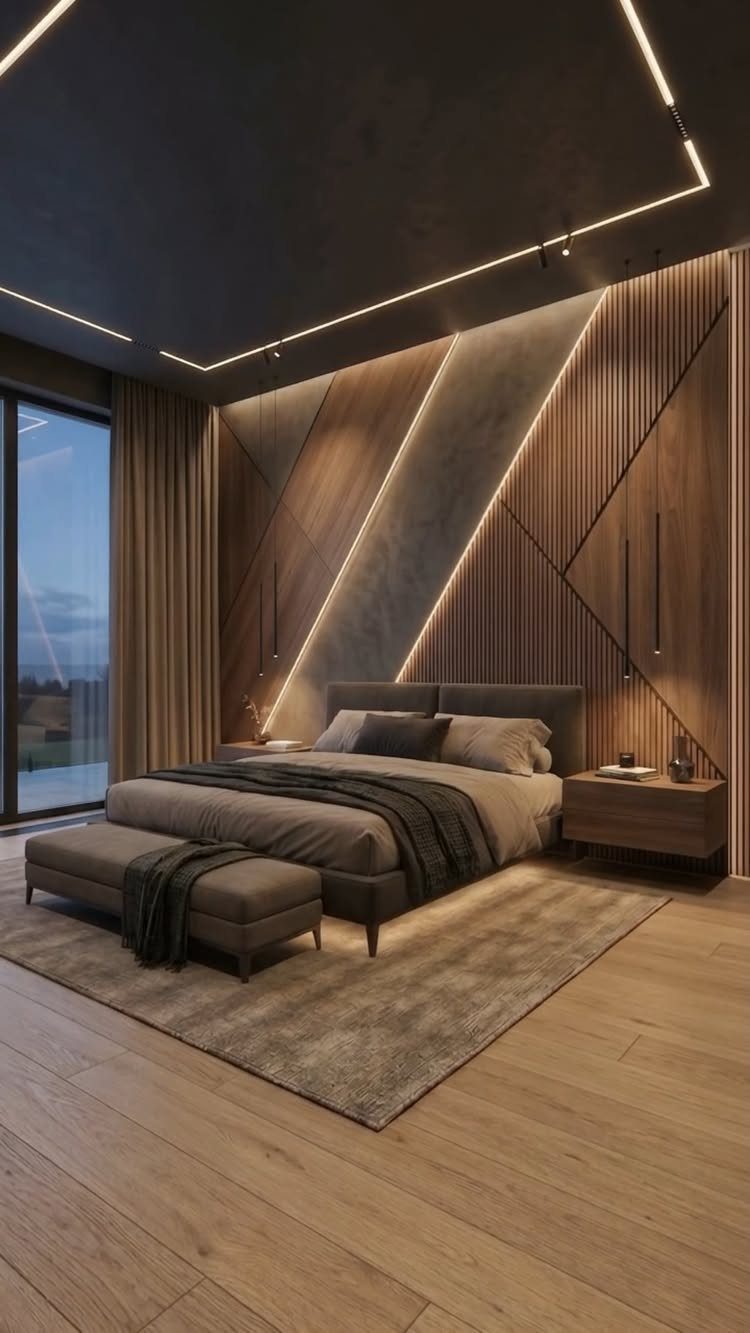
3 kinds of light do the work in this room: strips set into the ceiling, pendants hung low, and glow washing over the wood paneling.
Each can be dimmed or switched on its own, which is what makes the room feel layered rather than just bright.
For a rental, plug-in pendants and stick-on LED strips get you most of the way for well under a thousand dollars. Put every layer on its own switch or smart plug so evening mode takes one tap.
2. Tall Headboard
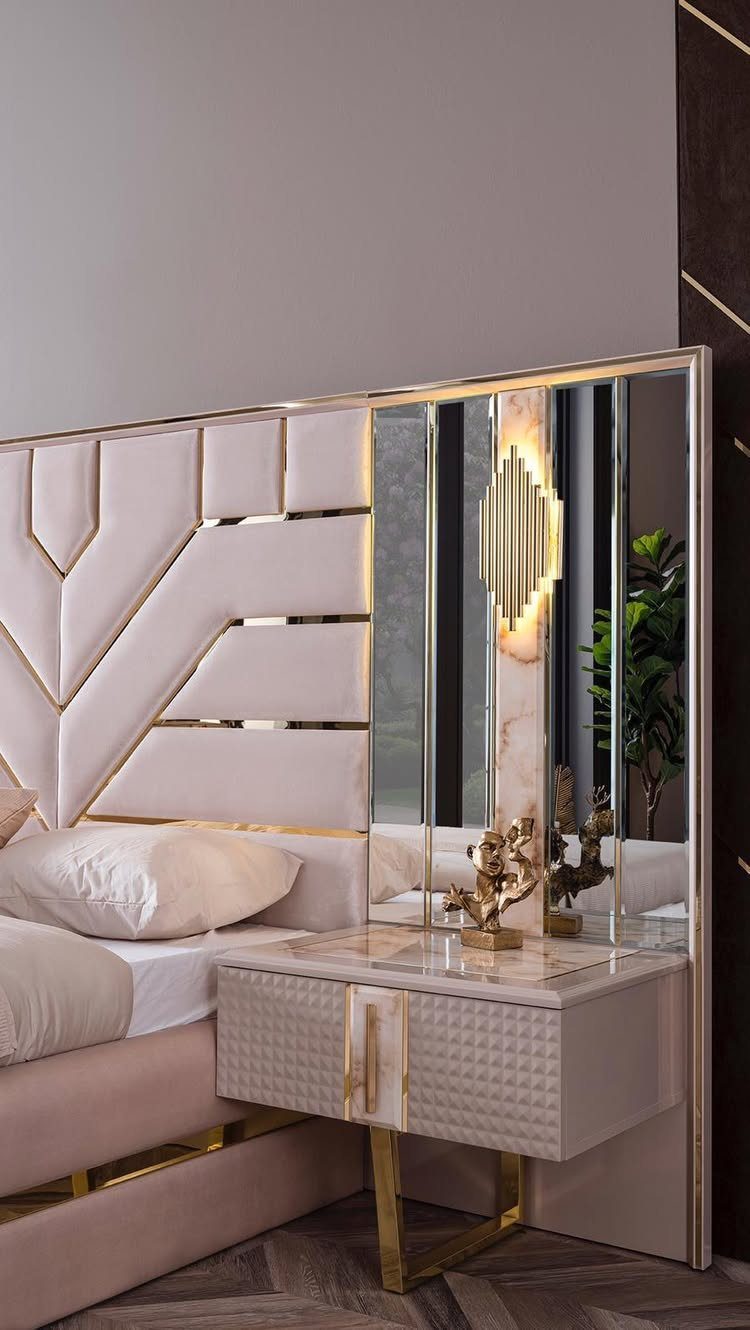
A headboard that climbs well past the pillows makes the bed the room’s focal point before you add anything else.
Tufted pink upholstery with gold accents reads glamorous, and a marble-topped bedside table finishes the look without competing with the headboard.
I’d pick a soft blush over a hot pink, since it reads as a neutral and lasts through decor changes. On a budget, a DIY panel is a weekend project: plywood, foam, batting, and fabric.
3. Soft Color Palette
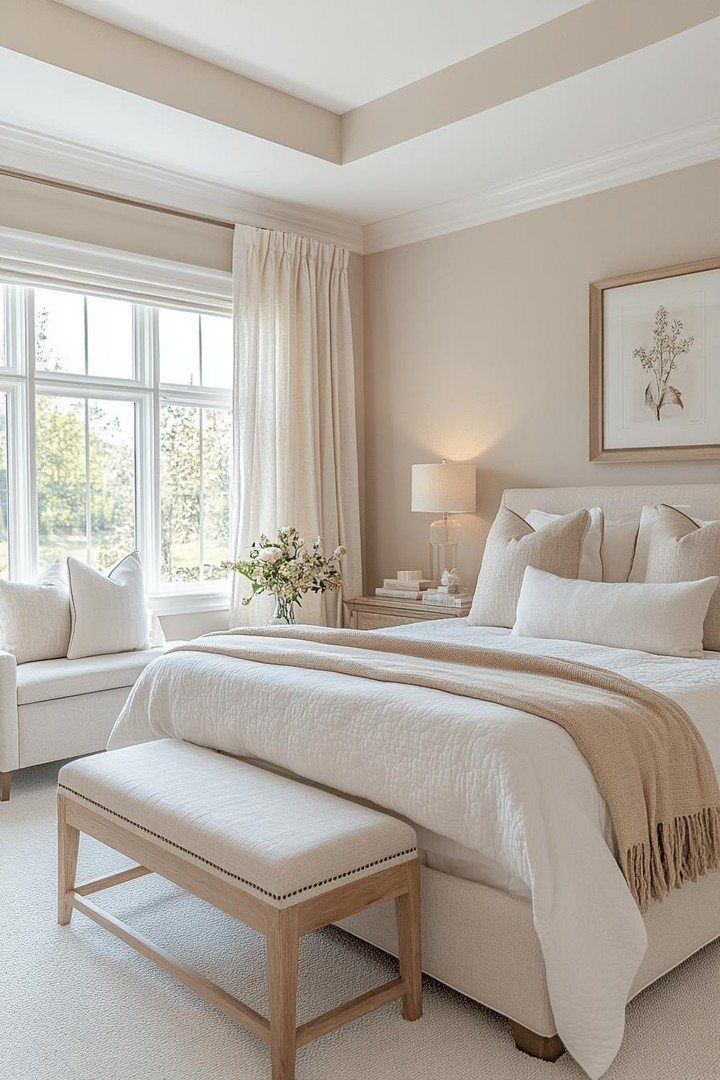
Beige, cream, and white across the walls, curtains, and bedding keep a bedroom quiet, and sticking to those 3 tones does most of the work. Small changes in texture stop it from looking flat.
Stay within two or three shades so nothing competes. A beige throw, a matching bench at the foot of the bed, and a small sofa by the window all work because they sit close in tone.
Paint is the cheapest way to start: one gallon often covers a small room.
4. Cozy Seating Area
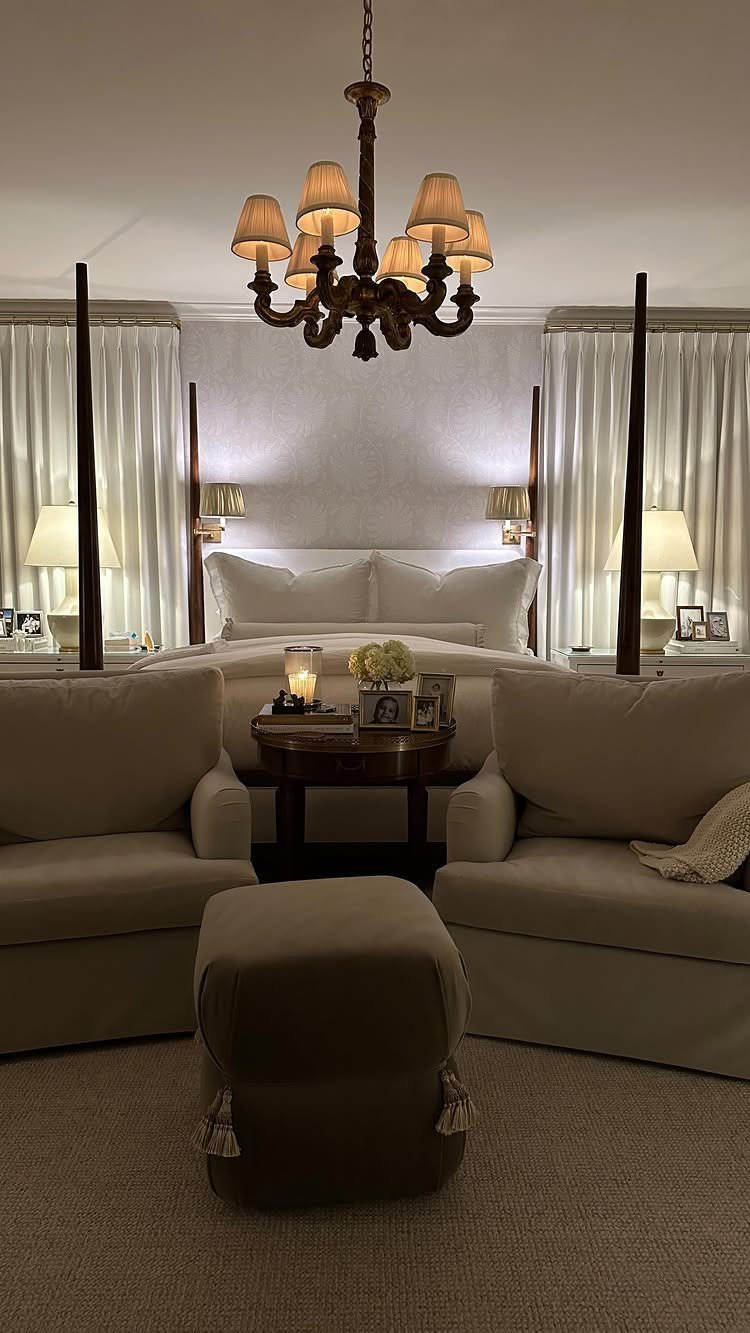
2 armchairs, a round table between them, and an ottoman turn a corner of the bedroom into a place to read or drink coffee. Beige upholstery keeps it calm beside the canopy bed.
Leave enough floor space to walk around the chairs, or the nook will feel like clutter.
I like a round table here because it has no corners to bump. If the room is small, one chair and an ottoman does the job.
5. Built-in Wardrobes
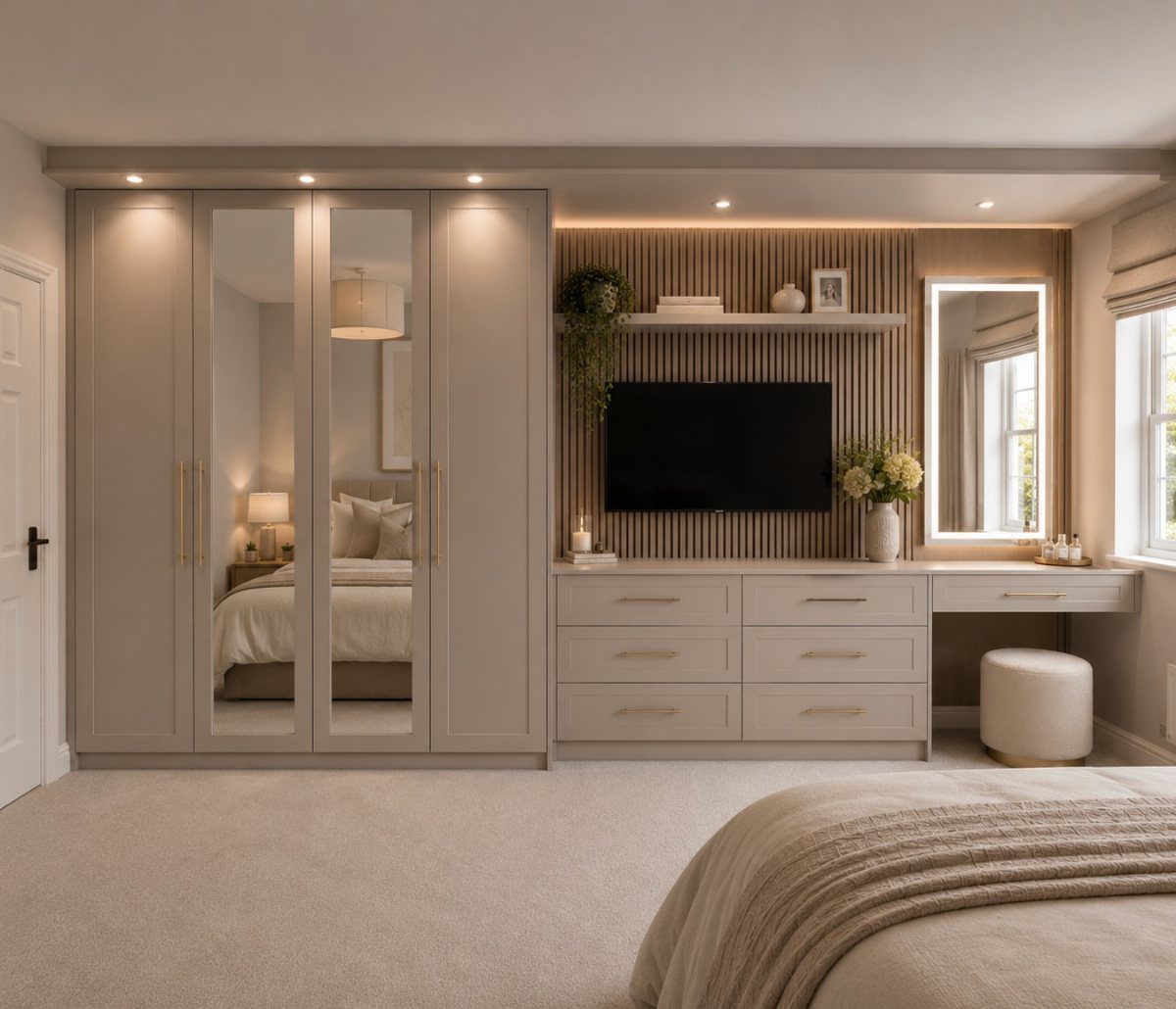
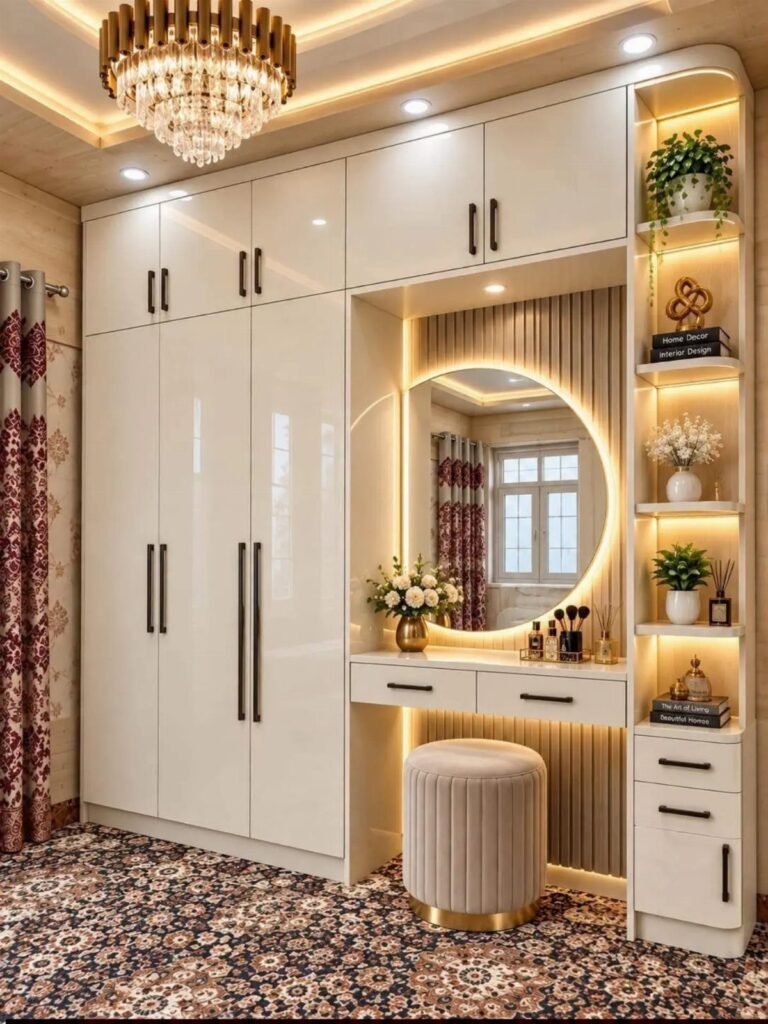
Wardrobes built wall to wall in a taupe finish hide clothes behind mirrored doors, and the mirrors double as a dressing spot. Drawers built into the unit mean a separate dresser is optional.
Full custom work is expensive, so price it against stock cabinet systems you can assemble and trim yourself over a weekend.
Taupe is easier to live with than stark white, since it hides scuffs better. A slatted wood backdrop adds warmth.
6. Bedside Tables
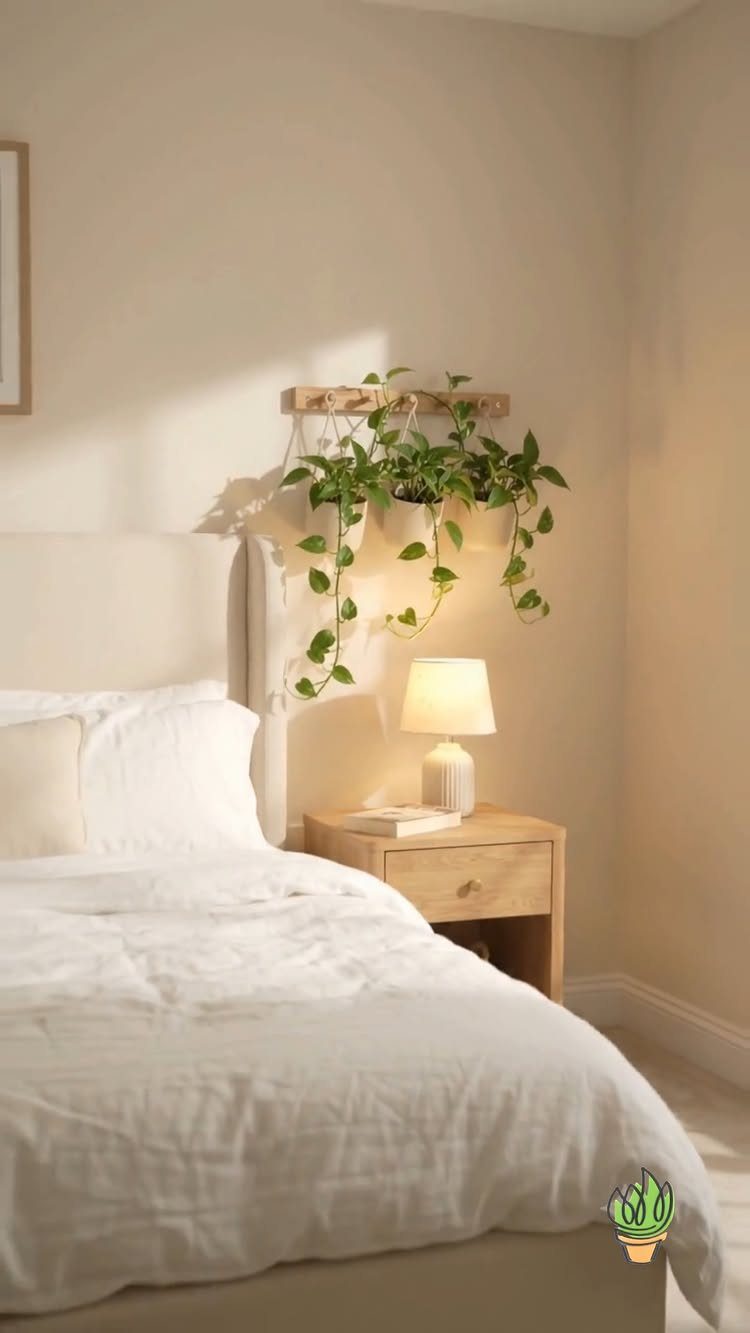
A bedside table needs a flat top for a lamp and a book, and ideally a drawer for everything else. Light wood on a bedside table keeps the setup airy next to white linens.
Match the top height to your mattress so reaching for the lamp is easy; a few inches either side of the mattress top is a good rule.
Hanging plants on the wall above a bedside table free up surface space for a lamp and a book. Skip anything so small that you end up stacking things on the floor.
7. Gilded Mirror and Sconces
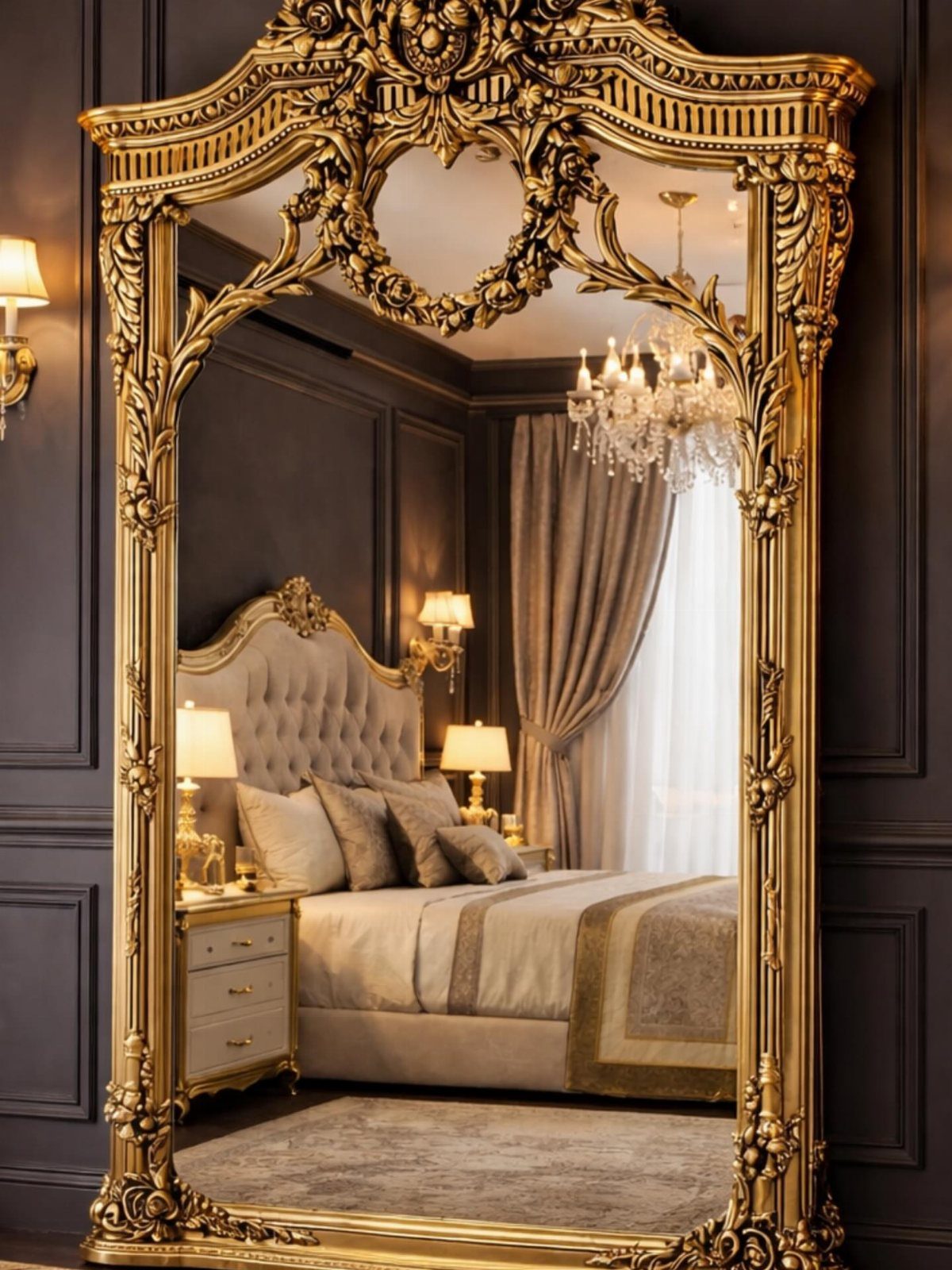
A mirror with an ornate gold frame, set opposite gold-based lamps and a chandelier, bounces their light back across the room and makes the gold read as one deliberate scheme.
Against grey walls, the warm metal stands out without any extra color.
I’d pick one oversized mirror over several small ones, and hang it where it catches lamplight rather than the door. Repeat the gold in two or three places only, or the room tips into costume.
8. Textured Bedding
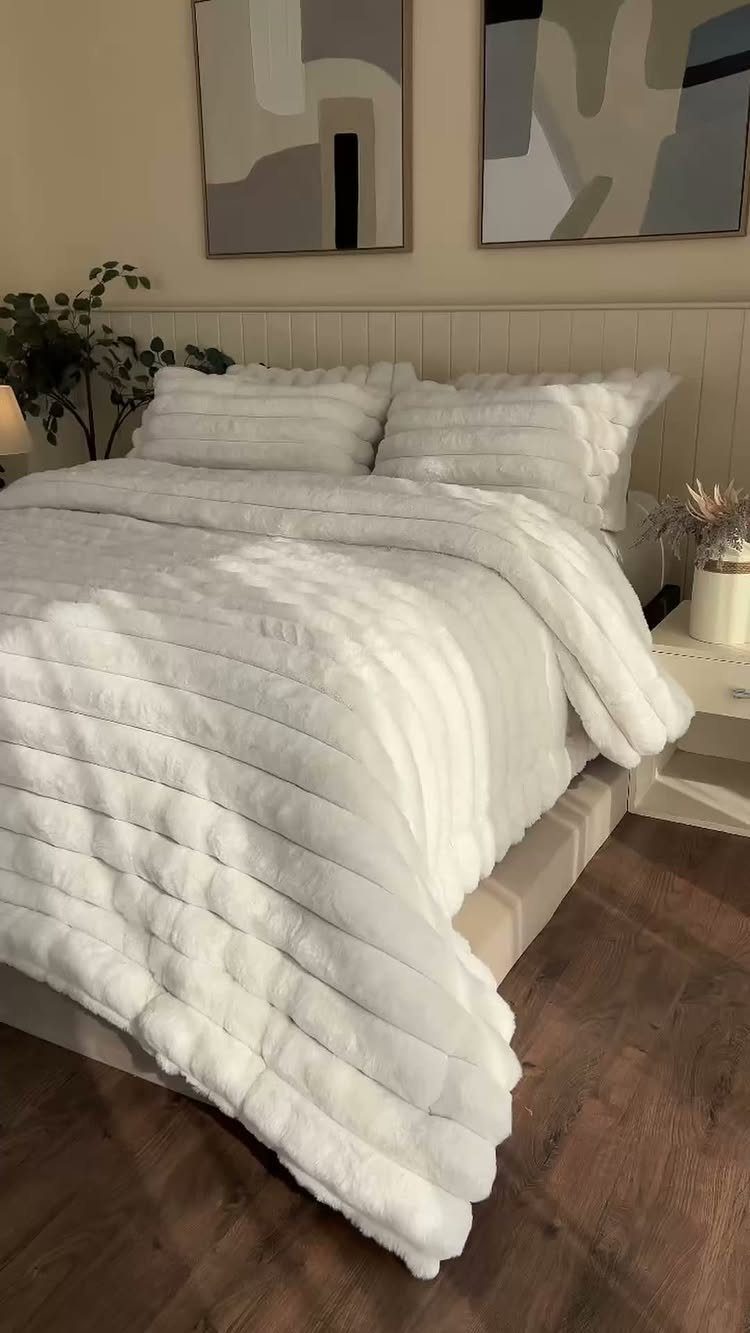
A single color can carry a whole bed when the fabrics differ: a ribbed faux fur throw in white, 2 matching pillows in a flatter weave, and the texture does the work that pattern usually would.
Against a white headboard, the texture does the work that pattern usually would.
Mix two or three materials, such as a plush throw over a ribbed cover, and keep them in one color family so the bed stays calm. Bedding is the cheapest layer to swap, and it needs no tools.
9. Textured Wallpaper Accent Wall
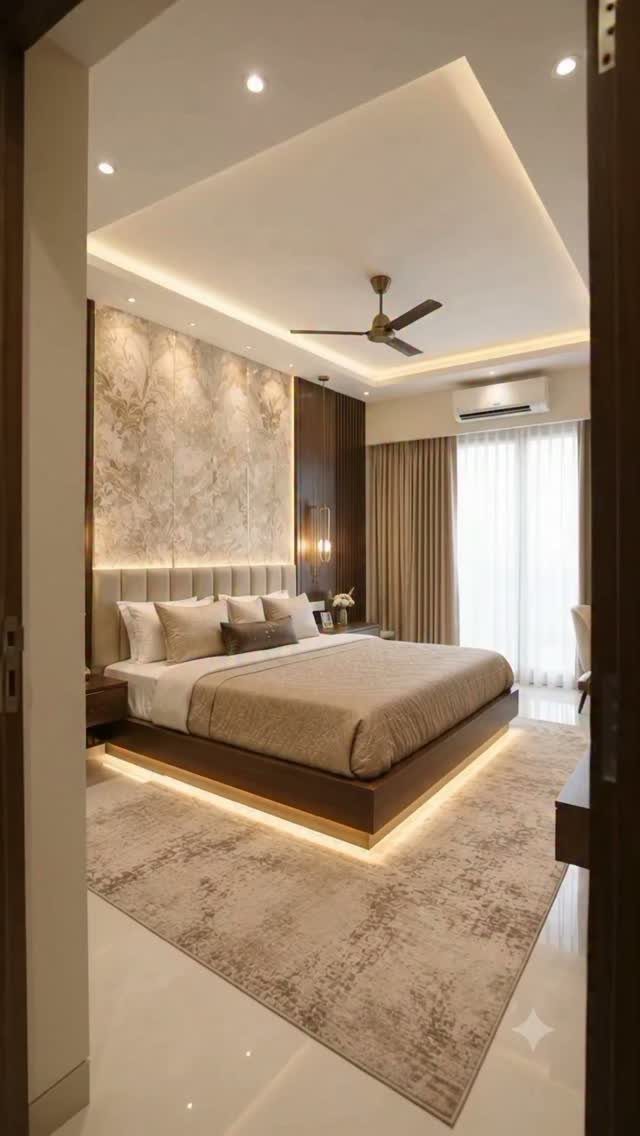
A textured wallpaper accent wall behind the bed gives a plain beige room depth without adding a single piece of furniture. Put it only on the wall the bed sits against, so the other three can stay quiet.
I’d choose a tone close to your paint, because texture carries the effect and a loud color fights it. Peel-and-stick versions suit renters, and one wall is a weekend job.
10. Painted Furniture
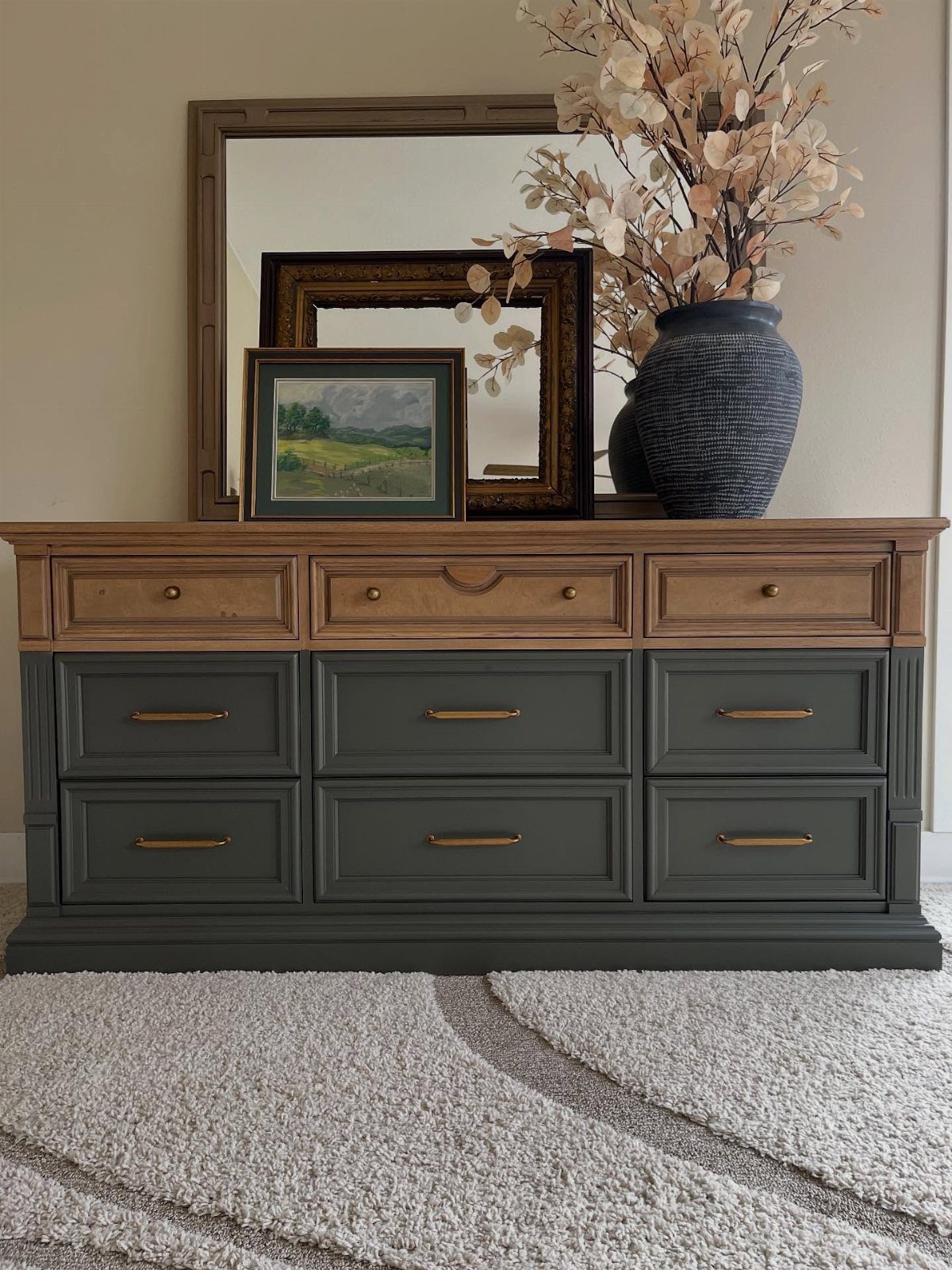
Painting a dresser 2 tones, dark grey on the body and the natural wood top left bare, adds contrast without taking up any floor space; sand and prime only the body, and tape the edge where the paint meets the wood.
Keeping the wood visible stops the grey from feeling heavy.
I like this better than a full repaint because the wood warms the piece.
Sand lightly, prime, and use a couple of thin coats; a quart of paint is plenty for one dresser. Tape the top edge for a clean line.
11. Centered Platform Bed
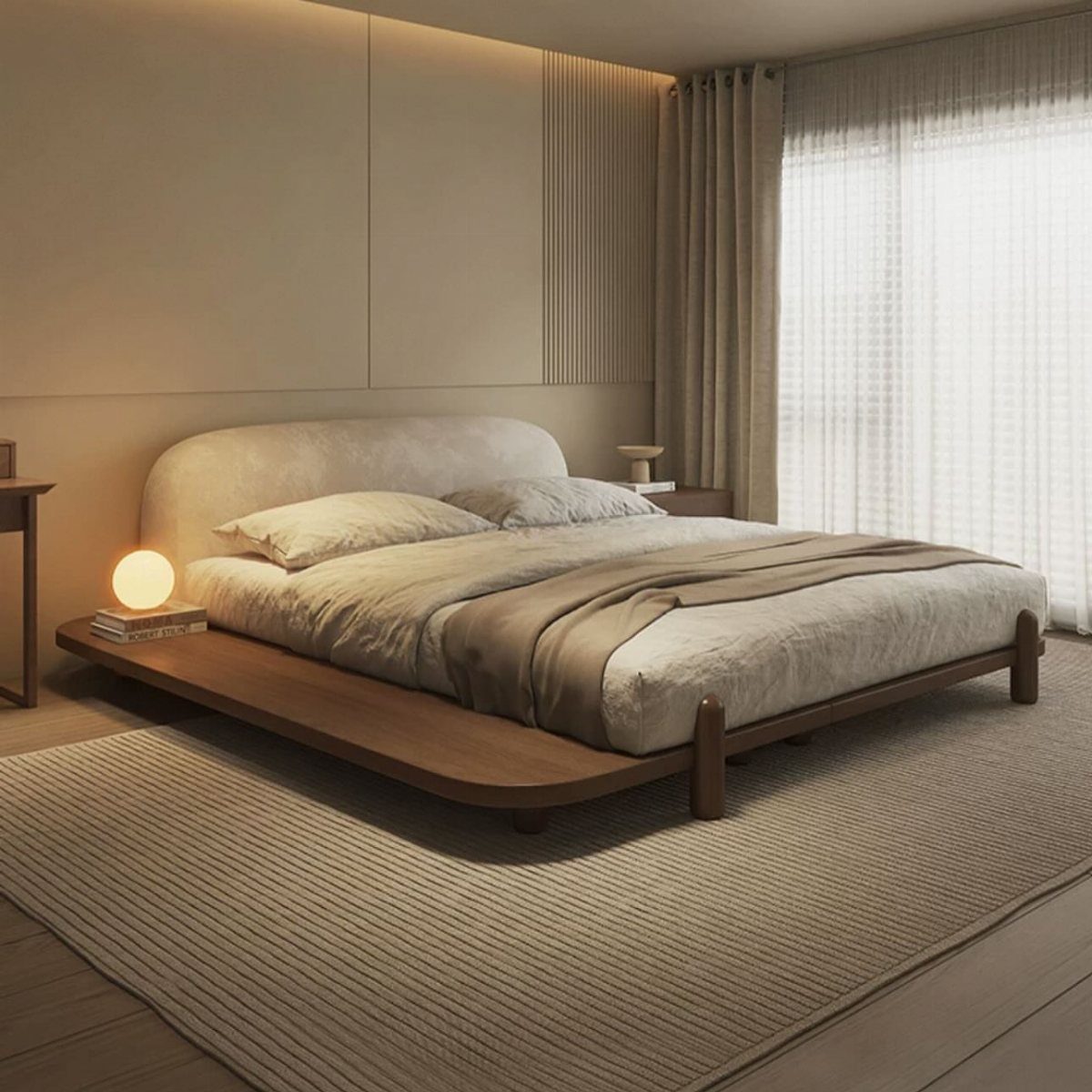
A low wooden platform bed centered on the wall gets its presence from restraint: clean lines, beige linens, and nothing stacked around it.
Center it so both sides look equal, with a round lamp on the nightstand to anchor the balance.
Skip a heavy headboard here. The slatted wall behind it already supplies the vertical lines, and a textured rug under the foot of the bed softens all that straight wood.
12. Bed Directly Under a Large Window
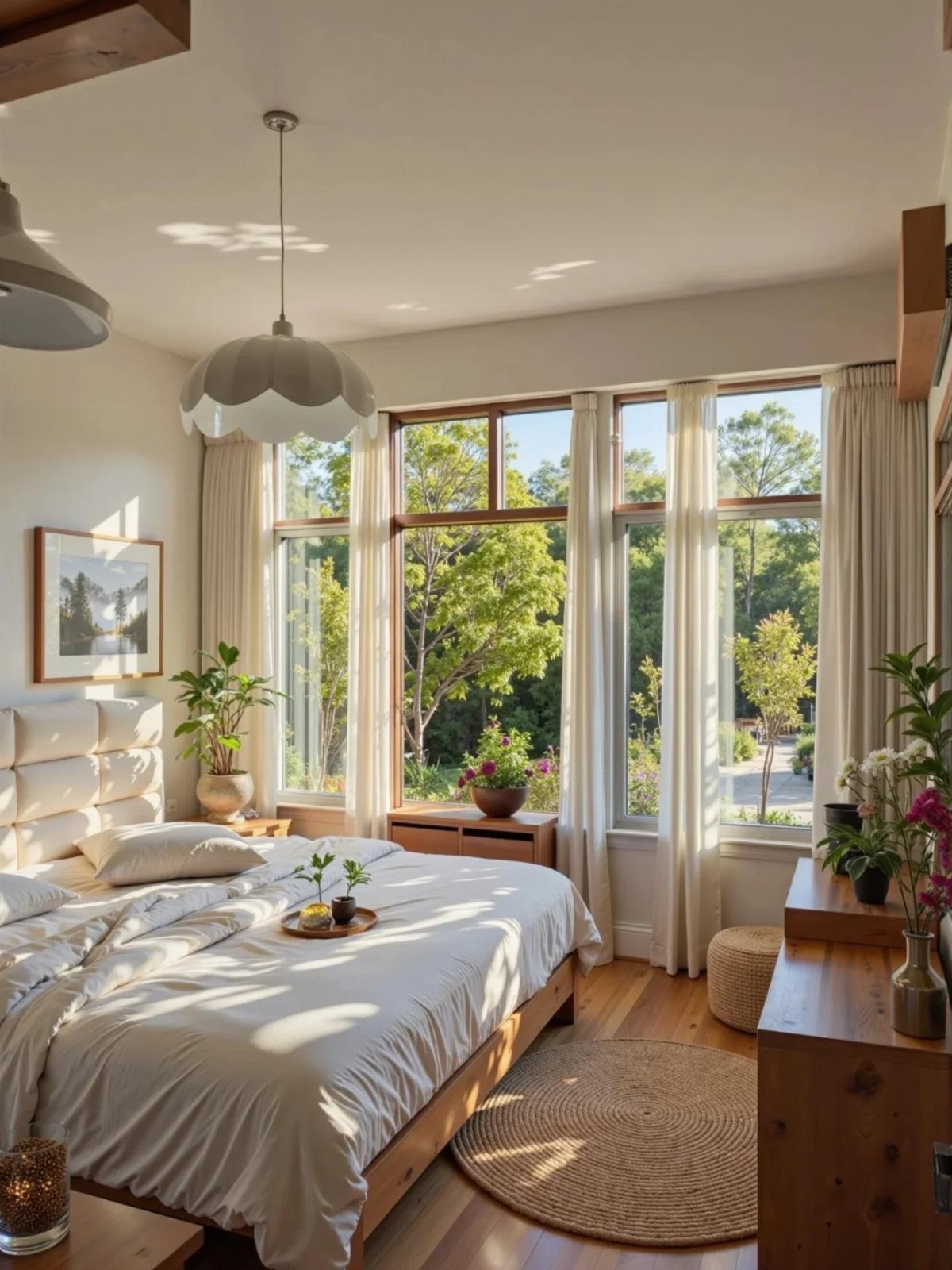
Putting the bed directly under a large window fills a bedroom with daylight and fresh air, which matters most in a small room or apartment. White linens keep it bright, and wood furniture adds warmth against the greenery outside.
Pick curtains or blinds you can close fully, since morning sun comes straight onto the pillows. Keep any headboard low enough that it doesn’t block the glass.
13. Floor-to-ceiling Curtains
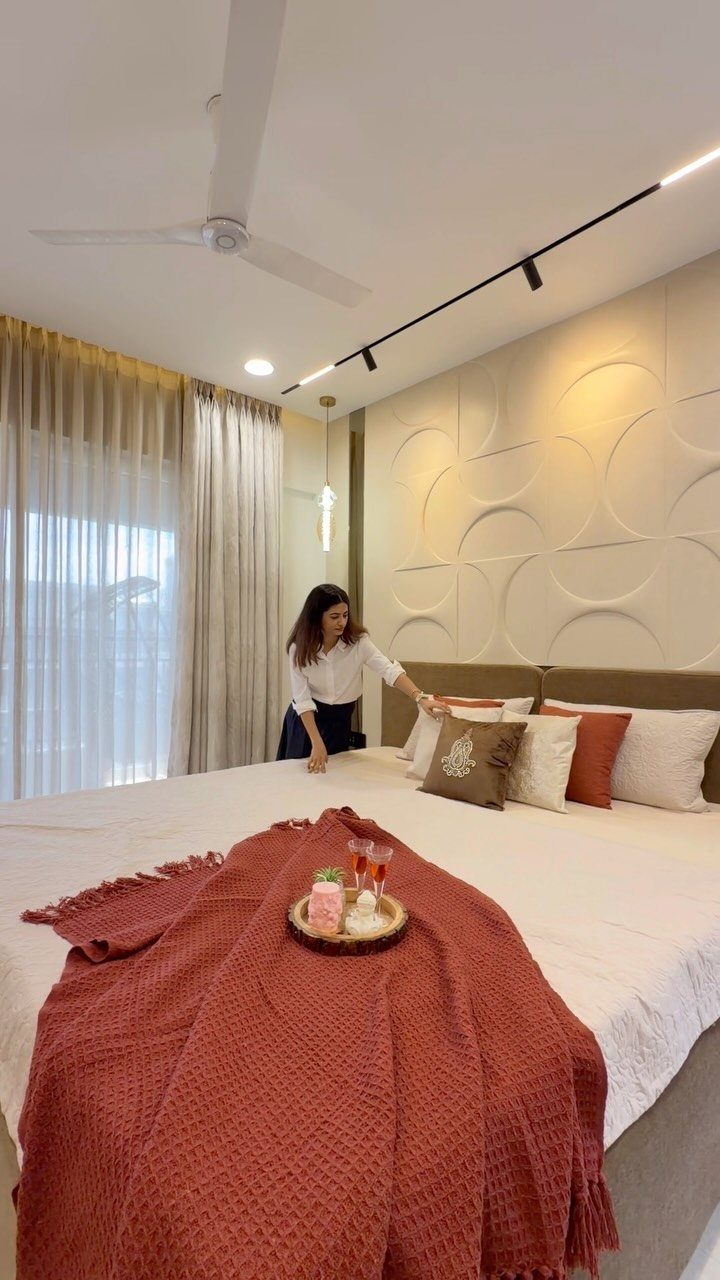
Beige panels in a modern room suit a white textured wall because they sit close in tone and let the texture stay the focus.
I’d mount the rod as high as the ceiling allows and let the fabric just brush the floor.
Buy panels long enough to reach, since short ones undo the effect. A ceiling-mounted track is worth pricing if you own the place and can drill into the ceiling; renters should stick with a tension rod or an adhesive-hook setup.
14. Personal Decor Touches
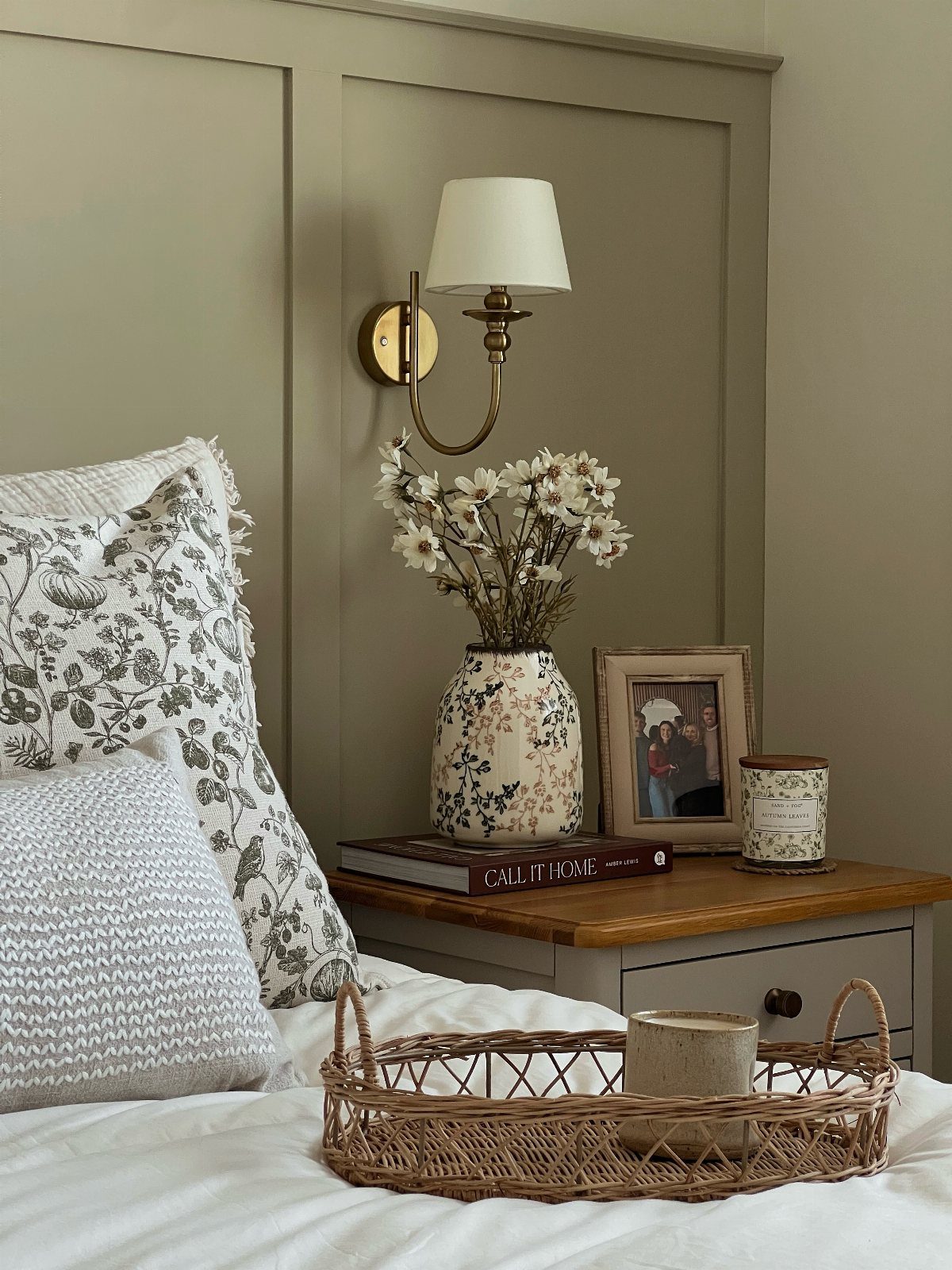
Group them in odd numbers and vary the heights so the eye moves across the surface.
I’d keep it to what you actually love, and leave room for a lamp or a gold sconce above. Swap the flowers and the book as often as you like; it costs almost nothing.
Designing a Master Bedroom
Decide what the room has to do before you buy anything.
Before you place the bed, decide what else the room has to hold, because a desk, a reading chair, or a second dresser each takes real floor space and the layout should work around them.
Place the bed and chairs so daylight reaches them. Sheer curtains keep privacy and let light through; blackout panels suit anyone who sleeps late or works nights.
Settle on a single palette, say painted walls with a few accent pillows, and check that your rug and bedding sit comfortably inside it.
Matching or contrasting furniture both work, as long as you choose one approach and stick with it.
Look up, too. A painted beam, molded plaster, or a single statement fixture gives the ceiling a job, and a fixture is the easiest of those to change in a rental.
Whether you’re on the precipice of a major home renovation or you’re looking for bedroom ideas that you can implement in a flash, figuring out what exactly you want to evoke in your space is the first step in any great makeover.
Current Trends
A modern bedroom doesn’t have to be all white anymore. Warm, muted tones lead: warm gray, greige, soft clay, dusty sage, and deep charcoal.
Layers in close shades of one color read as more current to me than loud, high-contrast patterns.
The palette should look like it all came from one source.
Mementos, collectibles, and things you chose on purpose beat a perfect, matched set. Comfort comes first.
Mixing Furniture Styles
Mixed furniture holds together when something repeats. A shared tone, a shared wood, or a common shape is enough to link a modern bed to an older dresser.
Texture is the easiest way to blend styles.
Aim for three dominant textures: one soft, like fabric or a rug; one structured, like wood or rattan; and one reflective, like glass or metal. That mix works across styles and keeps the room from turning chaotic.
In an open loft or large suite, let furniture mark the zones.
A statement rug and a few decorative pillows tie it all together.
Frequently Asked Questions
What are some good things to decorate my bedroom with?
Pieces you picked on purpose, like a collected mug set, a framed ticket stub, or a thrifted lamp, make a bedroom feel like yours far more than a matched set from one store.
Small items look best in groups of 3 or 5 at different heights; stack a few books under one object and the eye travels across the dresser instead of stopping.
Swapping flowers or a book costs almost nothing, and a lamp or sconce above gives the display light.
What are the current trends in bedroom decor?
Warm, muted tones lead right now: warm gray, greige, soft clay, dusty sage, and deep charcoal. A bed layered in 3 or 4 shades of one color looks newer to me than bold patterns fighting each other.
Personal items and comfort come ahead of a perfectly matched look, so the room should feel like it all came from one source.