
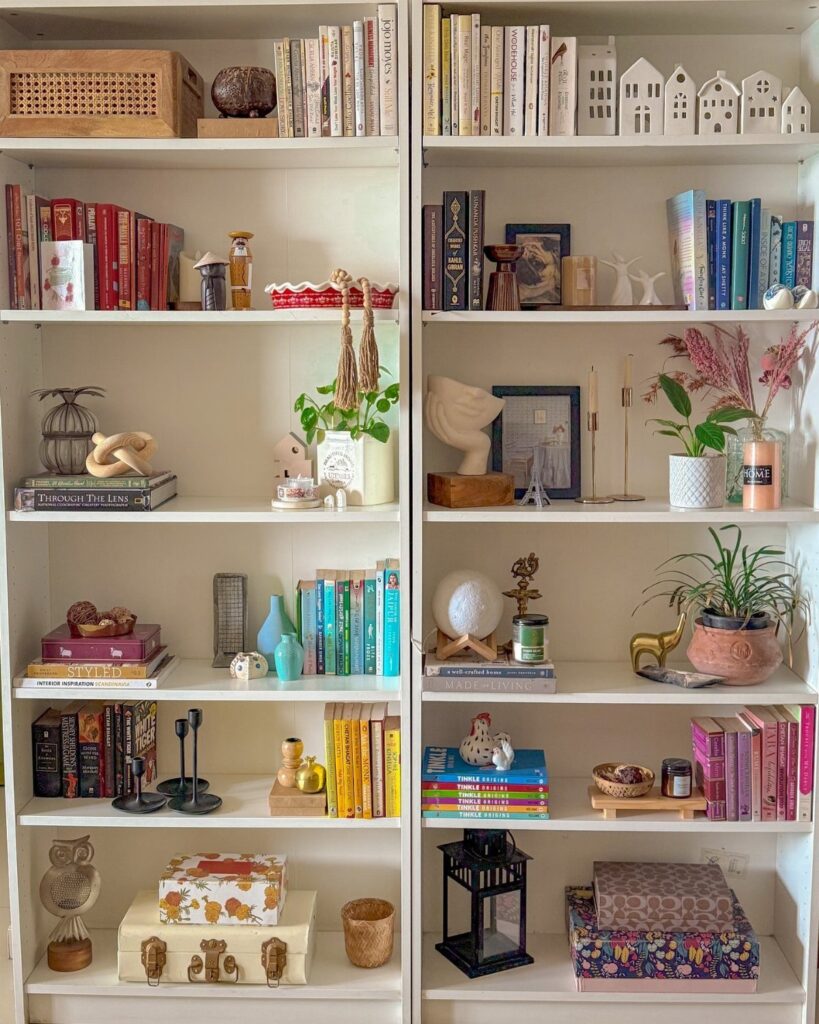
A bookshelf can hold color-sorted spines that read as a single gradient, a book nook diorama lit from within, or a sliding wood panel that hides the TV.
The right approach depends on whether you pull books daily, arrange them seasonally, or style the shelf once and leave it.
1. Color Sorted Books
Sorting books by color turns a bookshelf into a gradient that reads as one deliberate choice instead of a collection of random spines.
The effect is clean and calm, and it works especially well if you have a lot of books but want the shelf to feel pulled together rather than busy.
Start with one end and work through the spectrum, grouping books by their dominant spine color. You can stick to a strict rainbow order or cluster similar tones together in broader bands of warm and cool shades.
You lose the ability to find a book by title at a glance, so this works best for shelves you style more than you pull from.
2. Mix Vertical and Horizontal Stacks
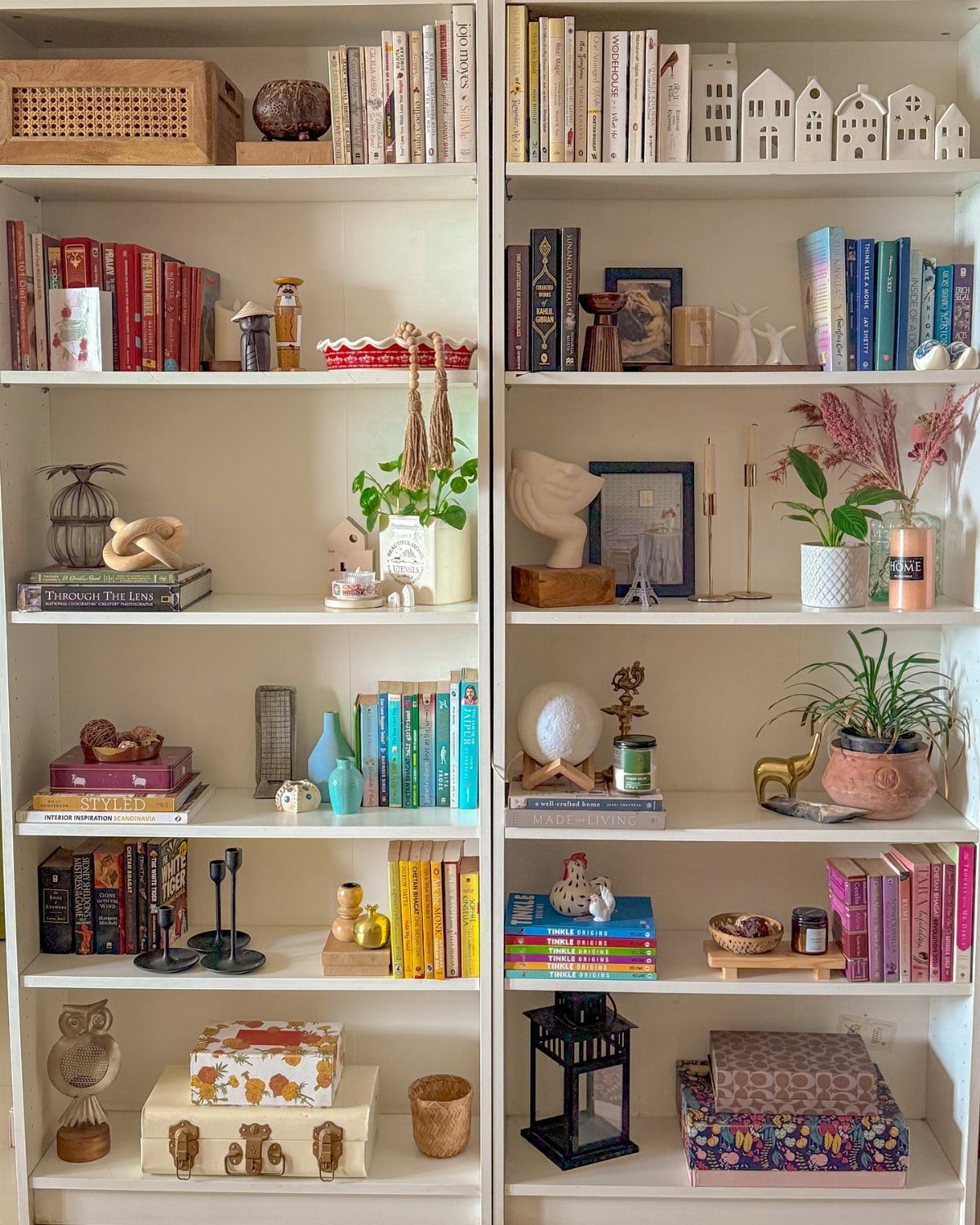
Alternating upright books with horizontal stacks breaks up the rigid vertical lines and gives you flat surfaces to layer small objects on top.
A stack of books makes a natural platform for a small vase, a candle, or a framed photo.
Mix the two orientations across each shelf rather than dedicating one shelf to each. The horizontal stacks add rhythm and make the whole thing feel less like a library and more like a composed display.
If a shelf feels too tight to stack horizontally, pull a few books forward so they sit an inch or two in front of the others.
That extra depth creates the same layered effect without taking up as much shelf surface as a full horizontal stack would.
3. Empty Space
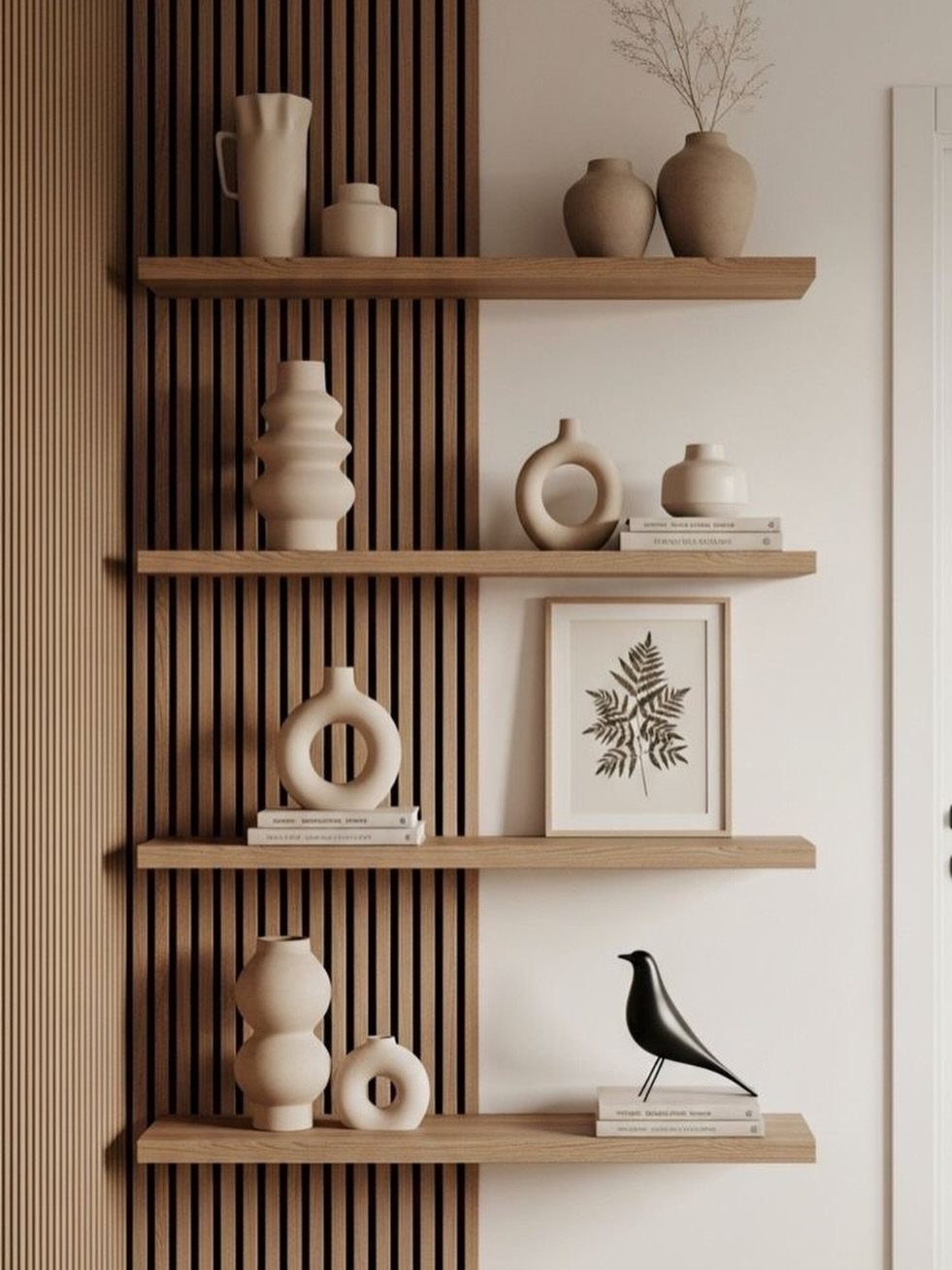
Leaving sections of a shelf completely empty gives the eye room to rest and makes what you do put out feel more intentional.
A half-filled shelf reads as intentional, not sparse, as long as what is there has enough visual weight to hold the space.
This approach works especially well on floating shelves, where too many objects can start to look cluttered quickly. Space things out so each piece has air around it, and resist the urge to fill every gap.
If an empty stretch feels awkward, adjust what you already have rather than adding more.
Shift a vase or a stack of books toward the center of the shelf so the blank space balances on both sides instead of reading as leftover.
4. Use Decorative Bookends
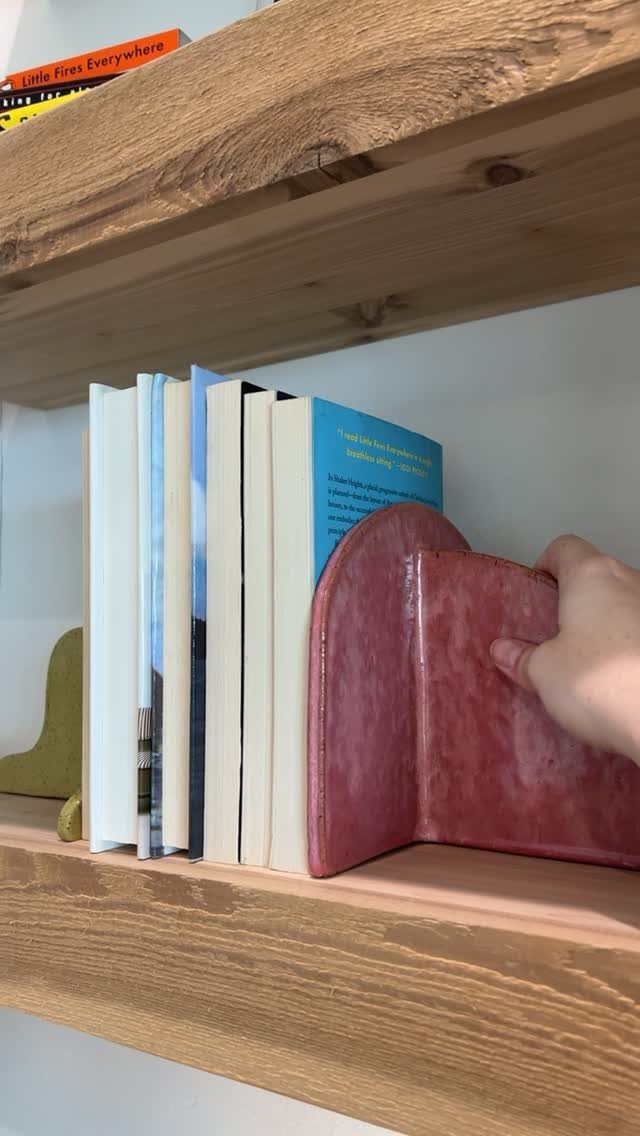
Bookends anchor a row of books and stop them from tipping, but they also work as small sculptures that bring color, shape, or texture onto the shelf.
A pair of ceramic arches, brass animals, or carved wood blocks can pull the whole shelf toward a specific style without taking up much room.
Look for bookends that match the material or tone of what is already in the room. Matte ceramic suits soft modern spaces, polished metal fits traditional or industrial rooms, and natural stone or wood works in just about anything.
Skip the novelty shapes unless they genuinely fit your taste. A bookend you would not display on its own is not going to look better just because it is holding books.
5. Add Plants
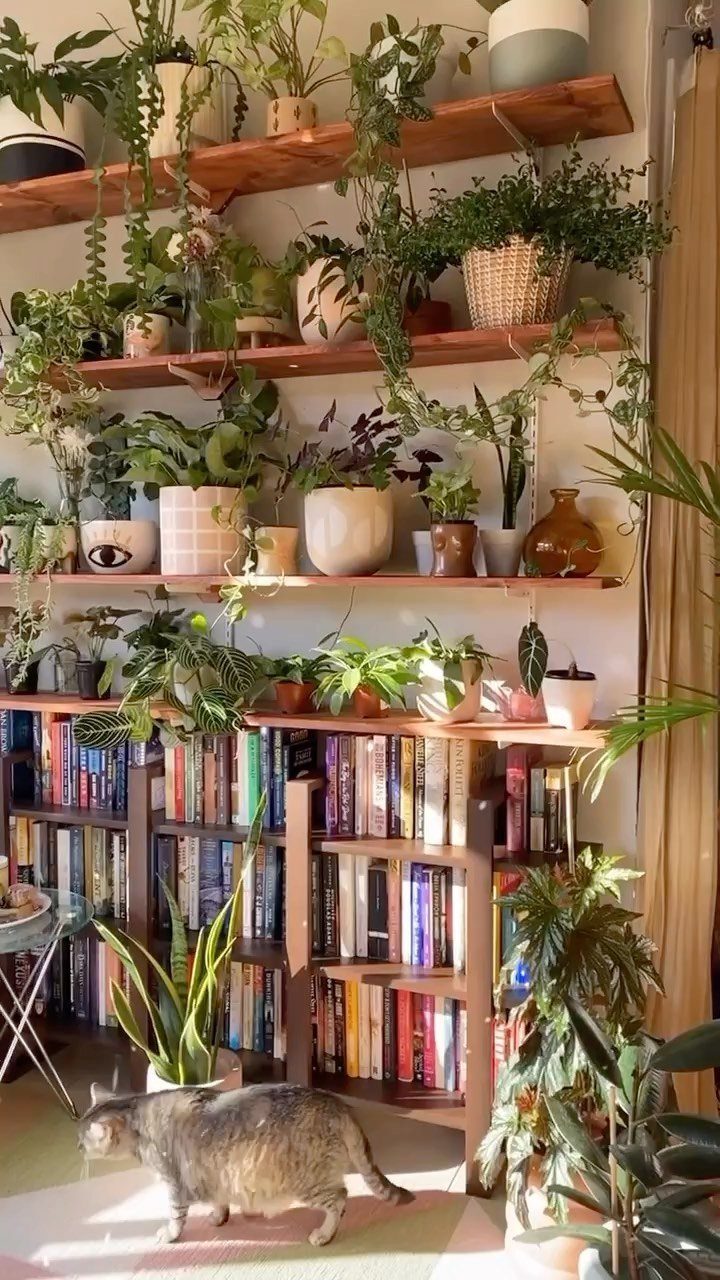
Plants soften the hard edges of books and shelves and add the kind of organic texture that keeps a styled space from feeling too rigid.
Small potted plants fit on individual shelves between stacks, and trailing varieties like pothos or string of pearls can drape down from upper shelves to fill vertical space.
Use a mix of heights and leaf shapes to keep the greenery from blending together. A tall snake plant or a bushy fern anchors one end of the shelf, while smaller succulents or ivy fill gaps without blocking sightlines.
Real plants need light, so if the shelf is in a dim corner, high-quality faux stems hold up better than struggling live ones.
6. Layer Art at the Back
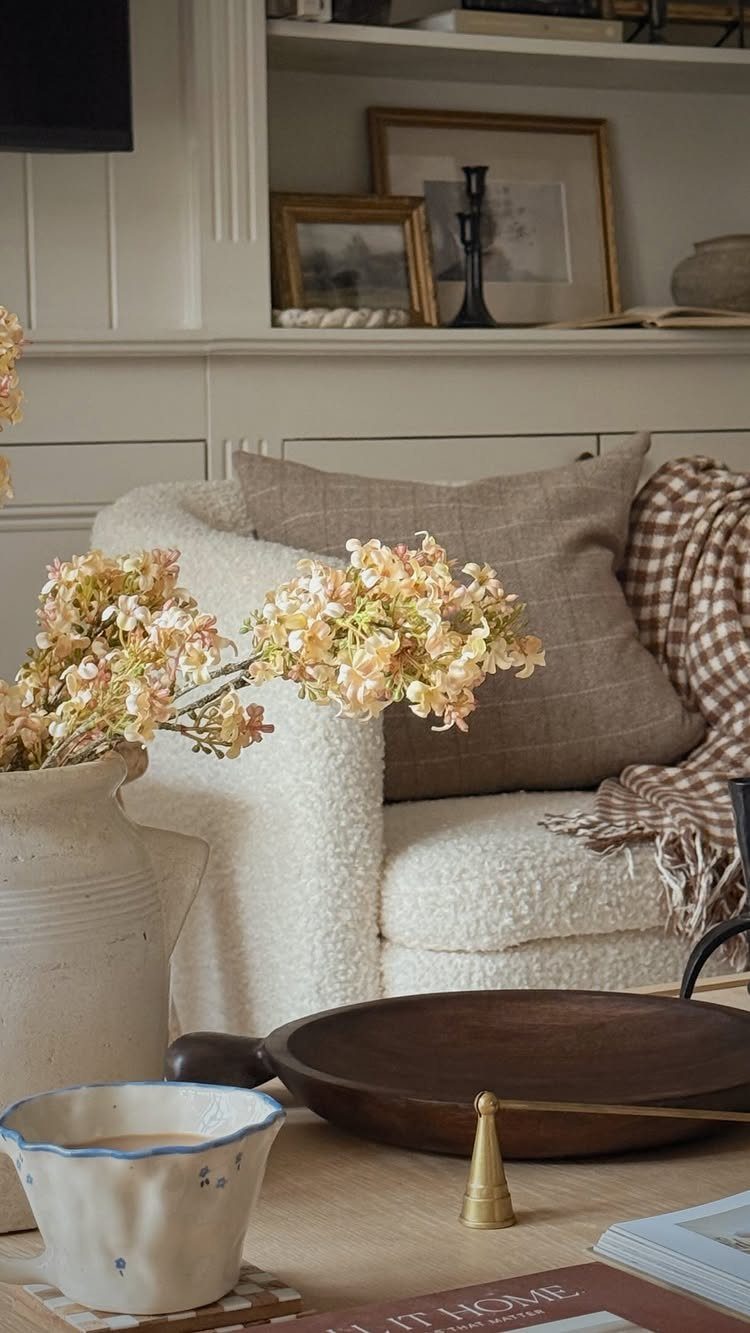
Leaning framed art or a mirror against the back of a shelf adds depth and turns the shelf itself into a backdrop for what sits in front.
An 8×10 or 11×14 frame usually fits the scale of most standard bookcases, and a mirror bounces light back into the room while making the shelf feel less heavy.
Prop the frame at a slight angle so it leans securely, and tuck a small felt pad or a folded piece of cardboard under the bottom edge if it slides.
This keeps the frame stable and protects the back of the shelf from scratches.
7. Cluttered Books
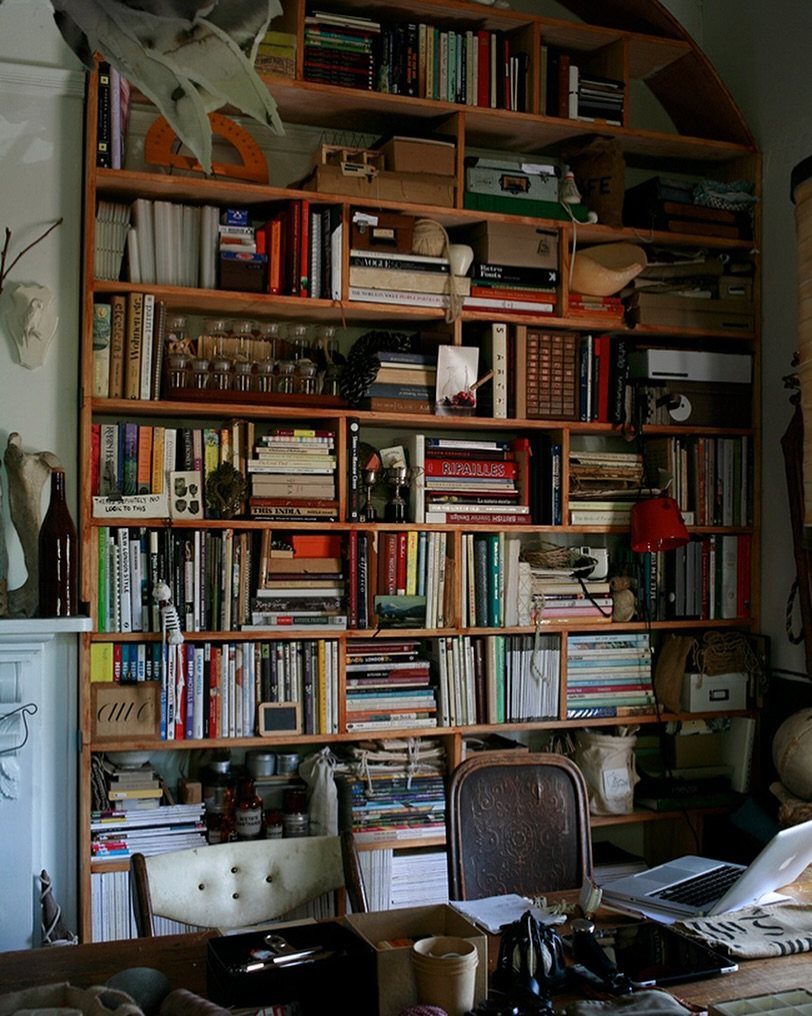
Packing shelves tightly with books until they fill every inch creates a lived-in, collected-over-time look that feels comfortable rather than styled. The books become the main event, and the density itself reads as coziness.
This works when you actually have enough books to fill the space and when you are fine with function over display.
You give up room for decorative objects, and finding a specific title takes longer, but the shelf feels honest and full in a way that a carefully arranged display does not always manage.
8. Groups of Decor Items
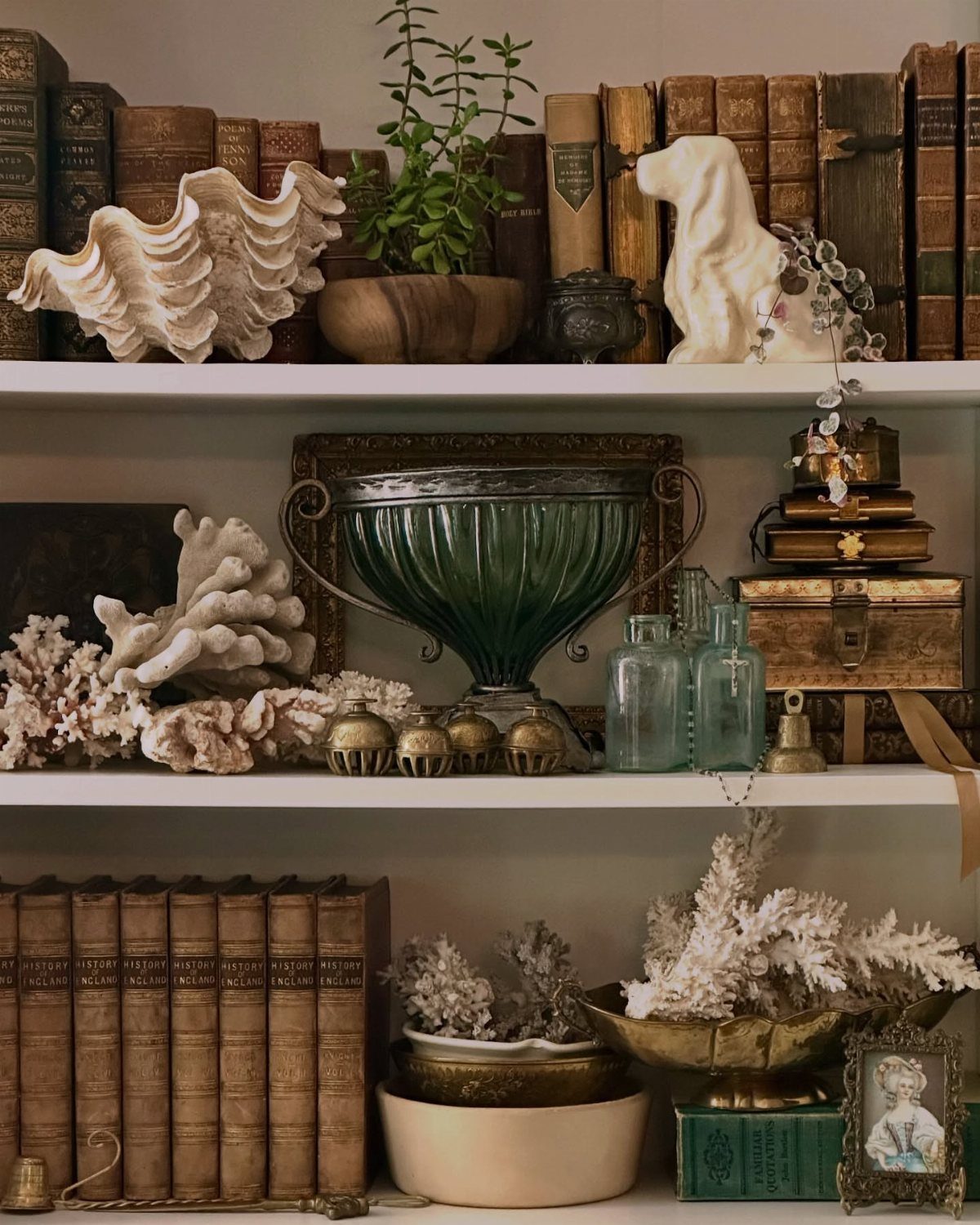
Arranging decorative objects in small clusters instead of spreading them one per shelf makes each grouping feel like a deliberate collection rather than filler.
Different heights and textures within each group keep the eye moving through the cluster without everything blending together. Keep some space between groups so each one stands out on its own.
9. Add Soft Lighting
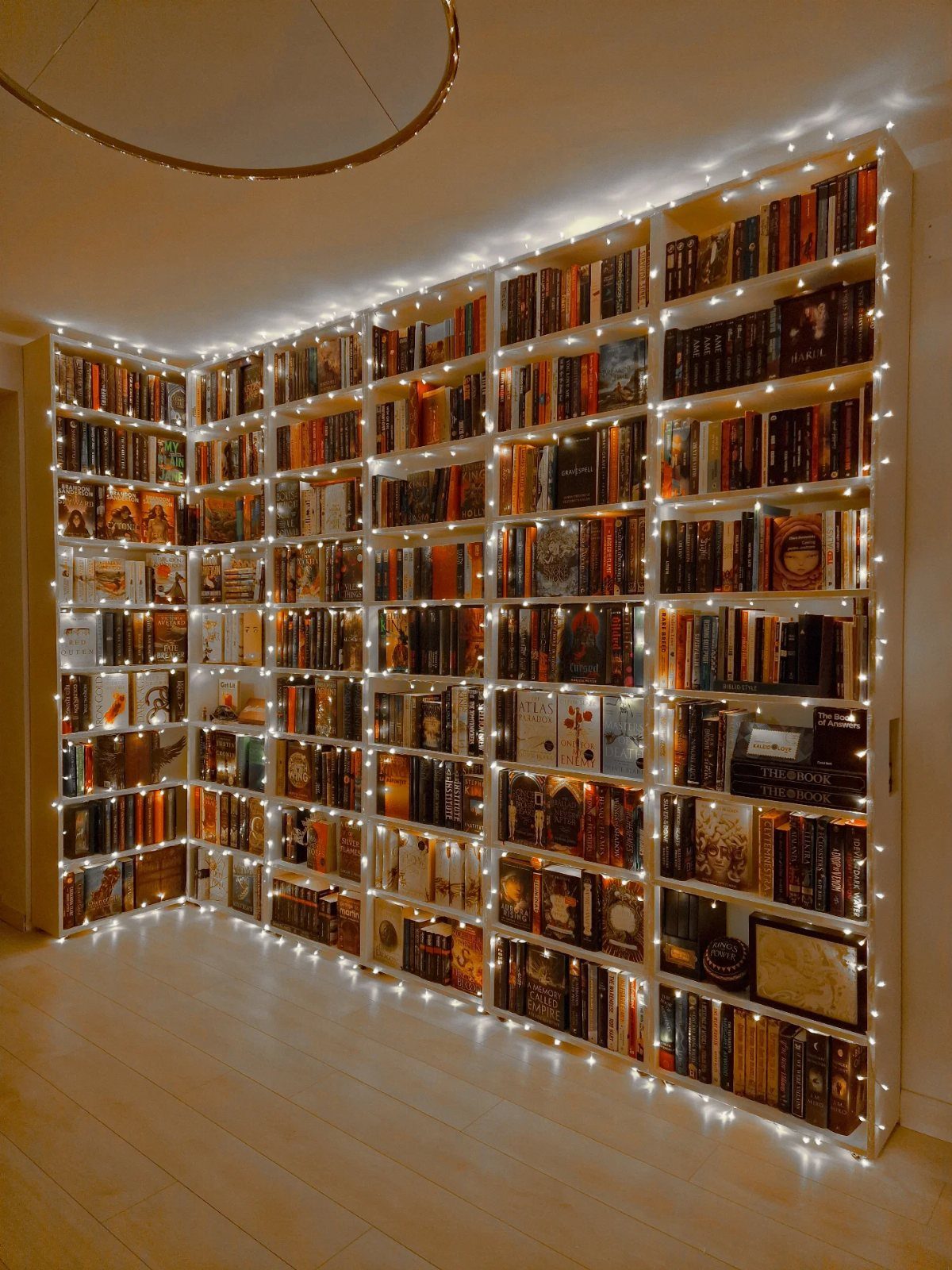
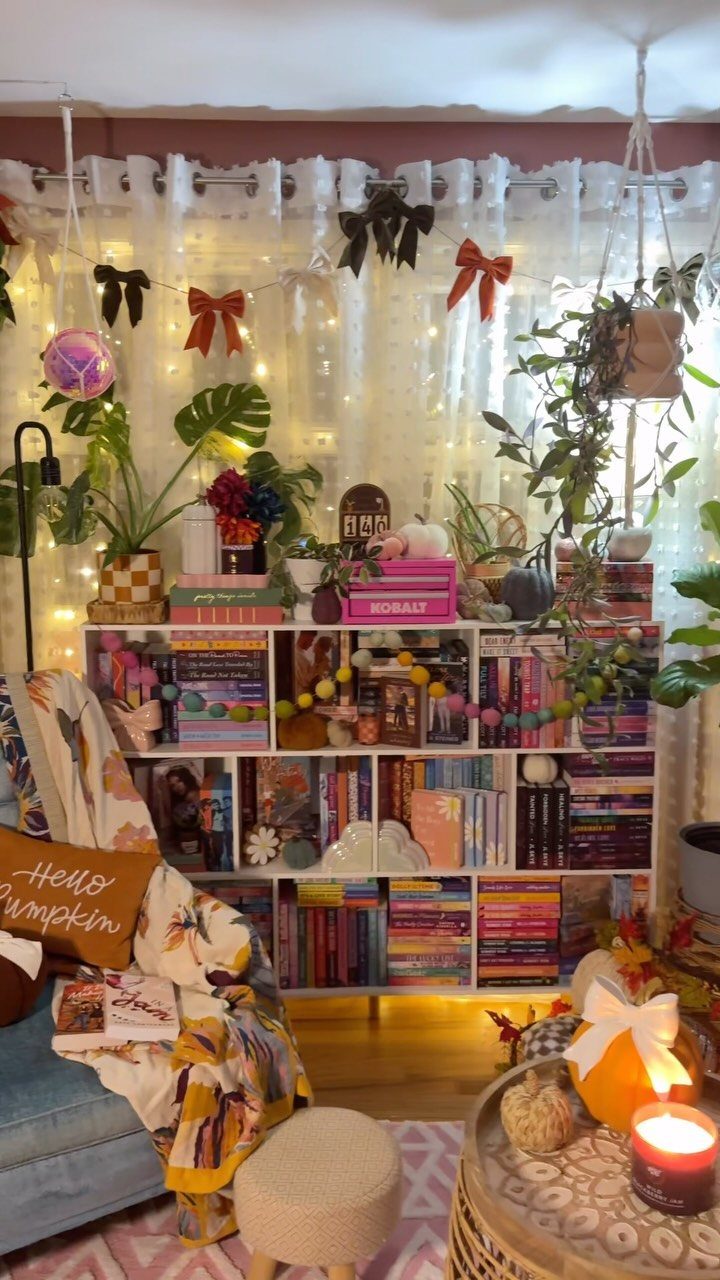
String lights or a small lamp tucked onto a shelf adds warmth and pulls the bookshelf into the room’s lighting plan instead of leaving it as pure storage.
Fairy lights drape along the back edge or wrap loosely around stacks of books, and a small LED puck light or a battery-powered lamp tucks into a corner without needing an outlet nearby.
The glow softens the shelf at night and draws attention to what sits there without relying on overhead light alone.
10. Themed Decor and Collectibles
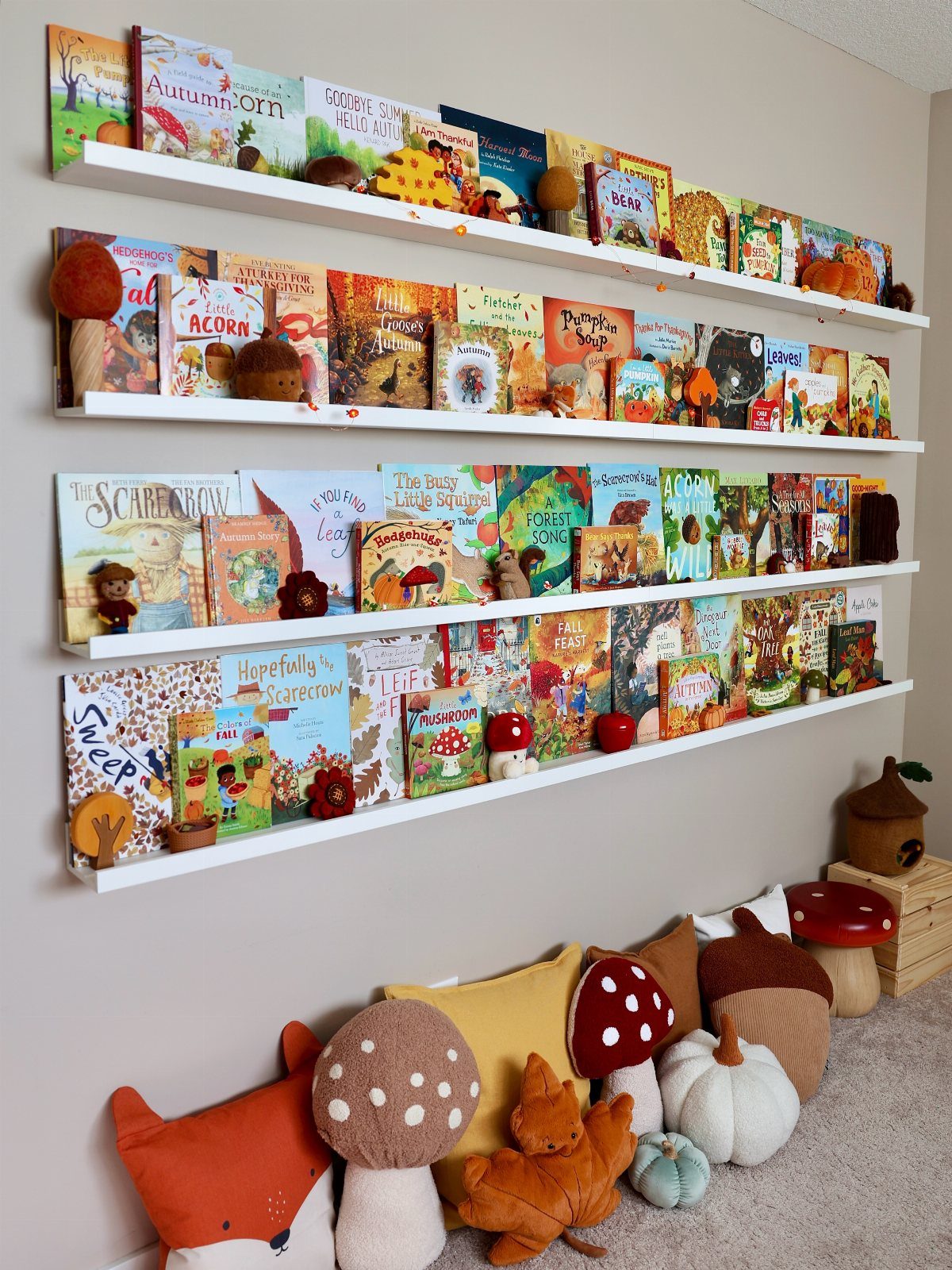
Devoting one shelf or section to a single theme, whether it is a color, a subject, or a collection, gives that area a clear identity and makes the whole bookshelf feel more intentional.
A shelf of mushroom figurines and autumn books reads as a choice, not as random items that happened to land there.
This works especially well for kids’ rooms or seasonal displays, where the theme can shift with the time of year or their current interests.
11. Use a Book Nook
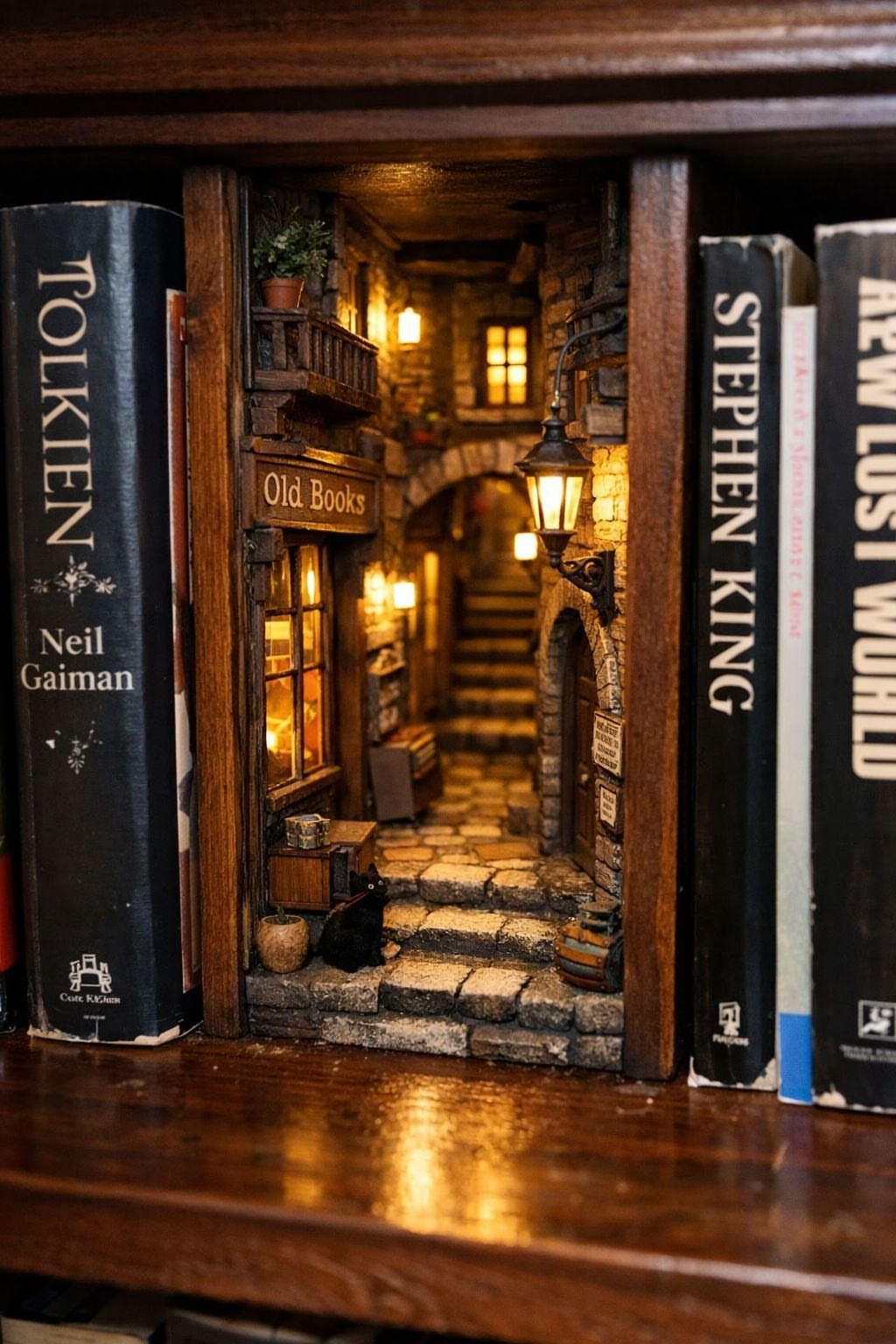
A book nook is a small diorama that sits between 2 rows of books and creates a miniature scene that looks like it belongs in the world of the shelf.
These are usually built or bought as kits and feature tiny storefronts, alleyways, or rooms lit from within.
The scale matches the height of a standard book, so it slots in without forcing you to rearrange the whole shelf.
It adds narrative detail and turns part of the bookshelf into something you stop and look at instead of glancing past.
12. Seasonal Decor

Swapping out a few objects or book arrangements to match the season keeps the shelf from looking static and gives you a reason to refresh it a few times a year.
A stack of books shaped into a tree with lights and a star fits winter, while a vase of branches or a bowl of gourds works for fall.
The rest of the shelf stays the same, so the seasonal piece stands out without requiring a full reset every time.
13. Sliding Panels to Hide a TV
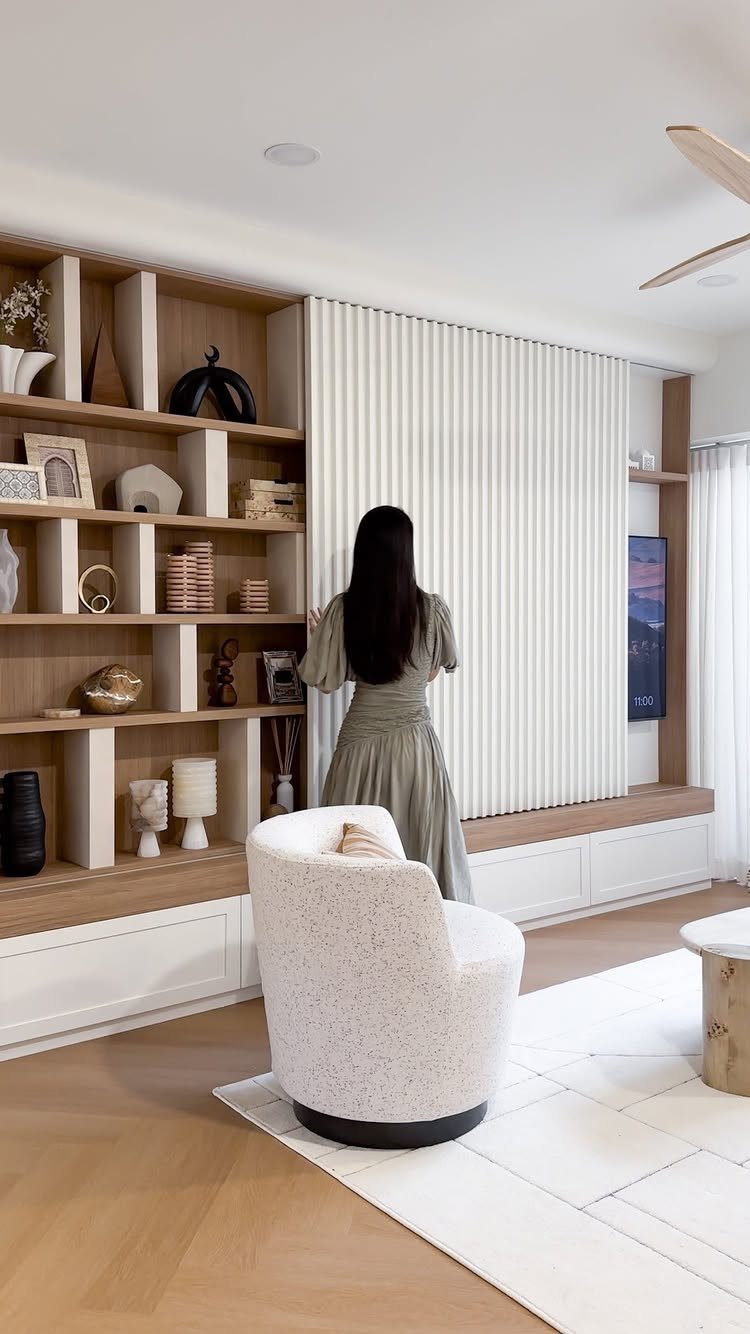
A sliding panel mounted on a track in front of the bookshelf lets you cover the TV when it’s off and slide it open when you want to watch.
The panel becomes part of the shelf’s architecture instead of calling attention to the screen.
Slatted wood or cane panels work well because they add texture without feeling heavy, and they match the warmth of the surrounding shelves. A solid panel in the same finish as the bookcase blends in even more completely.
This requires either a built-in unit with the track installed during construction or a retrofit track mounted to the front edge of an existing shelf.
The panel needs a few inches of clearance on one or both sides to slide past the TV.
Tips for a Clean Look
Grouping objects in odd numbers, especially threes and fives, makes a display feel more natural than pairs or even rows. The asymmetry keeps the arrangement from looking too formal or staged.
Repeating the same few colors across the shelf keeps it from looking scattered. I pull colors that already show up in the room and carry those onto the shelf.
If the books are multicolored, the decor can pull from one or two tones that repeat, or you can go neutral with white, black, and natural wood to keep the focus on the books themselves.
Empty space is not wasted space.
A shelf that runs wall to wall without a single gap reads as crowded no matter how carefully you arrange it. Leave sections open so the pieces you do include have room to register on their own.
Decorating Process
Clear the entire shelf before you start. Taking everything off lets you see the space as it actually is instead of working around what is already there.
Gather everything you might want to use and set it out where you can see it all at once.
Books, frames, plants, candles, small sculptures. Having the full range in front of you makes it easier to spot what works together and what does not.
Start placing items in groups rather than one at a time. Step back after each addition and adjust the spacing or swap pieces out until the shelf feels balanced without looking symmetrical.
Functional Bookshelf Uses
Bookshelves hold more than books. Office supplies, craft materials, and framed photos all fit, and the vertical storage keeps them accessible without taking up floor space.
A bookcase can work as a headboard if it is low enough to sit behind the bed or tall enough to frame it.
The shelves give you space for a reading lamp, a water glass, or a phone without needing a separate nightstand.
In an open floor plan, a bookcase placed perpendicular to the wall divides the room without blocking light the way a solid partition would. Both sides of the shelf become usable surfaces, and the openness keeps sightlines clear.
Frequently Asked Questions
What can you put on a bookshelf?
Books, plants, framed art, decorative objects, storage boxes, and small lamps all work on bookshelves. The mix depends on whether you need the shelf to hold a lot of books or if you have room to include more decorative pieces.
I layer different types of items across shelves to keep the display from feeling too uniform.
What is the rule of thumb for decorating shelves?
I leave breathing room on each shelf and cluster things in threes or fives when I can.






