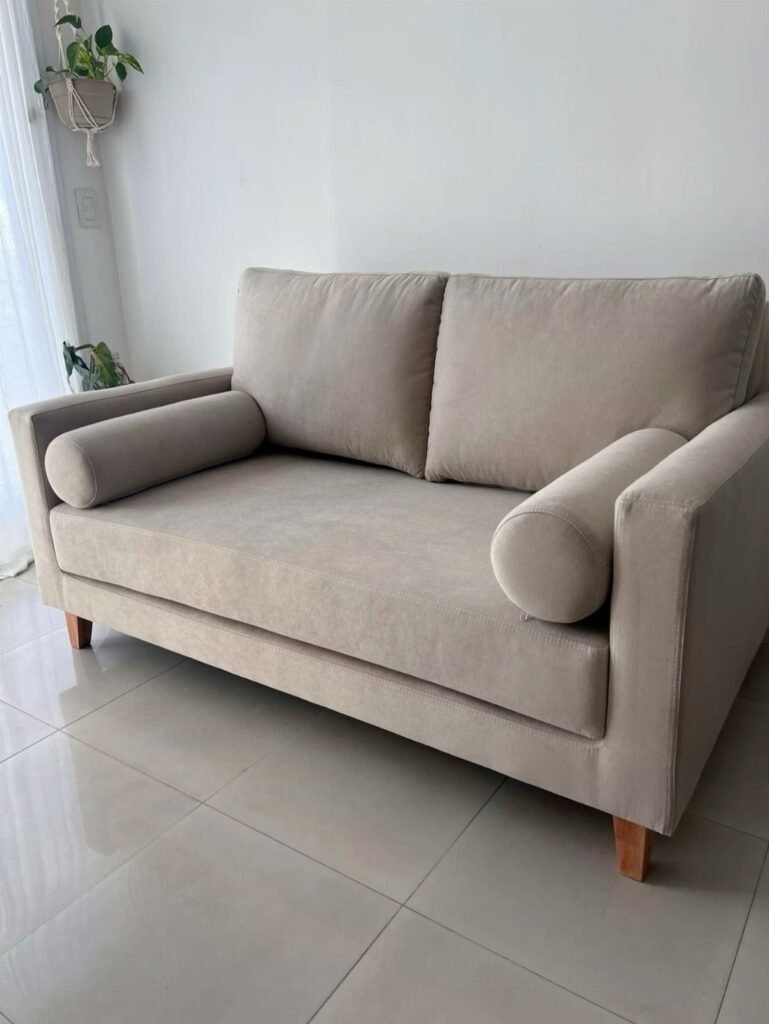
What suits a small living room depends on the jobs it has besides seating: a loveseat or a curved sofa only seats, while a sleeper sofa, a storage sofa with built-in drawers or an over-sofa Murphy bed also covers a guest bed, closet space or a whole bedroom.
1. Loveseats
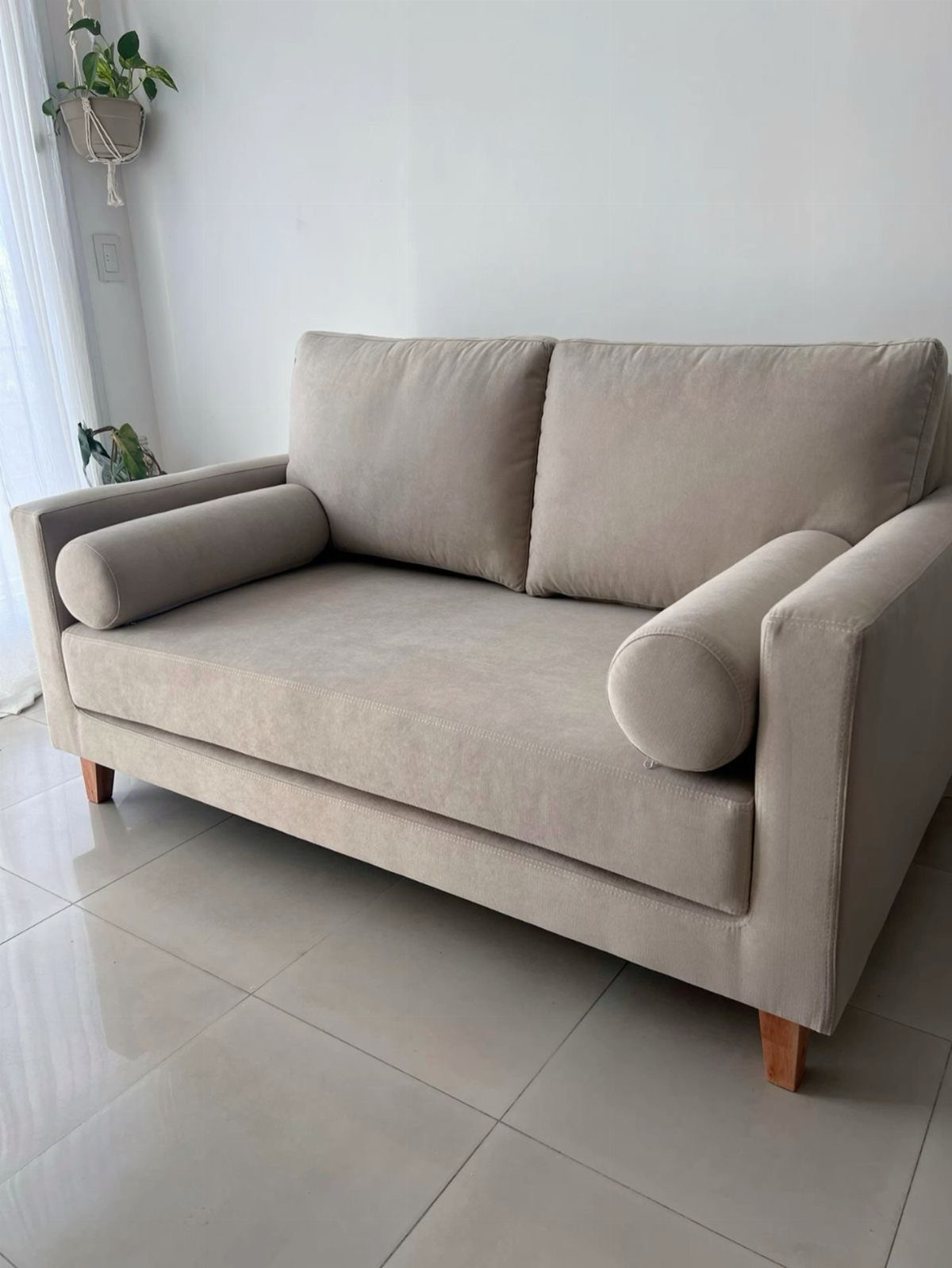
A loveseat in a pale fabric on slim wooden legs lets you see the floor underneath, which counts for a lot in a small living room.
When tile or wood runs visibly under the seat, the space reads larger than it does with a skirted sofa sitting flat on the floor.
Bolster pillows are a cheap way to add shape without adding bulk. I’d pick two in the same fabric as the seat so the piece stays calm against a white wall.
Get the width of your wall and the clear opening of your doorway on paper first, then shop. A loveseat only helps if it fits both.
There are 11 sectional configurations for every room size, plus options for two-seaters, three-seaters, and four-seaters, so you absolutely have options even if you’re not working with much square footage.
2. Sleeper Sofas
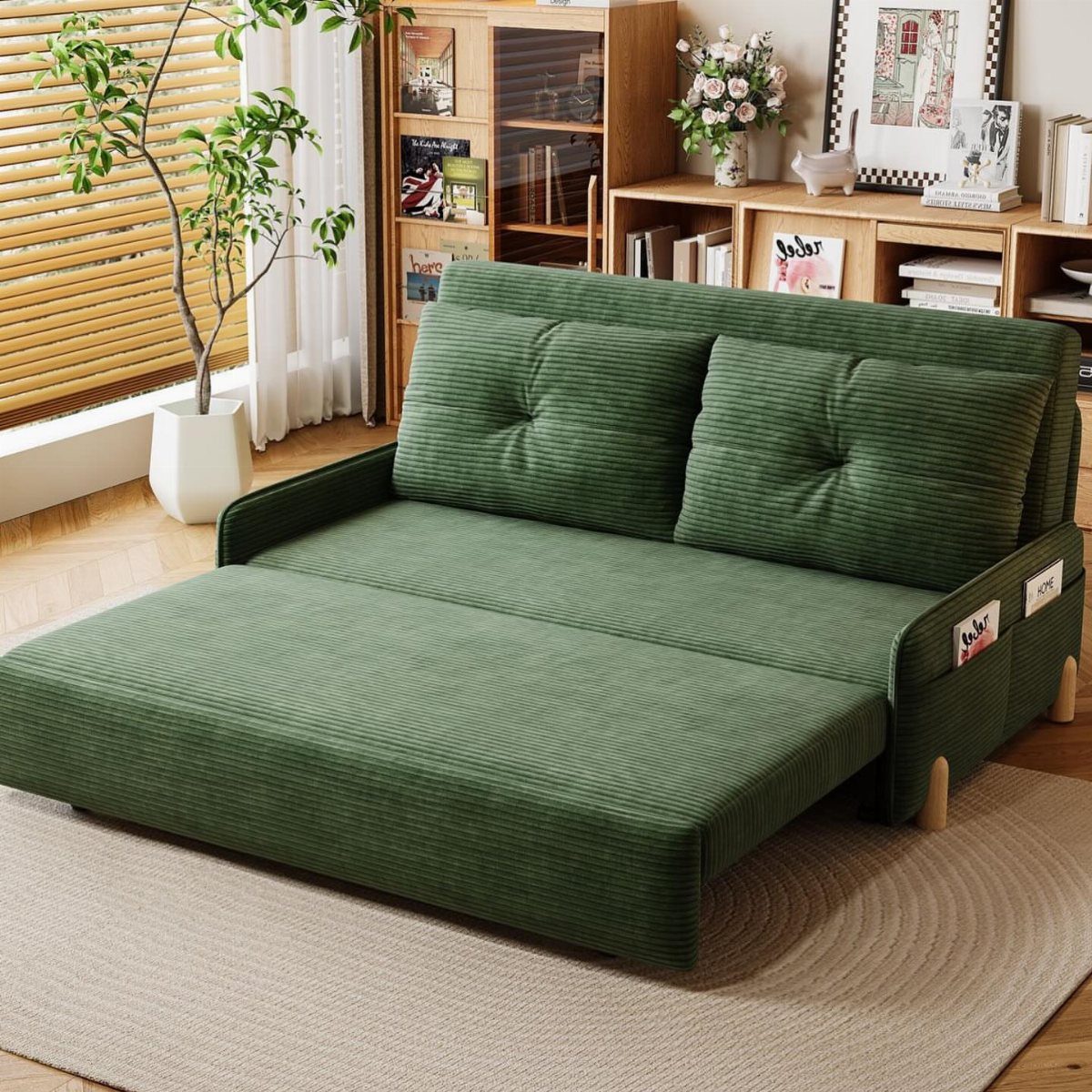
Corduroy gives a sleeper sofa a softer, homier look than the usual flat gray upholstery, and green is a color that hides the "guest bed" function well.
By day it’s a sofa; at night the back drops flat or the seat pulls out.
For a renter with one main room, this saves buying a separate bed for visitors. I’d test the unfolding in the store or read the return policy, because the mechanism is where cheap models fail.
Leave clear floor space at the foot, since the bed needs more room than the sofa does.
3. Low-Profile Accent Chairs
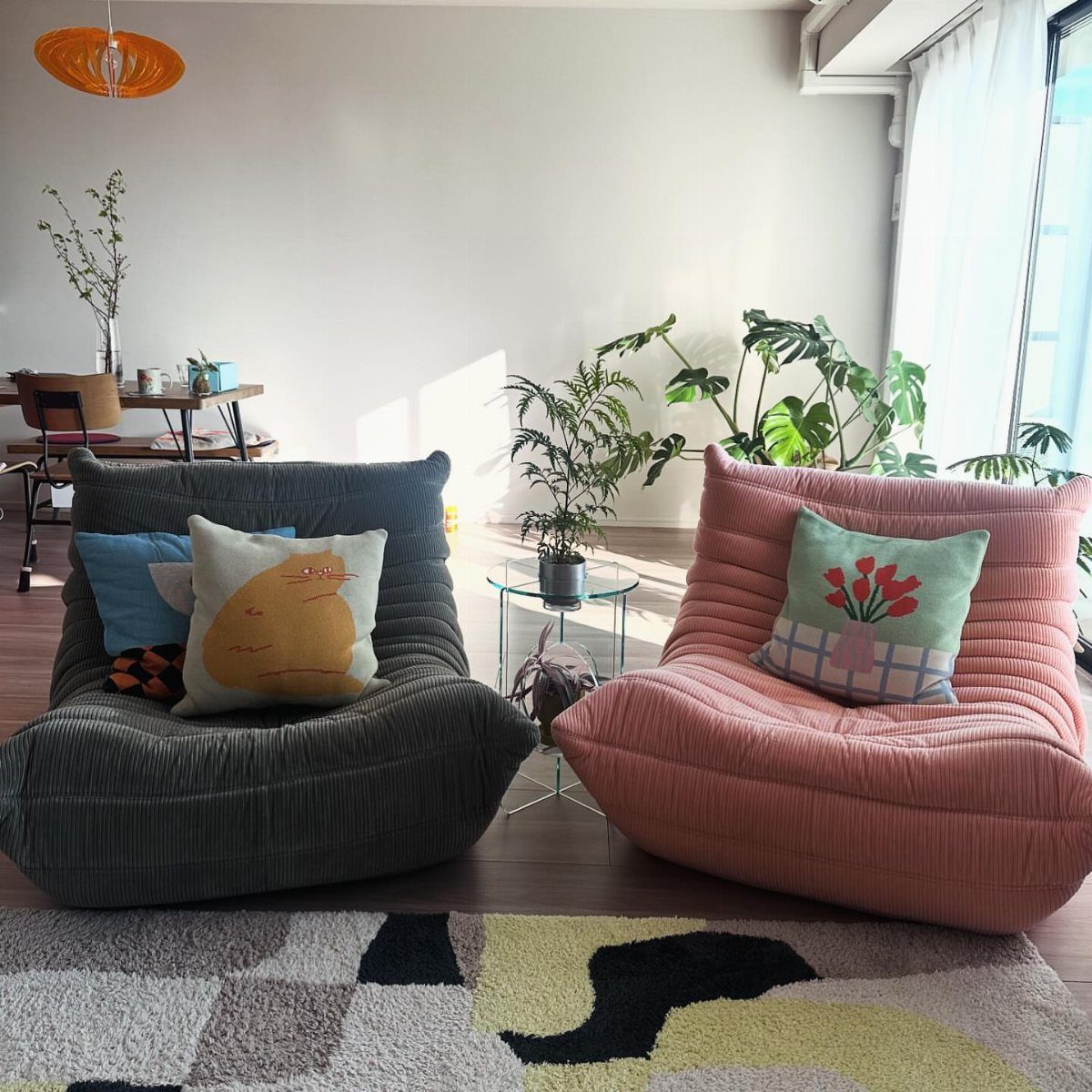
Two low ribbed lounge chairs can replace a sofa in a tight room.
Face the 2 chairs toward each other on a patterned rug, slide a compact side table or stool between them, and the pair becomes a conversation spot that leaves the walkway clear.
Mixing 2 colors, like gray and pink, keeps a matched pair from feeling stiff. I’d keep the pillows to two or three per chair so the seats stay usable.
Low backs also keep sightlines open, which helps a small space feel airy.
4. Compact Chaise Sectionals
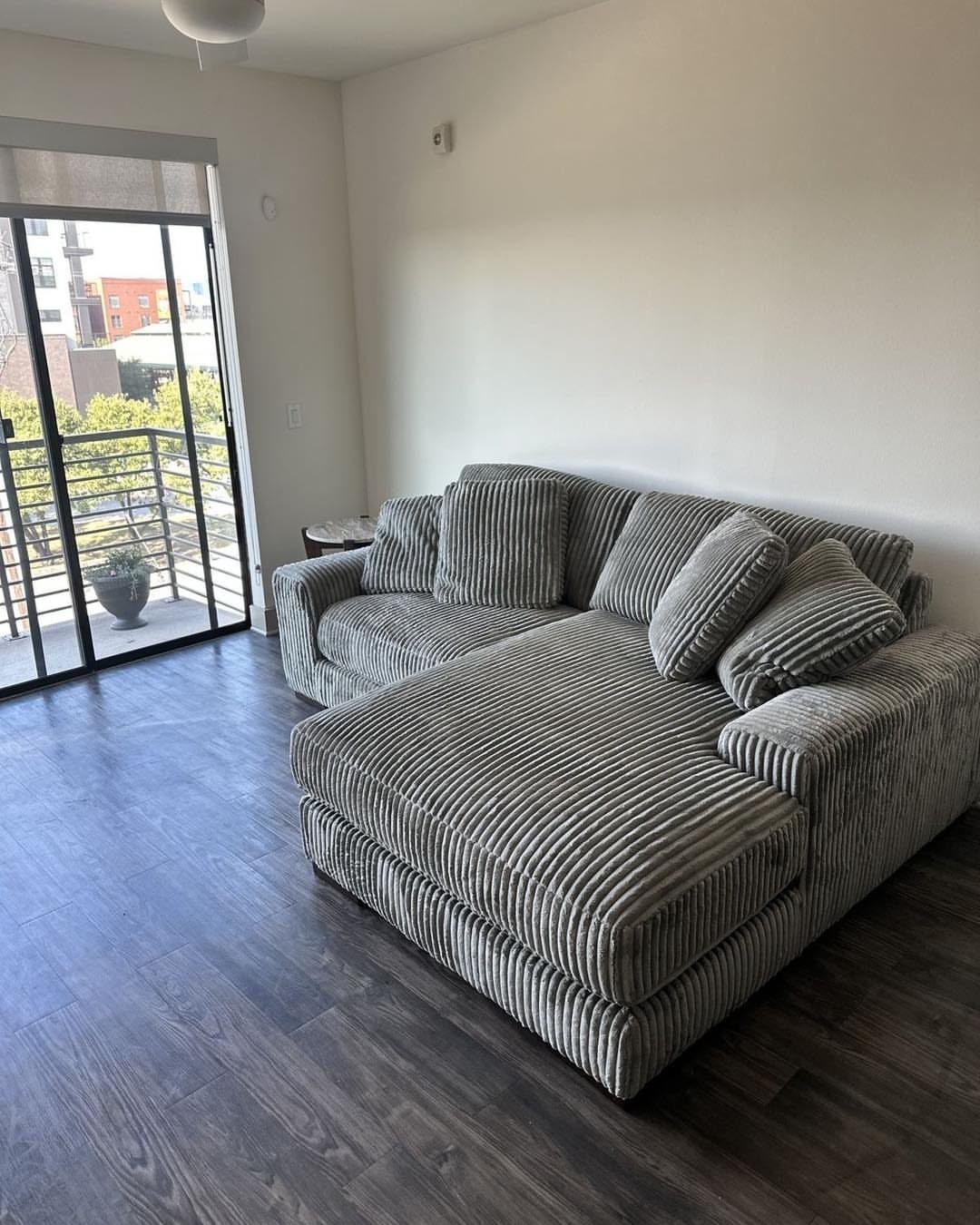
Pushing a corduroy sectional with a chaise against one wall, with the chaise end toward the balcony door, gives you a lounge seat and a sofa in one footprint.
The chaise replaces the ottoman and the extra chair you’d otherwise squeeze in.
Before ordering, check which side the chaise sits on, and leave room for the door to swing or slide fully open.
Corduroy adds texture, so I’d keep the walls and floor plain around it.
5. Built-In Storage Sofas
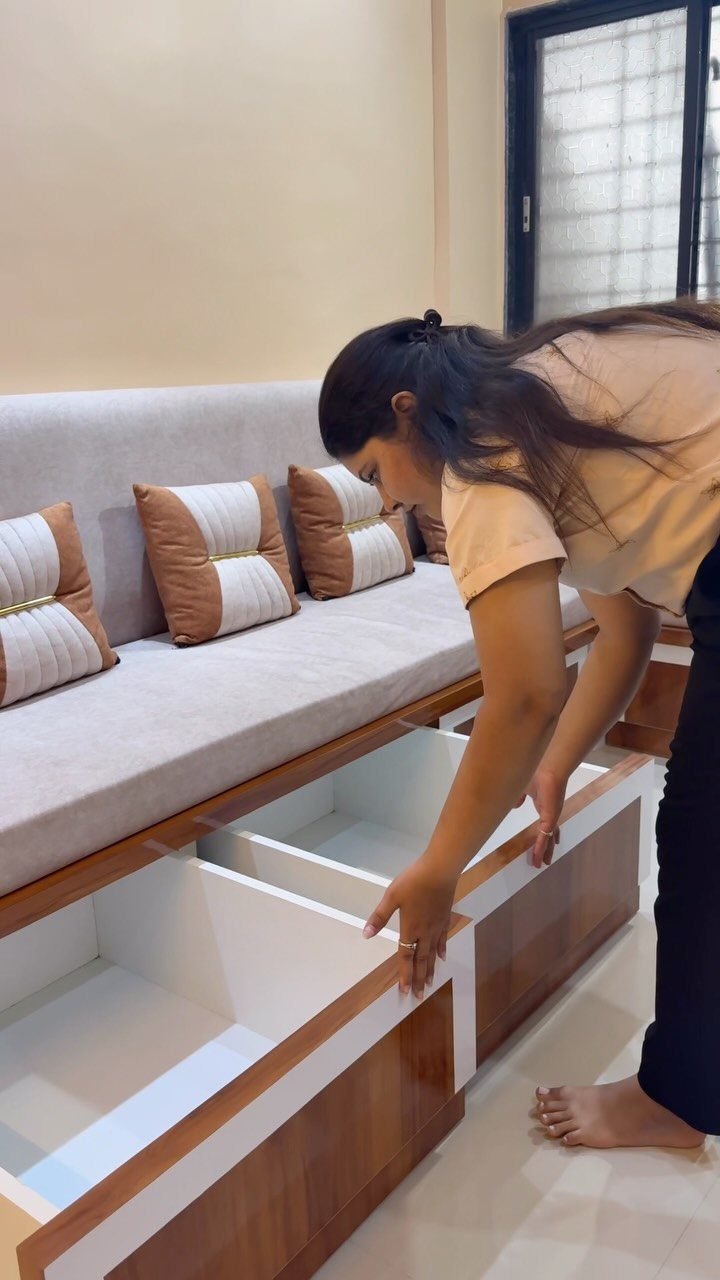
Drawers built into the base of a sofa give you storage where you’d normally have dead space. Blankets, board games and spare pillows disappear, and a light gray sofa keeps the look clean.
For a renter without closets to spare, this is the most practical piece on the list. I’d choose drawers that slide out fully, and check that you can open them without hitting the coffee table.
Brown pillows warm up the gray without adding clutter.
6. Over-Sofa Murphy Beds
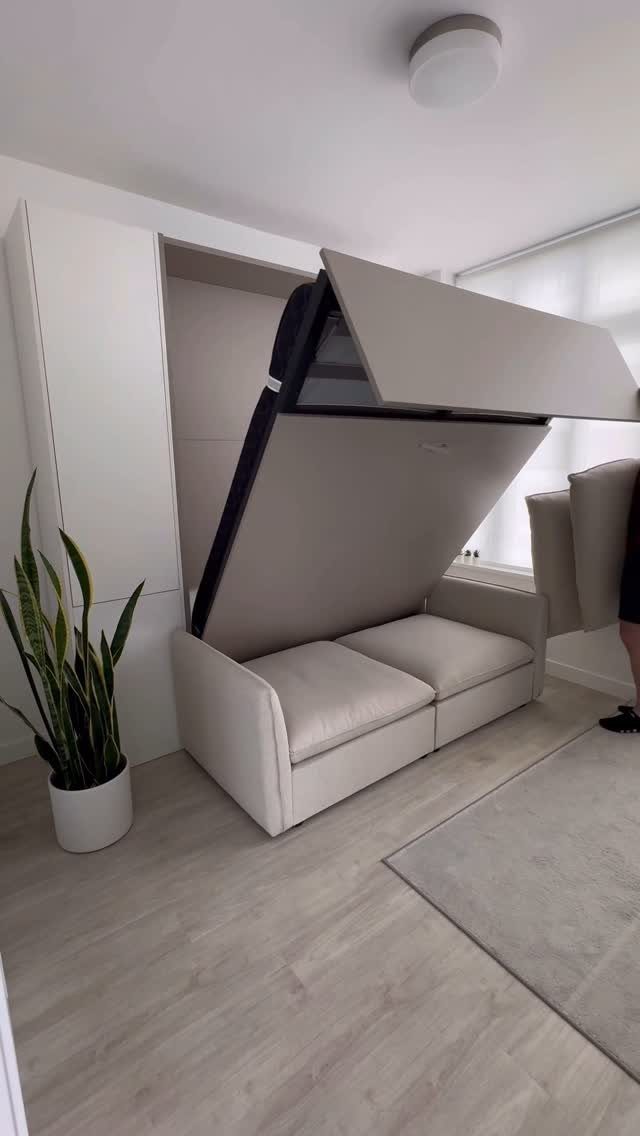
A Murphy bed folded over a small sofa gives you a bedroom and a living room in the same wall space. During the day the bed stays up, and the sofa underneath works as normal seating.
Match the finish of the bed to the sofa, as in a light beige, so the wall reads as one piece.
Pulling the bed down needs clear floor in front, so keep the rug and any coffee table light enough to move.
This costs more than a plain sofa, but it replaces a bed frame too.
7. Curved Apartment Sofas
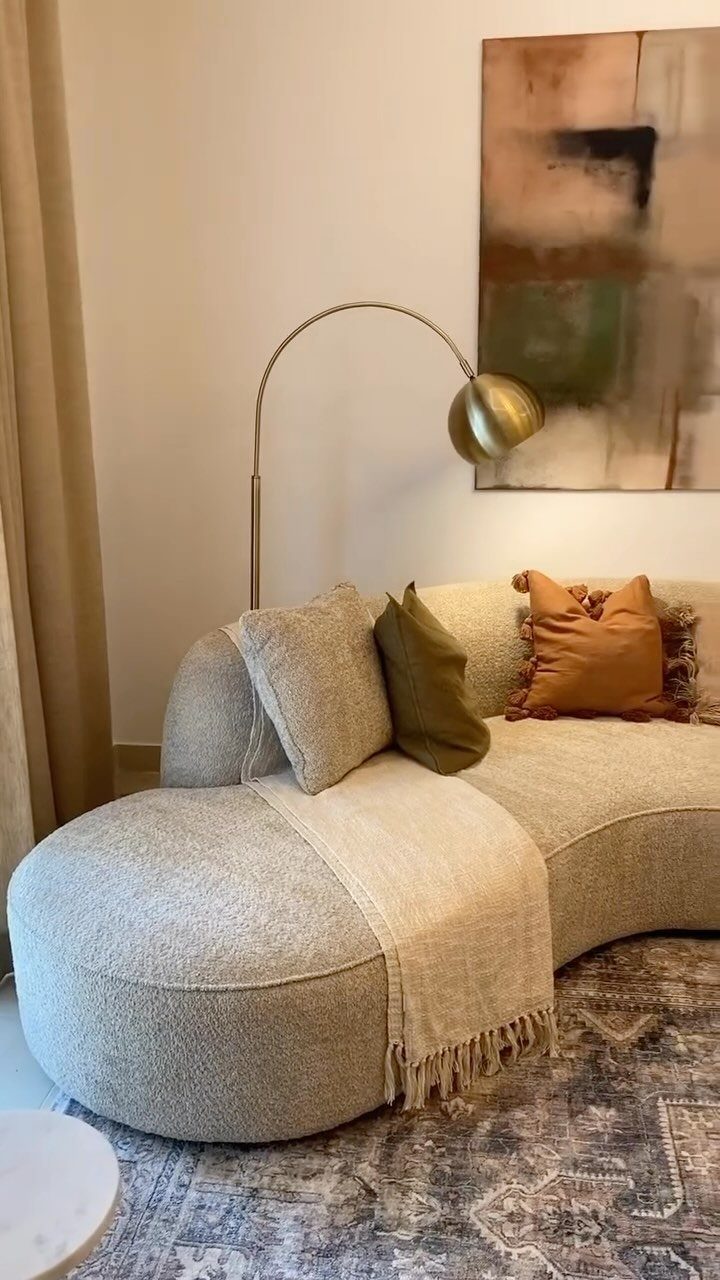
A curved sofa has no sharp front corners, so it fits into a tight apartment living room without the hard edges that make a straight sofa feel blocky.
The soft line also leaves more walking space around it, which helps in a living room where every foot counts.
An arched floor lamp suits the shape well, since it reaches over the seat and needs no side table.
I’d keep the sofa a light fabric and put the color in the pillows, with 3 pillows and a throw so the seat stays usable.
Measure the wall first, because a curve takes more depth at its middle than a straight sofa of the same width.
Measuring Before Buying
A 25-foot locking tape beats the stubby 8-foot kind, which folds under its own weight past 5 feet, right where the numbers matter.
Older buildings often leave only 28–30 inches at that spot, even when the listing says the opening is 32.
Where the hallway turns, a 72-inch sofa needs roughly 34 inches of clearance so it can pivot diagonally.
On a higher floor, measure the elevator’s interior depth, not just its door, and check the stairwell too.
Walk the edges of the tape, then sit in the spots where you’d actually settle in. Give it 10 minutes and you’ll know whether the piece is too big.
Add 2 inches everywhere, since packaging adds bulk.
Common Mistakes
Checking the room and skipping the route in is the first mistake I’d flag. Even a 72-inch-wide sofa that’s 40 inches deep can wedge diagonally in that elevator.
Depth hurts more than width. A 78-inch sofa that’s 40 inches deep covers about 3,120 square inches of floor, while an 84-inch sofa that’s 34 inches deep covers about 2,856, so the shorter one can actually eat more of the room.
In rooms of 11 by 13 feet or less, pick a sofa under 36 inches deep.
Dark upholstery makes a compact space feel smaller.
Cream, oatmeal, terracotta and warm gray reflect more light. Put a dark tone on the rug or one accent chair instead.
Look at the legs too: showing 3 inches of floor beneath the frame lets a sofa read lighter. A modular sofa also gets through tight doors in pieces.
Frequently Asked Questions
What are the best sofas for a small room?
For a small room, I’d pick a sofa under 75 inches wide, or a modular set that arrives in separate pieces and rearranges as the space changes.
A loveseat on slim legs, a curved sofa or a chaise sectional all work too. Keep the depth under 36 inches in a room of 11 by 13 feet or smaller, because depth eats floor faster than width does.
What are some good furniture ideas for an apartment?
Pieces that do 2 jobs fit apartments best. Two low accent chairs facing each other can also stand in for a sofa in a tight room.
How do I measure before buying apartment living room furniture?
Measure the route as well as the room.
Use a 25-foot locking tape to check the door opening, the hallway turns, the elevator’s interior depth and the stairwell. Pad every measurement by 2 inches to allow for the box and wrapping.
Is a 15×15 living room small?
A 15 by 15 room is on the small side for large furniture, but it gives you more room than the 11 by 13 feet where I’d cap sofa depth at 36 inches. Heavy, dark pieces shrink a room fast, so I’d leave them out.