Ideas here run from a few-dollar swap like a cozy throw or a pair of sheer curtains to a full wall of dark paint, so what decides your pick is whether you rent or own and how much of the room you can change.
If the walls and floors are off limits, start with what you can move or remove: a shag rug, lamps with 2700K bulbs, a tufted ottoman.
If you can paint, a dark hue on one wall changes the room more than any single piece of furniture.
1. Shag Rugs
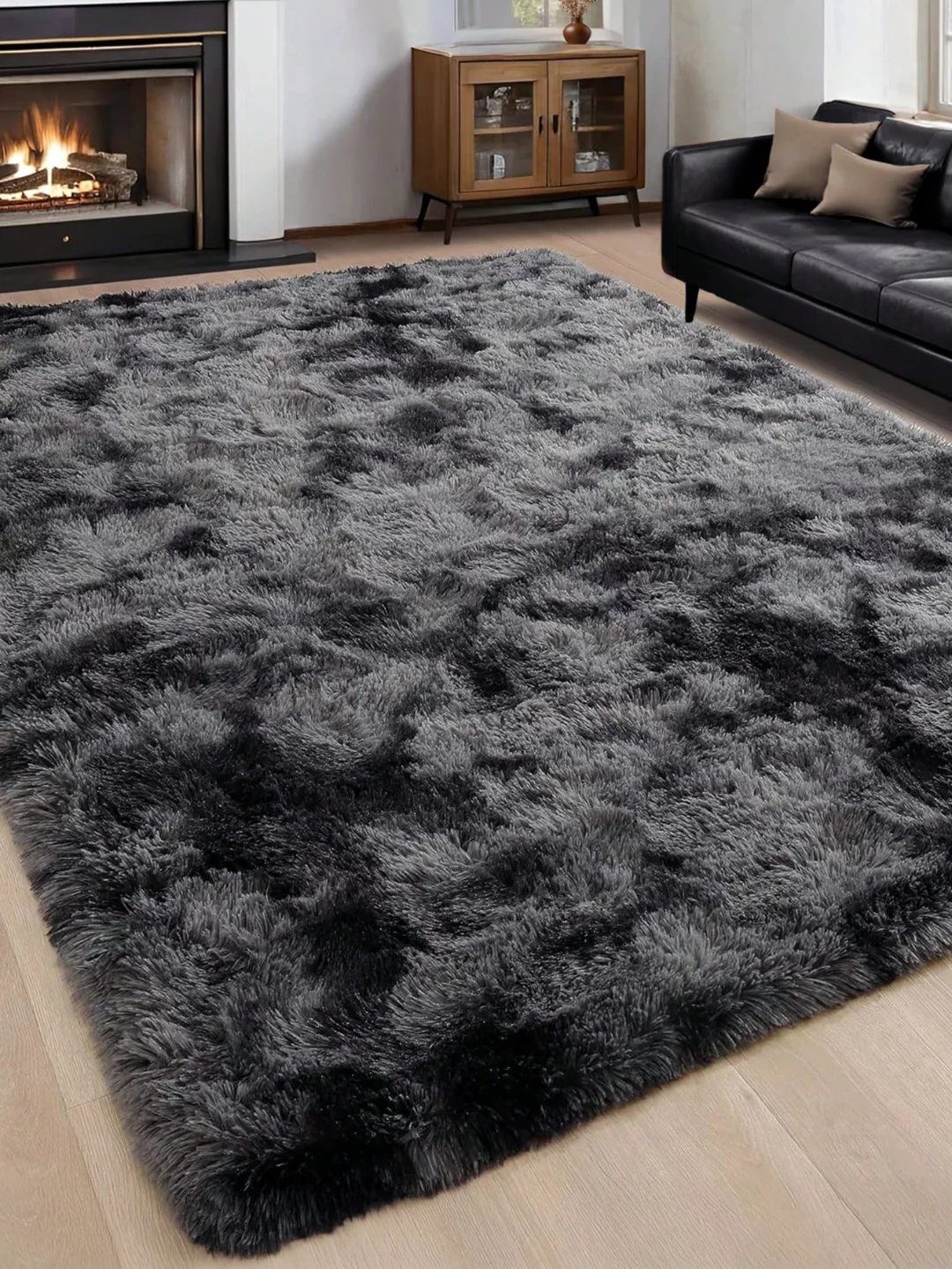
A shag rug does 2 jobs on a hard floor: it warms bare feet and it soaks up sound that would otherwise bounce off wood.
In a room with a fireplace and a leather sofa, that softness balances all the slick surfaces.
Pick a rug big enough that at least the front legs of the sofa rest on it, so the seating and the shag read as one zone.
A grey shag keeps the look calm, and I like it against light wood because the texture does the work without adding another color.
Budget is the limit here: bigger rugs cost more, so measure before you shop.
2. Modern Cozy Living Room
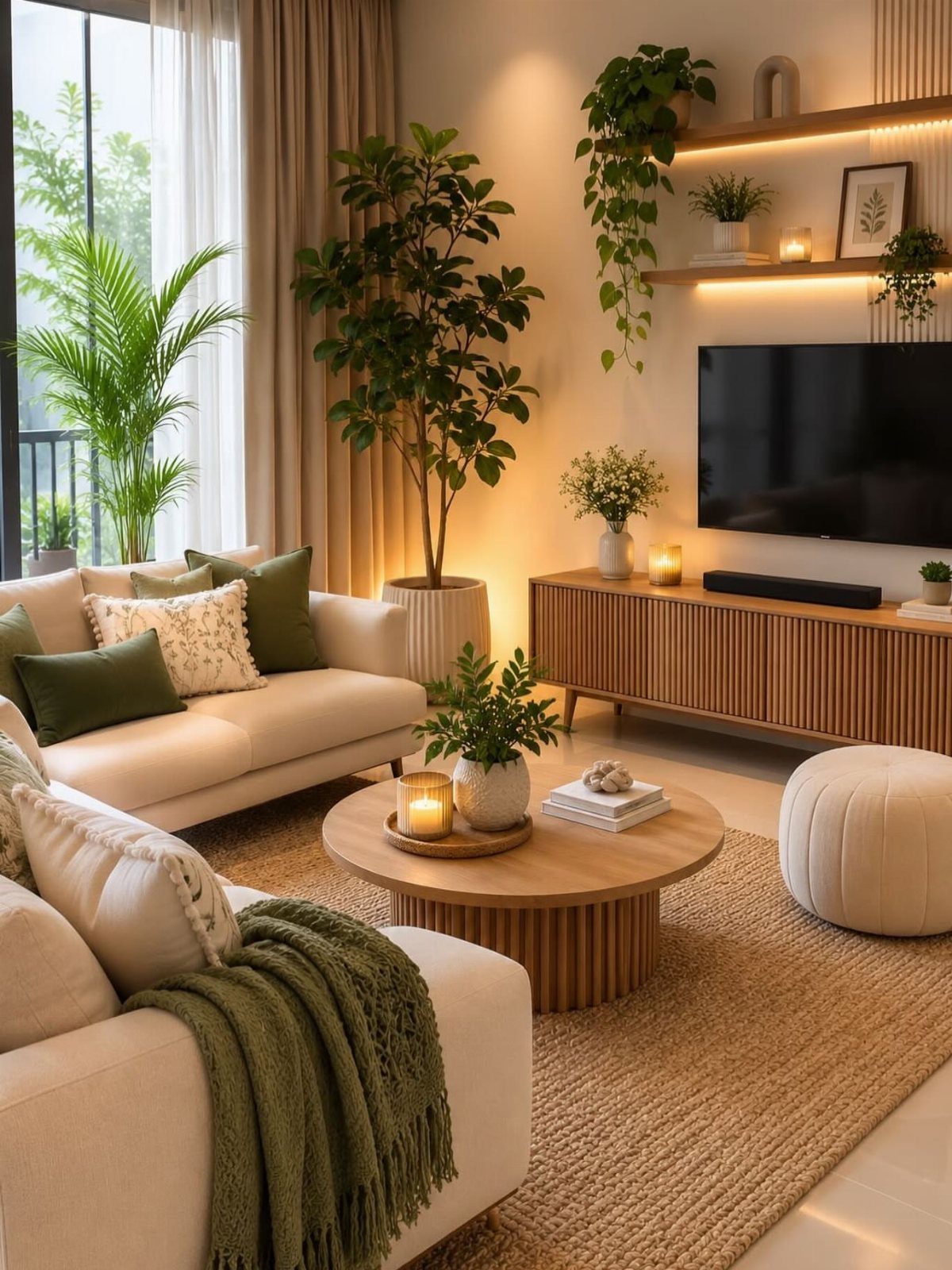
Minimalism and coziness only clash when the room goes cold, so keep the furniture count low and let the materials carry the warmth.
A cream sofa, a round wood coffee table and a slatted console are enough to fill a room, and the rounded and linear shapes keep a small set from looking sparse.
I’d pick one wood tone and repeat it, then add plants for color instead of more decor. Warm bulbs matter as much as the sofa.
Fewer pieces also means each one can be a little better made, and that is a fair trade when the total still has to stay small.
"A cozy living room has layers of drapery, art or photos hanging, soft seating, and layers of textures," says Lauren Sweet-Schuler.
3. Floor Lamps and Table Lamps
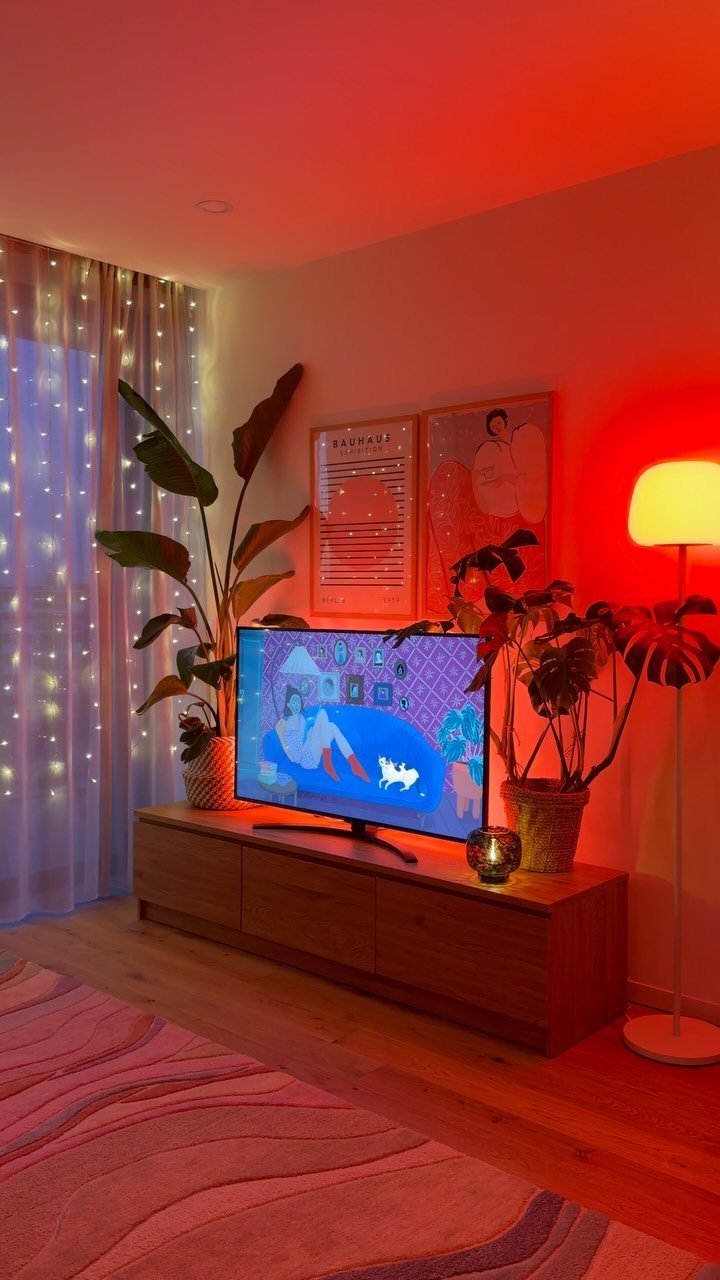
Lamps at different heights do more for a room’s mood than any overhead fixture.
A tall floor lamp beside a console and a small table lamp on a shelf give you 2 pools of warm light, so the ceiling light can stay off at night.
Choose warm-toned bulbs; a cool one flattens the whole effect. A colored lamp, like a red one, also works as a decor piece, not just a light source.
Tuck cords behind furniture so the setup stays tidy.
4. Deep Cloud Sofas and Chairs
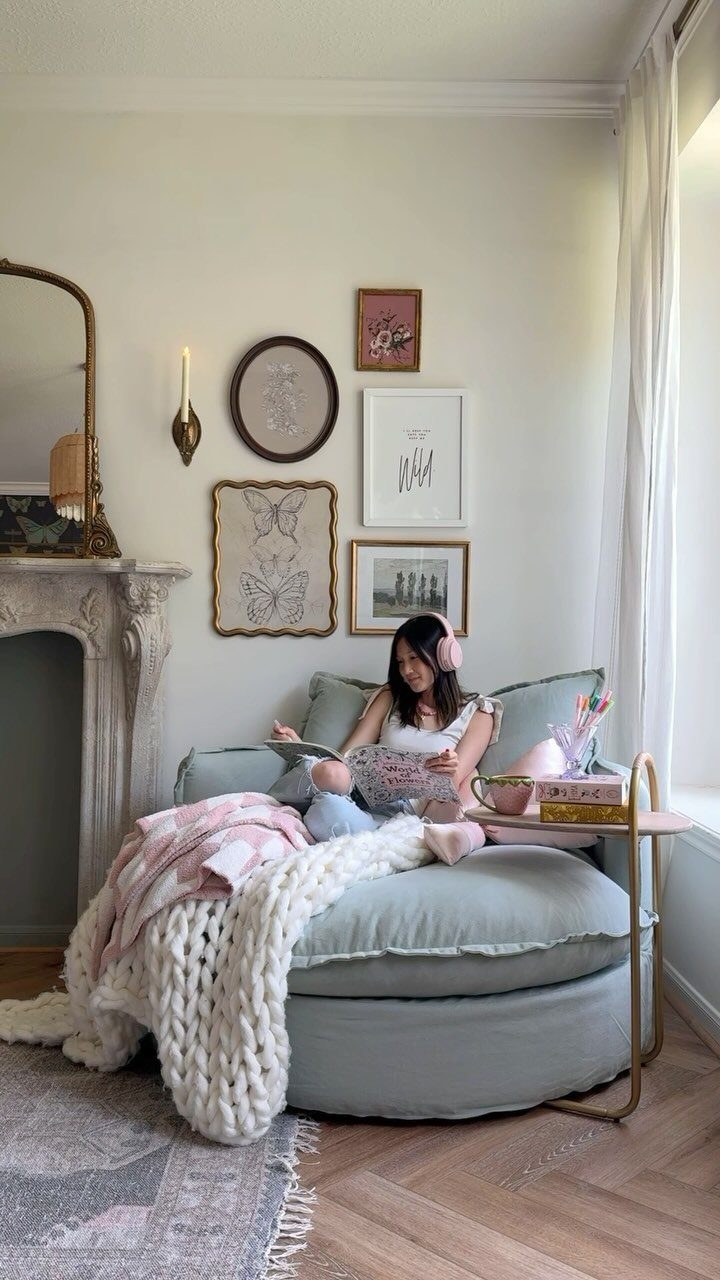
Depth is what makes a sofa or chair feel like a cocoon. An oversized, deep seat lets you pull your legs up and settle in with a book, which a standard narrow seat never allows.
Pair it with a chunky knit blanket over one arm so it’s ready when you sit down.
A soft light blue keeps a big piece from overwhelming the room, though a large chair needs real floor space, so measure the spot first.
5. Natural Materials and Earthy Tones
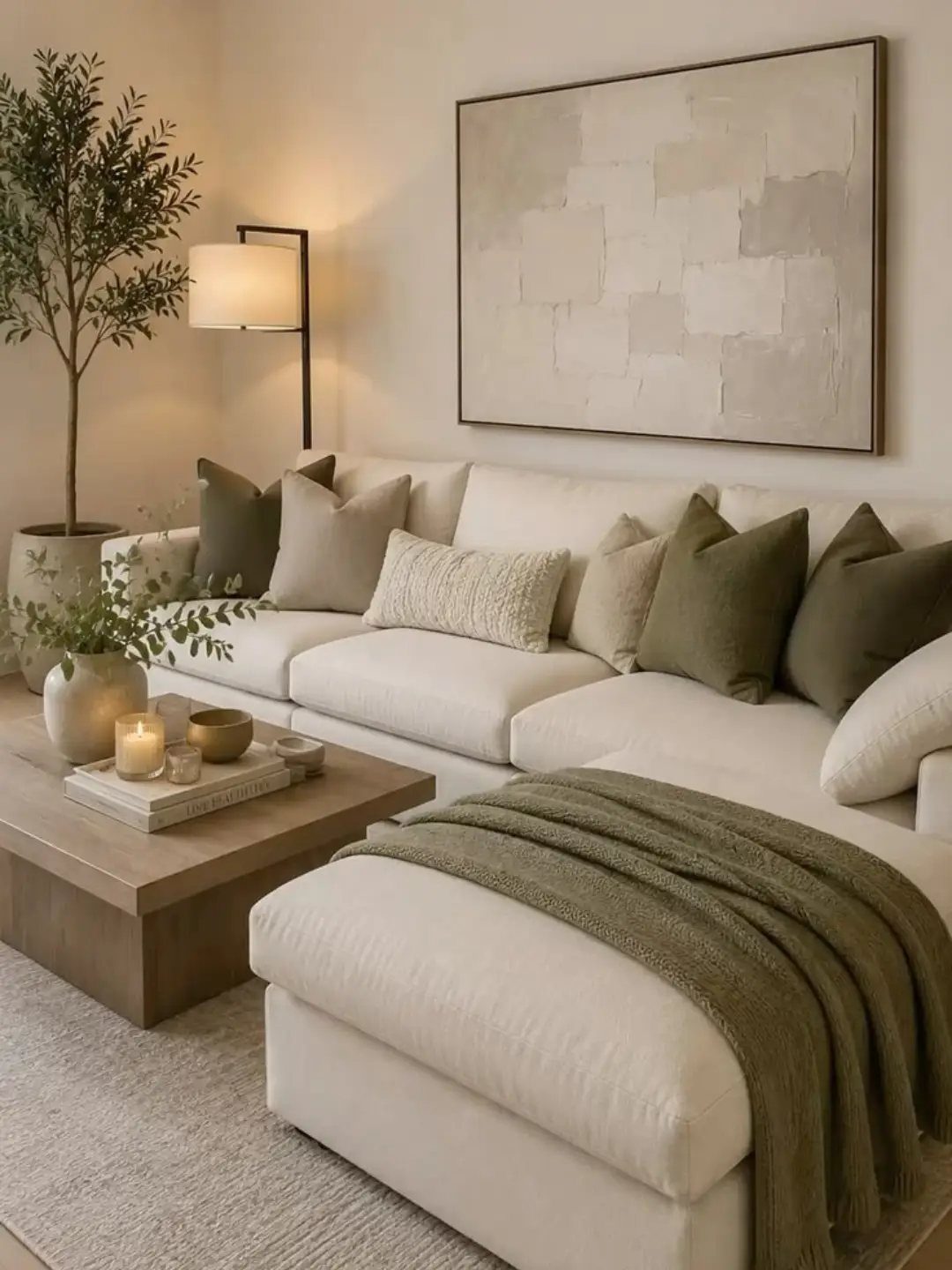
Olive pillows on a white sectional is the easiest way I know to bring earth tones into a room without repainting anything.
Buy the cheap parts first: pillow covers and a throw cost far less than a sofa.
Keep the green in two or three items so it reads as an accent. Natural wood and living plants do the rest.
6. Include Cozy Throws
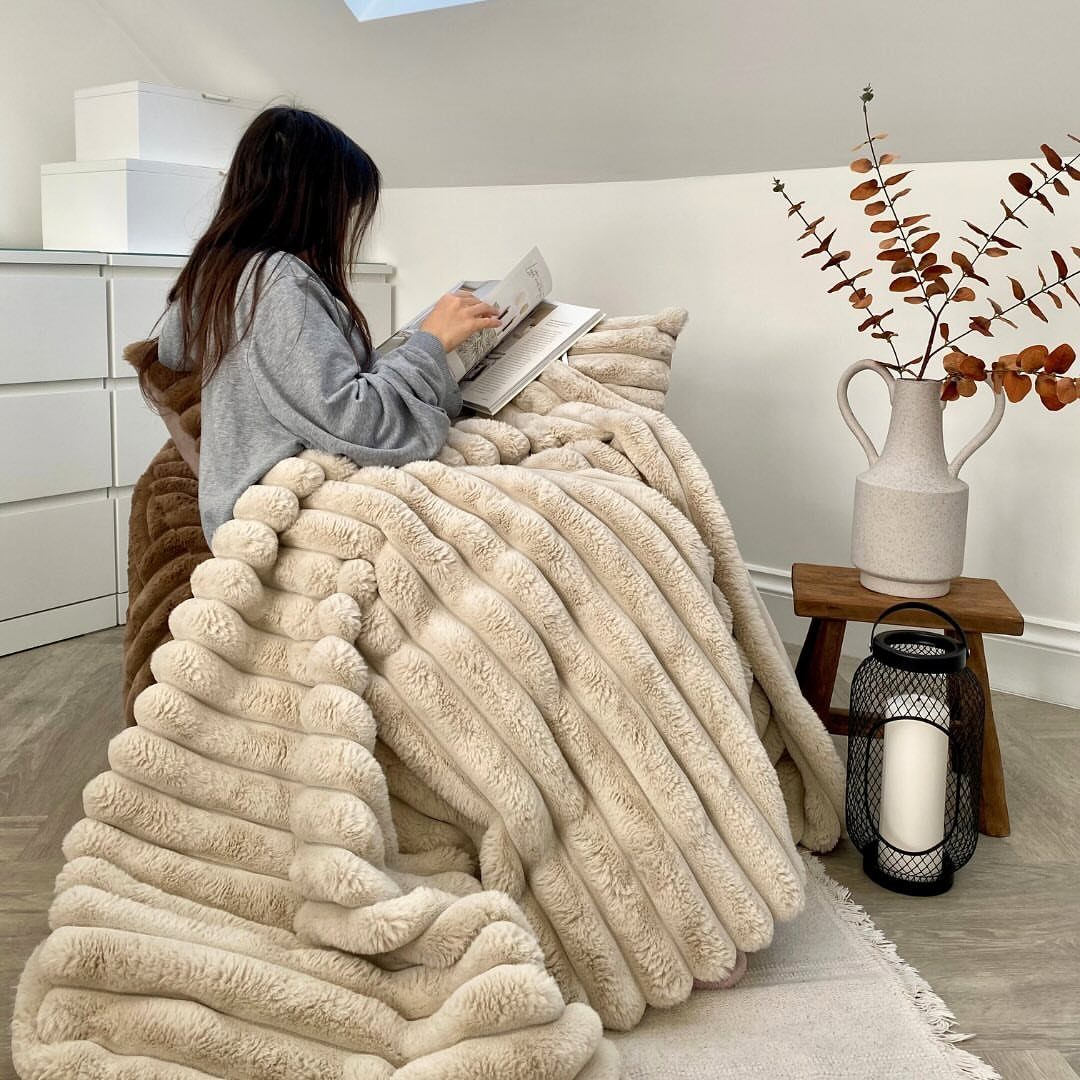
A thick throw is only cozy if you can reach it, so keep one within arm’s length of your favorite seat. A cream ribbed knit looks good draped over a sofa arm and stays neutral with almost any upholstery.
Pick a chunky, textured weave over a thin one; the texture adds warmth to the room even when nobody is wrapped in it.
A basket or ladder by the sofa holds extras without clutter. Throws are one of the cheapest ways to add comfort.
7. Dark Hues
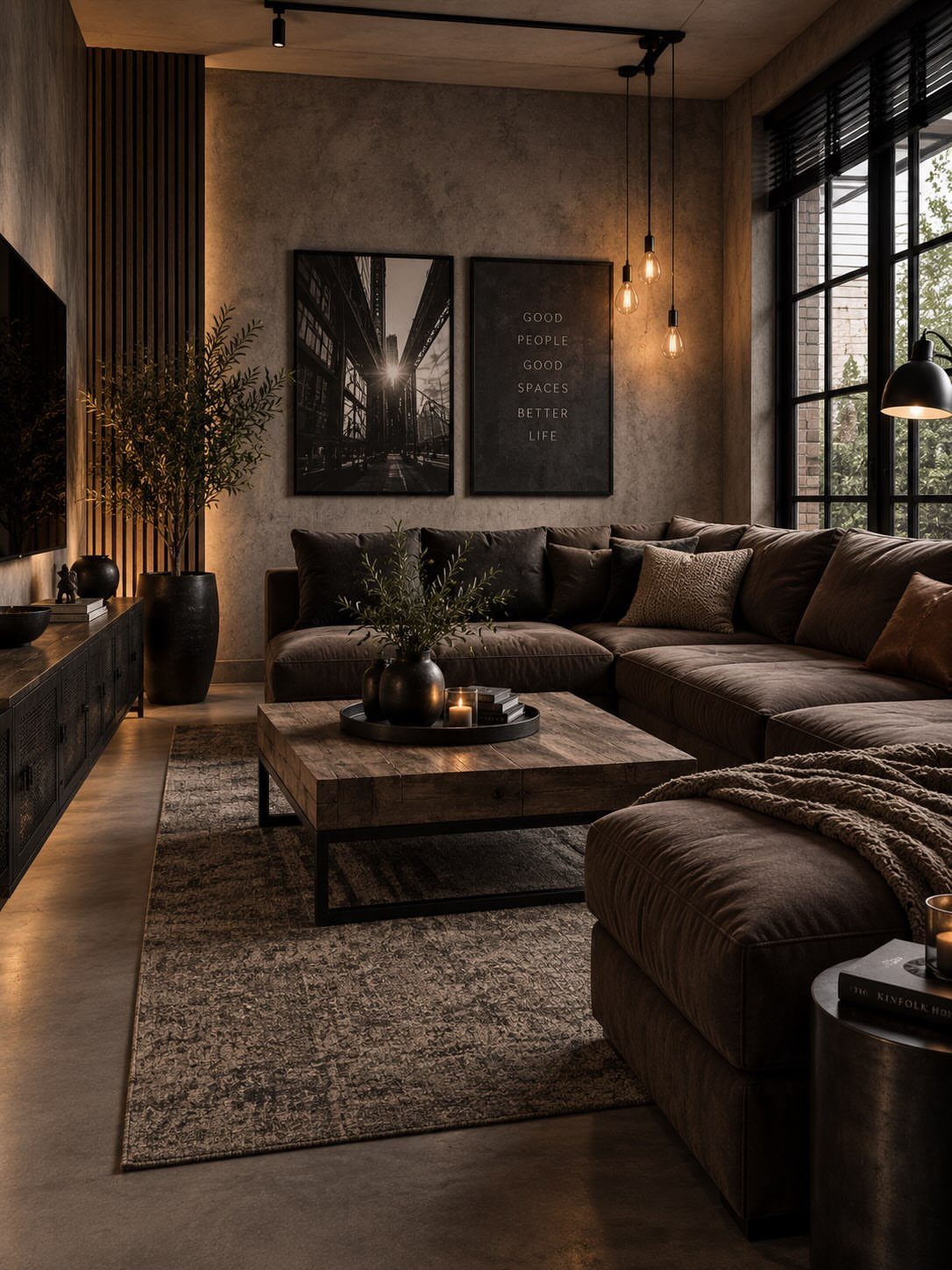
Dark grey walls with a brown sectional make a room feel closed in around you, in a good way. The dark backdrop pulls the edges of the room in, and the sofa becomes the warm center.
Keep the lighting low and amber, since dark walls swallow a cold bulb. A wooden coffee table adds a lighter tone so the room doesn’t turn heavy.
Paint is the cheapest way to try a dark color, and a quart or a gallon costs far less than replacing a sofa.
8. Add a Focal Point
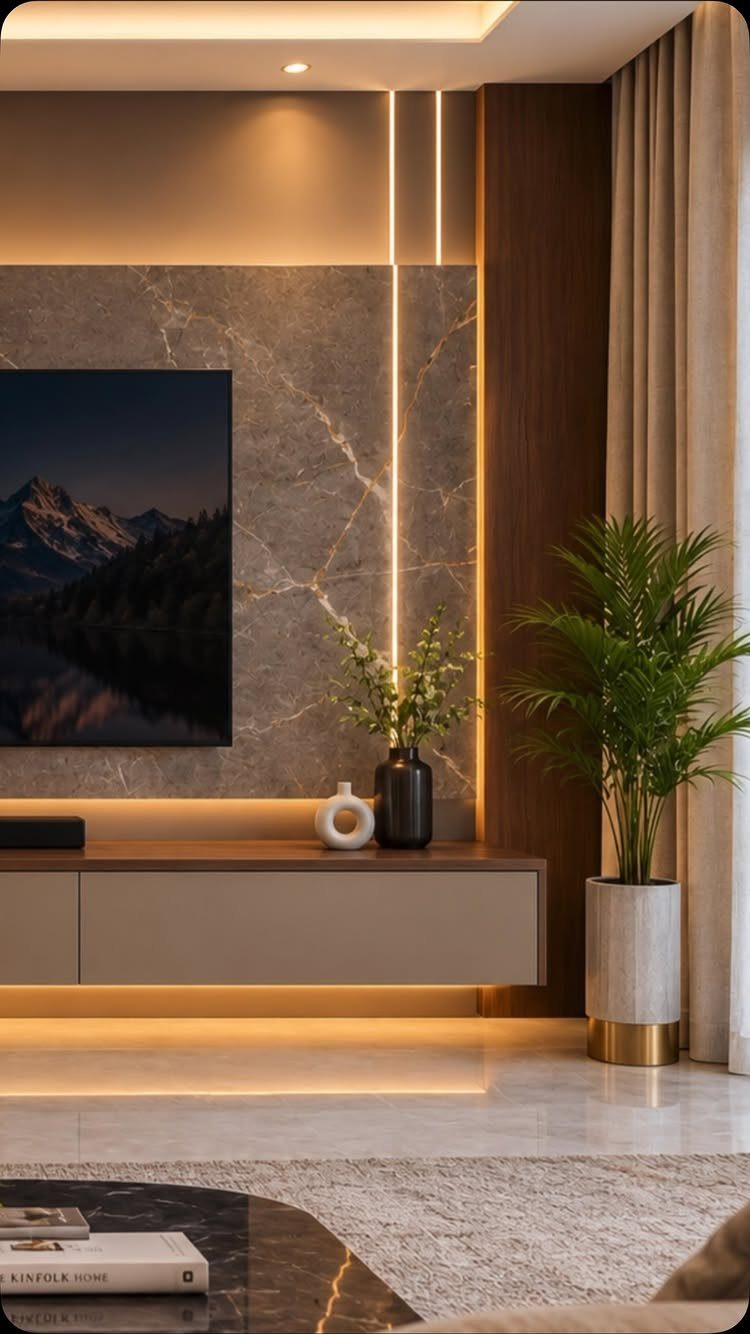
A TV wall with backlit marble gives the eye one place to land, and everything else in the room can stay quiet around it. That is what a focal point does: it lets you cut clutter elsewhere.
A floating console under the screen keeps the floor open, which helps a smaller room. A potted palm beside it softens the stone.
If marble is out of budget, a single painted or paneled wall behind the TV can do the same job, and I’d light it from behind either way.
9. Storybook Cottage Charm
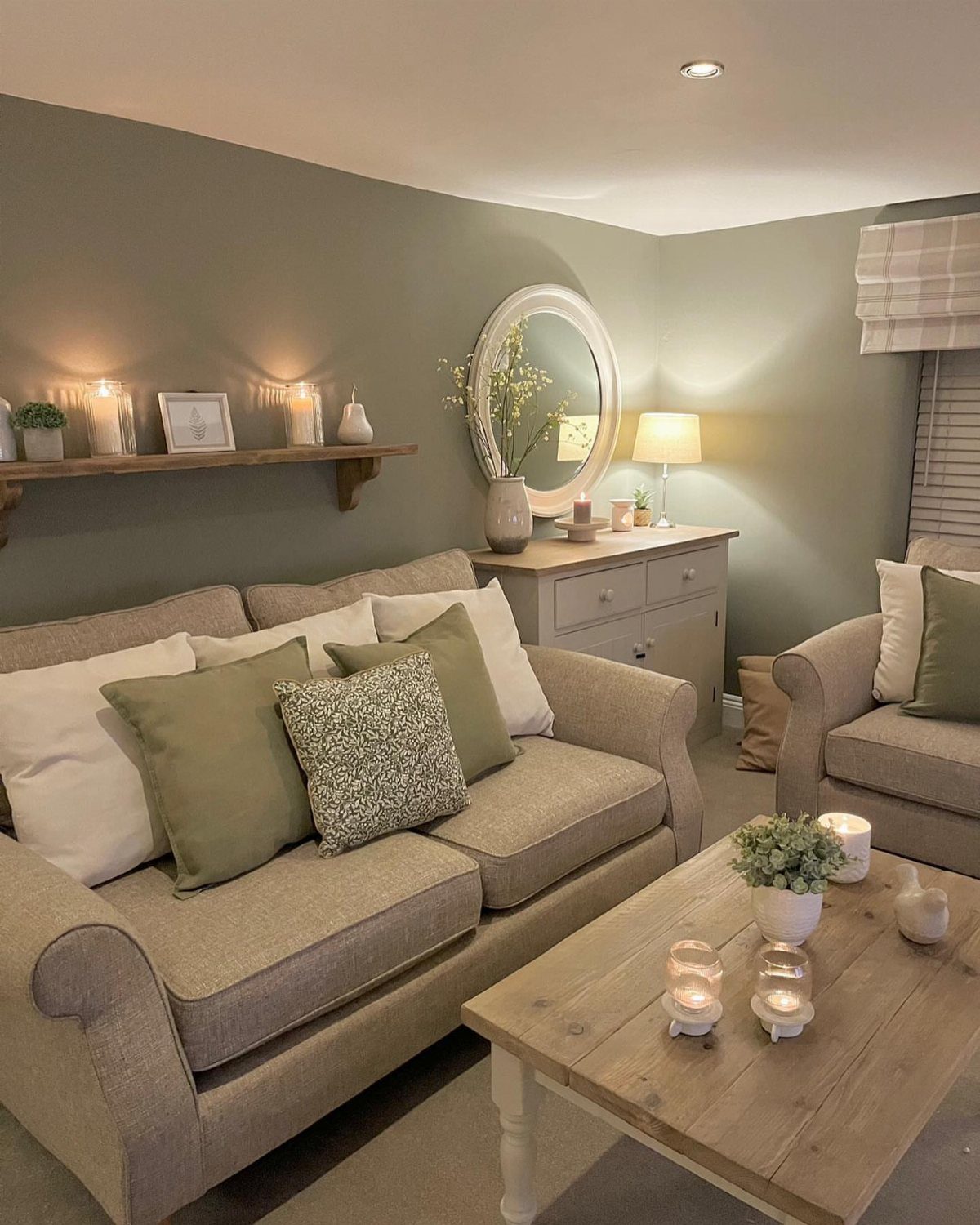
Sage green walls, a vintage dresser and an oval mirror give a room cottage charm without a single frilly piece. Soft, old-looking furniture does most of the work.
Green pillows on a beige sofa tie the seating to the walls, and a wooden coffee table adds another worn, warm tone.
I’d hunt for the dresser secondhand, since a piece with some age fits this look better than a new one.
Keep the lamps soft so the walls glow instead of glare.
10. Add Greenery and Plants
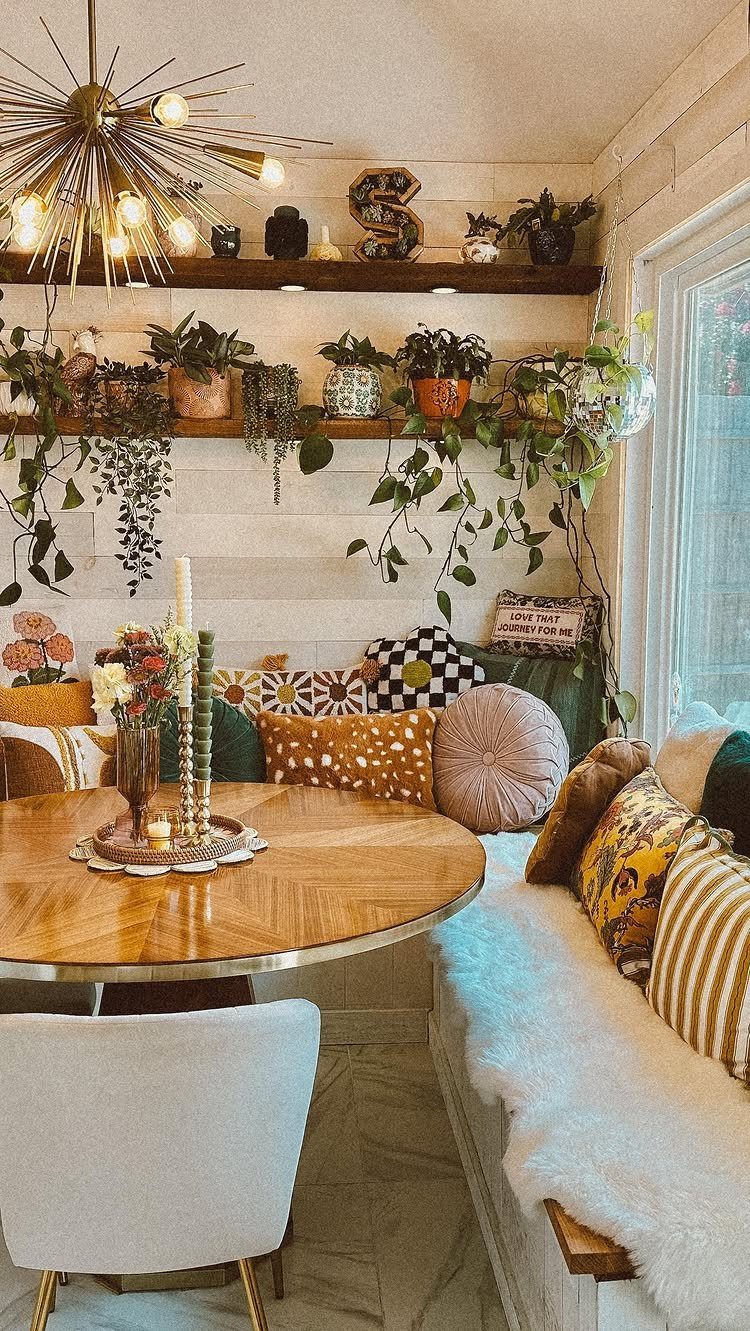
Wall space is free real estate in a small home.
Leaves balance a soft, heavy look like a plush bench piled with pillows and a faux fur throw, so one trailing pothos or a tall snake plant nearby keeps the corner from feeling like a pile of fabric.
I’d mix trailing plants with upright ones so the shelves look layered, not lined up.
Start with two or three pots and add as you learn what your light can handle.
11. Eclectic Elements
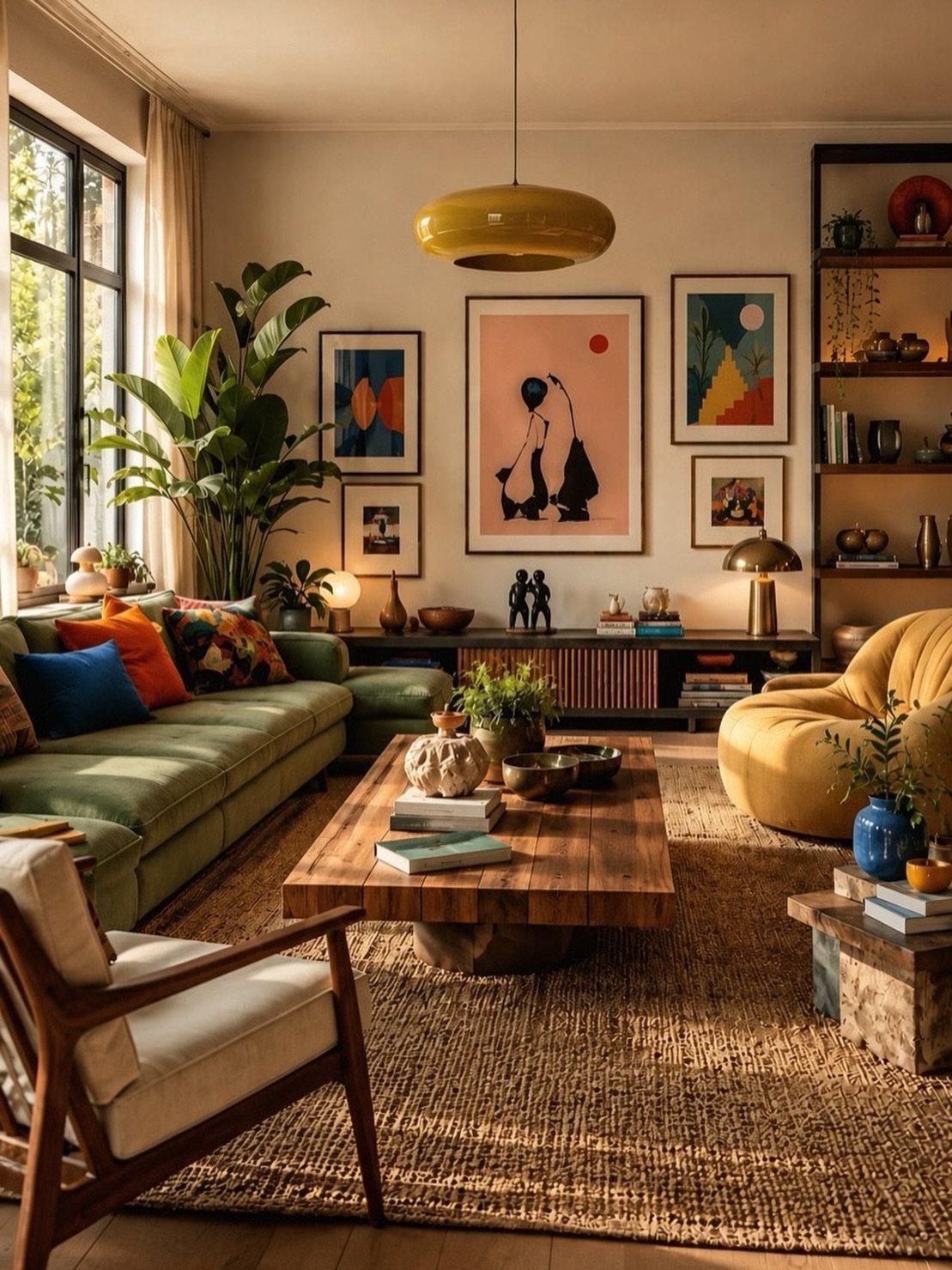
A green sofa across from a yellow armchair breaks the usual matching-set rule, and it works because both colors are strong and neither one backs down. A jute rug underneath keeps the mix grounded.
Repeat one color somewhere else so the room feels planned: the yellow pendant light does that here. I’d keep the wood tone consistent, then let art in different sizes and styles fill the walls.
Limit yourself to 2 bold colors, or it tips into chaos.
12. Monochromatic Palette
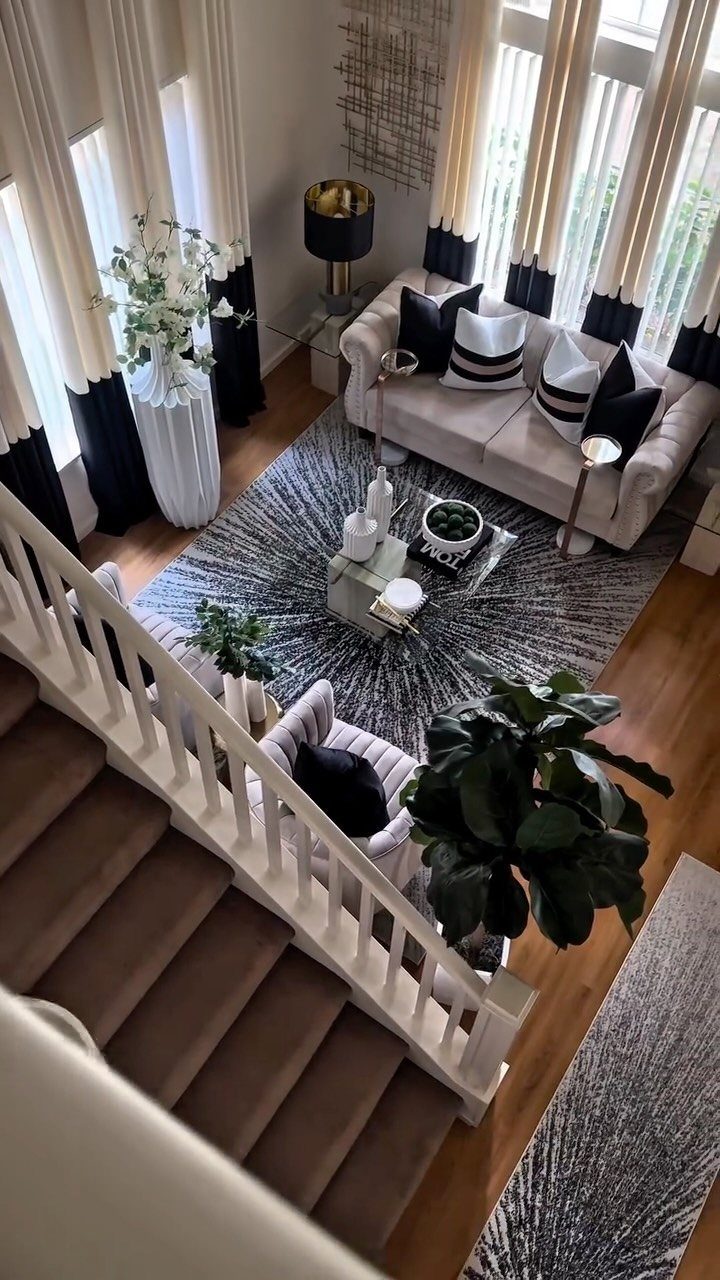
A monochrome room lives on contrast between shades, so white, black and grey need different textures to avoid flatness.
On a beige sofa, black and white pillows bring in pattern, and a gray patterned rug underneath ties the mix together; keep the pillow patterns in different scales so they don’t compete.
Plants are the one color I’d allow, since green warms a palette that could otherwise feel stark. Keep the count of patterns to two or three, and vary their scale.
Pillow covers are the cheapest piece to swap if the balance feels off.
13. Reading Nook with a Comfortable Chair
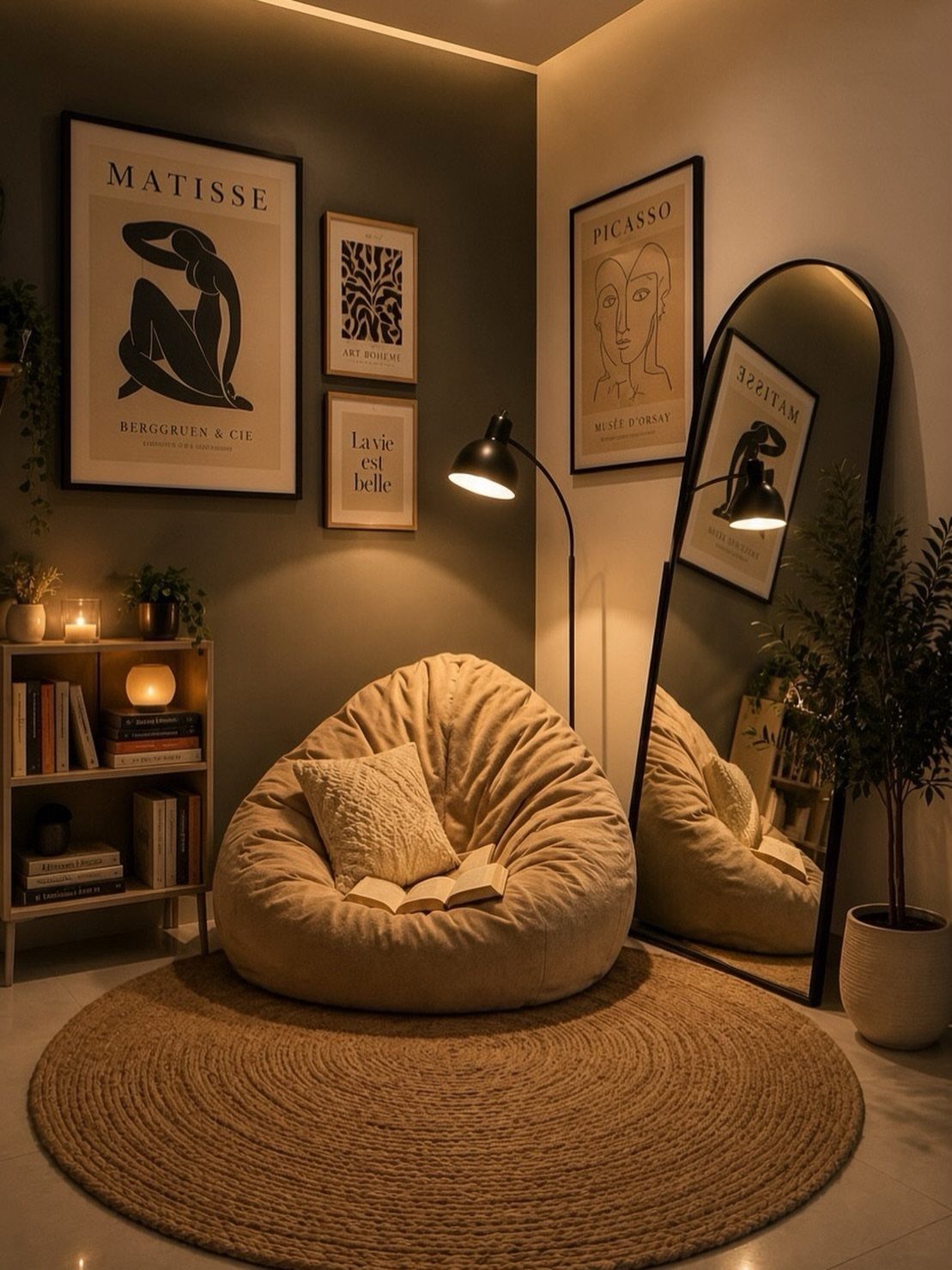
A reading nook needs a floor spot that invites you to stay, and a bean bag on a round rug marks one out without any construction.
The jute rug defines the corner, so the chair reads as a destination instead of a stray seat.
Put a floor lamp right beside it so you don’t have to move to read, and keep a bookshelf within reach. Bean bags cost far less than most armchairs, which suits a tight budget.
14. Vintage Furniture
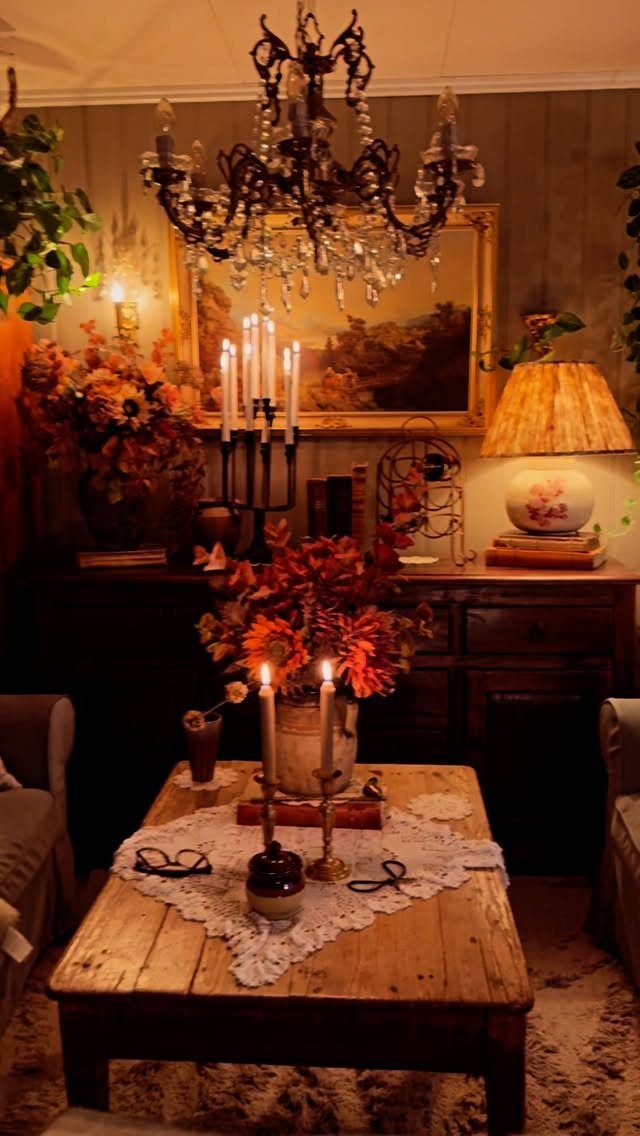
Old wood does what new furniture struggles to copy: it looks lived in. A rustic coffee table beside a dark sideboard gives a room weight and warmth, and the 2 tones sit well together.
Secondhand is where I’d look for both; older pieces usually cost less, and their worn finish suits this style better than new wood stained to look old. Check that drawers slide and the surface is sound before you buy.
Keep the lighting dim and warm, and let flowers and a gold-framed painting add the finishing touches.
15. Sheer Curtains
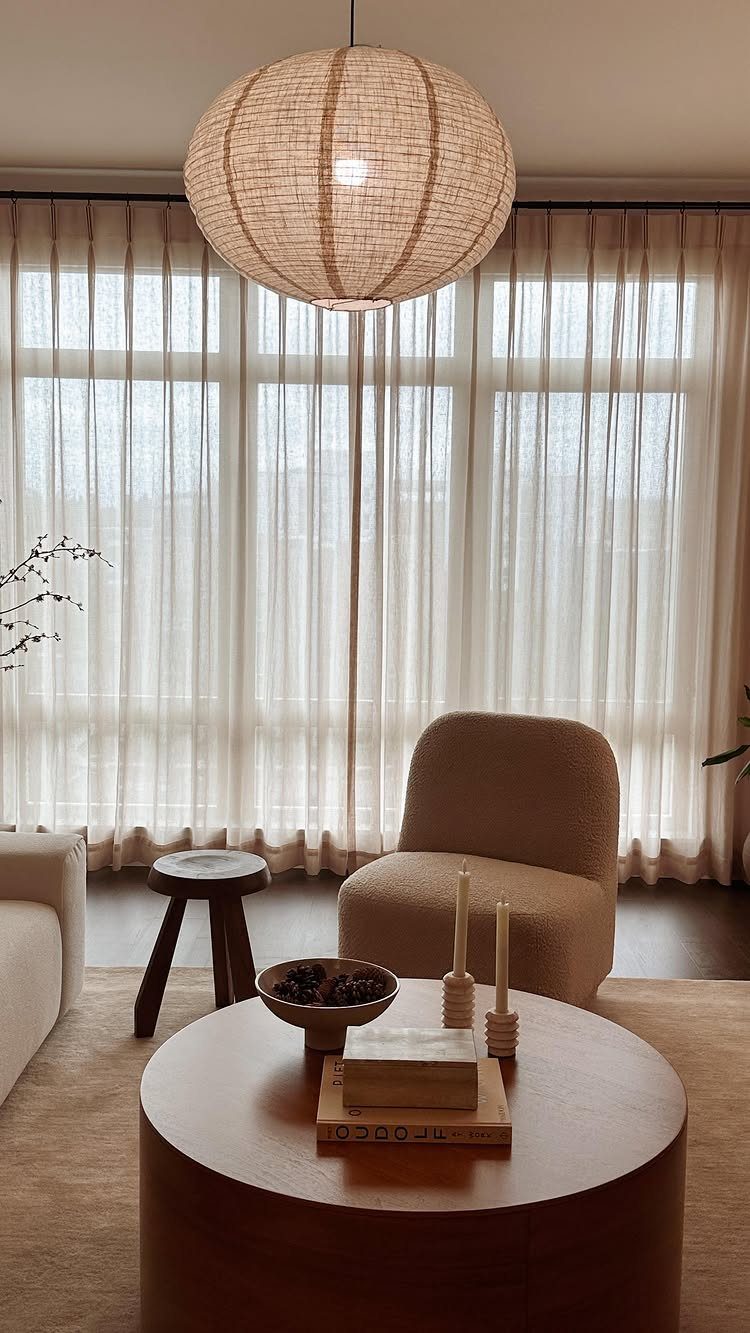
Hung wide, they turn a plain window into a gentle backdrop for a bouclé chair and a wooden table.
Mount the rod high and close to the ceiling, and let the fabric reach the floor, so the window looks taller. Choose white or off-white to match a neutral room.
Sheers are among the cheapest ways to change a room’s mood, and you can add heavier drapes later if you want more privacy.
16. Tufted Ottoman
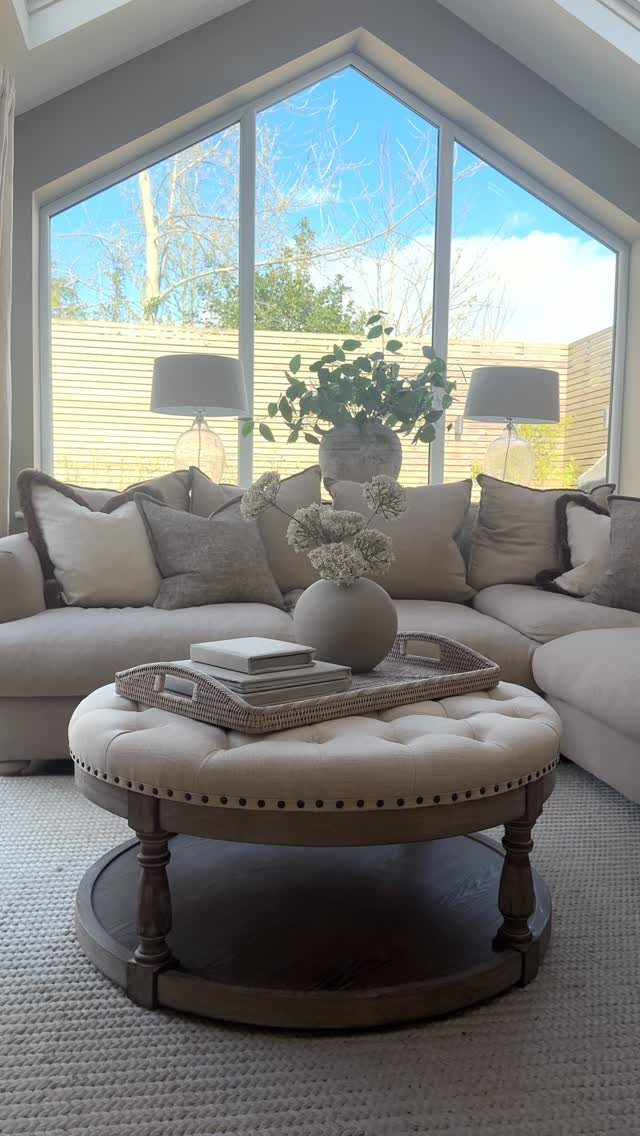
Round tufted ottomans earn their place by doing 3 jobs: extra seat, footrest and coffee table. Set a tray on top and it holds drinks and candles without any wobble.
I like a cream one with a wooden base next to a light sectional, since the tone blends in and the shape softens all those straight lines.
A round form is also easier to walk around in a tight room than a square one.
Pick a tray with a rim so nothing slides when someone sits on the edge.
Importance of Lighting
A single overhead fixture throws flat, even light across everything, and that’s what makes a living room feel stark; split the work among several smaller lamps.
Check the bulb box for 2700K or "warm white." Bulbs on the cool end of the scale, 4000K and up, give a living room the feel of an office, so look for 2700K on the box.
Add dimmers where you can.
Being able to turn the brightness down in the evening gives you control over how cozy the room feels, and a dimmable warm bulb is the closest thing to a fire’s glow in a home without a fireplace.
Creating Intimacy
Seating that faces inward gets people talking. Pair a deep-seated sofa with accent chairs opposite it, so guests can look at each other instead of at a screen.
A pair of compact sofas set across from each other pulls people into conversation more than one oversized sectional does.
If a sectional is what you want, push it against the walls and let a couple of accent chairs take up the open floor, since you can slide those around whenever the room’s use changes.
Fill the room without crowding it. You want people close enough to talk, with a clear path to walk through.
A unique coffee table, a statement chair or an interesting piece of art also gives guests something to comment on.
Seasonal Decor Changes
Neutral furniture makes seasonal changes cheap, because the colors live in the items you can swap in an afternoon.
Change the accent pillows and the throw, and the whole room shifts. Dark blue is a good fall choice.
Vary the textures too. Mixing knits, velvet and wood adds depth, and that depth reads as cozy even in a quiet palette.
Keep the extras small and spaced out. A few statement pieces placed with care fill a room without clutter, and they avoid the unfinished look of big empty areas.
Whatever your style, the same approach works.
Frequently Asked Questions
What makes a living room feel cozy?
Warm light, soft textures and deep seating do most of the work. Several small lamps with warm bulbs (2700K or "warm white") beat one overhead fixture, which throws flat light and makes a room feel stark.
Softness comes from texture you can reach: a shaggy rug under bare feet, a heavy knit blanket on the arm of your chair, and a sofa deep enough (about 38–40 inches) to tuck your knees up on.
What color makes a room feel warmest?
Warm neutrals like cream, beige and soft earthy tones feel warmest, especially under amber light. Cream upholstery and a cream knit throw stay neutral with almost any furniture.
Warm color doesn’t need a paint job. A few olive pillows against a white sectional bring in the earthy tone, and the effect holds as long as the green stops at 2 or 3 pieces.
Dark walls can feel warm too, but they need low, amber bulbs because a cold bulb gets swallowed.