Which of these ideas fits depends on what you can change: a renter with white walls can start with soothing colors in small doses, while anyone with a free afternoon can work through one drawer, shelf or corner of clutter.
The list runs from a single soft-leaved plant to arranging a whole room around the five elements, and the cheapest change, shifting a sofa a foot or two off the line between door and window, costs nothing.
Pieces you can move out with you, like a freestanding wooden bookcase, suit a lease best.
1. Use Soothing Colors
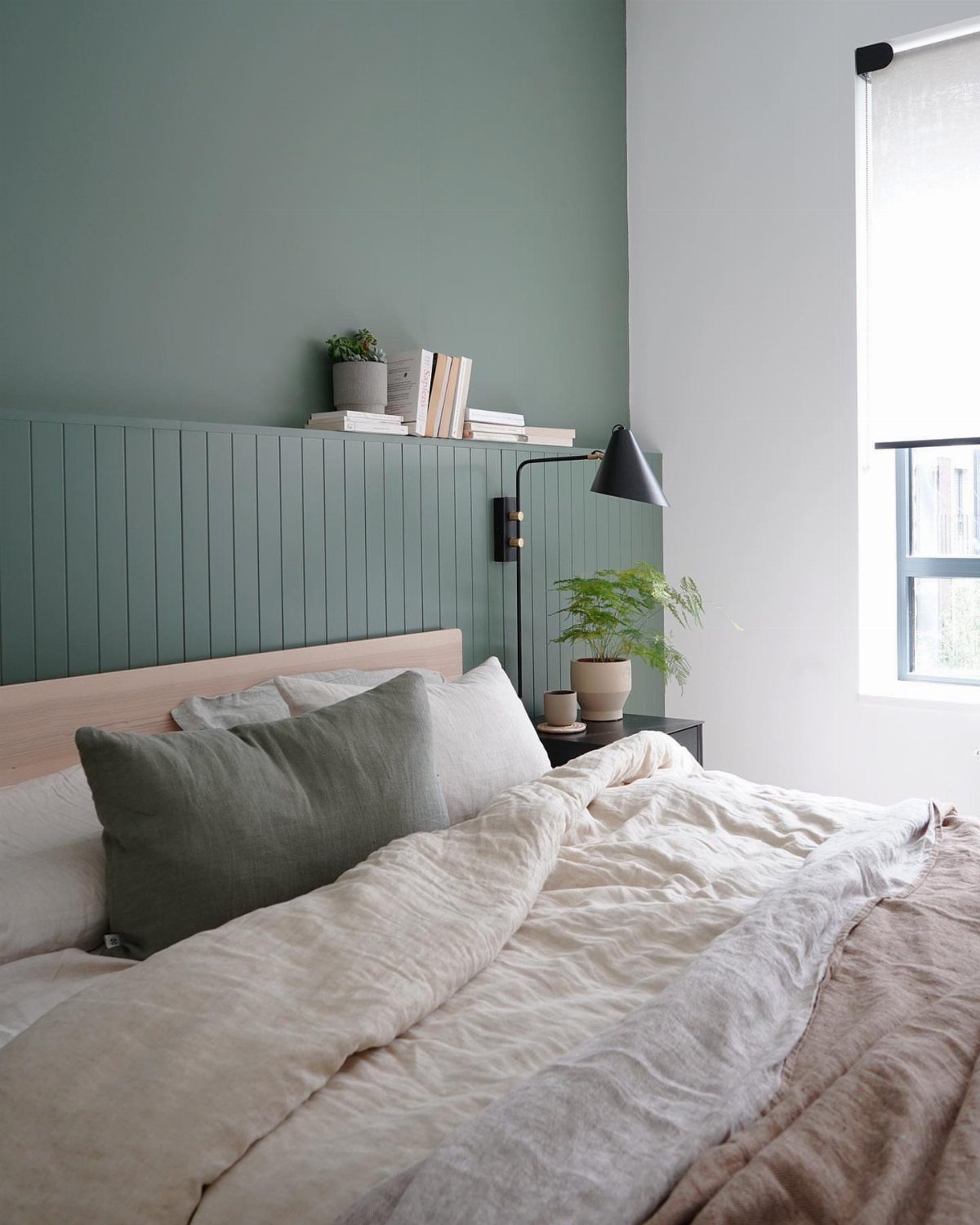
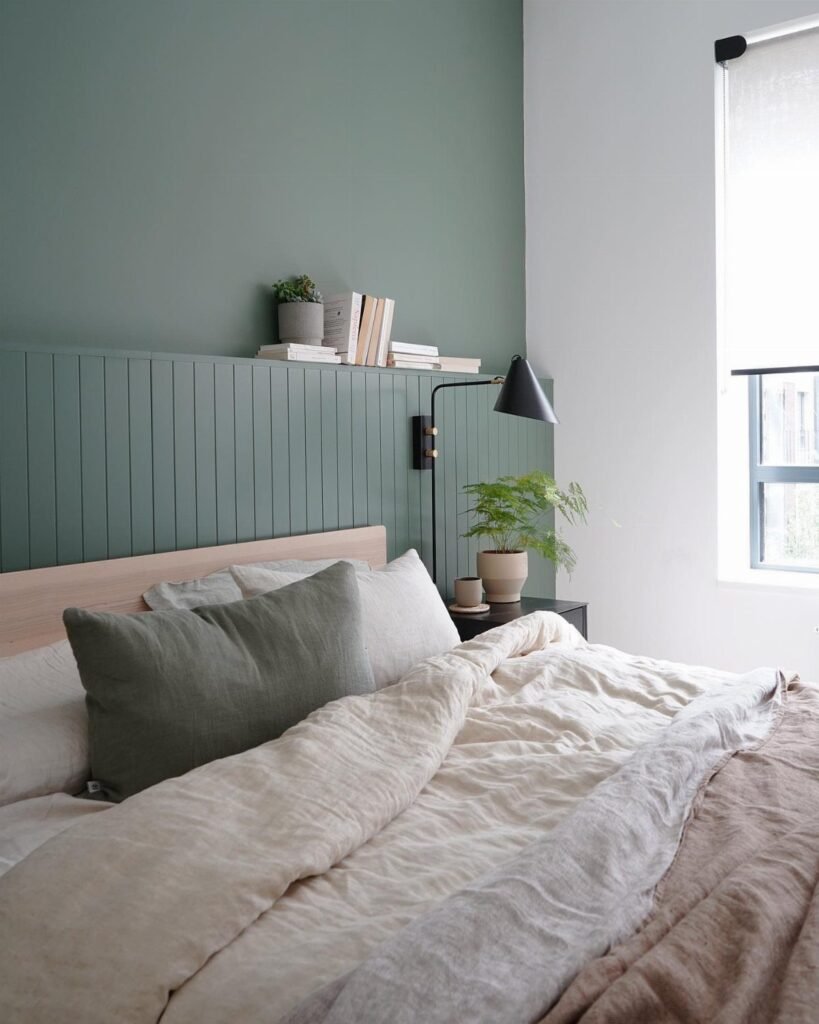
Furniture in the same muted family as the walls keeps a room quiet. Sage green is a good anchor, so I’d pick a bed frame, nightstands and linens in soft neutrals or woods and let the wall carry the color.
Skip high-contrast pieces. A black lamp works as a single accent, but a red dresser would fight the calm.
If your walls are white, start with bedding and a painted nightstand. It costs far less than repainting a room and takes an afternoon.
2. Soft, Lush Plants with Rounded Leaves
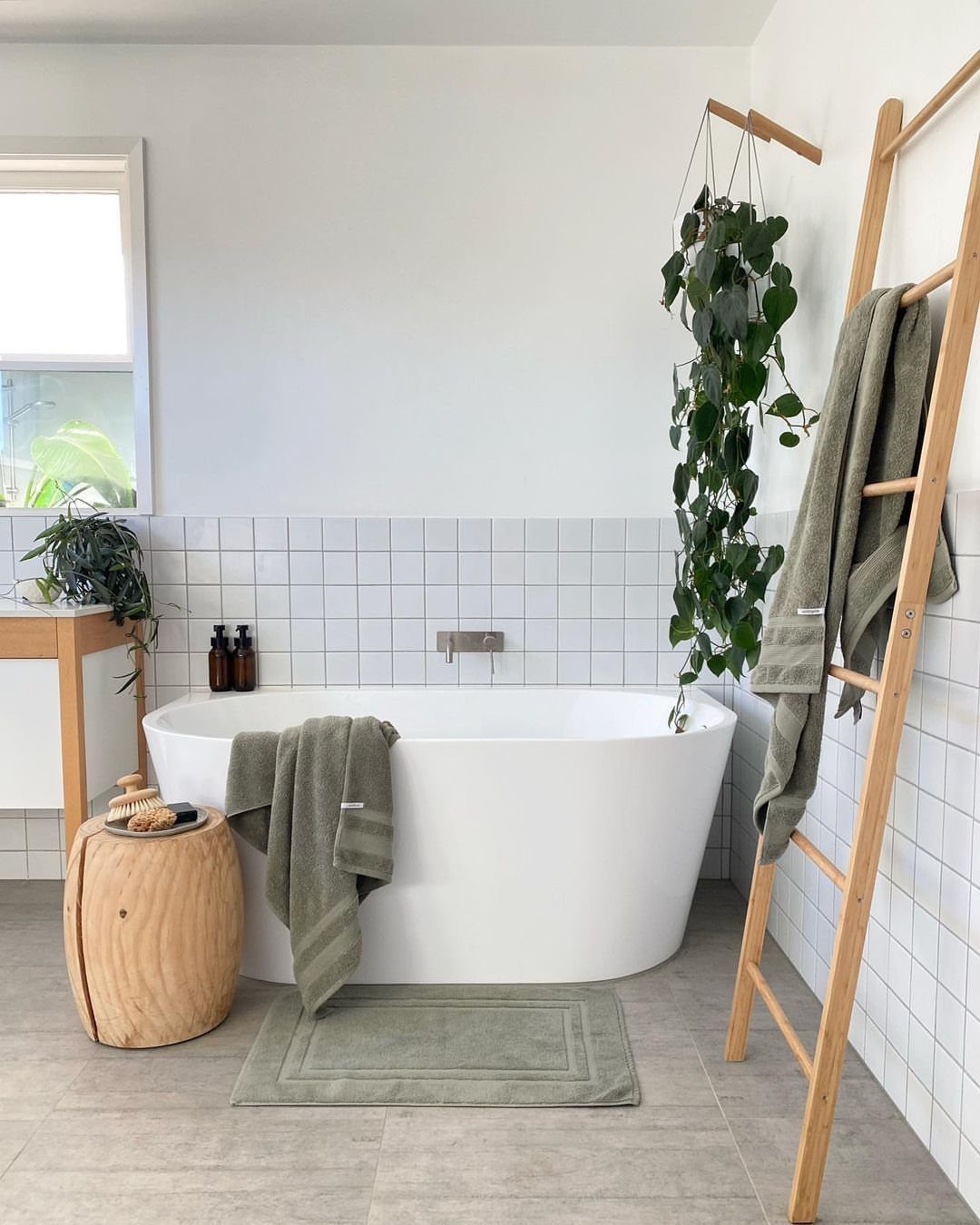
A plant with rounded leaves does the work of a furniture piece in a bathroom corner. Soft edges read gentler than spiky ones, and a hanging pot keeps the floor clear around a tub.
I like pairing one hanging plant with a plant on a small wooden side table. The table gives you a place for a towel or candle too.
Choose a spot with some light, and check that the pot has a drainage tray so the wood doesn’t get water rings.
3. Wood, Bamboo
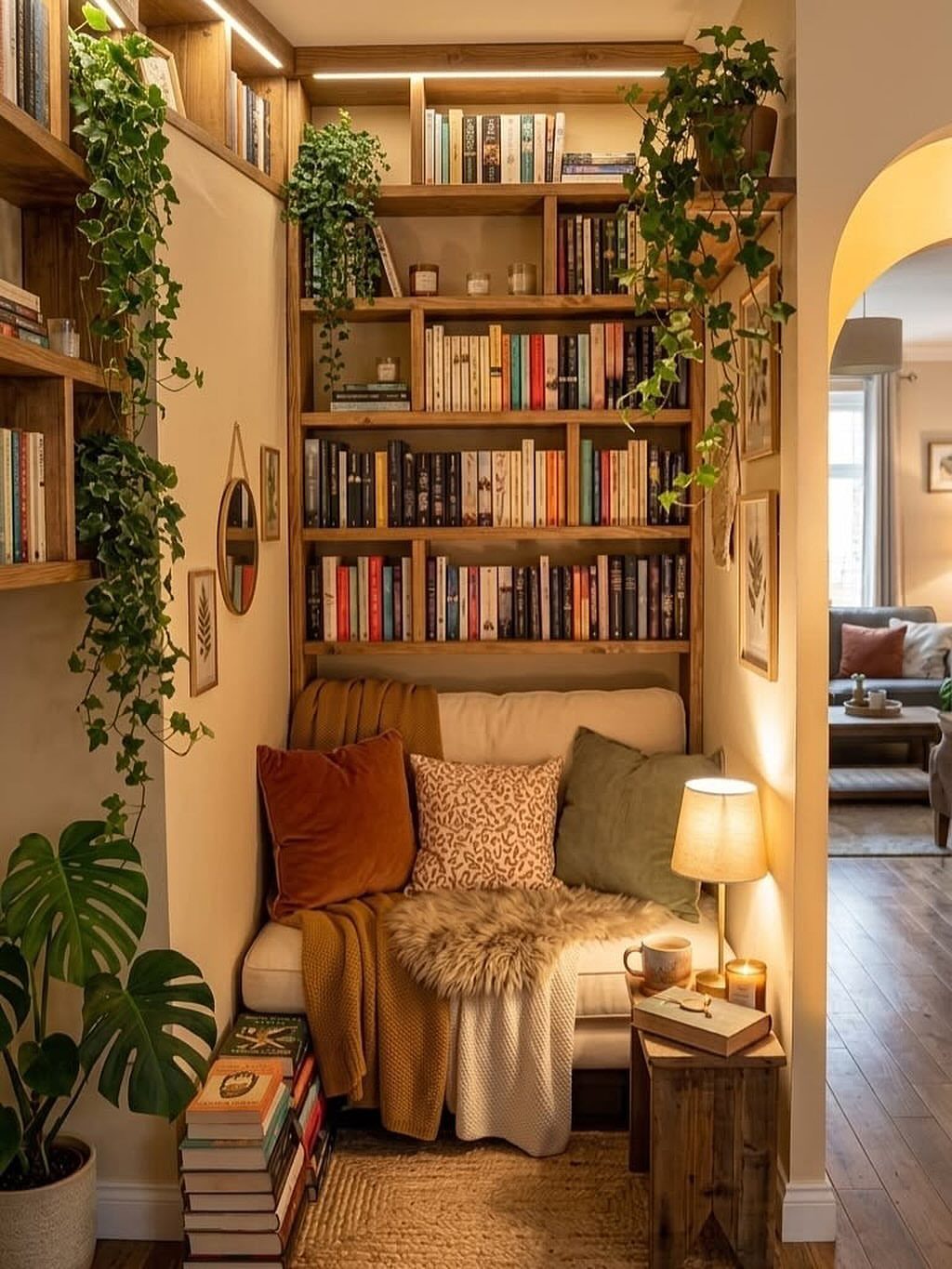
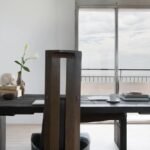
Wooden shelves and a small wooden side table add warmth that painted or metal furniture can’t. Bamboo works the same way if you want a lighter look.
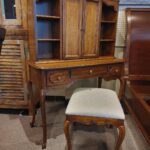
Renters can skip built-ins: a freestanding wooden bookcase gives the same effect and moves with you. Keep the sofa light so the wood stands out, and add a rug underfoot for softness.
Climbing plants on top of the shelves tie the wood to the greenery. One side table is enough; more makes a small nook feel crowded.
Importance of Furniture Arrangement
Start with the pathways. Walk through the room from each doorway and make sure nothing forces you to squeeze around a chair or sidestep a table, because blocked routes are where feng shui says energy stalls.
Avoid lining a sofa or bed up directly with a door or window. Shift it a foot or two to the side so the line from entry to glass stays open.
Light matters too. Angle seating to face the window so the brightest part of the room is what you look at when you sit.
A plant near the seating area adds to the effect. Bamboo and ficus both suit a living room, since their soft, upright growth fits the calm, balanced look the space calls for.
If possible, try not to have the back of your sofa face your living room’s entrance. "An ideal furniture arrangement is one where, as you enter the space you can see the sofa ‘greeting you,’" says Reiko Gomez of Reiko Design.
Five Elements of Feng Shui
Each of the 5 elements (wood, fire, earth, metal and water) carries its own color, direction, season and emotion.
Fire is a good example: it pairs with red, the south, summer and a strong, emotional charge. You can balance the room without painting anything red.
For fire, try animal prints or triangular shapes. A triangular lampshade or a patterned pillow does the job quietly.
Walk the room and count which elements show up.
Most rooms lean heavily on one or two, so pick up the missing ones with small pieces such as a tray, a vase or a throw. Aim for all 5 present, each one placed on purpose.
Decluttering Strategies
Clutter is said to block energy, and a crowded surface is the easiest place to see it. Pare the setup down to what you reach for each week, and move out anything that sits untouched.
Work in small bites: one drawer, one shelf or one corner per session. A weekend afternoon on a single area beats an exhausting whole-house purge you abandon halfway.
Add storage where things pile up, such as baskets, a lidded ottoman or a closed cabinet. Those keep surfaces clear without forcing you to part with everything.
If sorting stalls, ask a friend to help you decide what stays.
Frequently Asked Questions
Where should I place my furniture for good feng shui?
Keep walkways open first. Walk in from each doorway and make sure nothing makes you squeeze past a chair or sidestep a table, since blocked routes are where energy is said to stall.
Notes from other sources add a commanding position, meaning you can see the door from where you sit.
What does feng shui say about mirrors?
Don’t hang a mirror behind the sofa, because it is said to weaken the support that seating gives you.
Another guideline is to hang mirrors and art about an inch higher than you normally would, since placing them too low is believed to bring your mood down.
Serene images, such as a beach, are the usual pick for the wall.
What color couch is best for feng shui?
Pick a calm color like an earthy tone or a pastel.
Skip high-contrast pieces, since a red dresser or similar bold item fights the calm. Soft fabrics like chenille, bouclé, or brushed cotton and a few plump cushions add the comforting texture that feng shui calls for in a seating area.