
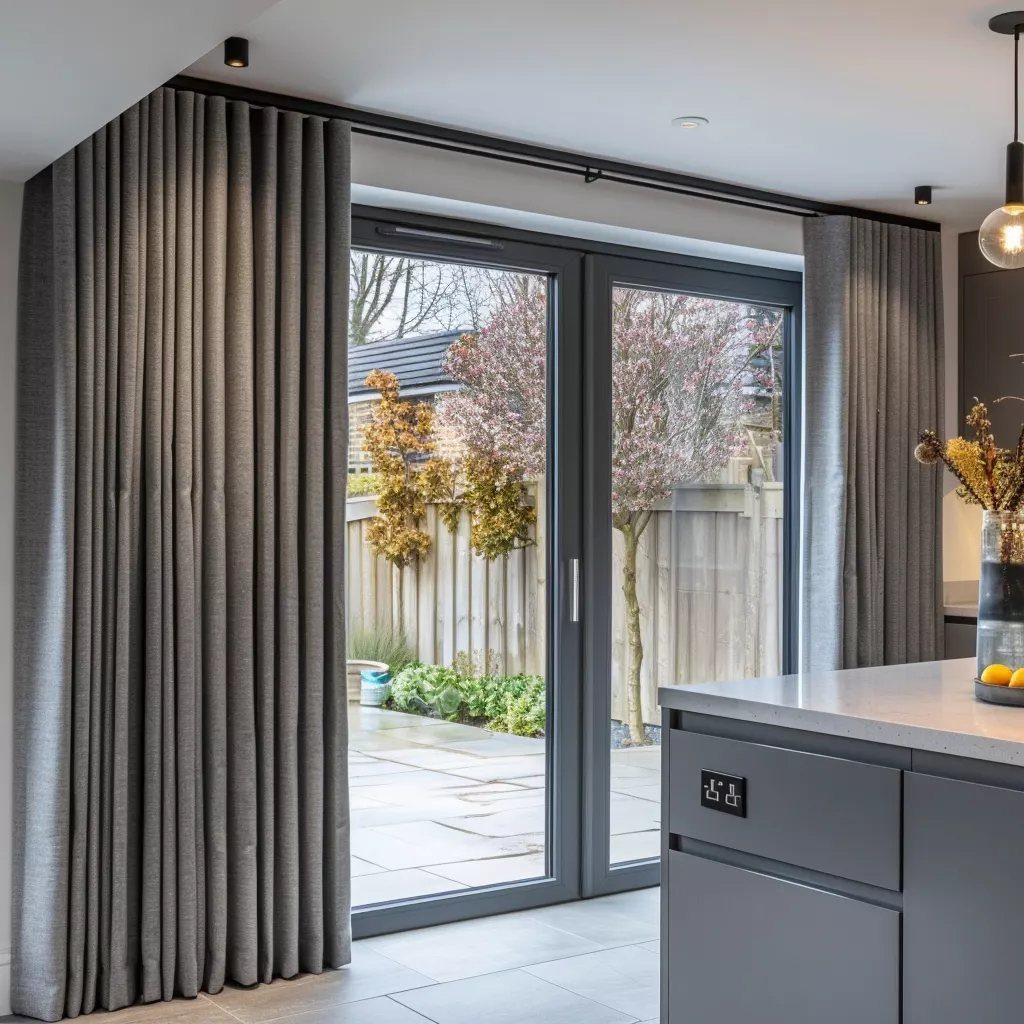
A sliding door curtain can be a single sheer panel on a ceiling track that costs less than $50 with tension hardware, or layered blackout drapes on a wall-mounted rod that require stud anchors and custom hemming.
A ceiling track holds the fabric flat and pulls the eye up, which makes the room feel taller.
1. Sheer Curtains with Blackout Drapery
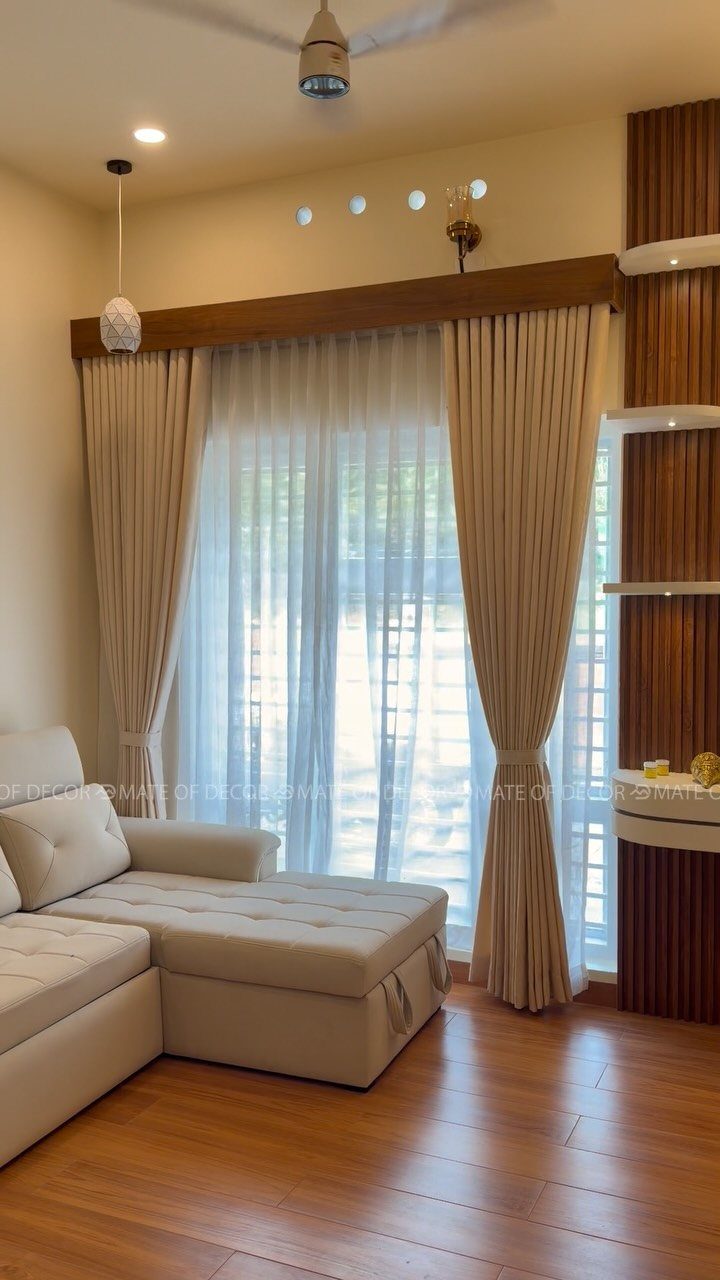
Layering sheer panels behind blackout drapes gives you 2 levels of light control on a single rod.
Pull the sheers when you want diffused natural light and privacy during the day, close the heavier drapes at night or when you need to block glare completely.
The setup works on a double curtain rod.
Mount the rod just below the ceiling and let both layers pool slightly on the floor for a finished look. If your sliding door gets afternoon sun, blackout fabric will keep the room cooler and protect furniture from fading.
2. Curtains That Blend with Walls
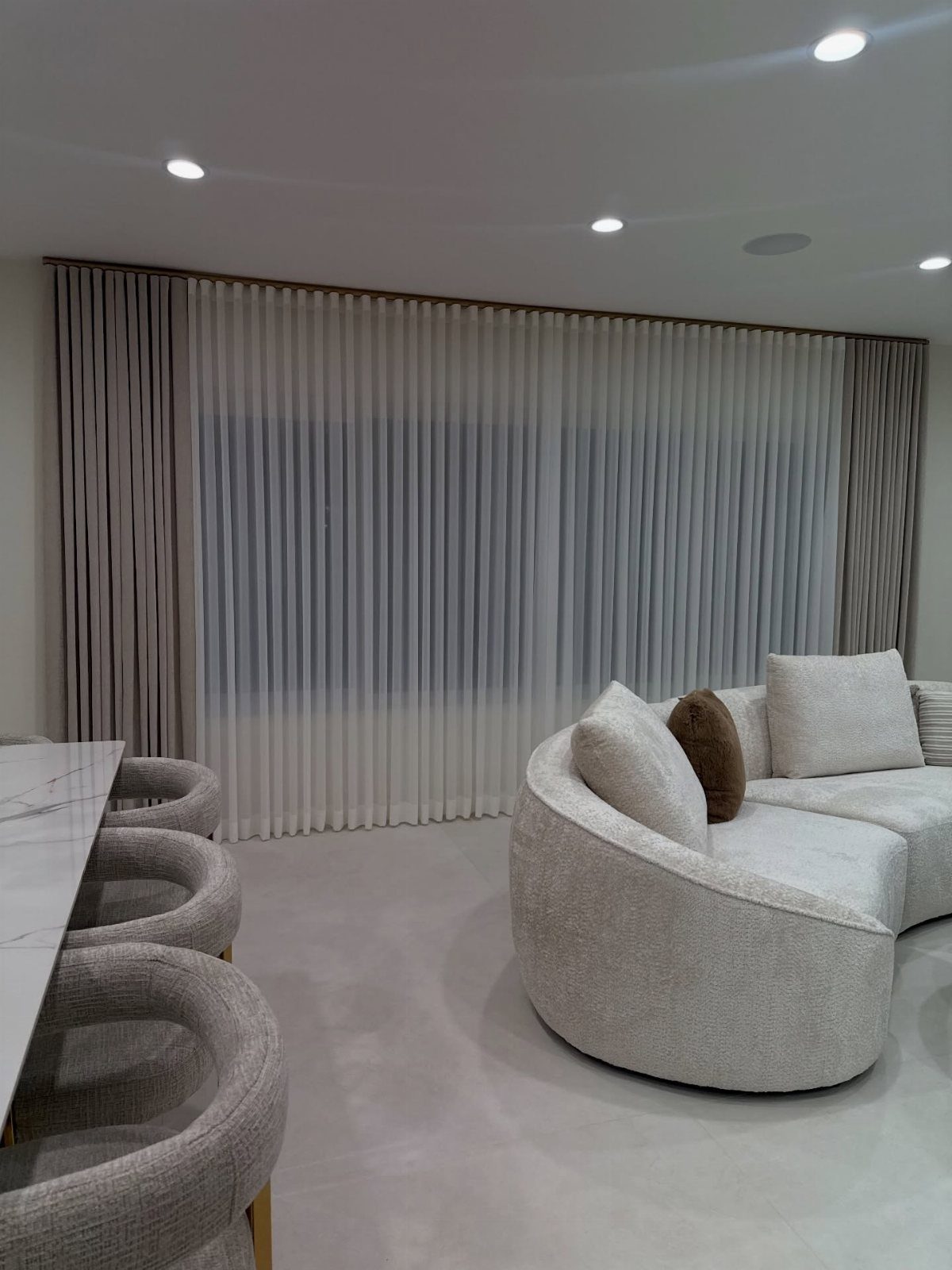
Matching your curtain fabric to the wall color makes the treatment disappear when closed, so the room reads as one unbroken plane instead of a framed opening.
This works especially well in small spaces where a contracting color would chop up the sight line.
Choose a neutral linen or cotton blend a shade or two lighter or darker than your wall paint, then hang the panels on a ceiling-mounted track that extends past the door frame on both sides.
When you draw them open, the door gets full clearance and the fabric stacks neatly out of view.
3. Multi-panel Window Treatment
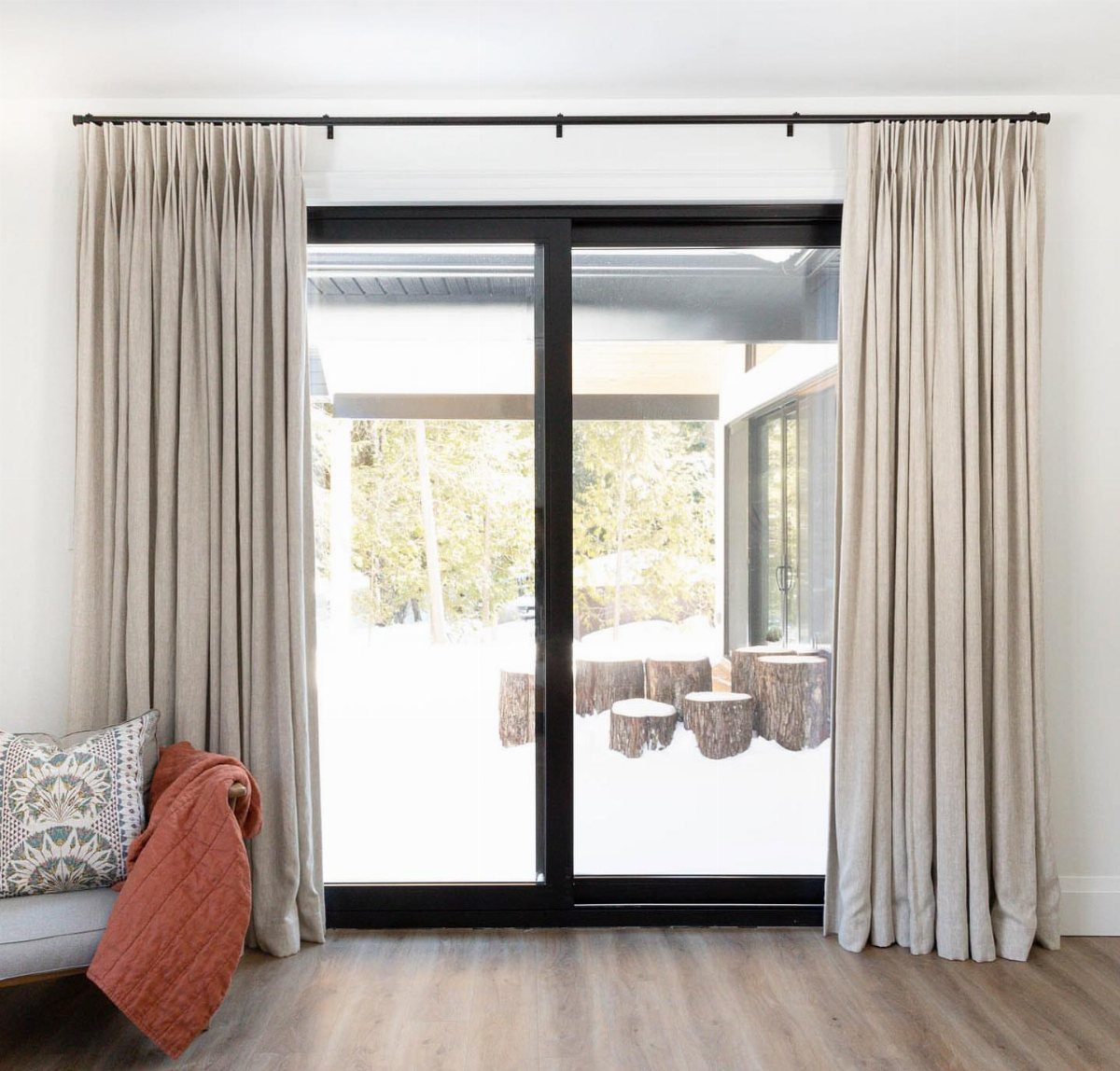
A double sliding door needs enough panels to cover the full width and still stack back without bunching. I prefer an even number so the panels meet in the center when closed and pull symmetrically to each side when open.
Hang the rod wider than the door frame so the stacked fabric clears the glass completely.
Linen or cotton in a neutral tone keeps the look clean, and floor-length panels that just skim the ground frame the door without dragging when you open and close it.
However, for these same reasons, it can be a bit challenging to find the perfect window treatments for sliding glass doors that both allow the light in, are easy to slide, and also provide a nice layer of privacy.
4. Bright Curtains
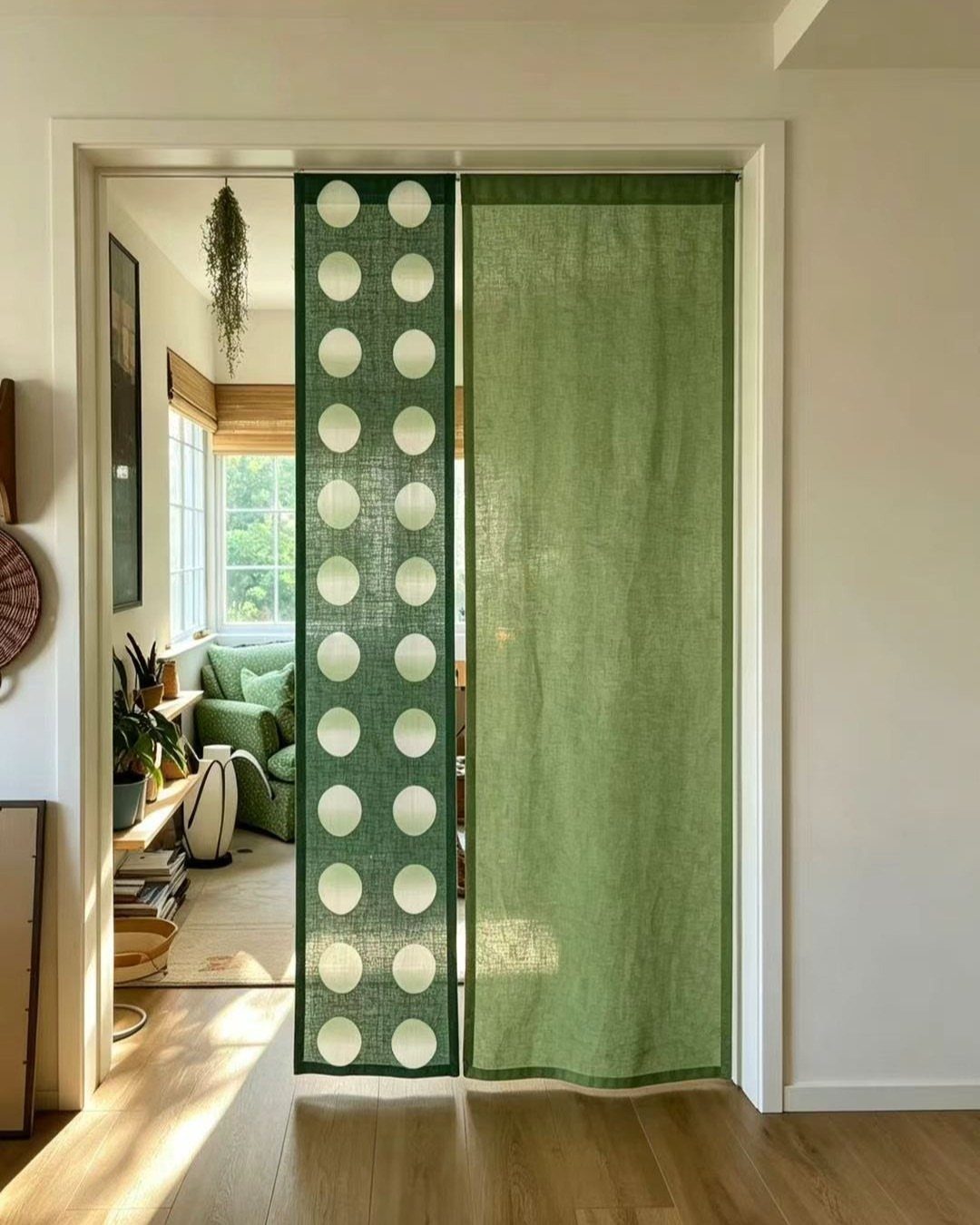
Color on a sliding door pulls focus and breaks up a neutral room without committing to paint or new furniture. A saturated green, rust, or navy reads as intentional, not leftover.
Mixing a solid panel with a subtle print, like polka dots or stripes, adds texture without fighting the rest of the space.
Keep the print in the same color family as the solid so the pair reads as one idea. This setup works best when the door opens to a private yard or balcony where you don’t need heavy light control.
5. Linen Drapery
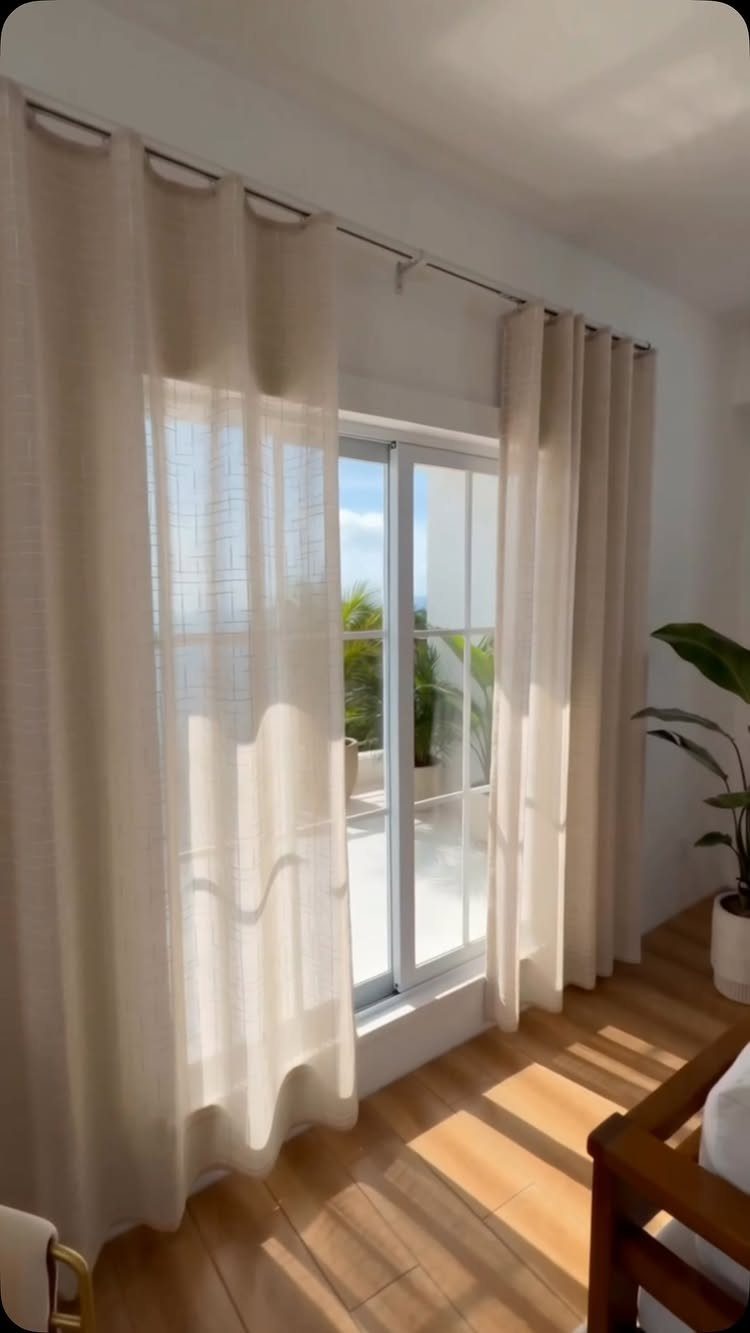
Linen curtains soften hard edges around glass doors and filter light without going fully opaque.
The fabric has enough body to hang straight but still moves when the door opens, and it ages well instead of looking worn after a year.
Look for a medium-weight linen so the panels drape without sagging.
Linen wrinkles naturally, which keeps the look relaxed rather than formal. If you want more structure, bamboo-blend fabrics hold a crisper line and still bring in that organic texture.
6. Panel Track Blinds
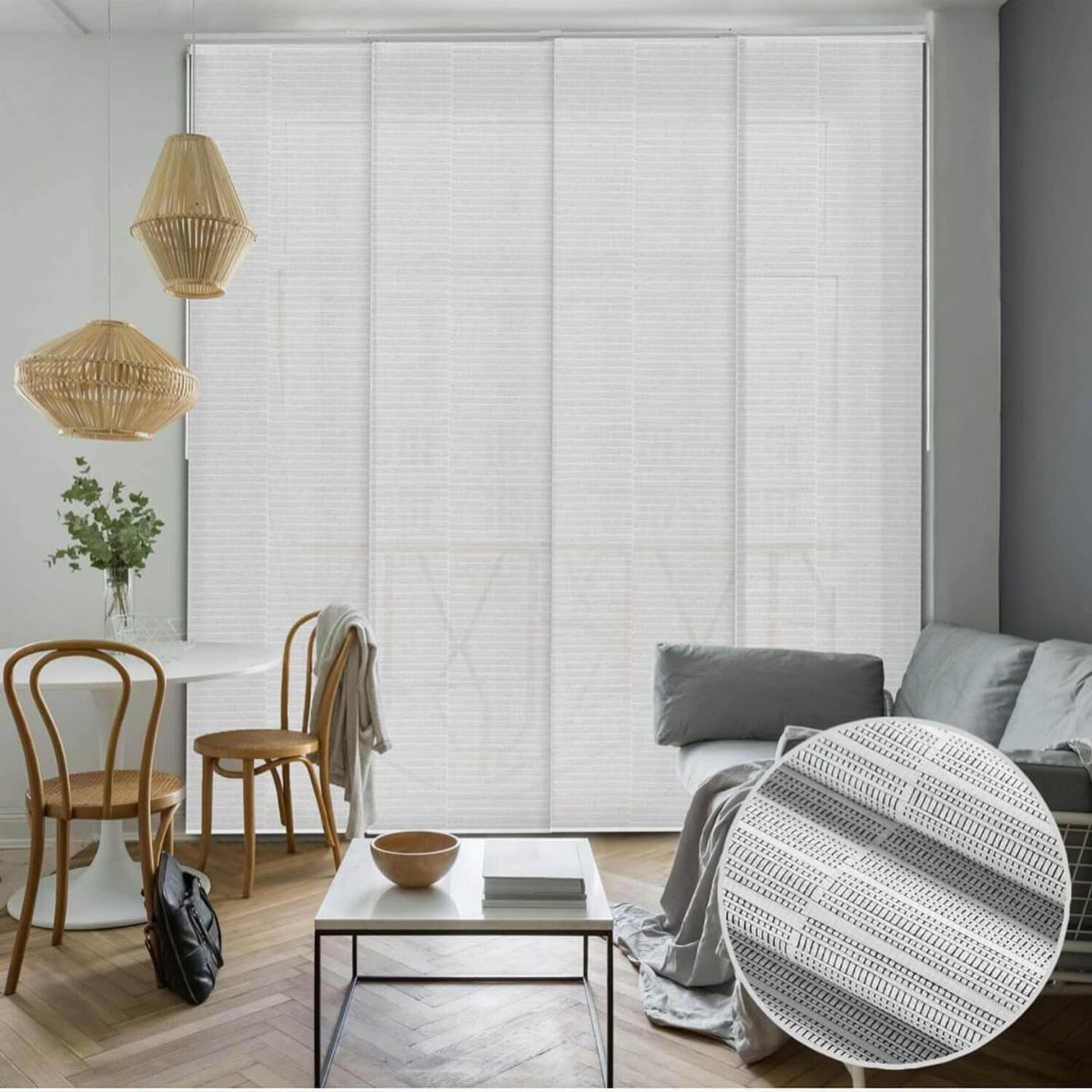
Panel track blinds slide on a ceiling-mounted rail like a Japanese shoji screen, so they sit flat against the door instead of bunching to one side.
Each panel overlaps the next as it moves, which gives you precise control over how much light and view you leave open.
The system works particularly well on wide sliding doors where fabric curtains would create a heavy stack.
White or light gray panels keep the look minimal, and the track hardware tucks into the ceiling line so nothing competes with the door itself.
7. Nature-inspired Prints
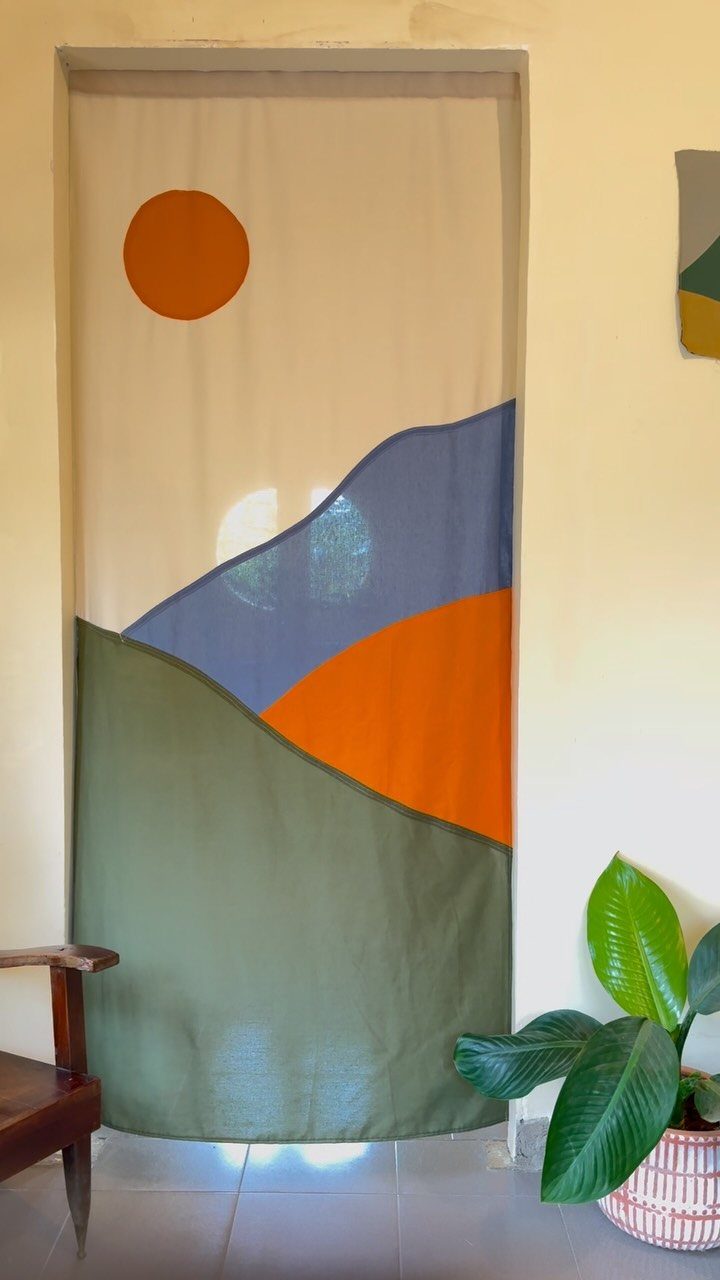
A nature-inspired print brings the outdoors in without competing with what is already outside the glass. Look for stylized mountain ranges, abstract botanicals, or line-drawn sun motifs on cotton or linen blends that filter light without blocking the view entirely.
The print works best at a scale that reads clearly from across the room but doesn’t overpower a small space.
Hang the panel on a tension rod inside the door frame if you want quick removal, or mount a standard rod above the frame for a more permanent look.
8. Minimal Window Treatments
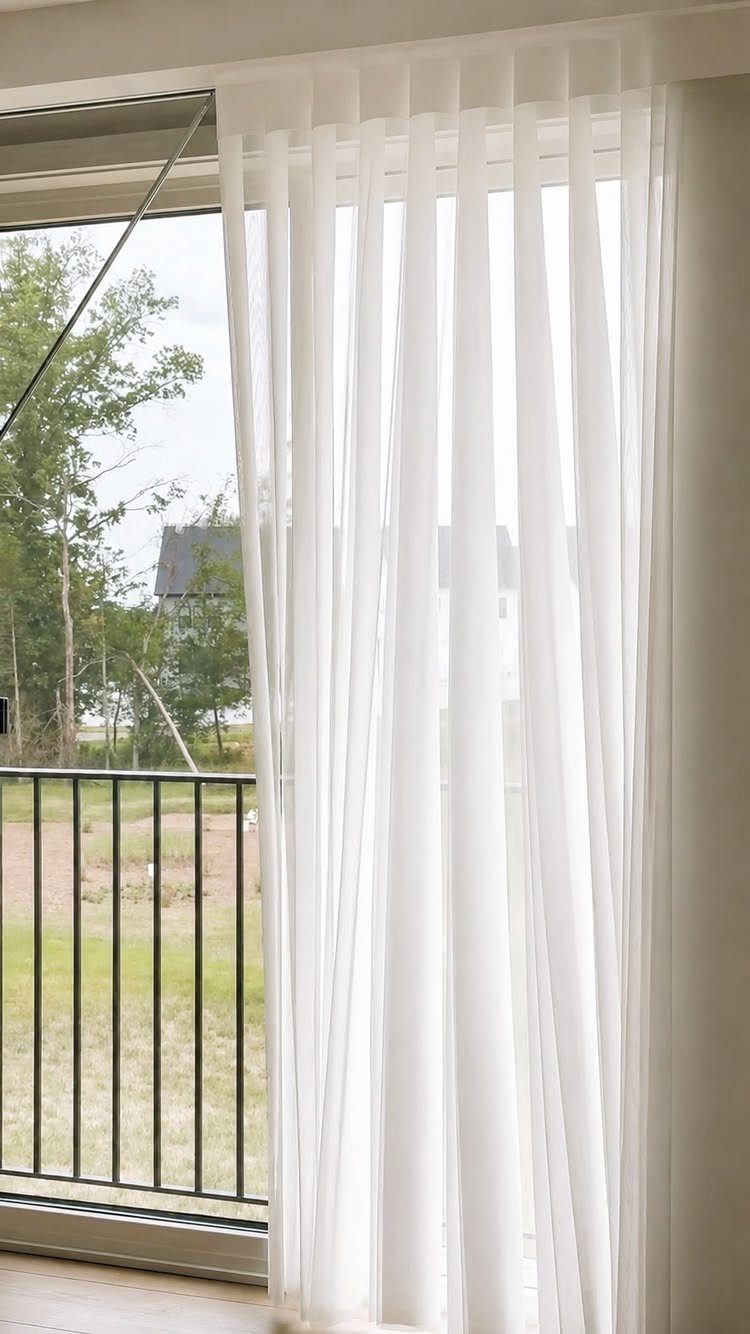
A single sheer panel on a ceiling track keeps the hardware invisible and the fabric close to the glass. The treatment sits flat when closed, filters harsh light, and pulls to one side without stacking wide.
This setup suits sliding doors where the architecture should stay the focus, or where a balcony or patio view deserves unobstructed sightlines most of the day.
White or off-white sheer fabric blends into the ceiling line and brightens the room instead of framing it.
9. Vertically Ribbed Sliding Door Curtain
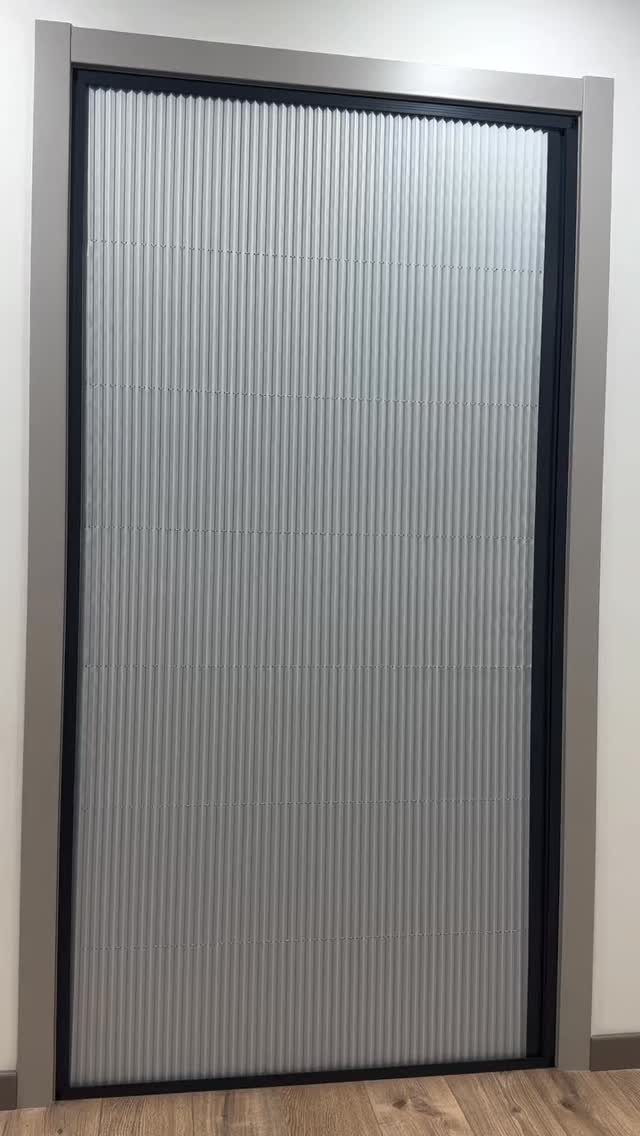
A ribbed panel that fits inside the door frame covers the glass without extending into the room, so it works where space is tight or where you want the door trim visible.
The vertical ribbing adds texture without pattern, and the fitted look keeps everything clean-lined.
This treatment stays put rather than sliding open, so it suits doors you rarely use or rooms where privacy matters more than access to the view. White or cream fabric reflects light back into the space instead of absorbing it.
10. Ceiling Track Sheer Curtains
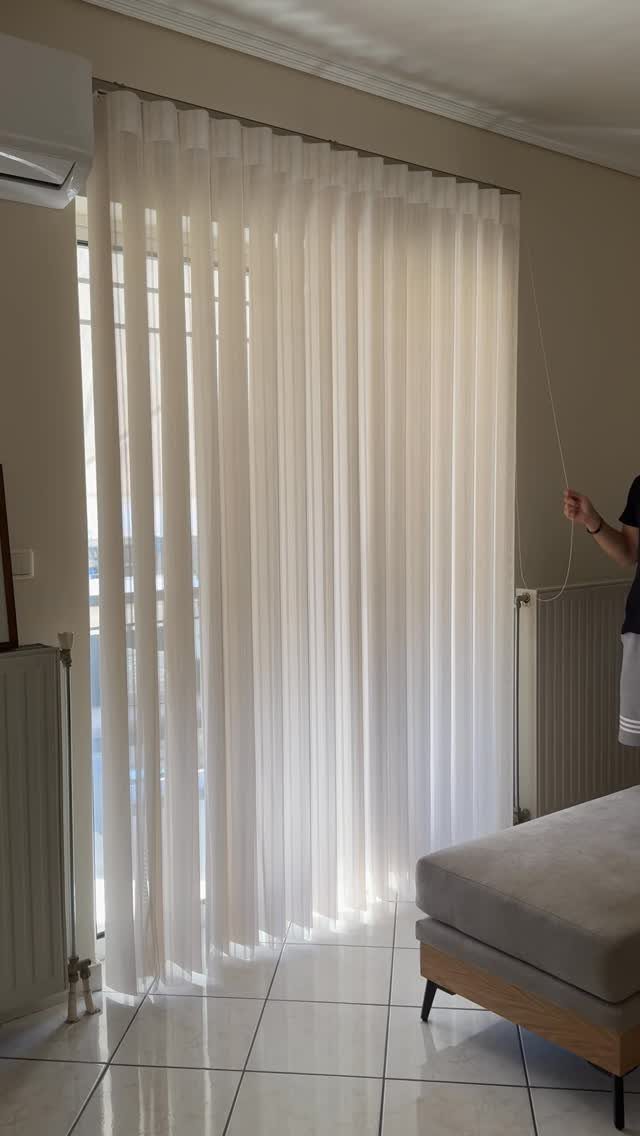
Lightweight sheers on a ceiling track take up almost no visual space when open and disappear into the ceiling line when you don’t need them.
The track mounts flush, so the fabric hangs straight without a visible rod breaking up the wall.
Sheer fabric softens the light without blocking it completely, and the ceiling mount makes low ceilings look taller by drawing the eye up.
11. Geometric Patterned Curtains
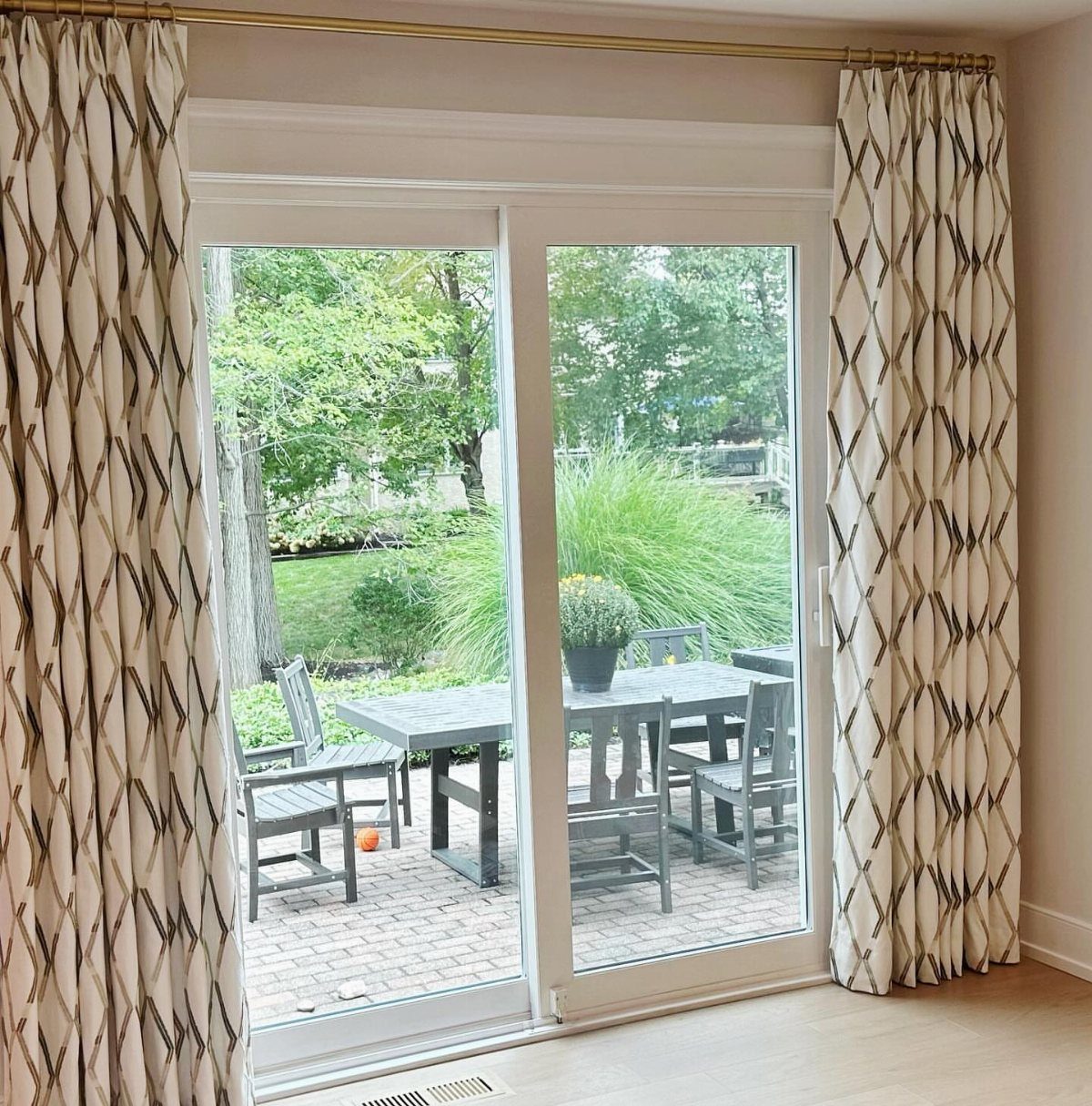
Geometric prints in dark tones on a cream ground add pattern without bright color, so the curtains frame the door but don’t compete with outdoor views or furniture inside.
The contrast keeps the panels from disappearing into the wall the way solid neutrals can.
A metal rod in black or bronze ties the curtain color to the door frame and anchors the look.
Hang the panels wide enough to clear the glass when open, and let them fall just to the floor so they don’t drag when the door slides.
12. Single-side Drawn Drapery
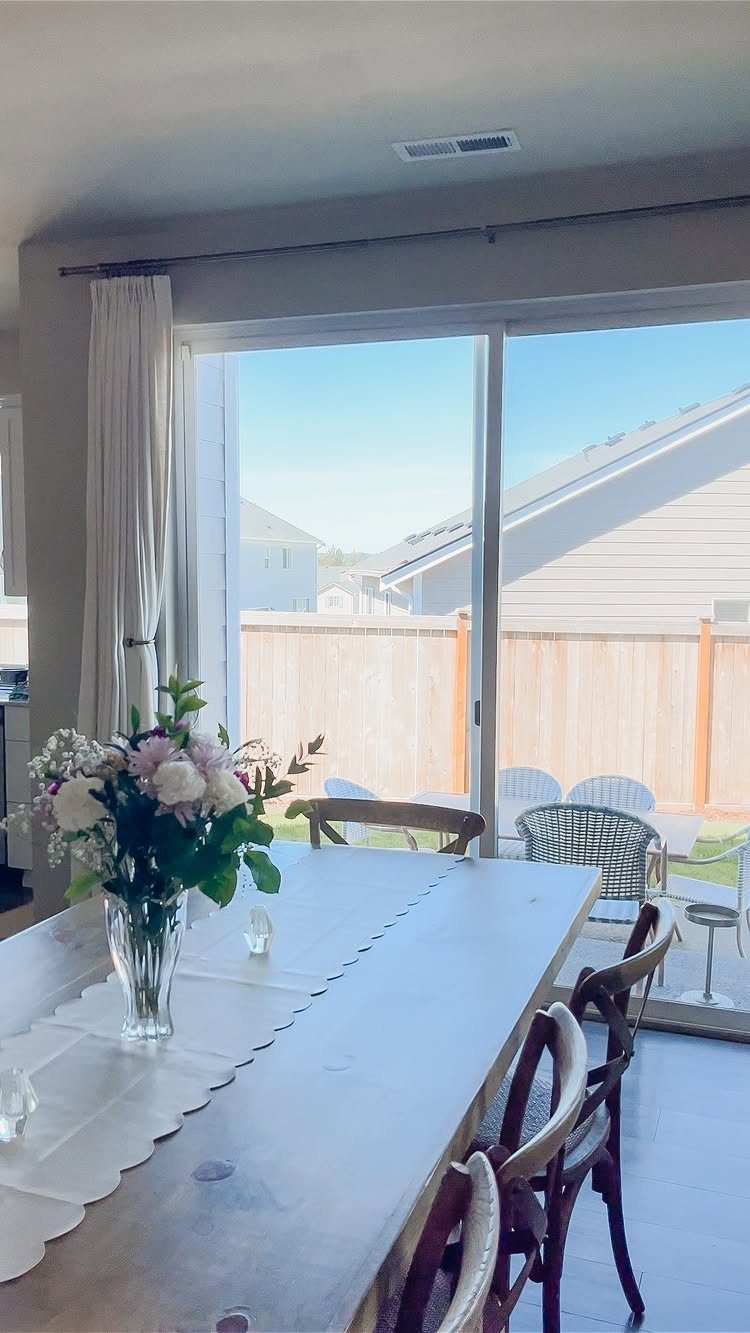
Drawing the curtain to one side only leaves the opposite edge permanently clear, which suits doors where you always enter and exit from the same side or where furniture blocks one half of the opening.
The single stack takes up less wall space than a center-split pair.
Choose a rod that extends far enough past the frame to hold the full width of gathered fabric without covering the glass.
A tie-back or hold-back hardware keeps the curtain in place and gives the gathered fabric a finished edge instead of a loose drape.
Choosing the Right Materials
Privacy sheers sit between standard sheers and blinds: they look like curtains but use vanes attached to the fabric so you can tilt them open or closed without pulling the whole panel aside.
Cotton and linen sheers suit casual spaces and anywhere coastal. They soften the daylight and shift gently when the door slides open.
Heavier fabrics give you full light control and help with temperature.
Installation Tips
Ceiling mounting keeps the rod out of sight and the fabric tight to the glass. Wall-mounted rods install faster and need less prep, but they sit lower and can interfere with the door frame if you mount them too close.
Inside-mount treatments sit within the door frame for a built-in look, but the frame needs enough depth to hold the hardware without blocking the door’s movement.
Measure twice before drilling.
Walk the full perimeter first for vents, outlets and walls that bow or tilt. Sliding doors are heavy, so if the panels are thick or layered, mount the hardware into studs or use anchors rated for the weight.
Hardware that sags or catches tells you the anchors were set too shallow or the rod was bent during install.
Budget-friendly Options
Ready-made grommet curtains and rod-pocket panels cost less than custom treatments and come in standard lengths that work for most sliding doors. If the length is off, hemming a rod-pocket panel takes basic sewing.
Adhesive vinyl shades go up without tools and leave the frame intact when you leave. Tension rods work the same way: they press into the frame instead of anchoring to the wall, so you can remove them without damage.
Textured fabrics and soft neutrals look intentional even at a lower price point. Shop sales and outlets, and measure before you order so you buy exactly what you need instead of paying to return excess yardage.
Prefab panels skip custom sizing and factory finishes, but they cover the door for far less and hold up fine in a rental or first place.
Frequently Asked Questions
What window treatments are in style for sliding glass doors?
Layered sheers with blackout drapes, ceiling-mounted track systems, and natural linen fabrics are all current.
These treatments give you flexible light control while keeping the door itself visible. Panel tracks and single-side drawn curtains work well in modern spaces where you want clean lines and full access to the glass.
How do I keep cold air from coming through my sliding glass door?
Blackout drapes or any heavier fabric help with temperature control and block drafts better than lightweight panels. The extra coverage keeps conditioned air in and cuts down on heat loss in winter.






