
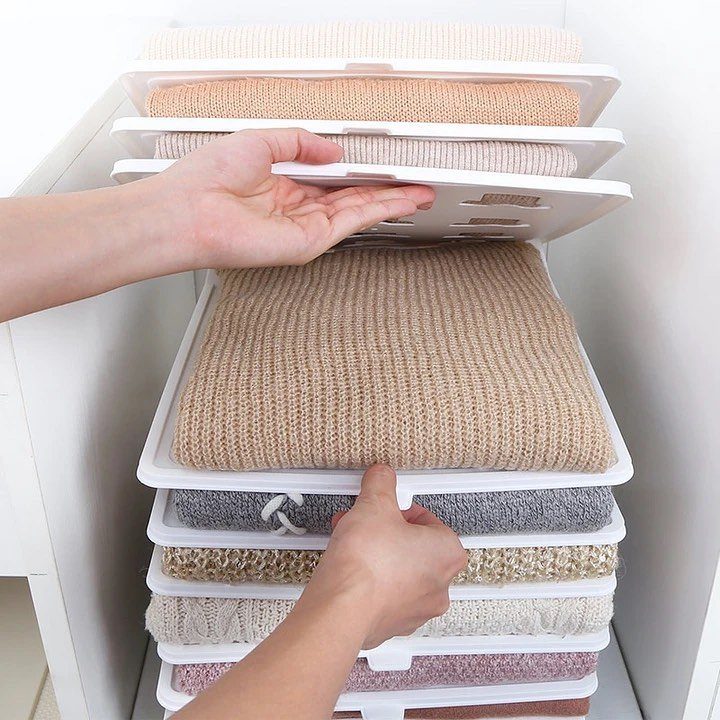
Sweaters can go in bins under a bed, stacked on open shelves, hung on tiered hangers, or stored in fabric organizers that hook over a door.
What works best depends on whether you’re storing them in the closet for the season or putting them away in a tote until next fall.
Wash or dry-clean everything before you pack it away, and tuck in a cedar block or lavender sachet if moths have been a problem.
1. Under-Bed Storage Solutions
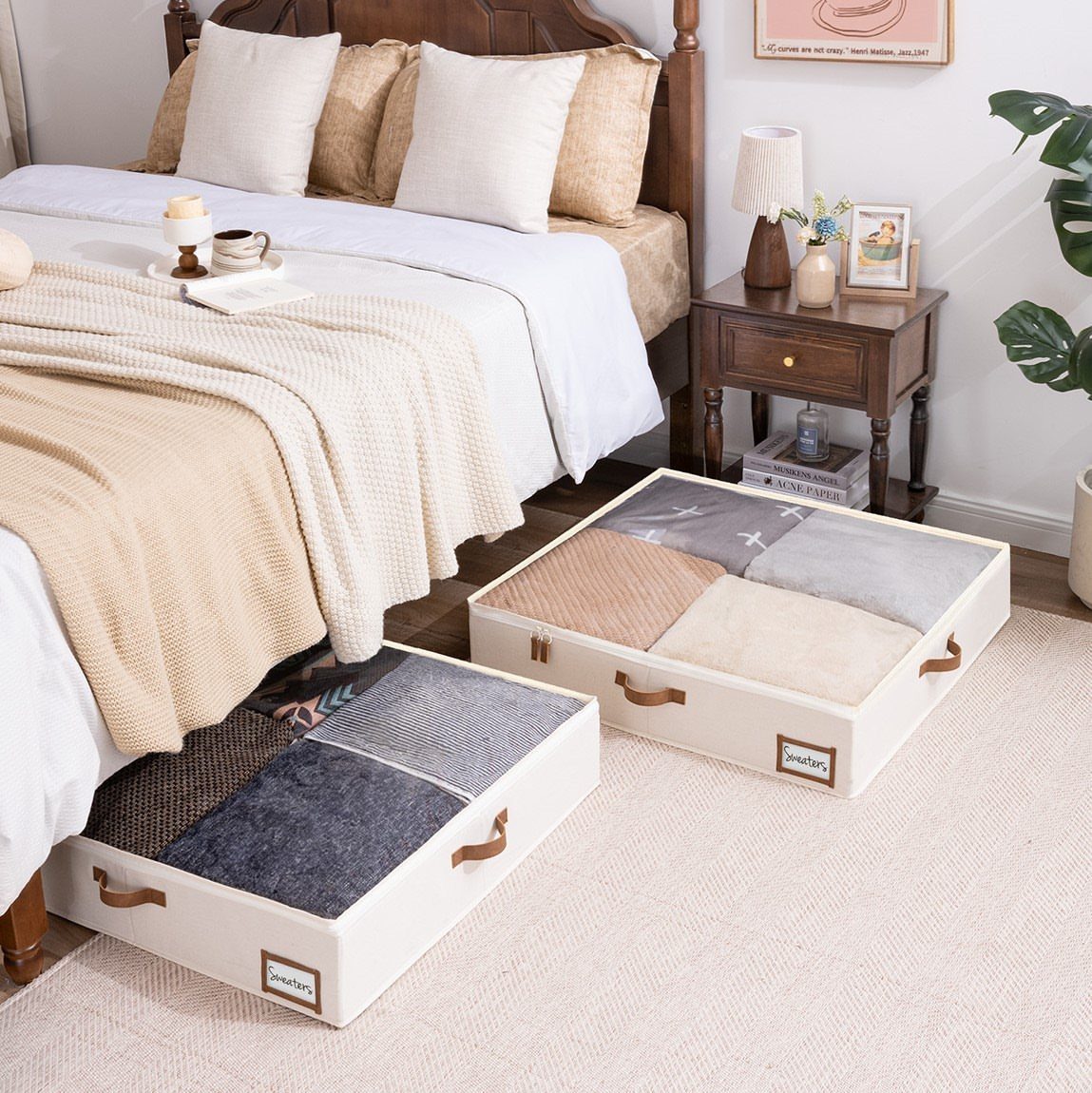
Flat bins with low profiles slide into the space beneath a bed frame and hold sweaters you won’t need until the weather turns.
I keep off-season knits here because they stay clean and out of sight without taking up closet real estate.
Look for bins with lids to keep dust off and handles on the short ends so you can pull them out without crawling under the bed.
Fabric versions with zippered tops work well if your floor stays dry, but hard-sided bins give better protection in a basement bedroom.
Measure the clearance under your bed first.
2. Use Plastic Totes
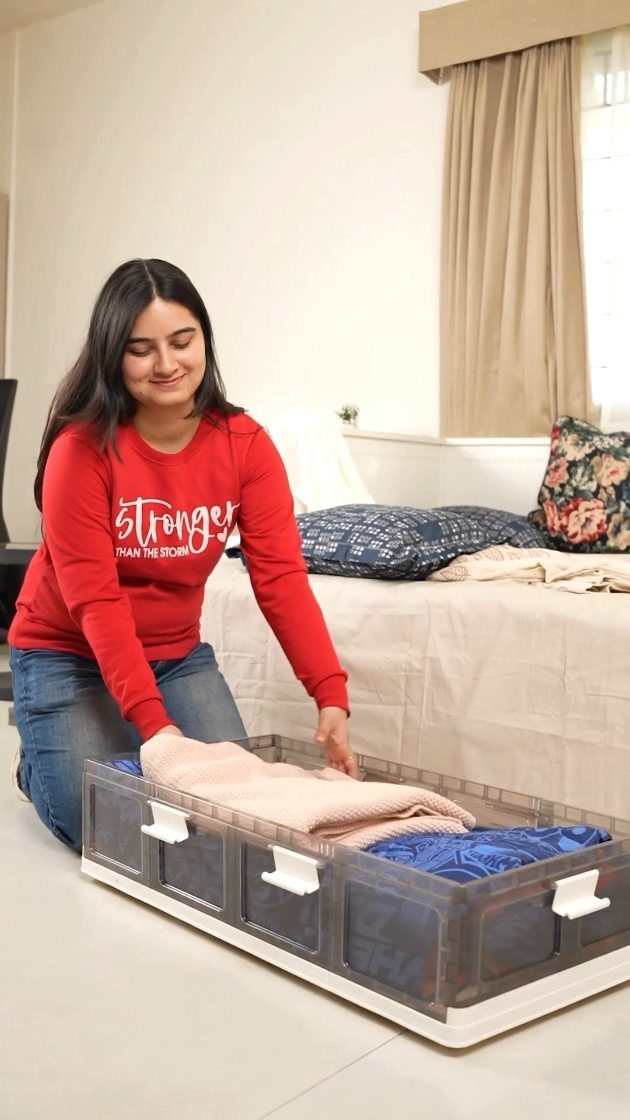
Clear plastic totes let you see what’s inside without opening them, which matters when you’re storing multiple bins in a garage, attic, or basement. I fold sweaters flat and stack them so the colors show through the sides.
Totes with snap-on lids keep moisture and pests out better than cardboard boxes, and they stack securely if you’re working with vertical space. A large tote holds a dozen or more medium-weight sweaters folded flat.
Label the ends with masking tape and a marker if you’re storing more than 2 bins. You’ll save yourself from pulling down every box to find one cardigan.
3. Over-the-Door Organizers
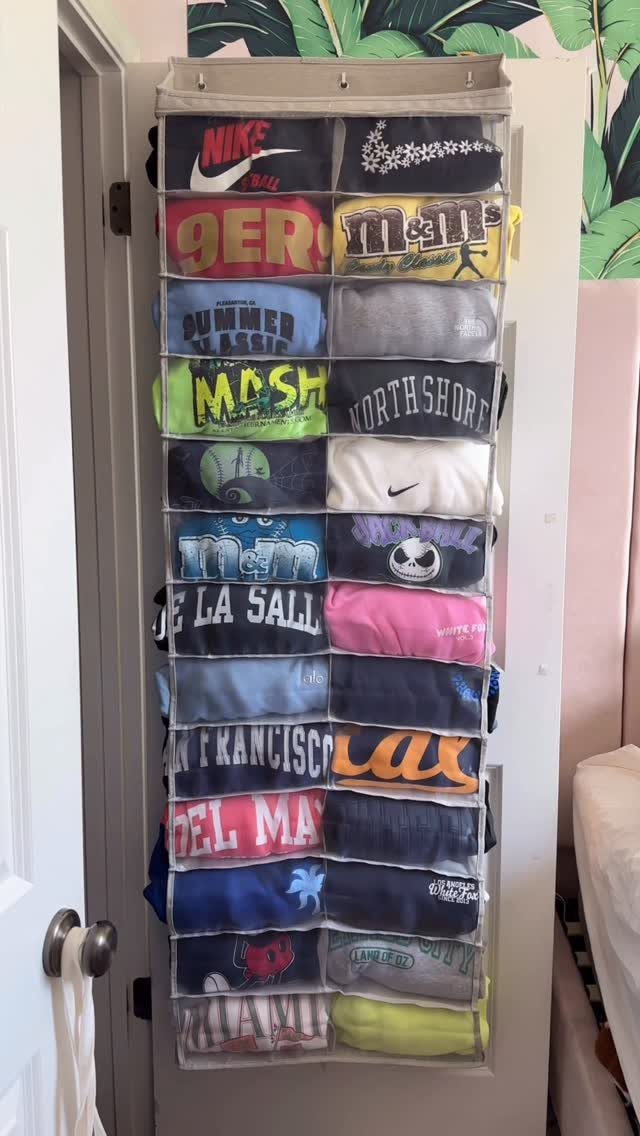
A fabric organizer that hooks over the top of a door turns that vertical span into slots for lightweight knits.
Each pocket holds 1 or 2 folded sweaters, and the whole thing comes down fast if you need the door to close flush.
This works best for cotton and linen sweaters that don’t need much airflow. Heavier wool can stretch the pockets over time, and anything damp will stay damp because air doesn’t move through a closed pocket.
I hang these on the back of a closet door rather than a bedroom door so the sweaters stay out of direct sunlight. Fading happens faster than you’d think on colors like navy and burgundy.
4. Use Shelf Stackers
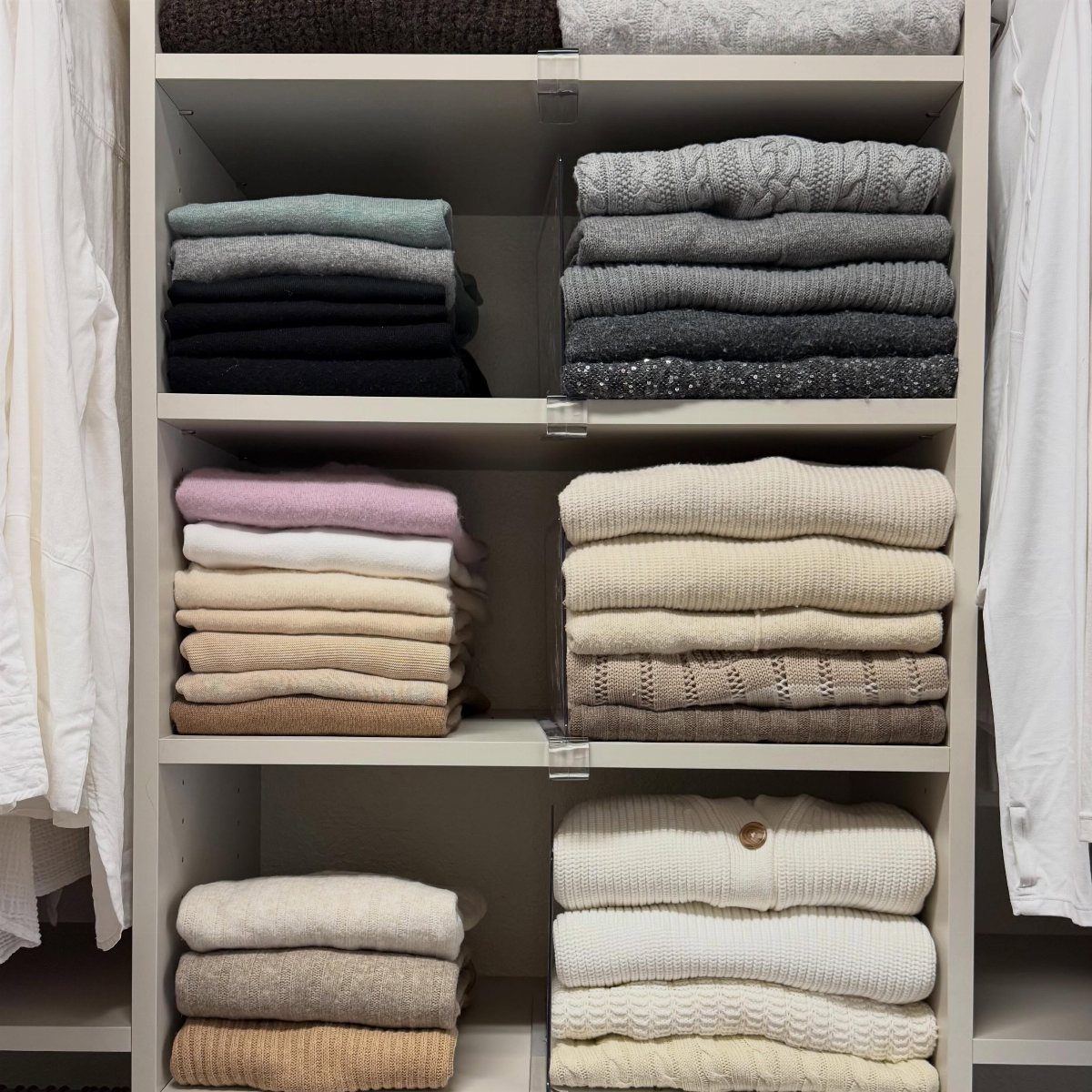
Shelf stackers are small wire or acrylic platforms that sit on a closet shelf and double the number of sweater stacks you can fit in the same footprint.
One goes directly on the shelf, and the second stack sits on the platform above it.
I prefer the versions with open sides because you can slide a sweater out without lifting the entire stack.
Closets with enough vertical clearance above a shelf are good candidates. Anything shorter and you’ll be fighting to pull sweaters from the top level without knocking the stack over.
5. Pull-Out Plastic Bins
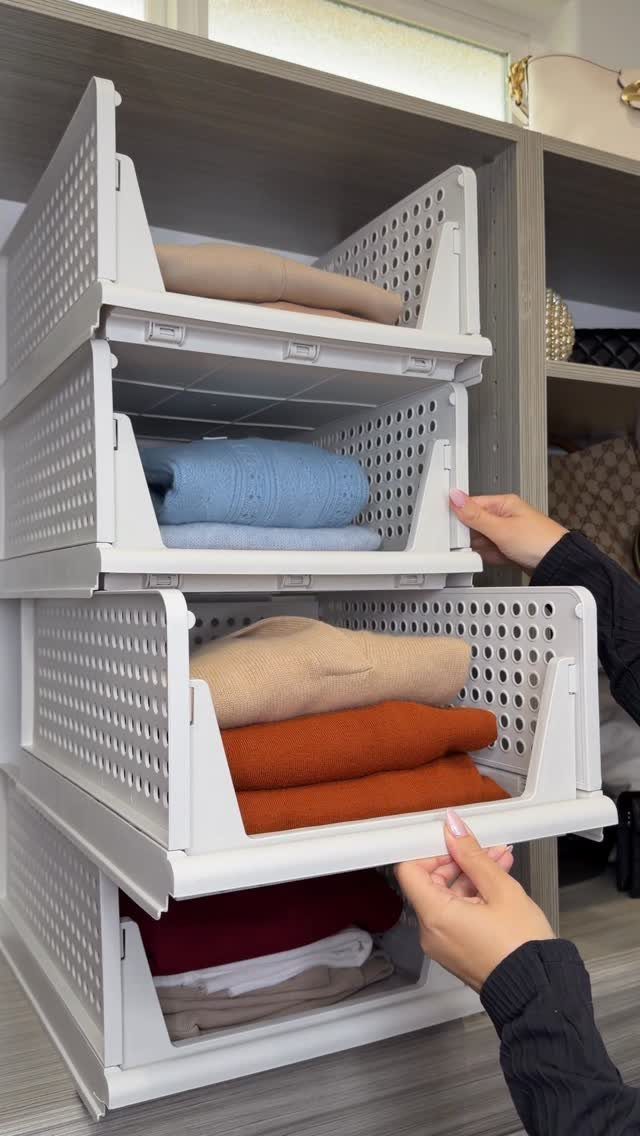
The holes in the sides let air circulate, which matters for wool and cashmere that shouldn’t sit sealed up for months.
Each bin holds 6–8 folded sweaters depending on thickness. I stack several high on a single shelf, and the front pull gives you enough grip to slide the bin out even when it’s loaded.
The perforations also mean these won’t work in a dusty garage or unfinished basement. Keep them in a clean closet where the airflow is a feature, not a problem.
6. Fabric Bins with Clear Windows
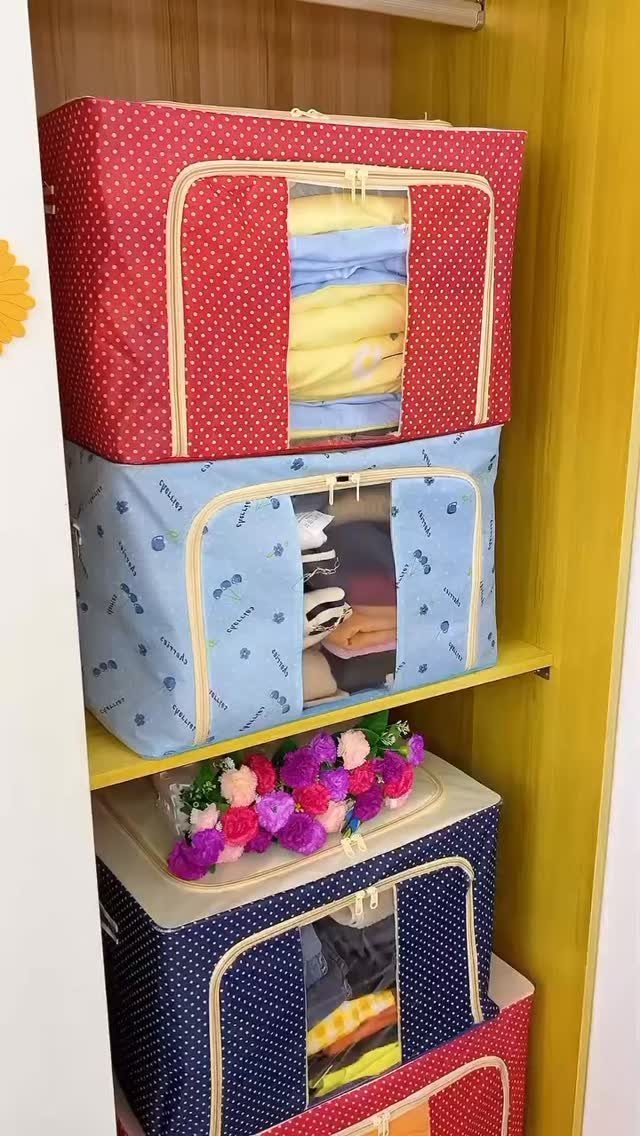
Zippered fabric bins with clear vinyl windows sit on a shelf and let you scan the contents without unzipping.
I fold sweaters so the front side faces the window, which makes it easy to spot a specific color or pattern when I’m looking for one piece.
The zipper keeps dust out, and the fabric sides compress slightly under a second bin, so you can stack 2 or 3 without wasting vertical space.
If you’re storing wool, crack the zipper open slightly during humid months. Sealed fabric bins can trap moisture, and mildew starts faster than you’d expect in a closed space.
7. Open Clothing Rack
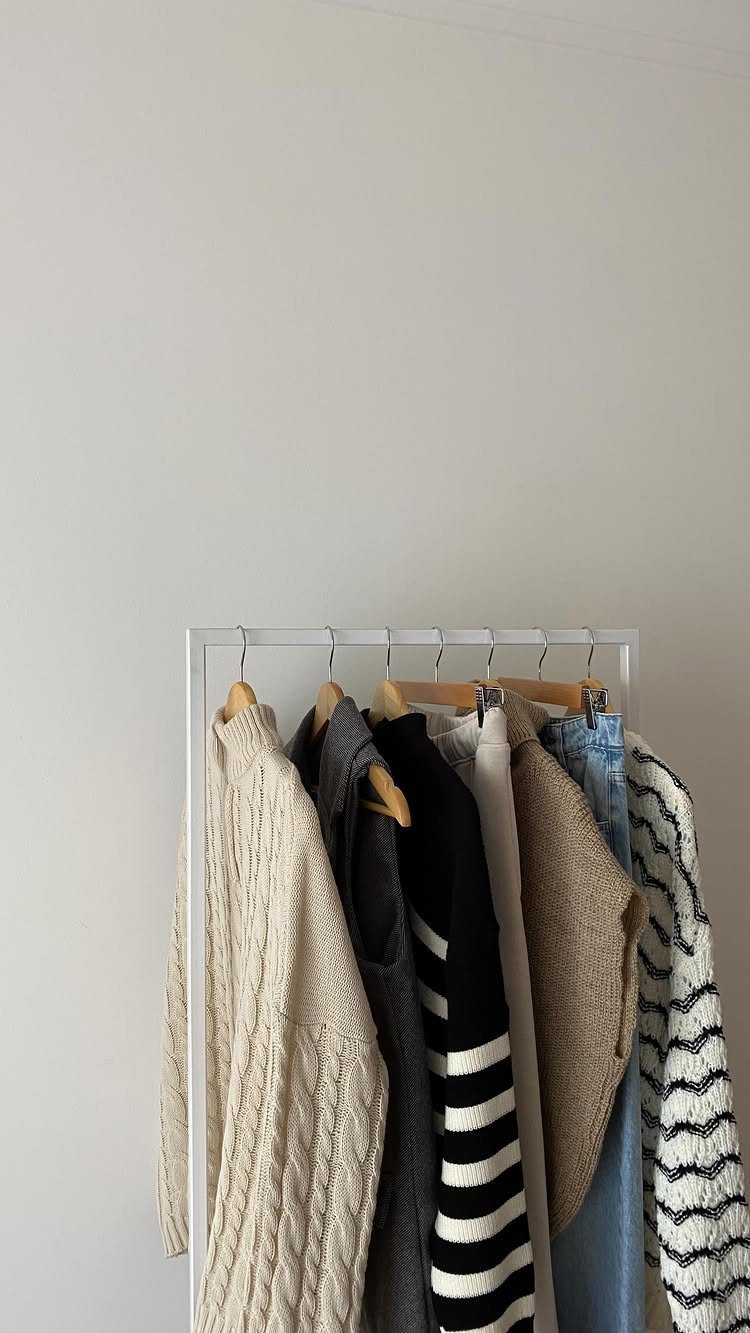
A freestanding metal rack keeps sweaters in view and within reach without committing to permanent closet fixtures.
Hangers work better than you’d think for heavier knits if you use padded or wide wooden styles that distribute the weight across the shoulders.
This setup works best in a bedroom or walk-in closet with wall space you’re not using. The sweaters stay accessible, and you can move the rack if you rearrange.
Choose a rack with a lower bar or shelf if you want to double up with bins underneath.
8. Divided Fabric Storage Bins
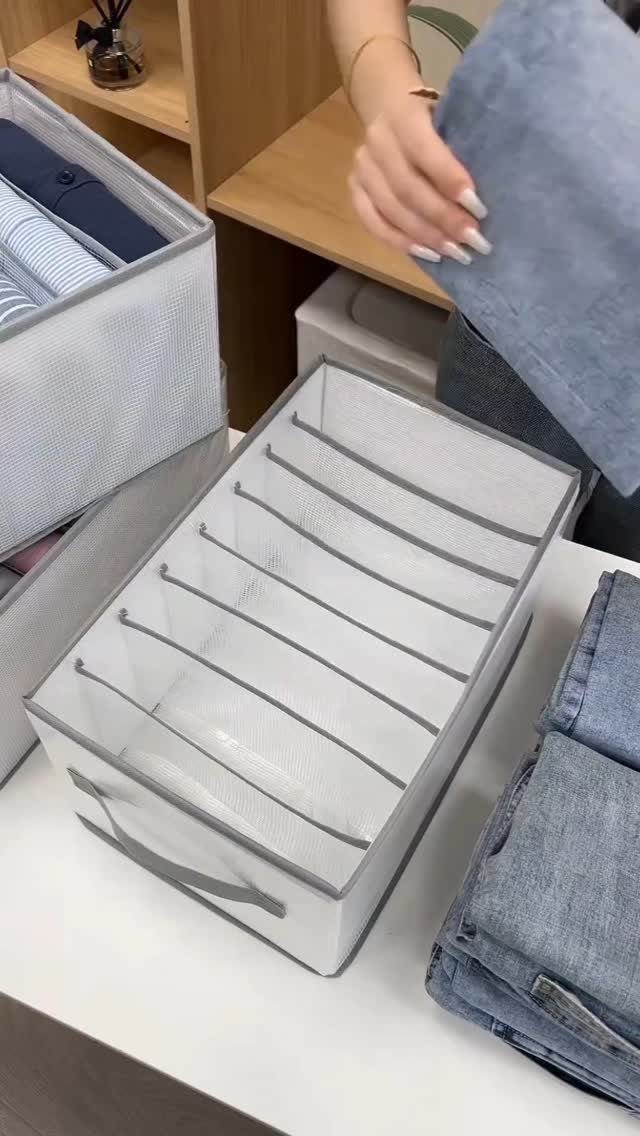
Internal dividers keep individual sweaters separated so you can pull one out without disturbing the rest of the stack. Each compartment holds 1 folded sweater, and the dividers stay in place when the bin sits on a shelf.
Fabric bins with sewn-in dividers collapse flat when you’re not using them, which matters if you rotate seasonal storage. The number of compartments varies depending on the bin, and most fit a standard closet shelf width.
This works well for lightweight and midweight knits that don’t need much breathing room.
9. Open Shelving Stacks
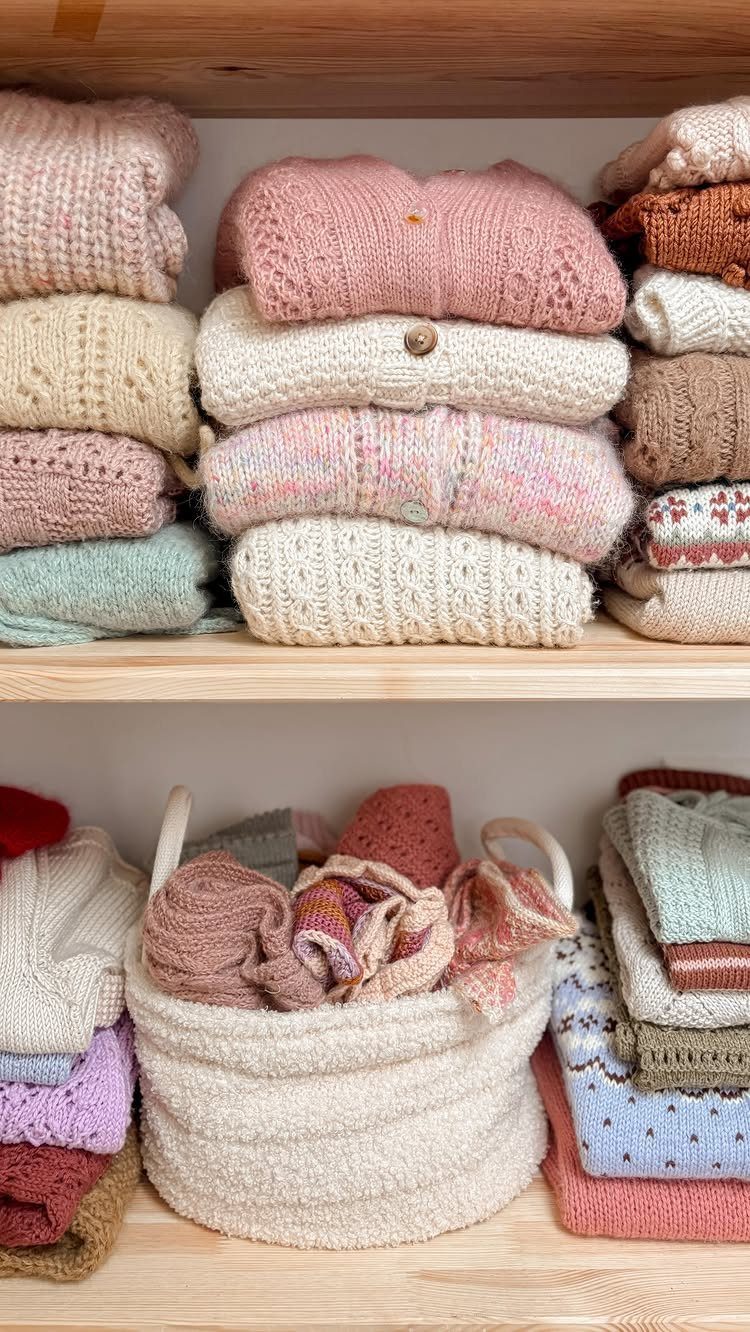
Stacking sweaters directly on shelves keeps them visible and easy to grab.
I fold each one to the same width so the stacks line up neatly, and I keep the tallest stacks toward the back where they’re less likely to tip.
A basket on the same shelf can hold rolled scarves or a few extra pieces you reach for less often.
The open arrangement makes it easy to see everything at once, but it also means the sweaters collect dust faster than they would in a bin with a lid.
10. Deep Closet Drawers
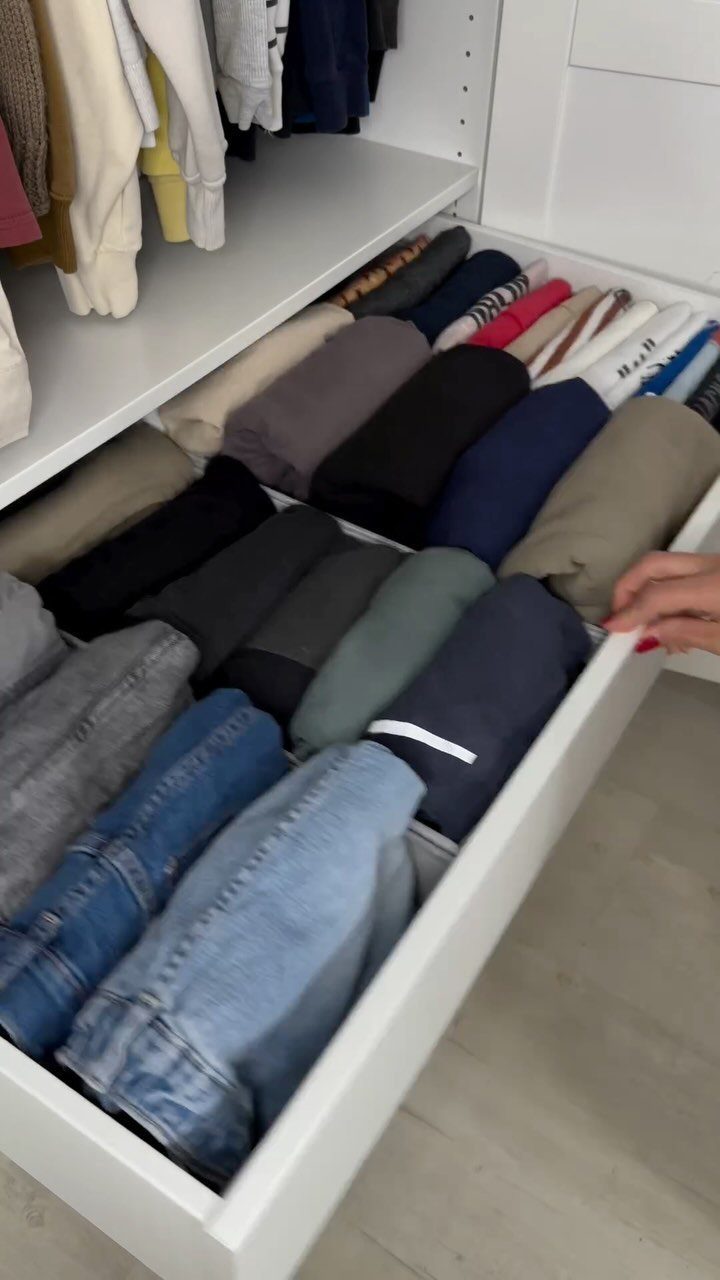
A pull-out drawer built into a closet system holds rows of folded sweaters side by side, so you can see every piece without lifting a stack.
The depth gives you room to file sweaters vertically or lay them flat in multiple rows.
I prefer vertical filing because you can pull one sweater out without shifting the rest, and the edges stay visible when the drawer is open.
This setup requires built-in or modular closet components, so it’s a better fit if you’re already installing a system or have adjustable shelving in place.
11. Space-Saving Tiered Hangers
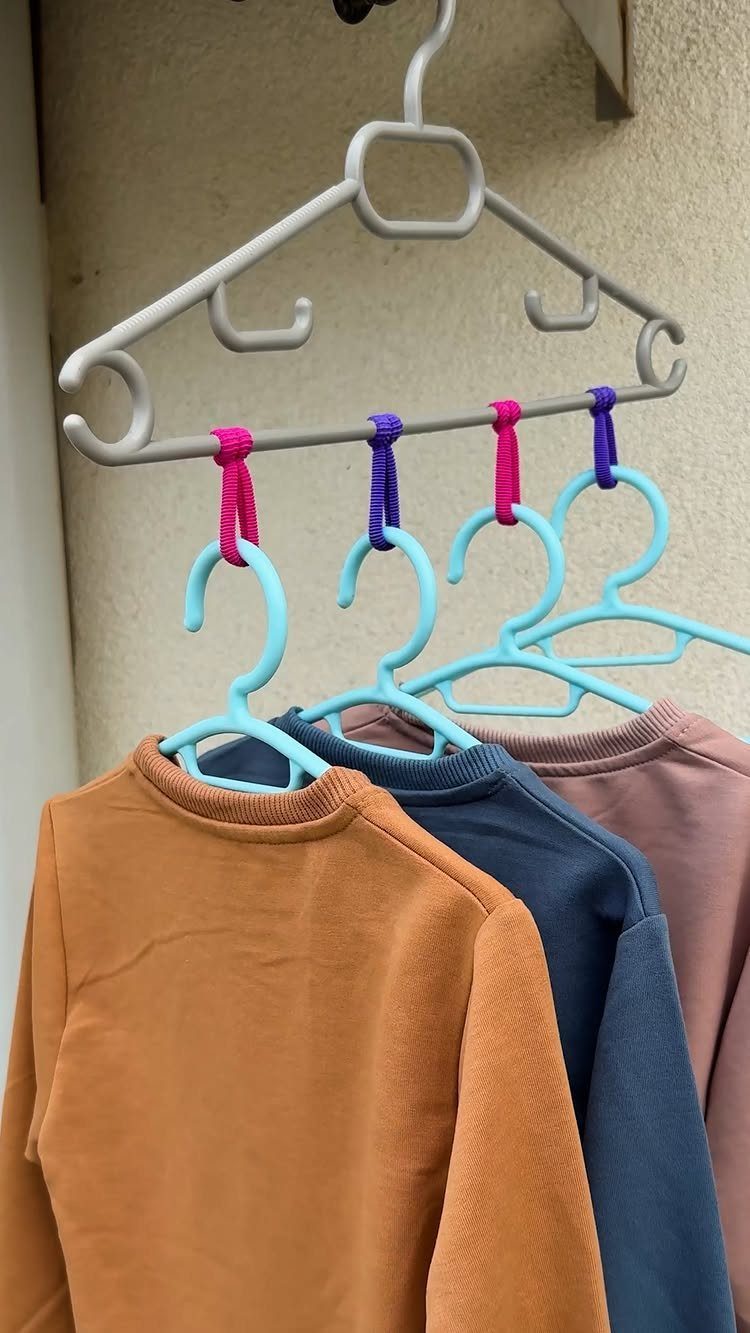
Tiered hangers let you hang multiple sweaters from a single closet rod hook by stacking the hangers vertically. Each level holds 1 sweater, and the whole unit takes up the rod space of 1 regular hanger.
The trade is access. You have to lift the top sweater to reach the one below it, so this works best for pieces you wear in rotation rather than daily staples.
Limit how many you stack so the hanger can still hold the weight without sagging. Any more and the bottom piece hangs too low or the weight pulls the top hanger forward.
12. Fabric Bins with Handles
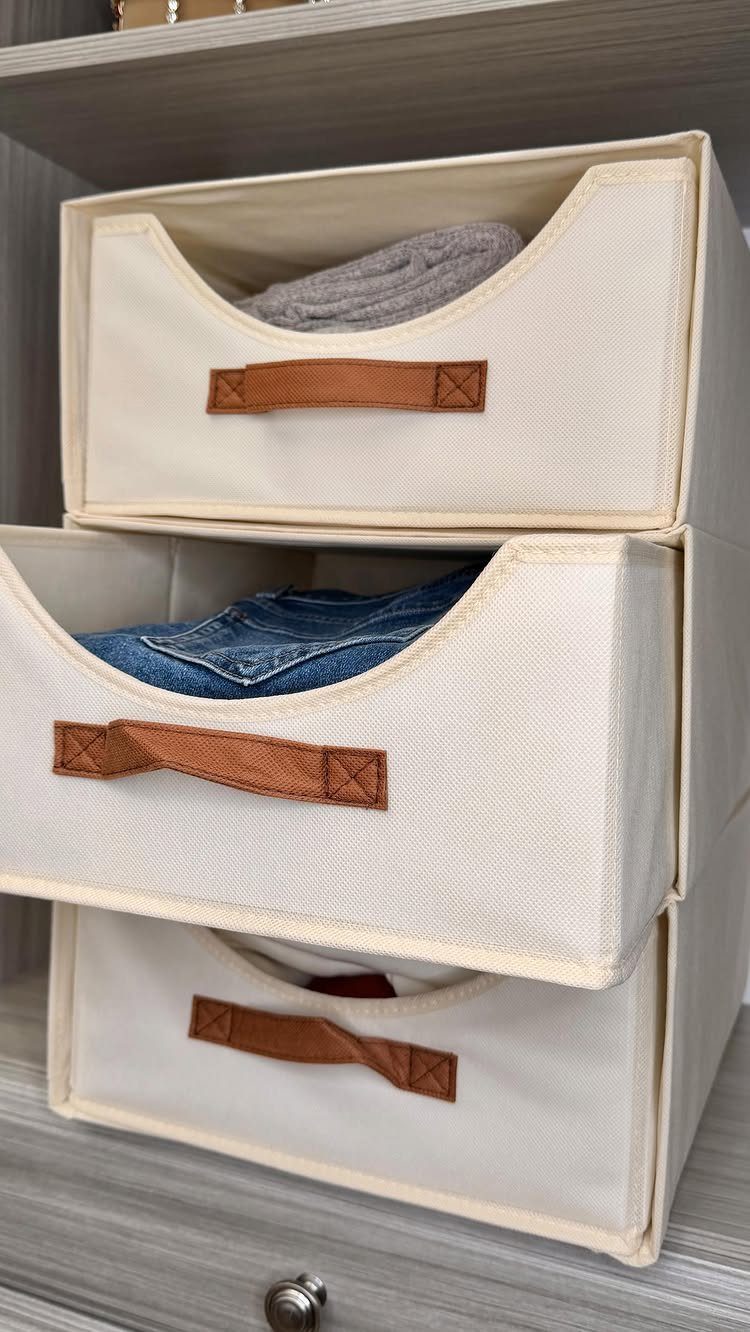
Handles on both sides of a fabric bin make it easy to pull down from a high shelf or carry to another room.
The bins collapse when empty, and the neutral fabric blends into most closet finishes without adding visual clutter.
I use these for sweaters I’m rotating out at the end of a season because I can move the whole bin to storage in one trip.
They stack well if the shelf has enough vertical clearance, and the soft sides compress slightly under weight.
Look for reinforced handles stitched through the fabric rather than just glued on. A loaded bin full of wool sweaters is heavier than it looks.
Proper Preparation Before Storage
Make sure each sweater is clean and dry before you put it away. Clean fabric keeps moths and other pests out, and anything left damp will smell stale when you pull it back out months later.
Check pockets and empty them. A forgotten tissue or receipt can leave marks or attract bugs.
Look each piece over for damage and fix what you find. Replace a missing button, repair a snag, or fix a broken zipper now rather than discovering it when you need the sweater again.
Silica gel packets absorb moisture from the air and help keep stored sweaters smelling fresh.
Avoid Plastic for Long-Term Storage
Plastic bins can work if the sweaters going in are bone-dry and clean, but any dampness gets sealed in and creates problems.
That trapped air turns stale fast, and natural fibers can develop odors or damage over months in a sealed container.
Toss a few silica packets in the bin and crack the lid every month or so to let stale air out. Bins stored in spaces with stable temperatures perform better than those exposed to extreme heat or humidity.
Vacuum-sealed bags compress synthetic sweaters and save space for short-term storage, but avoid them for wool and other natural fibers that need airflow. Breathable materials like cotton or canvas work better for long-term storage of delicate knits.
Moth Prevention Tips
Cedar blocks and rings give off a scent moths avoid, and they leave your sweaters smelling like wood instead of mothballs. Lavender sachets work the same way and smell milder if you prefer that.
The scent fades over time, and moths ignore cedar that no longer smells strong.
Pheromone traps lure male moths in and catch them before they can reproduce. They’re safe for closets and storage areas, and they work alongside cedar or lavender rather than replacing it.
Cotton balls soaked in peppermint, eucalyptus, or tea tree oil also deter pests. Place them in bins or drawers where you’re storing wool or cashmere.
Frequently Asked Questions
What is the best way to store your sweaters?
Fold heavy sweaters and stack them flat on shelves or in bins to prevent stretching. Hanging adds weight to the shoulders and can distort the shape over time, especially with wool and thick knits on standard wire or thin hangers.
Lighter sweaters can go on wide wooden or padded hangers if you need the shelf space.
What are some good closet organizers for sweaters?
Shelf stackers and divided fabric bins keep stacks organized without taking up more footprint, and pull-out plastic bins with perforated sides add airflow for wool.
Over-the-door organizers turn vertical space into slots for lightweight knits, and deep drawers let you file sweaters vertically so you can see every piece at once.






