Budgets here start around $200–$800 for a jute rug or a wicker piece and climb past $2,500 for a slipcovered or neutral tan sofa, so there is a starting point at nearly every price.
A single accent chair or a light wood coffee table can change the feel of a room for far less than a new sofa.
1. Wicker Furniture
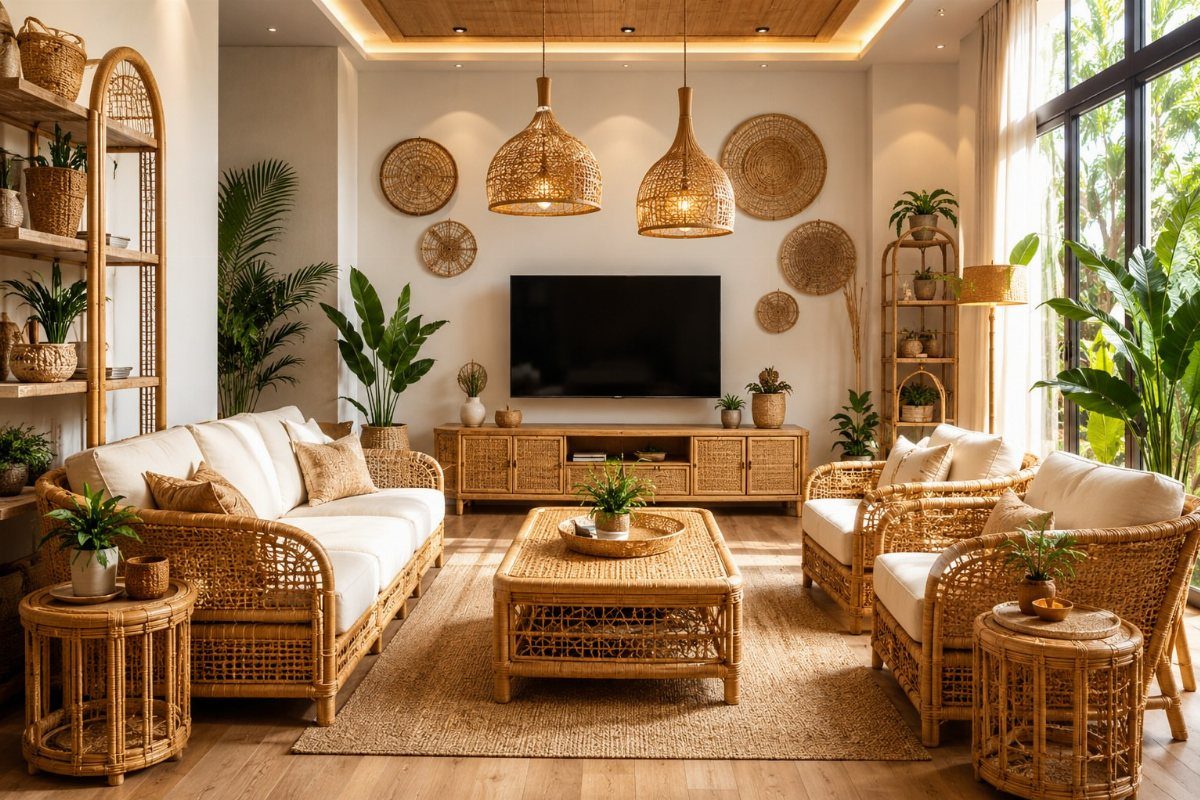
Wicker is light enough to rearrange on a whim, which matters if your living room doubles as a dining spot or a play area. It also shrugs off damp air better than most upholstered frames.
The white cushions do the heavy lifting here. Wicker alone can look stiff, so I’d pick a frame in one natural tone and let the cushions carry the softness.
Woven pendants and wall decor in the same material tie it together, but I’d stop at two or three woven pieces beyond the furniture.
2. Jute Rugs
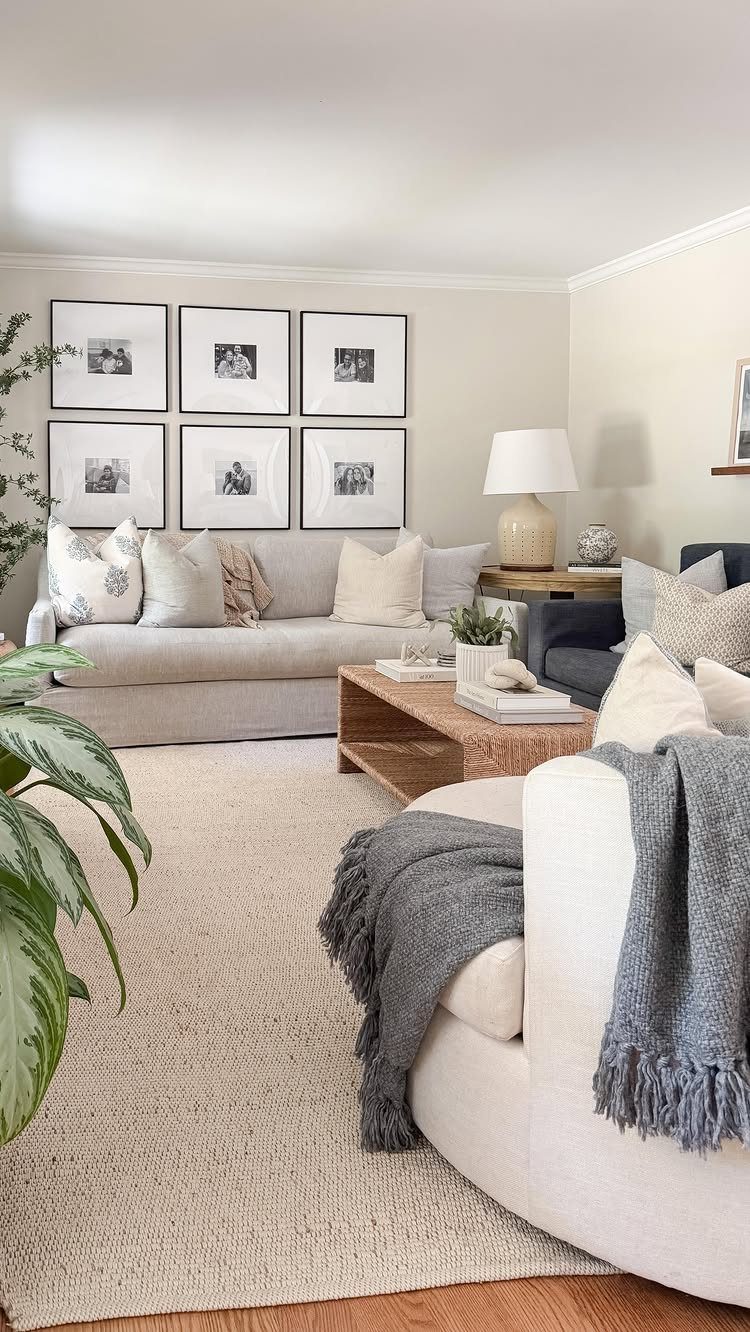
A jute rug brings in texture without adding a single color, which is why it works under almost any coastal sofa.
A tan jute weave pairs well with a wooden coffee table and a light sofa, because the warm, natural tones sit together without competing.
Pick a size big enough that the front legs of the sofa and chairs rest on it.
A small rug floating in the middle makes the room feel smaller. Jute is coarse underfoot, so I’d choose it for a main seating area rather than a spot where people sit on the floor.
3. Slipcovered Sofas
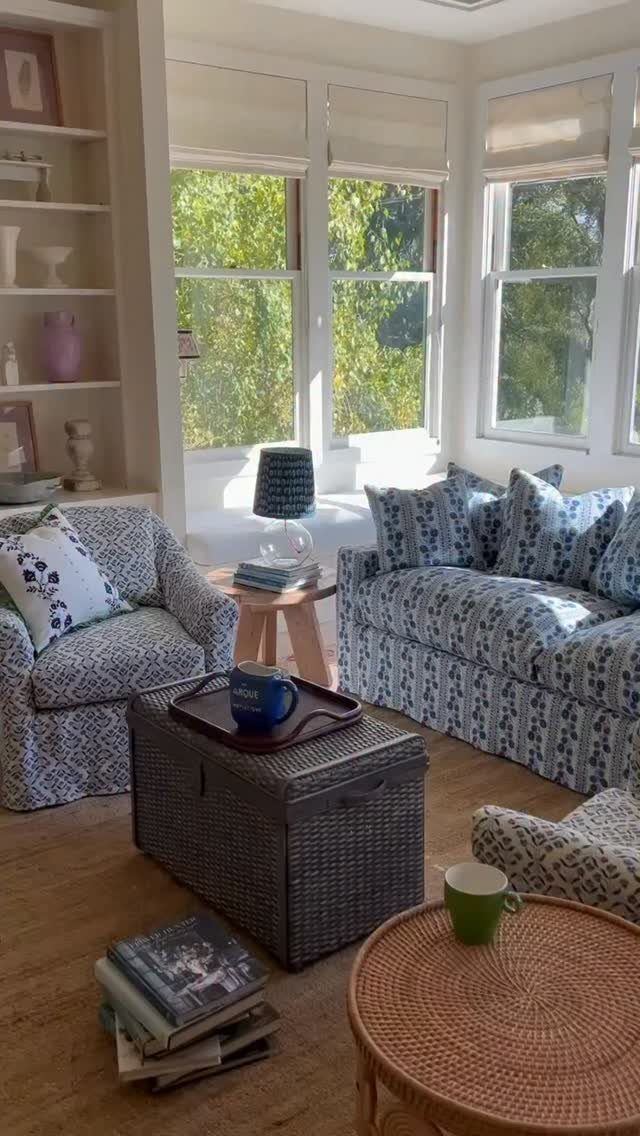
Easy maintenance is the whole argument for a slipcover: when a cushion gets stained, the cover comes off instead of the sofa getting replaced. A blue and white pattern also hides small marks better than a solid white would.
Matching the sofa and armchair in one pattern makes the seating read as a set, and a slipcover in the same fabric gets you there on a budget.
A wicker ottoman with storage next to it holds blankets and keeps the room tidy. Check that the cover fits snugly, since a baggy one looks sloppy.
4. Accent Chairs
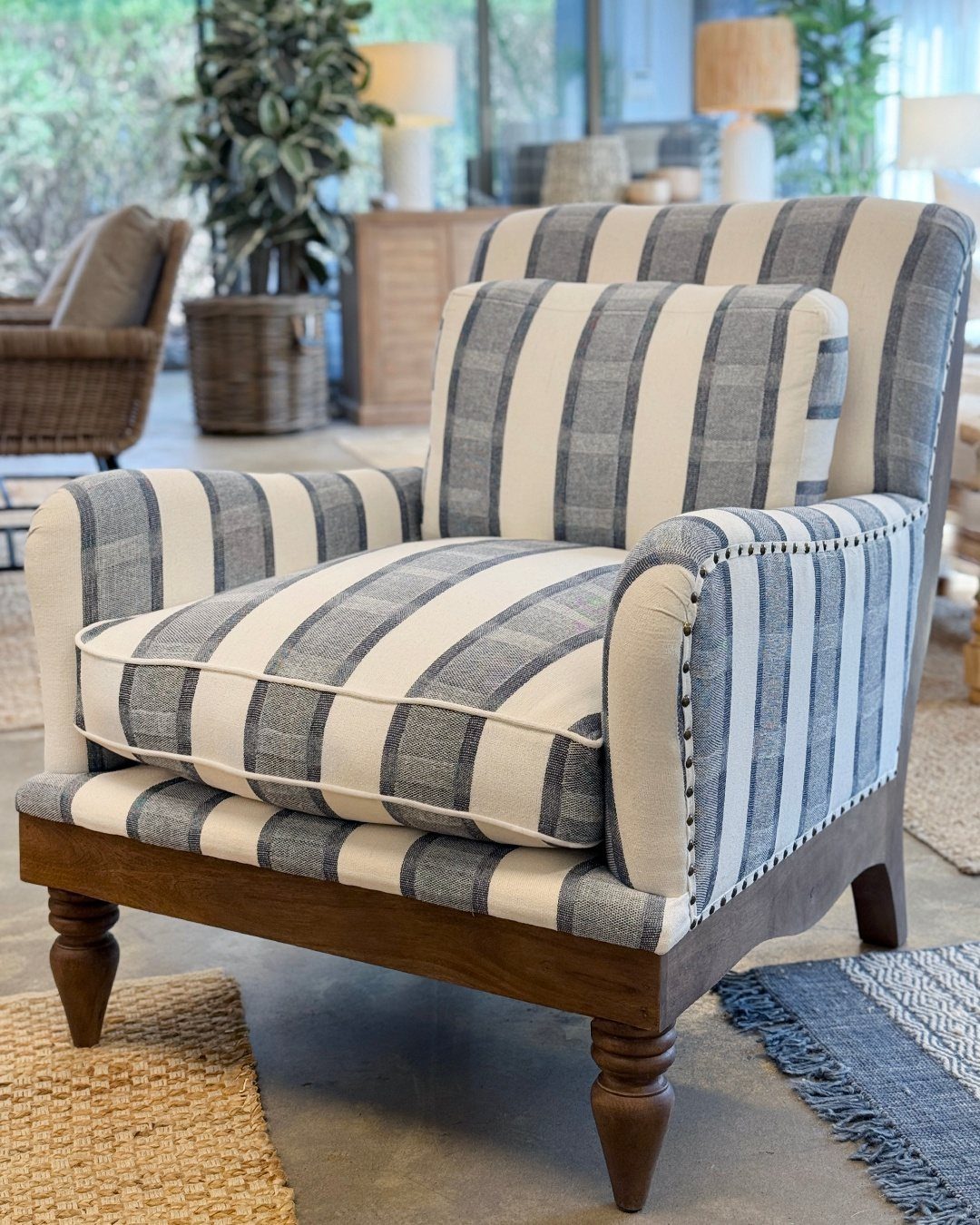
One striped chair can set the tone for a whole room. Blue and white stripes read as coastal immediately, and the wooden legs and nailhead trim keep it from looking like a beach-house cliché.
For a budget project, buy a single statement chair and keep everything around it plain.
Place it where the stripes catch light, near a plant or a window. I’d skip a second patterned piece nearby; the chair works because it stands alone.
5. Outdoor Furniture
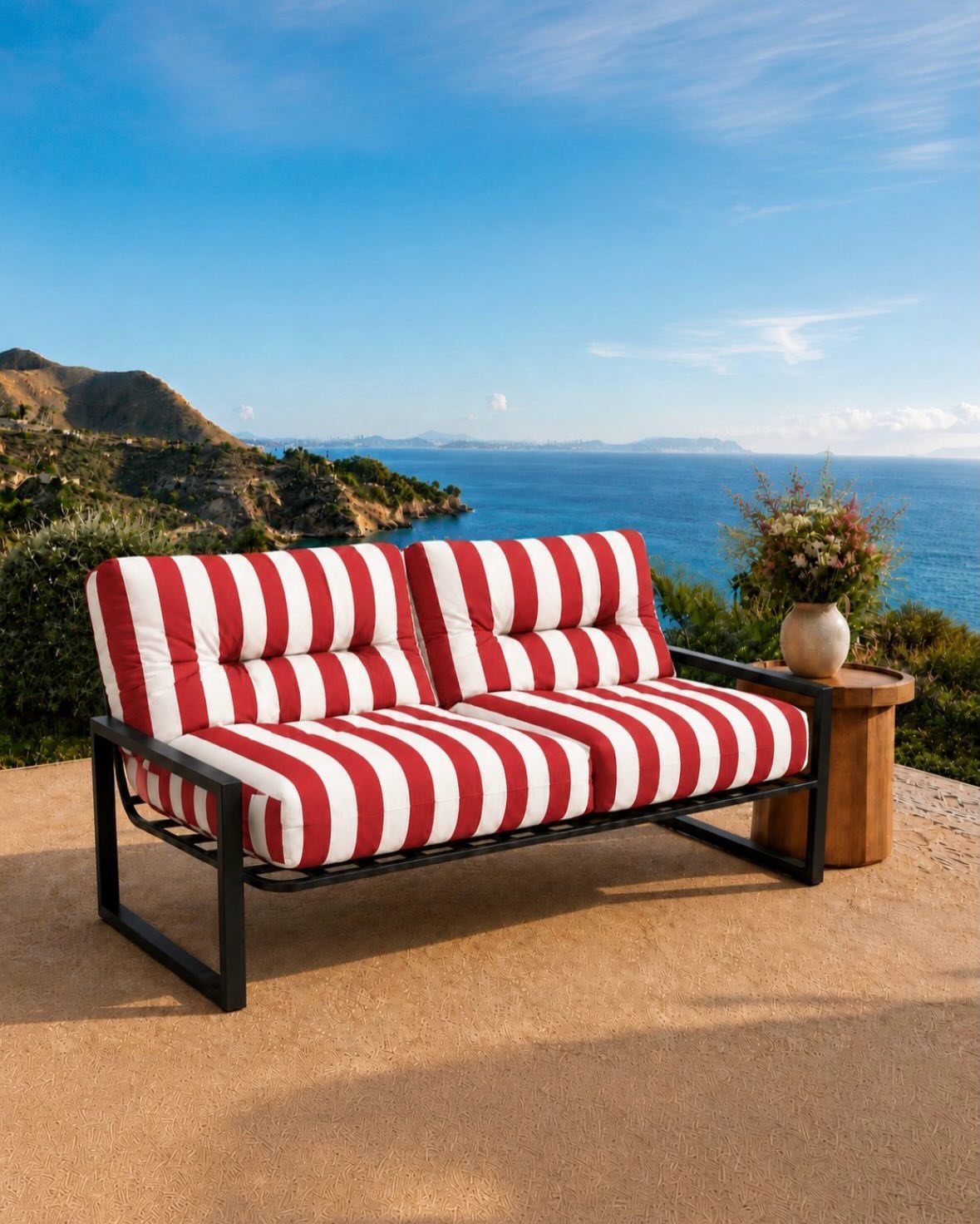
A striped outdoor sofa carries the coastal look onto the patio, and red and white stripes feel livelier than the usual blue. Bold stripes also mean you need very little else.
If your view is less dramatic than an ocean, the stripes still carry the space. I’d pick one strong color and repeat it only once, in a pillow or a cushion.
6. Furniture Arrangement
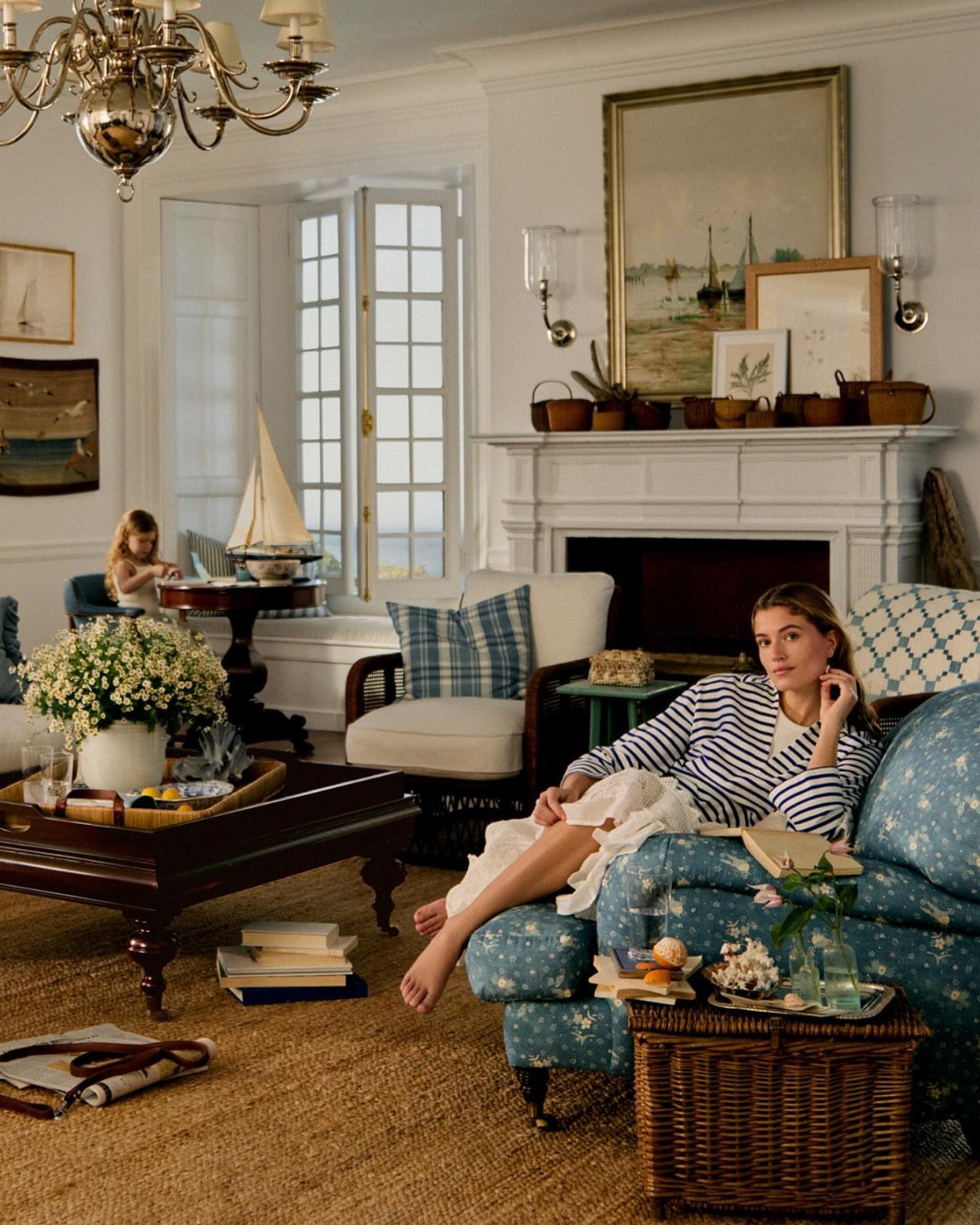
Where the furniture sits matters as much as what it is. In this room, the blue sofa and white armchairs face each other near the fireplace, which gives the seating a clear center and leaves the window view open.
Start by choosing one focal point, a fireplace or a window, and angle the seating toward it. Then set the chairs close enough for easy conversation.
A jute rug underneath anchors the group. I’d avoid pushing everything against the walls, since that makes a room feel emptier.
7. Light Wood Coffee Tables
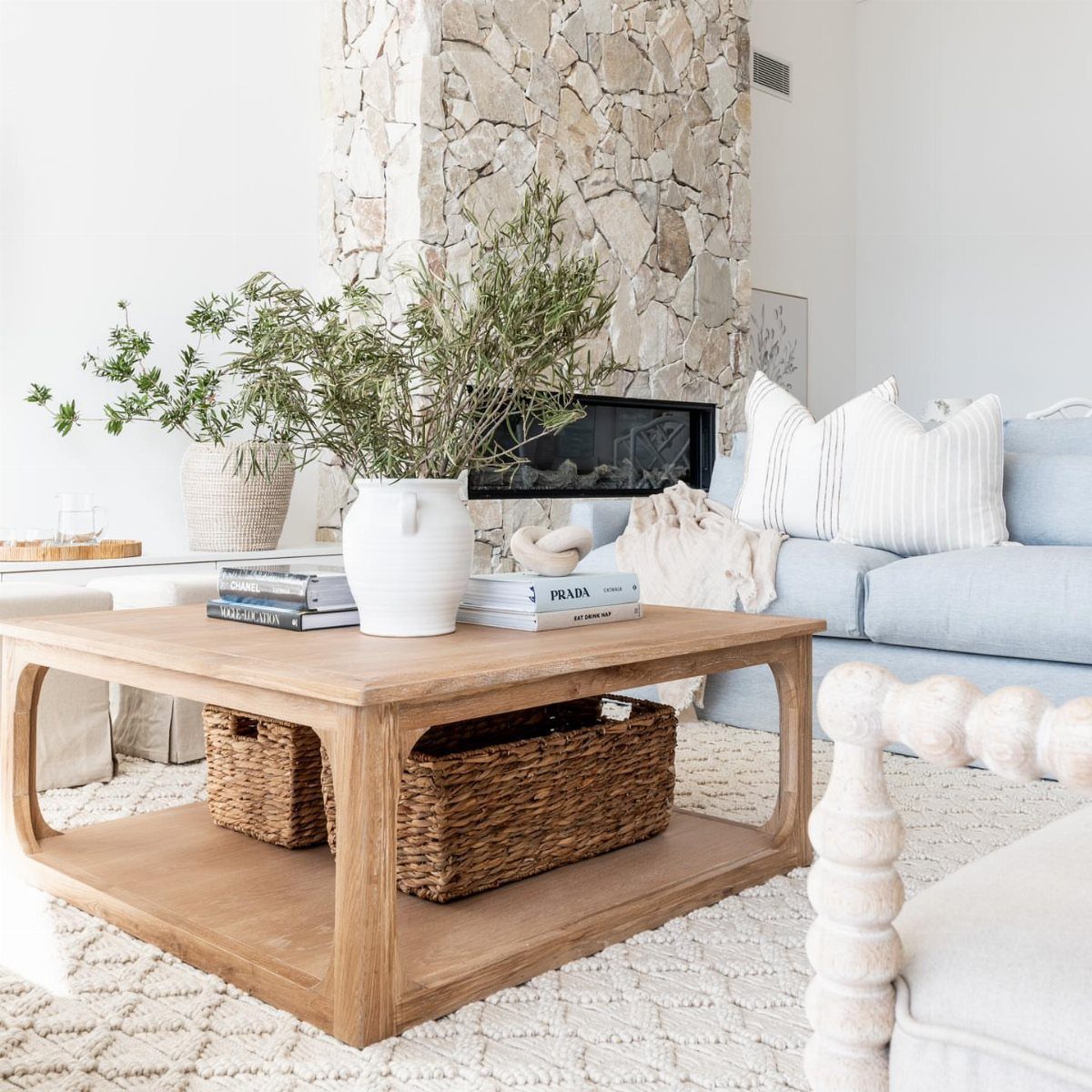
A light wood coffee table does 2 jobs at once: it warms up a room full of blue and white, and it gives you a surface to style.
Baskets underneath hold throws and remotes, so the top stays clear for a stack of books and a plant.
I’d keep the top to three things: books, one vase or greenery, and nothing more.
Crowded tables read as clutter fast. Look for a finish close to the tone of your other wood pieces so they match.
8. Driftwood Console Tables
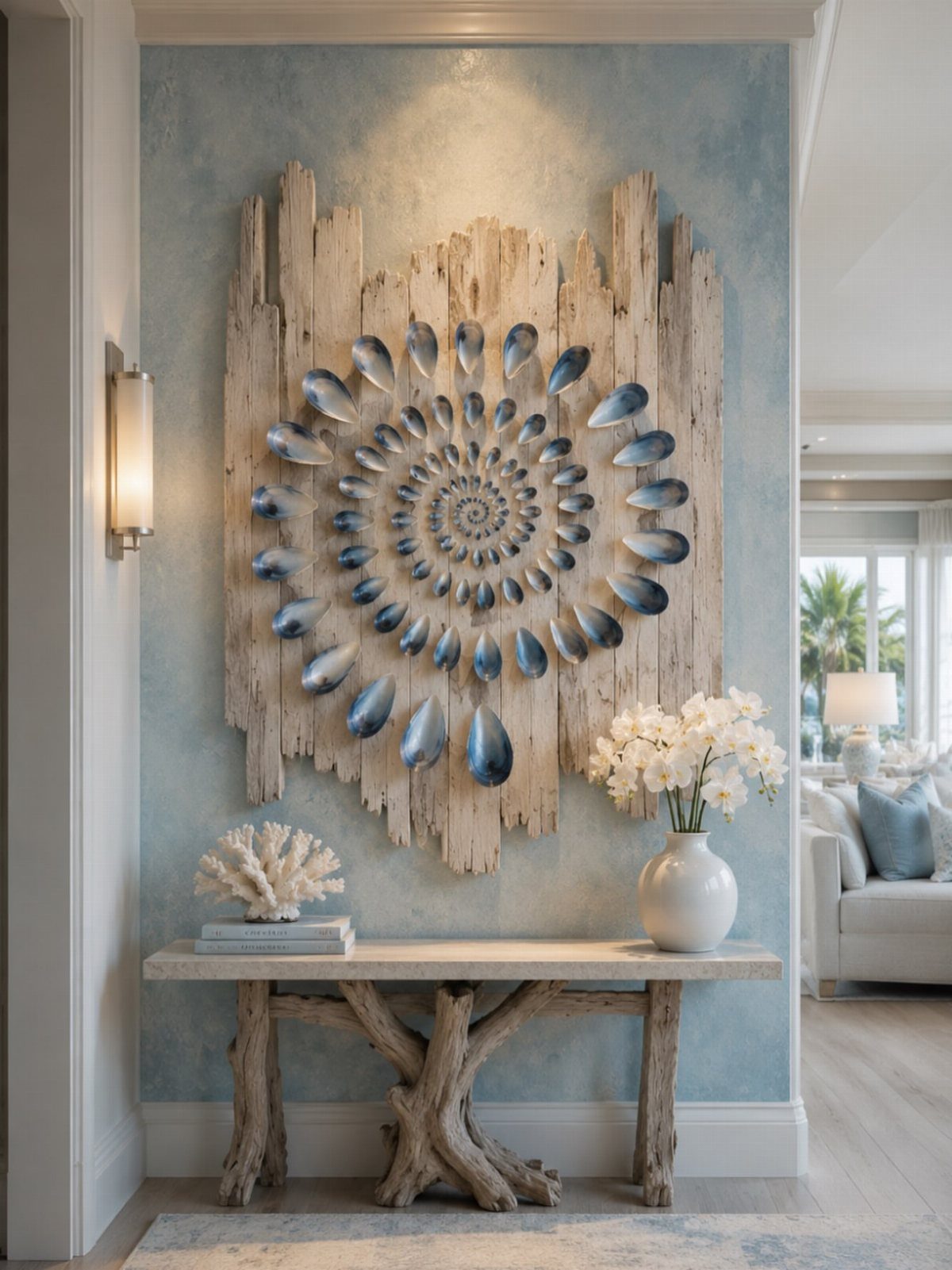
Against a soft blue wall, a driftwood console gives the room a rough, weathered edge that smooth painted furniture can’t. Each piece has its own grain and shape, so no two look alike.
Style it with one tall element, like orchids, and one sculptural piece, like coral. Hang a single large shell piece above it rather than several small ones.
A console like this is narrow, so it suits an entry or a spot behind the sofa. Leave some bare wood showing.
9. Neutral Tan Sofas
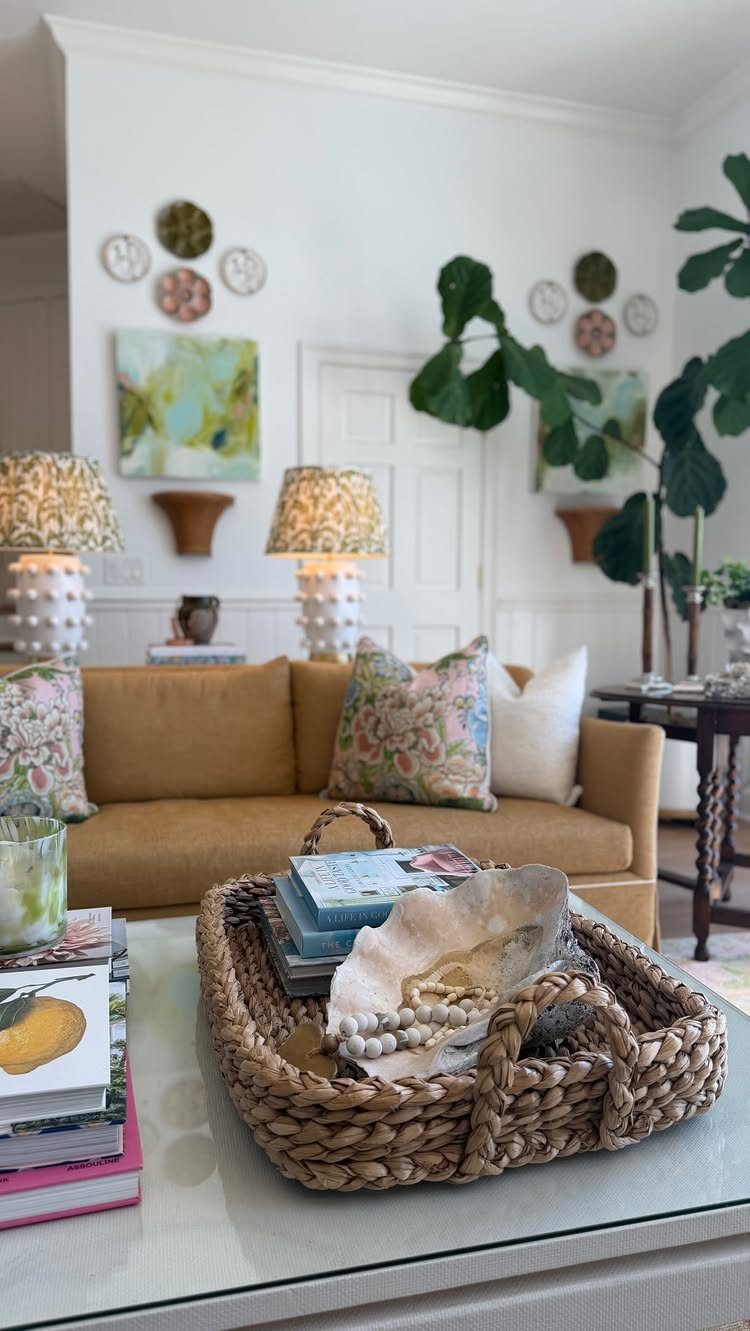
Tan is the easiest sofa color to live with in a coastal room, because it lets white tables, wicker, and shells stand out instead of competing with them. Patterned pillows then supply the personality.
A pair of pillows in related patterns works, or a trio if the sofa is wide, and at least one should be a quiet tone close to the sofa itself.
Pillow covers cost far less than a new sofa, so you can swap them with the seasons. A woven tray on the coffee table keeps small objects grouped and tidy.
Maintenance and Durability
Judge a coastal piece by how it is built before you look at the finish.
Before buying, tip the piece, press down on the arms, and look at how the joints are built: doweled or mortise-and-tenon beats staples, and a frame that feels heavy for its size usually has real hardwood inside.
Chunky, sturdy furniture with a few scuffs and rough spots holds up longer than a slim piece with a perfect finish, because the sturdy one has less to lose.
Salt air and sun wear every finish down eventually, so a perfect one only delays the scuffs.
Weathered and whitewashed wood hides that wear well.
Whitewash is diluted white paint or stain, and it leaves a pale, mottled look that reflects light and hides bleaching and salt spray. A distressed finish works the same way, so scratches and dings blend in instead of standing out.
Budget Vs. Investment
Spend on the pieces you will keep for decades, and save on the ones you will swap.
Spend the most on the big pieces you use every day: the sofa, the dining table and the bed frame. Accent furniture can come from mid-range or secondhand sources.
Here are the 3 price tiers, from cheapest to most expensive. Budget pieces at $200–$800 are usually particle board with finishes that age badly, and they last about 3–5 years.
Mid-range pieces at $800–$2,500 have solid wood frames and better upholstery, and they last 10–15 years with care. Above $2,500, brands like Serena & Lily and Maine Cottage build pieces meant to last 20+ years.
Consignment is the shortcut.
Mid-range and investment pieces often sell for 30–50% below retail, though lead times can run longer. A high-quality slipcovered sofa is a smart place to put your biggest purchase.
Eco-Friendly Sourcing
Durability is the first sustainability test. One well-made piece that lasts decades beats cheap furniture replaced every year.
Secondhand is the most sustainable way to buy, since it extends a piece’s life and keeps it out of the landfill. Reclaimed wood brings a worn, sun-bleached look that new lumber can’t fake.
For new pieces, look at materials that handle coastal conditions: untreated teak, sustainably harvested bamboo, or wood with a natural finish. Recycled plastic outdoor furniture is durable and uses no new lumber.
Furniture made in the US, from makers like Maine Cottage and Highwood USA, travels fewer miles to reach you.
Frequently Asked Questions
What defines coastal interior design furniture?
Coastal furniture comes down to natural materials, weathered finishes and soft colors like sand, sea and sky.
Wicker, jute, driftwood and whitewashed or distressed wood are the usual picks. These pieces look better as they wear, and the pale finishes hide the scuffs that salt air and sun leave behind.
How do I choose the right coastal color palette for my home?
For the base of the room, I’d stick with soft white, ivory, cool gray or navy, and bring in seafoam, sand and weathered driftwood tones in smaller doses. Keep the colors muted and organic instead of saturated.
Stacking a few neutral textures, like nubby linen against smooth wood, gives the room depth without making it feel crowded. In my own picks, one patterned piece, like a striped chair, works best when everything around it stays plain.
How do I maintain and protect coastal furniture from salt air and moisture?
Salt leaves a film you can’t always see, so a soft damp cloth once a month keeps it from building up, and linen or cotton slipcovers should go in the wash every season.
Natural wood does best with a polish made for coastal climates, and off-season cushions belong in waterproof bins. Weathered, whitewashed or distressed finishes also help, because scratches and bleaching blend into them.