Small living rooms gain space from two directions: a gallon or two of pale paint and one big mirror cost little, while a floating TV console or a coffee table with storage runs higher.
Your room’s extra job should pick the idea, whether that’s hiding clutter with a storage coffee table, clearing the floor with wall-mounted shelves, or making one piece do double duty.
1. Multifunctional Furniture
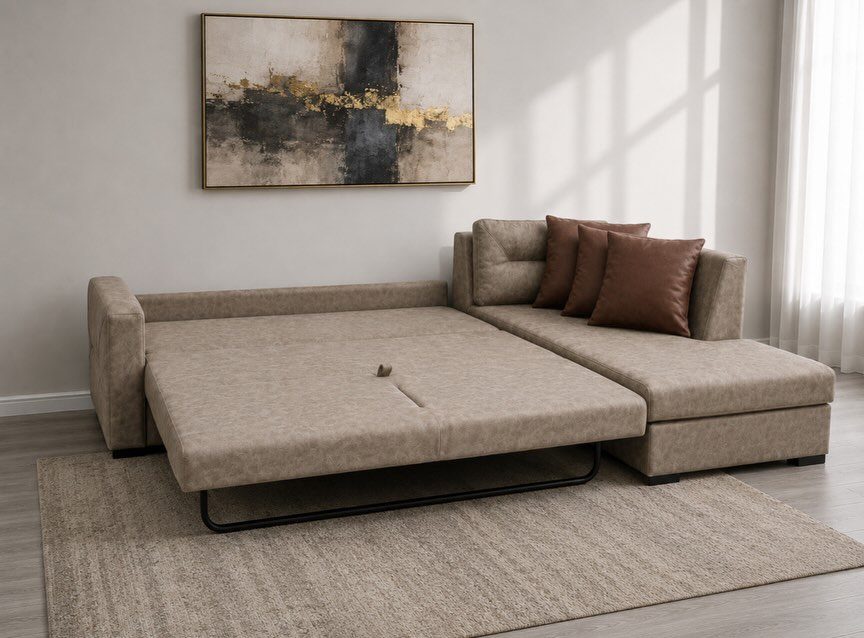
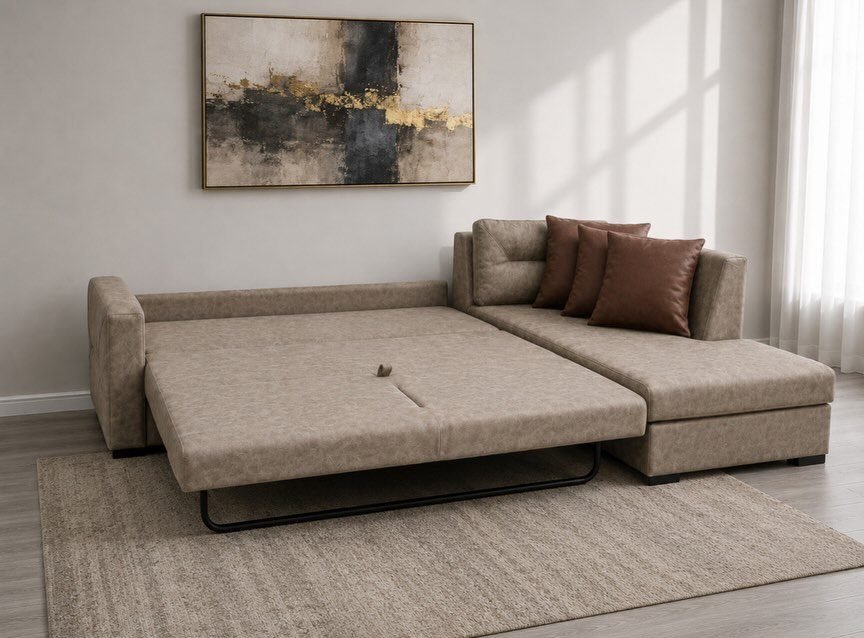
A sectional with a pull-out bed solves the small-apartment problem of needing a sofa by day and a guest bed by night, without giving up floor space to a second piece of furniture.
For a living room that doubles as the guest room, this is the version I’d pick over a separate daybed.
Measure the extended length before buying, and leave enough clearance for the mattress to open fully. A sleeper that only unfolds halfway into a coffee table is a daily annoyance.
Keep the rug and side tables light enough to slide aside.
2. Wall-Mounted Shelves
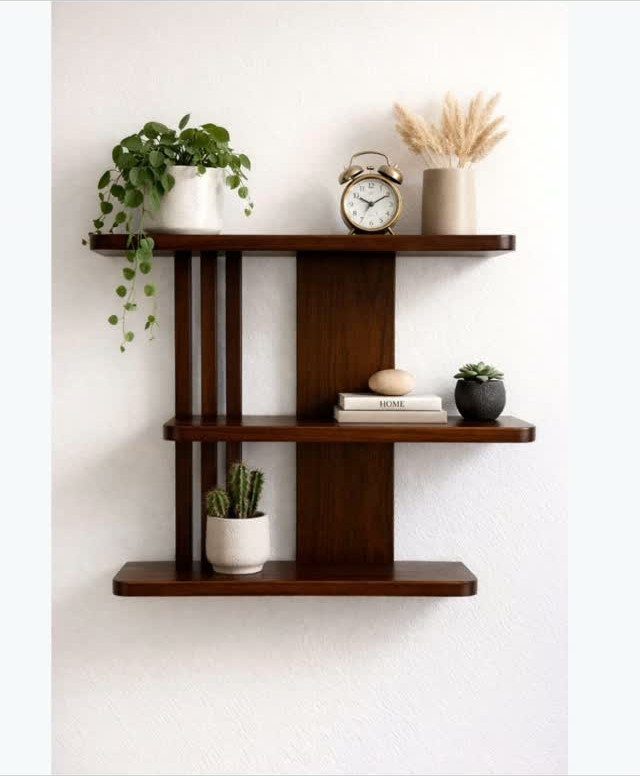
Shelves fixed to the wall give you storage without taking up a single inch of floor, which is the whole appeal in a room where the floor is already spoken for.
I like dark wood against a white wall because the shelves read as a deliberate feature, not clutter.
Anchor into studs or use proper wall anchors, since books are heavy. Leave a little empty space on each tier so the arrangement still looks calm.
3. Nesting Tables
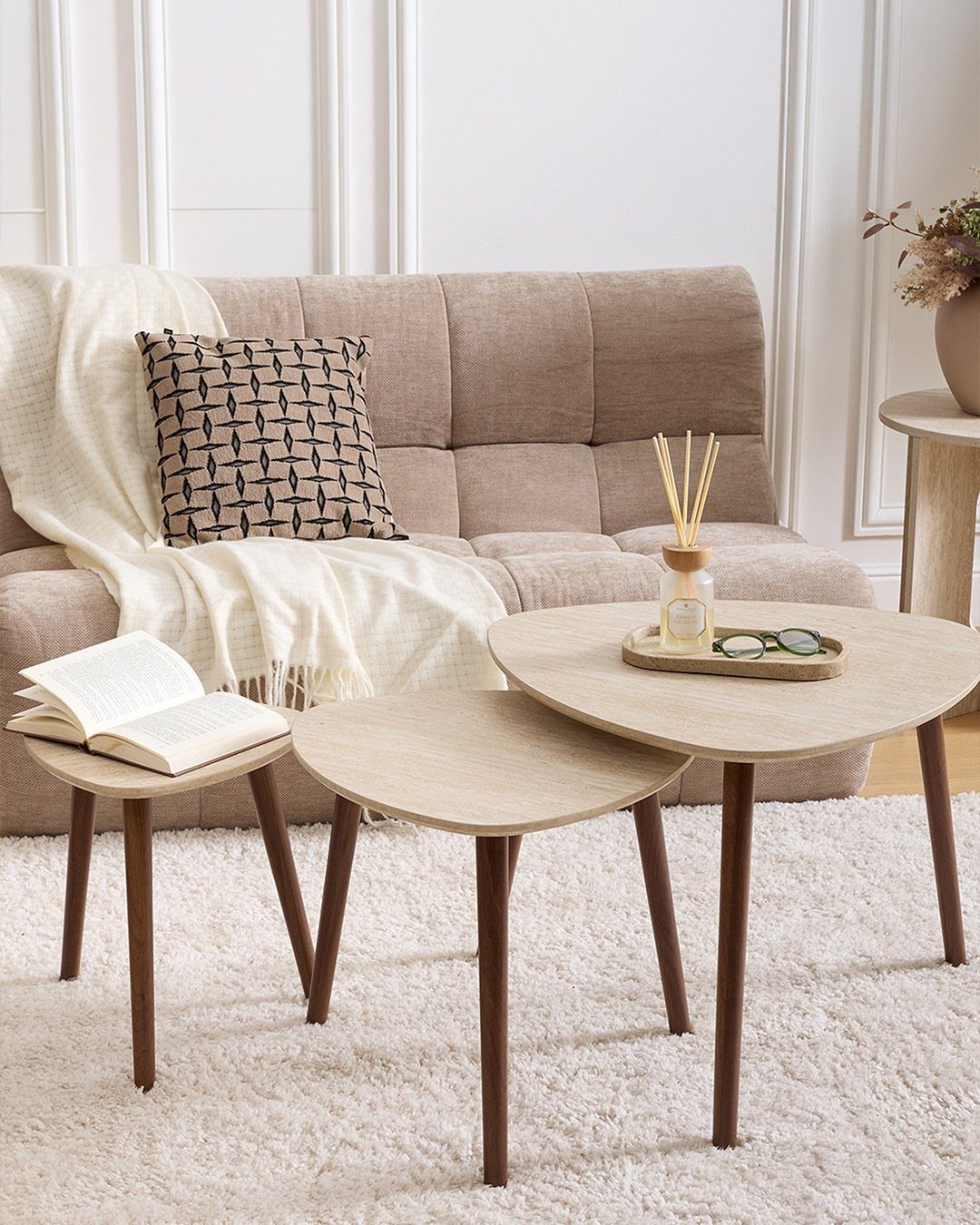
Small tables that slide into one another earn their keep by being a coffee table when you have company and a single compact stack when you don’t.
Light wood keeps the pieces from looking heavy, which matters when floor space is tight.
Pull the largest one in front of the sofa, then spread the others to the sides for drinks or a laptop. Push them back together to reclaim the walkway.
On a shag rug, check that the legs sit steady, because a deep pile can make a small table wobble.
4. Coffee Tables with Storage
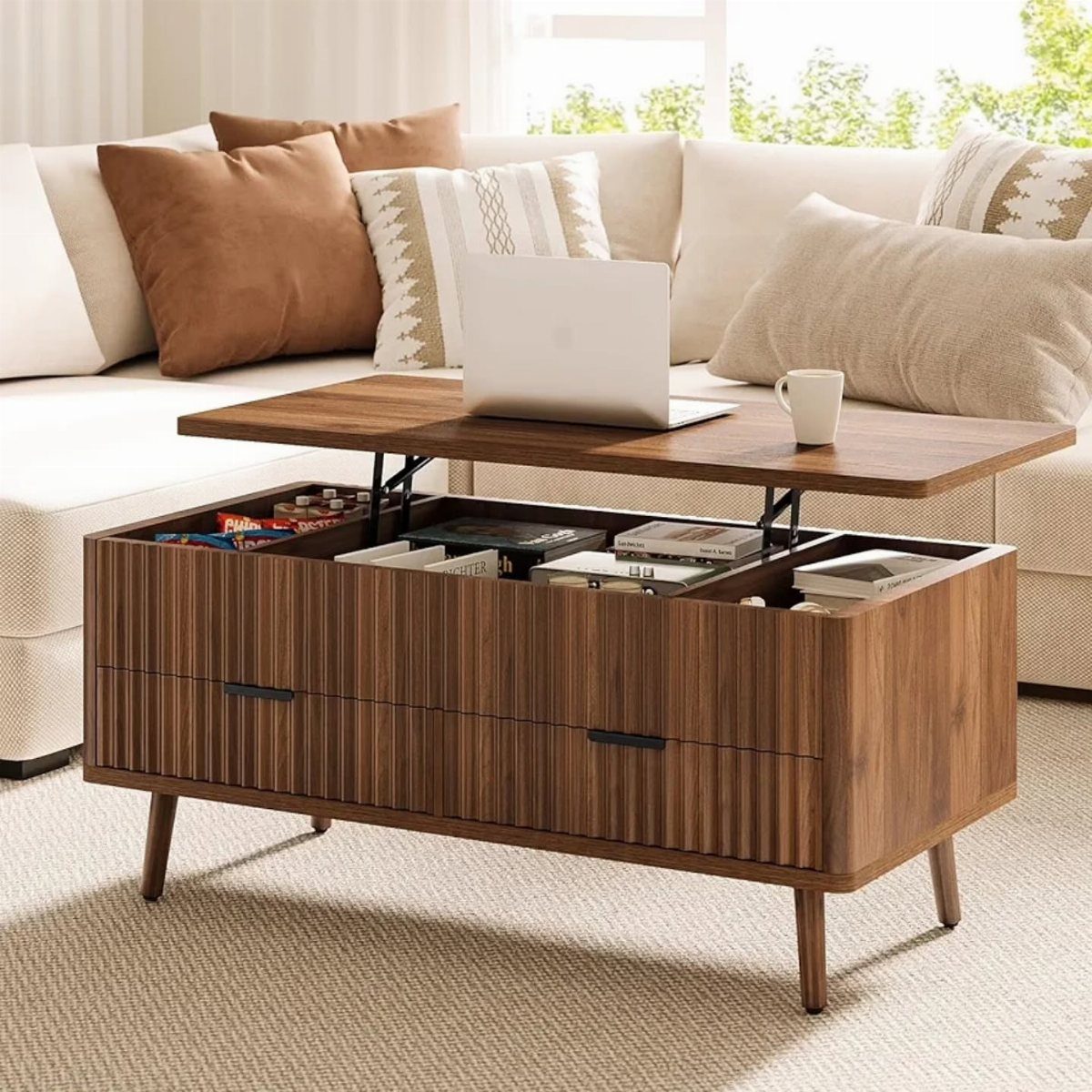
Lift-top coffee tables hide clutter inside the table itself, so books, games and snacks vanish the moment guests arrive.
For a renter without a closet to spare, this is where I’d put money before almost any other piece.
The top rises to bring the surface closer to your lap, handy for eating on the sofa. Choose a wood finish that picks up the tones in your pillows so it blends in.
Test the lifting mechanism if you can, since a stiff hinge will annoy you daily.
5. Lighter Wall Colors
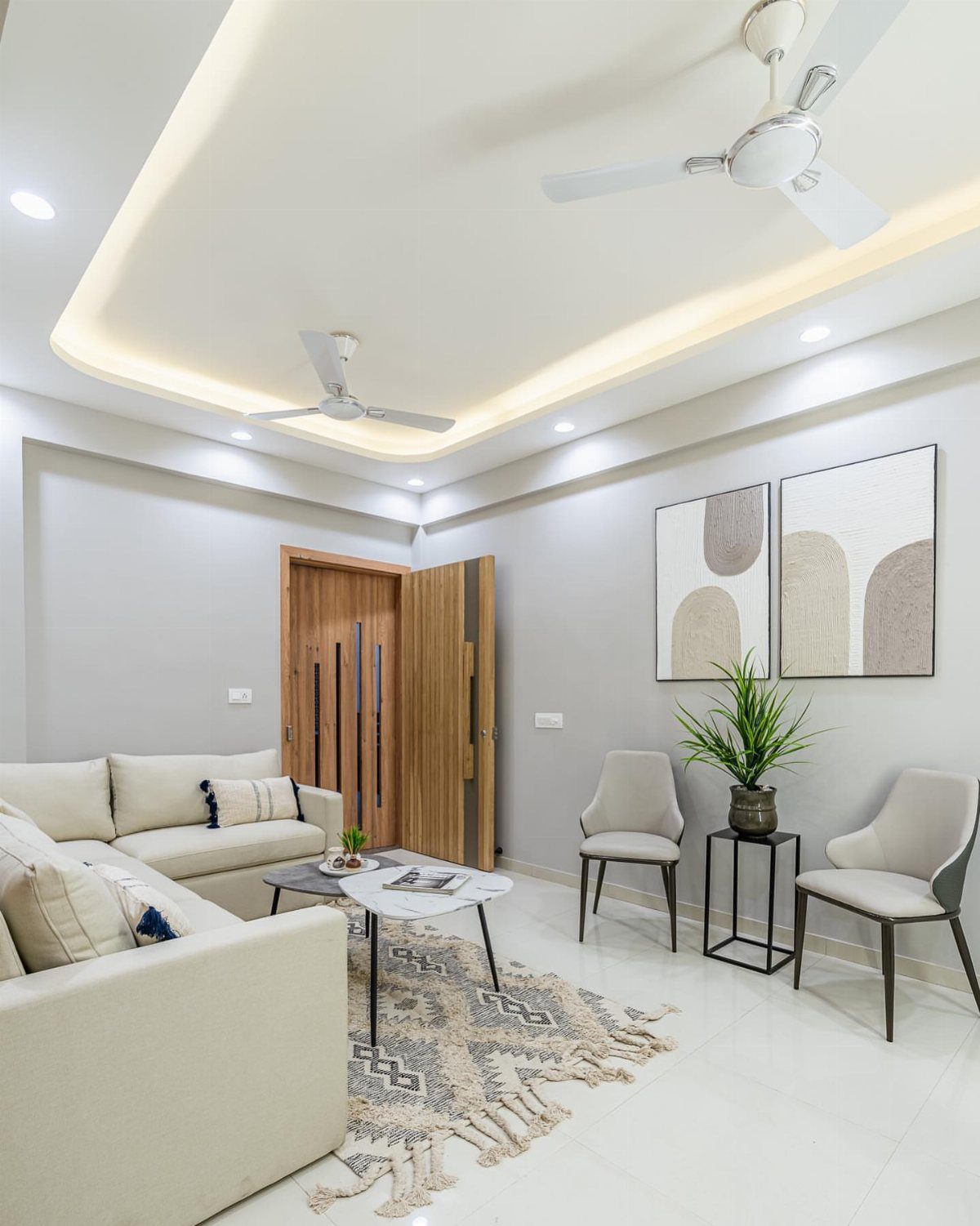
Pale walls make a room read larger because they bounce light around instead of soaking it up, and a can of paint is the cheapest way to get that effect.
Light gray works well when you want something softer than stark white.
Keep the big pieces light too: a cream sofa and a marble-topped table keep the eye moving without hard breaks. Add a patterned rug for contrast, so the room stays interesting rather than flat.
One weekend and a gallon or two is usually all a small living room takes.
6. Use of Mirrors
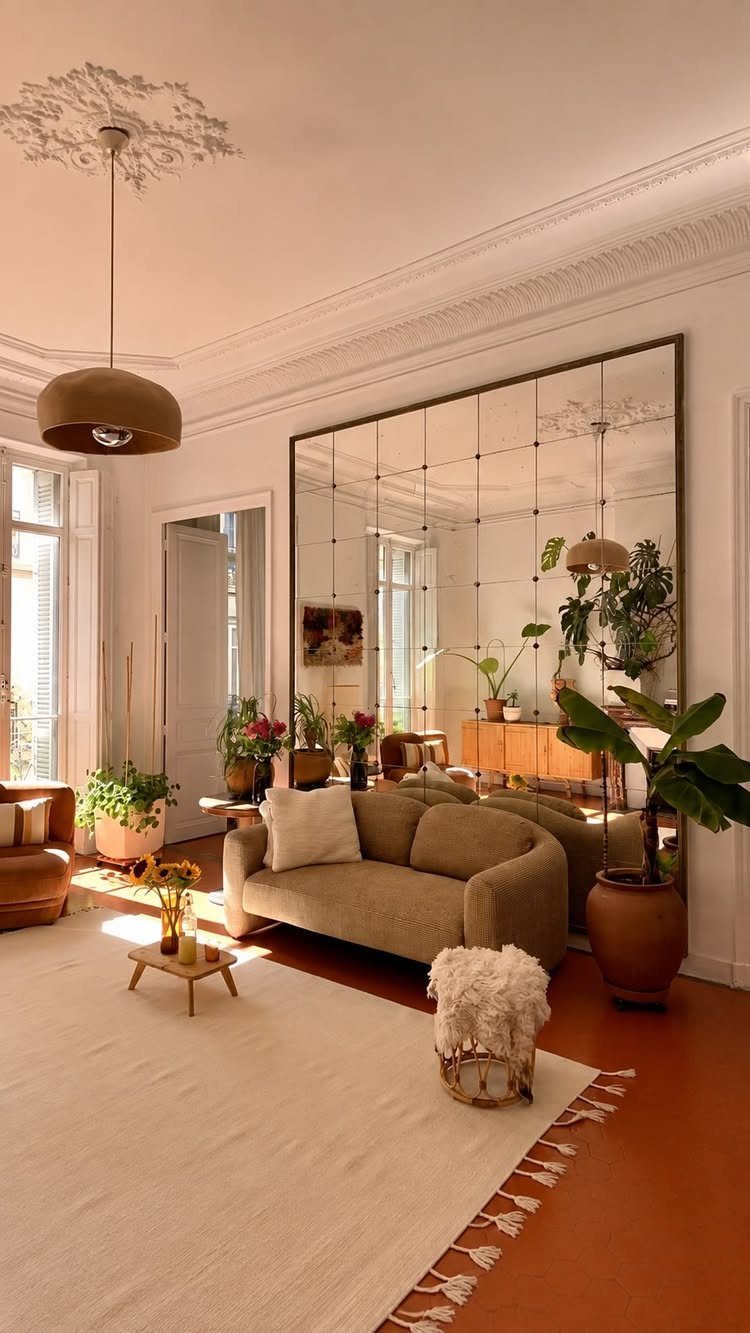
A wall of grid-style mirror panels doubles the apparent depth of a room, and it works hardest when it faces something worth reflecting.
Here the mirror catches the plants and the sofa, which makes the space feel bigger and greener. I’d place yours opposite a window or beside a lamp, not across from clutter, since a mirror shows everything twice.
Large panels cost more than a single framed piece, so if the budget is tight, start with one oversized mirror leaned against the wall.
7. Floating TV Console
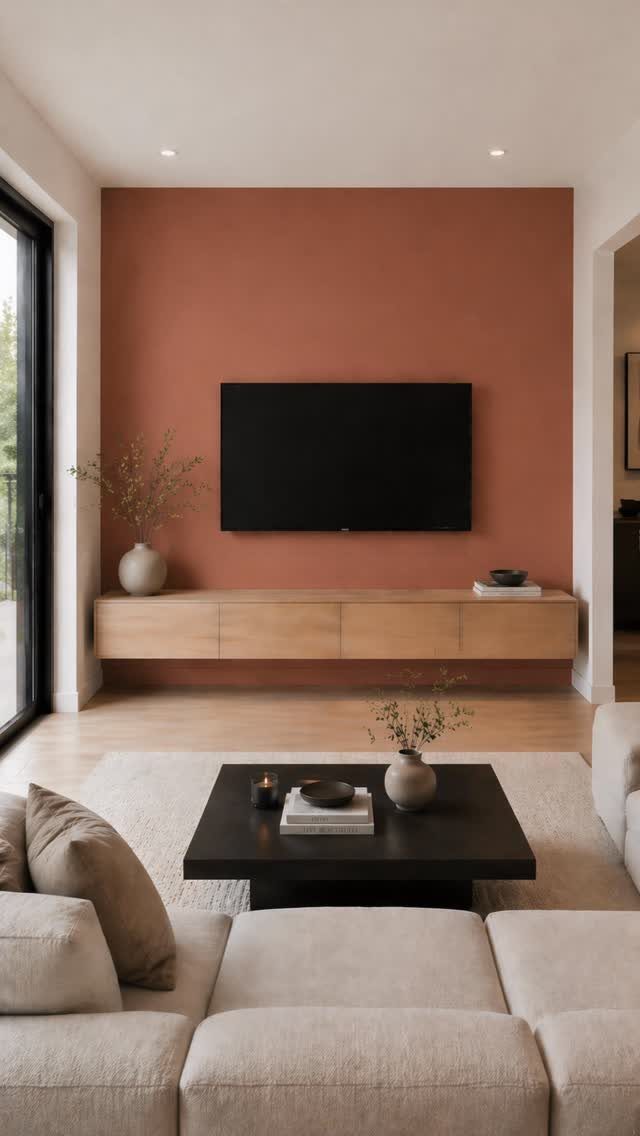
Mounting the console to the wall leaves the floor clear beneath it, and in a small living room that visible strip of floor is what makes the space feel larger.
Light wood suits the terracotta wall, since it stays warm without adding another heavy block of color. I’d keep the top mostly bare, with one or two objects, because a floating shelf looks crowded fast.
Mount it into studs, or use proper wall anchors rated for the weight of the TV gear. Set the console low enough that the screen sits at eye level from the sofa.
8. Low-Profile Slatted Sideboard
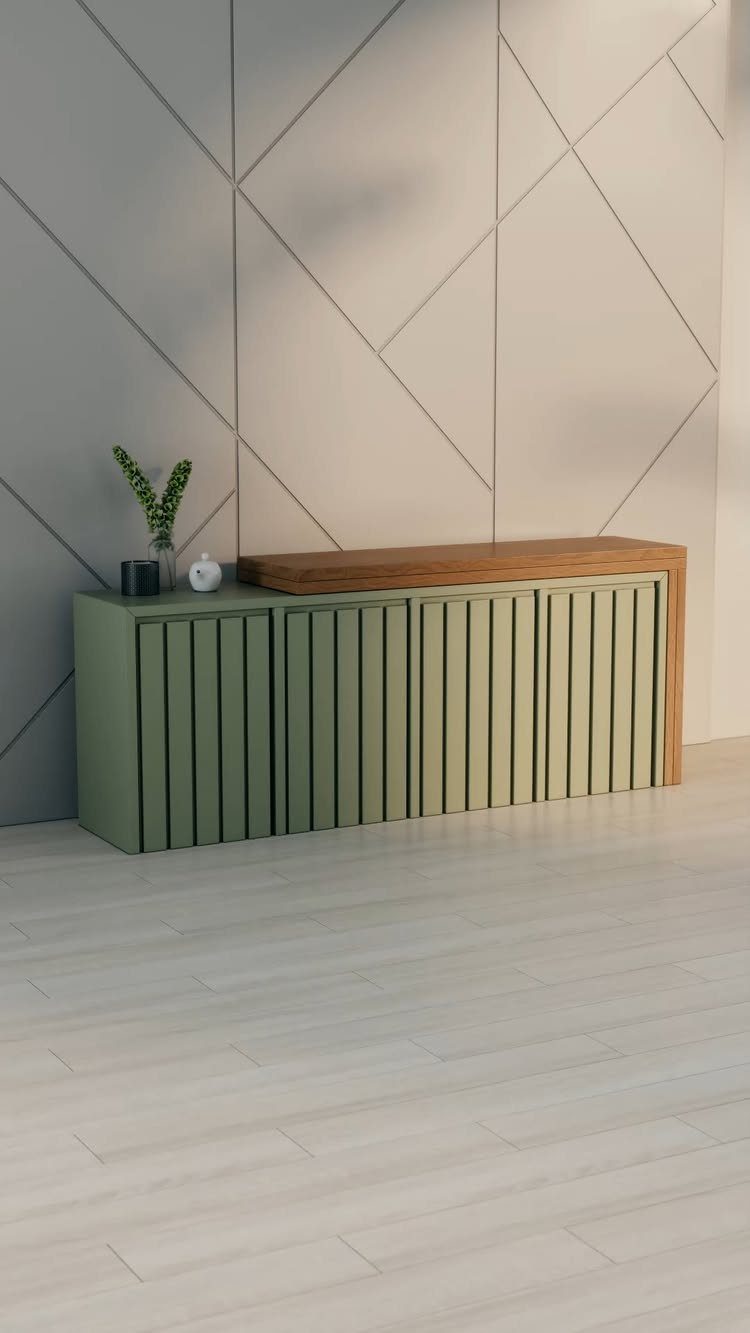
Green is a bolder choice for a sideboard than white or oak, and the vertical slats stop it from looking bulky.
A low piece like this runs along a wall without crowding it, and the wooden top gives you a spot for a lamp or a plant. Slatted doors hide stray cables, remotes and board games behind a tidy front.
Against a patterned wall, I’d keep the styling on top minimal so the two don’t compete. Check that the doors open without hitting the sofa or a radiator nearby.
9. Compact Two-Seater Sofa
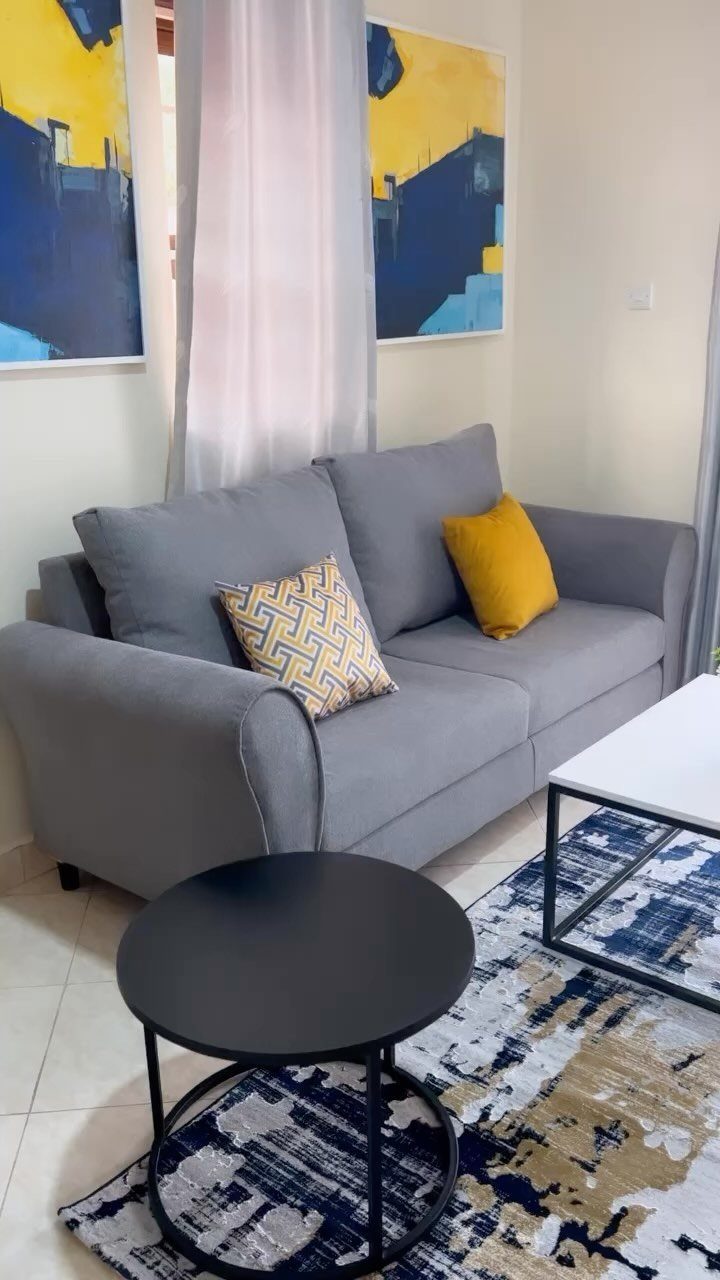
A two-seater sofa gives up one cushion’s worth of seating and gets back a good chunk of floor, which is the better trade in a tight room.
I’d pair it with two small tables in place of one large coffee table, so you can move them around as needed.
Grey is a calm base for color: yellow pillows, a blue rug and a couple of paintings do the lively work while the sofa stays quiet.
Measure your doorway and walls before ordering. Compact sofas often ship in smaller boxes, which helps in a walk-up.
10. Slanted Ladder Bookshelf
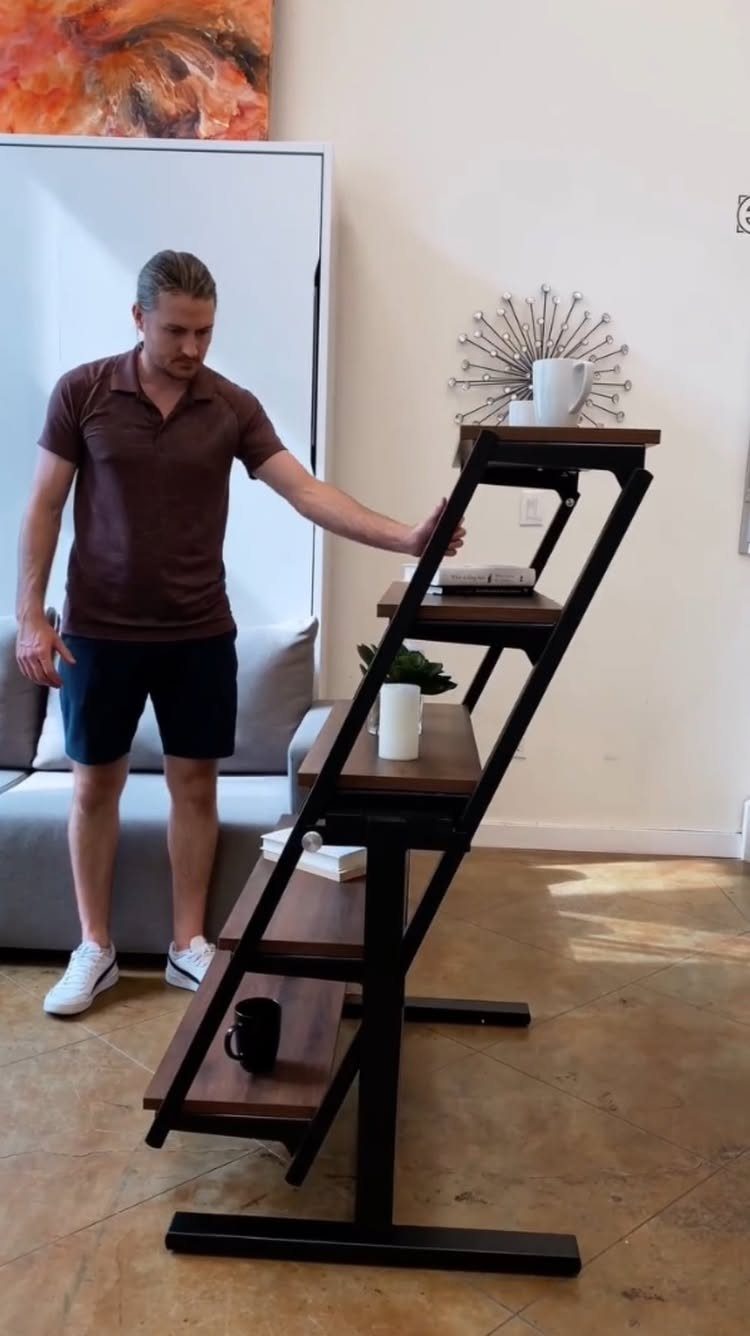
A leaning shelf takes up only a narrow strip of floor, because the slant lets the lower tiers reach out while the top stays close to the wall.
Wood shelves on a slim black frame keep the look light, so the unit doesn’t swallow a corner. Put heavier books on the bottom tiers and small plants or baskets up top.
Since it leans, make sure the feet sit flat and the top rests firmly against the wall.
A leaning unit that shifts is not worth the space it saves. Skip it if you have small children or pets that climb.
11. Slim Low-Profile TV Stand
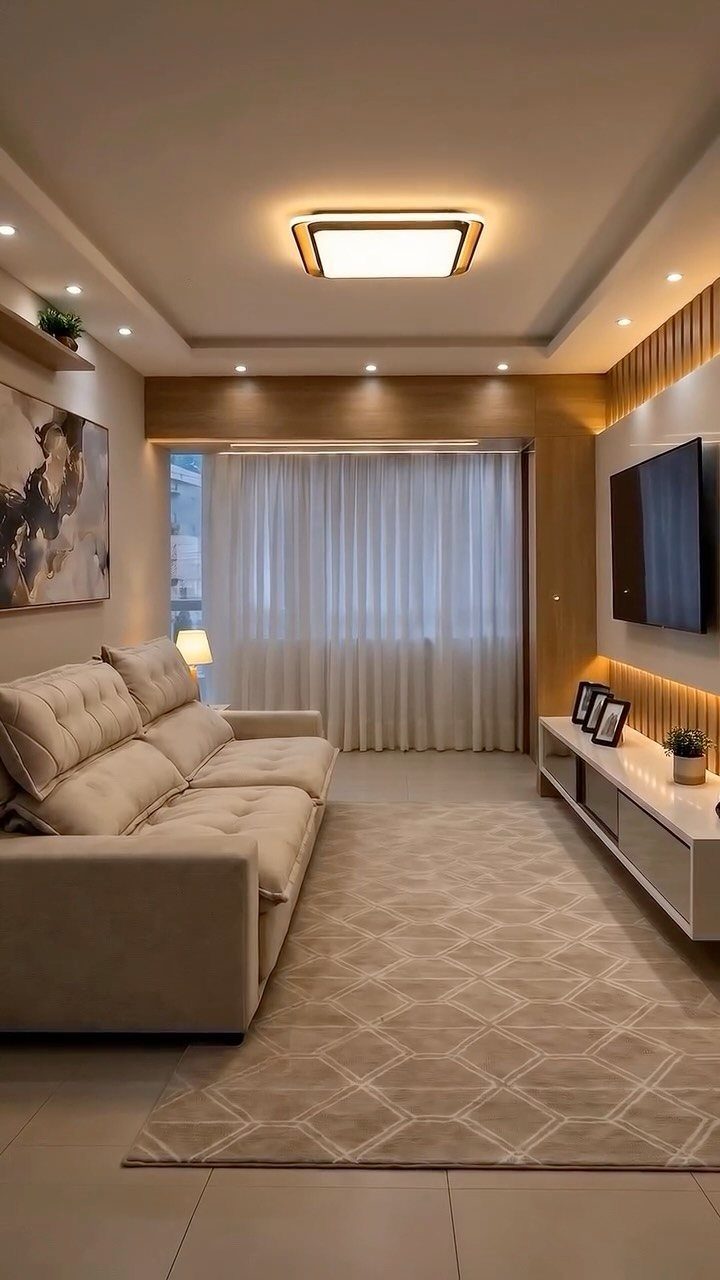
In a narrow room, a long, low TV stand pushed tight to the wall keeps the walkway open and the sightlines clean.
White blends into the wall, so the stand almost disappears, and the patterned rug becomes the focus instead. Mounting the TV above it, as here, saves surface area for a few books or a plant.
Measure the wall first, then pick the longest stand that still leaves breathing room at each end. Check the depth too, since a few extra inches can pinch a tight walkway.
Measuring Your Space
A tape measure does more for a small living room than any single piece you can buy.
Start with the length and width of the room, then write down where every door, window, fireplace and outlet sits, along with its size.
Those fixed spots decide what can go where. A sofa that blocks an outlet or a window you open daily will bug you for as long as you own it.
Measure the furniture as well, and compare those numbers against the room on paper before you spend anything.
Buying a piece that is too big is the mistake I see most, and it makes a room feel tight instead of snug.
Creating Flow and Traffic
Sketch the room on a sheet of paper. It doesn’t need to be neat; it only needs to show the path people take to walk through.
Then ask 3 questions of your sketch:
- Does the coffee table block the way to a patio door?
- Make sure a chair parked in front of a window still leaves room to open it.
- Everyone on the seating should be able to see the TV without leaning around someone.
If any answer is no, move the piece on paper first. Erasing a pencil line is much easier than returning a chair.
Color and Light Effects
Light colors bounce light around, which makes a small room look wider and brighter. Beige, light gray and soft blue all work on walls and on the largest pieces, like the sofa and chairs.
For a dark accent wall, the shortest wall in the room is the one to paint. Putting the sofa or paintings in front of it softens the effect.
Save stronger color for small things you can swap, like pillows, a throw blanket or one piece of art. Keep the accent to a touch of personality so it never swallows the rest of the room.
Frequently Asked Questions
What are some good living room sets for small spaces?
Furniture that does double duty earns its footprint: a sleeper sectional, a lift-top coffee table with a hidden compartment, or a set of nesting tables you slide under each other after guests leave.
A compact two-seater sofa paired with two small tables also beats a big matching set. Skip full sets in a tight room, because they tend to fill the floor with more furniture than you can walk around.
What is the 2/3 rule furniture?
I can’t give you a reliable version of that rule, so I won’t guess at it.
Paper beats any rule of thumb here: sketch the floor plan, mark every door swing, window and outlet, then check each piece’s dimensions against that drawing before you pay.
How can I make a small living room look bigger?
Paint the walls a pale color such as light gray, beige or soft blue, because light shades bounce light around instead of absorbing it.
Keep the largest pieces light too, and mount what you can to the wall, like a TV console, so a strip of floor stays visible.
Set a mirror across from a window or next to a lamp and it will add visual depth, though I would point it at something tidy, since it will repeat whatever it faces.