
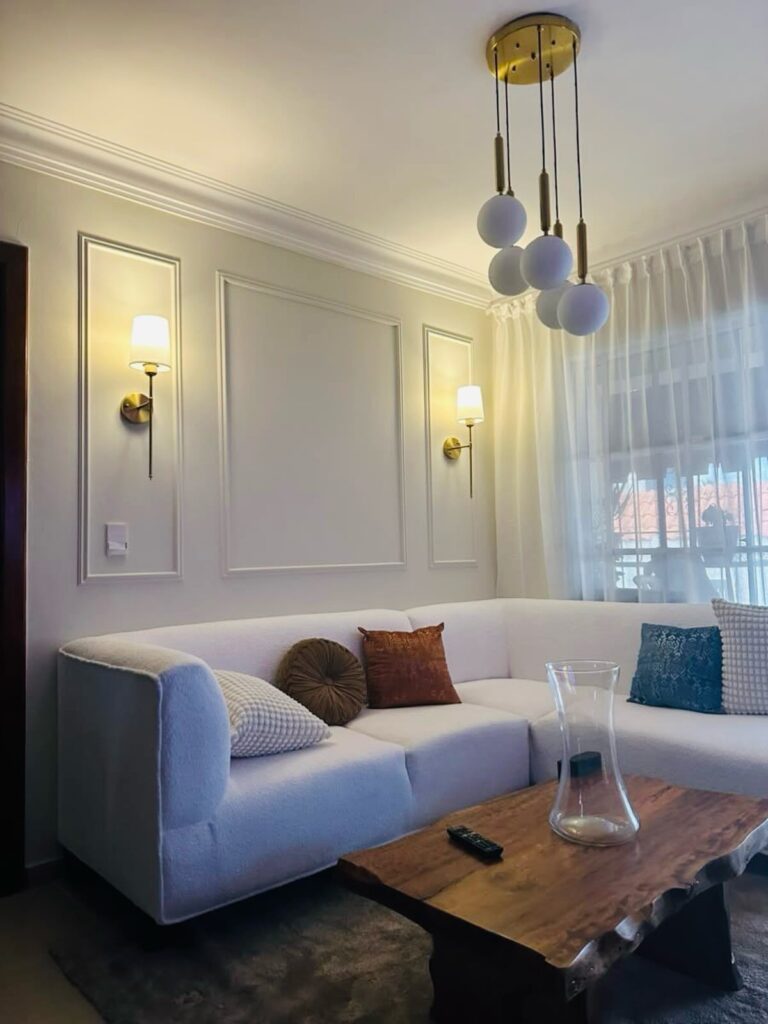
A living room needs 3 types of lighting to work: ambient light that fills the space, task lighting for reading or working, and accent lighting that draws the eye to art or architecture.
Placement changes with your ceiling height and how the furniture sits in the room.
1. Wall Sconces
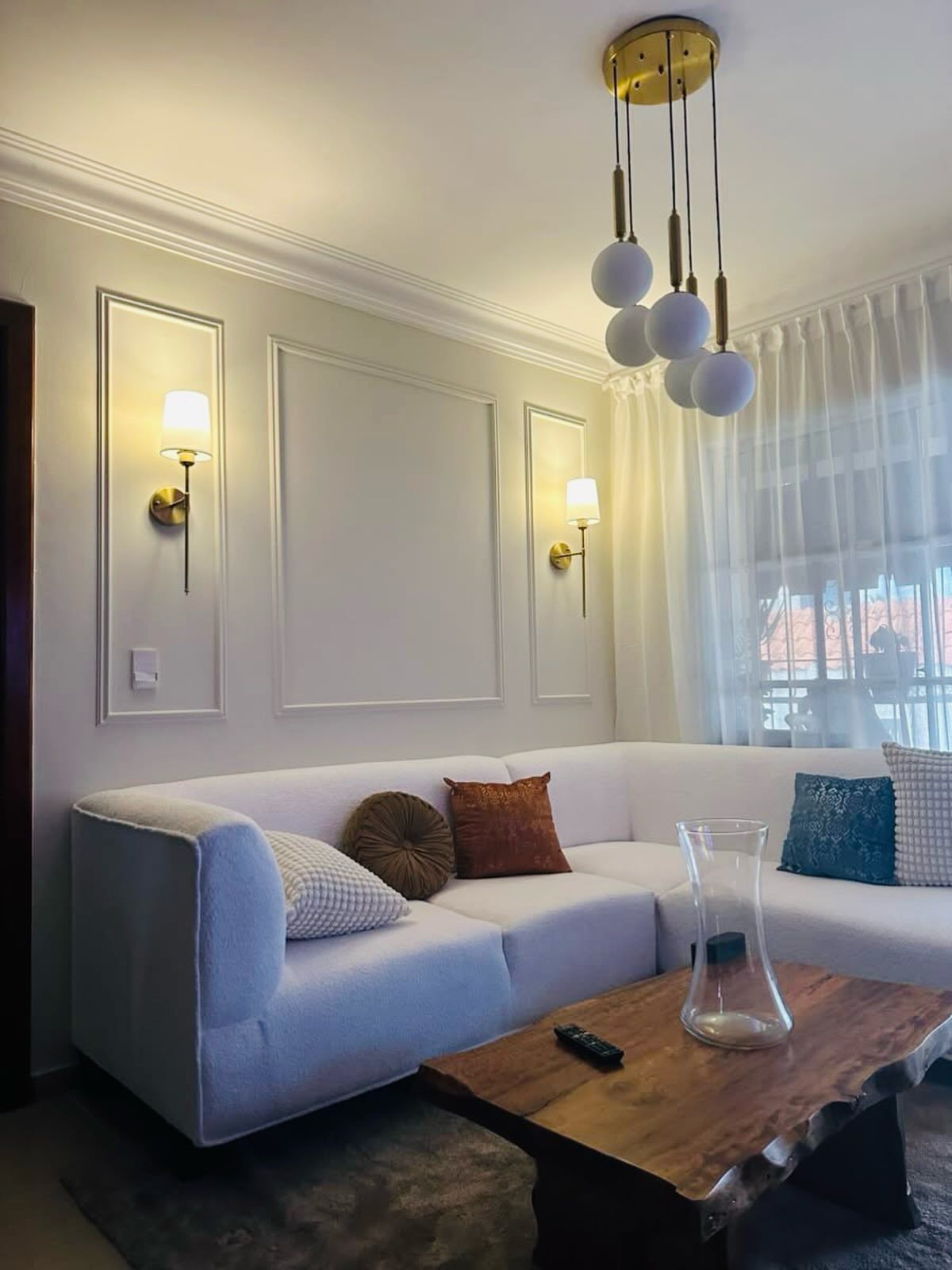
Wall sconces free up floor and table space while putting light exactly where you need it. Mounting them on either side of a focal point, like the paneled wall here, pulls a room into balance without adding furniture.
They sit high enough to clear a sofa back and low enough to light the seating area.
Hardwiring gives a cleaner look, but plug-in versions work just as well if you run the cord behind furniture or tuck it into trim.
Sconces with adjustable arms let you angle light toward seating for reading or aim it at the wall for softer ambient glow.
2. Floor Lamps
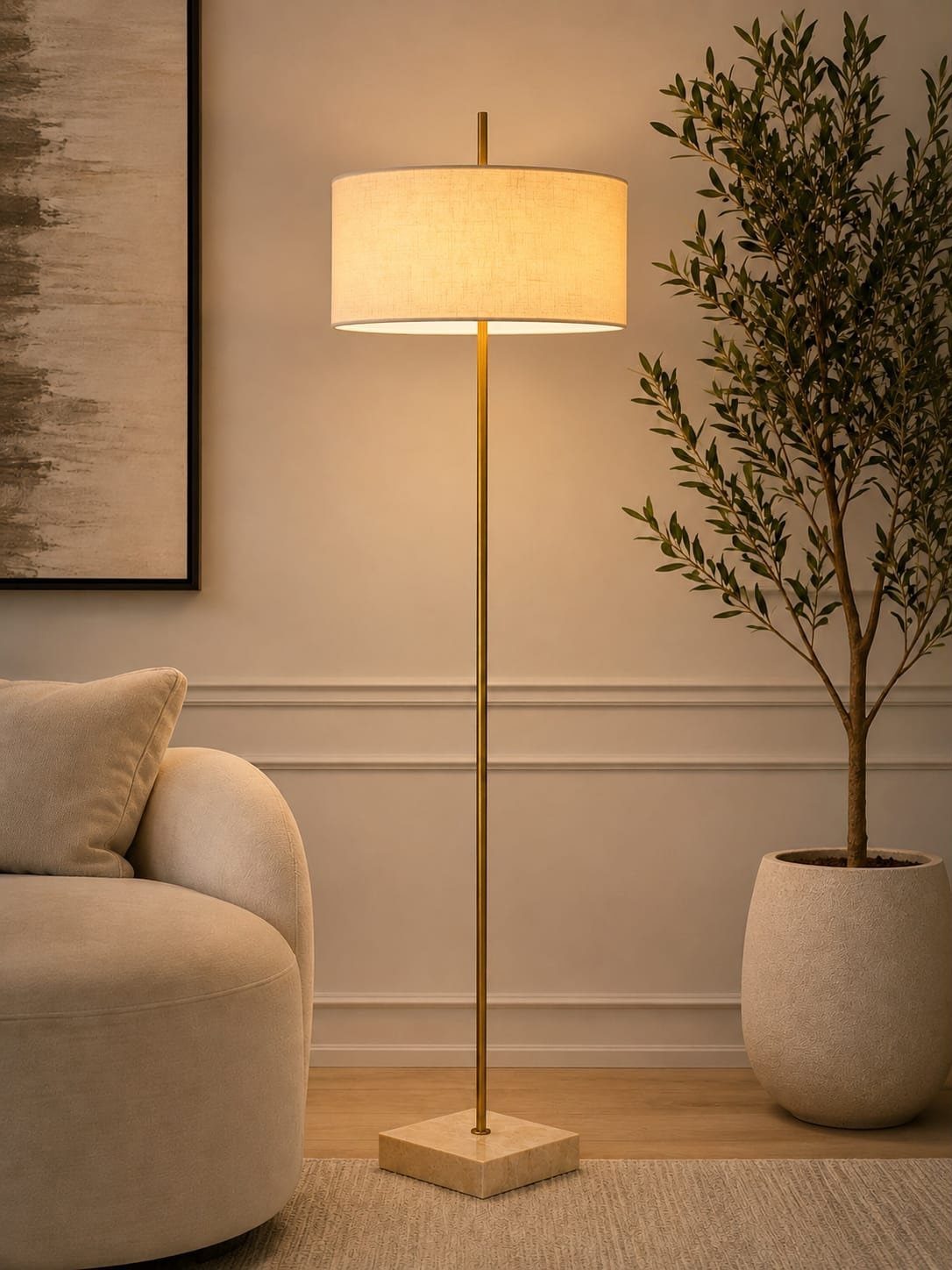
A floor lamp fills the corner a table lamp can’t reach and brings light up to eye level without mounting anything. The height pulls your gaze through the whole room instead of stopping at furniture.
Look for a weighted base, marble or metal, if the lamp sits near traffic.
Lighter bases tip easily when a cord gets caught or a pet brushes past. The shade should sit level with your shoulder when you’re seated nearby, so the bulb doesn’t glare directly into your sightline.
Three-way bulbs give you control over brightness if your lamp supports them, and they cost the same as standard bulbs.
3. Candlelight
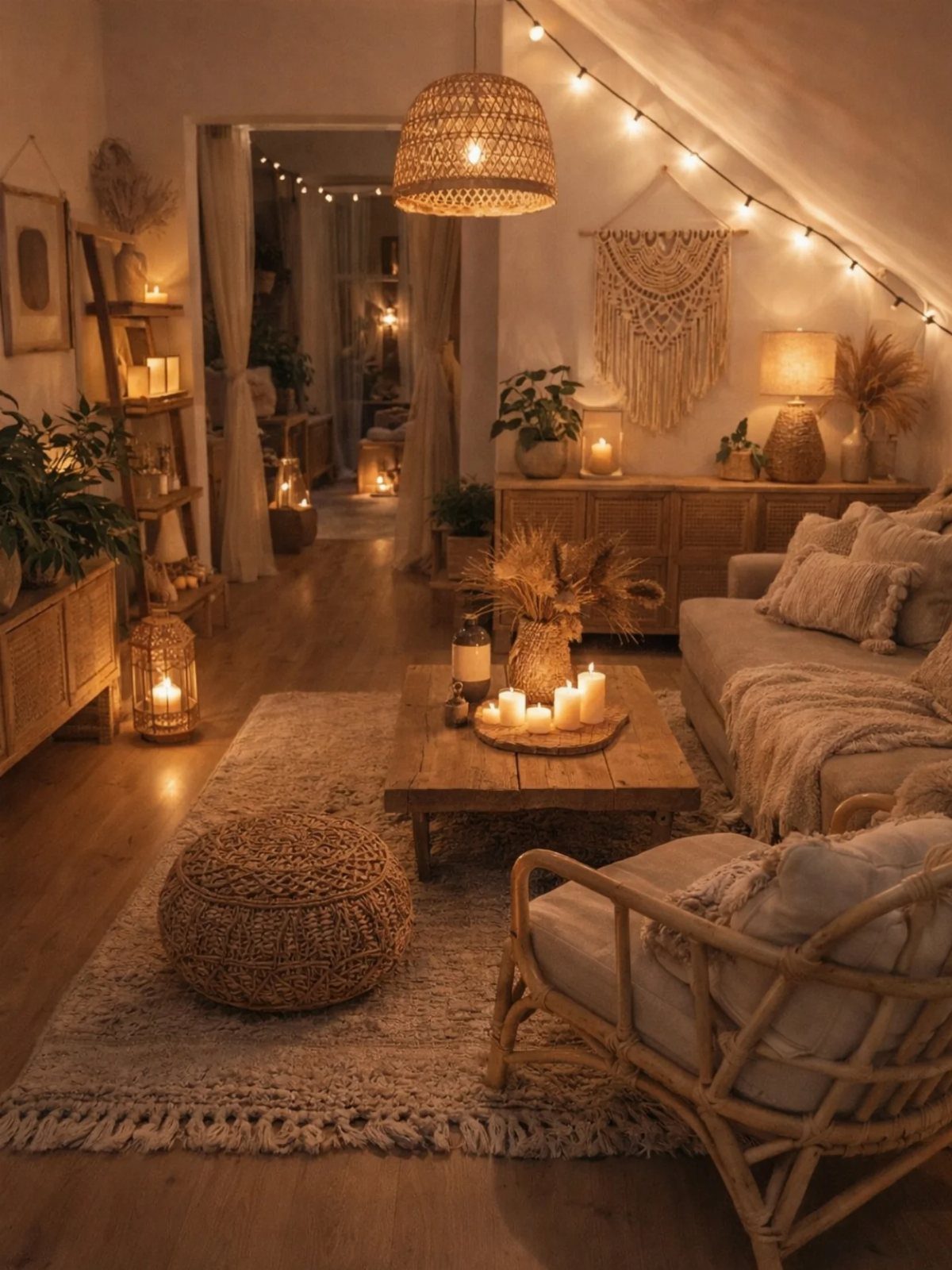
Candles give you the flicker and warmth electric light can’t replicate. Grouping them on a low coffee table spreads that glow across the seating area without taking up vertical space.
Real wax candles need trimming and watching, but they produce the best light quality.
Battery-operated versions with LED flames work for everyday use and timers keep them on schedule. Set candles on a tray or shallow dish so wax drips stay contained and the group moves as one piece when you need the table.
Unscented candles let you layer fragrance separately, and they don’t compete with food when you’re eating nearby.
4. Wagon Wheel Chandeliers
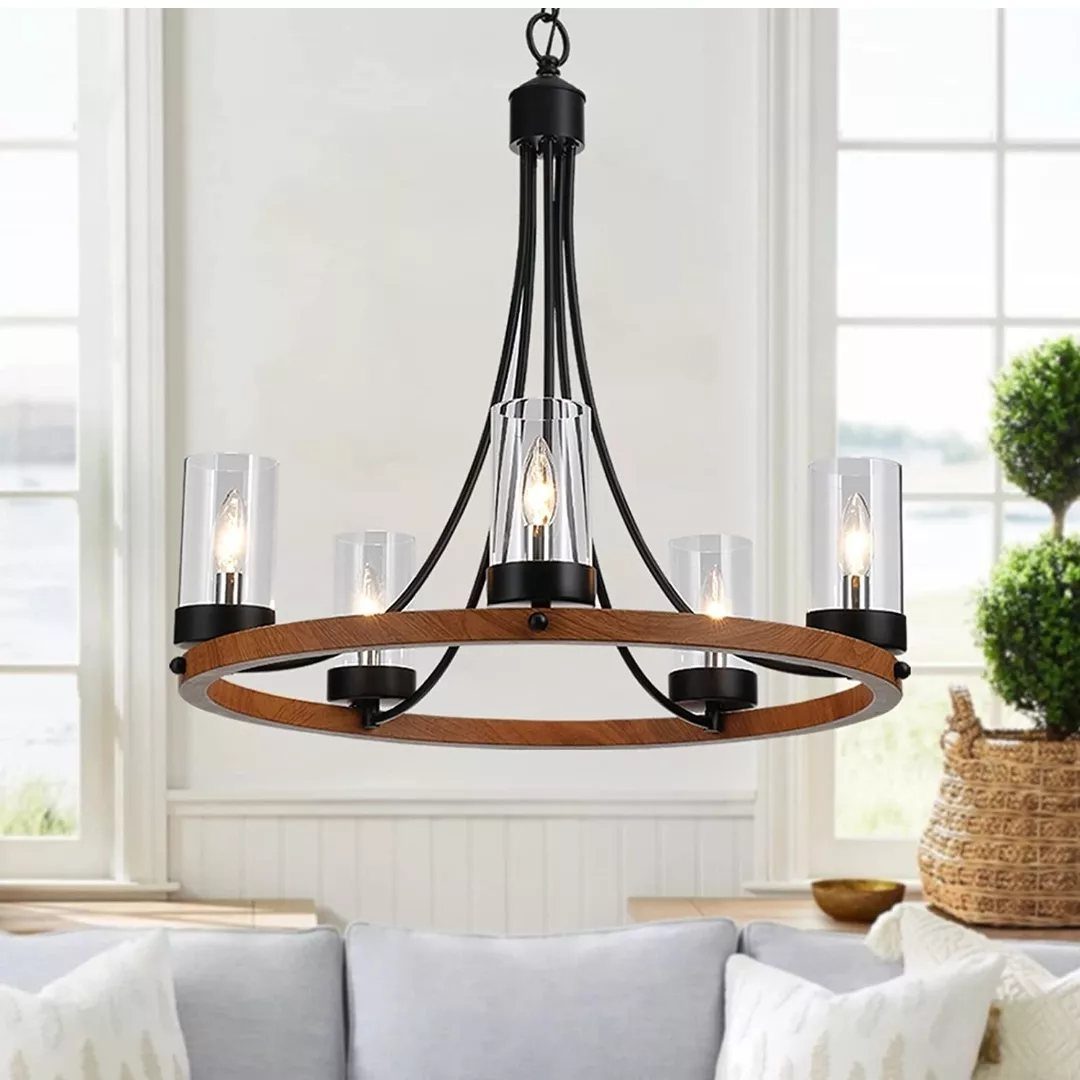
A wagon wheel chandelier reads rustic without requiring barn wood everywhere else. The spoked frame spreads light across a wide area, so it works over a sectional or in a room with high ceilings where a single pendant would disappear.
The wood and metal mix here keeps it from reading too country, and glass shades soften the bulbs enough that you can skip a dimmer.
Install it centered over the seating area, not the room, if your furniture sits off to one side.
5. Crystal Chandeliers
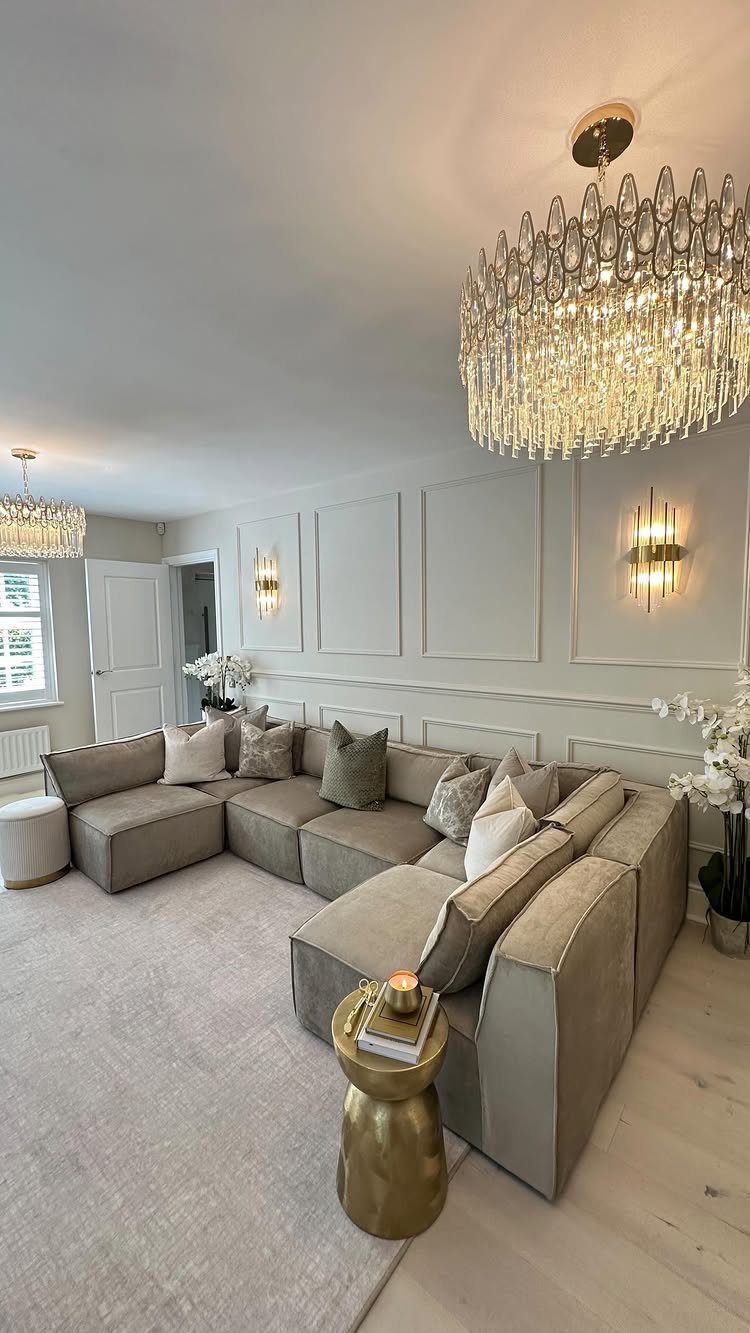
Crystal chandeliers catch and scatter light in a way no other fixture does. The faceted pieces multiply the light from each bulb, so a small chandelier puts out more usable brightness than a solid shade in the same size.
Hanging 2 chandeliers, as seen here, works in a long room or over separate seating zones.
Cleaning takes patience. Spray-on cleaners let you skip the hand-wiping, but you’ll still drip, so lay towels underneath.
6. Picture Lights
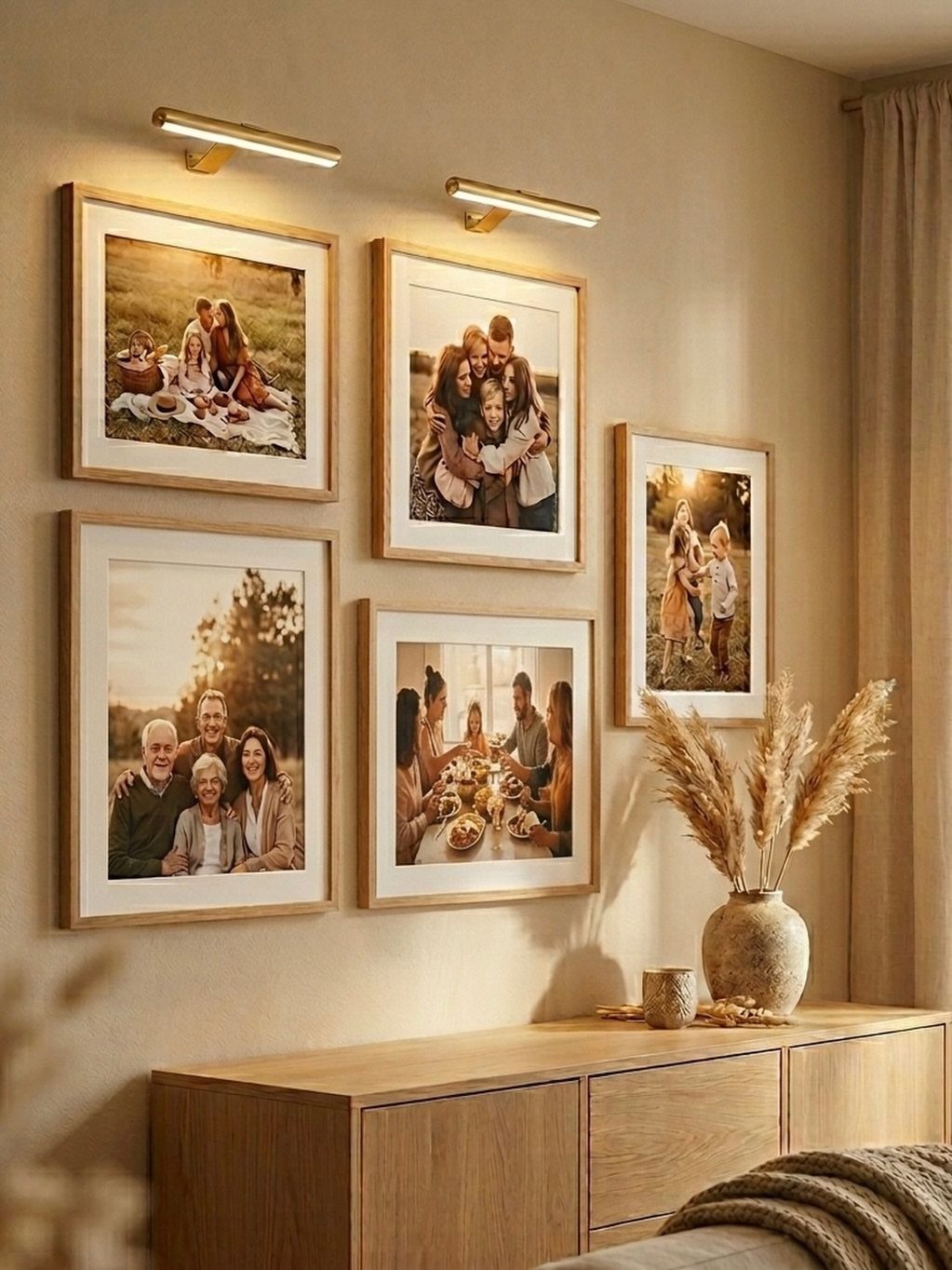
Picture lights put a narrow beam directly on artwork or photos, which makes them stand out even in a room with plenty of overhead light. The focused light also hides imperfections in the wall texture around the frame.
Battery-operated versions stick on with adhesive or small screws and last months on a set of batteries. Hardwired picture lights look cleaner but require running wire through the wall or along the baseboard.
A light that’s too narrow overexposes the center and leaves the edges dark.
7. Use of Mirrors
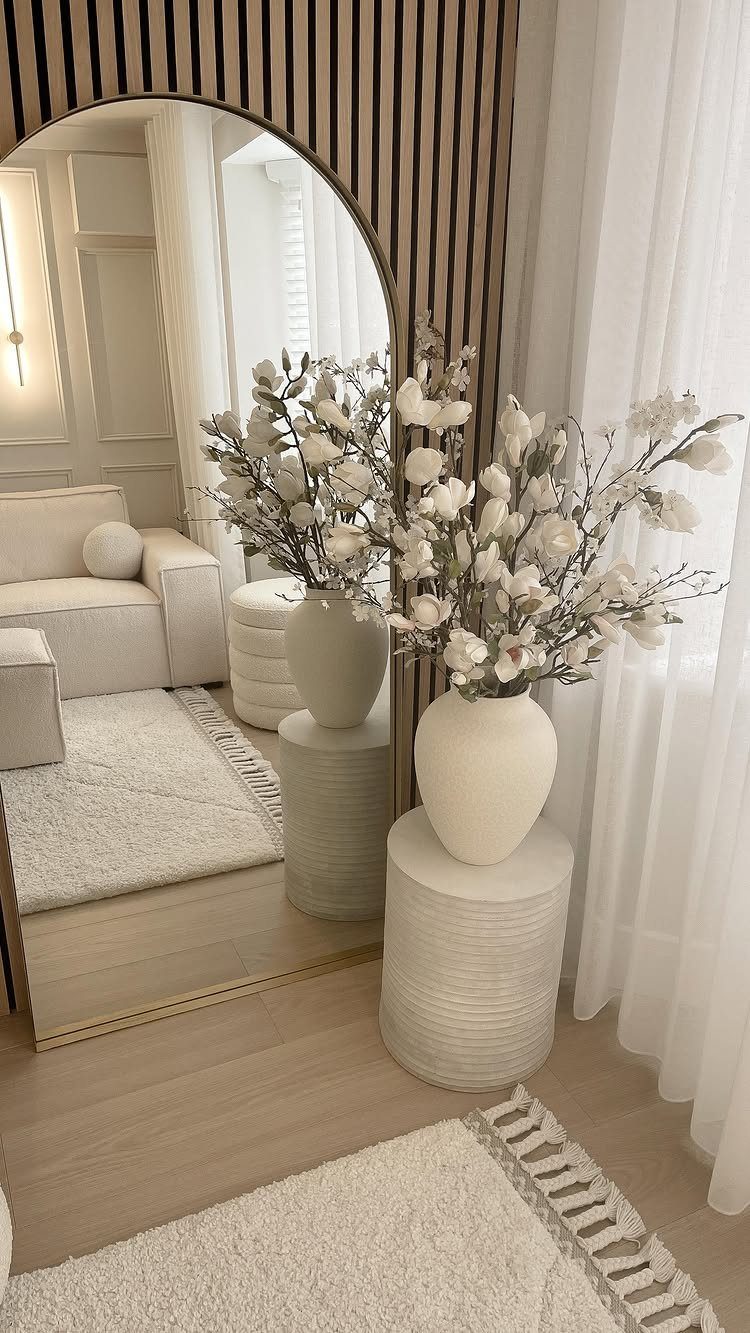
A mirror doubles the light that hits it, so placing one opposite a window or across from a lamp brightens the whole room without adding another fixture.
The reflection also makes the space read larger, which matters in a narrow room or one with low ceilings.
Lean a floor mirror against the wall if you rent, or mount it with heavy-duty anchors if you own.
Arched tops soften the look more than rectangular frames, and a frame that matches your trim keeps the mirror from reading like furniture.
Clean glass weekly. Dust and fingerprints cut the reflection by half.
8. Rattan Lighting
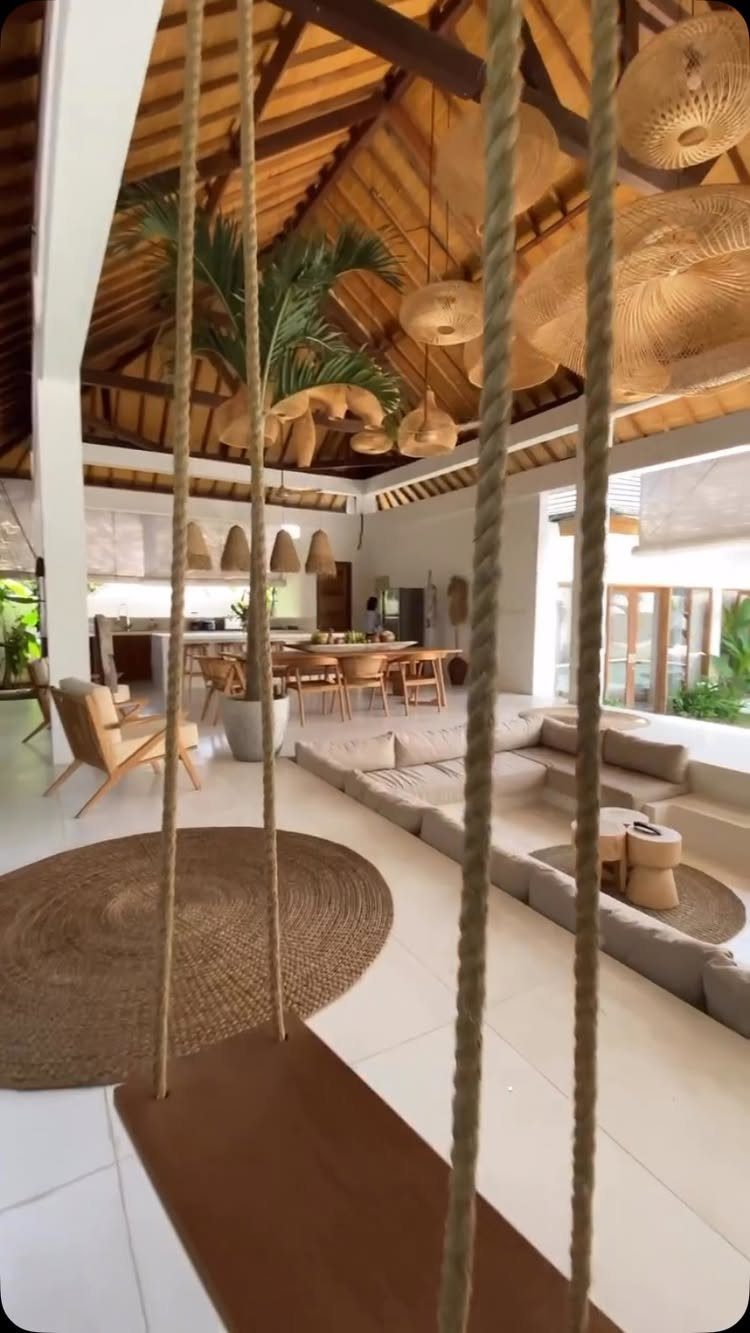
Rattan shades soften the light and cast patterned shadows across the ceiling and walls. The woven texture reads warm without blocking too much brightness, so they work as primary lighting in a room with white walls or high ceilings.
The natural material fits coastal, modern, and transitional rooms equally well. Synthetic rattan holds up better in humid climates and costs less, but real rattan ages to a richer tone over time.
Dust the weave every few weeks with a dry brush. Wiping it down with a damp cloth risks warping the strands.
9. Smart Lighting Systems
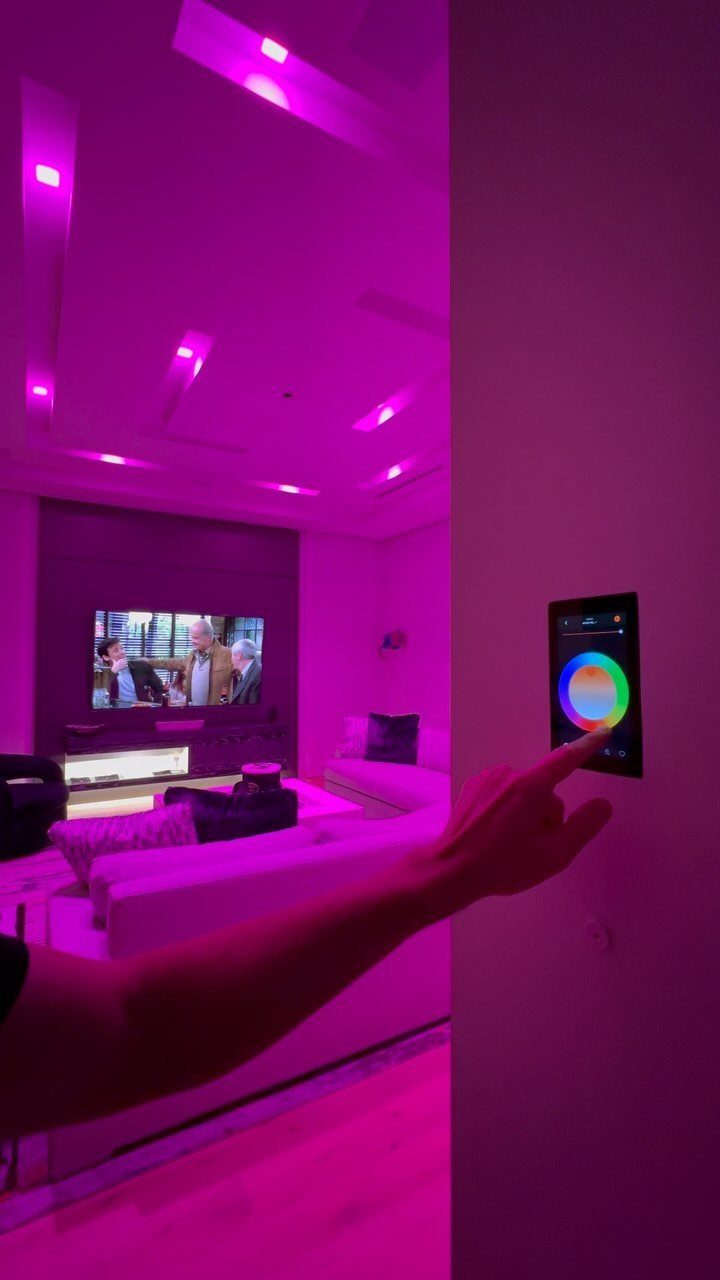
Smart lighting lets you adjust brightness and color temperature from your phone or voice assistant, which means you can shift from bright white for cleaning to warm amber for evening without touching a switch.
Scheduling lights to fade at a set time keeps the room from going dark all at once.
Most systems require a hub or compatible bulbs, and setup moves quickly once you know which app controls what.
Color-changing bulbs cost more than white-only versions, but they let you match the light to the time of day or the task.
Dimming warm white bulbs creates a softer glow than switching to a colored mode.
10. Fixtures with Adjustable Arms
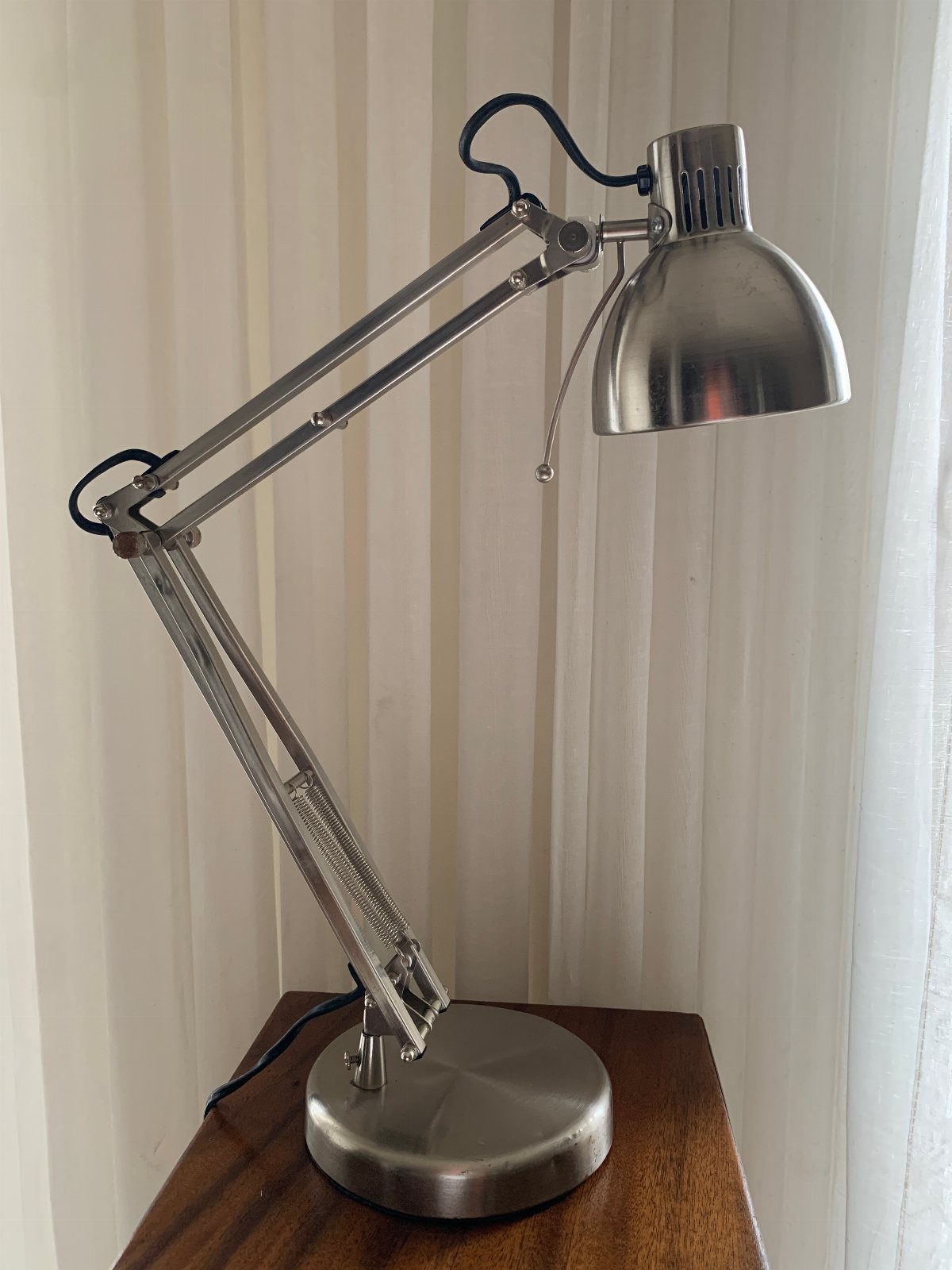
An adjustable arm lets you swing light toward a book, a laptop, or a side table without moving the lamp base. The joints lock in place, so the light stays aimed where you set it instead of drifting back.
Metal arms hold their position better than plastic, and a sturdy base keeps the lamp from tipping when you extend the arm all the way out.
Most adjustable lamps sit on end tables or desks, but floor versions with long arms work next to a sofa.
Tighten the joints every few months if the arm starts to droop under the shade’s weight.
11. Colorful Lamps
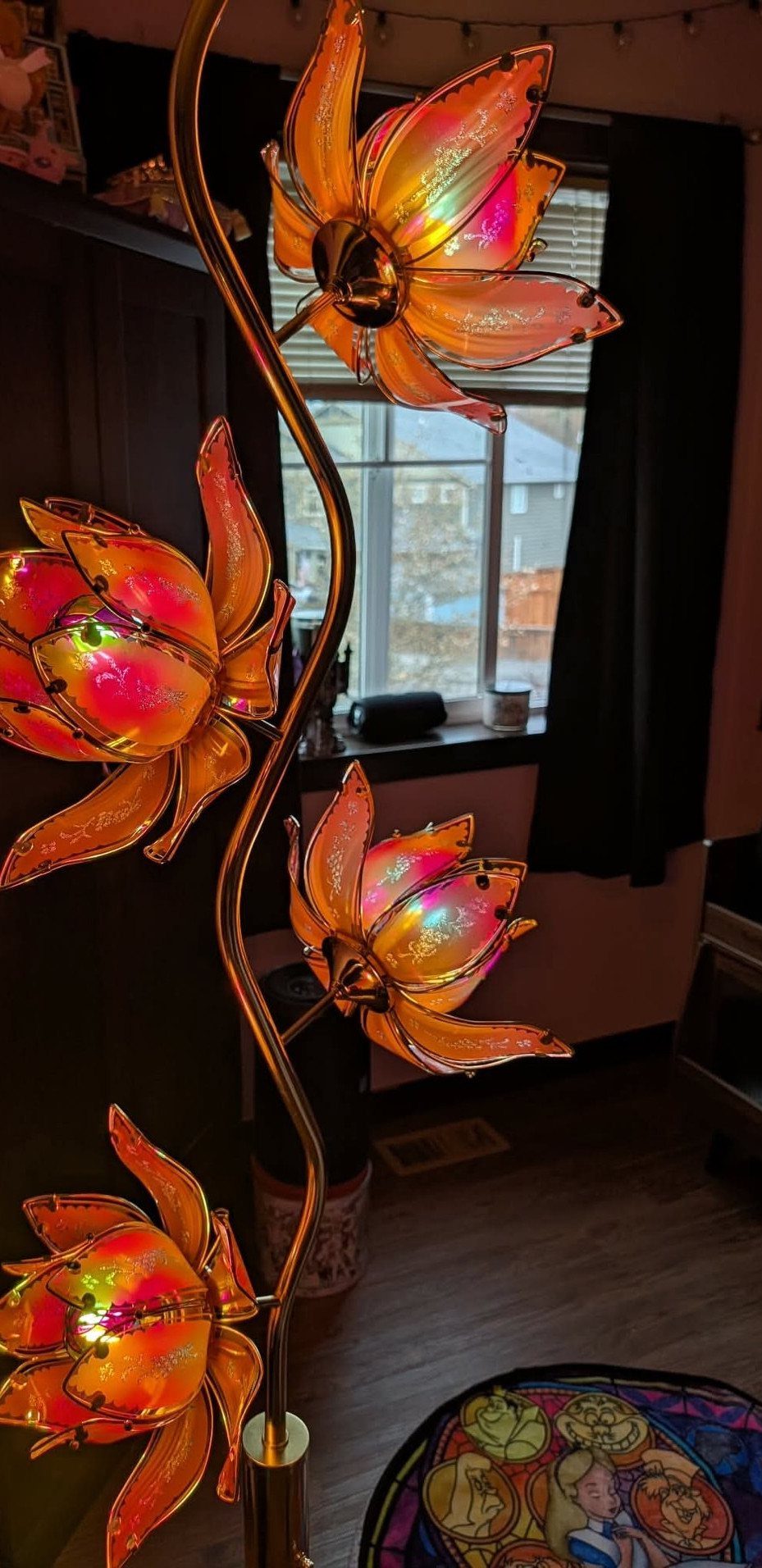
A lamp with a colored shade or base pulls attention without requiring bright paint on the walls.
The shade tints the light, so a warm orange or pink casts a glow that feels softer than white light through a plain shade.
A single colorful lamp works well in a neutral room where you want one piece to carry the personality.
Translucent shades show the bulb shape through the material, so use a standard A-shape bulb instead of a spiral CFL or exposed filament if you want a clean look.
12. Statement Pendant
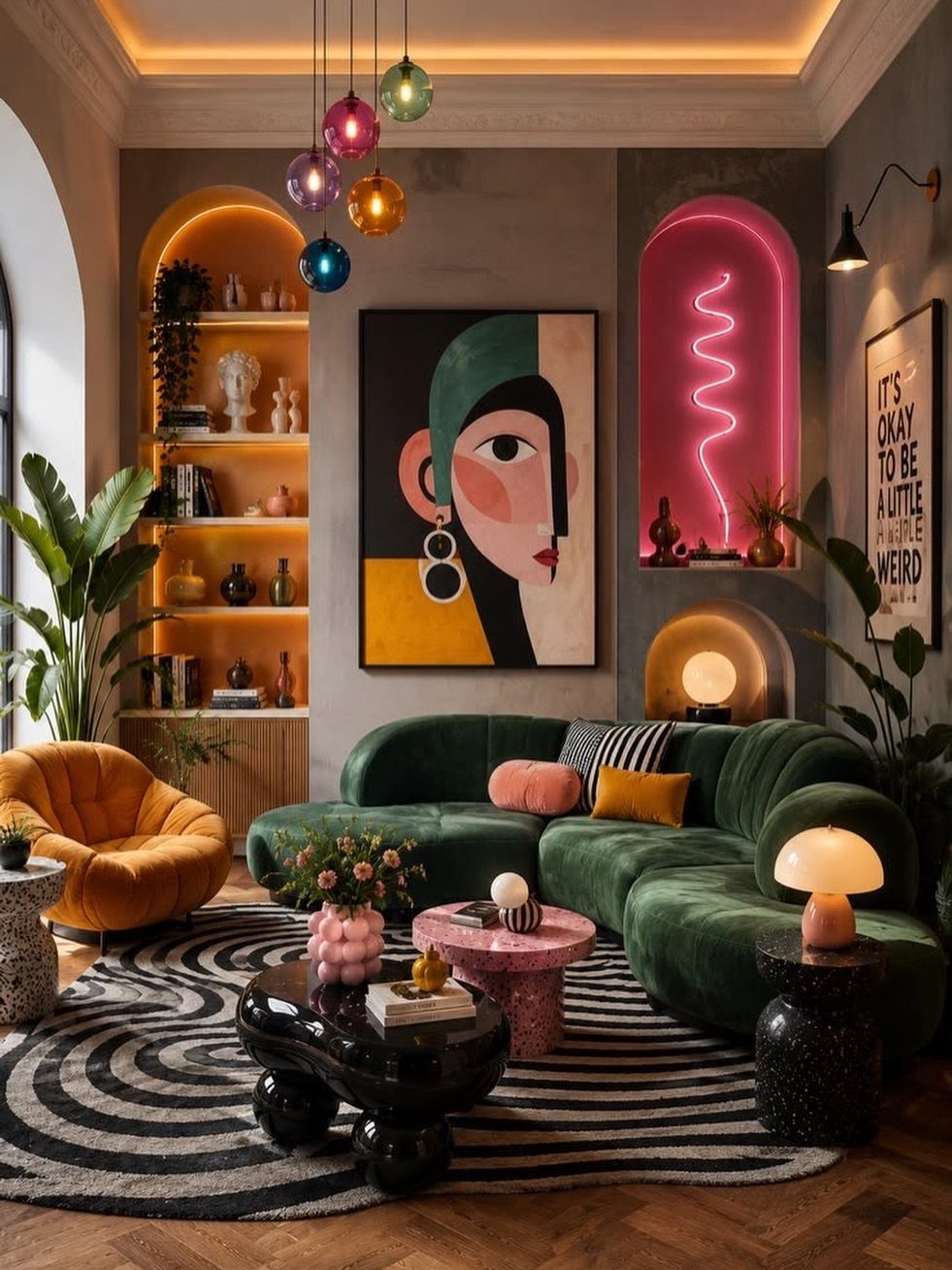
A large pendant over the seating area pulls your eye upward and anchors the space without eating into the floor plan.
Hang the pendant low enough to feel present but high enough that no one walks into it when they cross the room.
If the pendant sits over a coffee table, it can drop lower, but leave enough clearance that reaching across the table doesn’t bump the fixture.
Multiple pendants hung at staggered heights spread light more evenly than a single centered fixture.
13. Backlighting for TV
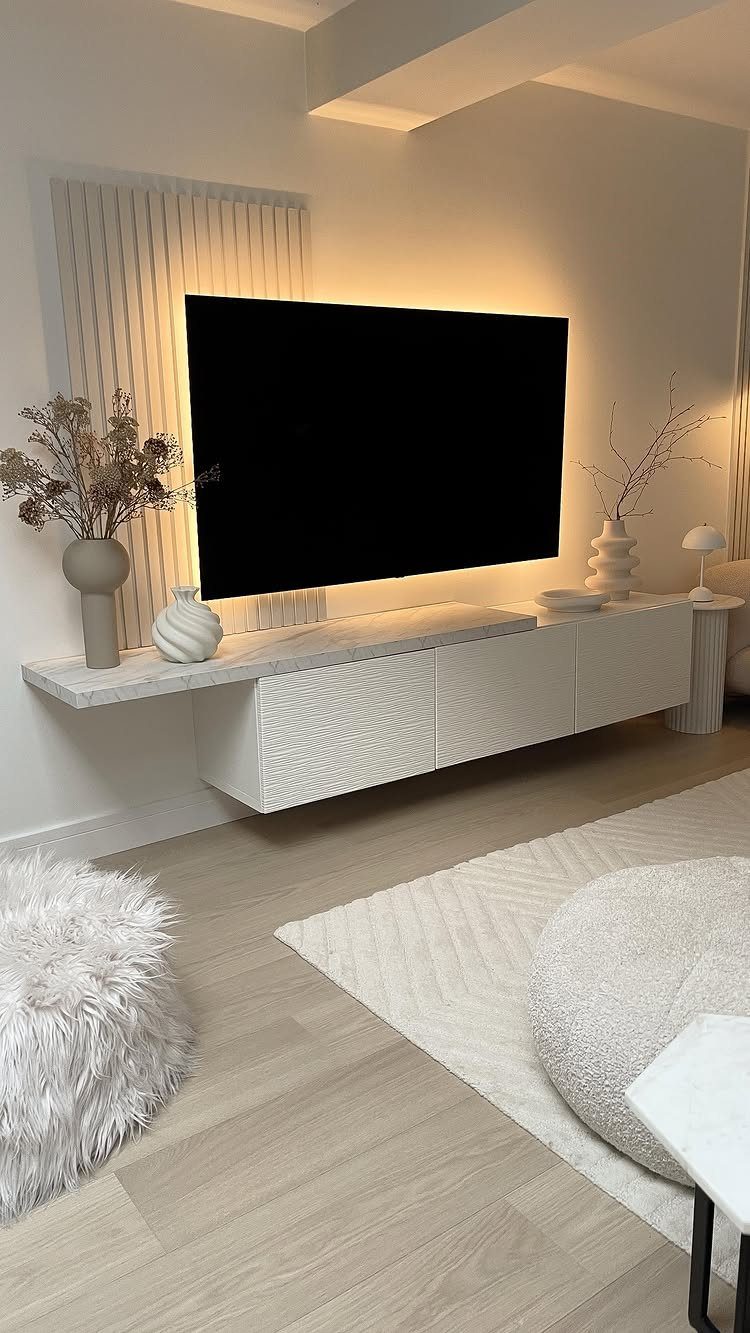
Backlighting behind the TV narrows the gap between the bright screen and the dark wall, so your eyes adjust less during long sessions.
LED strips stick to the back of the TV and plug into a USB port, so they turn on and off with the screen.
Color temperature matters.
Warm white or amber light feels easier on the eyes than bright white or blue. Some strips let you adjust the color through a remote, but fixed warm white strips cost less and work just as well.
Mount the TV with enough clearance that the light has room to spread evenly behind it.
14. Artistic Fixtures
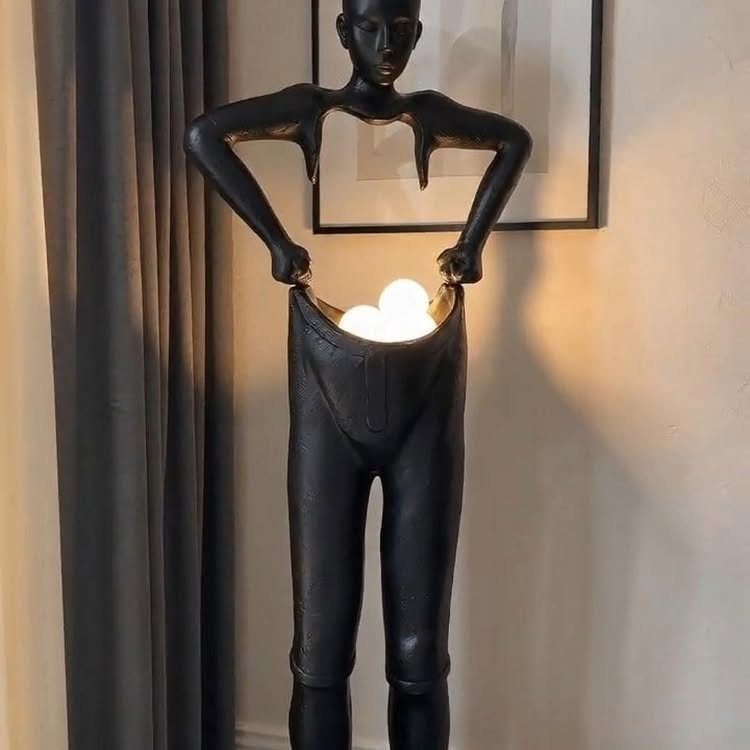
A fixture that reads as sculpture first and lighting second gives you a focal point that still produces usable light. The human figure holds light inside its form, so the piece stays interesting even when the bulbs are off.
These fixtures work best in rooms where you already have enough ambient light from other sources. The sculptural shape usually directs light in unexpected ways, so brightness spreads unevenly.
Position it where people will see it from multiple angles. A corner or next to seating lets the silhouette show.
15. Portable Lamps
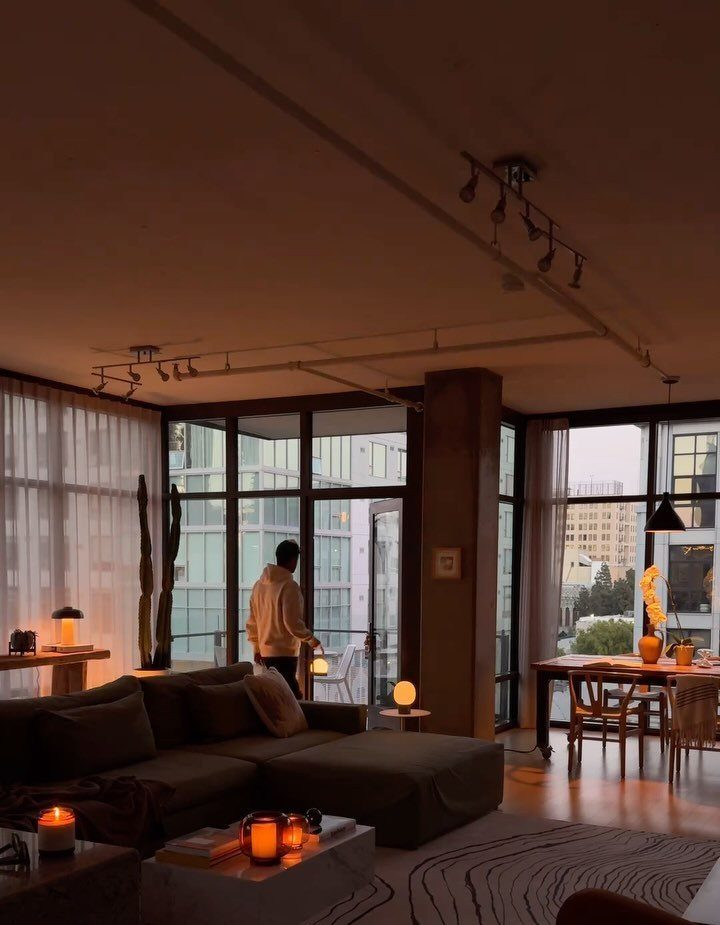
Portable lamps run on batteries, so you can move them wherever you need light without hunting for an outlet.
They sit on a coffee table one night and move to a side table the next, which matters when you rearrange furniture or add seating for guests.
Rechargeable lamps hold enough charge to get you through a full evening without hunting for an outlet.
Check the charging method before buying. USB-C charges faster than older USB types, and some models include a charging base that holds multiple lamps at once.
Dimming controls stretch battery life and let you adjust brightness without swapping bulbs.
16. Sculptural Lighting
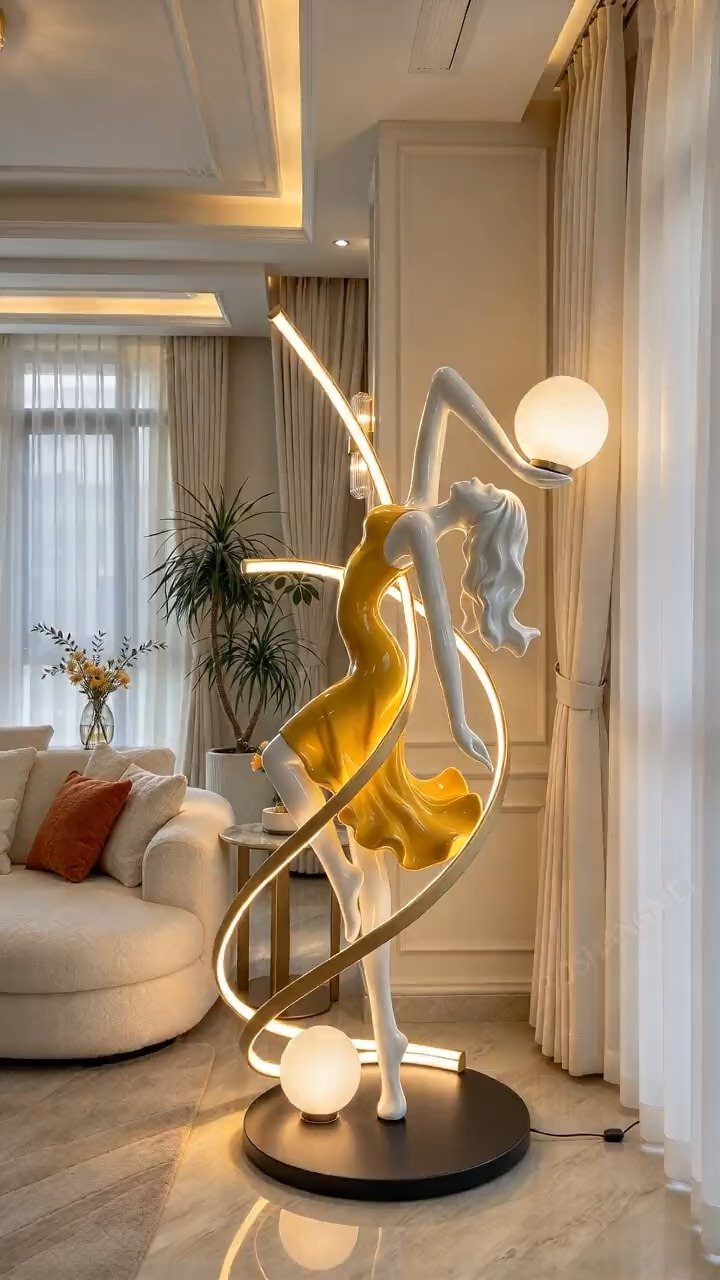
Sculptural floor lamps take up the same footprint as a standard lamp but draw more attention because the base itself becomes the design.
The figure in motion here pulls the eye upward and fills vertical space a plain pole base would waste.
The shade or bulb placement often sits off-center, so the light casts at an angle instead of straight down. That works well for ambient glow but less so for task lighting.
A bold lamp like this needs breathing room. Placing it too close to busy furniture or patterned rugs competes for attention instead of letting the shape stand out.
17. Integrated Cove Lighting
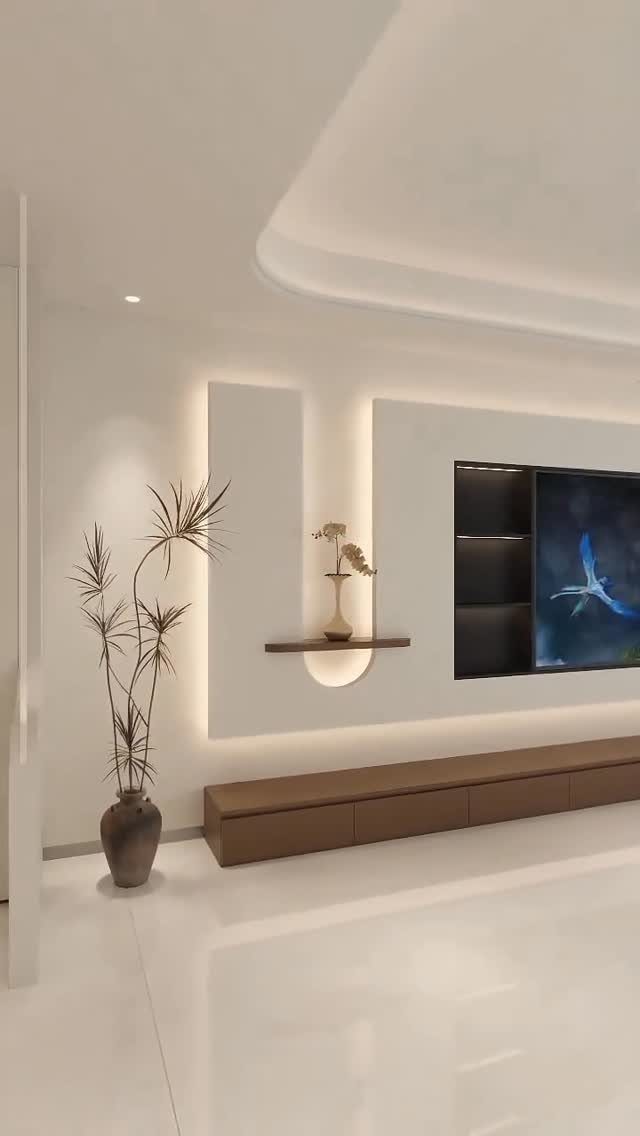
Cove lighting hides the fixture inside a recessed ceiling or wall channel, so you see the glow without seeing the source. The indirect light washes across surfaces instead of pointing down, which softens shadows and stretches the space.
Installation requires cutting into drywall and running electrical, so it suits a renovation more than a weekend project. LED strips fit most cove profiles and use less power than older rope lights.
Backlit panels add depth to flat walls and put light exactly where you want it without adding furniture.
18. Backlit 3D Wall Art
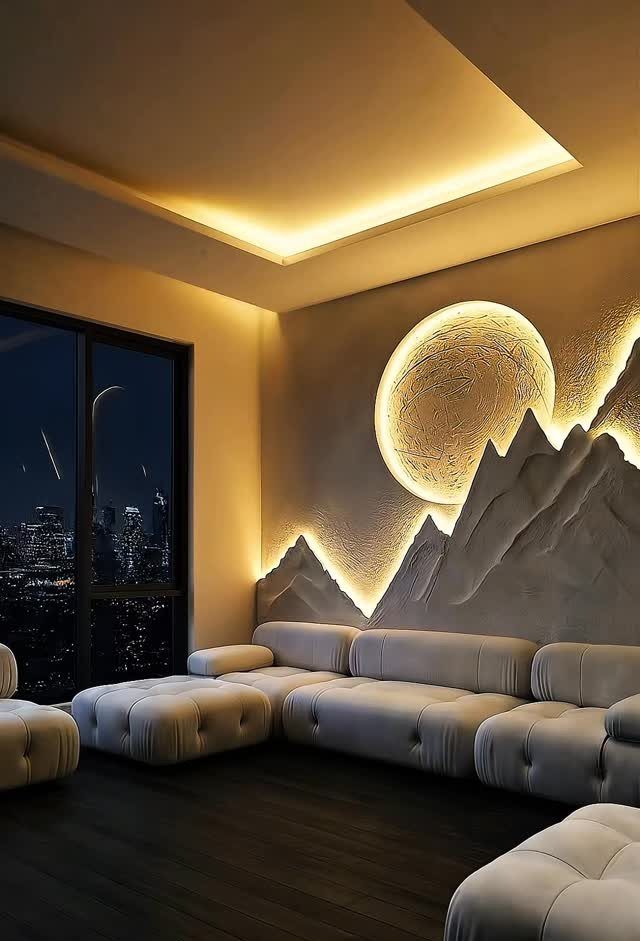
A 3D wall installation with built-in backlighting combines the function of artwork and a light source in one piece. The dimensional surface catches the light differently than a flat print, so the scene shifts as you move through the room.
These installations mount like heavy framed art, with anchors into studs. The power cord usually exits at one corner, so plan the placement near an outlet or behind furniture that hides the wire.
The glow reads softer than a table lamp, so it adds ambiance but won’t replace task lighting for reading or working.
19. Colored Ambient Mood Lighting
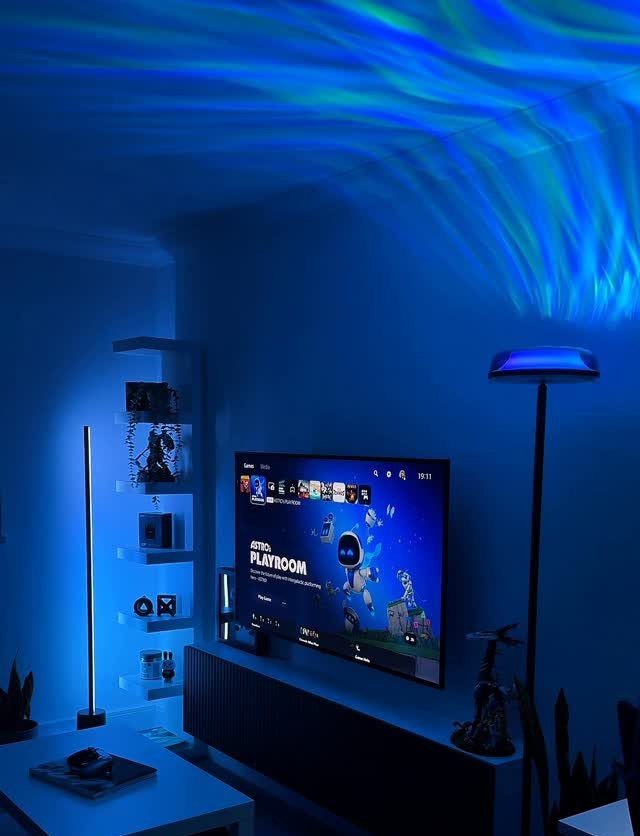
Colored LED strips behind the TV or along furniture edges fill the wall with saturated light that shifts the room’s entire feel.
Blue light, like what’s visible here, reads cooler and more cinematic than warm tones, so it suits movie watching or gaming more than conversation.
The strips stay hidden behind the unit and draw power directly from a USB port, so they light up the moment you turn on the TV.
RGB versions give you full control over color through an app, while fixed-color strips cut the price and skip the learning curve.
The glow bounces off the wall, so light-colored surfaces reflect more color than dark ones.
Three Types of Lighting
Ambient lighting fills the room with general brightness and forms the base layer.
Chandeliers, flush mounts, and recessed fixtures all serve this purpose. A dimmer lets you shift from full brightness during the day to a softer glow at night without changing bulbs.
Task lighting covers a single job: the page of a book, the screen of a laptop, the surface of a side table.
The light sits close to where you need it, and the beam stays narrow enough that it doesn’t wash out the rest of the room.
Accent lighting brings attention to artwork, shelving, or architectural details.
Wall lights, LED strips, and directional spots add depth without competing for attention the way a large fixture does. The goal is to highlight what you want seen, not to add general brightness.
A successful lighting design combines a number of light sources at different levels of the room. Add layers of light from a number of types of fixtures that can be used together or separately for a flexible space.
Choosing Color Temperature
Warm white light in the 2700K–3000K range reads softer and suits rooms where you relax. It casts a glow that feels closer to incandescent bulbs and makes wood tones and warm paint colors look richer.
Neutral white in the 3500K–4100K range works better in multi-purpose spaces where you shift between activities. The light stays bright enough for tasks without feeling as stark as daylight-toned bulbs.
Temperatures much above 4100K belong in garages and workshops, not living rooms. The blue-toned light reads harsh in a room where you sit for more than a few minutes.
Placement Tips
A pendant or chandelier needs at least 7 feet of clearance from floor to fixture in a room with 8-foot ceilings.
Recessed cans go 4–6 feet apart if you want the light to land evenly. Put them a foot or two in from the furniture line rather than straight overhead, or you’ll shadow everyone’s face.
The bottom edge of a table lamp shade should land at eye level when you sit down, which usually puts the top of the shade around 58–64 inches off the floor.






