
A dresser can take chalk paint with no primer, mineral paint that grips through an old finish, or spray paint in thin coats to avoid drips.
The color depends on whether the room needs a focal point or something that recedes: black and sage green work anywhere, deep purple reads as sophisticated with the right hardware, and classic white is the simplest way to make an old piece look finished.
1. Decoupage Drawer Fronts
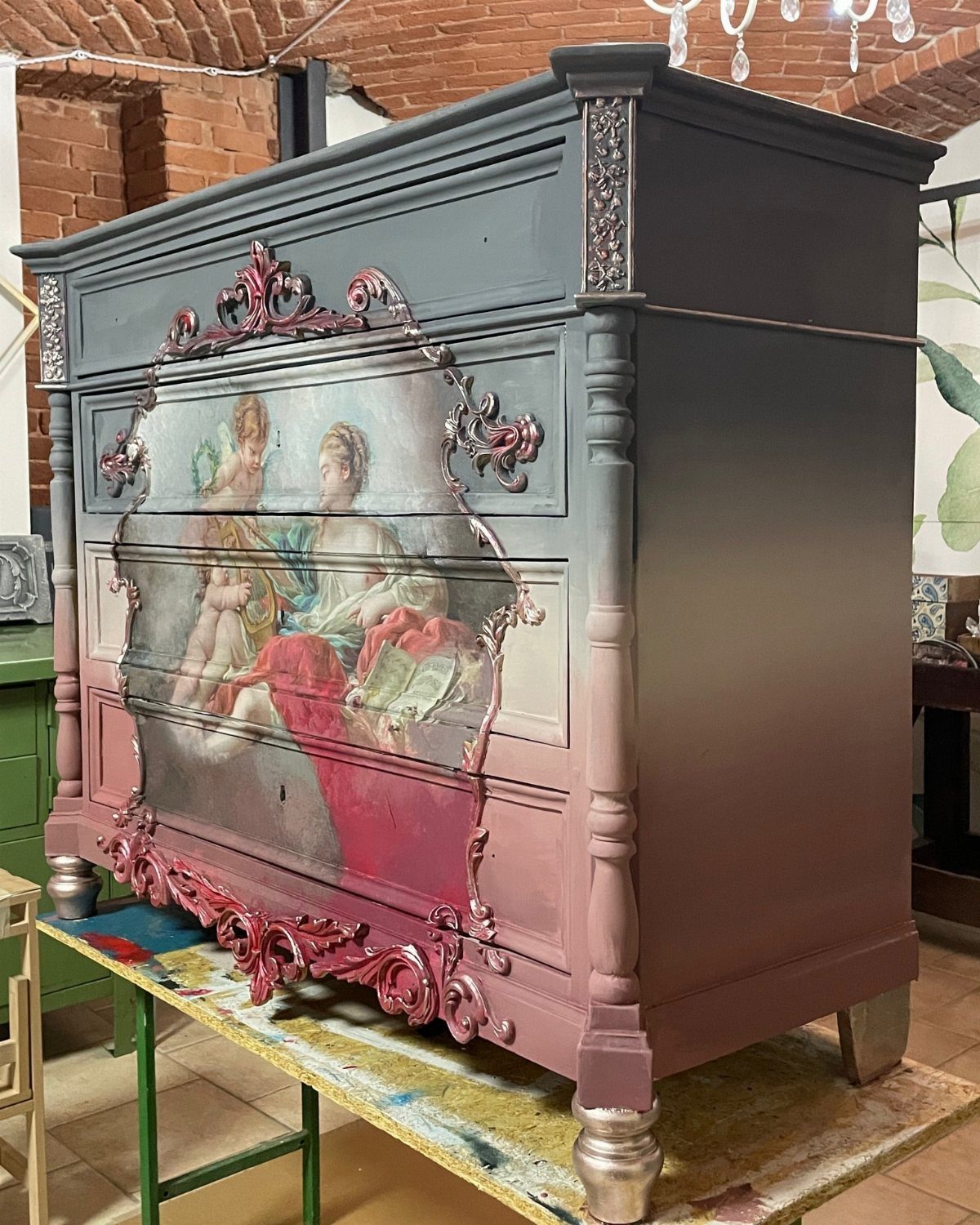
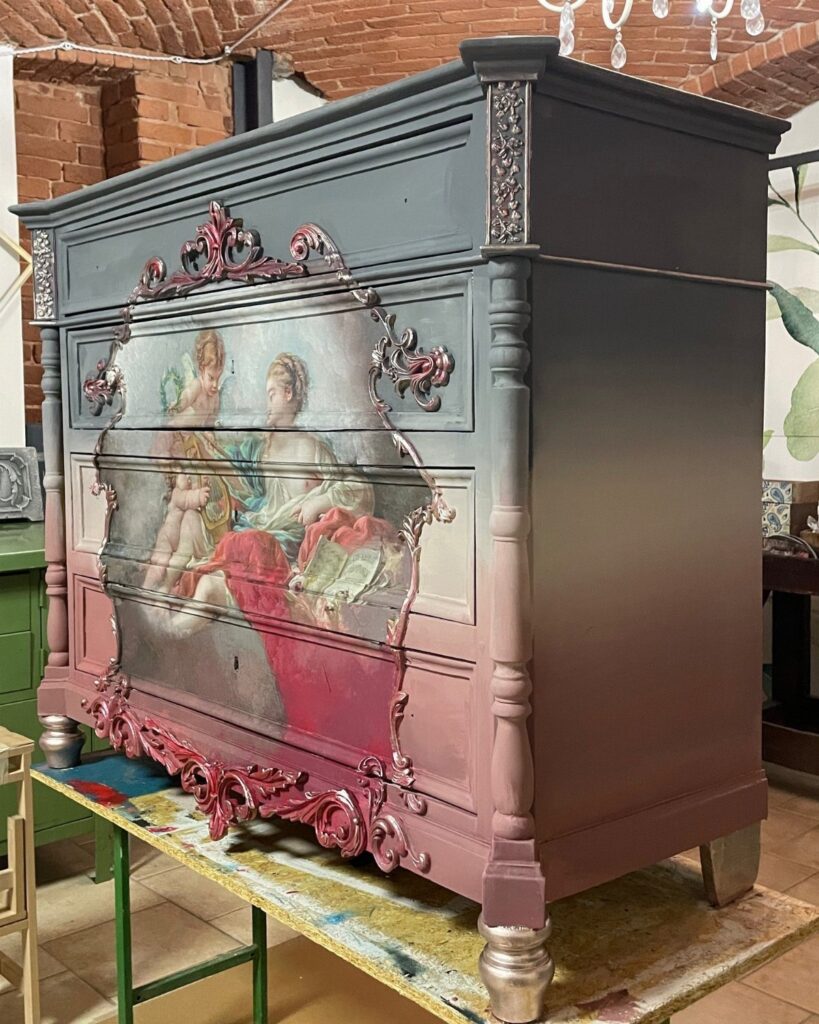
Decoupage lets you add an image to drawer fronts by gluing down printed paper, then sealing it with a topcoat. The technique works on painted or raw wood, and you can use anything from art prints to vintage book pages.
Pick a thin paper that lies flat without wrinkling.
Mod Podge or diluted white glue works for both adhesive and sealer. Apply it to the drawer, smooth the paper down with a credit card to push out bubbles, then seal with a few more coats once it dries.
The result holds up to daily use as long as you seal it well. Sand lightly between coats for a smooth finish.
2. Rustic Wood Accents
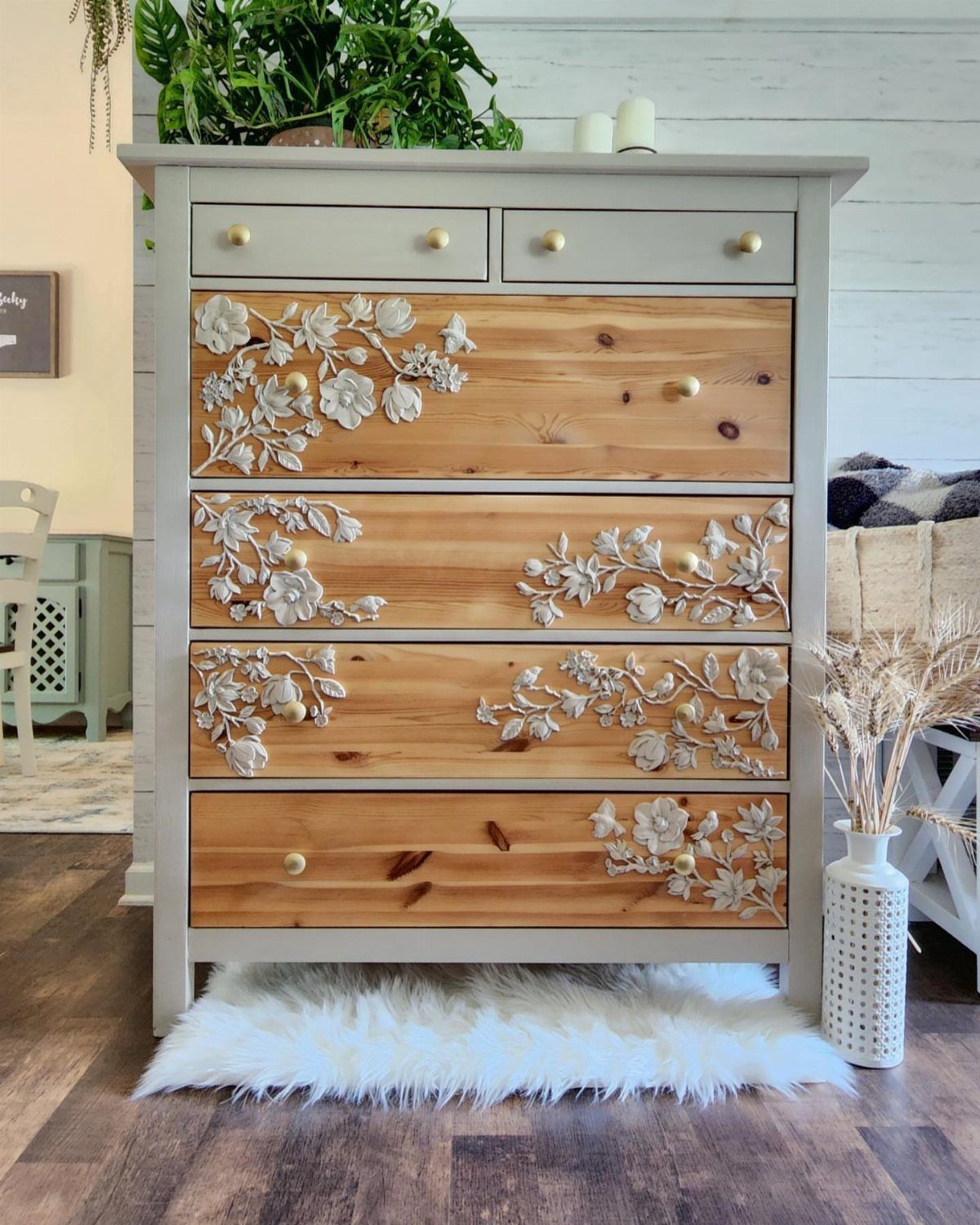
Leaving drawer fronts in natural wood while painting the frame gives you contrast without needing perfect color matching. The wood grain adds warmth, and the painted body keeps the piece from looking too rustic for modern rooms.
This works best when the drawer fronts are solid wood or veneer worth keeping.
If the existing finish is worn, sand it back to bare wood and apply a clear sealer or light stain. Paint the frame in a neutral like grey, white, or navy so the wood reads as the accent.
If the drawer fronts are damaged or laminate, you can replace them with new wood panels cut to size before painting the rest.
3. Two-Tone Dresser
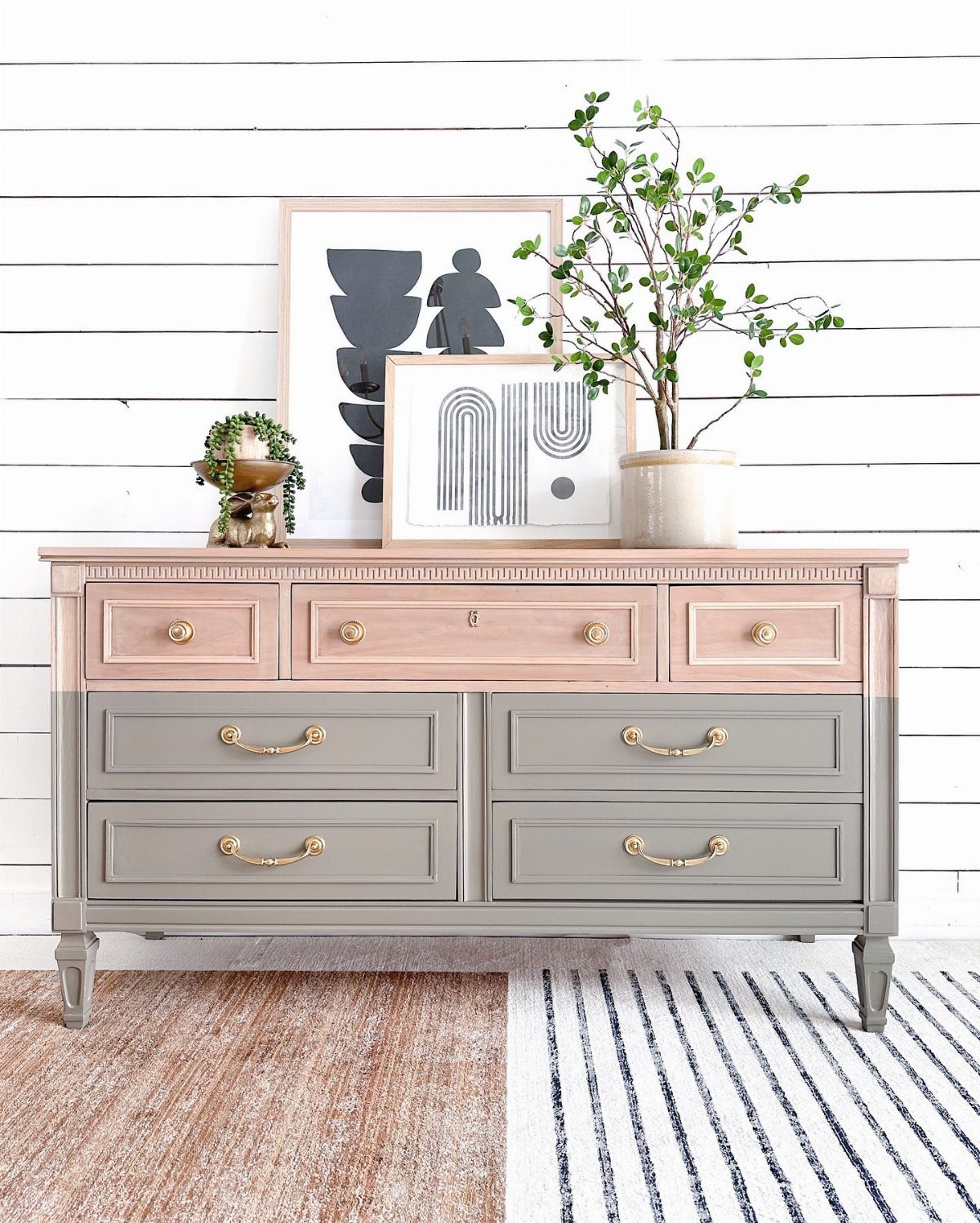
Splitting a dresser into 2 colors breaks up the height and lets you use a bold shade without overwhelming the room.
The division usually falls horizontally, with the top drawers in one color and the bottom in another, or vertically between the frame and the drawer fronts.
Pick colors with enough contrast that the line between them reads clearly.
A light top with a darker base keeps the piece from feeling top-heavy. You can also reverse it for a grounded look.
Tape off the divide with painter’s tape and paint one section at a time. The cleaner the line, the more intentional it looks.
4. Ombre Dresser
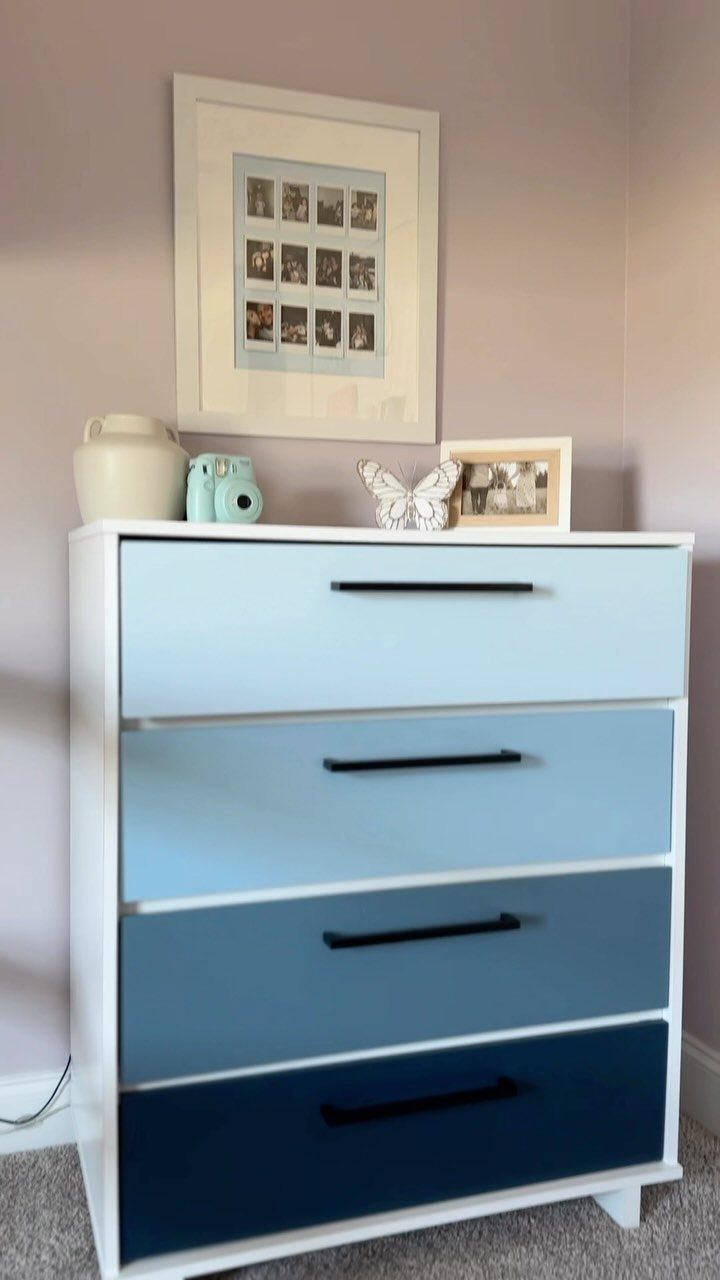
An ombre gradient fades from one color to another across the drawer fronts, lightest at the top and darkest at the bottom. It takes more mixing than a solid color, but the effect is softer than a hard two-tone split.
Start with white or a light base color on the top drawer.
For each drawer below, add a bit more of your accent color to the mix. The creator of this one used blue, mixing progressively darker shades as she moved down.
The transition works best when you blend 4 or more shades.
Test each mix on cardboard first so you can adjust before committing to the drawer. The handles stay consistent, which keeps the gradient from feeling too busy.
5. Repainted Vintage Dressers
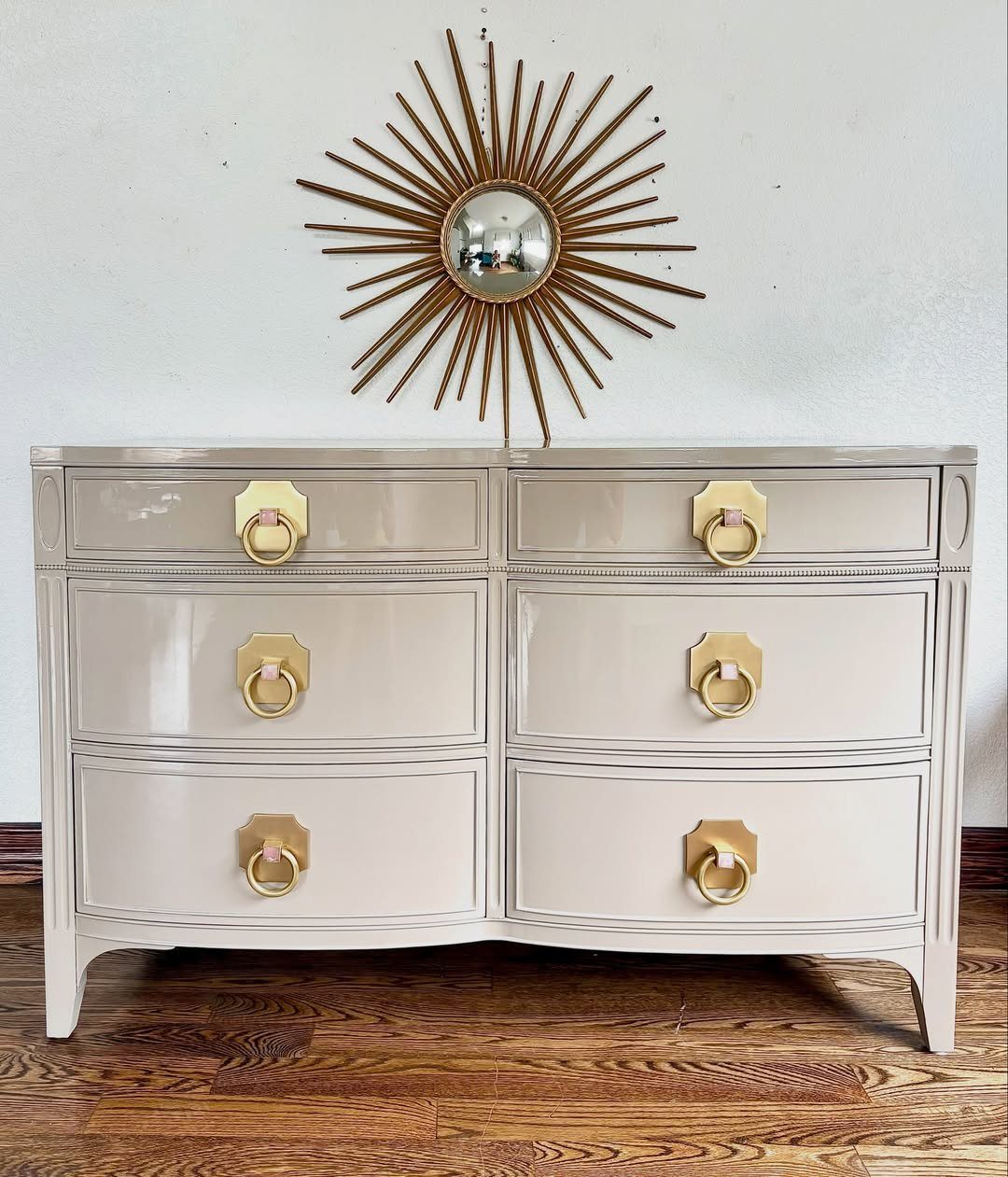
Vintage dressers with curved fronts, carved details, or unusual hardware are worth keeping intact.
Paint them in a quiet neutral or pastel and you get a piece that works in a modern room but still carries the lines and details that made it good in the first place.
Sand down any chipped finish, fill deep scratches with wood filler, and prime bare spots before painting.
If the hardware is solid brass or has detail you like, clean it with vinegar instead of replacing it. A soft cream, greige, or pale blue works better than stark white on pieces with traditional lines.
These dressers usually have dovetail joints and solid wood construction, so they last longer than flat-pack furniture once you refinish them.
6. Bright Bold Colors Dresser
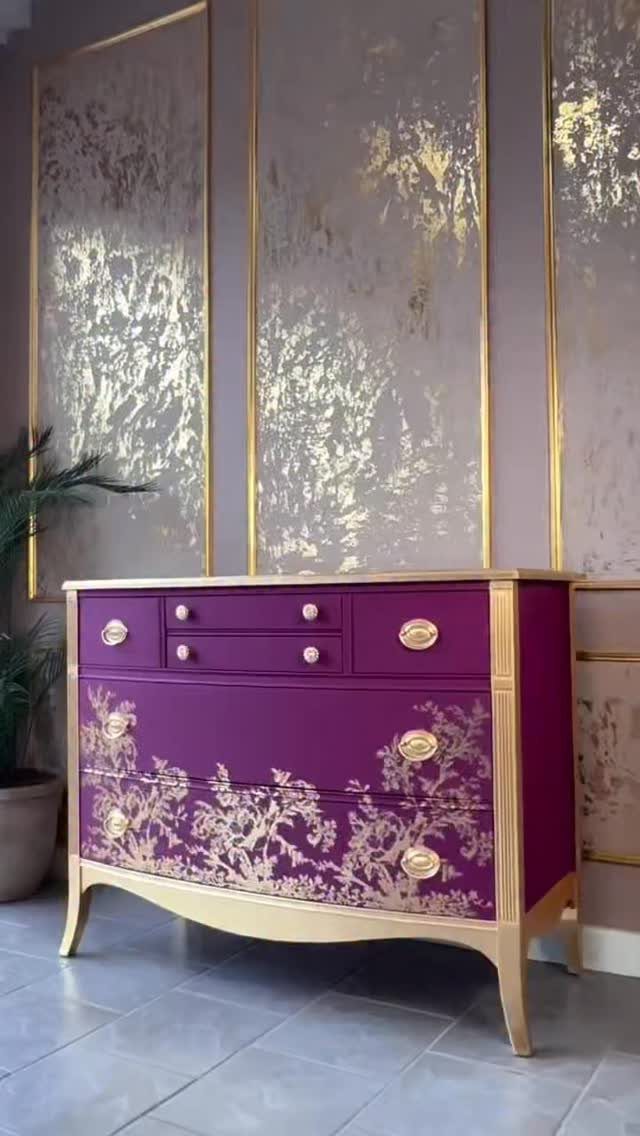
A bold color like cobalt, emerald, or deep purple makes a dresser the focal point without needing much else in the room. It works when you want the furniture to stand out instead of blending in.
The color reads best on a dresser with clean lines or minimal detail, where the shape does not compete with the paint. Pair it with metallic hardware in brass or gold to add contrast without softening the impact.
One coat of primer and 2 of satin or semigloss paint usually cover an old finish. The sheen matters: flat paint on furniture shows scuffs, and high gloss highlights every flaw in the wood underneath.
Whatever the reason, if you’re ready to pull out your paintbrush and add a bit of color to your chest of drawers, there are plenty of stunning painted dresser ideas out there for inspiration.
7. DIY Bone Inlay
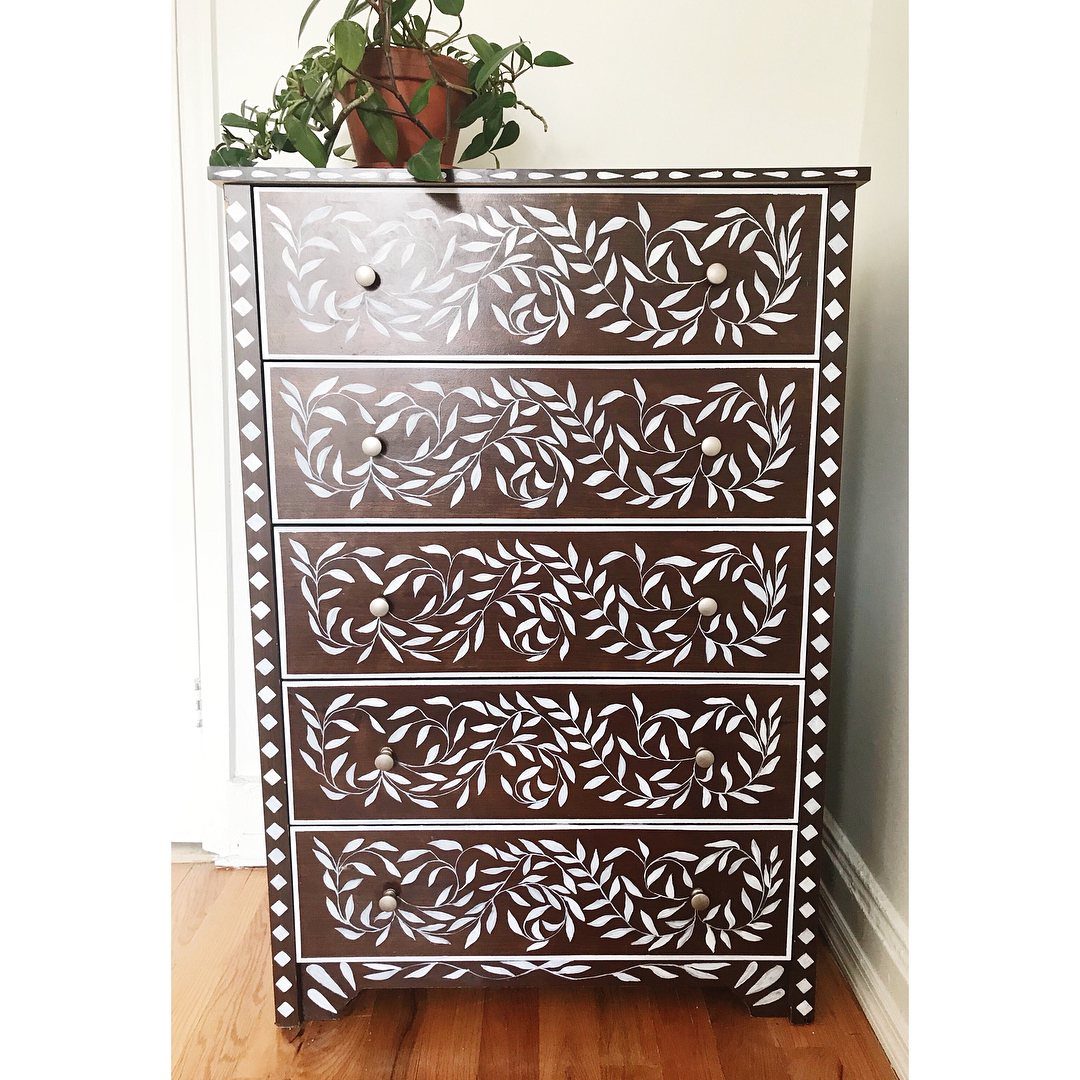
Painting a bone inlay pattern gives you the look of the real thing without the cost or the weight.
The design mimics the carved geometric or floral motifs found on traditional inlay furniture, where thin pieces of bone or shell are set into wood.
Use a fine brush and white paint over a darker base color.
The pattern works best when you keep the lines thin and repeat the motif across drawer fronts or along the edges. Seal with a clear topcoat once dry so the paint does not chip with use.
8. Pastel Dresser
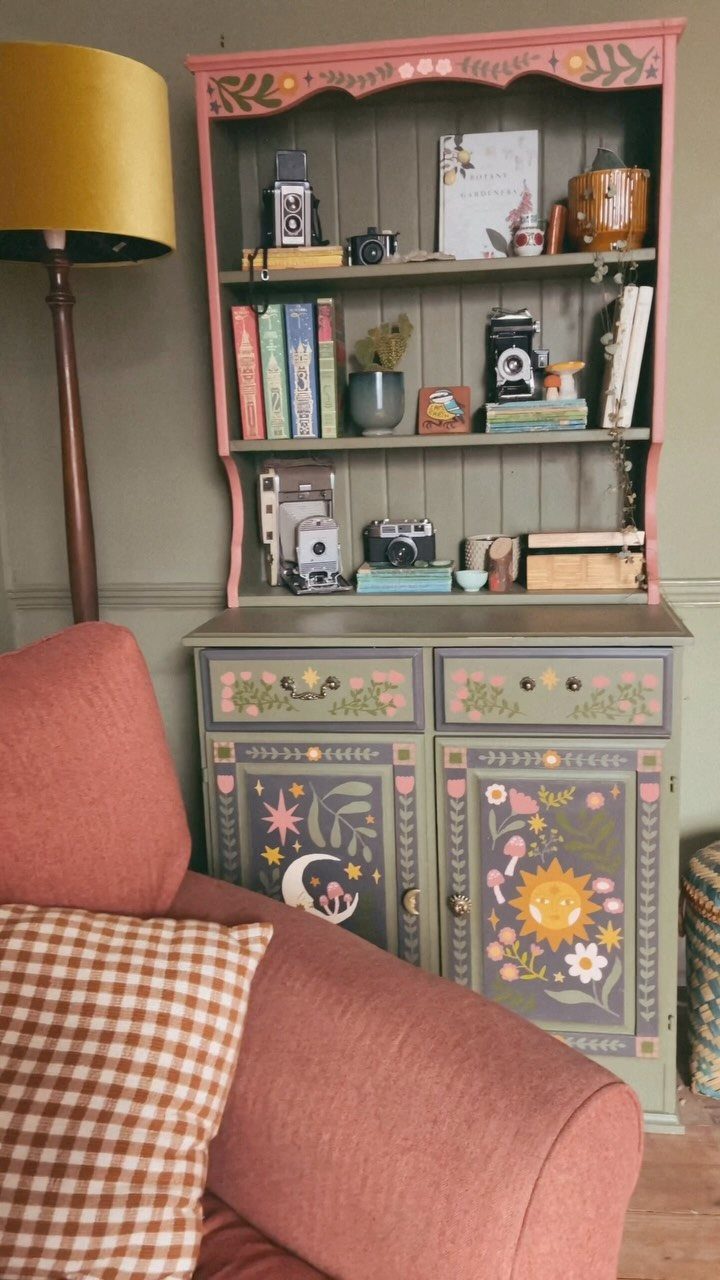
Soft pastels like blush pink, mint, or lavender keep a dresser light without reading as nursery furniture when you pair them with hand-painted details or metallic hardware.
The color works in bedrooms or living spaces where you want something gentler than white but still neutral enough to last.
Add painted florals, stars, or botanical motifs in a slightly darker shade to give the piece more interest. A clear or light wax topcoat protects the design without yellowing the pastel base.
The look takes time if you add detailed painting, but the base coat itself is straightforward.
9. Striped Dresser
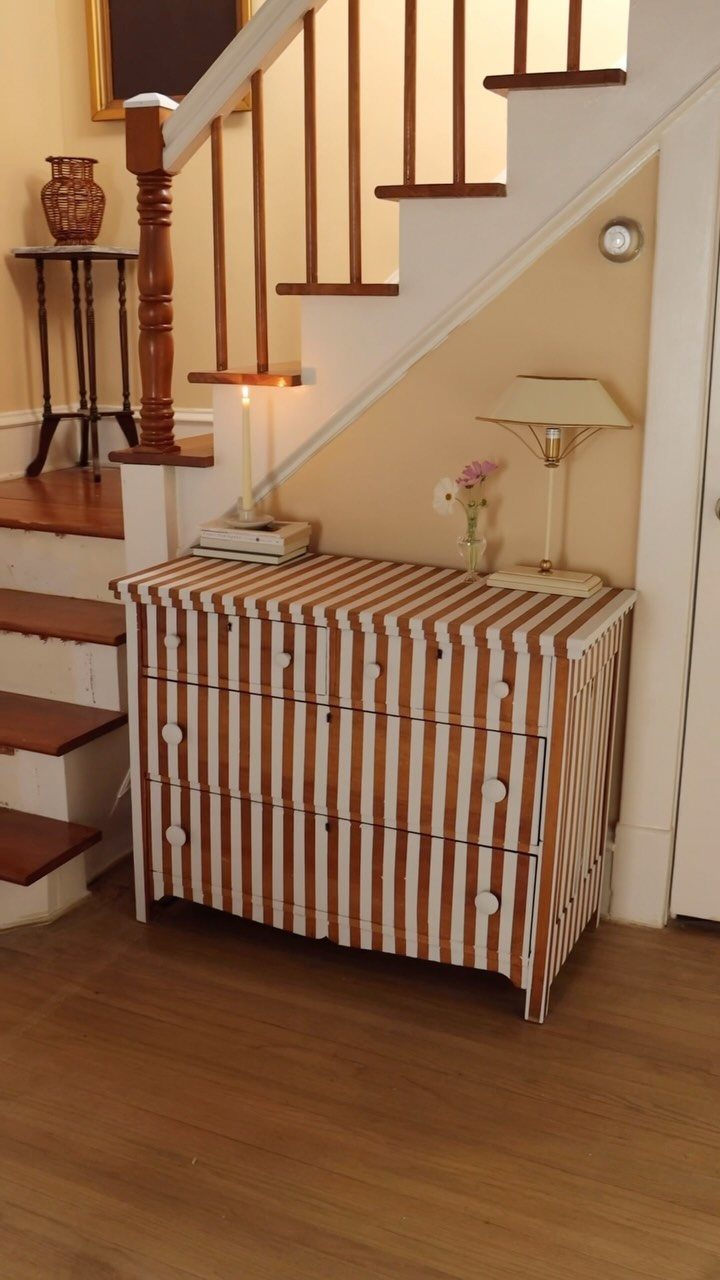
Vertical or horizontal stripes across the drawer fronts turn a plain dresser into something with more movement.
The pattern works in any color combination, but keeping one stripe neutral lets the other color stand out without the piece feeling too busy.
Tape off the stripes with painter’s tape, pressing the edges down firmly so paint does not bleed underneath.
Paint the alternating stripes in your accent color, pull the tape while the paint is still slightly tacky, then seal once everything dries.
The spacing matters: wide stripes read as bold, narrow ones feel more detailed.
10. Floral Stenciled Dresser
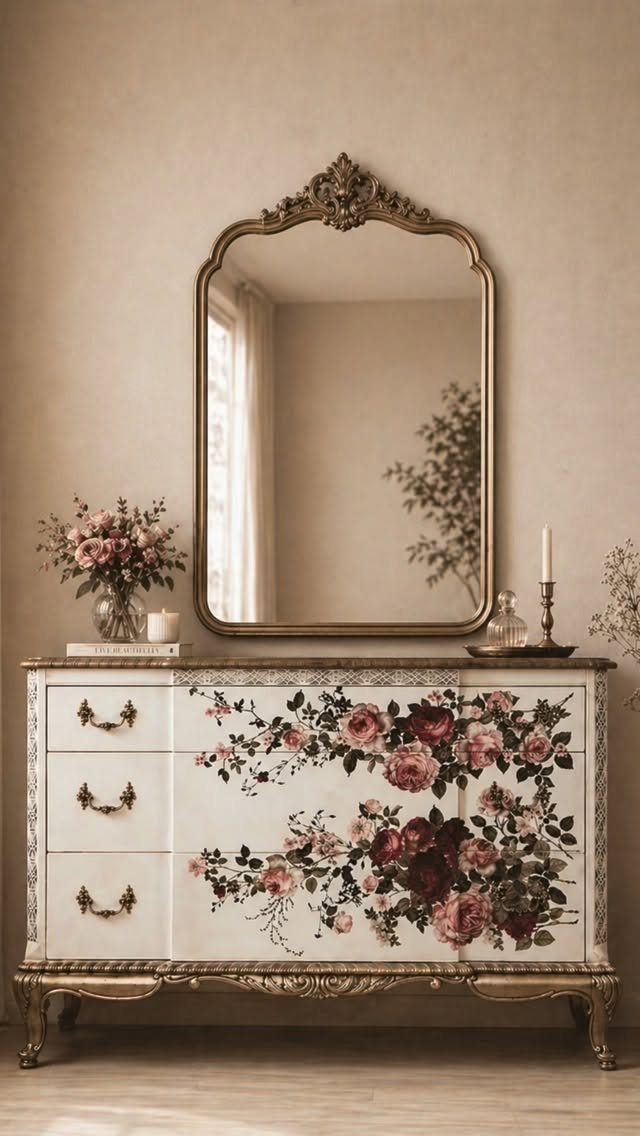
Stencils let you add a floral design without needing steady hands or drawing skills.
The pattern can cover a full drawer front or sit in one corner as an accent. Either way, it gives the piece a softer, more decorative look than solid paint alone.
Use a stencil brush and dab the paint on instead of brushing it, which keeps the edges crisp. If you want layered florals, let the first color dry completely before adding the next stencil on top.
Pick a stencil size that fits the drawer proportions so the design does not look cramped or lost.
11. Painted Geometric Patterns
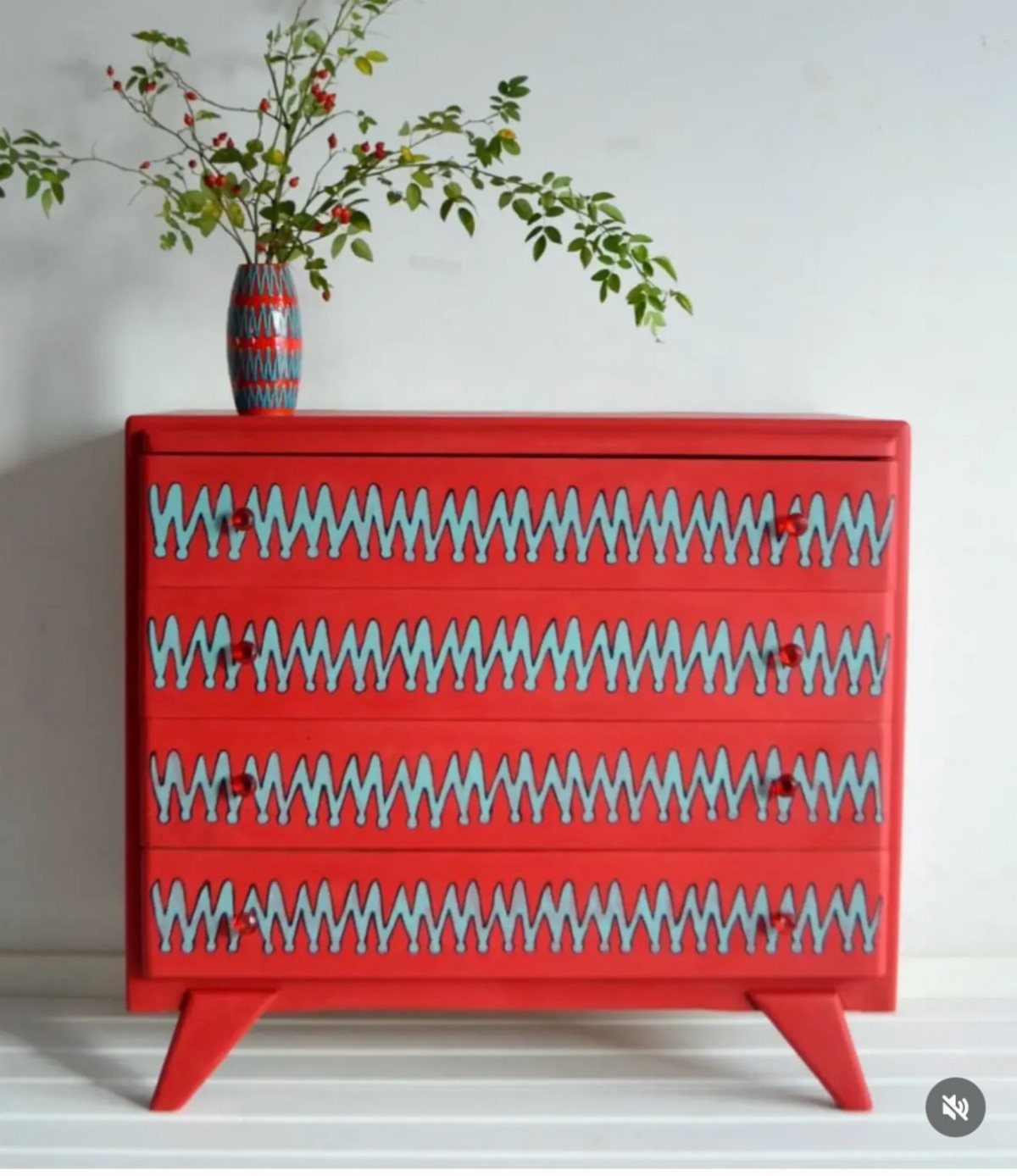
Geometric shapes like chevrons, triangles, or diamonds add structure to drawer fronts without needing freehand painting. Painter’s tape makes the lines clean, and the pattern reads clearly from across the room.
Tape off your design, paint the sections in your chosen colors, and remove the tape before the paint fully dries to avoid peeling. A level helps keep horizontal lines straight if you are working with stripes or chevrons.
The bolder the color contrast, the sharper the pattern looks. Neutral backgrounds with one bright accent keep it from overwhelming the room.
12. Textured Painted Dresser
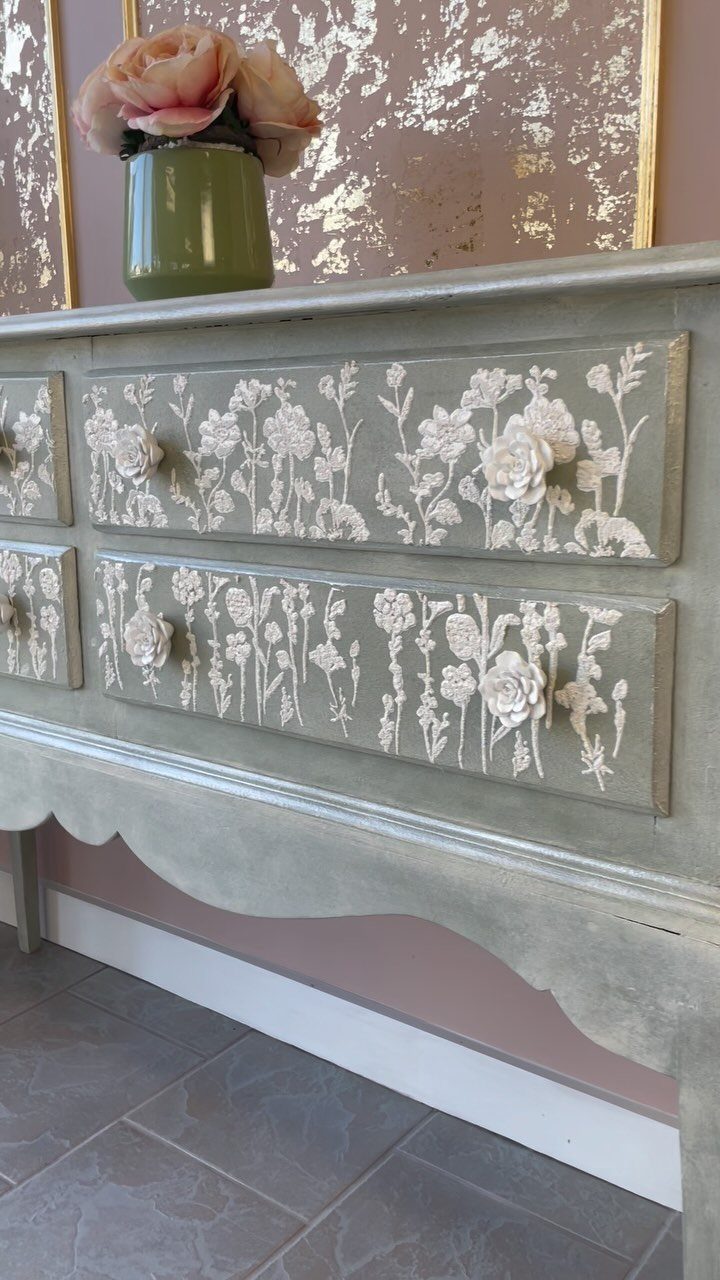
Textured paint or raised stencil paste adds dimension to drawer fronts so the design casts a shadow and catches light instead of sitting flat. The effect works with florals, damask patterns, or anything with repeated detail.
Apply modeling paste or thick dimensional paint through a stencil, let it dry completely, then paint over the entire surface. The raised areas stand out even when the whole piece is one color.
This adds time since the texture needs to cure before you paint, but it gives you a result that looks carved or embossed without touching the wood underneath.
13. French Provincial Dresser
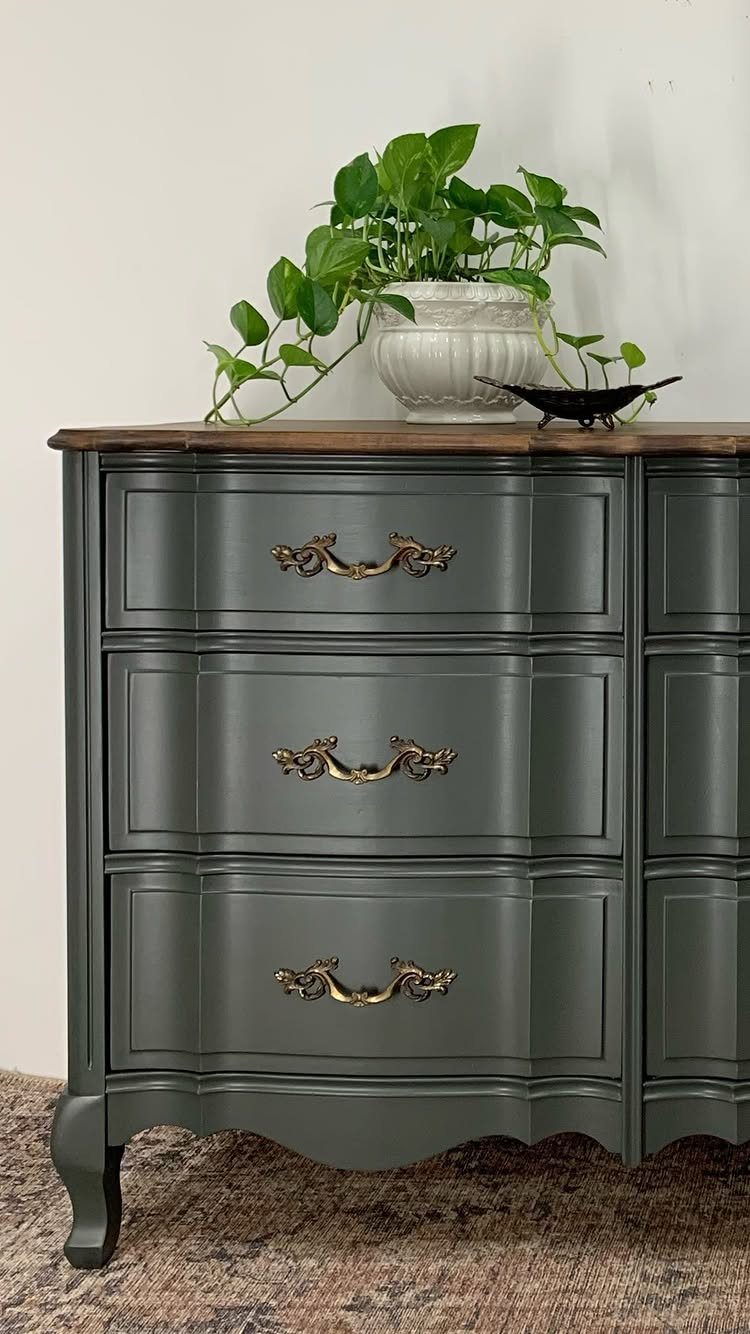
French Provincial dressers have curved fronts, cabriole legs, and carved details that look best when you lean into the ornate style instead of trying to hide it.
Paint the body in a soft neutral like grey, cream, or pale blue, and keep the original hardware if it has any detail worth showing.
If the hardware is missing or damaged, replace it with something equally decorative. Brass or gold pulls read as traditional, matte black keeps it from feeling too formal.
The curves and carved elements mean more prep work. Sand carefully around the details so you do not lose the definition, and use a small brush to get paint into the grooves.
14. DIY Card Catalog Dresser
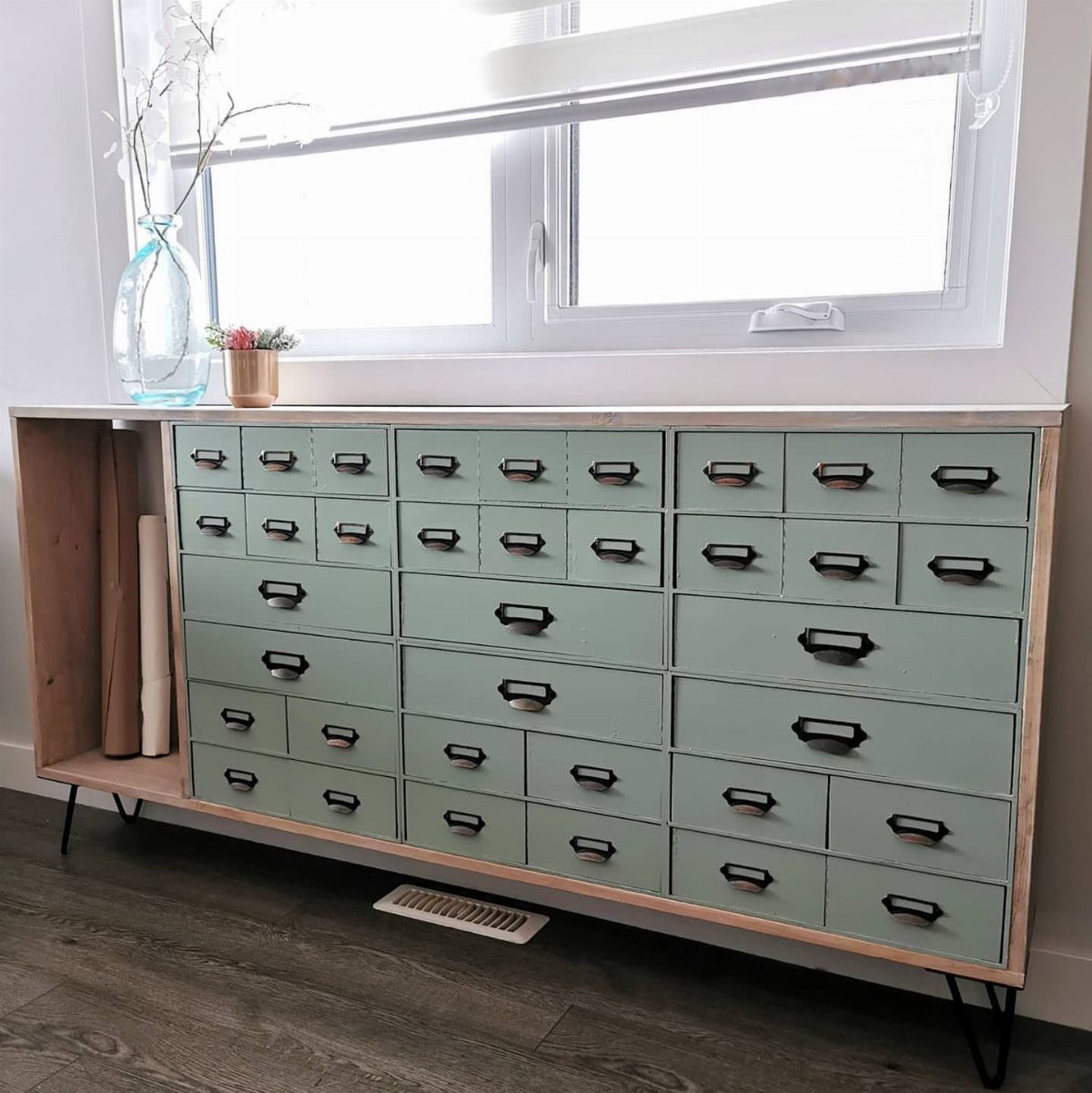
Adding hardware to every drawer and painting a dresser to mimic a vintage card catalog turns a plain piece into something with more character.
The look works best on dressers with at least 6 drawers, where the repetition of small pulls across the front reads as intentional.
Use cup pulls or label holders in brass or black, spaced evenly across each drawer.
This takes time to drill and install all the pulls, but the hardware does most of the visual work once it is on.
15. Black Paint
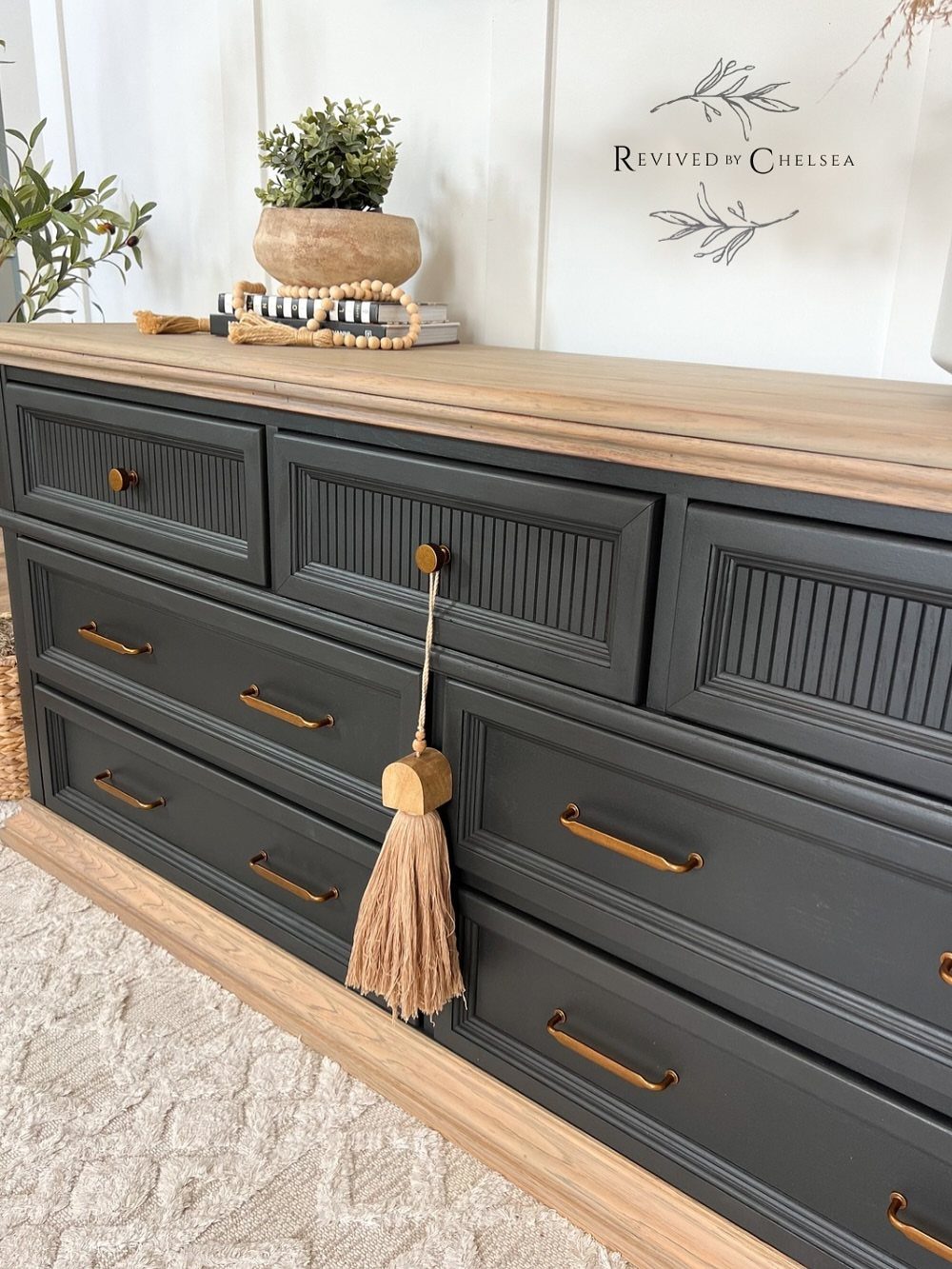
Black paint gives a dresser weight and makes it work in rooms where lighter colors would disappear.
It reads as modern when paired with brass or gold hardware, and leaving the top in natural wood keeps it from feeling too heavy.
Use satin or semigloss so the finish does not show every fingerprint. Sand between coats for a smooth result, and seal with a clear topcoat if the dresser gets daily use.
The contrast between black and wood works on any dresser with clean lines.
16. Painted Nautical Dresser
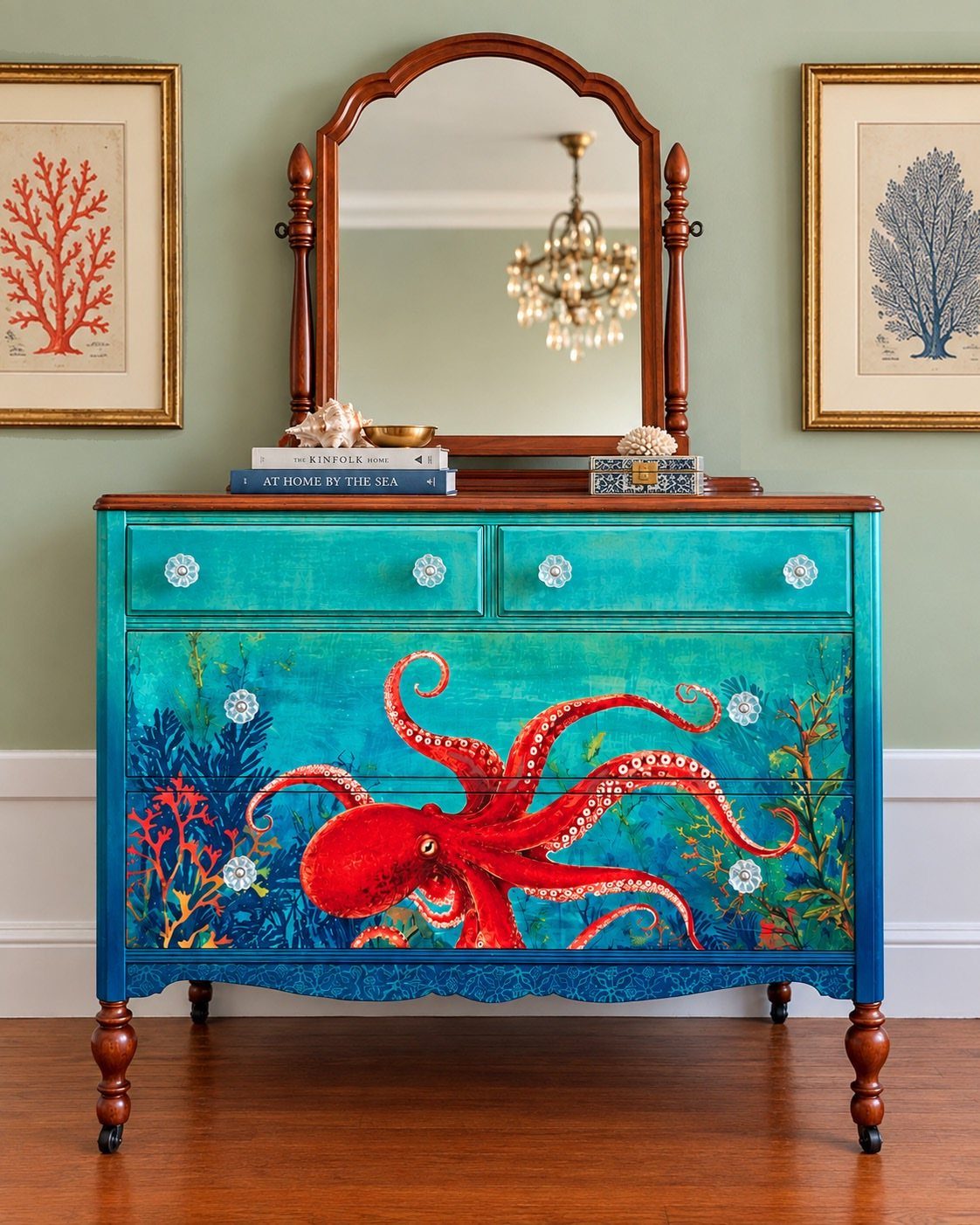
Painting an ocean scene or marine motif across the drawer fronts turns a dresser into a focal point that works in bedrooms or coastal spaces.
The design can be as simple as a silhouette or as detailed as coral and sea creatures in multiple colors.
Sketch the composition on paper first so you know which elements land on each drawer. Use a small brush for details like tentacles or coral branches, and keep the background a solid color so the painted elements read clearly.
This takes more time than a solid color, but the result is something you would not find in a store.
17. Sage Green Dresser
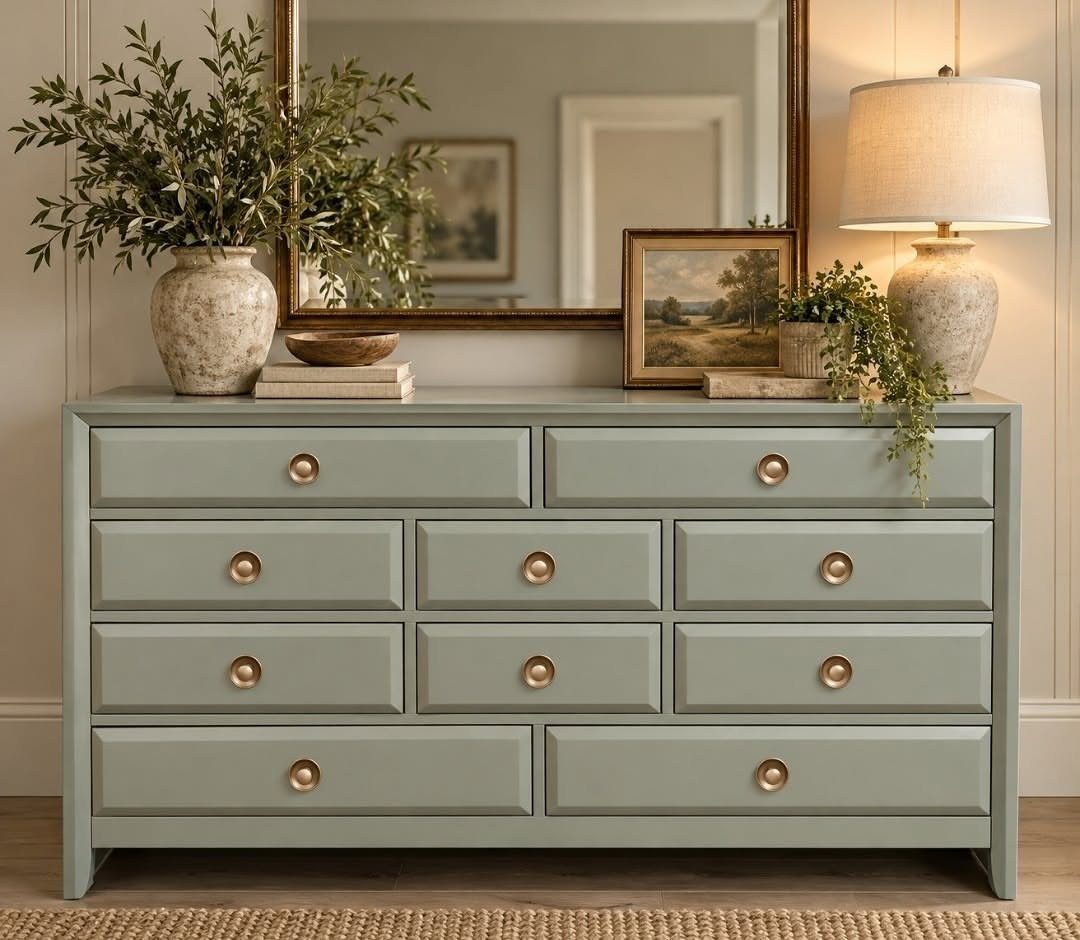
Sage green sits between grey and green, which makes it easier to work with than brighter greens that can feel too bold. It works in bedrooms and living spaces where you want color without committing to something bright.
The finish matters: satin or eggshell hides minor flaws in the wood better than flat paint.
18. Painted Landscape Mural
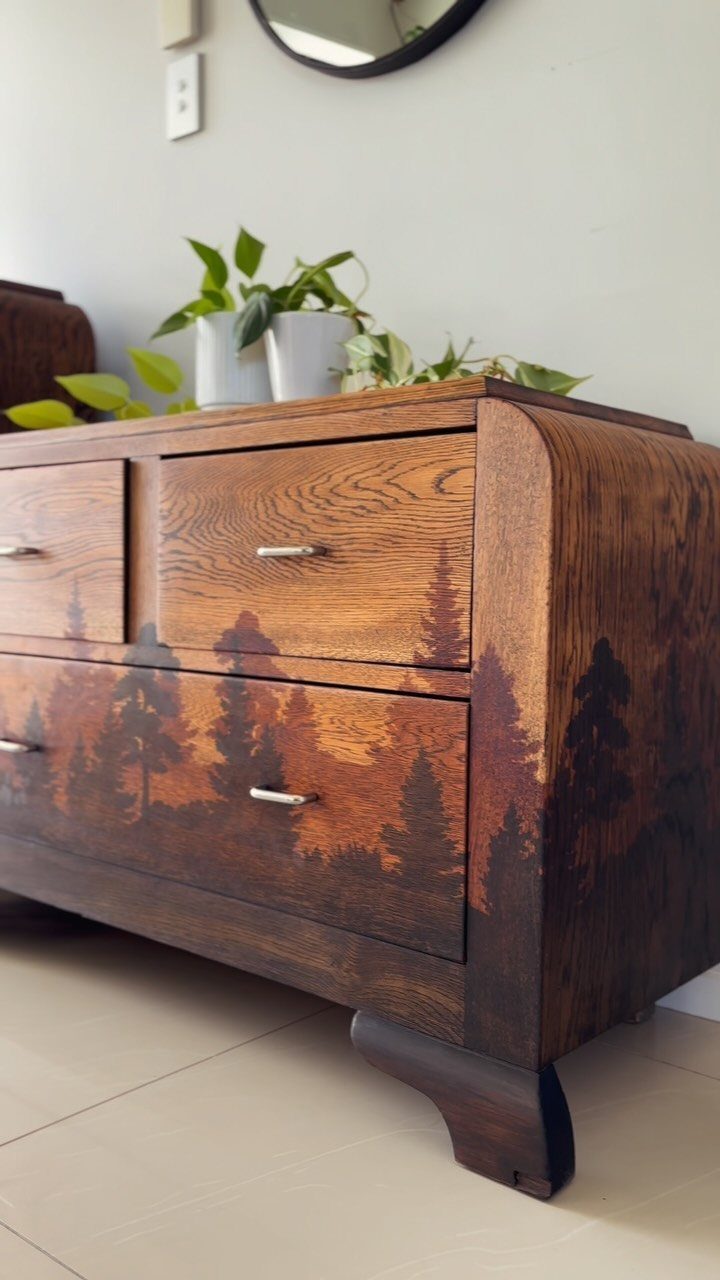
Painting a landscape or treeline across the lower drawers creates a horizon effect that breaks up the height of a tall dresser.
The design works best as a silhouette in one color over a lighter base, where the shapes read clearly without needing fine detail.
Tape off the horizon line where the landscape begins, then paint the silhouette freehand or use a projector to trace the outline. Dark brown, black, or deep green work for the landscape, and the top drawers stay a solid neutral.
The effect is subtle from a distance and more detailed up close.
19. Dark Grey Carved Floral Dresser
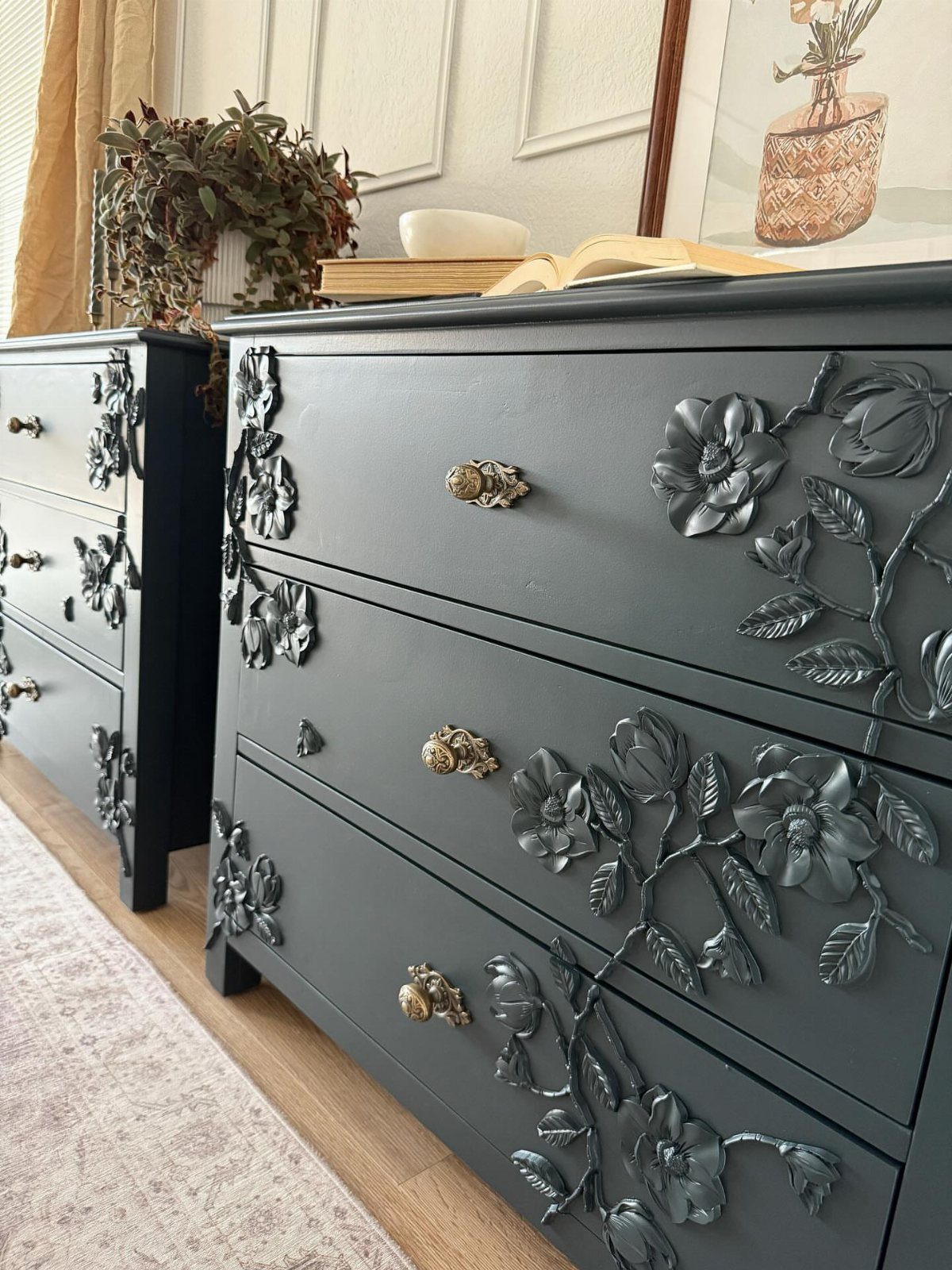
Dark grey on carved details gives you the depth of the carving without the weight of natural wood.
The paint settles into the grooves and highlights the relief, especially when you pair it with gold or brass hardware that catches light against the matte finish.
A foam brush gets into carved areas without leaving heavy buildup, and light sanding beforehand keeps the details crisp. Two thin coats cover better than one thick coat on ornate surfaces.
The dark color makes the dresser a statement piece, so it works best in a room with enough light to keep it from disappearing.
20. Hand-Painted Floral Motifs
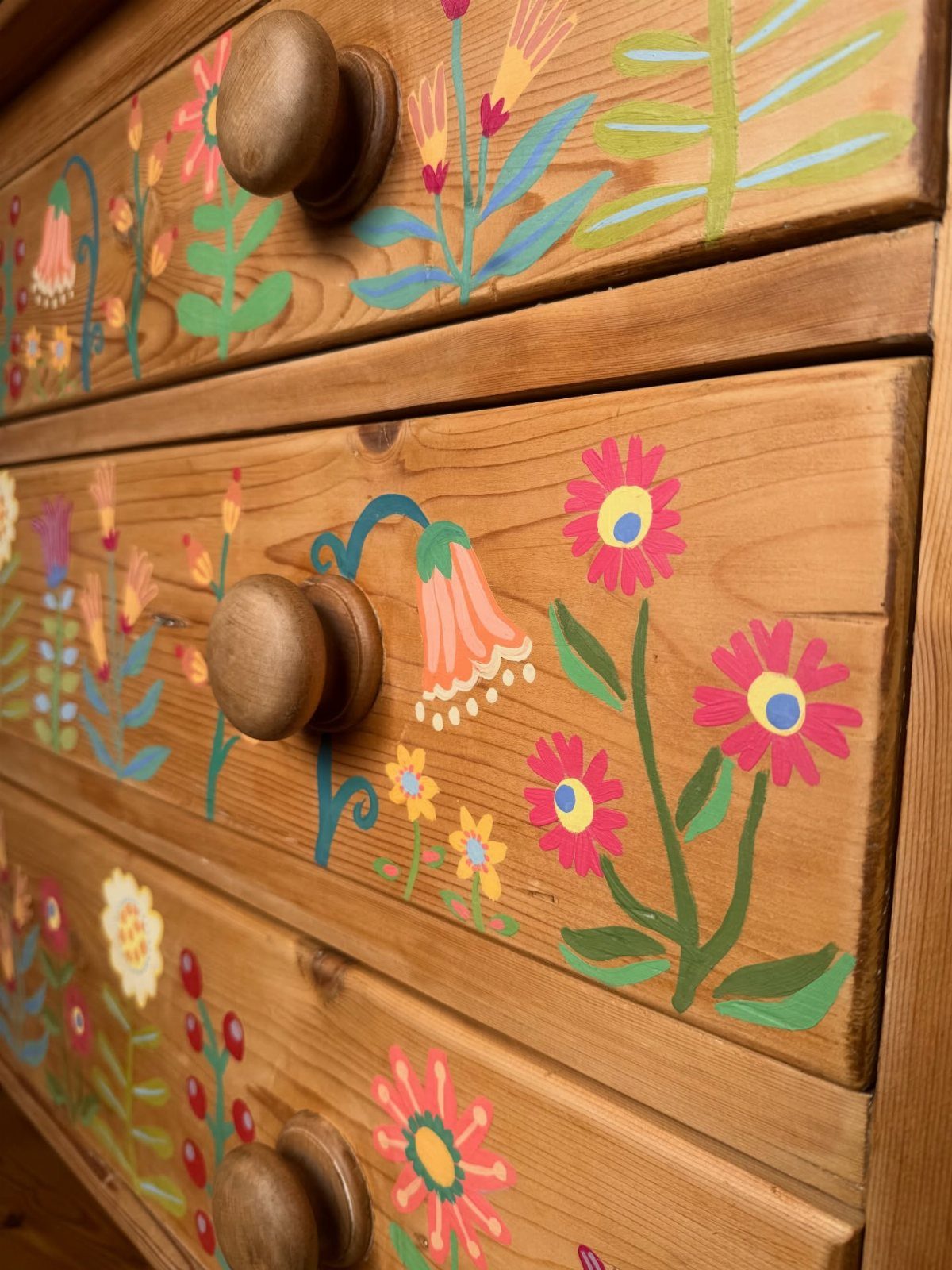
Painting florals by hand across drawer fronts takes longer than stenciling but gives you control over placement and color. The design can be loose and painterly or tight and detailed, depending on how much time you want to spend.
Sketch the layout in pencil first so you know where each bloom sits, then paint in layers, starting with the darkest color and adding highlights last. Use a fine brush for petals and a liner brush for stems and leaves.
Once everything is dry, a coat of polycrylic or water-based sealer keeps the design intact through drawer pulls and daily contact.
21. Deep Purple Finish
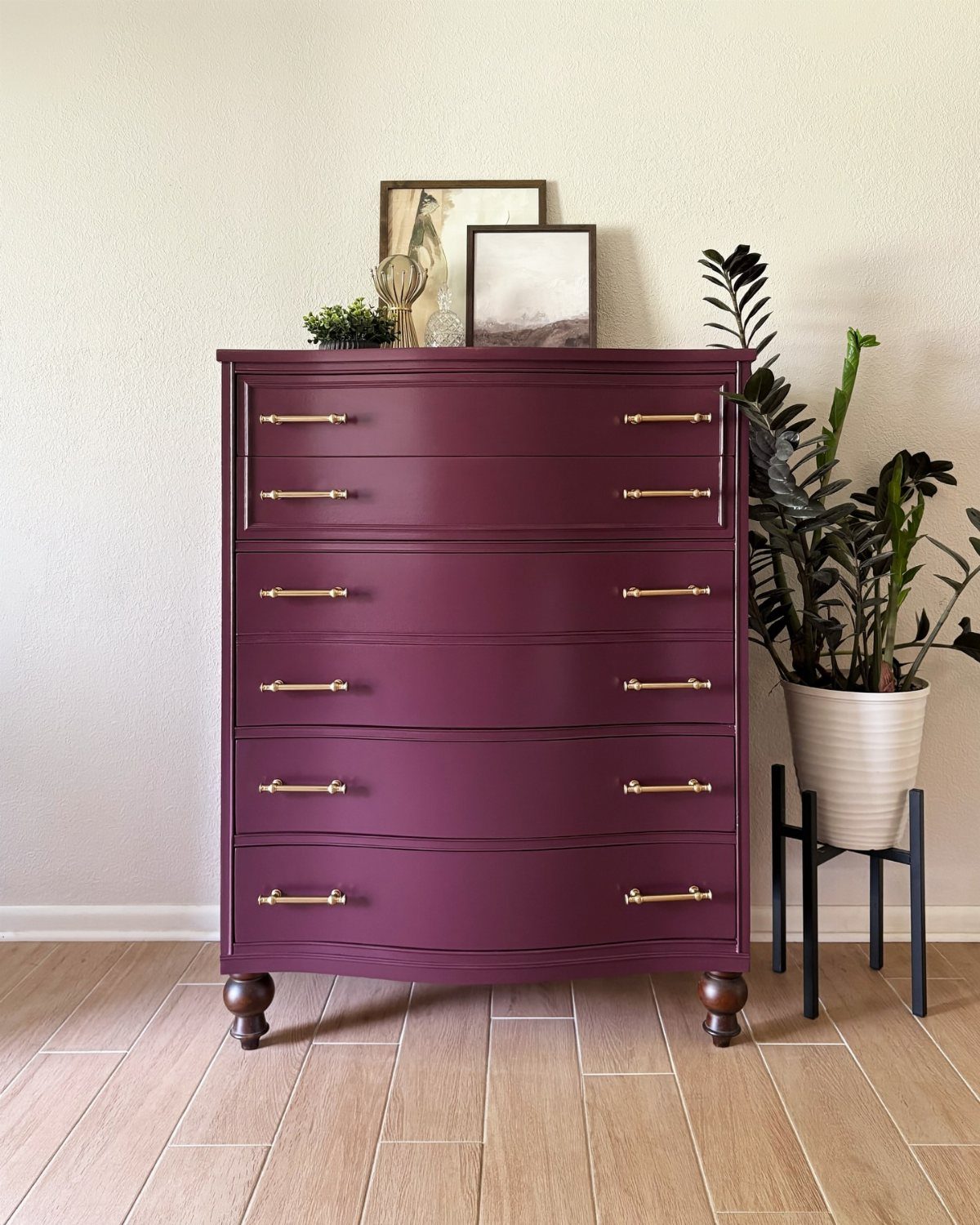
Purple sits between bold and neutral, especially in deeper plum or eggplant tones that read as sophisticated instead of bright. Gold hardware plays off the richness of the color without competing with it.
I go with satin or semigloss because flat paint shows scuffs too easily on a surface that gets touched often.
A quick sand with 220-grit between coats removes any brush marks, and if the top sees a lot of action, finish it with polycrylic.
It fits in a bedroom without overpowering the space, and it reads as intentional rather than leftover from a kid’s room.
22. Whimsical Fish Motifs
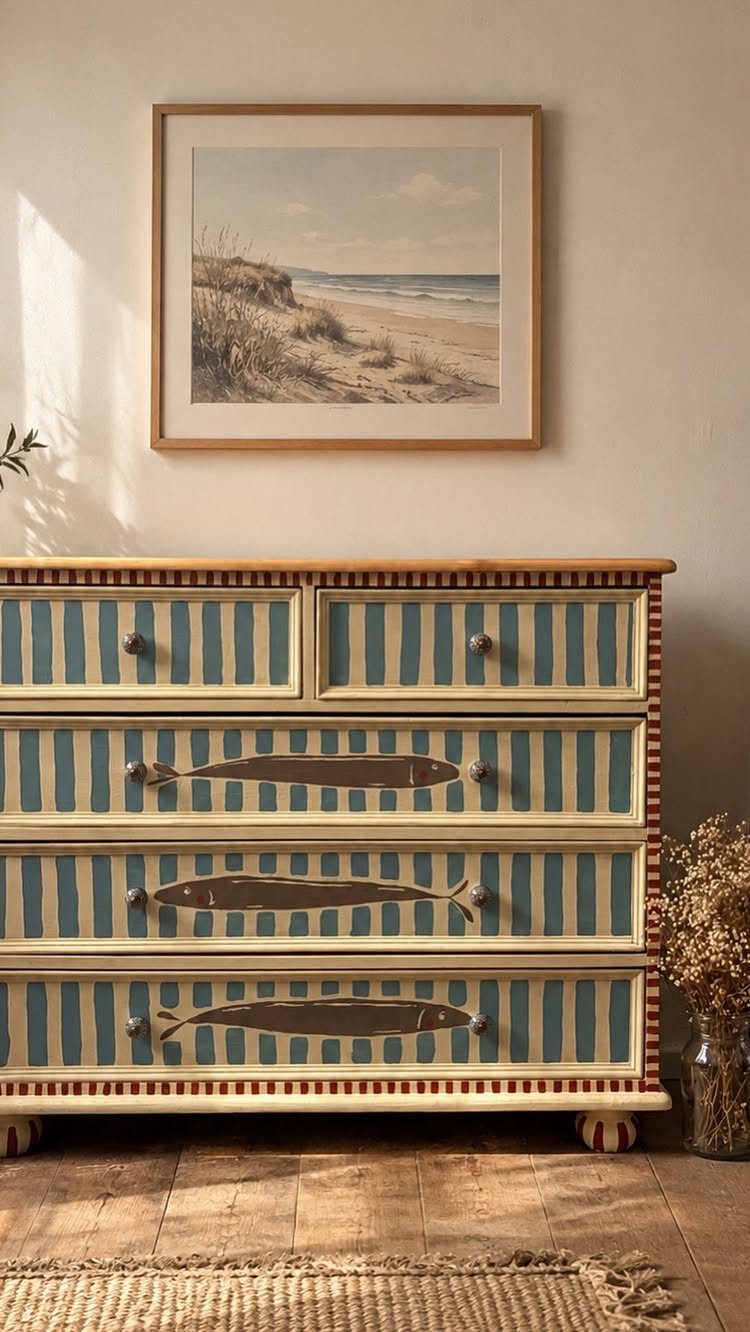
Painting fish or other marine life onto striped drawer fronts gives you a layered design where the stripes provide structure and the illustrations add character.
The look works in kids’ rooms or coastal spaces where you want something playful without being too literal.
Paint the stripes first, let them dry, then add the fish freehand or use a stencil. Keep the fish simple in silhouette or add color and scales for more detail.
The stripes anchor the design so the illustrations feel intentional instead of scattered.
23. Classic White Dresser
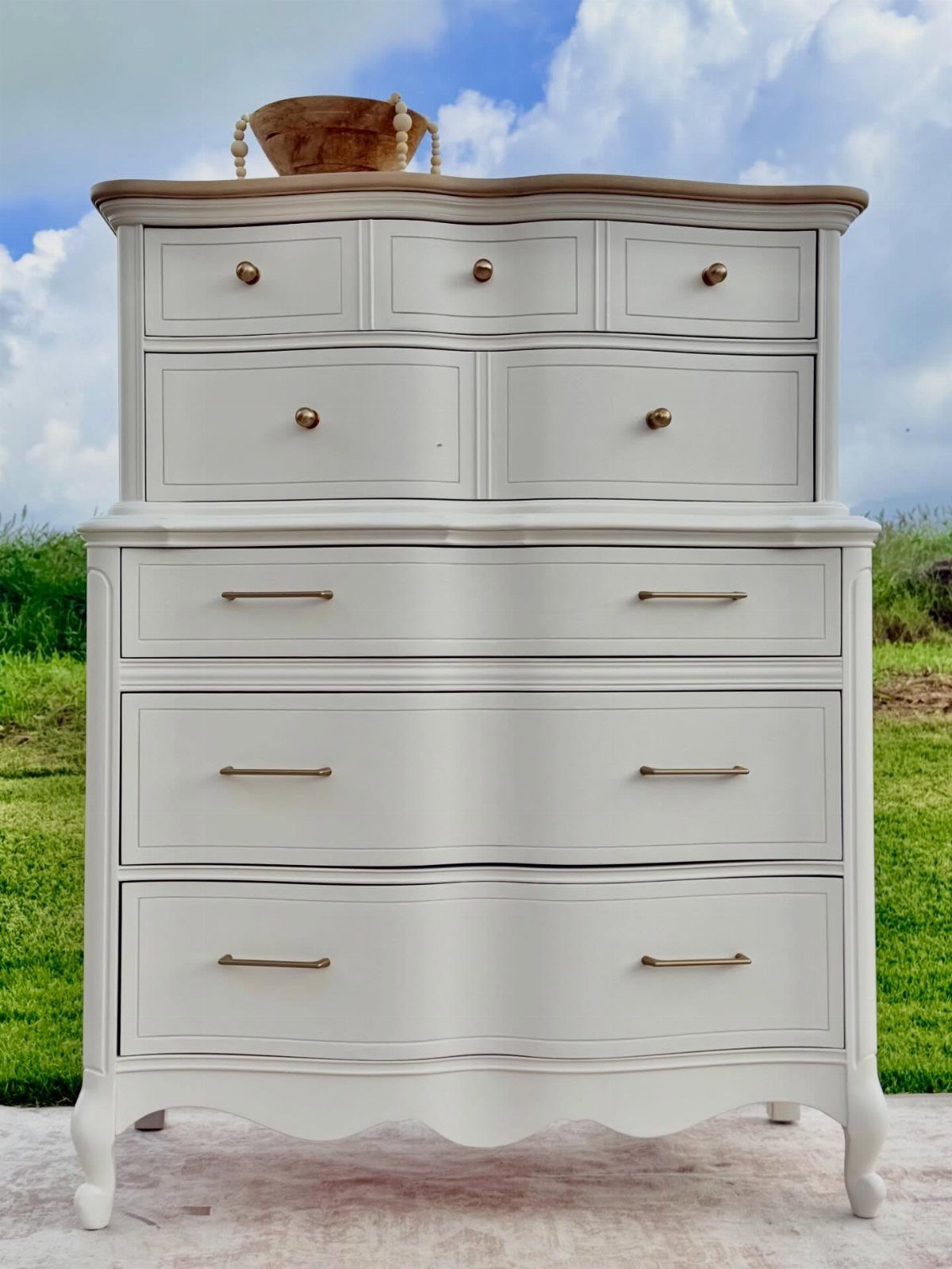
White paint and gold hardware is the simplest way to make an old dresser look finished without adding pattern or extra detail.
The combination works in any room and with any style, and it lets the shape of the dresser come through instead of the color.
Prime any dark or stained wood before painting so the old finish does not bleed through. 2 coats of white usually cover, and a clear topcoat protects high-touch areas like the top and drawer edges.
The brass pulls add warmth and keep the whole piece from looking too much like a hospital.
24. Star Pattern Stencils
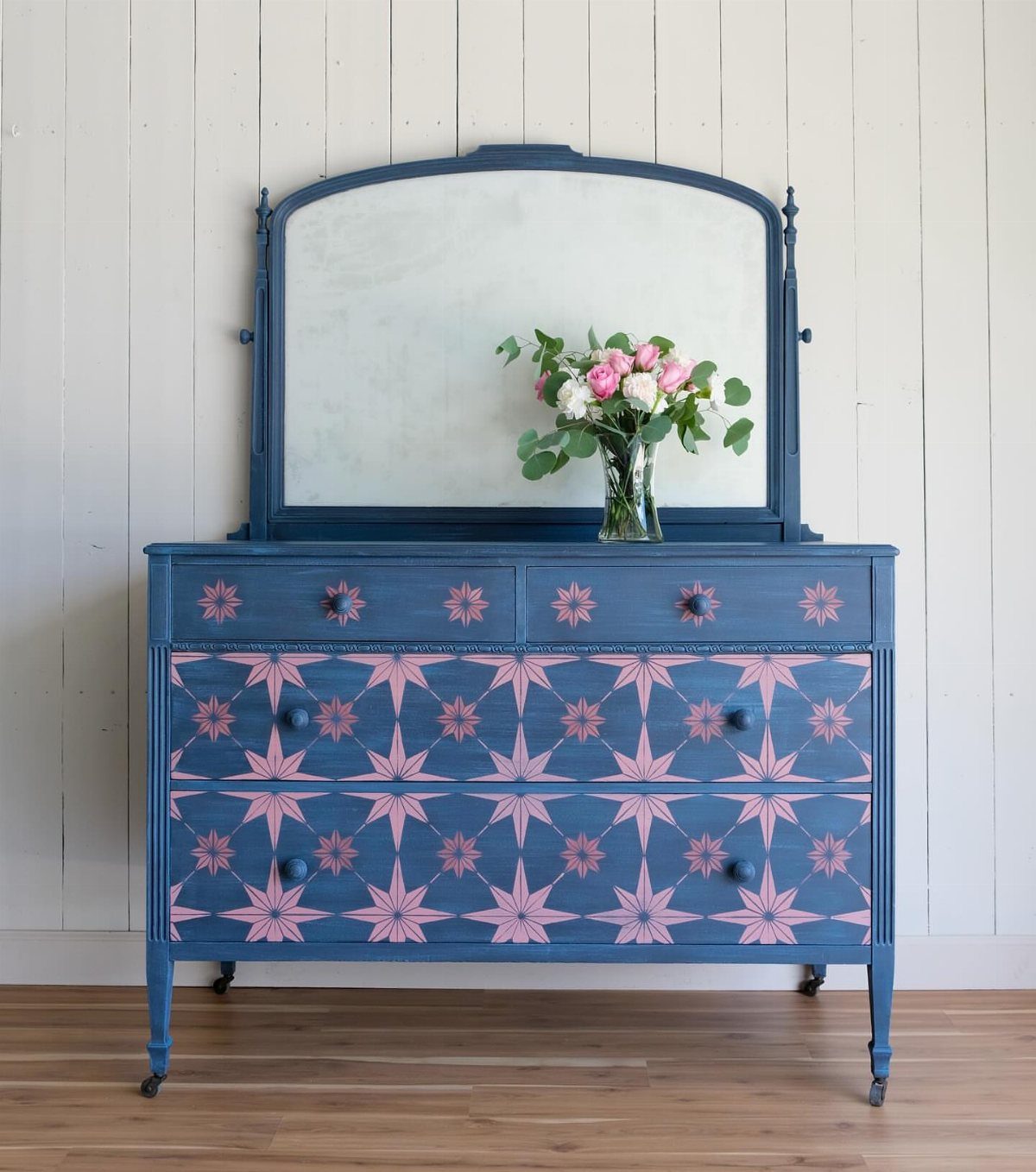
Stars stenciled onto drawer fronts add pattern without the commitment of allover design. The shape is simple enough to paint freehand if you do not have a stencil, and repeating it across the drawers gives the piece rhythm.
Space the stars evenly or cluster them in one area, depending on how much coverage you want. Use a contrasting color so the stars read clearly from across the room.
A clear topcoat locks the pattern in place so it does not rub off when you open the drawers.
Best Paint Types
Chalk paint goes on without showing brush strokes and needs no primer on most surfaces. Mineral paint and acrylic enamel both stick well and hold up to drawer pulls and daily contact.
Milk paint sinks into raw wood instead of sitting on top, so you get a flat finish that lets the grain show through. It works best on raw or stripped wood rather than over an existing finish.
Spray paint covers evenly and dries fast, but you need good ventilation and several light coats to avoid drips.
Latex paint does not bond to furniture well.
It sits on the surface instead of gripping it, which means it chips or peels once the dresser starts getting used. Stick with paints made for furniture or cabinets.
Preparation Steps
Light sanding roughens the surface enough for paint to grip, even if you are not stripping the finish down to bare wood.
If the dresser already has paint or a sealed finish and you do not want to sand, clean it thoroughly and use a bonding primer.
The primer bridges the gap between the old finish and the new paint so adhesion is not a problem.
Priming also blocks stains from bleeding through, which matters on older wood or pieces with water damage.
Choosing Colors
If the room is already neutral, a bold dresser color gives you a focal point without repainting walls.
Blues and greens read as calm, reds and oranges feel more active. The color sets the tone, so pick based on how the room is used.
Navy, emerald, warm grey, white, and black work in most rooms. Pink, light blue, and olive green soften the look if you want something less stark.
Traditional rooms with carved furniture lean toward classic colors like cream or muted blue. Modern spaces with clean lines take bolder shades or high-contrast neutrals better.
Frequently Asked Questions
What is a popular color to paint a dresser?
Bold colors like cobalt, emerald, and deep purple make dressers stand out, while sage green and dark grey work when you want something quieter.
Black with brass hardware reads as modern, and white stays versatile across any room. The right choice depends on whether you want the piece to blend in or anchor the space.
Is painted furniture still in style?
Painted furniture remains a cost-effective way to update a room without replacing everything.
A weekend of work turns an old dresser into something custom, and the finish holds up to daily use when sealed properly. The look works across traditional and modern styles depending on the color and hardware you choose.
What are some creative ideas for painted dressers?
Ombre gradients, stenciled florals, and geometric patterns add interest beyond a solid color.
Paint the frame and leave the drawer fronts bare, or reverse it and let the natural wood sit along the sides and top. Hand-painted details take longer but give you something that does not look store-bought.






