
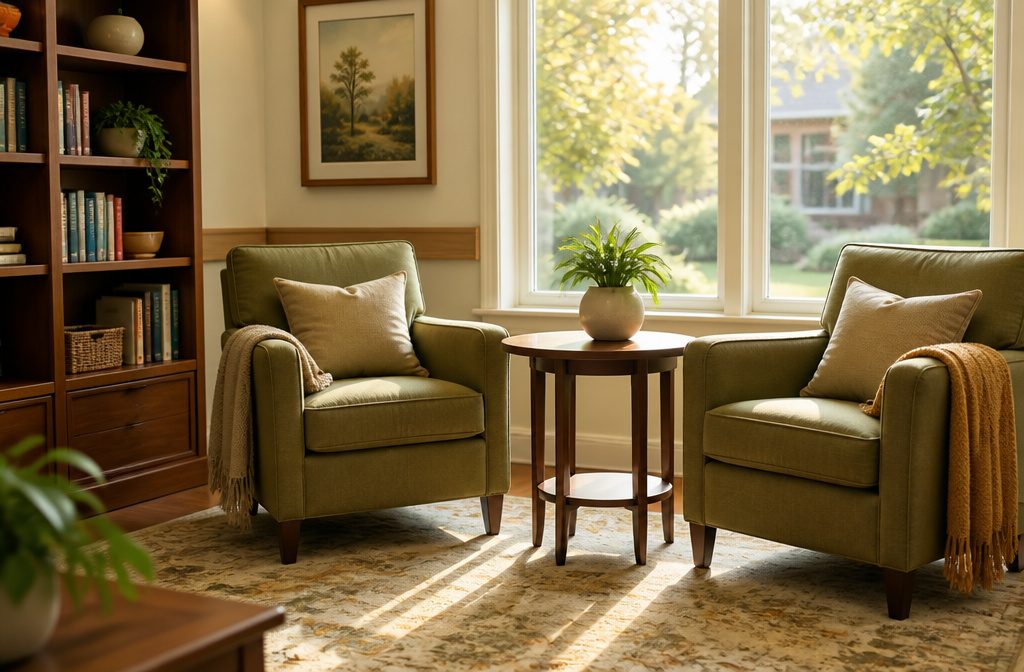
Senior living furniture addresses a specific set of physical needs that standard home furniture wasn’t built for: higher seat heights, stability under uneven weight shifts, and surfaces that tolerate daily disinfecting without cracking or fading.
The difference between a chair that helps someone stand independently and one that traps them until help arrives often comes down to 2 or 3 inches of seat height and whether the frame stays planted when you push down hard on one armrest.
The Homall Recliner Chair held the top spot here with a 17.9-inch seat height and a steel frame rated for 265 pounds, while the RESTREAL Power Lift Recliner brought dual motors and a 330-pound capacity for anyone who needs mechanical help getting up.
My Top Picks
| Product | Award | Best for | Why it won | ||
|---|---|---|---|---|---|
| Homall Recliner Chair | Best Overall for Comfort and Safety | Seniors prioritizing comfort and security | Strong balance of comfort, safety features, and stability with the highest overall performance | Check price | |
| RESTREAL Power Lift Recliner | Best for Mobility Support | Seniors with mobility challenges | Dual motor power lift assists standing up, designed specifically for stability and movement support | Check price | |
| Agati Curtis Pull Up Upholstered Seat | Best for Aesthetic Appeal | Design-conscious senior living spaces | Highest aesthetic appeal among options, elevates room appearance while meeting senior seating needs | Check price |

Best Overall for Comfort and Safety: Homall Recliner Chair
Best Overall for Comfort and Safety: Homall Recliner Chair
Quick Verdict
Seat height that lets most seniors stand without strain, a steel frame that doesn’t wobble, and a recline mechanism that adjusts through 70 degrees made this the top choice for anyone balancing comfort with safety.
The maker rates it for up to 265 lbs, and the 17.9-inch seat height clears the threshold physical therapists recommend for independent standing.
The PU leather wipes clean in seconds, but it won’t breathe the way fabric does during long sitting sessions.
What It Does Well
- 17.9-inch seat height reduces the effort needed to stand, a real factor for anyone with knee or hip limitations who wants to sit independently without calling for help.
- Adjustable recline from 90 to 160 degrees lets you switch from upright work posture to a near-flat nap position without moving to another chair.
- Non-marking foot pads on four legs prevent the chair from scratching hardwood or tile and keep it from sliding when you shift your weight getting up.
- Upgraded steel-frame footrest with thick foam holds your lower legs through a full movie without sagging, according to the maker.
Where It Falls Short
- PU leather traps heat and doesn’t let air through, which becomes uncomfortable during extended sitting in warm rooms.
- 265-lb capacity sits below what some competing models support, ruling it out for larger users.
Who It’s For
Anyone recovering from surgery or managing arthritis will appreciate the seat height and the stable base, especially in a single-person household where standing assistance isn’t always available.
Skip it if you need breathable upholstery for all-day use or if your weight approaches the rated limit.
How It Compares
The Agati Curtis Pull Up Upholstered Seat was designed specifically for senior living facilities and emphasizes aesthetic integration into care environments, but the sources don’t confirm its seat height or structural specs.
The Homall delivers documented measurements and a multi-position recline mechanism, making it the safer pick for buyers who need verified dimensions and adjustable support at home.
Where to buy: Amazon
Best for Mobility Support: RESTREAL Power Lift Recliner
Best for Mobility Support: RESTREAL Dual Motor Power Lift Recliner Chair
Quick Verdict
Two independent motors drive the backrest and footrest separately, letting someone adjust each to the exact angle they need without moving the other.
The lift function tilts the entire seat forward to help with standing, and the chair reclines completely flat for overnight sleep.
The massage and heating work well for comfort, but the three-package delivery weighing a combined 143 pounds means you’ll need help getting it inside.
What It Does Well
- Dual motors with separate controls let you position the backrest and footrest independently through infinite angles, which matters when recovering from shoulder surgery or when one position relieves pressure but another doesn’t.
- Power lift tilts the seat forward to reduce strain on knees and lower back when standing, designed specifically for seniors, pregnant women, or anyone with limited mobility who struggles to rise from sitting.
- Reclines to a completely flat position that functions like a bed, paired with eight massage points across the back, waist, thighs, and legs with five modes and adjustable intensity.
- Built-in tray table with cup holder and wireless charger folds down when not needed, and includes USB and USB-C ports for devices that don’t charge wirelessly.
Where It Falls Short
- Three-package delivery totaling 143 pounds (83, 36, and 24 pounds) requires help with unloading and moving, and packages may arrive on different days.
- No assembly tools included, though the maker says setup takes 20–40 minutes following the manual.
- Leather upholstery, while easy to clean, may not suit buyers who prefer fabric for breathability or temperature regulation.
Who It’s For
Someone managing mobility limitations or recovering from surgery who needs mechanical help standing up and wants the option to sleep in the chair will use the dual motors and lift function daily.
A buyer furnishing a formal living room or someone who moves frequently may find the 143-pound delivery weight and three-box logistics too cumbersome for a piece that doesn’t easily relocate.
How It Compares
The Agati Curtis Pull Up Upholstered Seat prioritizes aesthetics and cleanability for senior living common areas but lacks the power lift mechanism that defines the RESTREAL.
Someone furnishing a private bedroom or den where standing assistance matters will choose the RESTREAL; a facility manager outfitting a shared lounge where multiple residents sit briefly may prefer the Curtis for its easier maintenance and traditional seating design.
Where to buy: Amazon
Best for Aesthetic Appeal: Agati Curtis Pull Up Upholstered Seat
Image: agati.com
Best for Aesthetic Appeal: Curtis Pull Up Upholstered Seat
Quick Verdict
The Curtis Pull Up Upholstered Seat prioritizes visual appeal over feature count, making it the right choice when the look of a senior living room matters as much as function.
Upholstery makes it easy to clean or repair without replacing the entire chair, and the design avoids the institutional feel that many functional pieces carry.
The tradeoff is that chairs built for more comprehensive reclining or adjustment features will offer better overall comfort for residents with complex mobility needs.
What It Does Well
- Upholstered construction means stains and wear can be spot-cleaned or reupholstered without discarding the frame, extending the chair’s life in a high-use environment.
- Design avoids sterile institutional looks while remaining durable, so the space feels more like home than a medical facility.
- Comfort and safety features accommodate residents with mobility challenges, reducing the risk of slips or awkward transfers.
- Atmosphere-enhancing design helps residents feel at ease rather than medicalized, which matters when the living room is the main social space.
Where It Falls Short
- Less comprehensive functionality than recliners with motorized lift or multi-position adjustments, which can limit comfort for residents who need more postural support.
- Not built for all-day sitting if a resident spends most waking hours in one chair; competitors with deeper cushioning and more adjustability may be better for that use case.
Who It’s For
This chair suits families or facility managers who want a living room that looks inviting first and clinical never, and where residents can move in and out of chairs without assistance most of the time.
Skip it if a resident needs a lift mechanism or spends six or more hours a day seated, because chairs designed for those needs will serve better even if they look less refined.
How It Compares
The Homall Recliner Chair offers more positions and deeper cushioning, which translates to better support for residents who need to shift their posture frequently or stay seated for long stretches.
The Curtis Pull Up trades some of that adjustability for a cleaner silhouette that works in a room where multiple pieces need to look cohesive rather than like medical equipment.
Where to buy: agati.com
How I Chose the Best Senior Living Furniture
I evaluated 31 models available to U.S. buyers and researched 3 of them in depth, drawing on 3 sources: manufacturer specifications and video reviews on YouTube.
Each product was scored against the factors that matter most for this use case (seat height, stability, cleanability, durability, design aesthetics), with every score tied to documented evidence.
What to Look for When Buying Senior Living Furniture
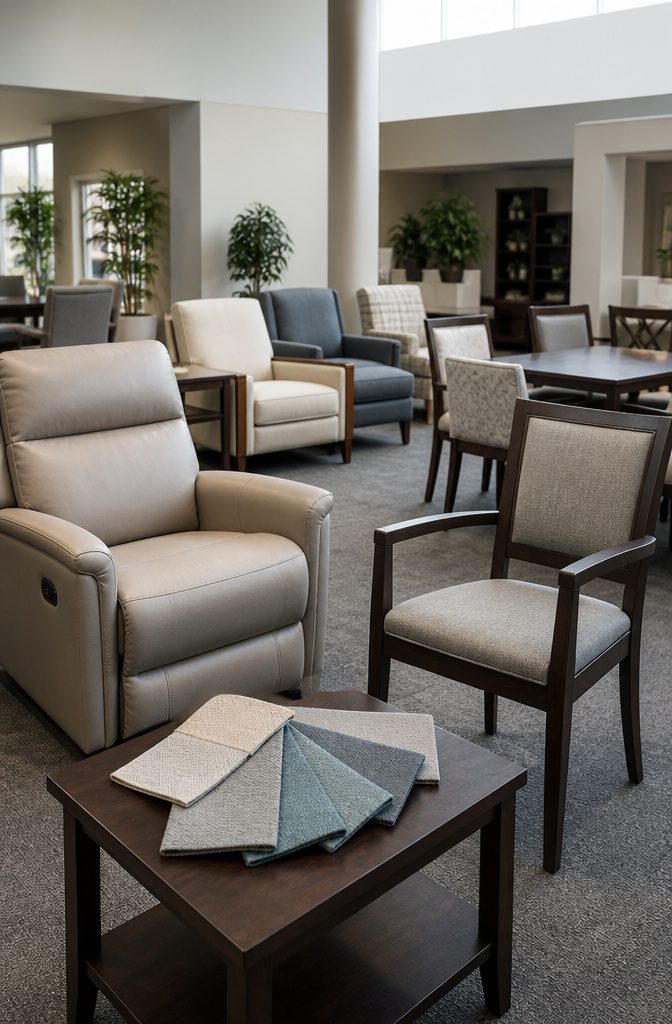
Optimal seat height for senior living furniture ranges from 18 to 20 inches.
Seat Height
Getting up from a low sofa puts real strain on knees and hips, especially for anyone managing arthritis or recovering from surgery.
The range that works best sits between 18 and 20 inches from the floor to the seat cushion, a few inches higher than standard residential furniture.
That extra height cuts the effort needed to stand and reduces the risk of a fall during the transition.
Measure from the floor to the compressed cushion, not the frame.
A plush seat that looks 19 inches uncompressed can drop to 16 once someone sits, and that 3-inch difference matters. If someone uses a walker or wheelchair, matching seat height to the walker’s hand grip or the wheelchair’s seat makes transfers smoother.
This matters most for shared spaces where residents have varying mobility.
In a private room where someone spends most of the day in a recliner they’ve already adjusted to, matching that familiar height becomes more important than hitting the textbook range.
Stability
A chair that rocks or tips when someone leans forward to stand becomes a hazard.
Stability comes from weight, a wide base, and how the legs attach to the frame. Furniture designed for senior living typically uses solid hardwood frames with corner blocks and metal brackets, not just dowels and glue.
Four-legged chairs generally outperform pedestal bases, and armchairs with legs that extend slightly beyond the seat edge resist tipping better than designs where the legs sit flush.
Weight matters too. A 40-pound chair stays put when someone pushes down on the armrest; a 20-pound one can slide or tip.
This becomes critical in memory care units where residents may lean heavily on furniture while moving through a room.
In assisted living apartments where someone uses a cane but moves confidently, a moderately stable piece with good armrests may be enough.
Test by pressing down hard on one armrest while the chair sits on the floor uncarpeted. Any wobble or lift on the opposite side is a red flag.
Ease of Cleaning and Durability
Spills happen daily in senior living, and fabrics that resist stains or wipe clean without special treatment save staff time and extend the life of the furniture.
Performance fabrics like solution-dyed acrylic or treated polyester blends repel liquids long enough to blot them up, and most tolerate bleach-based disinfectants without fading.
Vinyl and faux leather wipe clean in seconds, which makes them popular in dining areas and high-traffic lounges. Vinyl gives up breathability.
Vinyl can feel sticky in warm rooms, and lower-grade versions crack and peel within a few years. Look for commercial-grade vinyl rated for healthcare use, often labeled with a weight per square yard above 20 ounces.
Durability overlaps with cleaning since furniture that survives daily disinfecting lasts longer.
Solid wood frames outlast particleboard, and double-stitched seams hold up better than glued hems. Mobility aids leave scuffs and dings, so darker wood finishes and textured fabrics hide wear better than light oak or solid colors.
This pairing matters most in shared dining rooms and activity spaces where turnover is high and cleaning happens multiple times a day.
In a private suite where one person lives quietly, a fabric that just tolerates spot cleaning and ages gracefully may be fine.
Design Aesthetics and Safety Features
Furniture in senior living walks a line between institutional durability and residential warmth. Pieces that look too clinical remind residents they’re in a facility, while overly decorative designs can feel out of place or harder to clean.
The middle ground tends toward simple profiles, neutral upholstery, and wood tones that match a range of decor without calling attention to themselves.
Safety features often blend into the design. Rounded edges and corners reduce the risk of injury during a fall or a misjudged turn with a walker.
Non-slip feet keep chairs from sliding on tile or laminate, and some designs include contrast piping or trim that helps residents with low vision distinguish the seat edge from the cushion.
Aesthetics matter most to families touring a facility and to residents who notice when their apartment feels like a hospital room.
Safety features matter to everyone, but they become non-negotiable in memory care or for residents with vision impairments or unsteady gait.
In independent living where residents bring their own furniture, these built-in safety details become less of a priority since people choose what feels familiar.
How the Top Picks Compare
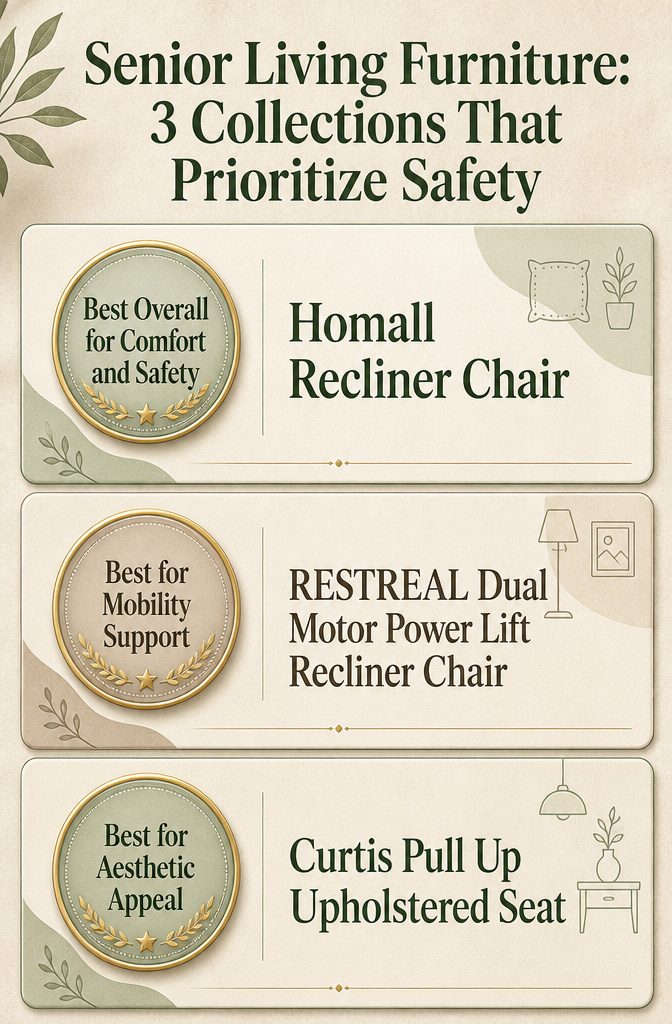
The Homall features a manual recline, while the RESTREAL offers dual motor control.
The Homall and RESTREAL both lean heavily on function, but they get there through different mechanics. The Homall uses a manual recline, which means you pull a lever and use your body weight to settle into position.
The RESTREAL runs on dual motors, so you control the backrest and footrest independently with a remote. That split matters if someone has specific pressure points or needs to elevate their legs without lying all the way back.
Manual recline works fine for anyone with decent upper body strength, but the powered option removes that physical requirement entirely.
Weight capacity separates them too. The RESTREAL holds up to 330 pounds, while the Homall stops at 250.
That 80-pound difference determines whether the frame will hold up long-term or start to sag after a year of daily use. If you are buying for someone closer to that upper limit, the RESTREAL gives you a bigger safety margin.
The Curtis chair is a different category. It has no recline at all and no motorized lift.
What it does have is a seat height of 19 inches, which is about 2 inches taller than a standard dining chair and makes it easier to stand up without assistance. The arms are also there for leverage.
If mobility support means helping someone get in and out of a seat rather than adjusting position once they are sitting, the Curtis does that job in a way that fits into a living room or bedroom without looking clinical.
The Homall and RESTREAL both weigh over 70 pounds, which means they stay put but are not easy to move between rooms.
The Curtis weighs around 35 pounds, so it can be repositioned when you rearrange or need it somewhere else temporarily. That flexibility matters more in a smaller space or if the furniture needs to serve multiple people in different areas.
Setting Up Furniture Safely
Arrangement matters as much as the pieces themselves. Clearing paths between seating areas prevents trips, and most safety guides recommend a minimum clearance of 36 inches for walkers and wheelchairs to move through comfortably.
In practice, that means pulling chairs back from walls and leaving enough room that someone can pivot without catching an armrest on a doorframe.
Anchoring furniture helps when stability is already marginal. Wall-mounting tall bookcases and securing area rugs with non-slip pads address the two biggest tip-over risks in shared spaces.
For chairs that recline or have movable parts, positioning them away from high-traffic zones reduces the chance that someone walking past will collide with an extended footrest.
Lighting the space properly also reduces falls. Placing floor lamps near seating rather than relying on overhead fixtures alone cuts down on shadows that can hide uneven transitions between flooring materials.
Task lighting on side tables makes it easier to see the armrest when sitting down or standing up, which is when most furniture-related injuries happen.
Rounded corners and non-slip feet handle the last layer. Furniture with sharp edges can be retrofitted with corner guards, and adhesive felt pads on chair legs prevent sliding on tile or hardwood.
A layout should feel open rather than obstacle-filled, where someone with limited mobility can move between a chair, a table and the door without needing to map a route first.
Using Furniture Safely
Seat height makes the biggest difference in how easily someone can sit down and stand back up.
Most seats work best between 18 and 20 inches from the floor to the cushion, which lines up with most people’s knee height and lets the feet rest flat without sliding forward.
Anything lower turns standing into a struggle, especially for anyone with hip or knee pain.
Stability matters just as much as height. A chair that rocks or tips when someone leans on the armrest becomes a fall risk, and falls are what send people to the hospital.
Look for frames made from steel or solid wood rather than particleboard, and check that the legs sit flat without wobbling. Recliners with extended footrests should stay planted when fully open, not tip forward under the shift in weight.
Non-slip feet protect both the floor and the person using the chair. Hard plastic glides can skate across tile or hardwood the moment someone pushes down to stand, so padded or rubberized feet grip better and stay put.
Rounded edges on armrests and tables prevent bruising and cuts, which matters more when someone uses a walker or loses balance easily.
Weight capacity shows up in the specs but gets ignored until something breaks.
Most senior furniture tops out around 265 to 400 pounds, and that limit includes the force of sitting down hard or leaning heavily on one side. Staying within the rated capacity keeps the frame intact and the cushions from compressing too fast.
“If a chair forces you into a slouched position, it can restrict blood flow, limit lung capacity, and worsen muscle weakness. Sometimes your furniture is actually causing new health issues.”
Maintaining Senior Living Furniture
Furniture in senior living environments takes more wear than residential pieces. Mobility aids bump against armrests, spills happen during meals, and high traffic means daily contact with skin oils and cleaning products.
The material choices that make sense for safety and comfort also need to hold up under that kind of use without constant repair or replacement.
PU leather shows up across senior furniture collections because it wipes clean with a damp cloth and resists most stains without special treatment. That matters when someone spills coffee or needs to clean up quickly between residents.
High-density foam maintains its shape longer than standard cushioning, which means the seat height and support stay consistent instead of compressing after a few months of use.
I check whether the frame material is listed when comparing options.
Steel frames with non-slip foot pads protect both the furniture and the flooring underneath, and they tend to stay stable longer than lightweight alternatives. Some collections use FSC-certified wood framing, which adds structural support without adding bulk.
Removable components make long-term upkeep easier. Zippered lumbar pillows can be adjusted or replaced, and detachable armrest covers simplify spot cleaning.
Furniture that can be cleaned or repaired in place rather than pulled from service for days at a time keeps common spaces running. In a communal setting, that difference shows up in both cost and resident satisfaction.
Frequently Asked Questions
What seat height works best for senior living furniture?
Look for seat heights between 18–20 inches measured from the floor.
This range makes sitting down and standing up easier for people with limited mobility or joint pain. Some recliners sit slightly lower at around 17.9 inches, which can still work if the chair includes a lift function to assist standing.
How do I know if a chair is stable enough for seniors with mobility aids?
Check the weight capacity and frame construction. Chairs rated for 400 pounds typically use reinforced steel or solid wood frames that stay steady under pressure from walkers or when a person shifts their weight getting up.
Four-footed bases with non-slip pads prevent sliding on hard floors and reduce tipping risk.
What materials are easiest to clean in high-traffic senior facilities?
PU leather tops the list because spills wipe off fast and it resists stains better than fabric.
High-density foam cushions hold their shape through repeated use and cleaning. Avoid materials that trap moisture or require special cleaners, since quick turnaround matters in shared spaces.
What safety features should senior living furniture include?
Rounded edges prevent bruising from accidental contact, and non-slip feet keep chairs from moving unexpectedly.
Recliners with dual motors allow independent control of the backrest and footrest so residents adjust positions without strain. Built-in lumbar support and extended footrests reduce fall risk by keeping the body aligned and supported.






