
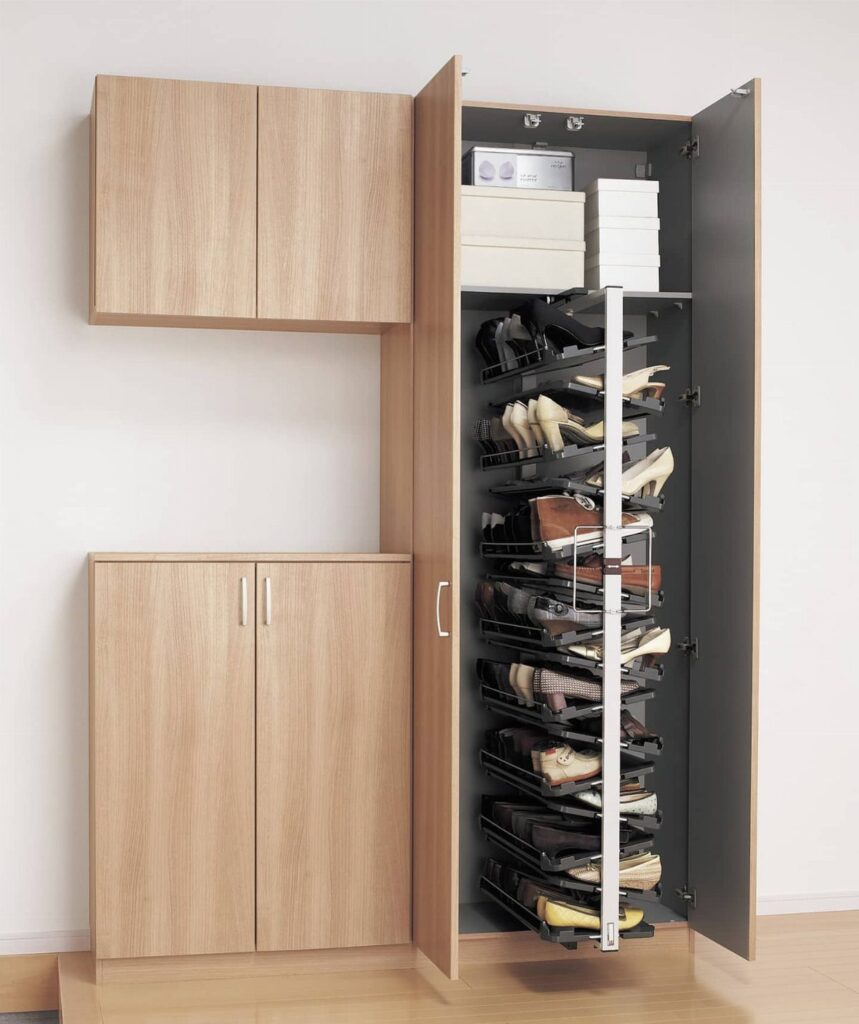
Storage for shoes ranges from a wire rack that slides under your bed to a modular wall system that holds dozens of pairs in clear boxes stacked as high as your ceiling allows.
Most entryway benches hold 6 to 10 pairs, and shoe cabinets with tilting drawers keep 1 or 2 pairs per compartment.
1. Entryway Shoe Storage Bench
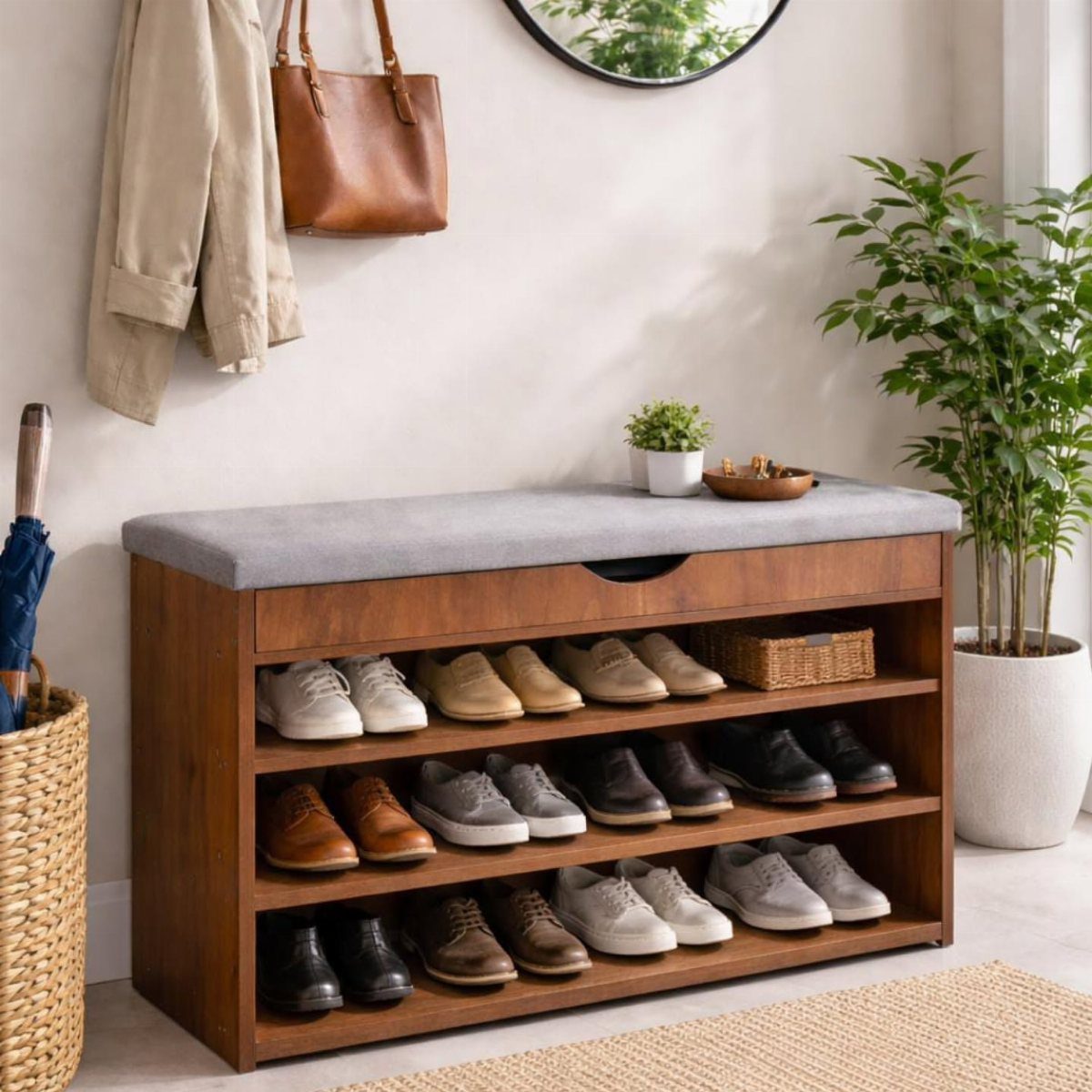
A bench with storage underneath gives you somewhere to sit while you pull shoes on and keeps pairs close by at the same time.
The cushioned top makes it comfortable enough for daily use, and the open shelves below let you grab what you need without opening anything.
Most benches like this hold 6 to 10 pairs depending on their width and the size of your shoes. I’d keep the pairs you wear most often here and move seasonal shoes somewhere else once you run out of space.
2. Shoe Storage Cabinet
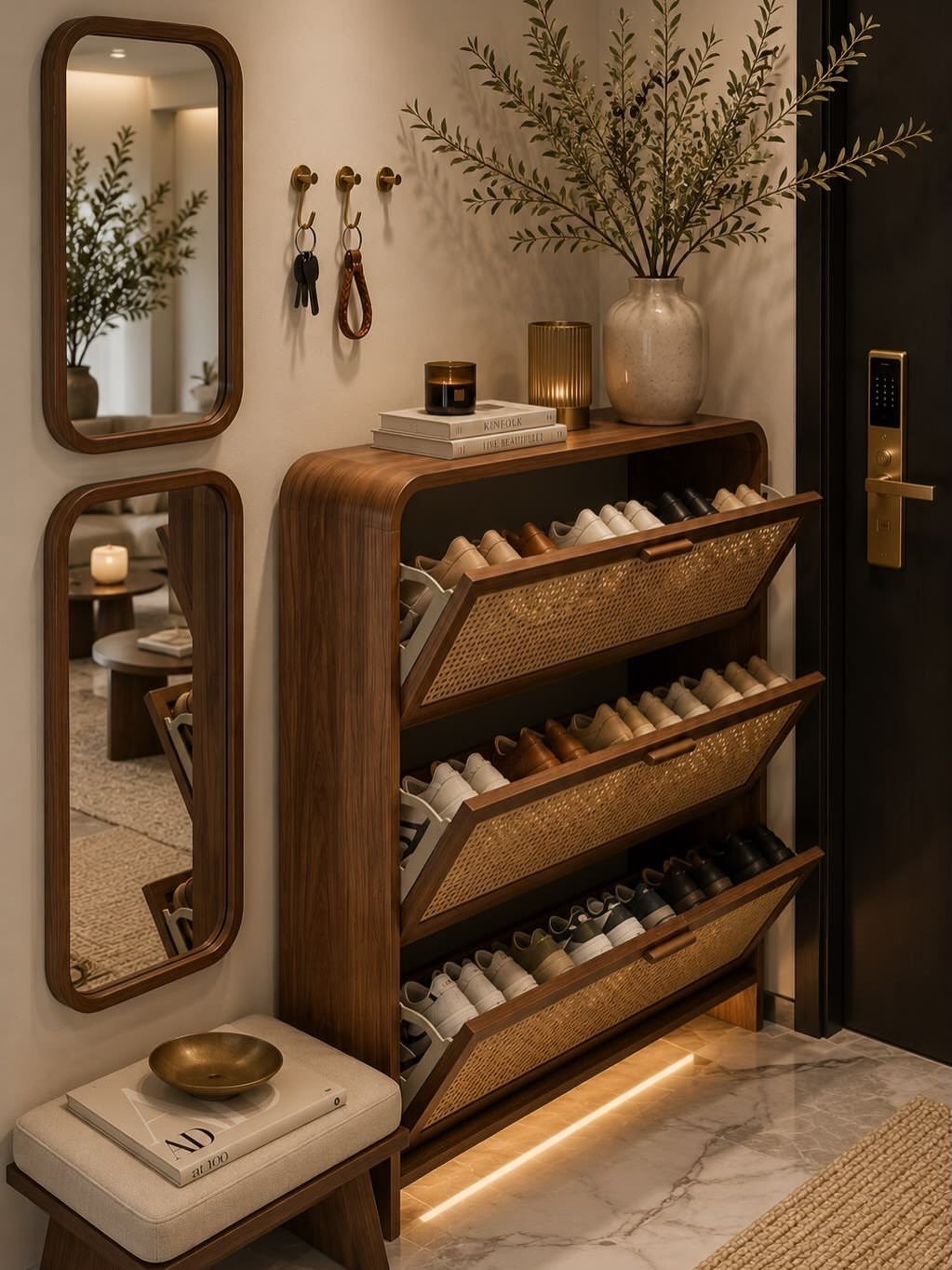
Cabinets made for shoes typically have tilting drawers that pull down to reveal what’s inside, so you can see every pair without opening and closing doors.
The angled compartments keep shoes visible and easy to reach, and the closed front hides everything when you’re not using it.
The drawers in most shoe cabinets are shallow enough to hold 1 or 2 pairs each, which works well in an entryway where you’re storing what you wear regularly rather than your entire collection.
3. Stackable Modular Shoe Storage Wall
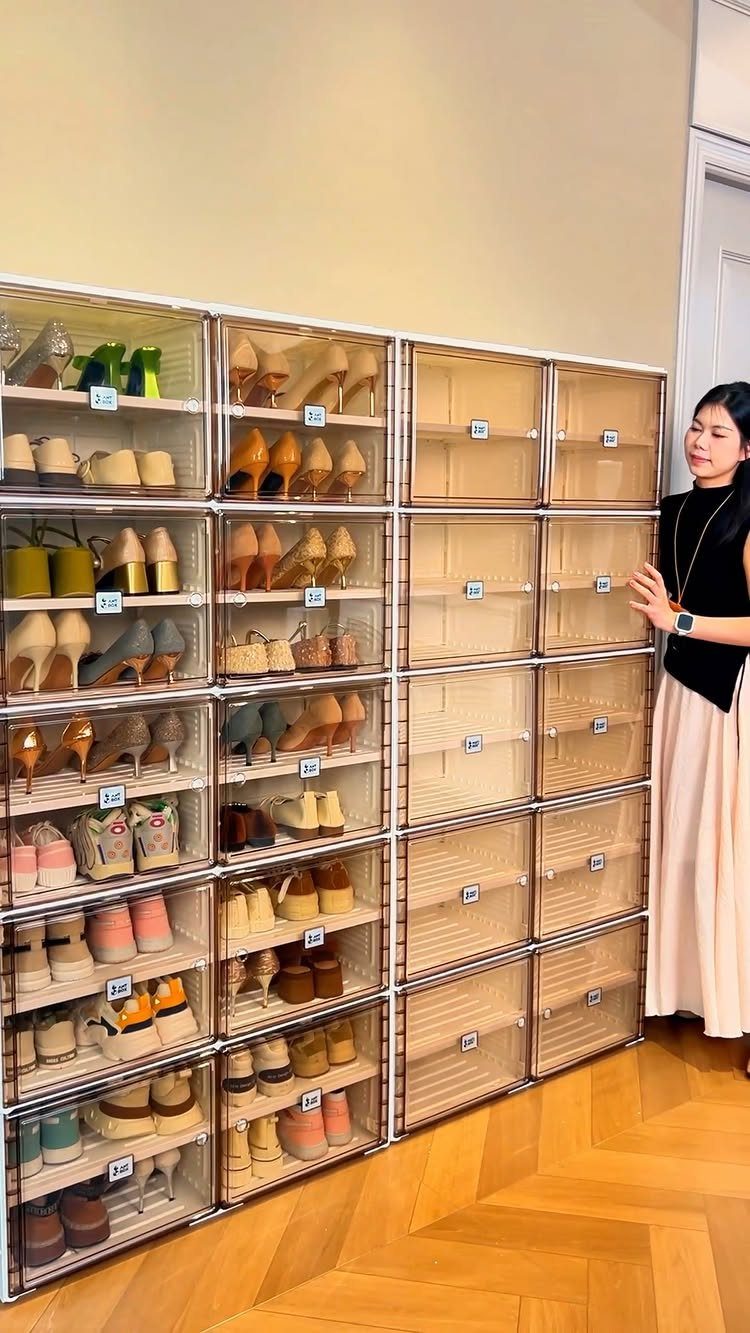
Clear plastic boxes that stack let you build storage exactly as tall and wide as you have room for, and you can see every pair without pulling anything out.
Each box typically holds 1 pair, though you can squeeze smaller shoes or sandals into the same space.
I like this setup for someone with a larger collection who wants everything visible at once. The boxes keep dust off, and if you need to add more later, you just buy another set and stack them on.
4. Hall Tree
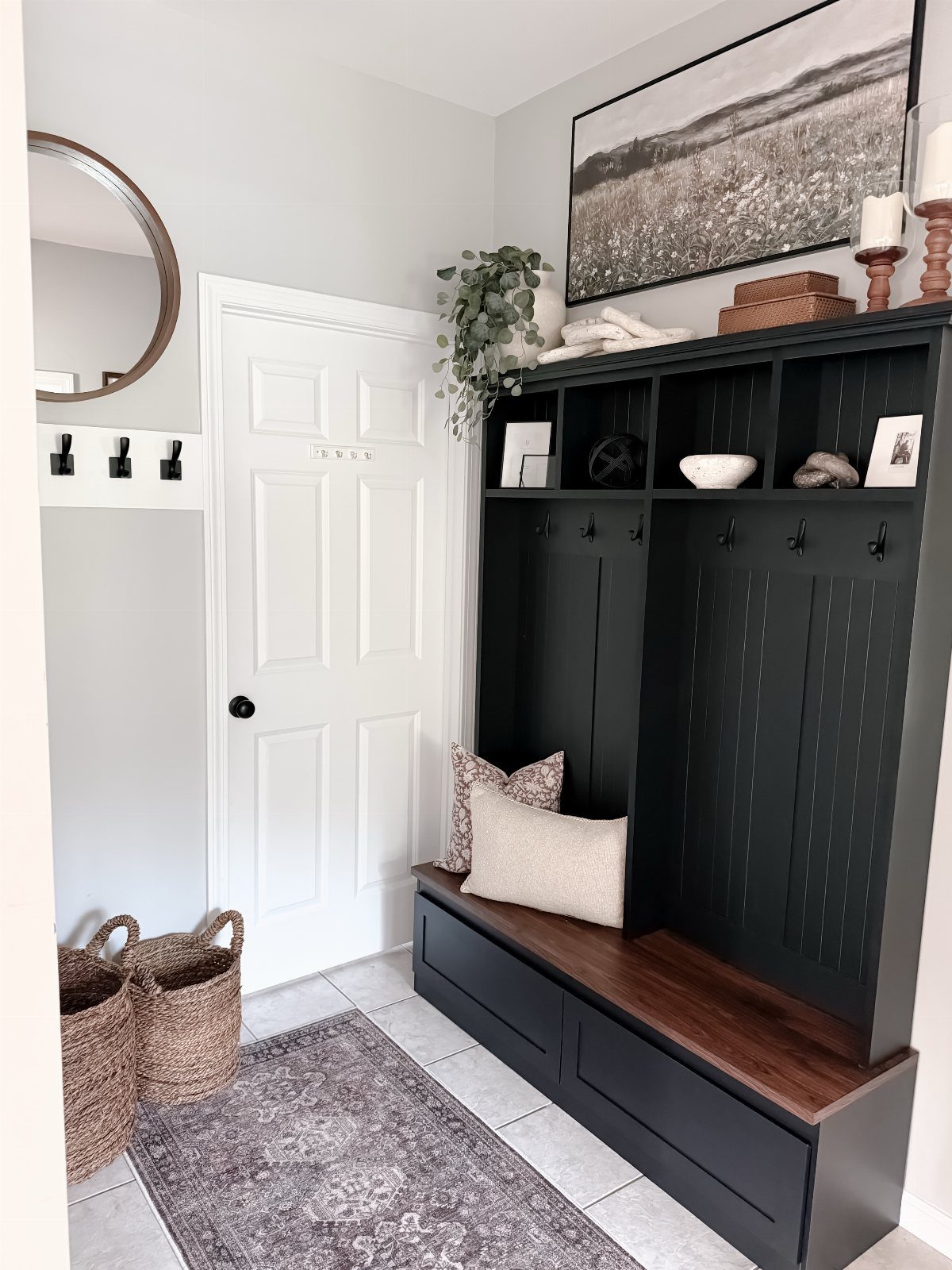
Hall trees combine seating, coat hooks, and open cubbies for shoes in one built-in or freestanding piece.
A bench in the middle gives you somewhere to sit while you tie your shoes, hooks above hold coats and bags, and cubbies below keep pairs sorted and off the floor.
This works especially well in an entryway where you need storage for more than just shoes.
5. Over the Door Shoe Storage
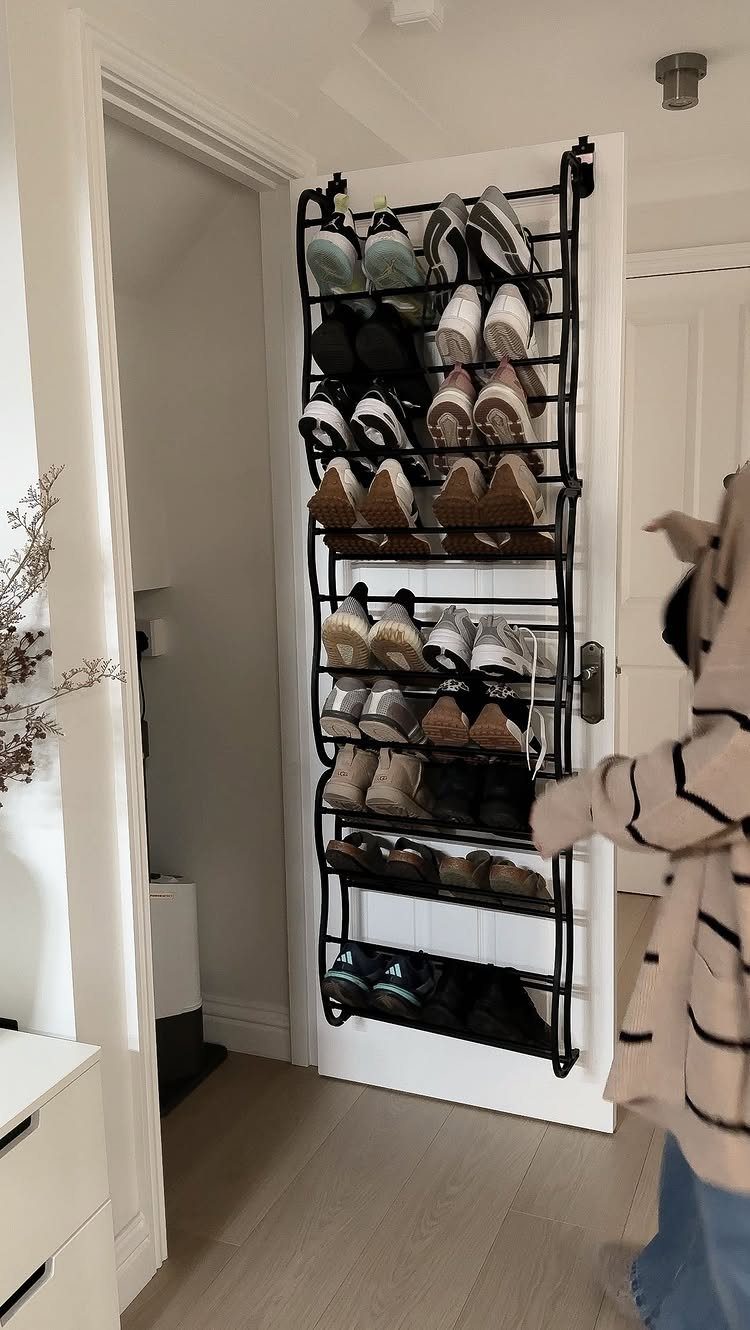
Hanging racks that hook over a closet door turn unused vertical space into storage without drilling or mounting anything.
The metal pockets hold shoes at an angle so you can see what’s inside each slot, and the whole thing comes off if you move or change your mind.
Sneakers and flats fit easily, but heels and boots can be trickier depending on the depth of each pocket.
6. Bookcases Turned Shoe Displays
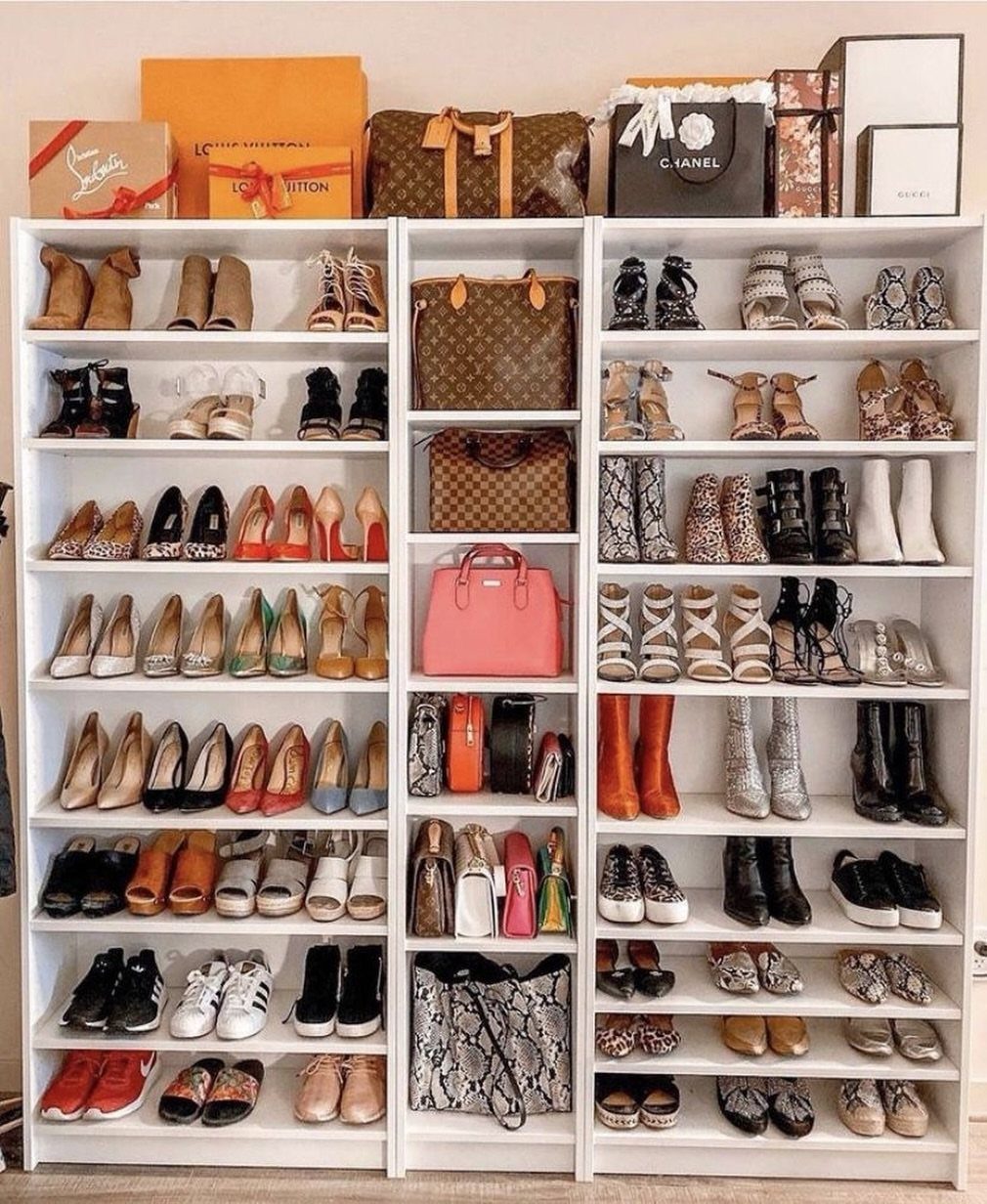
Standard bookcases become open shoe displays when you skip the books and line the shelves with pairs instead.
The shelves give you enough height for heels and enough depth for most shoes to sit flat, and keeping everything visible makes it easier to see what you own.
This setup works best if you have the floor space for it and want your shoes out in the open rather than hidden. Measure your tallest heels or boots first to make sure the shelf spacing accommodates them.
7. Drop-Front Shoe Boxes
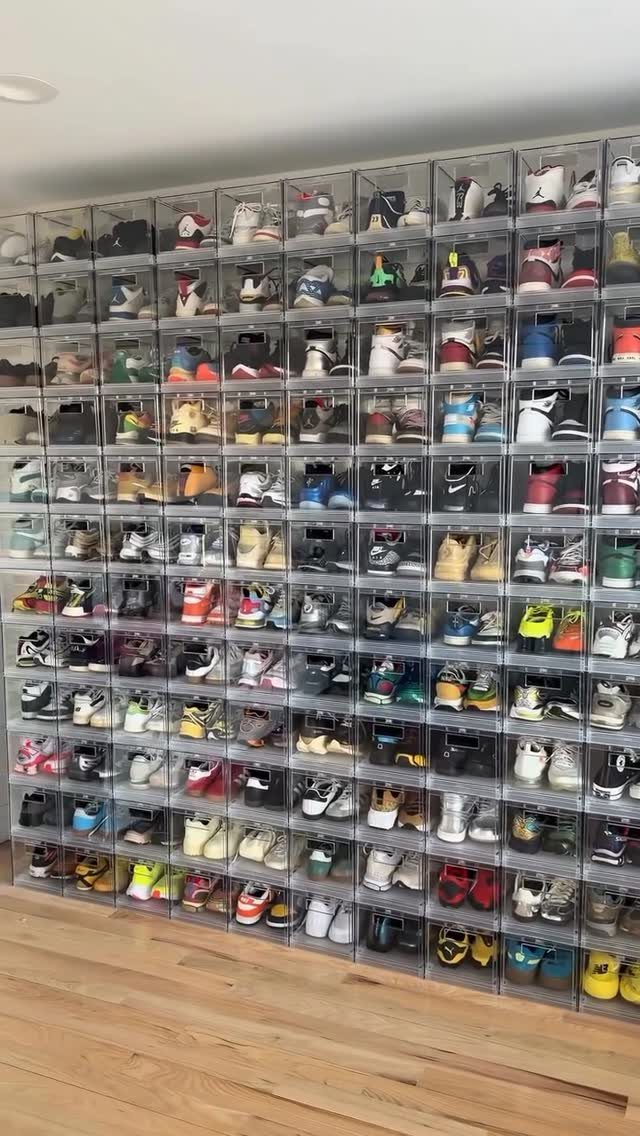
Drop-front boxes let you pull the front panel down to grab what you need without unstacking anything above it. The clear sides let you see what’s inside without opening them.
Each box holds 1 pair, so this setup takes up more wall or closet space than a rack would. If you have room for it and want shoes protected from dust while still being able to see them, this works well.
8. Shoe Storage Tower with Cubbies
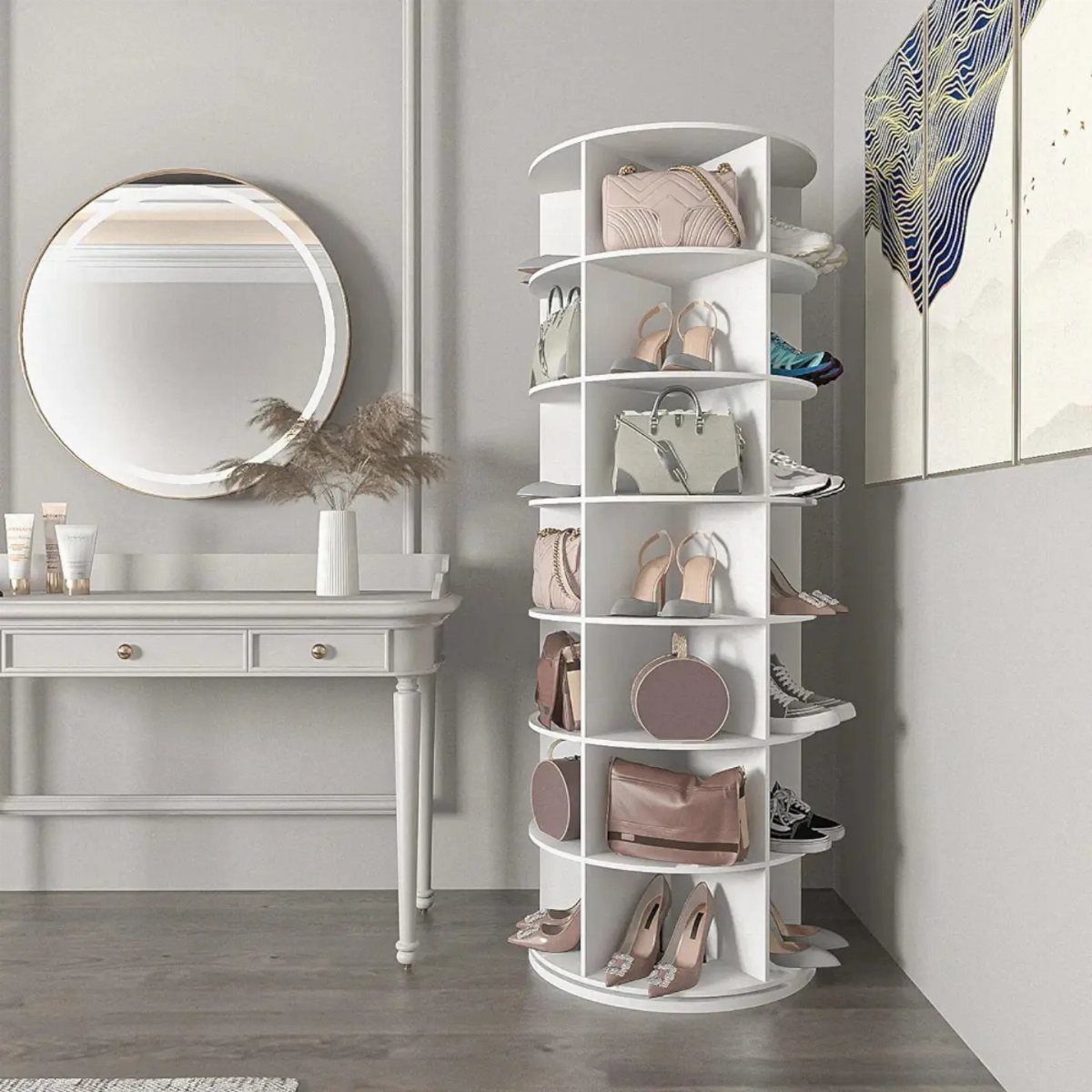
A tower with individual cubbies keeps each pair in its own slot, so you can see everything at once without digging through a pile.
The curved shape fits into corners or against walls without taking up much floor space, and the open front makes it easy to grab what you need.
Heels fit easily, and the cubbies are tall enough for most ankle boots.
9. Under-Bed Shoe Storage Drawers
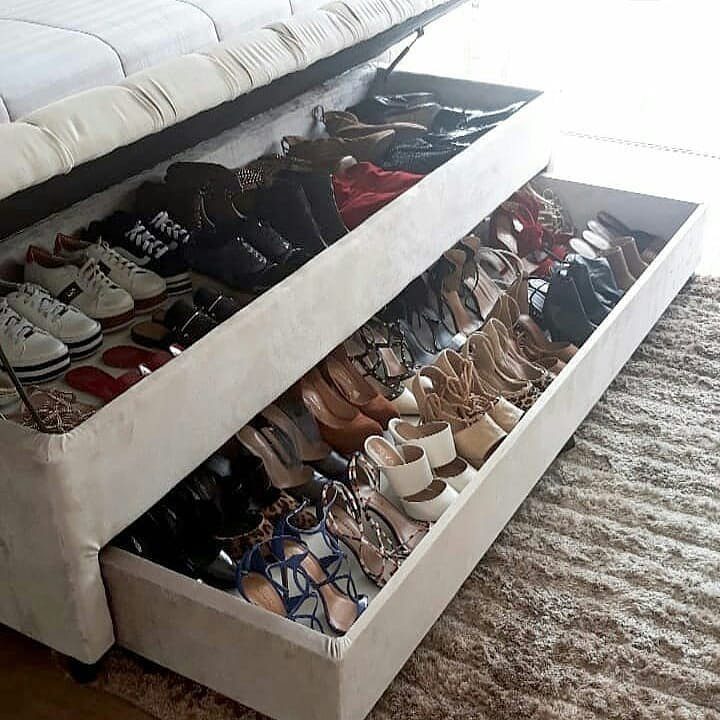
Bed frames with built-in drawers underneath turn that empty space into storage for shoes you don’t wear every day.
The drawers pull out fully so you can see everything inside, and the capacity is enough to hold dozens of pairs if you arrange them flat or on their sides.
This works especially well if you’re short on closet space and already need a new bed frame. Seasonal shoes or pairs you only wear occasionally can go here instead of taking up room in your closet.
10. Open Wire Shoe Rack
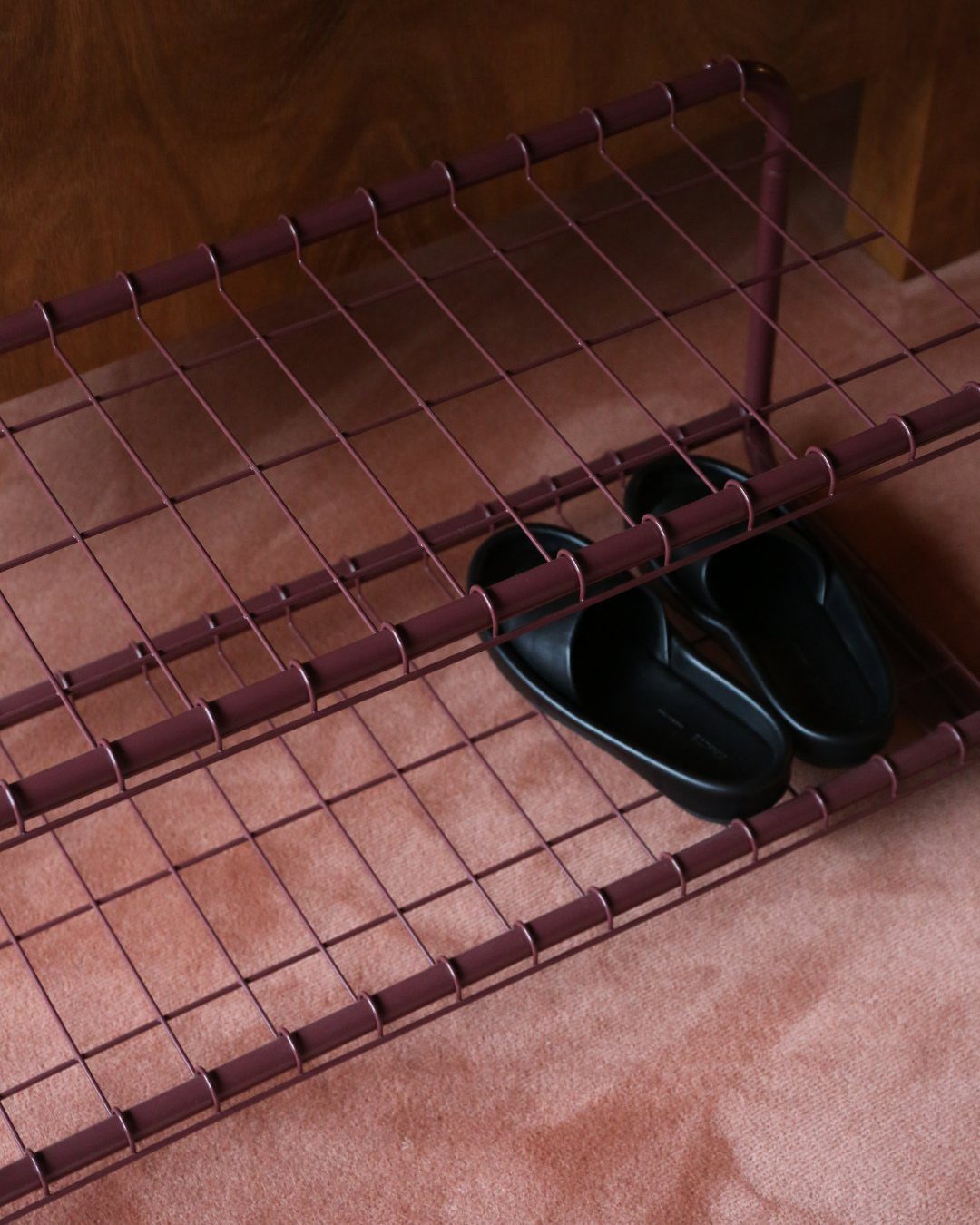
Wire racks with open shelves let air circulate around your shoes, which helps if you’re storing pairs that get wet or need to dry out between wears.
The lightweight metal frame is easy to move, and the open design makes it simple to see what’s on each shelf.
Wire racks come in different heights, and the number of tiers decides how many pairs fit. Sneakers and flats fit best, though you can angle heels if the spacing allows.
Maximizing Small Spaces
When you’re short on floor space, a tall rack or tower lets you stack shoes upward instead of spreading them across the room.
A narrow tower with cubbies or a wall-mounted modular system adds storage without spreading across the room, and both keep shoes visible so you can find what you need quickly.
Furniture that does more than one thing helps when you don’t have room for separate pieces.
Over-the-door shoe racks turn an area you weren’t using into storage for flats, sneakers, and low-profile shoes.
Even if you don’t consider yourself a sneakerhead or a Carrie Bradshaw-level footwear fanatic, shoe storage is pivotal in organizing any bedroom or entryway.
Aesthetic Shoe Storage
Shoe cabinets with finished wood fronts look like regular furniture rather than pure utility.
A piece in dusty gray oak or another neutral finish fits into an entryway the same way a console or side table would, and the closed front keeps shoes out of sight when guests arrive.
You can turn a basic cabinet into a focal point by covering it with patterned adhesive vinyl. Black-and-white patterns or bold colors make the piece stand out, and the top surface gives you room for books or decorative objects.
Clear modular boxes show off your collection if you want shoes to be part of the room’s look. Stacking them in a grid creates a display that works in a bedroom or walk-in closet where the shoes themselves become decor.
DIY Options
Building your own shoe shelves lets you size them exactly to your space and the number of pairs you own.
Simple plywood towers with fixed shelves fit into a closet and give you custom dimensions without the cost of a built-in system.
Turning a standard bookcase into shoe storage is another budget option. You already have the structure, and all you’re doing is arranging shoes on the shelves instead of books.






