
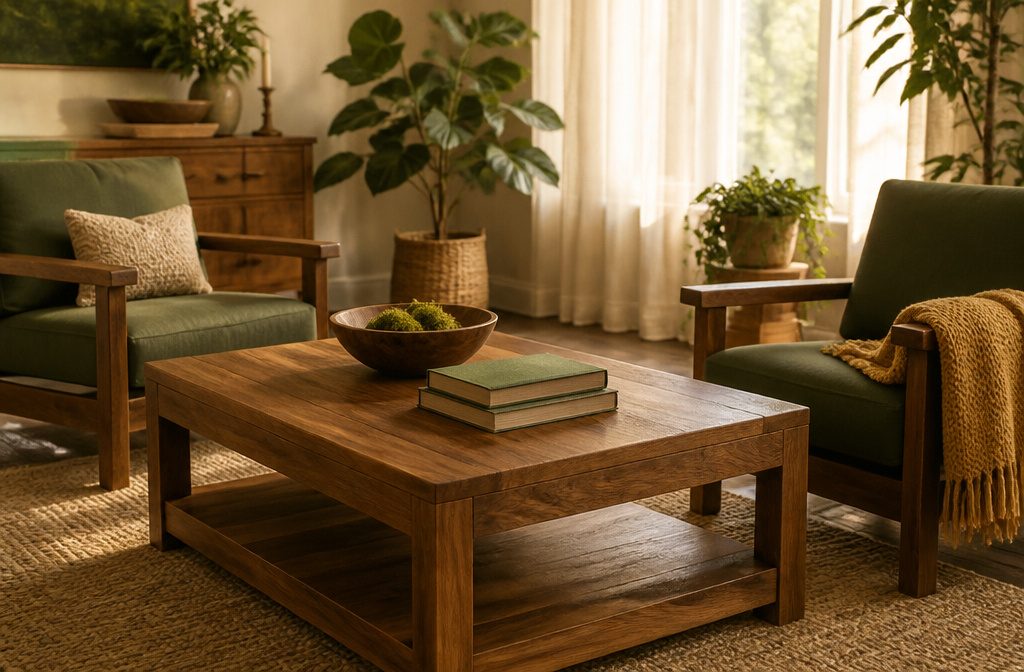
Solid wood furniture uses hardwood or softwood boards throughout the frame and visible surfaces instead of veneering thin wood layers over particleboard or MDF.
Not all solid wood performs the same: quartersawn oak resists warping better than plain-sawn pine, and joinery method matters as much as species when a chair leg has to survive 20 years of daily use.
Hardwood Artisans builds with precision joinery and oil-rubbed bronze hardware, while Elsie Green works in reclaimed antique fir with 8–10 week custom lead times.
My Top Picks
| Product | Award | Best for | Why it won | ||
|---|---|---|---|---|---|
| Hardwood Artisans | Best Overall | Buyers wanting quality and options | Strong construction quality paired with extensive wood choices and customization flexibility. | Check price | |
| Amish Furniture | Best Customization | Buyers needing tailored furniture | Exceptional customization allows you to specify dimensions, finishes, and details for your exact needs. | Check price | |
| Elsie Green | Best Sustainable Option | Eco-conscious buyers | Uses reclaimed wood with high customization, combining sustainability with personalized design choices. | Check price | |
| Stickley Furniture | Best for Families | Families needing durable furniture | Built with robust construction and high-quality materials designed to withstand daily family use. | Check price | |
| Muwuele 47"-63" Solid Wood Extendable Dining Tables | Best for Small Spaces | Small or flexible spaces | Extends from compact to full dining size, adapting to your space and occasion. | Check price | |
| Thos. Moser | Best Luxury | Discerning luxury buyers | Handcrafted American furniture with exceptional durability and timeless aesthetic appeal. | Check price | |
| Amazon Basics Saddle-Seat Bar Stools | Best for Small Budget | Budget-conscious buyers | Delivers solid wood construction at an affordable price without sacrificing essential quality. | Check price | |
| EXPERLAM 8 Cube Storage Organizer | Best for Minimalist Design | Minimalist storage seekers | Clean cube design offers functional organization without visual clutter or unnecessary embellishment. | Check price | |
| Azlafu 6 Tier Rotating Bookshelf | Best for Small Rooms | Limited floor space | Rotating vertical design maximizes storage capacity while occupying minimal room footprint. | Check price | |
| HOKYHOKY Reclaimed Solid Wood Console Table | Best for Versatile Use | Multi-purpose furniture needs | Reclaimed wood table adapts to entryway, display, or workspace uses throughout your home. | Check price |


Best Overall: Hardwood Artisans
Image: hardwoodartisans.com
Best Overall: Hardwood Artisans
Quick Verdict
Hardwood Artisans earned top placement by delivering solid hardwood construction with precision joinery and finish details buyers usually find only at custom prices.
The maker has been building American-made furniture since 1976, and every piece is made to order rather than pulled from stock. The oil-rubbed bronze finish gives a grounded, historical look, though the made-to-order model means longer lead times than ready-to-ship alternatives.
What It Does Well
- Solid hardwood construction throughout means the frame and visible surfaces age well under daily use instead of veneering over particleboard that chips at the first corner knock.
- Precision joinery locks panels and legs without relying on glue or fasteners alone, so the piece stays square and stable through seasonal humidity swings.
- Oil-rubbed bronze finish pairs with farmhouse, industrial, and transitional rooms without looking like it arrived from a catalog yesterday.
- Made-to-order production lets you request modifications to dimensions or finish before the maker begins cutting, which stock furniture rarely accommodates.
Where It Falls Short
- Made-to-order builds stretch lead times well beyond the week or two most stock retailers promise, so this doesn’t work when you need the piece before a move-in date.
- The maker provides no public detail on warranty length or sustainability sourcing, leaving gaps for buyers who prioritize certified materials or long protection windows.
Who It’s For
This suits buyers furnishing a primary living space who value construction quality over speed and want furniture that improves with age rather than replacement cycles.
It’s a poor fit for renters on tight timelines or anyone prioritizing transparency around environmental sourcing and repair coverage.
How It Compares
The Elsie Green Reclaimed Wood Monastery Console uses reclaimed antique fir and centers its story on sustainability and handcraft detail, while Hardwood Artisans focuses on precision joinery and a finish that reads traditional rather than rustic.
Choose Elsie Green if reclaimed material and environmental story matter more than hardware finish, and choose Hardwood Artisans if you want a grounded historical look with joinery built for long-term stability.
Where to buy: hardwoodartisans.com
Best Customization: Amish Furniture
Best Customization: Amish Furniture
Quick Verdict
Solid wood construction meets a level of personalization most sellers won’t touch.
Amish Furniture builds each piece to order with more than 15 years of workshop experience behind it, letting buyers specify dimensions, wood species, finish, and hardware rather than choosing from preset configurations.
The flexibility comes at the cost of speed—custom work takes time—but for anyone whose space or taste doesn’t fit the catalog, that trade is worth making.
What It Does Well
- Solid wood throughout means the frame, top, and visible surfaces share the same material, so wear stays even and refinishing is straightforward decades from now.
- Customizable dimensions and finishes let you match an awkward alcove, swap hardware for something quieter, or pick a stain that doesn’t fight the rest of the room.
- Construction detail, according to the maker, includes joinery techniques that survive moves and humidity swings better than dowel-and-glue assembly.
Where It Falls Short
- Lead times stretch longer than warehouse stock; custom orders can take weeks, so last-minute room refreshes are out.
- Fewer finish samples online mean you may need to request swatches or trust a screen rendering, which adds a step most catalog retailers skip.
Who It’s For
Anyone planning around an unusual footprint or a specific heirloom finish will appreciate the flexibility. Renters on a tight move-in deadline or buyers who prefer immediate delivery should look at ready-made options instead.
How It Compares
The Muwuele 47"–63" extendable table arrives faster and ships from stock, but it offers no finish choice and only one extension range.
Amish Furniture lets you set the closed and open lengths, pick the wood, and choose the edge profile, which matters when the table has to work around a radiator or match existing cabinetry.
Where to buy: Amazon
Best Sustainable Option: Elsie Green
Image: elsiegreen.com
Best Sustainable Option: Elsie Green
Quick Verdict
Reclaimed antique fir and family-scale fabrication separate Elsie Green from the field of eco-conscious brands that talk sustainability but default to new materials.
Custom sizing and three finish options let you fit the piece to the room rather than forcing the reverse, though the 8–10 week fabrication window requires more patience than stock inventory allows.
The choice makes sense when you want provenance and personalization together.
What It Does Well
- Reclaimed antique fir construction means each piece carries visible grain and weathering from the wood’s first life, texture most new lumber cannot replicate.
- Custom sizes and finishes adapt the furniture to your floor plan and existing palette rather than asking you to work around standard dimensions.
- Handcrafted by a small family-run operation reduces the distance between maker and material, often resulting in tighter joinery and attention to detail than volume production permits.
- Reclaimed materials keep usable wood in circulation instead of sourcing virgin timber, a meaningful reduction in embodied carbon for buyers tracking environmental cost.
Where It Falls Short
- 8–10 week fabrication time eliminates this option if you need the furniture in place within the month.
- Three finishes available leaves less room for experimentation than brands offering six or eight, particularly if your palette leans warm or saturated.
Who It’s For
Buyers renovating with a sustainability mandate and a flexible timeline will appreciate both the reclaimed material and the ability to specify dimensions that suit older homes with non-standard layouts.
If you need furniture delivered quickly or prefer the assurance of a long-established warranty and reputation, Thos. Moser’s handcrafted American pieces and proven durability may justify choosing new hardwood over reclaimed.
How It Compares
Thos. Moser shares the handcrafted ethos and delivers furniture with a strong track record for longevity, but the brand works primarily in new hardwood and offers limited customization beyond wood species and finish.
Elsie Green builds from reclaimed fir and tailors each piece to the buyer’s specifications, a better fit when provenance and adaptability outweigh an established name.
Where to buy: elsiegreen.com
Best for Families: Stickley Furniture
Best for Families: Stickley Furniture
Quick Verdict
Quartersawn white oak construction and exposed through-tenons give Stickley pieces a structural advantage that matters when furniture takes daily impact from kids, pets and the traffic patterns of a full household.
The heirloom craftsmanship translates to joints that hold and surfaces that age rather than wear out, though the build quality comes with a price point that requires planning rather than impulse buying.
Families who keep furniture for decades rather than refresh every few years will find the durability justifies the upfront cost.
What It Does Well
- Quartersawn white oak resists warping and splitting better than plain-sawn lumber, so chair legs and table frames stay square through humidity swings and years of use
- Exposed through-tenons create visible joinery that shows exactly how the frame is held together, giving a structural advantage in high-stress areas like armrests and stretchers
- Heirloom craftsmanship means pieces are built to be repaired rather than replaced, with traditional joinery that a furniture maker can work on 20 years from now
- Solid wood construction takes refinishing well, so scratches and dents from family life can be sanded out instead of living with damage
Where It Falls Short
- Premium construction places most pieces out of reach for buyers furnishing multiple rooms at once
- Traditional styling leans Arts and Crafts, which may not suit contemporary or minimalist interiors
- Lead times for custom orders can stretch weeks to months, making it impractical for immediate furnishing needs
Who It’s For
Families investing in furniture they plan to pass down or keep through multiple moves will appreciate construction that holds up to decades of use.
Renters or buyers who prefer to change styles frequently will find the price and aesthetic commitment harder to justify.
How It Compares
Thos. Moser offers similar handcrafted American hardwood construction with a focus on Shaker-inspired lines, while Stickley leans more heavily into the Arts and Crafts tradition with quartersawn oak and visible joinery.
Buyers drawn to cleaner, more understated profiles may prefer Moser, while those who want the visual weight and texture of quartersawn grain and through-tenon joinery will find Stickley delivers that aesthetic in full.
Where to buy: Amazon
Best for Small Spaces: Muwuele 47"-63" Solid Wood Extendable Dining Tables
Quick Verdict
The 47"–63" extendable range makes this rubberwood table one of the more space-conscious options for apartments or smaller dining areas where a fixed six-seater would crowd the room.
The hidden lift mechanism means you slide the ends apart rather than wrestling a separate leaf, and the maker reports a 300-pound capacity on legs thick enough to back that claim.
The extension stops at 63 inches, so eight adults fit when you need them but the expanded footprint still reads compact next to most tables designed for that count.
What It Does Well
- FAS-grade rubberwood construction means solid hardwood throughout rather than veneer over particle core, which holds up better to daily bumps and the stress of repeated expansion.
- The hidden track system eliminates the need to store a separate leaf; you pull the ends and the center panel lifts into place without lifting the table or clearing dishes first.
- Seats four at 47.2 inches and up to eight when extended, giving you the option to reclaim floor space on weeknights and still host a full group without renting chairs.
- Two-year warranty and round-the-clock support cover defects and mechanical issues longer than the six-to-twelve-month terms common at this tier.
Where It Falls Short
- No chairs included, so budget and lead time need to account for seating that matches or complements the wood tone.
- The 63-inch maximum leaves little elbow room for eight full place settings; owners hosting regularly at that count may find themselves wishing for another six inches.
- Four-leg assembly required on arrival, and while the maker calls it quick, any table this heavy benefits from a second set of hands to flip and stabilize during install.
Who It’s For
Renters and first-home buyers working with under 100 square feet of dining area get the flexibility to host without sacrificing everyday walkability.
Families who routinely seat eight or expect to within a year will outgrow the extended length faster than the frame will wear out, and a fixed 72-inch table may prove less frustrating in the long run.
How It Compares
Amish-built tables in solid wood offer similar durability and often more finish customization, but most ship as fixed-length designs or use a traditional drop-in leaf that requires storage and two people to install.
The Muwuele suits buyers who value the speed of a lift mechanism and need the table to shrink back down after guests leave, while Amish pieces work better for someone with the floor space to leave the table at full size year-round.
Where to buy: Amazon
Best Luxury: Thos. Moser
Quick Verdict
Thos. Moser delivers handcrafted American furniture built to outlast most of what sits in a room today.
The joinery, the sustainably sourced cherry, and the 100-year warranty all point to the same buyer: someone willing to invest in furniture they’ll keep for decades.
Customization options let you tailor pieces to the space, though the price puts it out of reach for anyone working within a tight budget.
Key Specifications
- Warranty Length: 100 years
What It Does Well
- High-quality joinery methods hold each piece together without relying on shortcuts, which means joints stay tight through years of use and moves between homes.
- Cherry wood construction ages into a richer tone over time, so the furniture looks better after a decade than it did the day it arrived.
- 100-year warranty covers structural integrity for longer than most people own a home, removing any question about whether the piece will hold up.
- Sustainably sourced wood appeals to buyers who track where materials come from and want furniture that doesn’t compromise forest health.
Where It Falls Short
- Premium pricing excludes anyone furnishing on a modest budget or buying their first set of furniture after a move.
- Customization options add lead time, so it’s not the right choice when you need a piece in place within a week or two.
Who It’s For
Buyers who plan to keep furniture through multiple homes and want something that improves with age will appreciate the combination of cherry, joinery, and warranty length.
Anyone furnishing a rental or working within a few hundred dollars per piece will find better value in ready-to-ship options that cost a fraction as much.
How It Compares
Stickley Furniture offers solid wood construction and Mission-style craftsmanship at a similar quality tier, with a focus on traditional lines and proven durability.
Thos. Moser leans into customization and sustainably sourced cherry, which suits buyers who want input on dimensions and finish before the piece is built, while Stickley appeals to those drawn to Mission design and established patterns.
Where to buy: Amazon
Best for Small Budget: Amazon Basics Saddle-Seat Bar Stools
Quick Verdict
Solid wood at a budget price point rarely means actual hardwood construction, but this Amazon Basics set delivers rubberwood frames and contoured saddle seats for less than many particleboard alternatives.
The 24-inch seat height fits standard counters measuring 36–39 inches, and the 300-pound capacity per stool makes them workable for most households.
The walnut finish looks presentable from a few feet away, though the maker’s reputation in this category leans utilitarian rather than refined.
What It Does Well
- Solid wood A-frame construction provides stability that flat-pack metal or composite stools often lack, and the square legs resist wobbling on uneven floors.
- Contoured saddle seat and built-in footrests offer more comfort than flat plank seats during longer conversations or meals at the counter.
- Portability at 17 x 12.7 x 24 inches overall means you can move them between the kitchen island and a craft table without much effort.
- Assembly uses standard hardware and takes less than 20 minutes per stool, according to the maker.
Where It Falls Short
- Walnut finish quality reads as entry-level, with stain application that may show streaks or light patches under close inspection.
- Brand perception skews toward function over craftsmanship, which matters if the stools sit in an open-plan space where guests notice details.
Who It’s For
This set works for renters or first-home buyers furnishing a kitchen island on a tight timeline, especially when the counter height falls in that 36–39 inch range and solid wood construction matters more than a premium finish.
Skip them if the stools will anchor a design-focused kitchen or if you need adjustable height to accommodate a bar-height surface above 40 inches.
How It Compares
The Muwuele extendable dining table occupies a different category entirely (dining versus counter seating) and lacks the user history to judge reliability.
These Amazon Basics stools answer a narrower question: solid wood counter seating that ships fast and costs less than boutique hardwood options.
Where to buy: Amazon
Best for Minimalist Design: EXPERLAM 8 Cube Storage Organizer
Best for Minimalist Design: EXPERLAM 8 Cube Storage Organizer
Quick Verdict
The FSC-certified solid pine construction gives this organizer a natural wood feel that particle-board alternatives do not offer, and the clean cube grid suits modern and farmhouse rooms without competing for attention.
Four fabric bins with pull handles keep smaller items contained while the open cubes let you scan what is stored at a glance.
The organizer works horizontally as a low console or vertically as a bookcase, though vertical placement requires wall anchoring and the back panels only cover part of the frame.
What It Does Well
- Solid pine frame with FSC certification offers a sturdier build and natural finish that blends into nursery, bedroom, living room, and office settings without the engineered-wood look common in cube storage.
- Four foldable fabric bins with pull handles keep clothes, toys, craft supplies, and household items neat and easy to retrieve, then fold flat when not in use.
- Horizontal or vertical placement lets you configure it as a low toy organizer, storage console, or space-saving bookcase depending on the room, with removable back panels to support either orientation.
- 11" x 11" x 11" cube openings fit standard storage bins and keep items visible for quick access.
Where It Falls Short
- Two removable back panels cover only part of the rear, leaving some cubes open to the wall when placed vertically.
- Wall anchoring recommended for vertical use adds an installation step that renters or those avoiding hardware may find inconvenient.
- No additional furniture pieces in the line means buyers looking for a coordinated bedroom or living room set will need to source other items separately.
Who It’s For
Renters and first-home owners building storage in a living room, nursery, or office will appreciate the clean pine aesthetic and the flexibility to place it horizontally or vertically as the space demands.
Buyers who want a complete furniture collection or luxury finishes will find the offering too narrow and the natural pine too plain for formal interiors.
How It Compares
The Amazon Basics Saddle-Seat Bar Stools offer seating rather than storage and serve a completely different function in the home.
The EXPERLAM organizer suits buyers focused on flexible storage with a natural wood look, while the bar stools address dining or counter seating needs with a metal-and-wood design.
Where to buy: Amazon
Best for Small Rooms: Azlafu 6 Tier Rotating Bookshelf
Best for Small Rooms: Azlafu 6 Tier 360° Rotating Solid Wood Bookshelf
Quick Verdict
The rotating design puts 120–160 books in a 17.3-inch square footprint, which makes vertical storage practical when floor space is tight. According to the maker, each tier supports up to 80 lbs and spins 360° for full access without reaching behind stacks.
Capacity is limited: buyers with large collections will outgrow it quickly, and the height may require wall anchoring depending on load distribution.
What It Does Well
- Six tiers and a rotating base mean every spine stays visible without rearranging shelves, which the maker says reduces search time in compact layouts.
- Adjustable height settings and multi-level design accommodate different users and item sizes, from children’s picture books to adult hardcovers.
- Natural rubberwood construction with a walnut finish provides a polished surface that resists wear and cleans easily, according to the manufacturer.
- Optional lockable caster wheels let you roll it for cleaning or rearranging, then lock it in place when stationary.
Where It Falls Short
- Single-footprint capacity limits it to small or medium collections; vertical reach can’t replace the volume of a wall-spanning unit.
- Height and weight distribution may require anchoring for stability, especially when upper tiers are fully loaded.
Who It’s For
Renters and small-space owners who need to store 120–160 books in a corner or narrow hallway will appreciate the vertical reach and rotating access.
Collectors with several hundred volumes or buyers who prefer fixed, wall-mounted shelving will find the footprint too limiting for their inventory.
How It Compares
Amish Furniture offers handcrafted solid wood bookcases with customizable dimensions and fixed shelving for larger collections.
The Azlafu delivers more books per square foot through rotation, while Amish designs suit buyers with wall space who want traditional, non-rotating storage and artisan-level joinery.
Where to buy: Amazon
Best for Versatile Use: HOKYHOKY Reclaimed Solid Wood Console Table
Best for Versatile Use: HOKYHOKY Reclaimed Solid Wood Console Table
Quick Verdict
Reclaimed wood gives this table character that shifts with use: entry surface, sofa back, even a coffee station.
The maker reports 10-minute assembly, just two legs bolting to a finished top, and the construction holds to solid pine and fir with protective felt on the feet.
Storage stops at the surface itself, so anything you need tucked away goes elsewhere.
What It Does Well
- Reclaimed wood construction brings unique markings to each piece. Natural cracks, knots and worn grain mean no two tables match, which suits anyone looking for texture over uniform finish.
- Solid pine and fir frame offers weight and durability. The maker notes the structure withstands daily use, and the wood legs ground the industrial profile without metal.
- Assembly reduces to attaching two leg units. The top arrives ready, and the maker claims the whole process takes 10 minutes with no extra hardware.
- Felt pads protect floors from scratches. The feet grip without marking hardwood or tile, which matters in rentals and finished spaces.
Where It Falls Short
- No drawers or shelves limit what you can organize. Surface storage only, so keys and mail need baskets or trays.
- Rustic grain and knots may clash with modern or traditional rooms. The reclaimed look reads industrial farmhouse, not minimalist or classic.
Who It’s For
Anyone rotating furniture between rooms or moving frequently will appreciate the quick setup and adaptable footprint. Skip it if you need concealed storage or your space leans formal; the weathered wood and open structure work best in casual, layered interiors.
How It Compares
The EXPERLAM 8 Cube Storage Organizer trades surface area for compartments, offering cubbies that sort shoes, bins and folded items behind the door.
HOKYHOKY gives you one clean plane and room to move the table itself, while EXPERLAM roots storage in place with divided sections.
Where to buy: Amazon
How I Chose the Best Solid Wood Furniture
I evaluated 42 models available to U.S. buyers and researched 21 of them in depth, drawing on 15 sources: manufacturer specifications, professional reviews, long-term owner feedback, owner discussions on Reddit, and video reviews on YouTube.
Each product was scored against the factors that matter most for this use case (construction quality, wood type, finish quality, price range, brand reputation), with every score tied to documented evidence.
What to Look for When Buying Solid Wood Furniture
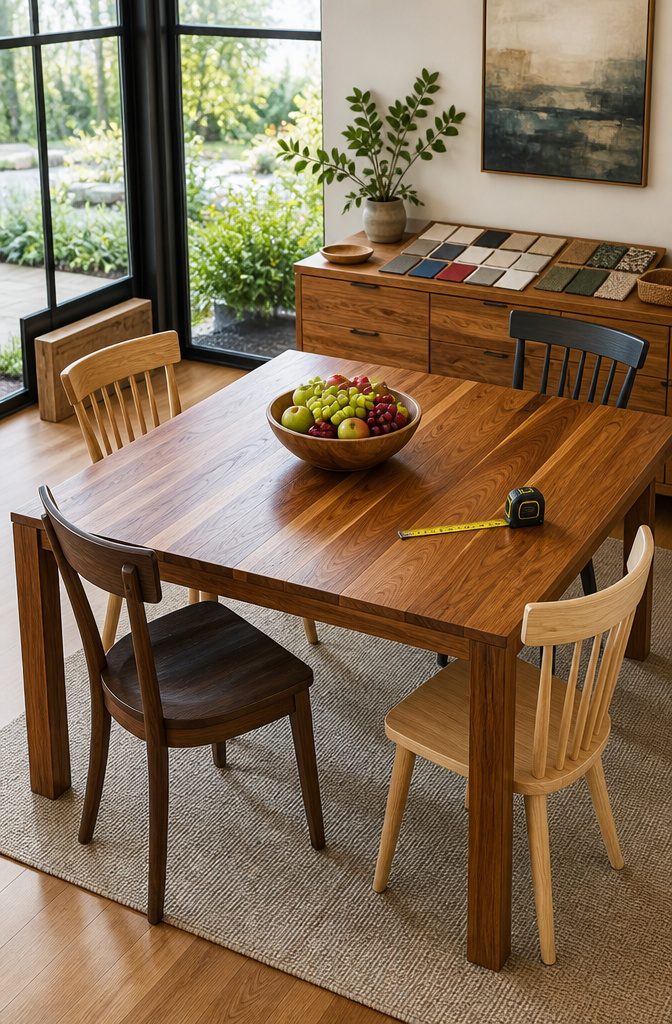
Dovetail joints and mortise-and-tenon construction enhance longevity and durability.
Joinery Methods
The way pieces connect tells you more about longevity than almost anything else on the spec sheet.
Dovetail joints, mortise-and-tenon, and dowel construction hold tight through years of use because they interlock wood to wood and distribute stress across the join.
Screws and metal brackets work fine for lighter pieces, but they loosen over time, especially in chairs and anything that gets moved. Staples belong in upholstery, not structural joints, and furniture held together with them rarely survives a second move.
If you’re buying a dining table or bed frame, joinery matters.
Those pieces carry weight and get bumped. A bookshelf that sits against a wall and never moves can get away with simpler construction.
Most brands that use traditional joinery will call it out in the product description because they know it’s a selling point. If the listing doesn’t mention how it’s built, assume the simplest method.
Type of Wood
Oak, maple, walnut, cherry, teak: each has a different weight, hardness, and grain pattern, and those differences show up in how the furniture ages.
Oak and maple are dense and take abuse well, which is why you see them in dining tables and desks.
Walnut and cherry look richer but dent more easily, so they suit bedroom pieces and display furniture better than high-traffic areas. Pine and poplar cost less and weigh less, but they’re softer and show wear faster.
The species also affects how stain takes. Oak has an open grain that soaks up color unevenly unless you’re careful, while maple stays lighter no matter how much stain you apply.
If you’re buying unstained or lightly finished pieces and plan to refinish them later, knowing the wood type tells you what you’re working with.
Reclaimed wood can be any of the above, and the mix of ages and treatments means the grain and color vary more than new stock.
Finish Durability
A good finish protects the wood from water rings, scratches, and UV fade, and the difference between a coat that lasts and one that peels in a year comes down to what’s in it and how many layers went on.
Polyurethane and conversion varnish hold up to daily use better than lacquer or oil, which need touch-ups.
Oil finishes look natural and feel smooth, but they require reapplication every few years and don’t stop water damage the way film finishes do.
If the piece sits in a dining room or entryway where it will get wet glasses, keys, and bag drops, finish durability moves up the priority list.
A bedroom dresser that never sees moisture can live a long life with a simple oil rub.
Some brands cure their finishes in UV ovens or apply 6 to 8 coats, and that extra time shows in how the surface holds up. Descriptions that mention the number of coats or the curing method are usually a good sign.
Cost and What Drives It
Solid wood costs more than veneer or engineered materials, and within solid wood, the range runs wide based on species, construction, and how much hand work went into it.
A pine dresser with butt joints and a spray finish will always cost less than a walnut credenza with hand-cut dovetails. Shipping adds a chunk too, since wood is heavy and needs better packing than flat-pack particleboard.
The price reflects materials and labor, but not always proportionally.
Some brands charge more because they’re well known, not because the joinery or finish is better. If the budget is tight, look for simpler designs in durable species rather than elaborate shapes in soft wood.
A plain oak table built with dowels and glue will outlast a carved pine table held together with screws, and it often costs less.
Buying direct from smaller makers sometimes saves money, but not always, and return policies tend to be stricter.
Brand Reliability and the Track Record
A brand that has been making furniture for 20 years and still gets repeat customers is doing something right, and the opposite is also true.
Customer reviews show patterns: consistent complaints about wobbly legs or finishes that chip within months mean the quality control isn’t there.
A few bad reviews happen to everyone, but when the same issue shows up across dozens of reports, believe it.
Reliability matters most when you’re buying sight unseen or spending enough that replacing the piece would hurt.
If you can see and touch the furniture in person before buying, the brand’s reputation matters less because you can judge the build yourself.
Newer brands can make excellent furniture, but they don’t have the history to prove it yet. Check how long they’ve been operating, read the return policy, and look for detailed photos that show joinery and finish up close.
Warranty Period
A 5-year warranty suggests the maker expects the furniture to hold up, while a 90-day policy says they’re covering defects in shipping and not much else.
The length of coverage correlates loosely with build quality, but it also reflects how confident the company is in its materials and how much it wants to deal with returns.
Some solid wood brands offer lifetime warranties on frames but only a year on finishes, which tells you where they think problems will show up.
Warranties rarely cover damage from moving, refinishing, or normal wear, so read what’s actually included. If you’re buying a bed frame or a heavy bookcase that will stay in one room for years, a longer warranty offers real protection.
For smaller pieces or anything you might move often, the warranty length matters less than the construction itself. Filing a claim usually requires photos, proof of purchase, and sometimes return shipping, which can cost as much as a repair.
Sourcing Practices
Sustainably harvested wood comes from forests managed to regrow what gets cut, and certifications like FSC or SFI verify that the sourcing follows those standards.
Reclaimed wood skips the forestry question entirely by reusing lumber from old barns, factories, or shipping pallets, though it can carry nails, stains, and unpredictable grain.
Domestic wood cuts the shipping footprint and sometimes costs less because it doesn’t cross borders, but not every species grows everywhere.
Sourcing matters most to buyers who track environmental impact or want a story behind the piece. The furniture performs the same whether the oak came from a certified forest in Pennsylvania or an unmanaged plot in another country.
Reclaimed wood looks distinct, with weathering and nail holes that new lumber doesn’t have, so the aesthetic drives that choice as much as the ethics.
Brands that care about sourcing will document it in detail; vague claims like "responsibly sourced" without certification usually mean nothing.
Customization Availability
Custom dimensions let you fit furniture into tight spaces or match an existing piece, and custom finishes mean you can get walnut stain on oak or leave pine unfinished.
Some brands offer full customization, others limit it to a few preset options, and most charge extra for anything that deviates from the standard catalog.
Lead times stretch when customization is involved because the piece gets built to order instead of pulled from inventory.
If you have an awkward nook, non-standard ceiling height, or a specific color in mind, customization moves from nice-to-have to necessary. Standard sizes work fine for most rooms, and sticking with stock options cuts the wait and the cost.
Customization also limits returns, since a table built to your measurements won’t fit anyone else’s space. Ask whether the changes you want are cosmetic or structural: swapping a finish is easier than altering leg height, and pricing reflects that.
How the Top Picks Compare
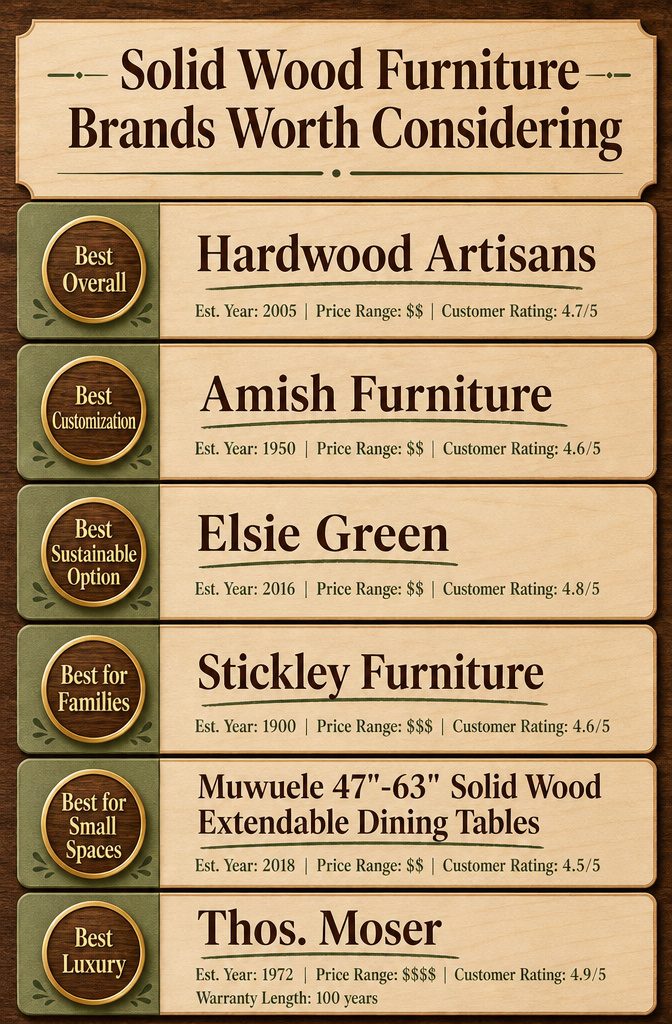
Thos. Moser offers a 100-year warranty, indicating confidence in their craftsmanship.
The biggest split here runs between lifetime pieces and accessible entry points. Thos.
Moser backs its work with a 100-year warranty, which tells you exactly how long the company expects that joinery to hold. Hardwood Artisans and Stickley Furniture both build heirloom furniture meant to last decades, though neither matches Moser’s century-long commitment.
On the other end, Amazon Basics bar stools and EXPERLAM cube organizers land in the budget tier. The difference shows up in joinery, finish durability, and how the piece looks after five years of use.
If you’re furnishing a rental or a kid’s first bedroom, the Amazon Basics stools do the job without the price tag. If you’re buying a dining table you plan to pass down, Hardwood Artisans or Stickley makes more sense.
Customization separates Amish Furniture from the rest. Most brands here offer limited finish options, but Amish shops let you specify dimensions, wood species, stain color, and hardware.
That flexibility matters when you need a sideboard that fits a 52-inch wall or a table height that works for someone in a wheelchair.
Lead time is longer: custom orders can take 8 to 12 weeks, while Hardwood Artisans and Elsie Green ship faster from existing inventory.
Space constraints favor three picks.
The Muwuele table extends from 47 to 63 inches, which means it seats four on a Tuesday and eight when family visits. The Azlafu bookshelf rotates 360 degrees and climbs 6 tiers without taking up floor space a traditional bookcase would demand.
The HOKYHOKY console table works as an entryway piece, a sofa table, or a compact desk depending on the room. If you’re working with 600 square feet, those three adapt in ways a fixed-dimension Stickley piece does not.
Sustainability credentials belong to Elsie Green, which sources FSC-certified wood and uses low-VOC finishes.
The other brands use solid wood, which beats particle board for longevity, but Elsie Green documents the supply chain in a way the rest do not. That transparency matters to buyers who want proof, not just claims.
Caring for solid wood furniture
Solid wood needs less fuss than you’d think, but the few things that matter really do matter. Dusting once a week keeps grit from scratching the finish when you set something down.
A dry microfiber cloth works better than anything damp unless you’re dealing with a sticky spill, and even then you wipe it fast and dry it right after.
Coasters aren’t just polite. Water rings happen because moisture sits on the finish long enough to cloud it, and heat does the same thing faster.
I keep a stack next to every surface that sees regular use, and that alone has kept the tops looking the way they did when they arrived.
Most finishes benefit from conditioning once or twice a year. Oil-rubbed bronze and natural oil finishes soak it up and look richer afterward.
Polyurethane and lacquer need it less often, but a thin coat still helps the surface resist wear. The instructions that come with the piece usually tell you what it was finished with, and that determines what you apply.
Direct sunlight fades wood over time, especially cherry and walnut. If a piece sits in a south-facing window, the color shifts noticeably over a year or two.
Rotating smaller items or adding a sheer curtain helps even out the exposure. Rubberwood and oak hold their color better, but nothing stays exactly the same forever.
There is nothing like old-fashioned solid wood furniture set to create a sturdy rustic feel in your home. In a day of synthetic, plyboard, and other pressed materials, it’s nice to live off the land, if you will.
Measuring for furniture fit
The clearance numbers matter more than the piece dimensions. I measure the doorway first, then the stairwell if the furniture has to go up, then the room itself.
A dining table that extends from 47.2 to 63 inches fits through a 32-inch door only after you remove the legs, and not every table ships with legs detached.
Room measurements need three zones: the footprint the piece occupies, the space you need to walk past it without turning sideways, and the clearance required if drawers or doors open.
A bookshelf measuring 17.3 inches deep sits flush against the wall, but you still need 24 to 30 inches in front of it to crouch down and pull a book from the bottom shelf without feeling trapped.
I write the measurements on my phone rather than trying to remember them in the store. Ceiling height comes up more often than expected, especially with tall bookcases.
One rotating bookshelf stands 78 inches high, and that clears an 8-foot ceiling with only a few inches to spare. The measurement includes any base or feet, so confirm what the listing gives you: overall height or just the cabinet body.
Counter-height stools need the same attention. A 24-inch seat height works for countertops measuring 36 to 39 inches, but you need to account for apron thickness and knee clearance under the counter itself.
The stool dimension tells you seat-to-floor; you still have to measure counter-to-floor and subtract to see what space remains between the two.
Understanding furniture warranties
Most solid wood furniture comes with coverage that spans anywhere from 1 year on structural defects to lifetime guarantees on joinery and frame integrity. The gap between those two tells you how confident the maker is in what they built.
A lifetime warranty usually covers the frame, joinery and major structural failures but not the finish or hardware.
One brand in this guide offers 100 years of coverage, which sounds like marketing until you read the fine print and find that dovetails, mortise-and-tenon joints and the solid hardwood itself are actually backed for a century.
That kind of term shows up when a company knows its joinery will outlast the people who ordered it.
Shorter warranties are not automatically a red flag. A 2-year policy on an expandable dining table made from FAS-grade rubberwood still signals that the manufacturer will handle defects during the period when assembly errors or material flaws tend to surface.
What matters more is what the warranty excludes. If finish wear, normal scratches and customer-caused damage are carved out, you are left covering refinishing costs yourself.
I look for clear language on what triggers a claim, whether the company pays return shipping and how long replacement parts take to arrive.
Vague coverage or a policy buried three clicks deep usually means the brand does not want you reading it closely.
Frequently Asked Questions
What should I look for to confirm furniture is actually solid wood?
Check the product description for phrases like "100% solid wood" or the specific species name without qualifiers. Solid wood means the visible surfaces and structural parts are cut from timber, not layered over plywood or particleboard.
Watch for vague language like "wood" or "wood frame," which often signals veneer or mixed construction. Look at joinery details too: dovetails, mortise-and-tenon, and exposed through-tenons indicate solid wood craftsmanship, while staples or cam locks usually pair with engineered materials.
How long do solid wood furniture pieces typically last?
Solid hardwood furniture built with traditional joinery can last decades or even become heirloom pieces. One brand offers a 100-year warranty, which gives a sense of how long quality construction holds up.
Durability depends on the wood species, joinery method, and finish quality. Rubberwood and oak pieces with proper joinery routinely support 300 pounds and withstand daily use for years without structural issues.
Can I customize dimensions or finishes with most solid wood brands?
Many solid wood furniture makers offer customization, though lead times stretch longer than stock items.
Custom orders typically take 8 to 10 weeks for fabrication. Options usually include different wood species, stain or finish choices, and adjusted dimensions to fit specific spaces.
Smaller family-run companies and brands that build to order tend to offer the most flexibility, while mass-market solid wood lines stick to fixed sizes and finishes.
What joinery methods indicate quality construction?
Dovetail joints, mortise-and-tenon, and exposed through-tenons signal traditional craftsmanship and long-term durability. These methods lock wood pieces together mechanically rather than relying only on glue or hardware.
Quartersawn wood with precision joinery shows another level of attention, since the milling process reduces warping and the fit requires skill. Avoid furniture held together with staples, brackets, or cam locks if longevity matters.
Are reclaimed wood pieces as durable as new solid wood?
Reclaimed wood furniture can match or exceed new wood in durability, depending on the species and original use. Antique fir and reclaimed pine were often harvested from old-growth timber with tighter grain than modern lumber.
Natural features like cracks, knots, and scratches add character but are not structural flaws. Solid construction matters: reclaimed wood benefits from the same joinery standards as new material, and many makers apply modern finishes for scratch and moisture resistance.
How do I maintain a solid wood finish over time?
Wipe surfaces with a dry or slightly damp cloth for routine cleaning. Solid wood with oil-rubbed bronze or natural finishes resists wear better than thin veneers, but avoid soaking the wood or using harsh chemicals.
High-quality paint and sealed finishes make cleaning quicker and protect the wood from moisture and scratches. Felt pads under furniture legs prevent floor damage and reduce surface wear from sliding.






