
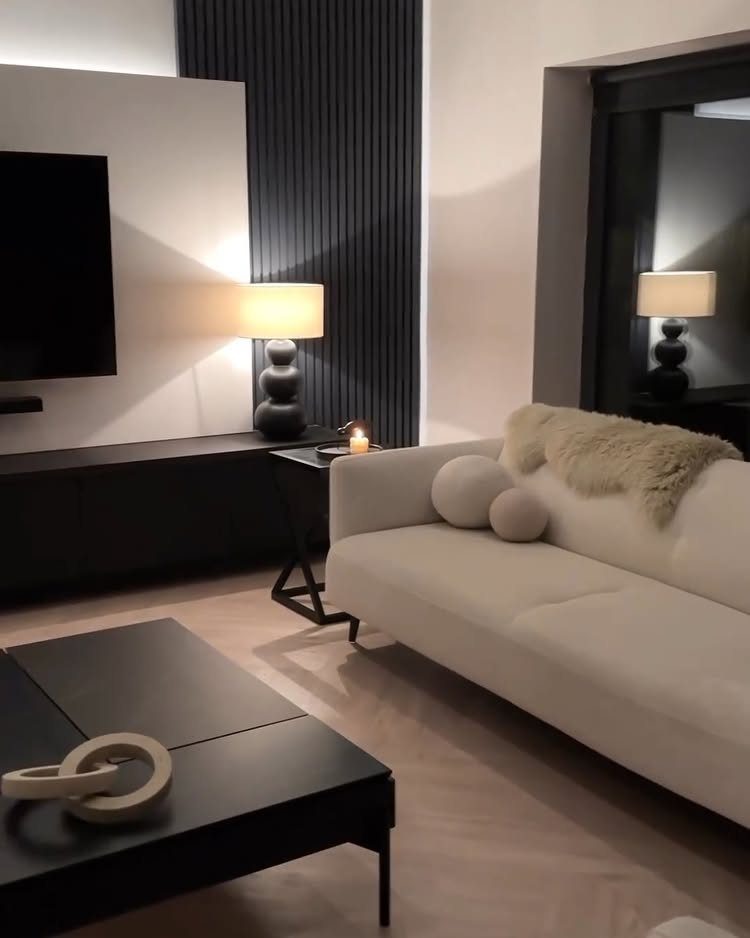
Black and white works because the contrast holds the room together, and adding plants, warm lighting or wood keeps it from feeling cold.
The rule is simple: if the room gets cold light or hard surfaces everywhere, it reads as clinical instead of clean.
Warm white bulbs at 2700K to 3000K fix that immediately, and textured materials like bouclé, linen or velvet soften the look where smooth paint and metal can’t.
The ideas here range from a single large canvas on a white wall to layering grey rugs and geometric furniture or pulling in plants and wood accents to warm the space.
1. Geometric Furniture and Decor
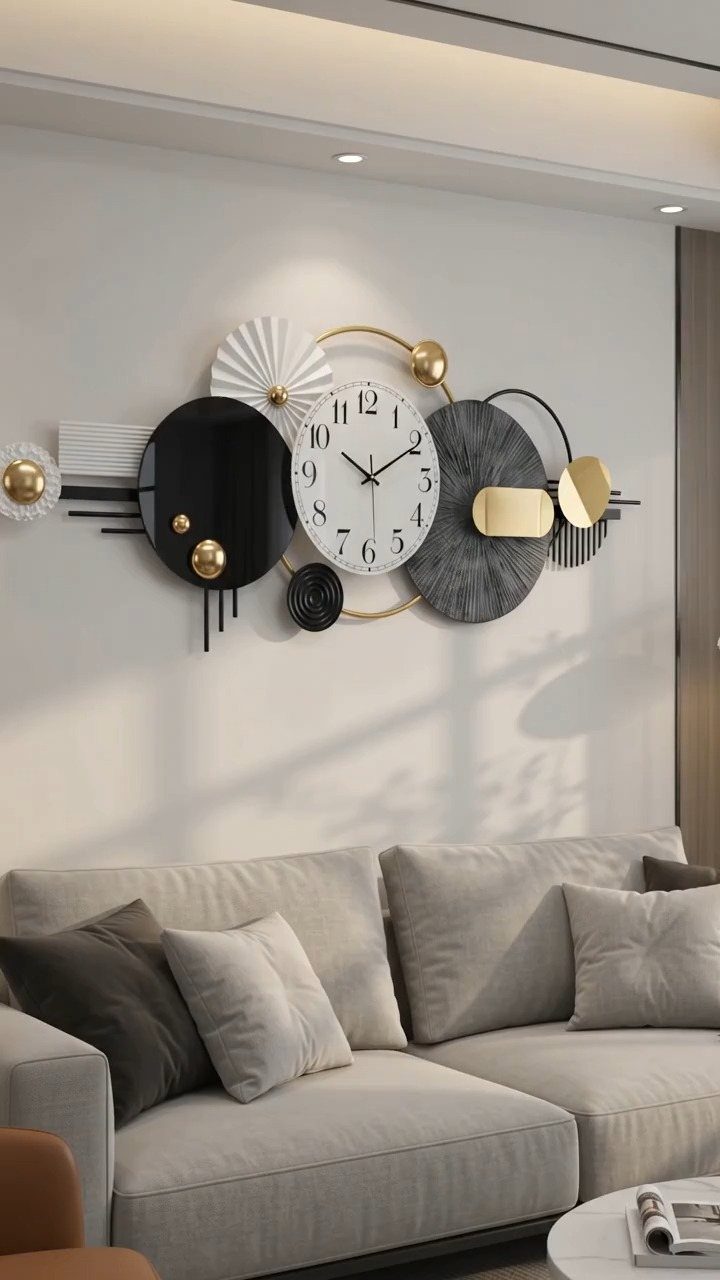
Geometric shapes in furniture and wall decor create visual interest when you are working with just 2 colors. A clock, mirror or sculptural piece with strong lines keeps the room from feeling flat.
Pick items that mix black, white and 1 metallic finish.
The metal adds contrast without introducing a full color. Circular, triangular or hexagonal patterns work best when they repeat across multiple pieces in the room.
2. Large Artwork
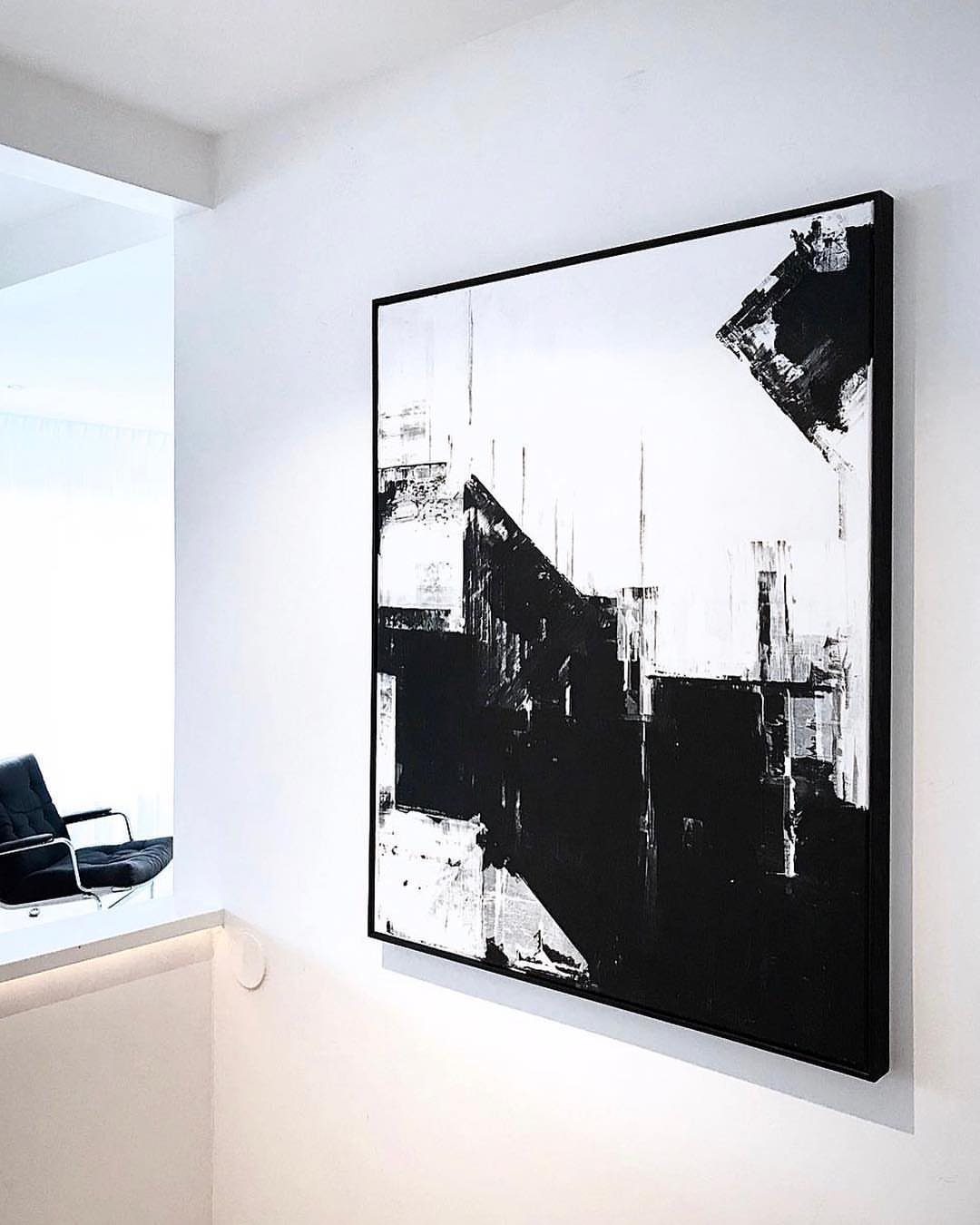
A single large piece of abstract art gives the room a focal point and fills vertical space without adding clutter. One oversized canvas commands attention on a white wall and sets the tone for the rest of the room.
Black frames sharpen the edge.
Frameless canvases soften the look. Either works if the painting itself carries enough contrast to stand out from the wall behind it.
3. Incorporate Plants
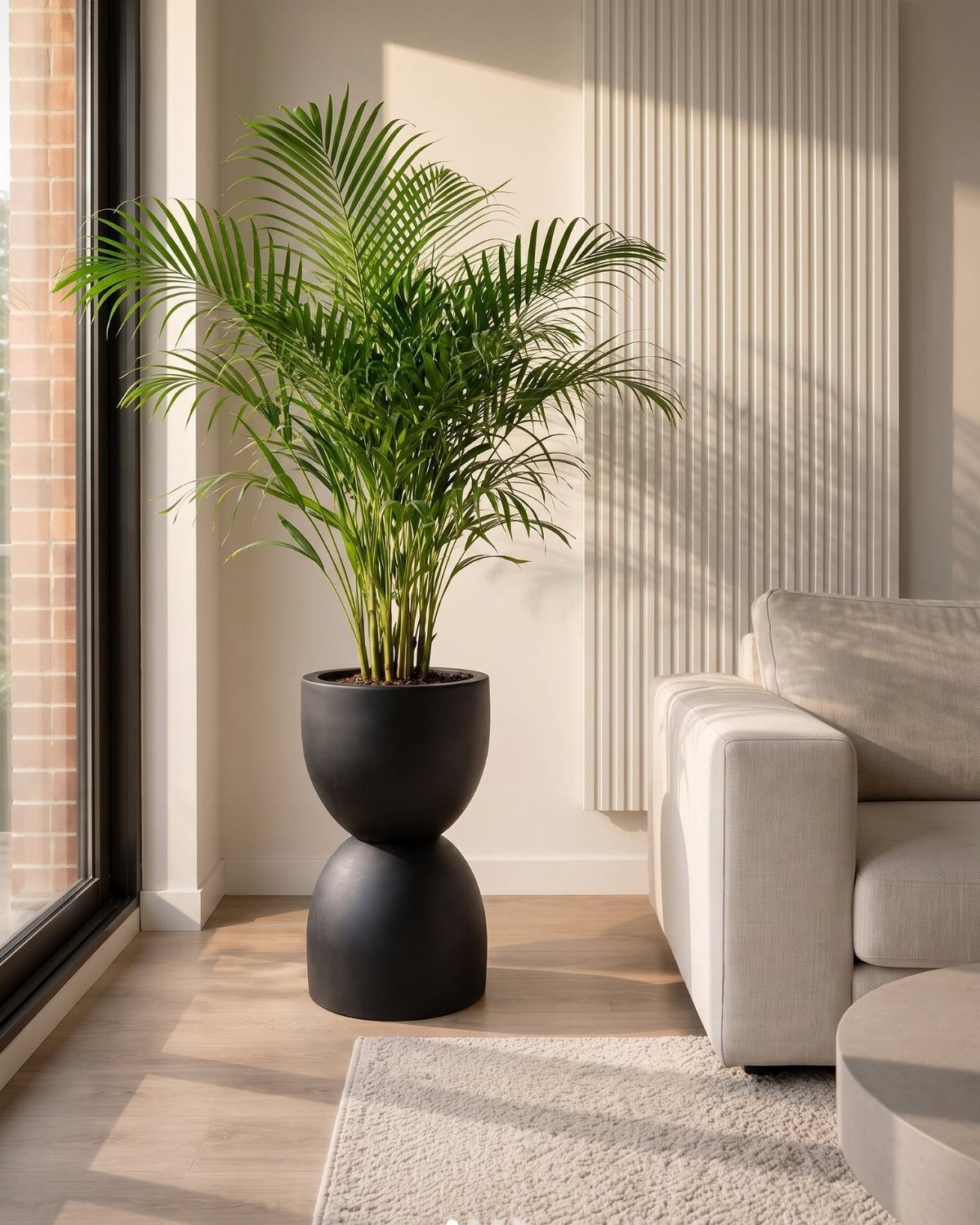
A green plant is the simplest way to soften a monochrome room without changing the palette. The contrast between hard black and white surfaces and the organic shape of a palm or fiddle-leaf fig makes the space feel less severe.
Put the plant in a black pot with a sculptural shape. A cylinder or hourglass silhouette fits a modern room better than a standard terra-cotta planter, and the black ties it to the rest of the decor.
4. Warm Lighting Fixtures
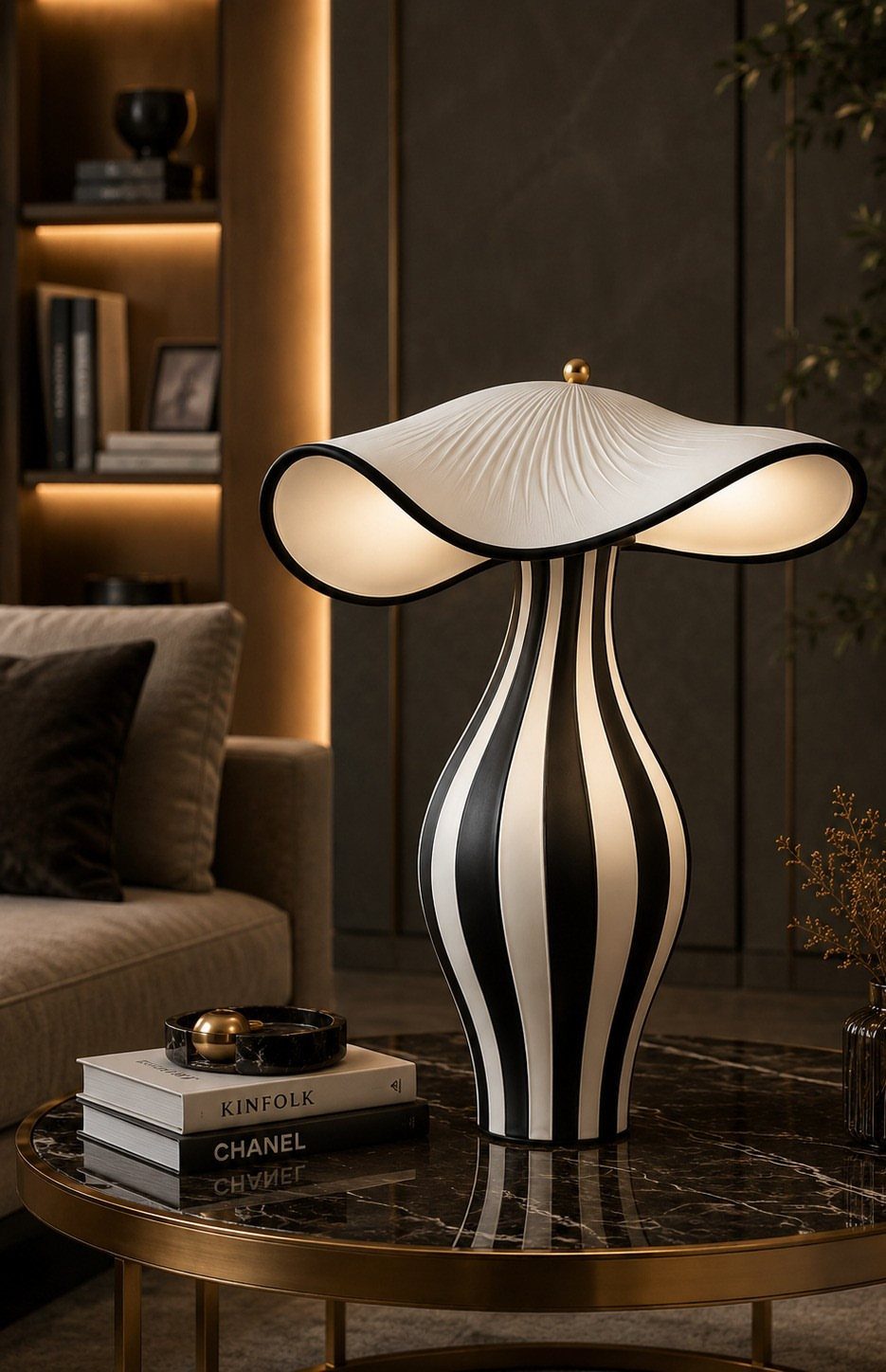
Warm-toned bulbs change how a black and white room feels. Cool white light makes the space feel clinical, while a soft yellow glow at 2700K to 3000K adds warmth and pulls the room together after dark.
A lamp base in black and white stripes or another graphic pattern reinforces the palette. Pair it with a white or off-white shade to diffuse the light evenly across the room.
5. Use Black and White in a Mid-century Scheme
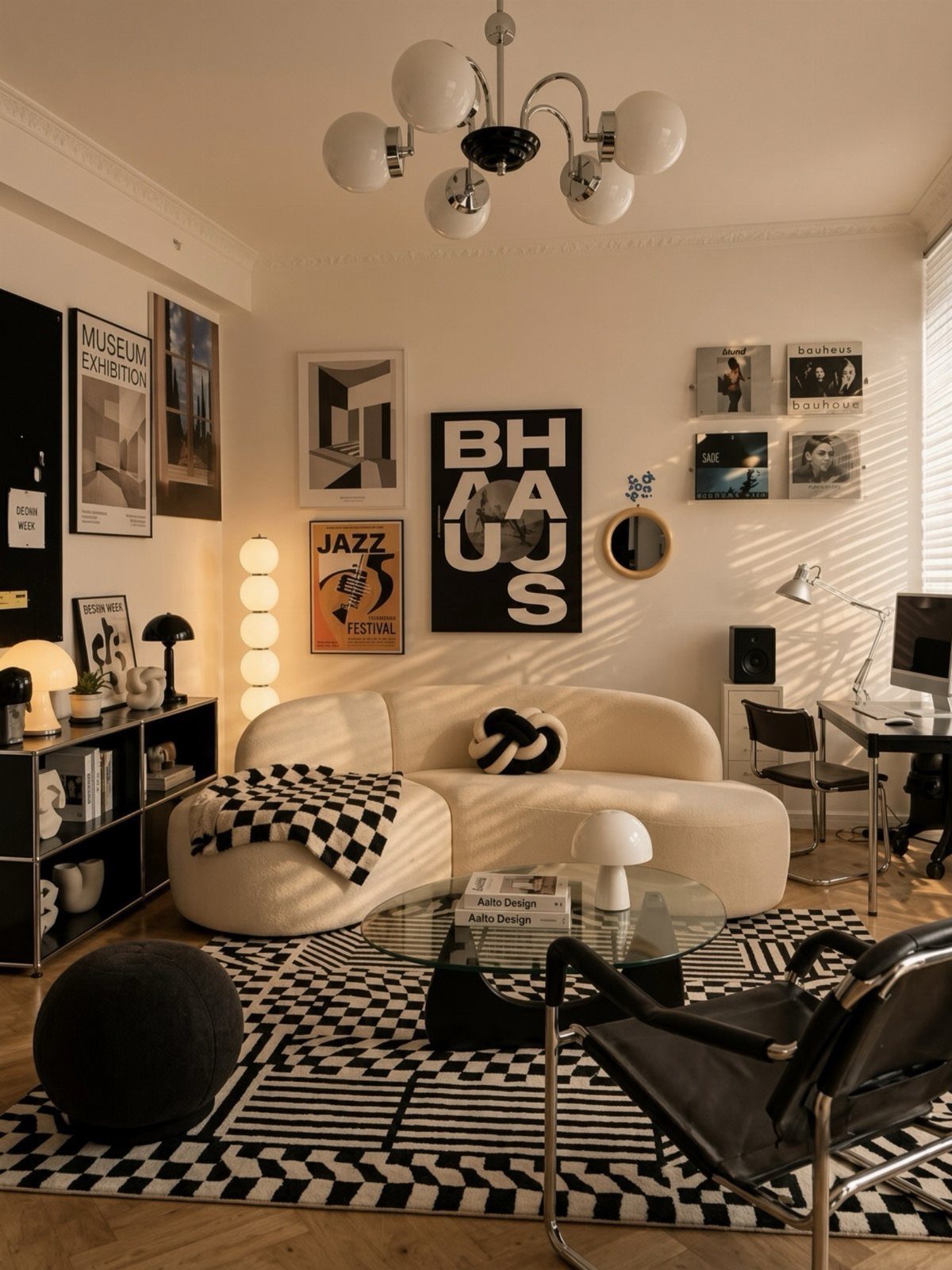
Mid-century furniture works well in a black and white room because the clean lines and tapered legs stand out against a simple backdrop.
A curved sofa, low-profile coffee table and molded plastic chair gain definition when the color around them stays neutral.
Look for pieces with walnut or teak wood tones if you want to warm up the palette slightly. The black and white stays dominant, but the wood stops the palette from turning cold.
A black and white palette is timeless and classic, with endless possibilities from subdued to statement-making.
6. Black Furniture Against White Walls
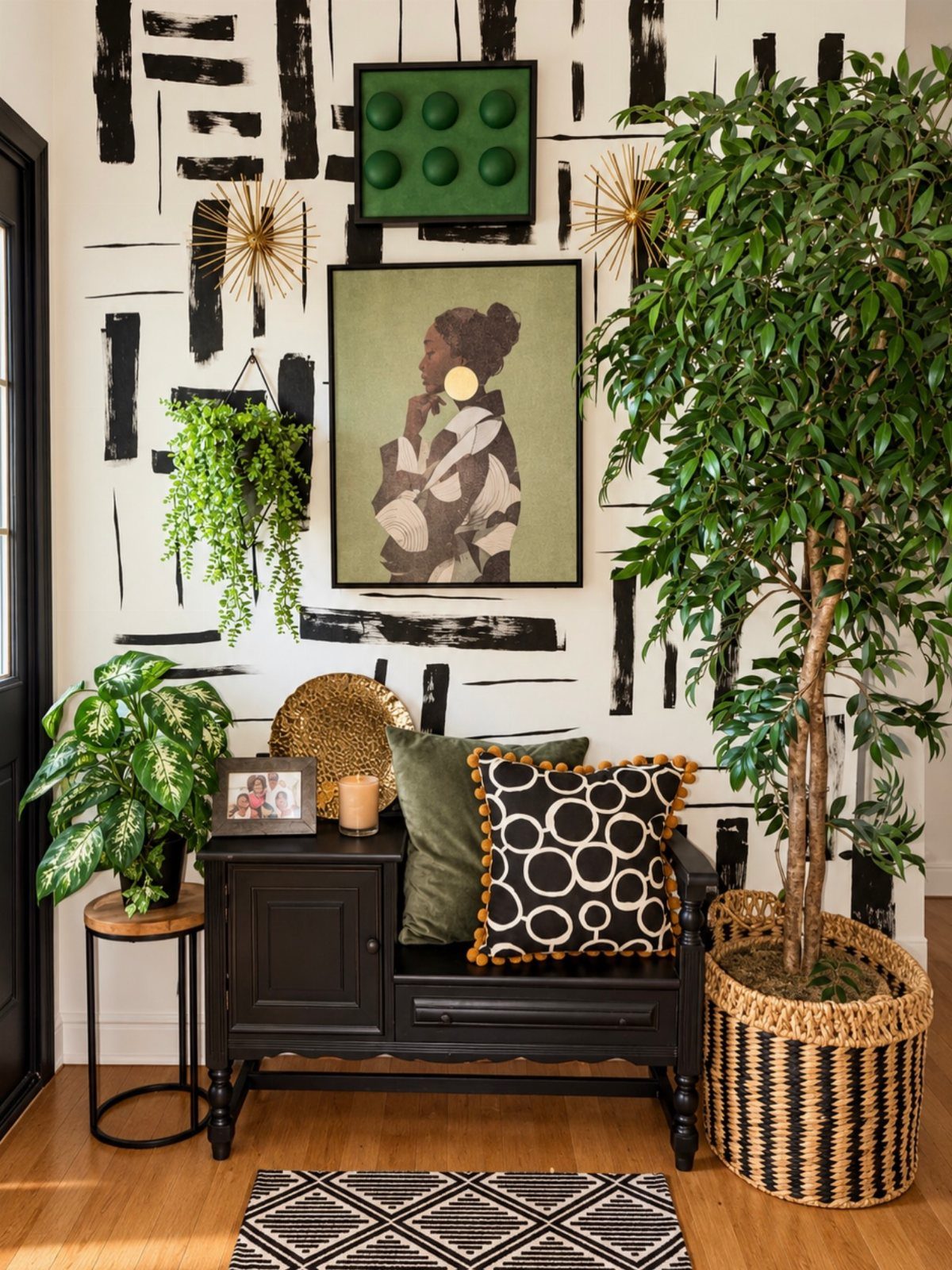
Black furniture stands out sharply against white walls and creates instant contrast. A cabinet, console or shelving unit in black wood or painted black becomes the anchor of the room and draws the eye immediately.
This approach works best when the furniture has interesting details: carved doors, turned legs or open shelving that breaks up the solid shape. Plain black boxes can feel heavy, but texture or negative space lightens the look.
7. Textured Grey Rugs
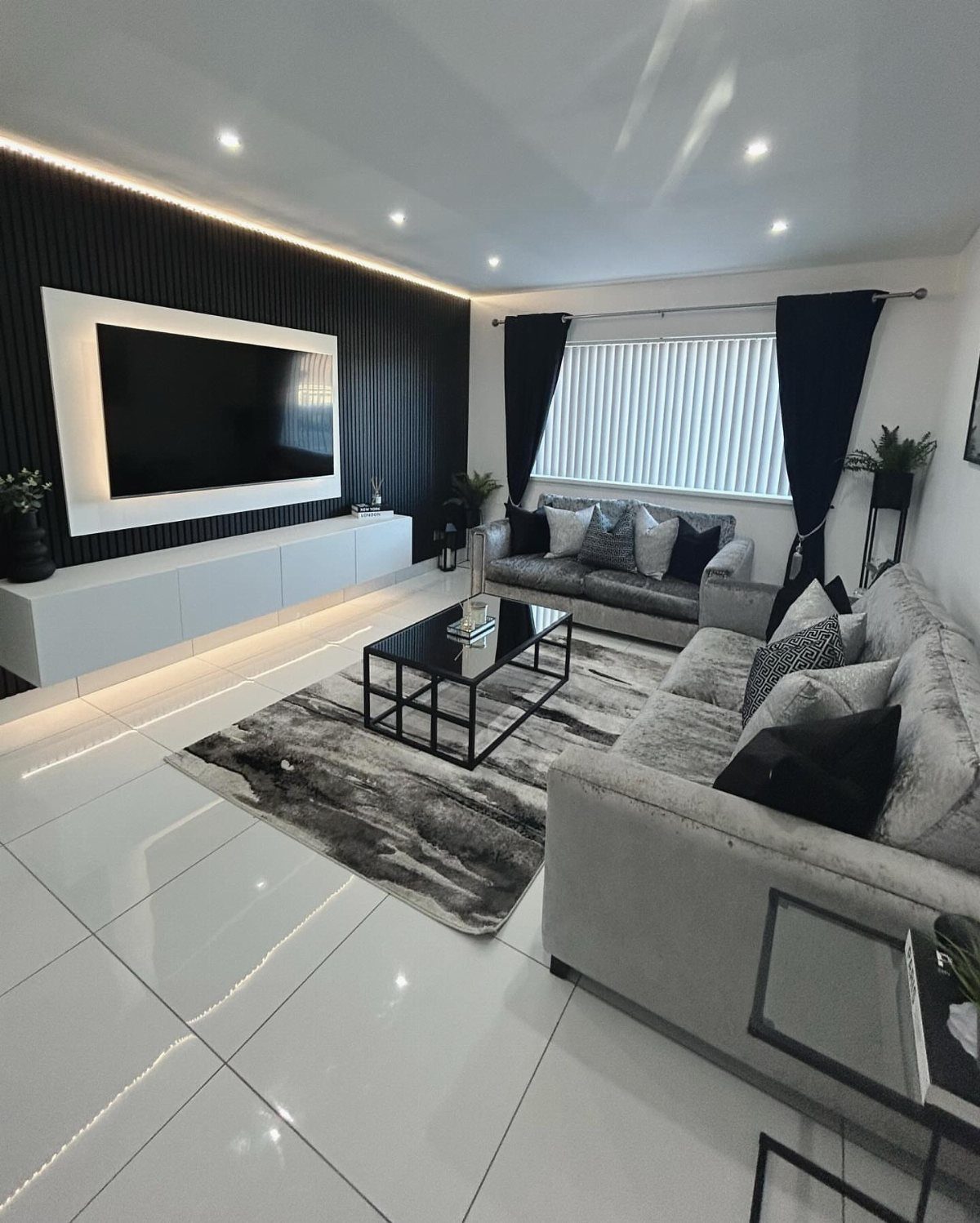
A grey rug adds a third tone without breaking the palette. It sits between black and white and gives the room a softer landing than stark contrast alone.
Texture matters more than pattern here.
A shag, woven or high-pile rug in grey reads as depth rather than detail, and it absorbs light instead of reflecting it the way a smooth black or white surface does. The room stays clean but feels less rigid.
8. Bold Accent Color
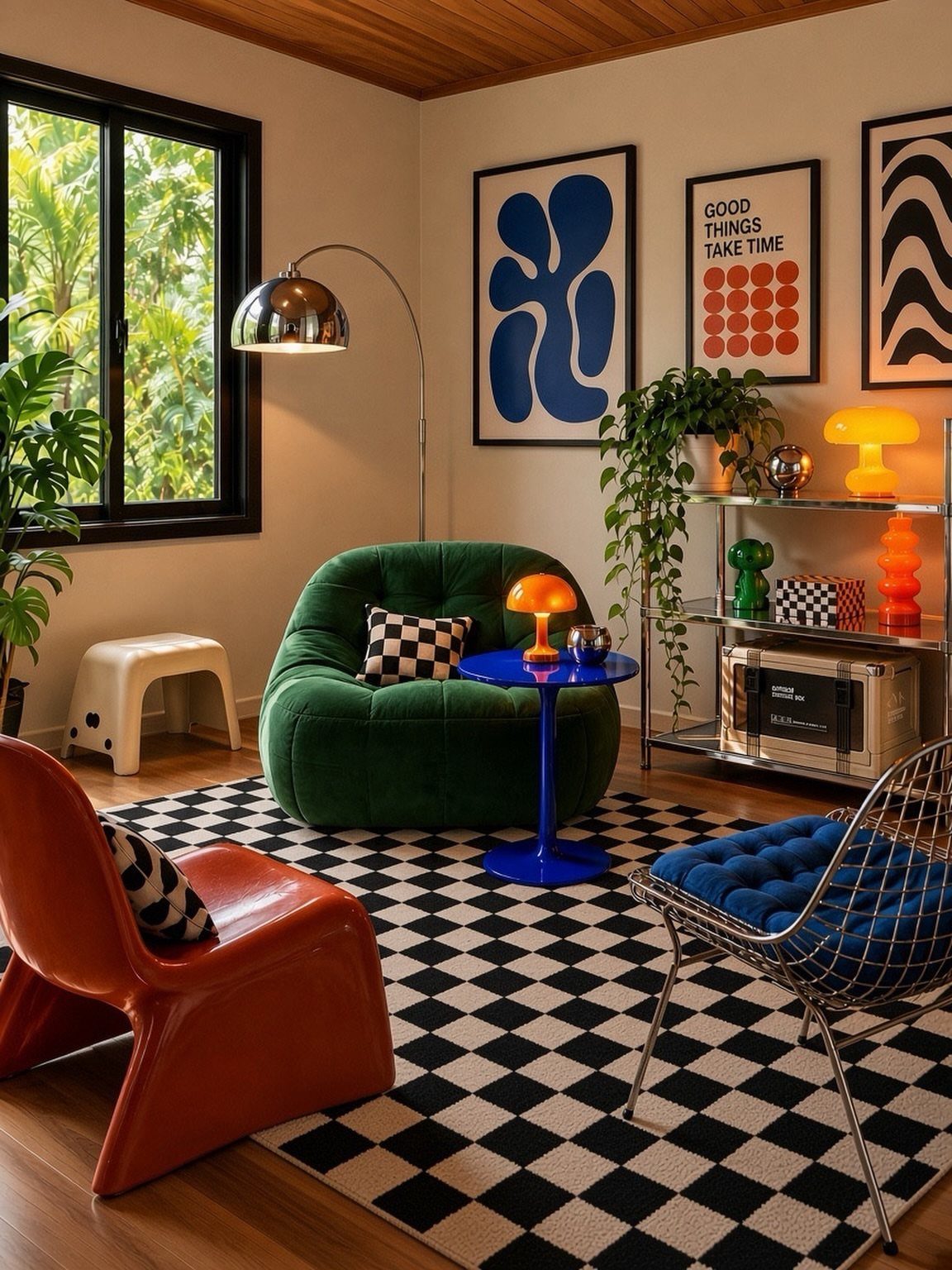
One bright accent color drops into a black and white room as a chair, throw or lamp and gives the space a focal point that moves.
The monochrome stays in place, and the color shifts with the season or your mood.
Orange, red or cobalt blue all work because they stand out sharply against neutral tones. Pick one and repeat it a few times across the room so it reads as intentional rather than leftover.
9. Balance White with Black
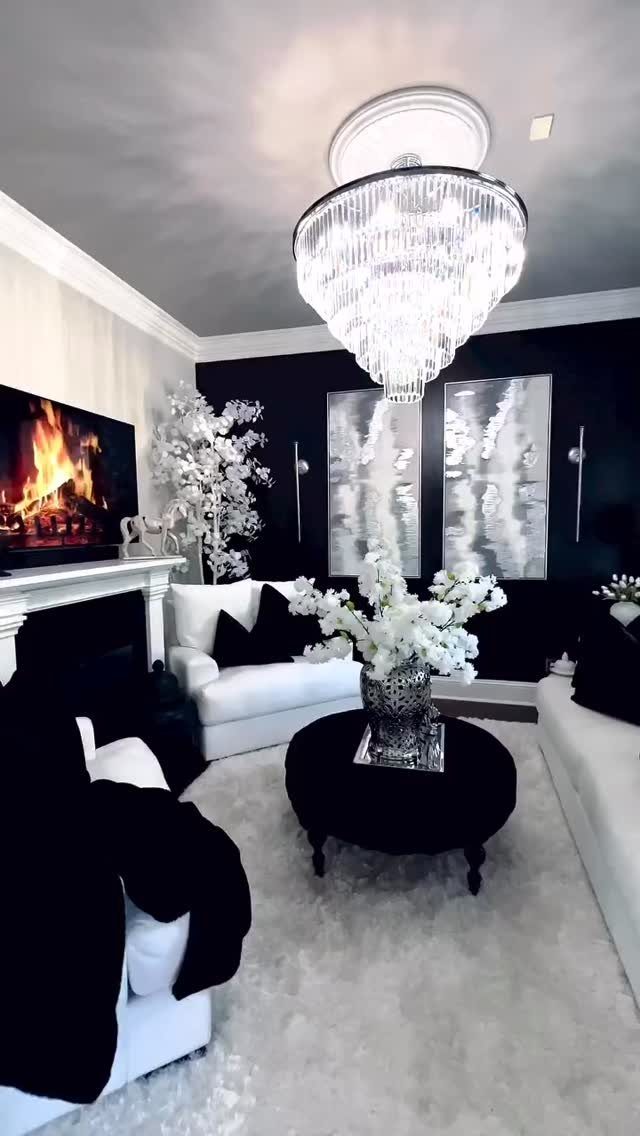
An all-white room gains structure when you add a single black feature wall or a large black cabinet. The black anchors the space and stops the white from washing out under bright light.
This approach flips the usual ratio. Most black and white rooms use white as the base and black as the accent, but reversing that puts the black in one concentrated area and leaves the rest of the room open.
The contrast stays strong without weighing down every corner.
10. Wood Furniture and Accents
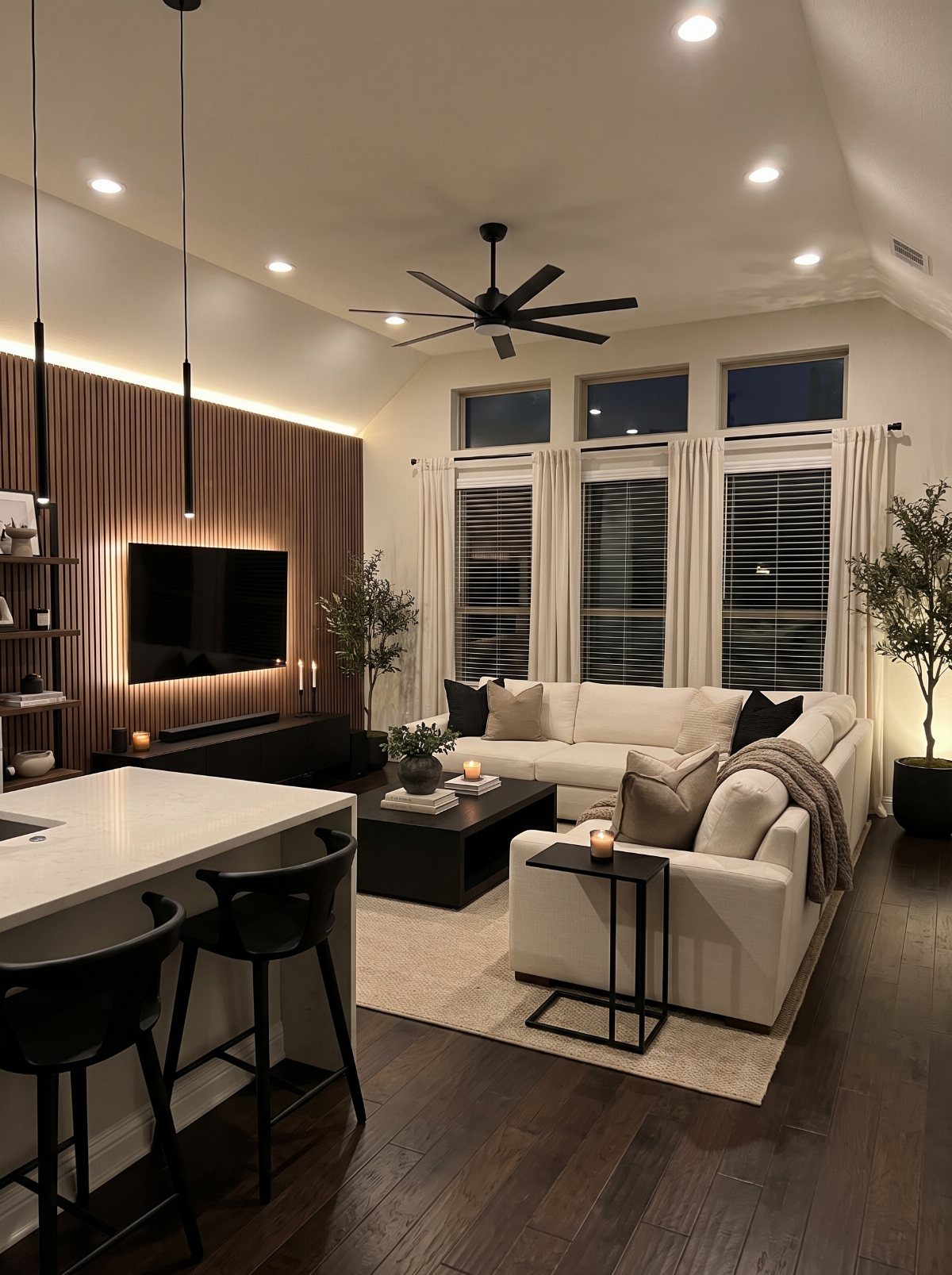
Wood floors or a wood accent wall introduce warmth without adding color. The grain and natural tone of walnut, oak or teak soften the hard edge of black and white and make the space feel finished rather than staged.
Dark wood ties into black furniture and reads as part of the palette. Lighter wood stands out slightly but still feels neutral enough to work with the monochrome scheme.
11. Layer Textures
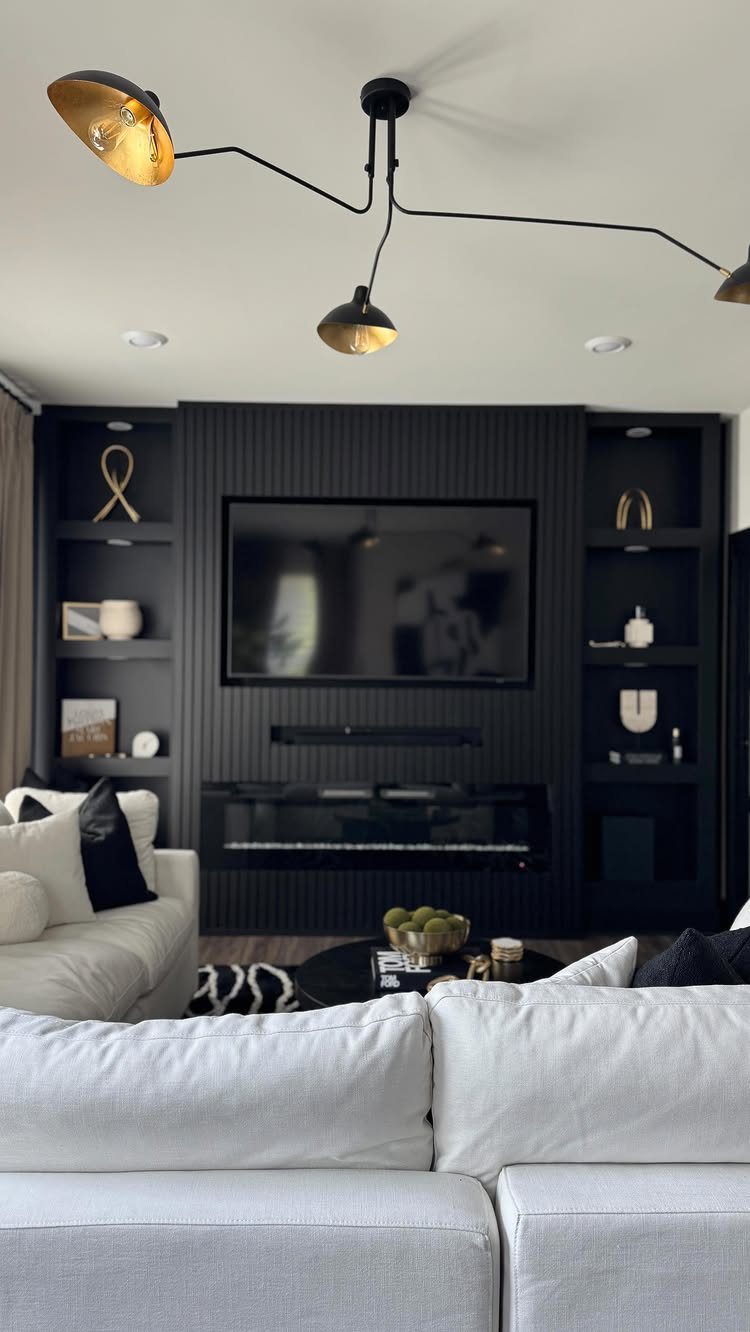
Mixing materials keeps a black and white room from looking flat. Ribbed panels, velvet upholstery, matte paint and glossy metal all reflect light differently, and that variation creates depth even when the color stays the same.
Pair smooth and textured surfaces in the same piece. A sofa in white boucle next to a black lacquered table gives each material more definition, and the room reads as layered instead of one-note.
How to Keep Black and White from Feeling Cold
The quickest fix for cold black and white isn’t a pop of color. A space with a white sofa, black side table, hard floors and bright bulbs photographs well but feels stark once you’re living in it.
Swap stark white for warm white or cream.
Oak, walnut or any natural wood tone adds warmth and stays inside the palette. Textured upholstery like bouclé, linen, velvet or leather feels more inviting than smooth painted surfaces or slick leather alone.
A rug with texture or a low pattern takes the edge off hard flooring.
Warm bulbs in table lamps, floor lamps and sconces shift how the space feels once the sun goes down. Plants, branches or dried stems break up straight lines and add organic shape where the furniture is all geometry.
Choosing Furniture and Decor
Large pieces control visual weight more than accessories because they take up more of what you see.
A black pillow moves easily. A black sectional, tall black accent wall or large patterned rug sets the tone for everything else.
Pick your sofa, coffee table and rug first, then adjust with smaller pieces. Curved furniture balances out sharp contrast better than anything else.
Statement lighting adds focal interest without adding clutter. An oversized pendant or sculptural floor lamp serves as functional art and helps draw the eye up.
To keep the room feeling sleek, leave the walls bare and let one large fixture carry the visual weight instead of filling every surface with smaller decor.
Common Mistakes to Avoid
Most black and white rooms go wrong for functional reasons, not because the colors don’t work. Too many shiny surfaces, too much stark white, black placed at eye level everywhere or zero soft materials will sink any palette.
Pure black and pure white with nothing in between reads as harsh no matter how you arrange it.
Cool white bulbs flatten everything. Layering stripes, checks, abstract prints and patterned rugs in one room creates chaos even when every piece is black, white or gray.
Open shelves loaded with small colorful objects dilute the whole scheme.
The fix is usually simple.






