
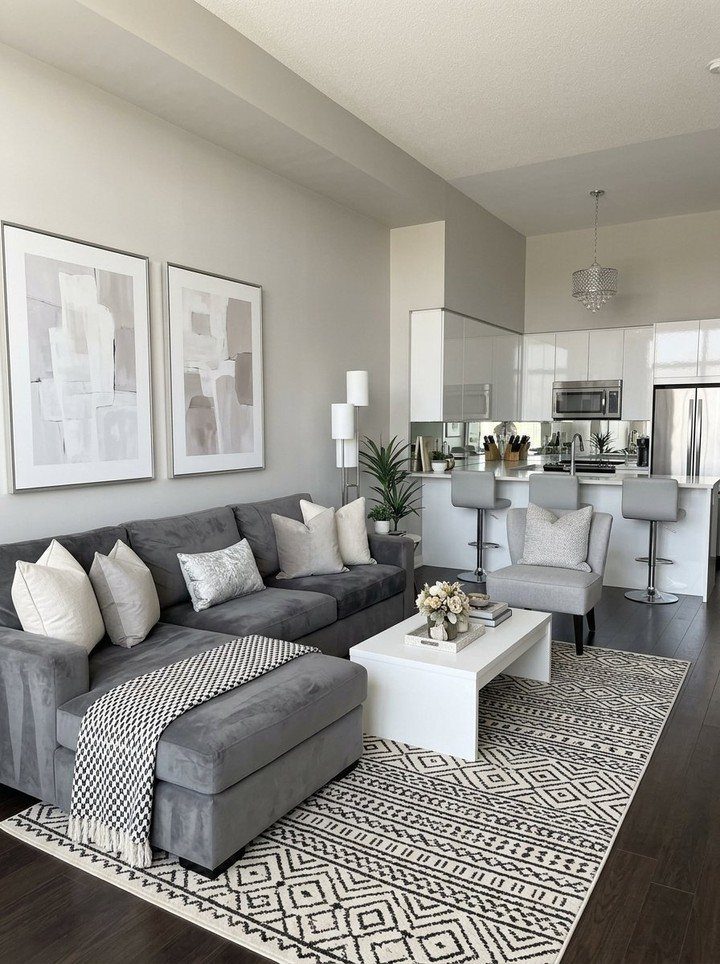
Gray works with styles from plush throws to mustard accents and gallery walls, so the first question is whether you want the room to feel warm or cool.
Light gray walls open a space and pair with off-white sofas when you need the room to stay bright, while deep gray anchors furniture and shows contrast with mustard or metallic accents.
1. Plush Pillows and Throws in Gray Living Room
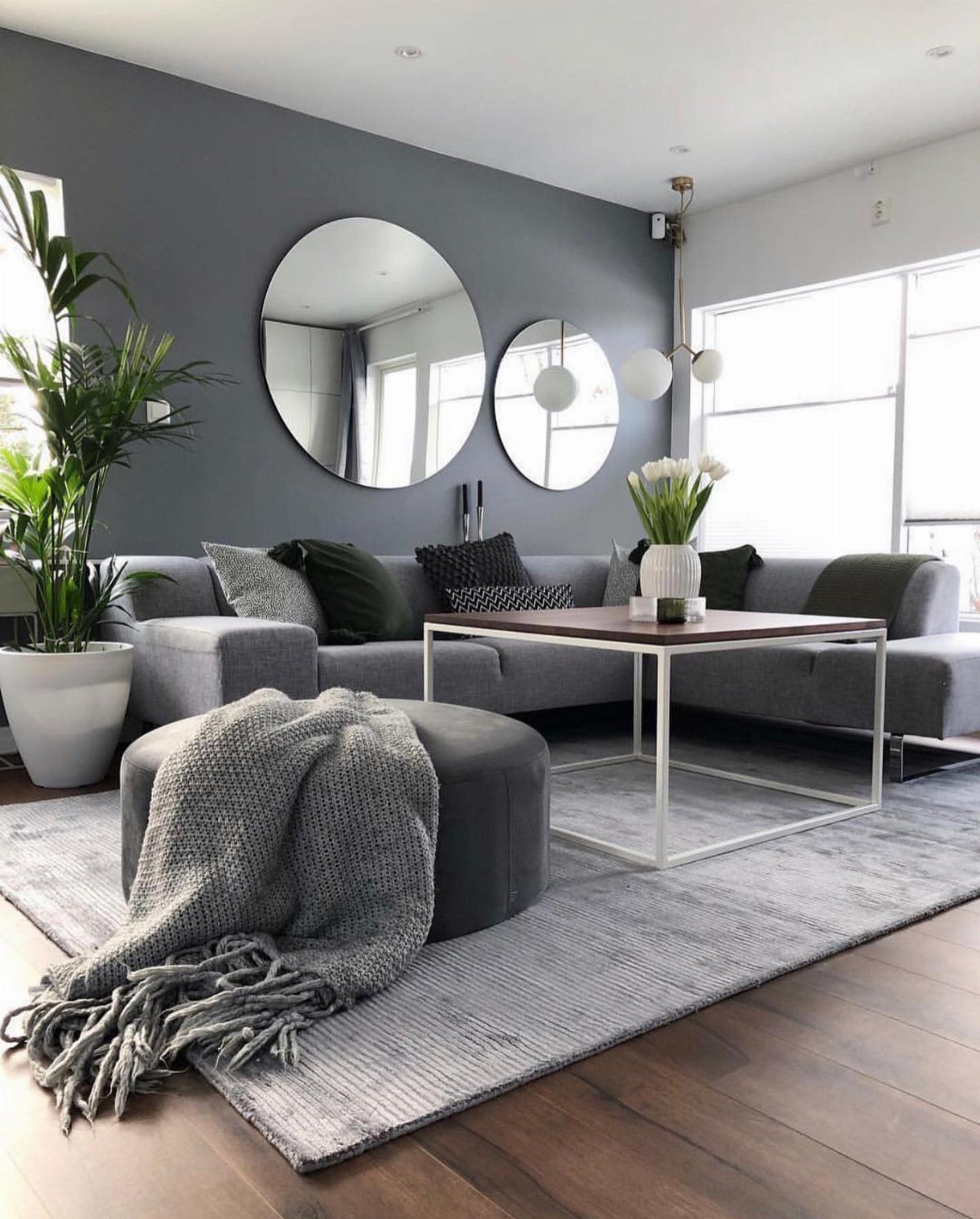
Soft textures make gray feel comfortable instead of stark. The knit throw and full pillows here add warmth without pulling in color that fights the room’s palette.
Mixing smooth upholstery with chunky knit or velvet gives you contrast you can feel, not just see. I keep throws folded over the arm or ottoman so they look ready to use, not staged.
If your sofa already feels heavy, swap one or two gray pillows for cream or ivory to open up the seating area without starting over.
2. Metallic Accents in Gray Living Room
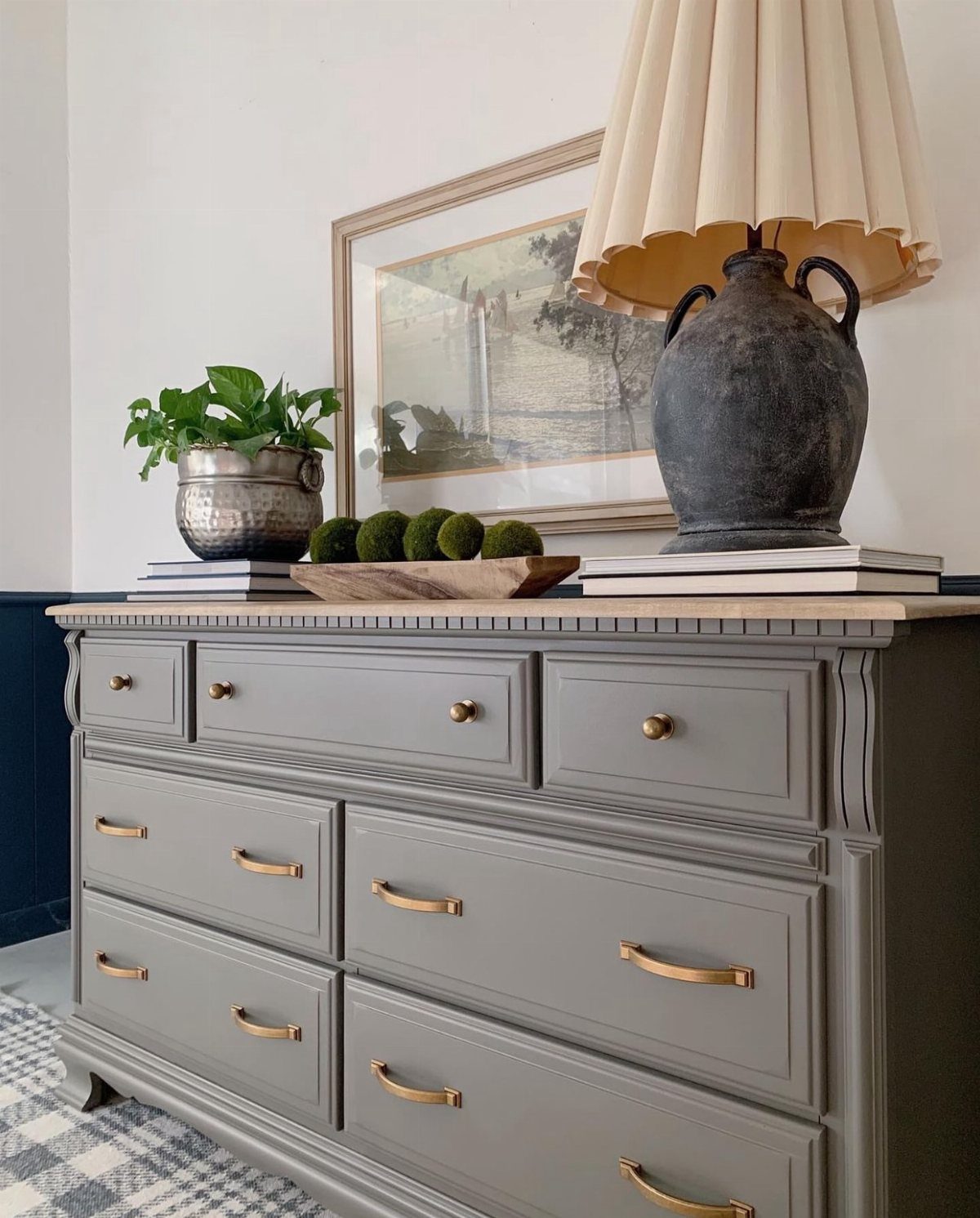
Gray reads cold when everything around it stays matte and flat. Metal finishes catch light and give the room some life.
Gold hardware on furniture is the easiest place to start. Drawer pulls, cabinet legs, and lamp bases all work, and you can add them one piece at a time instead of redecorating the whole room at once.
Silver and brass both pair well with gray. I prefer brass in rooms with warm lighting and silver where the light skews cool or bright.
3. Gray Living Room with Bold Colors
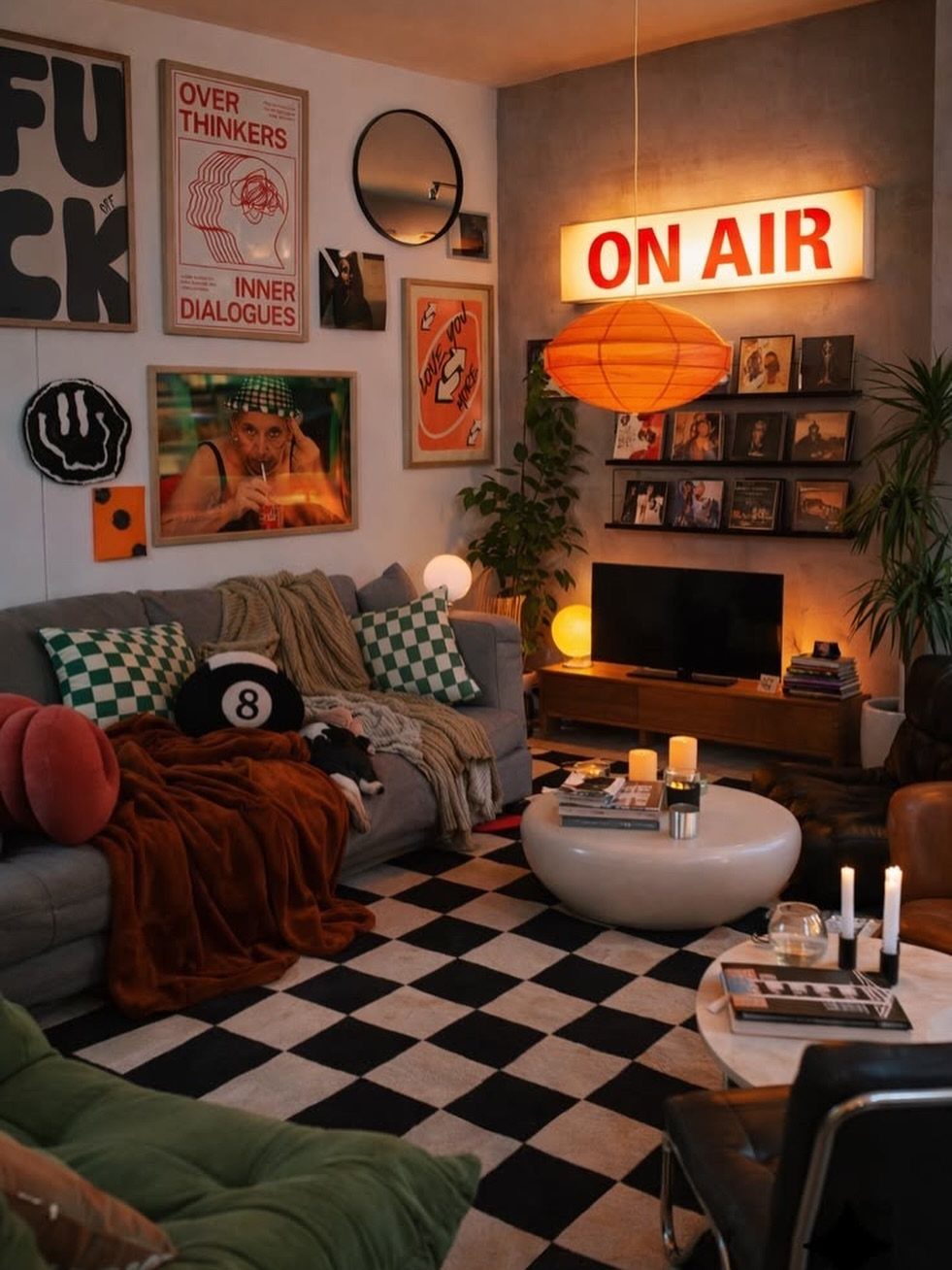
Bold accents keep gray from feeling too safe. The orange pendant and graphic art here prove you can go loud without losing the neutral base.
Pick one or two colors and repeat them in different forms. A single bright pillow reads like a mistake, but a lamp, a rug pattern, and a piece of art in the same family feel intentional.
Black and white patterns, like the checkered rug, anchor the bolder colors and keep the room from tipping into chaos.
4. Gray Living Room with Mustard Accents
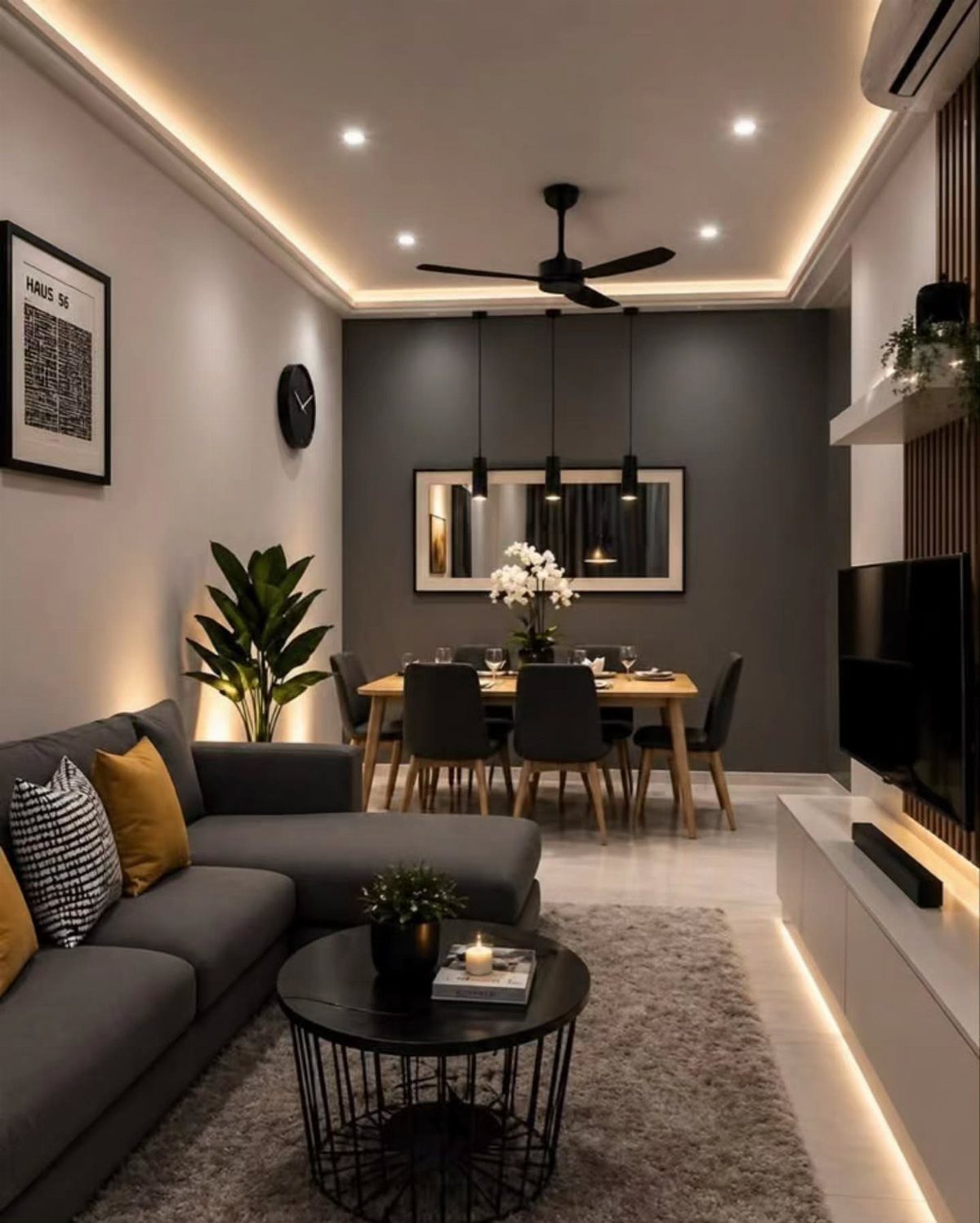
Mustard sits between yellow and brown, so it warms up gray without the sharpness of primary yellow. It works especially well with charcoal or deep gray walls because the contrast stays strong but not jarring.
Use enough pillows that the color registers from across the room. A single mustard throw disappears on a dark sofa.
Mustard fades faster than most neutrals, so keep extra pillowcases if you place them where sun hits directly.
5. Wooden Furniture in Gray Living Room
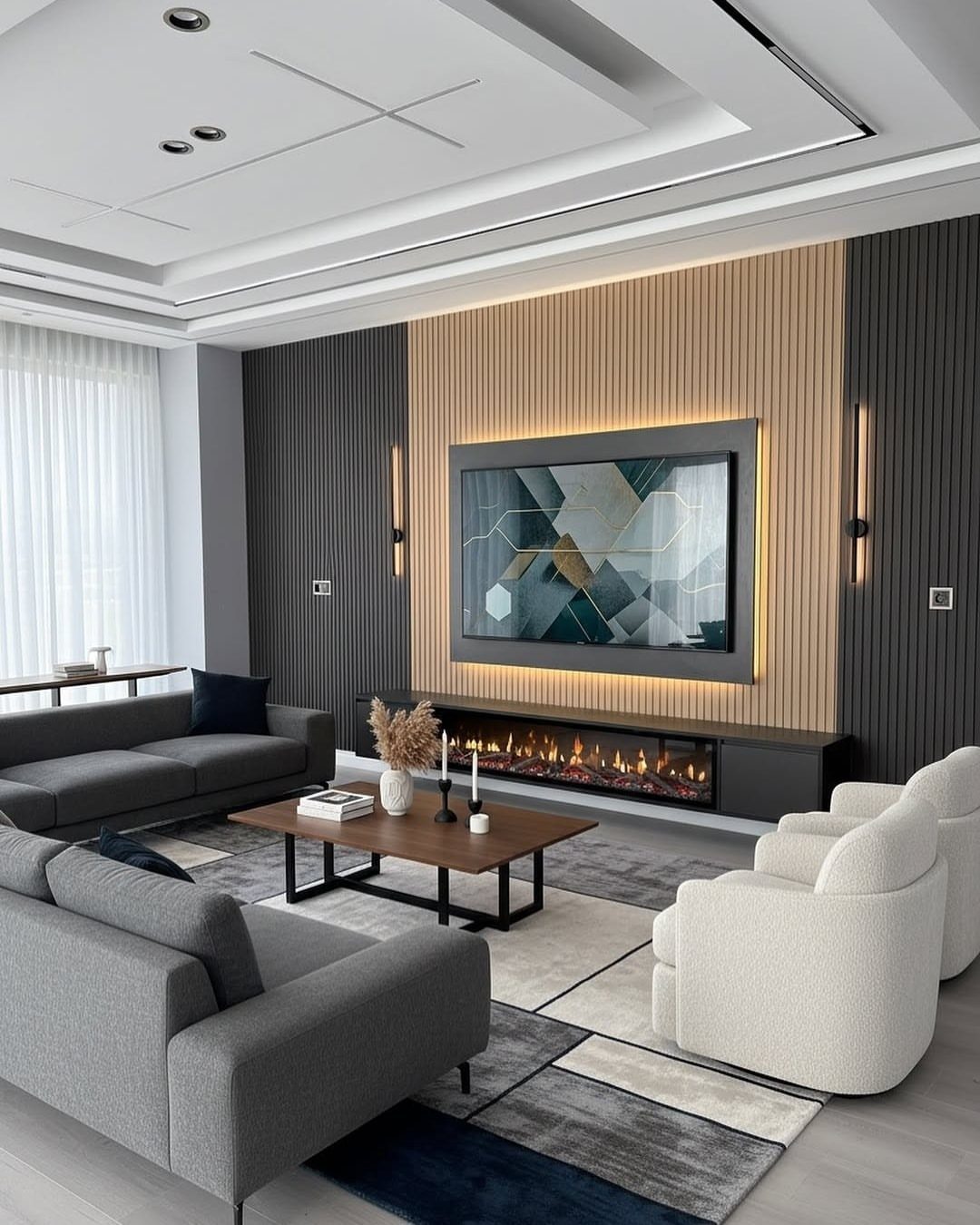
Wood brings warmth into a gray room without adding color. Light oak coffee tables and slatted wood walls soften the modern lines of gray upholstery.
Natural or light-stained wood reads casual. Walnut or espresso finishes lean formal, and the darker tone hides dings and wear marks better than pale wood.
If you are working with existing gray furniture, a wood coffee table or side table is the fastest fix. It changes the room’s tone in one piece.
6. Yellow Cushions in Gray Living Room
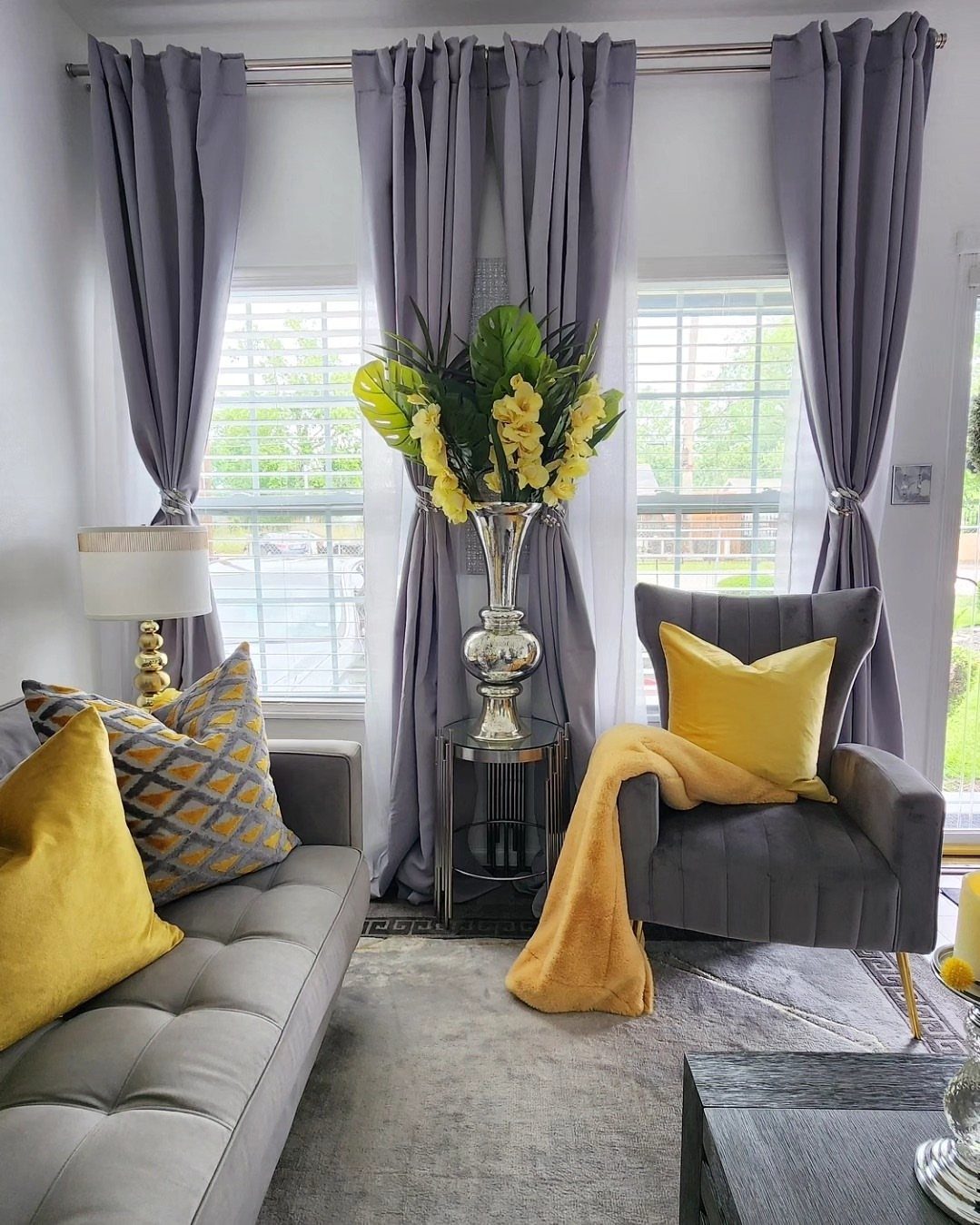
Yellow reads cheerful against gray in a way that orange or red do not. The contrast is high but not aggressive.
Bright yellow works best in small doses. Pillows, a throw, and fresh flowers give you enough pop without committing to a yellow rug or curtains that are harder to change later.
I like yellow in rooms that get limited natural light. It substitutes for the warmth that sun would bring in, and it keeps gray from feeling dim or heavy.
7. Go Minimalist
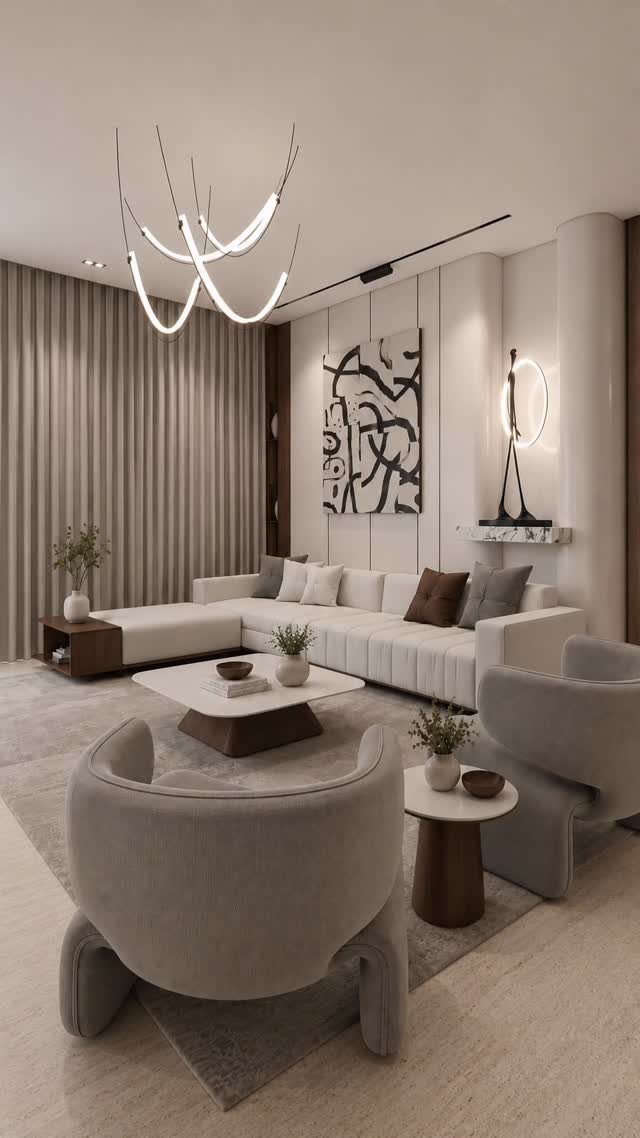
Gray and white make a room feel clean without much upkeep. The sectional and coffee table stay light, and the gray chairs and art keep it from reading sterile.
Fewer pieces mean each one has to work harder. The sofa anchors the seating, and the sculptural light fixture gives you the statement piece the room needs.
If you are starting with gray walls, white furniture opens the space back up. Reverse it with white walls and gray seating when you want the room to feel more grounded.
8. Playing with Grey
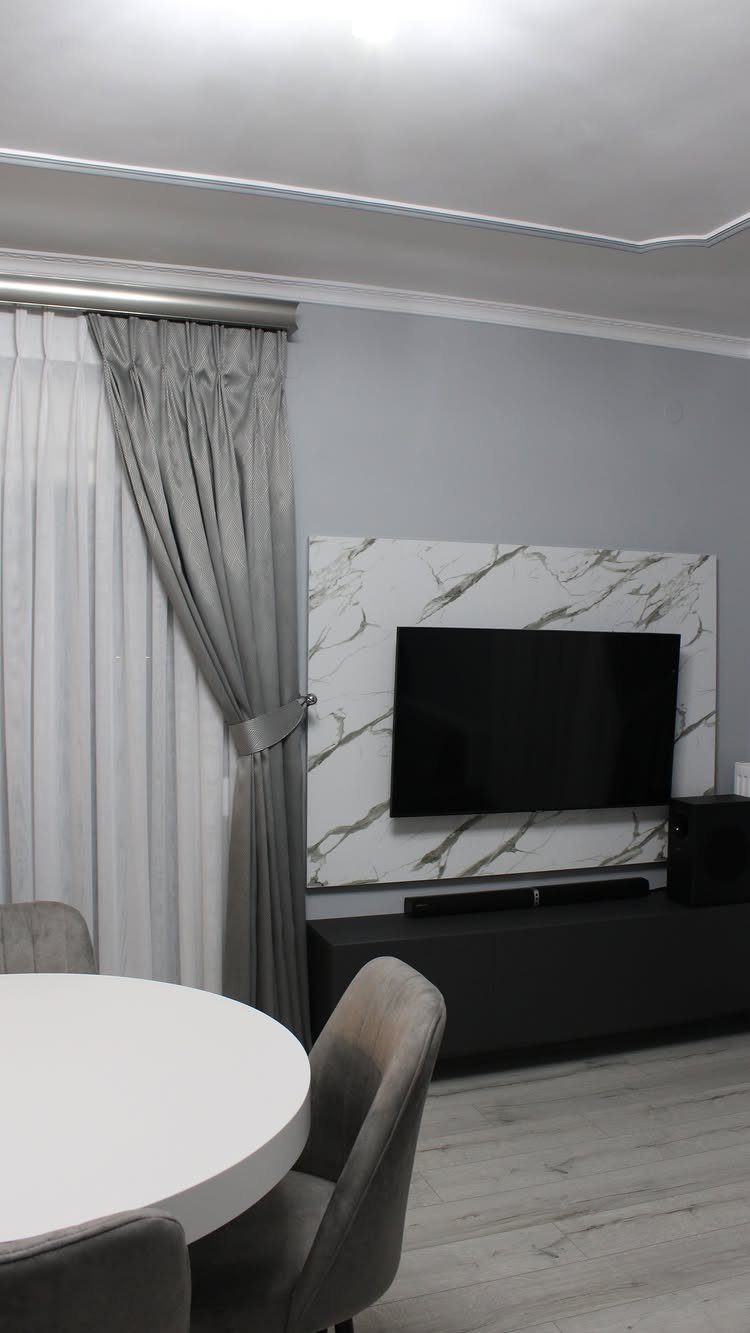
Gray walls and gray curtains let you change furniture without repainting or replacing window treatments. The marble TV wall adds pattern, and the black stand keeps the palette grounded.
This much gray works because the marble brings in veining and the white table breaks up the tone. Without those, the room would flatten out.
When you commit this much surface area to one color, texture and finish matter more than usual. Matte gray on the walls and polished marble on the accent wall keep the eye moving.
9. Natural Grey Tiled Floor
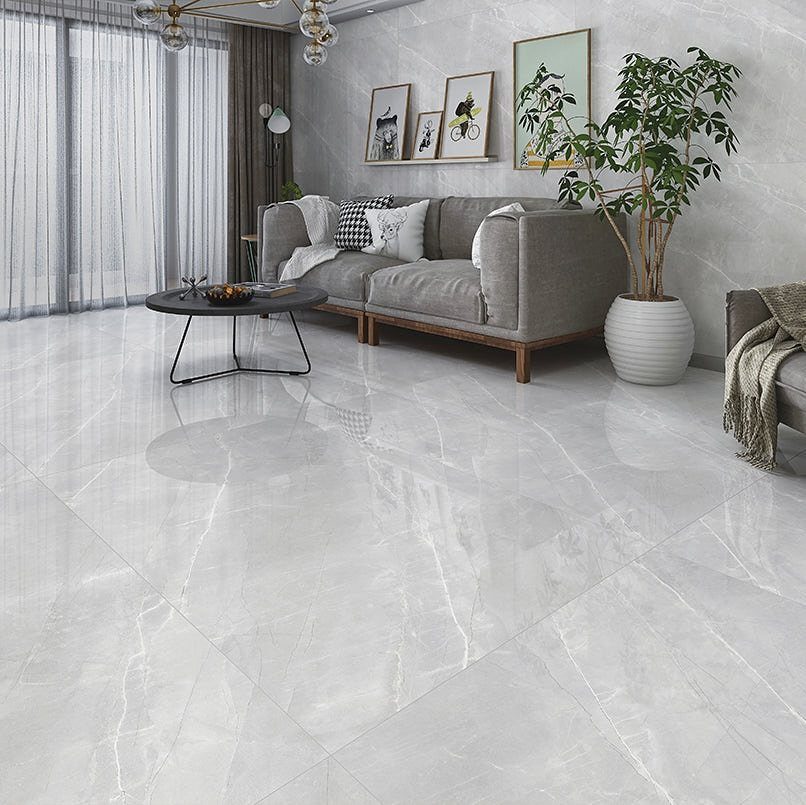
Large-format tiles in gray marble set the tone for the whole room. The veining adds movement, and polished tile reflects light better than matte.
Natural stone tile costs more than porcelain, but porcelain in a marble look holds up better in high-traffic areas and does not need sealing. Most people cannot tell the difference from across the room.
If you are replacing flooring, tile is a permanent choice. Pick a gray with warm brown veining if your furniture leans warm, and cooler gray with white veining if your palette stays neutral.
10. Refreshing Neutrals
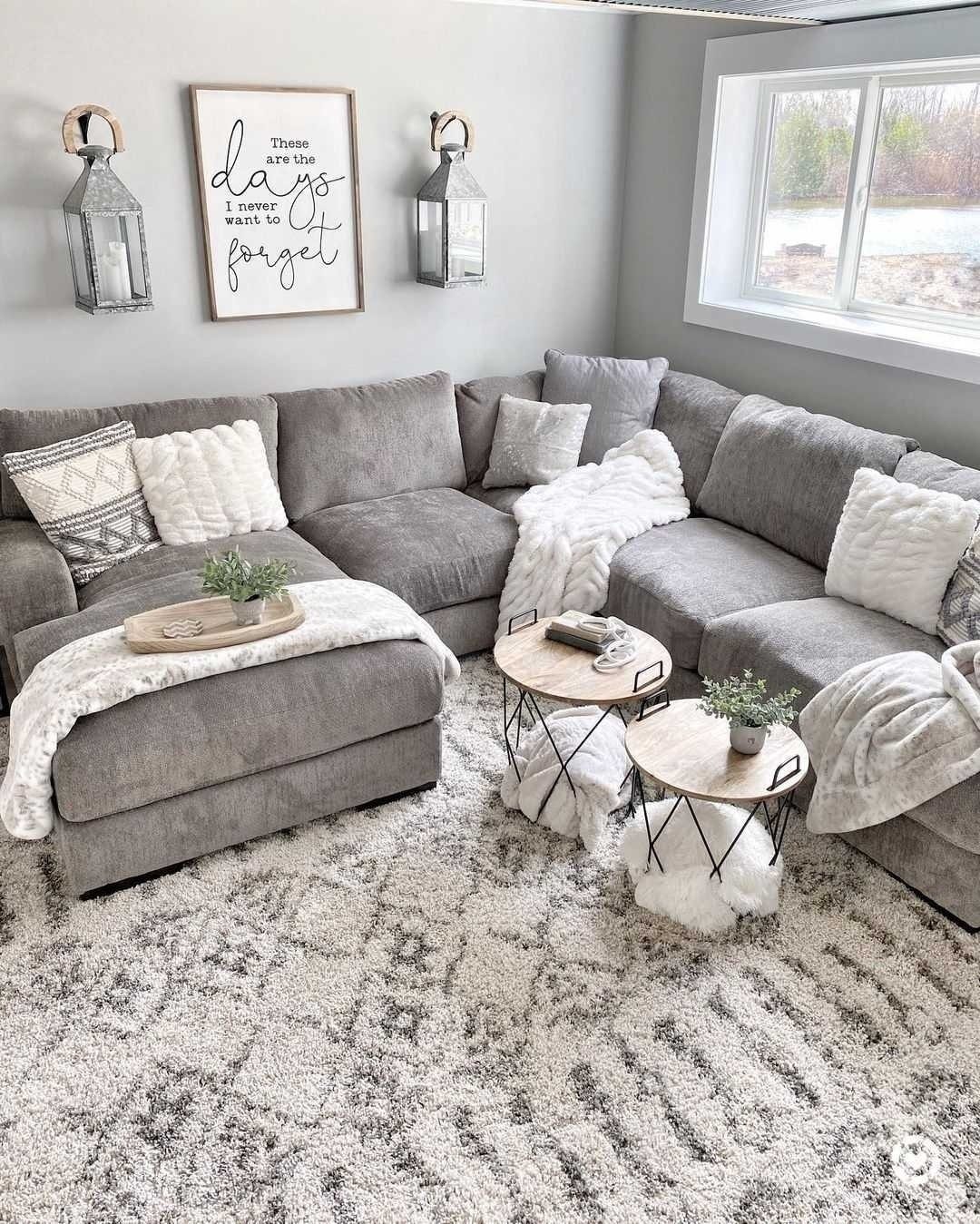
White and gray together feel calm without fading into the background. The white pillows and blankets lift the gray sectional, and the patterned rug adds just enough detail to keep the floor from disappearing.
Balance comes from repeating tones instead of introducing new ones. The white in the pillows matches the wall art frame, and the gray sofa echoes the text in the art.
Round side tables soften the square lines of the sectional. I prefer them in small living rooms because they take up less visual space than rectangular coffee tables.
11. Scandinavian Serenit
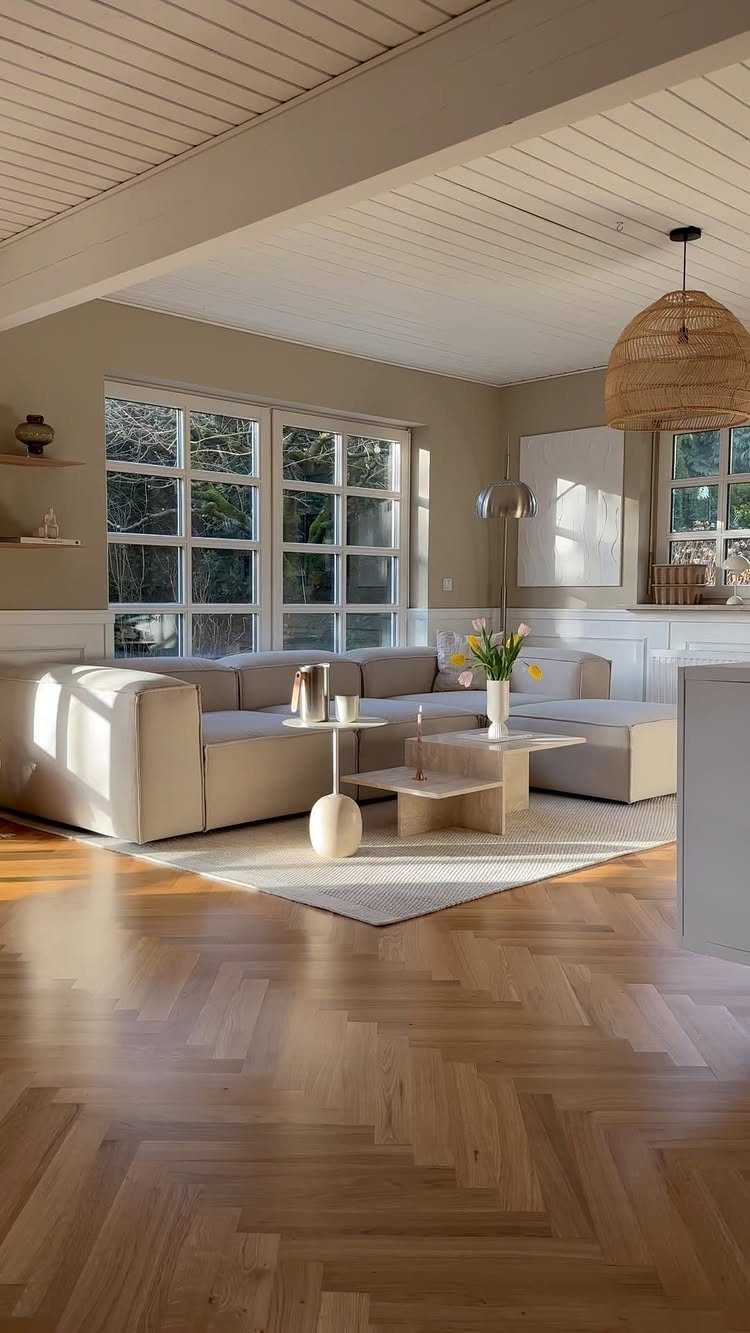
Light gray walls and a neutral sectional keep the room soft. Herringbone floors in a pale wood finish add pattern without competing with the furniture.
The woven pendant light and the natural wood floor both bring in warmth. Without them, this much gray and beige would feel too cool, especially in a room with this much natural light.
Large windows mean you can use deeper gray tones without the room feeling dark. In a space with limited daylight, stick to the lighter grays visible here or the walls will close in.
12. Shag Rugs in Gray Living Room
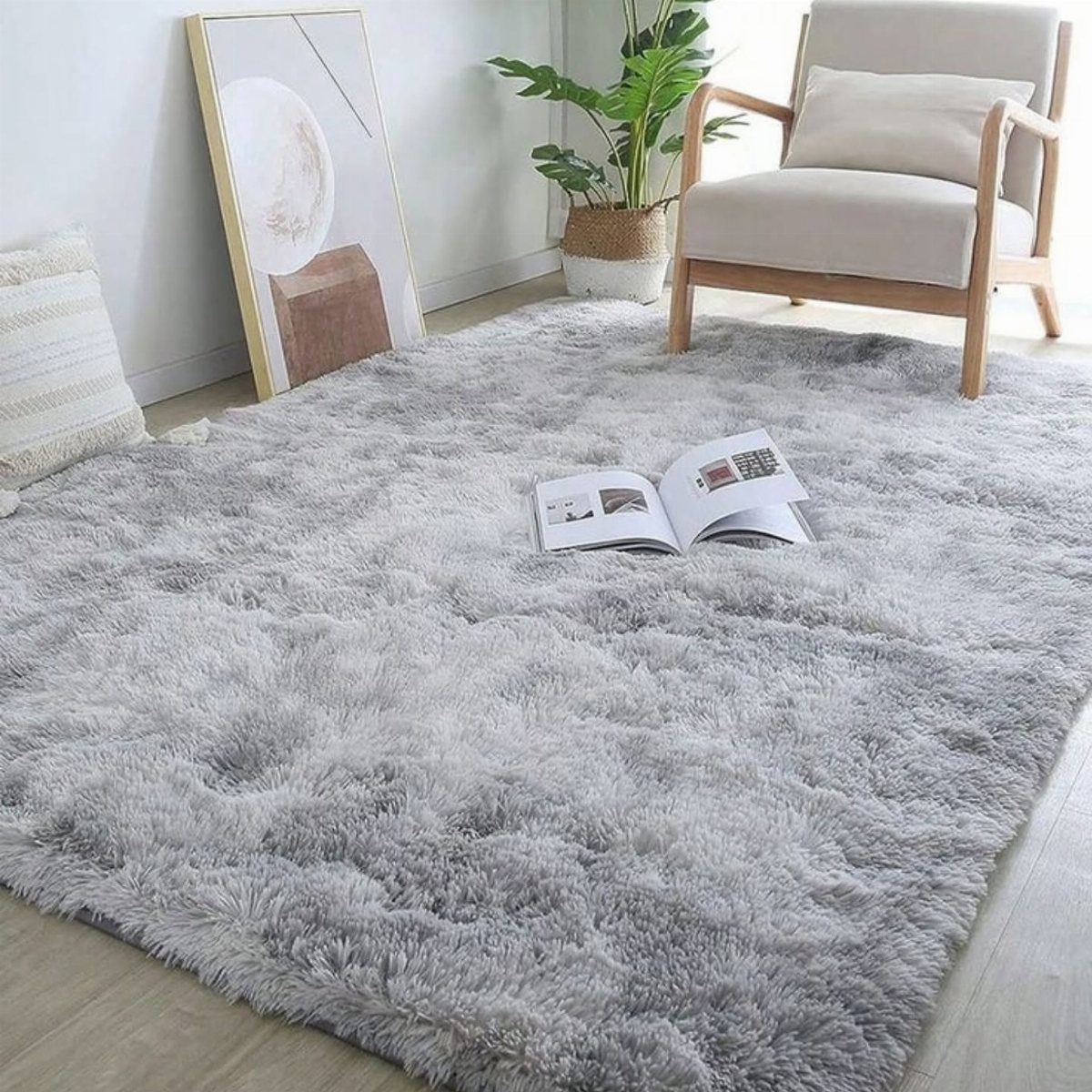
Shag rugs add softness underfoot and visual weight to anchor seating areas. Gray keeps the texture from overwhelming a neutral room.
High-pile rugs collect dust and need regular vacuuming. They work best in low-traffic areas or bedrooms, not directly in front of entryways where dirt tracks in.
Place the rug fully under the front legs of your seating so it holds the furniture group together. A rug sitting in the middle of the floor with no furniture touching it looks like an afterthought.
13. Gallery Wall in Gray Living Room
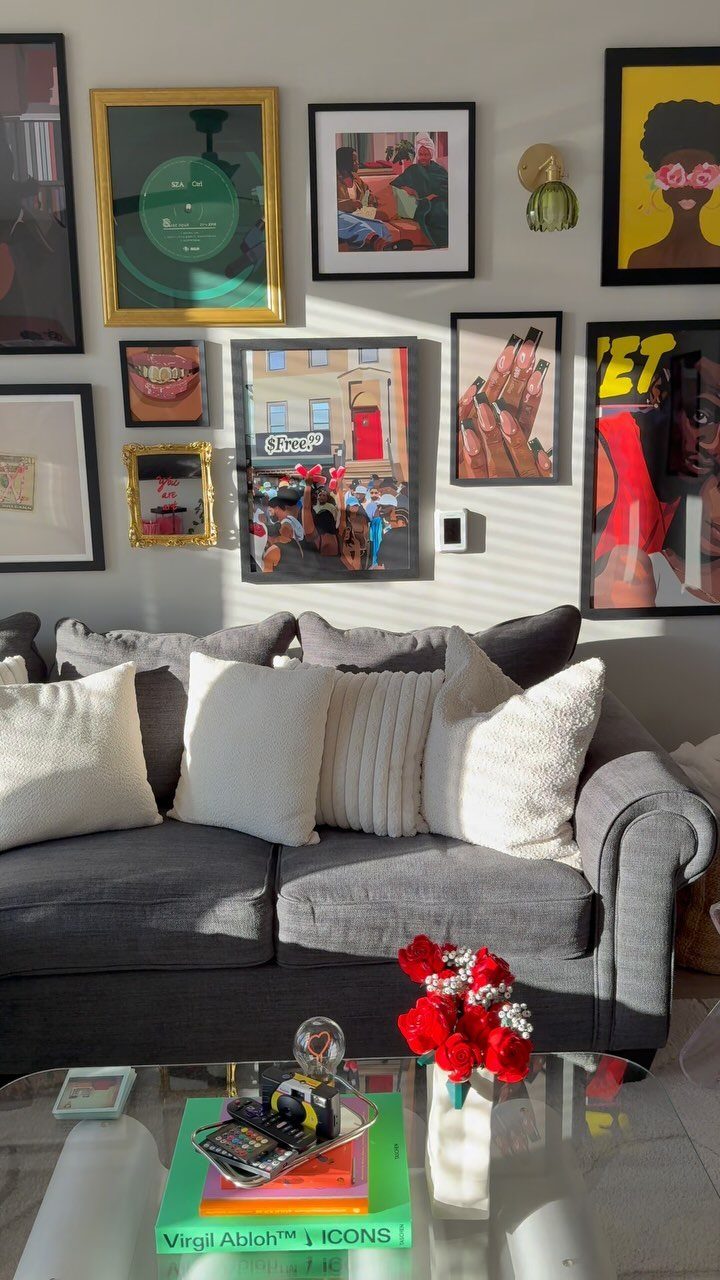
A gallery wall fills vertical space and lets you build the room’s focal point over time instead of all at once. Mixing frame sizes and orientations keeps it from reading too formal.
Start with the largest frame at eye level, then work outward. I space frames 2–3 inches apart so each piece stays distinct but the group holds together.
Black frames unify different art styles. White frames lighten the wall but show dust faster, and mixing both reads messy unless you commit to at least 3 of each finish.
14. Gray Walls with White Wainscoting
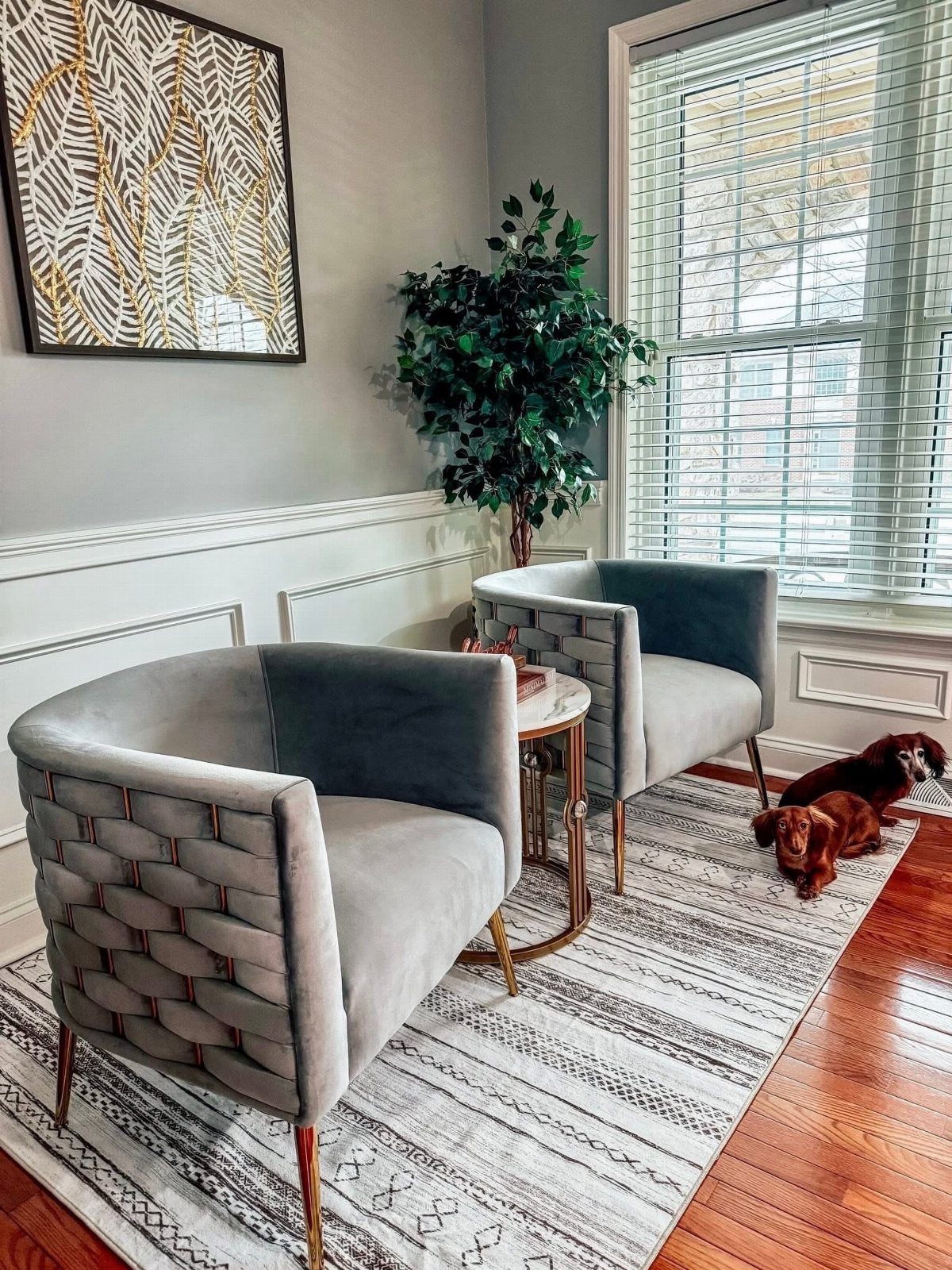
Wainscoting divides the wall and keeps gray from feeling too heavy. The white trim reflects light back into the room, and it protects the lower third of the wall where scuffs show most.
Standard wainscoting height lands just below chair rail height. Paint the upper wall gray after the trim is installed so you get a clean line.
Velvet upholstery adds softness that painted surfaces cannot. The gold legs tie to the side table and keep the furniture from blending into the gray walls.
15. Gray Sectional with Textured Art
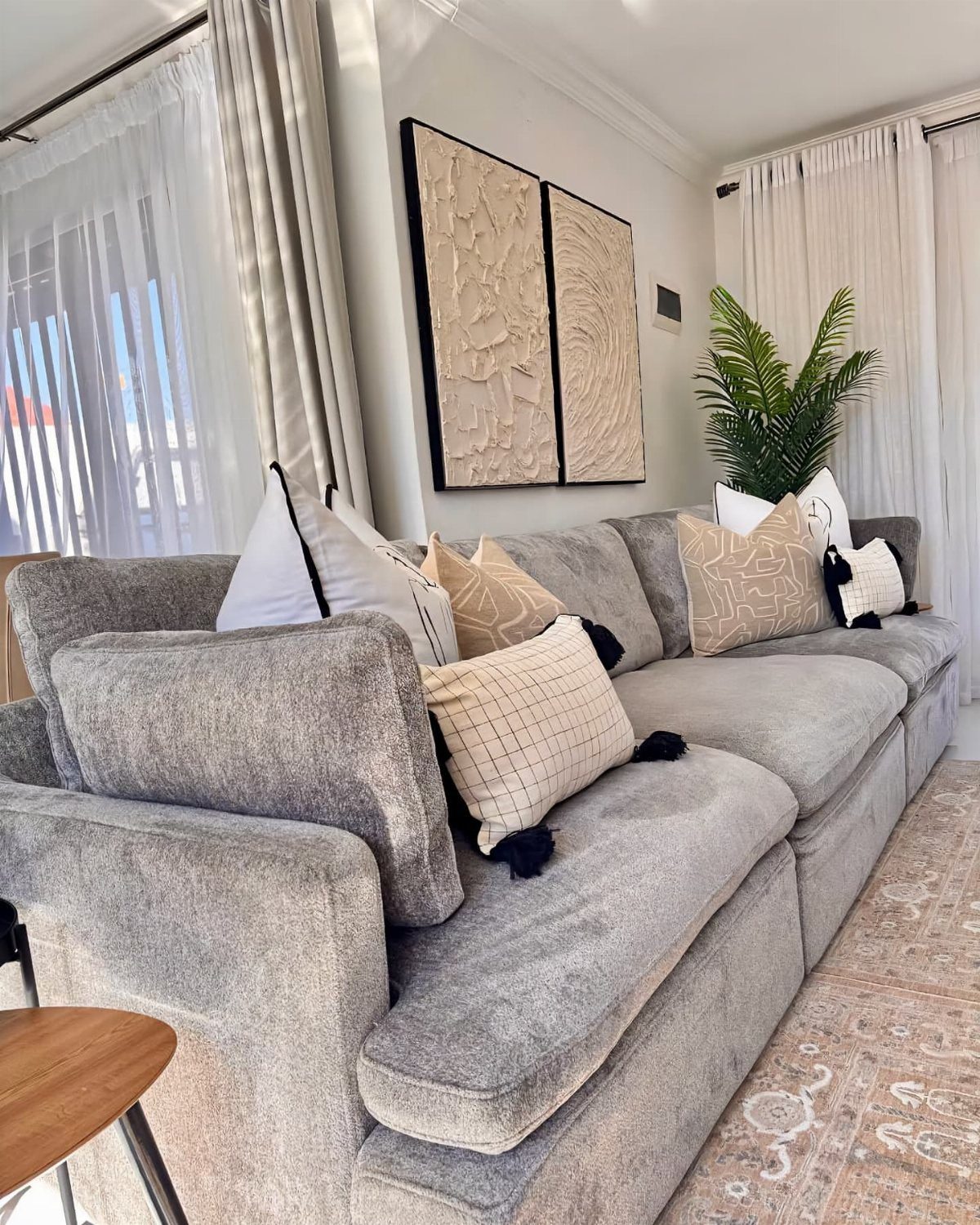
Textured art adds dimension gray paint alone cannot give. The cream tones warm the space without introducing color that competes with the sectional.
Large pieces work better than a gallery wall when the sofa already has multiple pillow patterns. 2 matching panels balance the long sectional without crowding the wall.
Fabric or plaster art collects dust in the crevices. Wipe it with a dry microfiber cloth every few weeks, and skip anything that needs water or cleaner unless the piece is sealed.
16. Light Gray Walls with Off-White Sofa
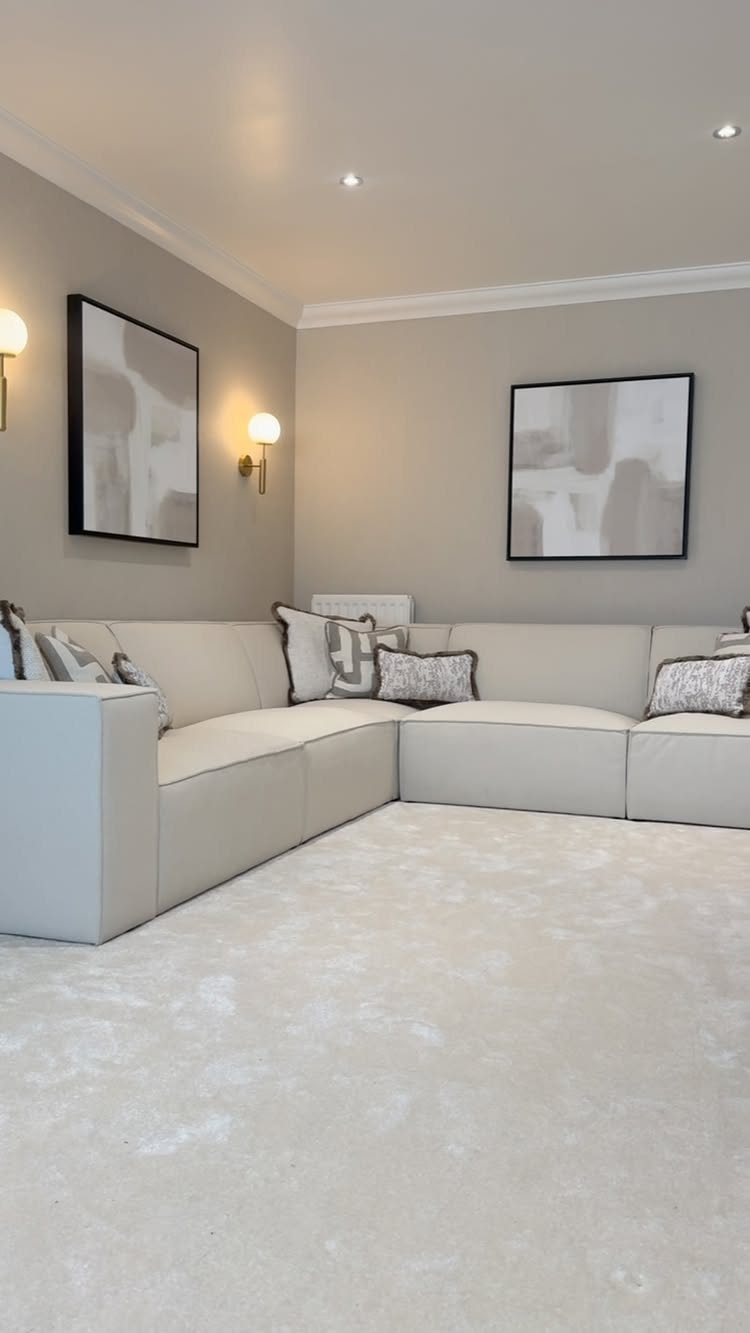
Light gray walls stay neutral enough to work with warm or cool furniture. The off-white sectional keeps the room bright, and the sconces add task lighting without taking up floor space.
Abstract art in muted tones extends the palette without breaking it. I prefer two medium pieces over one large one when the sofa already commands most of the wall.
Wall-mounted lighting frees up side tables and keeps cords out of sight. Install sconces at reading height when you are seated.
Colors That Go with Gray
Purple and gold work together because they sit opposite on the color wheel, and gray gives them room to stand out without competing.
The same principle applies to blue and orange or red and green, but purple and gold read more formal than the other pairs.
Warm neutrals like beige, cream, and soft taupe work when you want the room to feel softer but still neutral, and they let you add pattern through rugs or pillows without the pattern dominating the space.
Navy against light gray gives you contrast that feels deliberate but not loud. Emerald and blush both bring in color that registers across the room but stays easy to live with long-term.
Yellow pops harder than most accent colors, so it works best in small doses unless you want it to become the room’s main feature.
Creating Depth in Gray Rooms
Pick shades at least 2 steps apart on a paint strip so the contrast registers, but keep them in the same family so the shift feels intentional instead of patched together.
Wallpaper brings in pattern and texture that flat paint leaves out. Waves, stripes, or geometric prints give the wall texture without pulling in new colors that complicate your palette.
If you are not ready to commit to wallpaper, hang artwork that uses multiple shades of gray. The tonal range keeps the wall interesting, and you can rearrange or replace pieces without repainting.
Gray flooring grounds the room when walls stay light, and light gray walls lift the space when flooring runs dark.
Hiring Design Professionals
Interior decorators help when you know the room needs gray but cannot settle on which shade or how much of it to use.
They bring paint decks, fabric samples, and floor plans, and most offer an hourly consultation if you are not hiring them to manage the whole project.
Furniture placement matters more in gray rooms because the color does not distract from layout mistakes.
A decorator will tell you where the sofa should float and how far the rug needs to extend under each piece so the room feels balanced instead of arbitrary.
Expect to pay for at least 2 hours if you are hiring locally. Some decorators charge a flat fee for a single-room plan, and others work on commission if you are buying new furniture through them.
Frequently Asked Questions
What color goes with a grey living room?
Purple, mustard, navy, emerald, and blush all work well as accent colors in a gray living room.
Orange and rust wake up a gray room fast, and beige brings warmth back in without leaving the neutral range. Yellow brings warmth into rooms with limited natural light, and black and white patterns anchor bolder accent colors.
How to dress a light grey sofa?
Add pillows and throws in accent colors like mustard, yellow, or bold patterns to keep the sofa from disappearing into neutral walls.
Pack in enough pillows that the color shows up from the doorway, and pair flat linen with texture like bouclé or cable knit.
When the sofa reads dark, pull out a gray pillow or two and drop in something pale like oat or bone.
How to brighten up a gray room?
Use white or off-white furniture to reflect light back into the room, and add metallic finishes like brass or silver lamp bases to catch light.
Yellow accents substitute for warmth that sun would bring into spaces with limited natural light. Sconces clear the side tables and put light right where you sit or read.






