
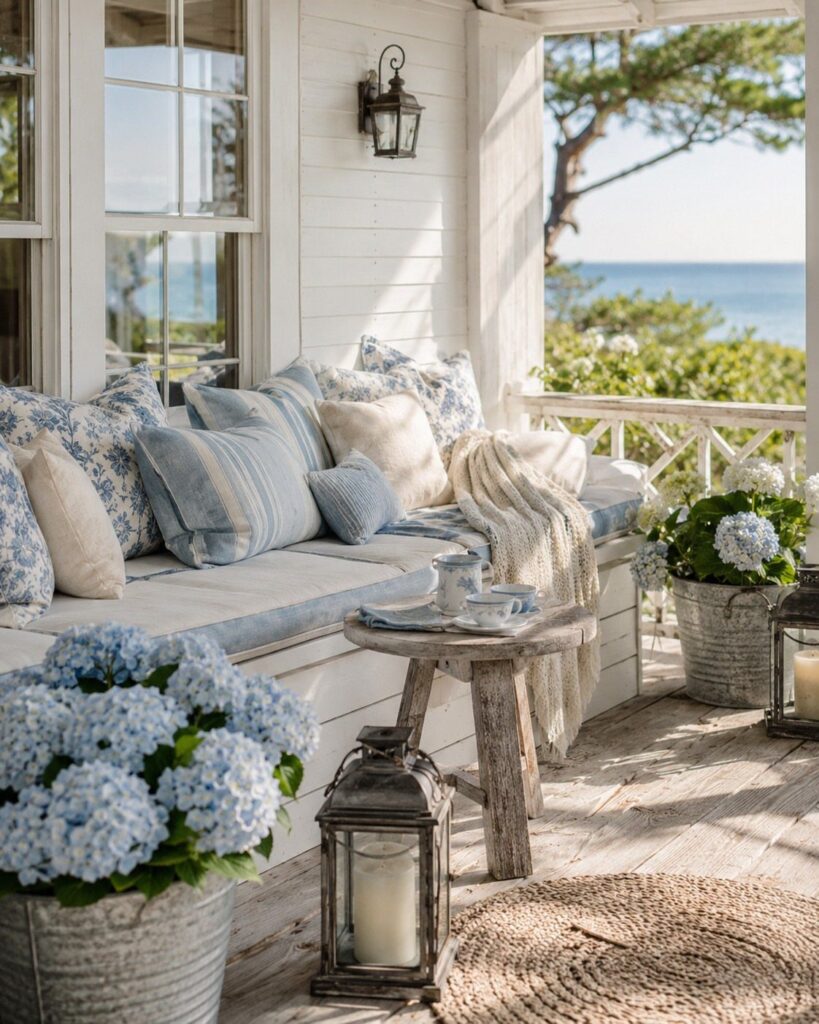
Coastal decor pulls from weathered wood, jute and linen rather than nautical stripes, which makes it easier to adapt to homes that are nowhere near the water.
If your room gets strong direct light, lean on white upholstery and pale walls that reflect rather than absorb it.
1. Weathered Wood Furniture
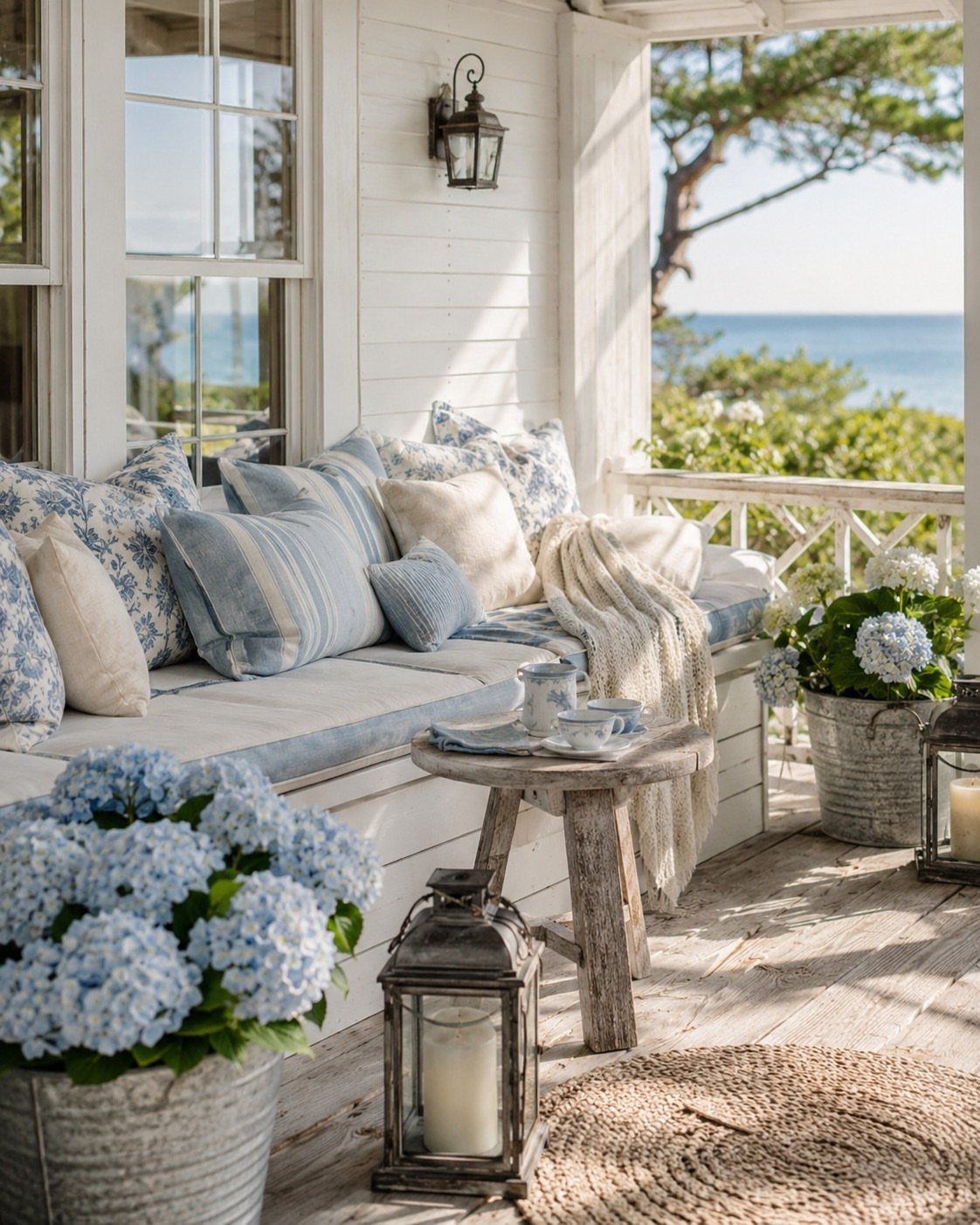
Weathered wood picks up the salt and sun exposure that comes with coastal living, and furniture made from it reads instantly as beach house material. Light wood pairs well with white paint and blue accents without competing for attention.
If you’re buying new, look for pieces finished in driftwood gray or whitewash rather than honey oak.
You can also weather new wood yourself with a vinegar and steel wool solution, though it takes a few days for the color to develop fully.
2. Natural Materials
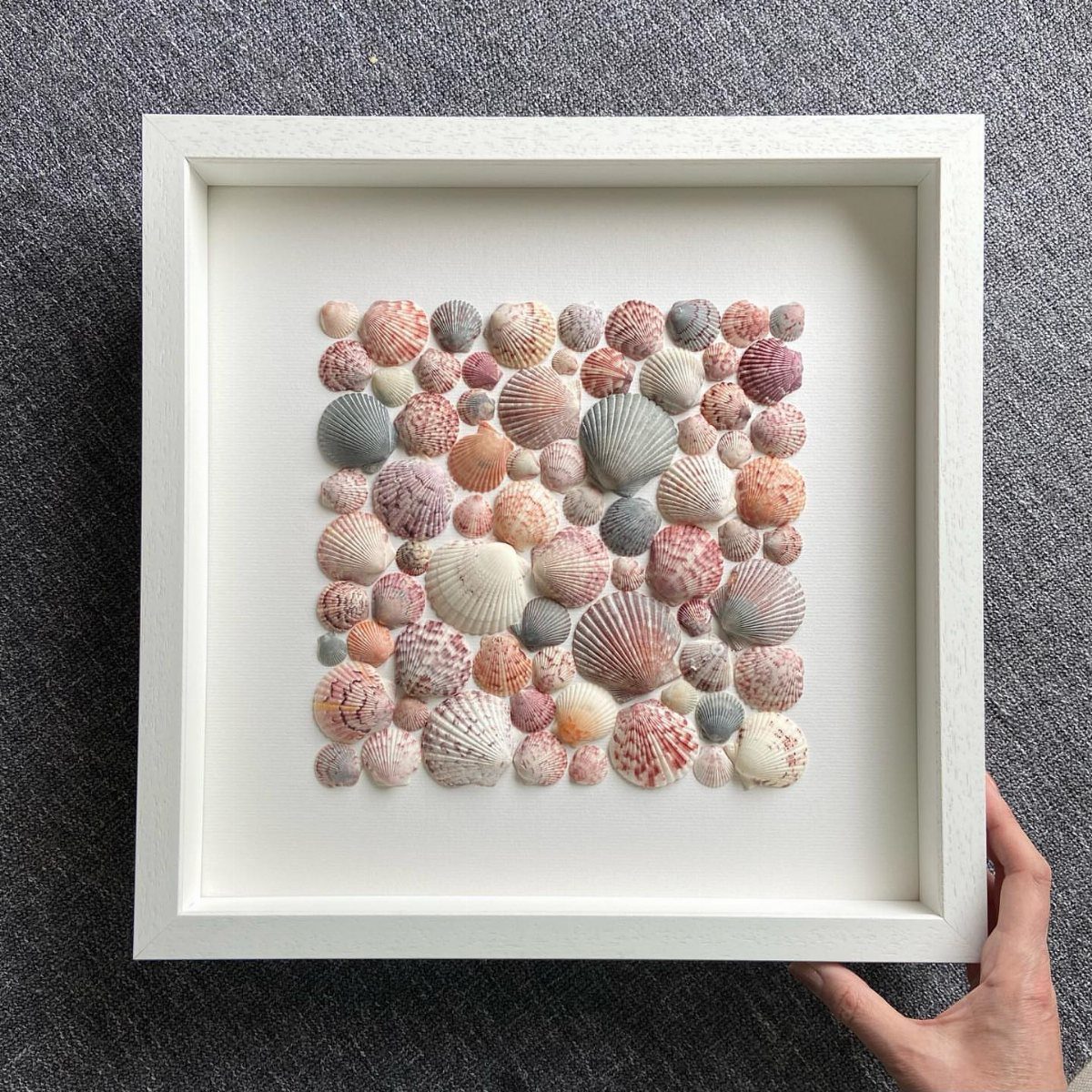
Shells, rope, jute and linen all bring texture without color, which keeps a coastal room from tipping into theme park territory. Framing a collection of shells the way this one is mounted turns beachcombing finds into something you can hang.
I’d stick with one frame rather than scattering small shells across multiple surfaces, where they start to look like clutter. A shadow box works if the shells have dimension; flat ones sit fine under regular glass.
3. Layered Rugs
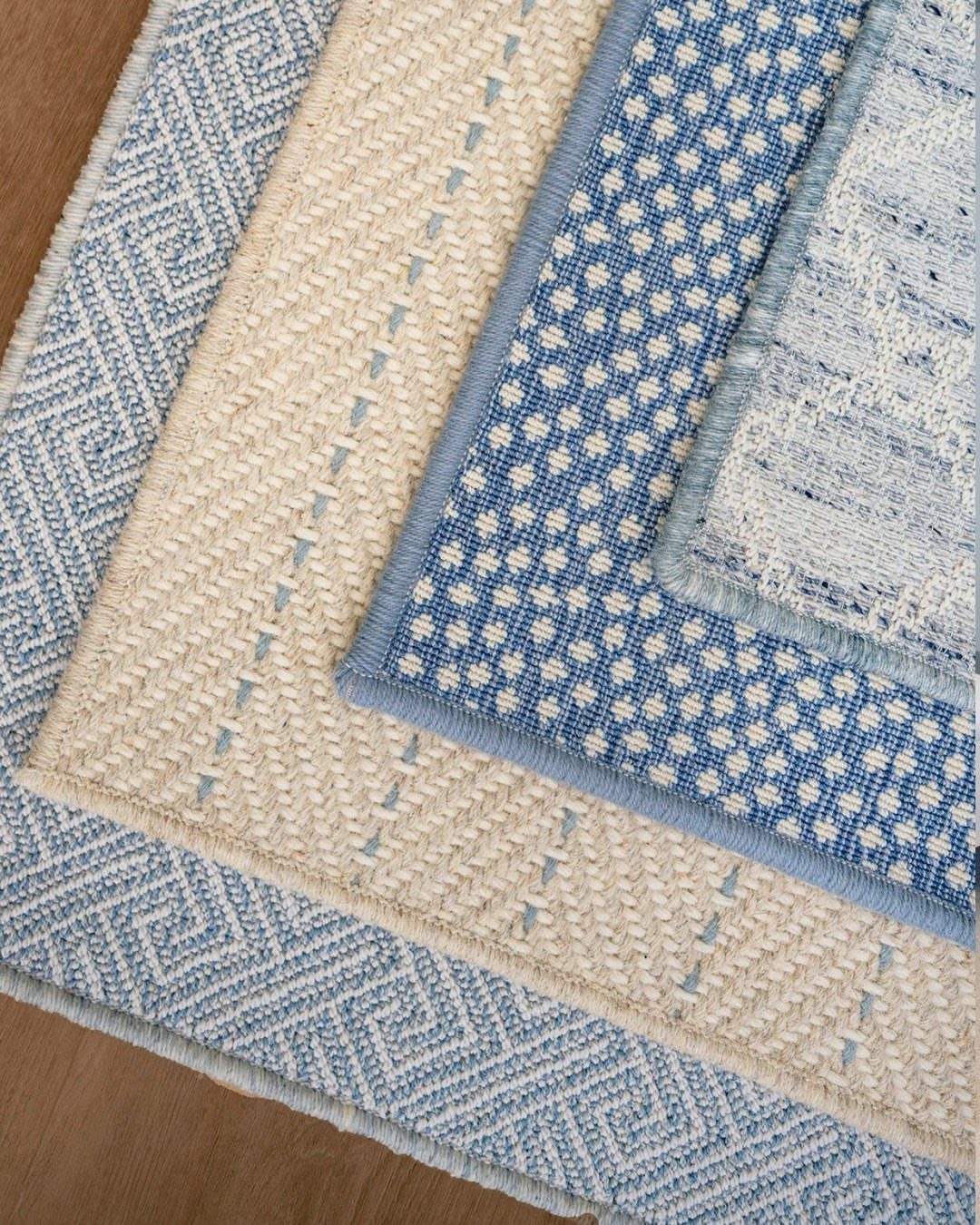
Layering a jute rug under a smaller patterned one gives you the texture of natural fiber where it matters and a softer surface underfoot where you actually walk.
Layering rugs in different weaves adds texture even when the colors stay simple.
Start with the largest rug in jute or sisal, then layer a flatweave or low-pile rug on top.
The top layer can bring in your blue or stripe without committing the whole floor to it. This approach also lets you change out the smaller rug seasonally without replacing the large neutral base.
4. Coastal Living Rooms
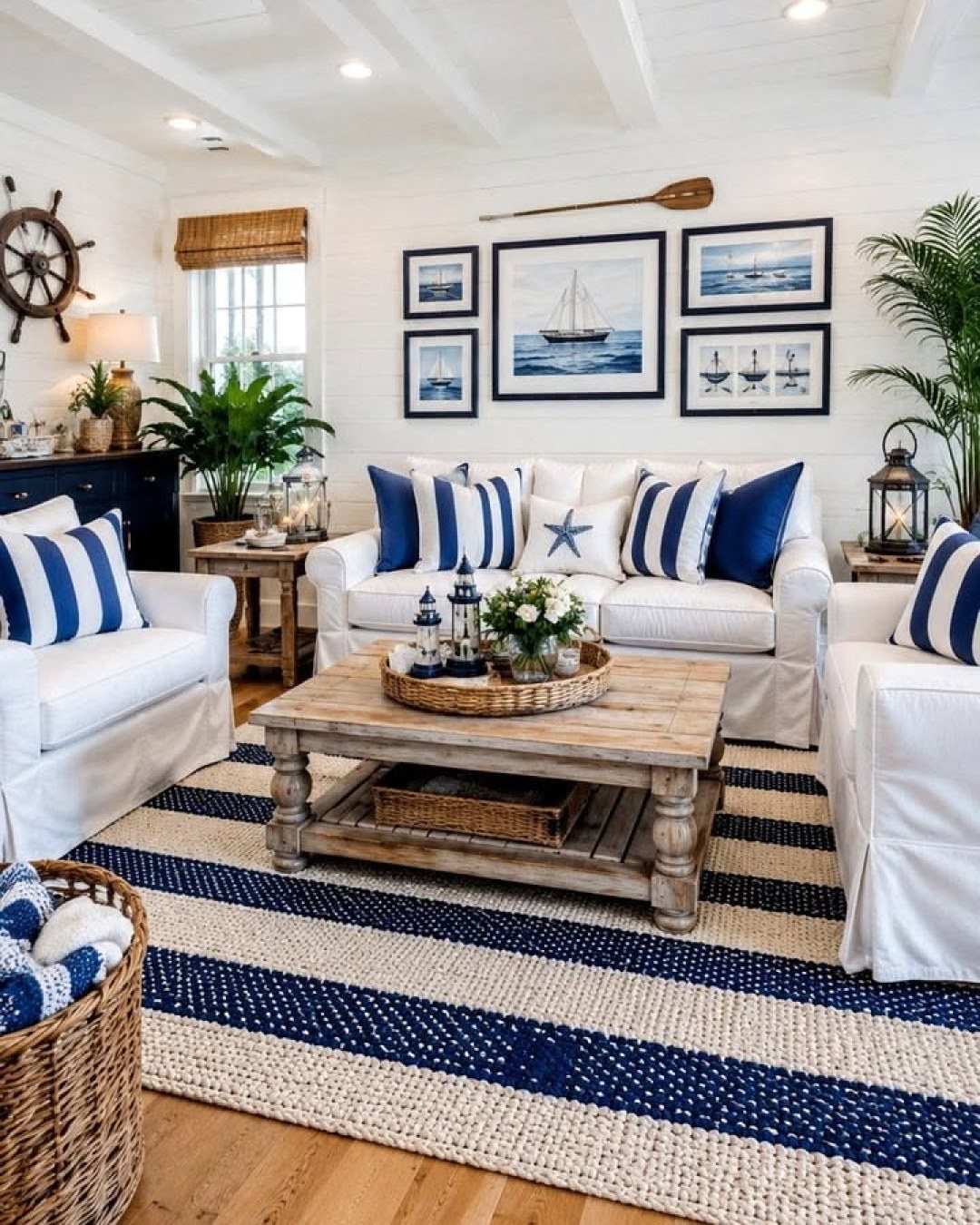
A coastal living room leans on white upholstery, weathered wood and blue striped fabric to feel pulled together without looking decorated. The coffee table here anchors the seating area and keeps the room from floating.
Use navy or denim blue in pillows and throws rather than pale aqua, which fades into the white.
Nautical art and a ship’s wheel work if the rest of the room stays simple; too many rope-and-anchor motifs and it stops reading as a home.
5. Use Decorative Accents
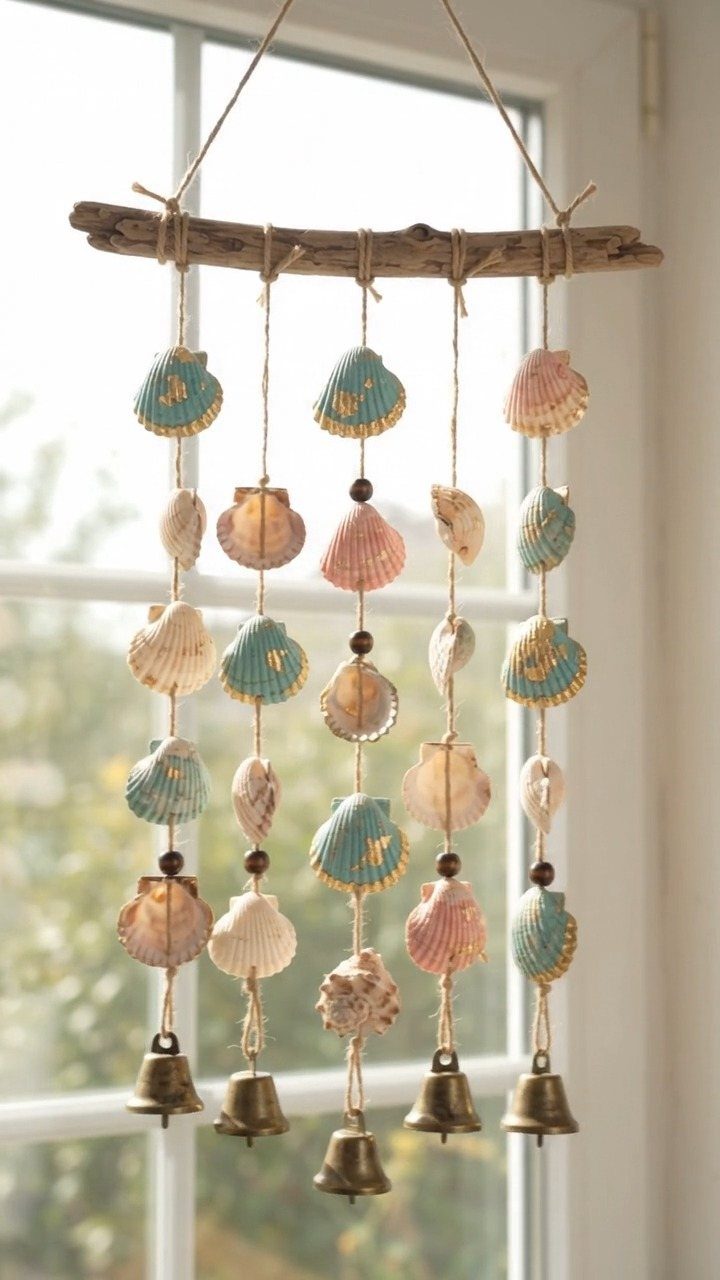
Small handmade pieces like this shell mobile add personality in a way that mass-produced coastal decor does not. The bells give it sound, which matters near a window or door where air moves through.
Driftwood, shells and twine are all materials you can gather yourself if you’re near the coast.
Drill small holes in the shells, string them on fishing line and tie everything to a branch. It takes an afternoon and costs almost nothing if you already have the drill bit.
6. Ceiling Fans
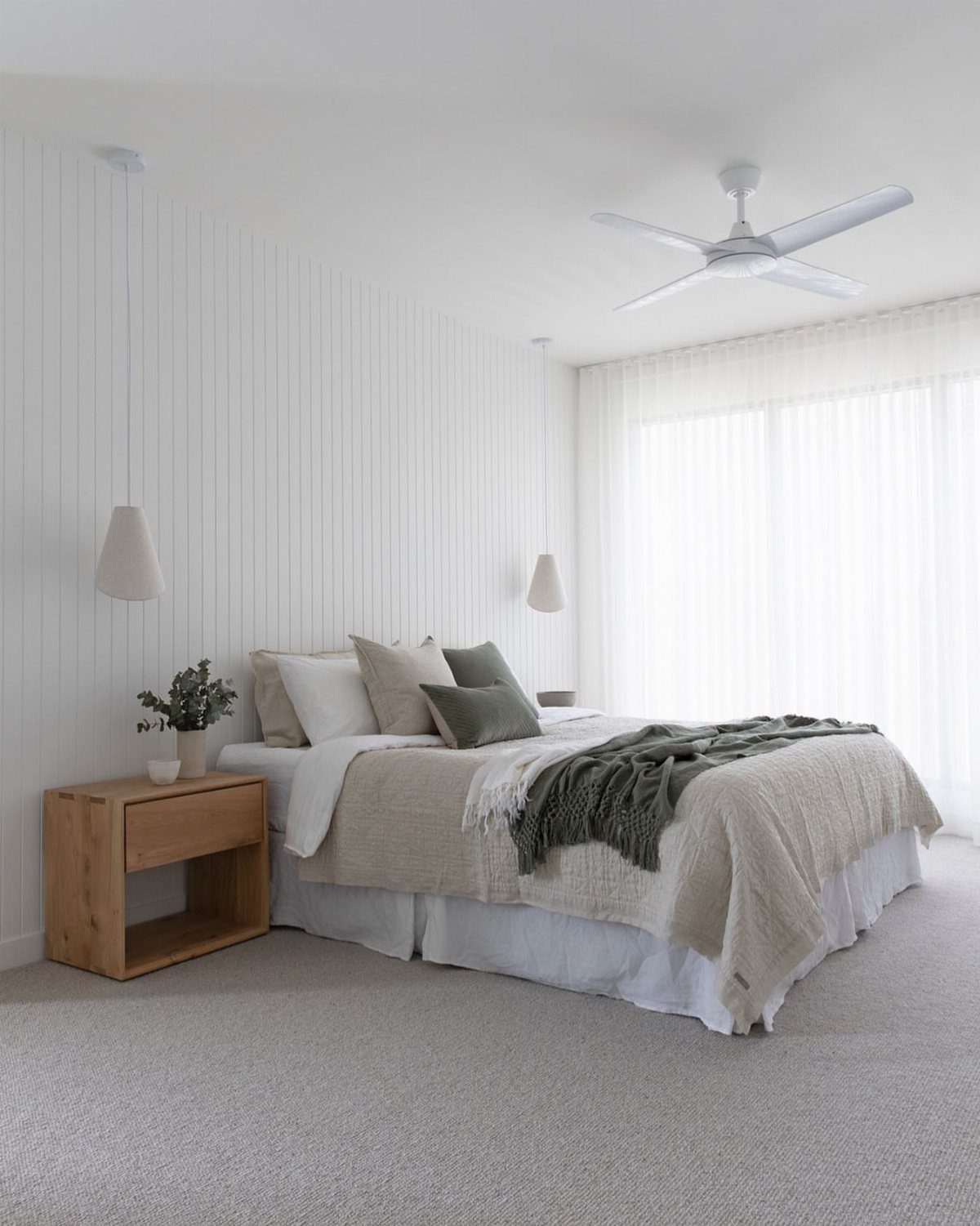
A white ceiling fan keeps air moving without adding visual weight to a room that already has white walls and neutral bedding. Coastal homes often run warm, and a fan means you can skip air conditioning on milder days.
Choose a fan with fewer blades for a cleaner look in a simple room. White or weathered wood finishes work better here than brushed nickel, which reads more contemporary than coastal.
7. Sea Glass
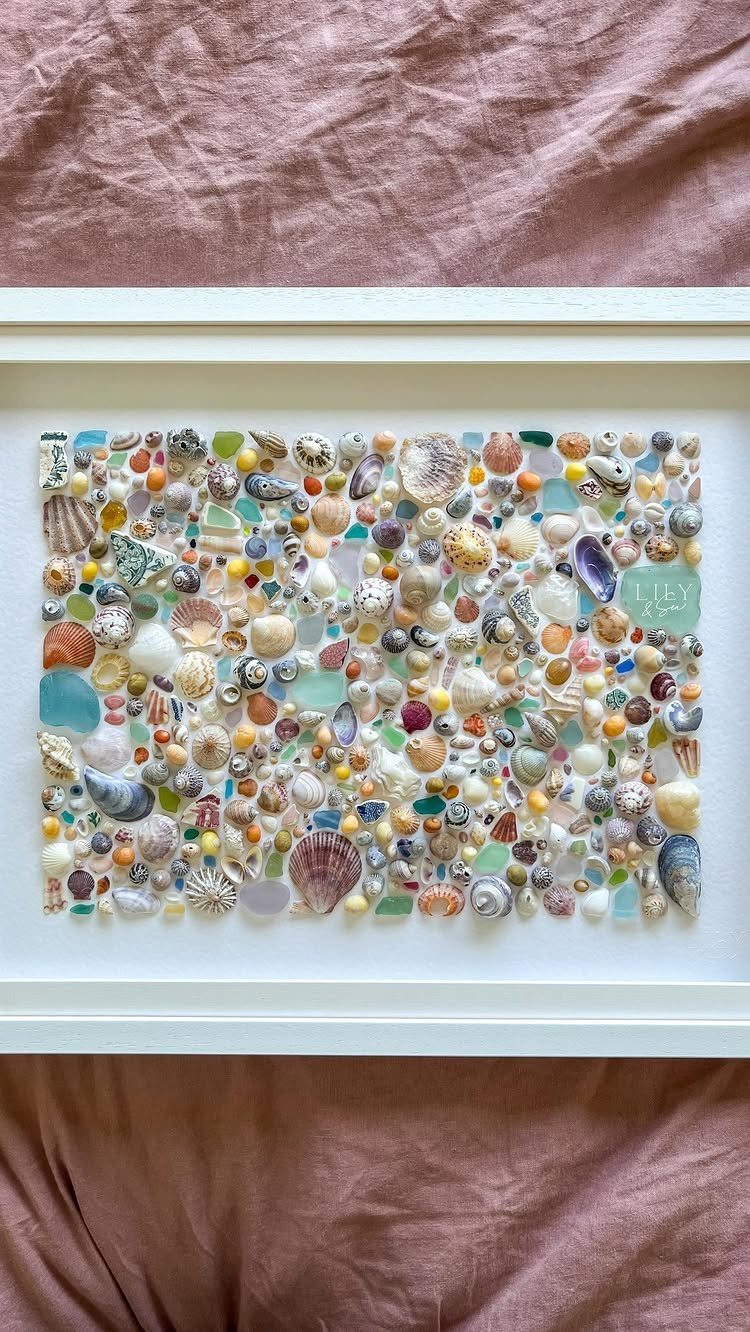
Sea glass framed as art catches light the way a painting on the wall does not.
Tumbled glass in green, blue and amber creates color variation without needing paint, and mounting it with shells adds texture to what would otherwise read flat.
Collecting enough glass to fill a frame takes months of beachcombing unless you buy it.
If you’re gathering your own, look after storms when rough water churns up older glass. Frosted pieces work better than shiny new glass, which looks more like broken bottles than something the ocean shaped.
8. Outdoor Living Spaces with Pergolas
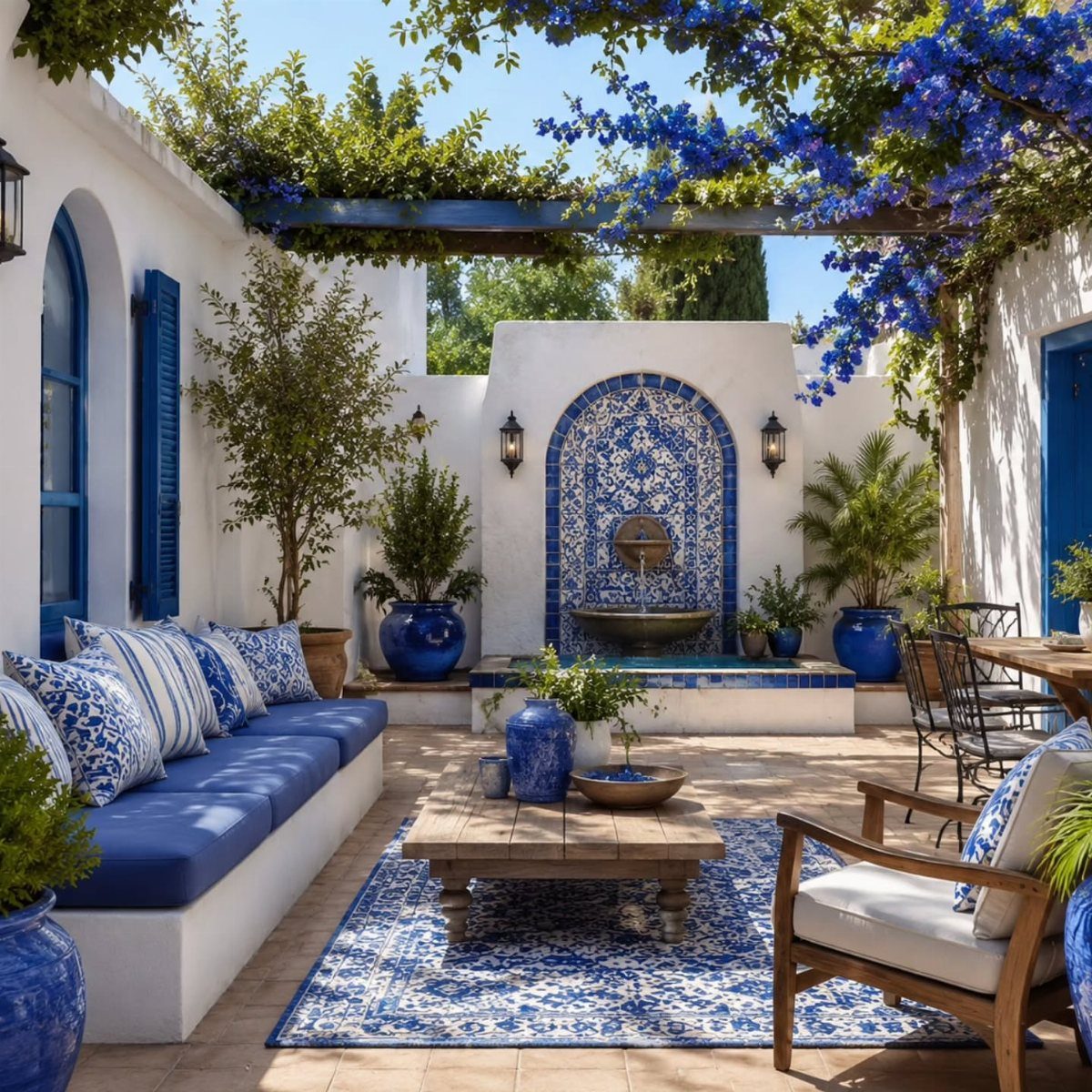
A pergola turns a patio into a room by defining the ceiling plane, and it supports climbing plants that add shade without blocking airflow. Built-in seating saves floor space and creates more surface area for cushions than individual chairs would.
Blue and white tile on a wall fountain brings water sound and movement to a space that otherwise stays still.
The fountain here is plumbed in rather than self-contained, which means it needs a water line but avoids the refilling that plug-in versions require.
9. Coastal Bedrooms
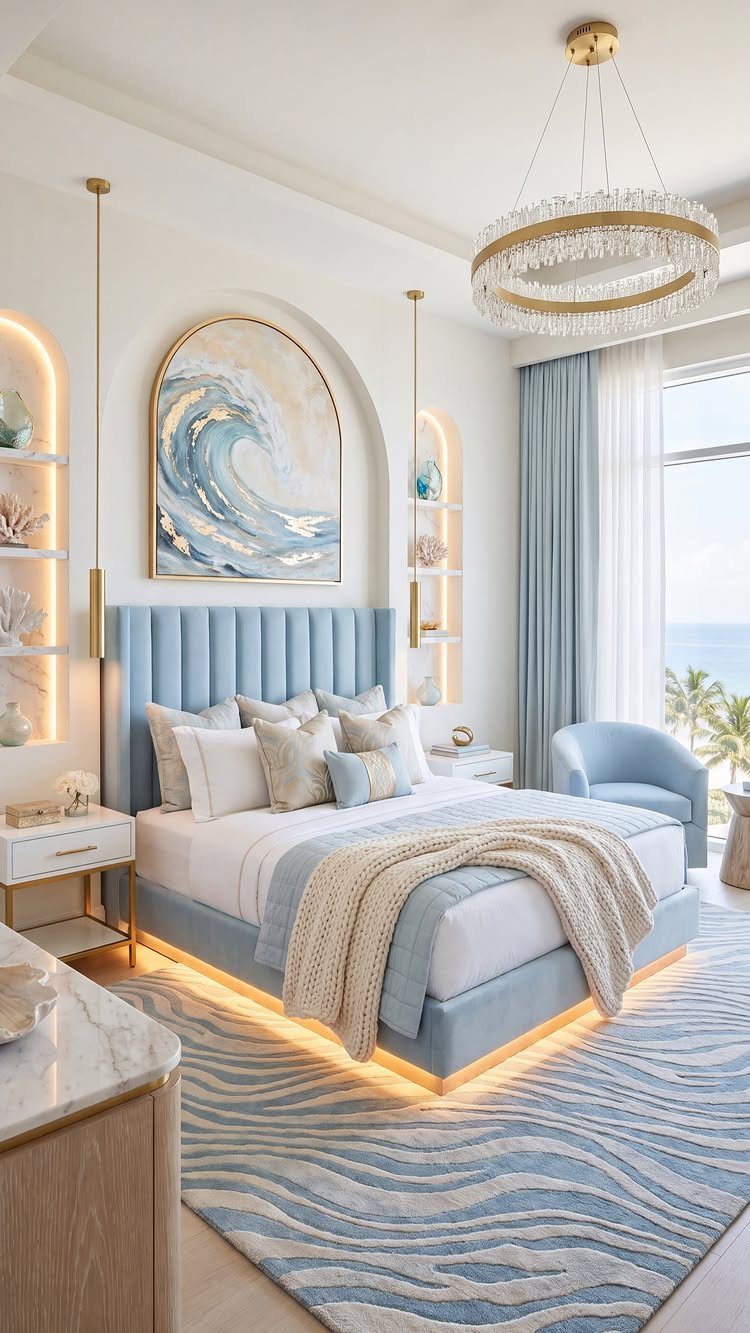
Soft blue on the bed frame and bench keeps the room feeling calm without washing out against white walls. The wave painting brings in more color at eye level, where art has more impact than it would over the headboard.
A crystal chandelier works in a coastal bedroom if the rest of the finishes stay simple.
Paired with too much distressed wood or rope detail it would look confused, but here it reads as the one formal piece in an otherwise relaxed room.
10. Coastal Bathrooms
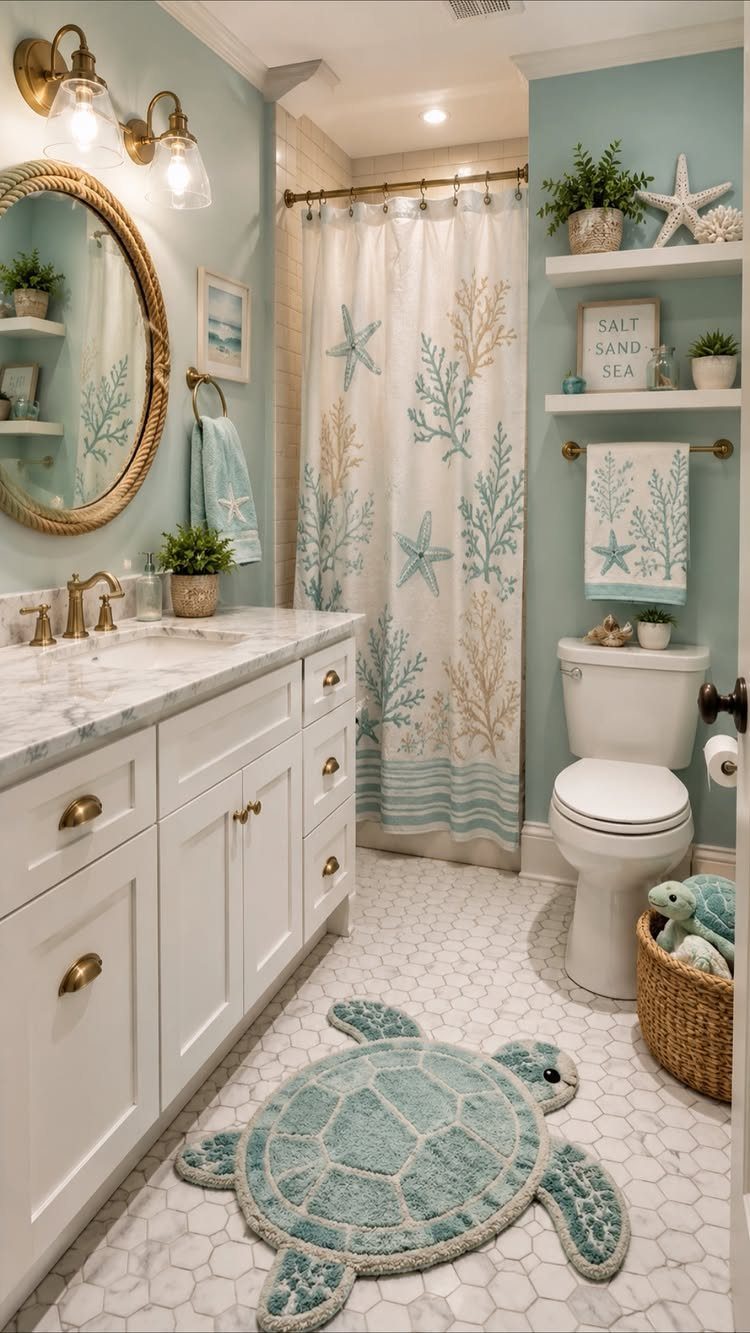
Light blue walls warm up a bathroom that gets a lot of white tile and fixtures.
The turtle rug and shell-printed shower curtain bring in coastal motifs without permanent installation, which matters in a rental or a space you might want to change later.
A wood-framed mirror and open shelving for towels keep the look from feeling too polished. Stacking folded towels where they show means they need to stay tidy, but it also means you can reach them without opening a cabinet.
11. Balanced Coastal Look
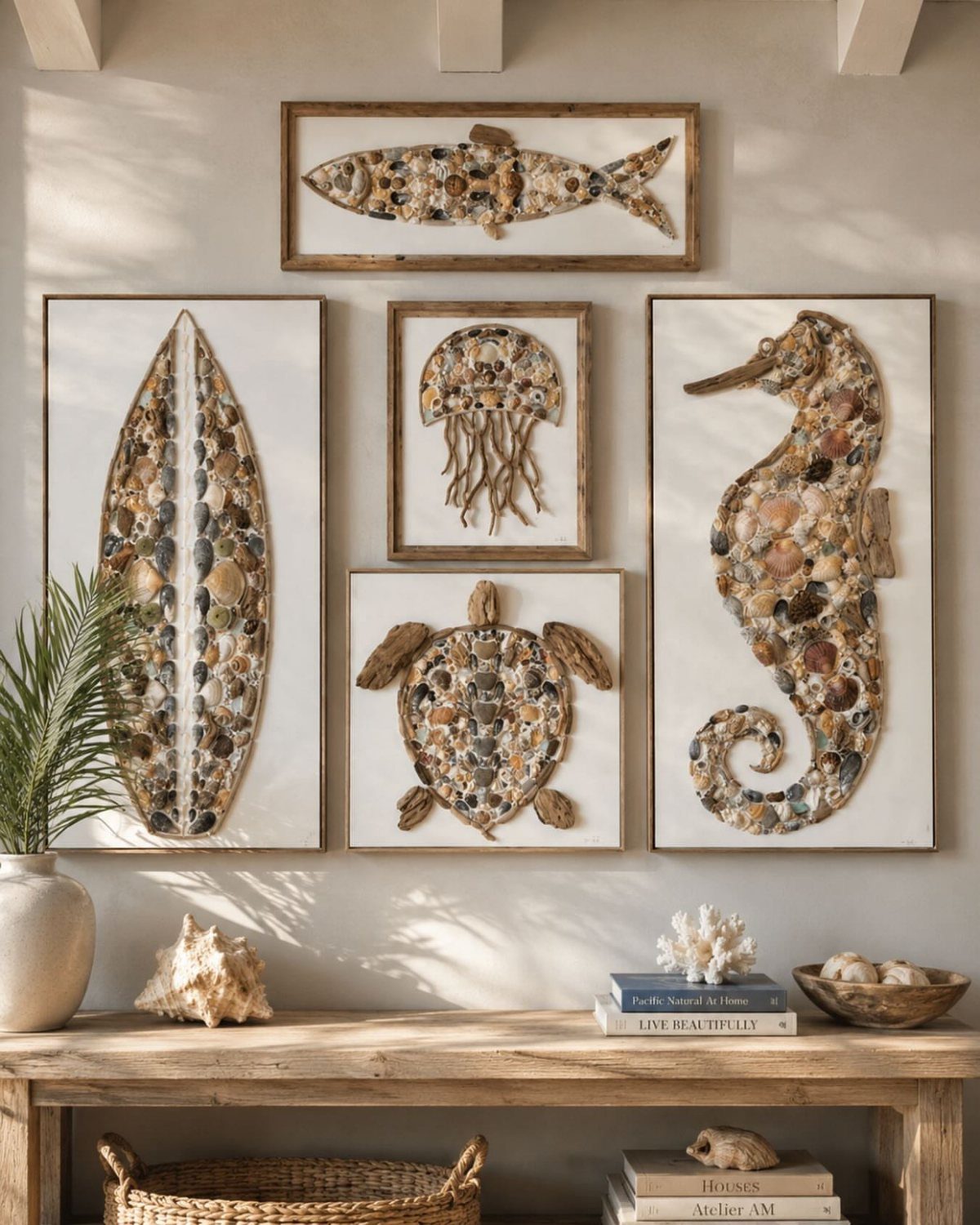
Grouping several pieces of shell art on one wall creates impact that a single frame would not, and keeping them all in the same medium stops the grouping from looking cluttered.
These are mounted above a console rather than scattered across the room, which keeps the coastal references contained.
Pebble art like this uses stones and shells arranged into shapes, then framed under glass. You can make it yourself if you have the materials and a glue that dries clear, or buy finished pieces depending on size and detail.
12. Coral Prints in Throw Pillows
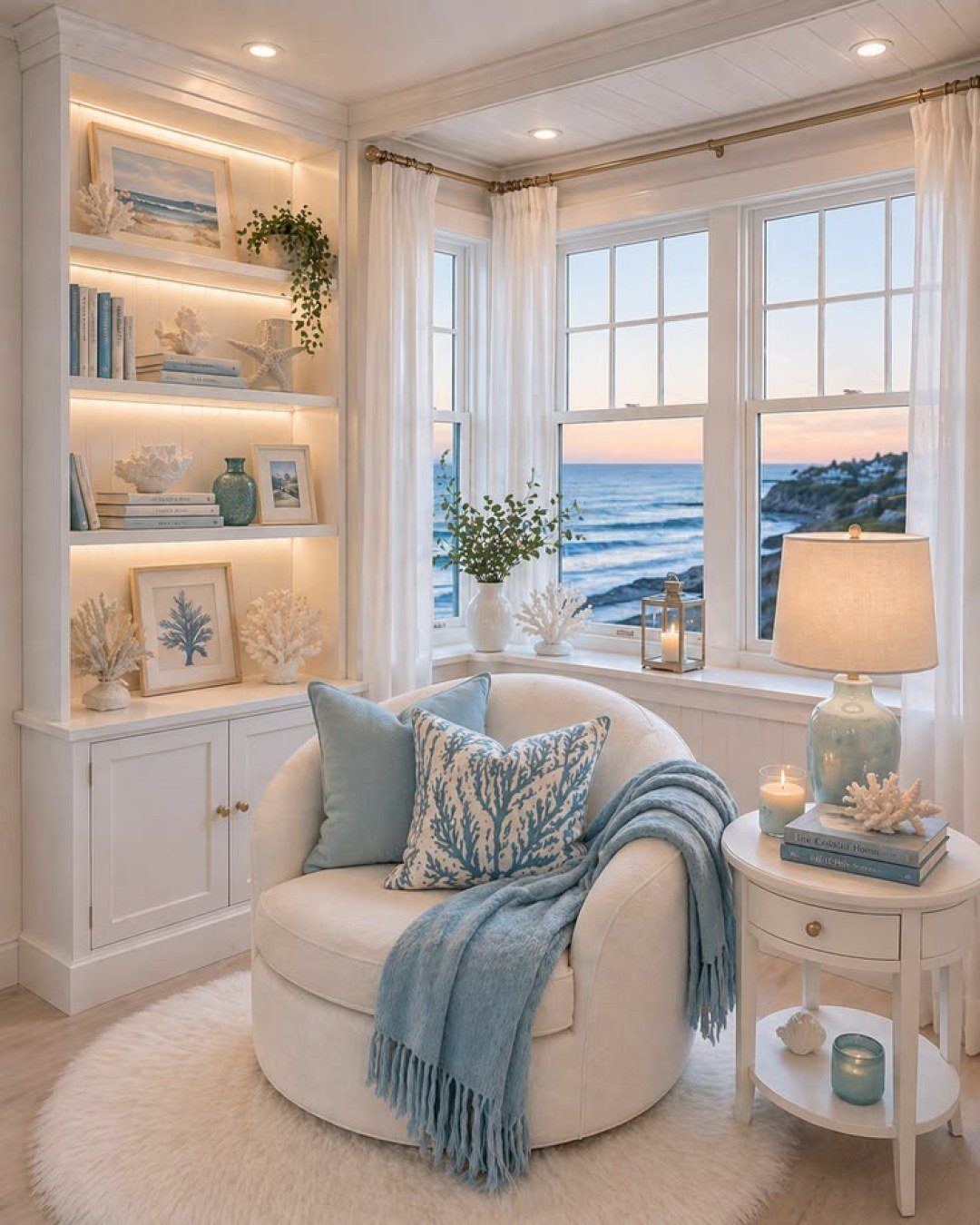
Coral prints on throw pillows bring pattern into a room without competing with a view, and they work on white upholstery where darker prints would draw too much attention.
A solid blue throw layered over the chair adds weight that keeps the pillows from looking like the only color in the space.
Swivel chairs suit rooms with windows on multiple walls because you can turn toward the view or back toward the room.
The base here is simple enough that it does not distract from the upholstery, which matters when the chair sits in the center of the room rather than against a wall.
13. Gallery Wall
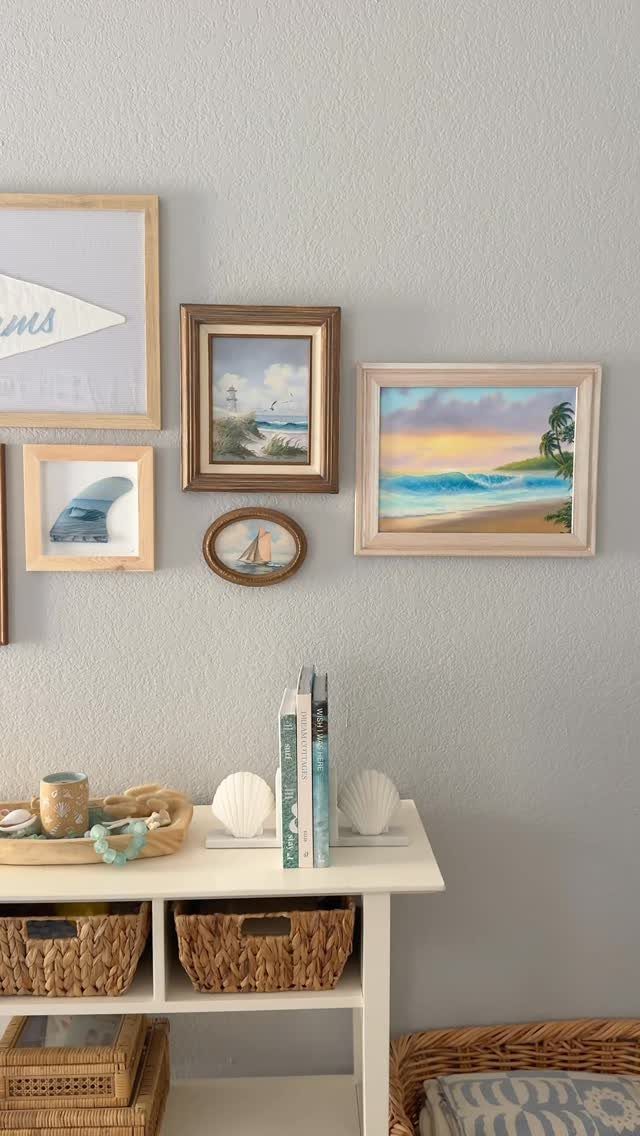
Hanging several pieces of coastal art in a loose grid gives you more presence on the wall than any single frame would, and grouping them above a console ties the arrangement to the furniture rather than leaving it floating.
Mix frame sizes and orientations but keep the palette simple so the grouping reads as intentional. White and natural wood frames work with most coastal art, and leaving space between pieces makes the wall feel collected rather than cluttered.
Coastal Design Characteristics
Coastal design works because it borrows the materials and light conditions you’d find in an actual beach house, not because it references the ocean.
Natural fiber, cotton and linen handle humidity without looking heavy, and light wood weathers better than dark finishes in damp air.
The palette stays within white, sand and soft blue because those colors reflect rather than absorb light, which matters in rooms with large windows facing water. Brighter colors compete with the view.
Open floor plans suit coastal homes because they let air move through the space, which cuts down on mechanical cooling.
The same layout also pulls natural light deeper into the interior, so rooms away from windows still feel bright during the day.
The style reads as understated because most of the decorative work happens in texture and material rather than in color or pattern. Shells and driftwood add detail without adding visual weight.
Differences in Coastal Styles
Coastal design keeps the palette light and the references indirect, while nautical design leans on navy stripes, anchor hardware and rope detail that calls out the maritime source directly.
Tropical style pulls from island climates with saturated color, oversized leaf prints and bold pattern.
The palette runs warmer than coastal, with coral, turquoise and yellow rather than soft blue and sand. Tropical furniture often includes rattan and bamboo, which are lighter in weight than the weathered wood coastal rooms use.
Coastal design translates to more home styles because it does not require committing to a theme.
The same white slipcovered sofa and jute rug work in a ranch house or a bungalow, while nautical and tropical both need the architecture to support the look.
Coastal design is a decorating theme inspired by weathered furniture and nautical accents found in traditional coastal homes. It incorporates pale finishes, shades of blue, and maritime elements such as compasses, marine life, anchors, and helms.
Budget-Friendly Coastal Decor
Painting existing furniture in white or pale gray costs less than replacing it, and the finish hides mismatched wood tones that would otherwise break up the room.
A coat of paint also ages furniture visually, which suits coastal style better than new finishes do.
Sheer white curtains soften direct sunlight without blocking the view, and they cost less per panel than lined drapes.
Woven baskets organize without adding color, and you can find them at thrift stores where they sell for a few dollars each.
Swapping throw pillows brings in blue or stripe without recovering the whole sofa. Covers in cotton or linen cost less than down inserts, which you can reuse from old pillows.
If you’re near the coast, gather driftwood and shells yourself, then mount them in a shadow box or string them on fishing line for wall art that costs only the frame.
Frequently Asked Questions
What is coastal decor style?
Coastal style depends on materials that actually belong near water: jute, cotton, unfinished linen and pale oak that won’t warp or darken when the air is damp.
White walls and sand-colored upholstery reflect the light coming through those big windows instead of soaking it up the way darker finishes do.
The interest comes from weave and grain rather than from pattern, which is why the look stays quiet.
What are some creative ideas for designing a beach home?
A console topped with weathered wood frames, or a jute rug layered under sisal, gives you the texture the style needs without adding objects that announce ‘beach house’ too loudly.
Rooms that open into one another let daylight reach farther in and keep air circulating, which matters when you’re keeping windows open most of the year.
What are the coastal interior design trends for 2026?
Expect more eco-friendly materials, soft pastel palettes and organic textures in 2026 coastal interiors. Natural, sustainable materials like reclaimed wood, linen, wicker and jute keep the design modern while evoking the relaxed feel of coastal living.
Layouts that let air move and daylight reach the back of the house still do most of the work in making a room feel coastal.






