
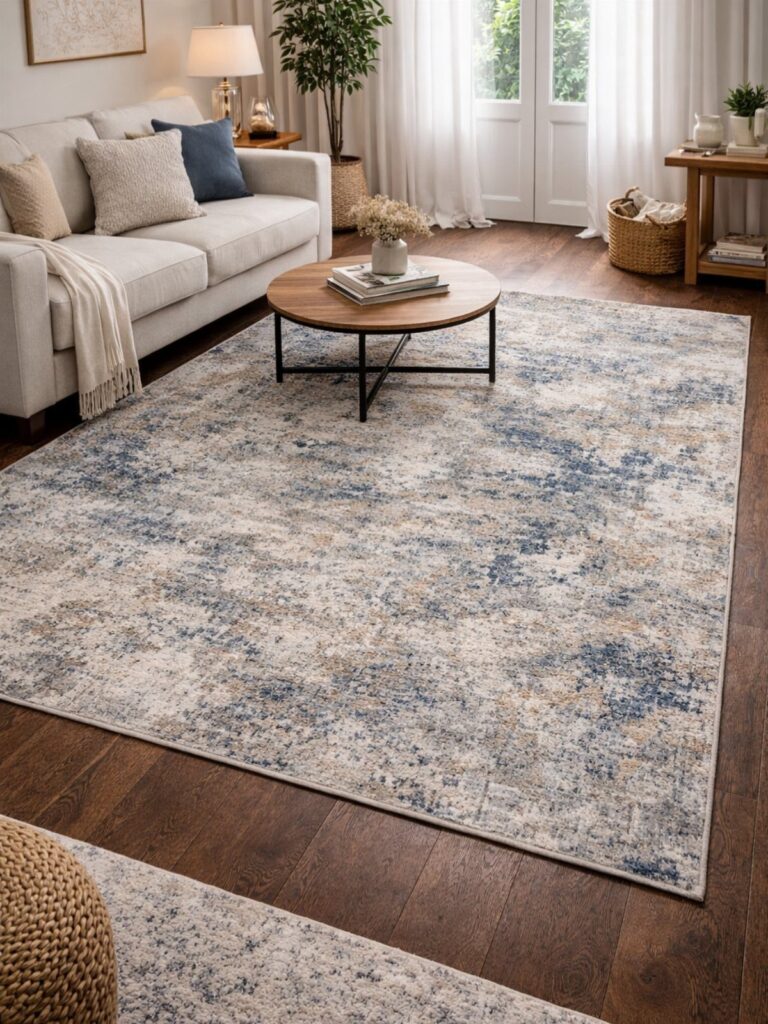
A living room carpet can be a low-pile neutral that blends into the floor or a soft white paired with tailored furniture that keeps the space feeling open.
Lighter tones and flat weaves make a tight space feel more open. Mid-tone neutrals hide wear better than pale options when the room gets a lot of use.
1. Large Neutral Base with Smaller Patterned Overlay
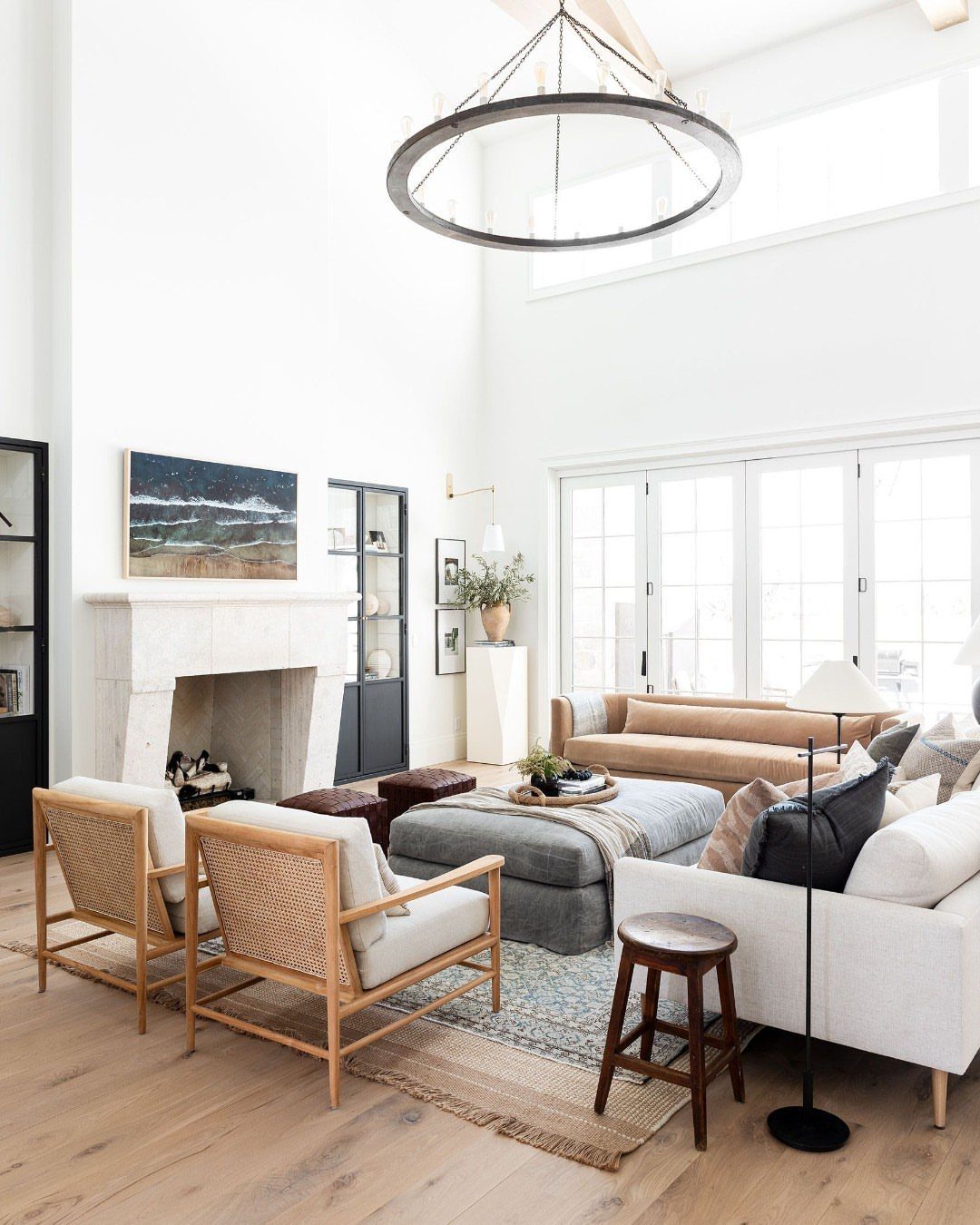
Layering a smaller patterned rug over a larger neutral one gives you a way to swap the accent piece without starting over on the base.
The neutral anchors the space and gives you clean edges that extend under furniture, while the smaller rug adds pattern at the center where people actually look.
The contrast works best when the base is jute, sisal or a flat-weave in cream or beige, and the overlay has enough color to read against it without fighting for attention.
Leave enough of the base visible around the edges that both rugs register as separate layers.
2. Textured Rugs
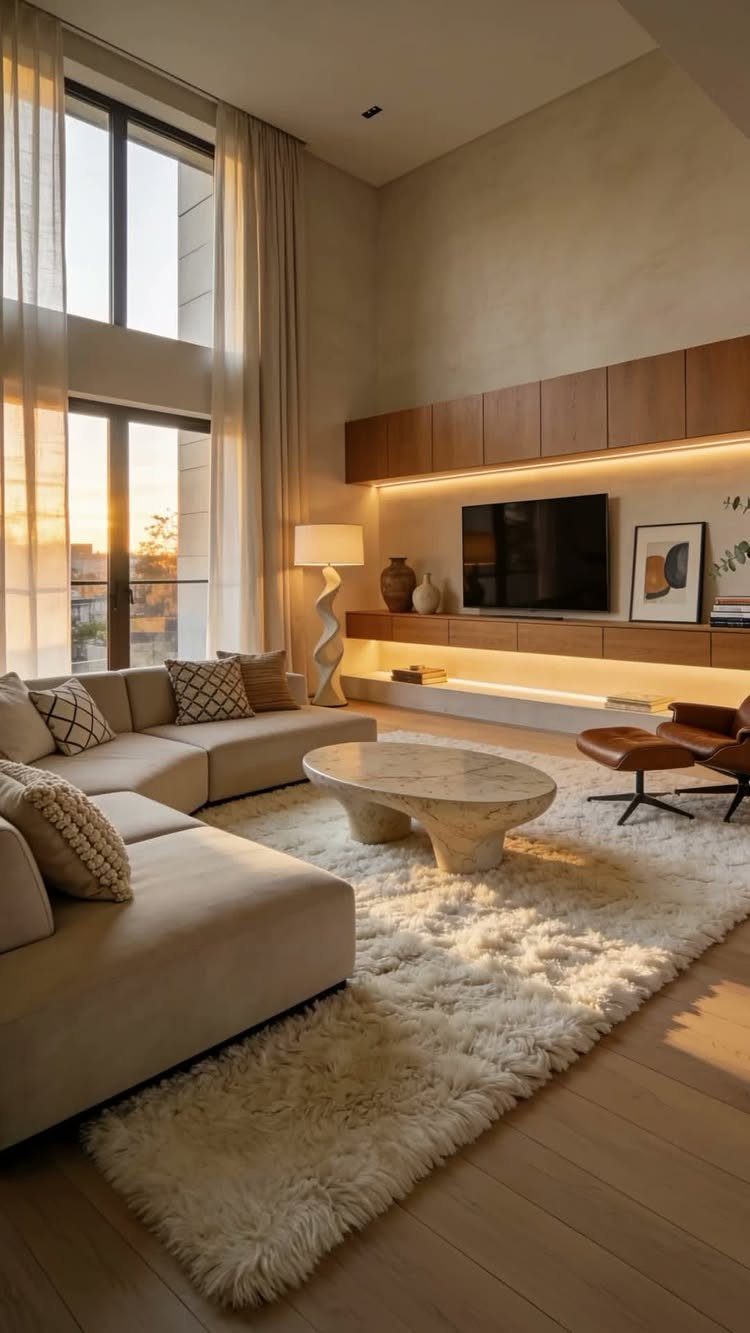
Texture catches light differently than flat weave, and that variance adds depth without pattern. A shag or loop pile in white or cream stays neutral but gives the floor presence, especially in rooms with smooth furniture and hard surfaces.
They need more cleaning. Long fibers trap dust and crumbs, so these need regular vacuuming with a suction-only setting.
Avoid them in high-traffic paths or anywhere near pets that shed heavily. In a low-traffic living room with clean-lined furniture, the softness pays off.
3. Patterned Carpets
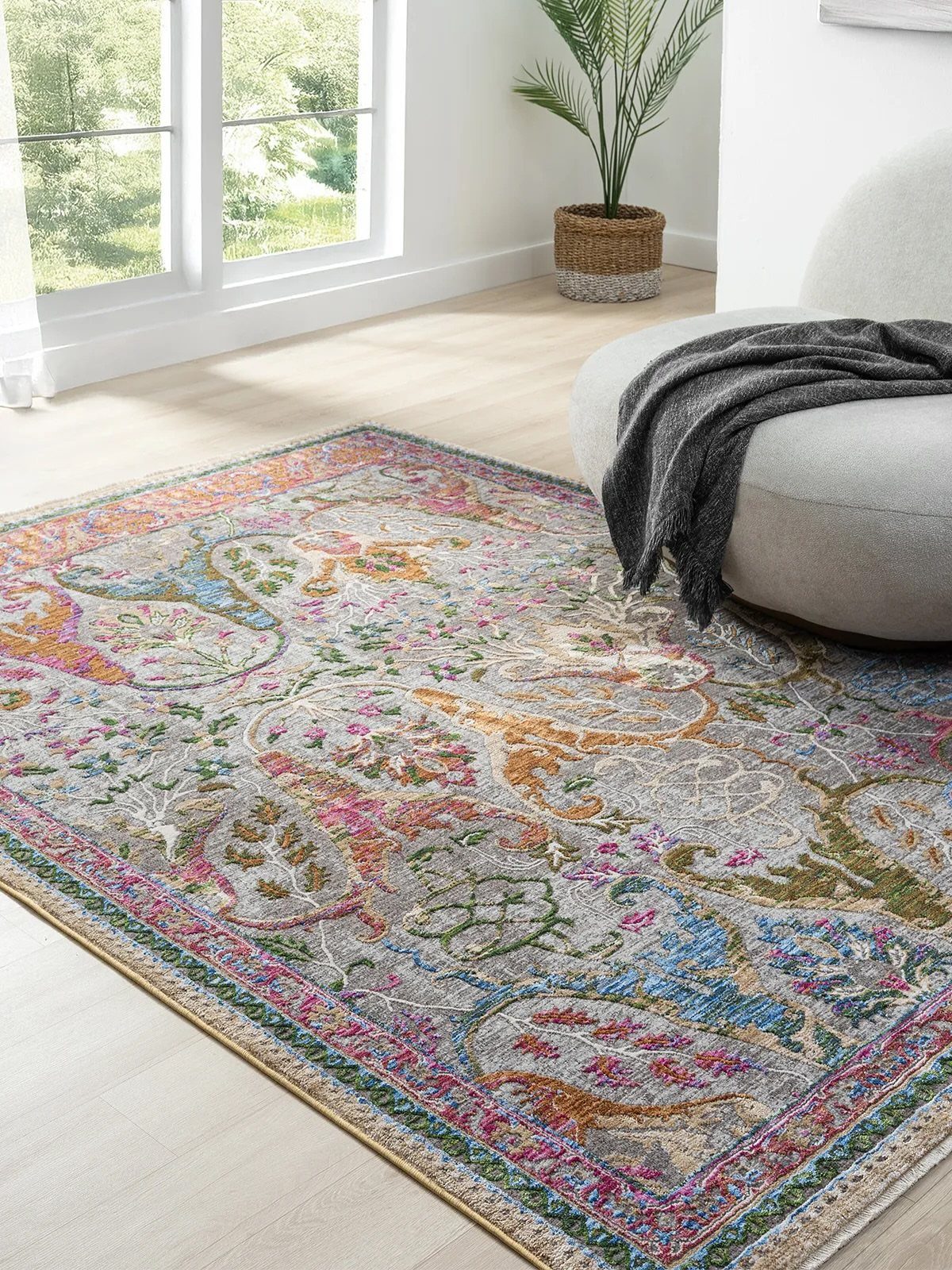
Pattern hides wear and small stains better than solid color, which makes it practical in a room that gets real use.
Florals, geometrics and abstract prints all work as long as the scale suits the room size. Larger patterns hold up better in bigger spaces, while small repeats can look cluttered once the rug gets past a certain size.
Pick one with at least 3 colors so it ties into multiple elements in the room. That gives you flexibility when you swap out pillows or furniture later.
Carpet flooring is climbing the charts when it comes to decorating your living rooms. Apart from its gorgeous looks and soft feel, carpet flooring can add texture and character to your living room.
4. Low-Pile Neutrals
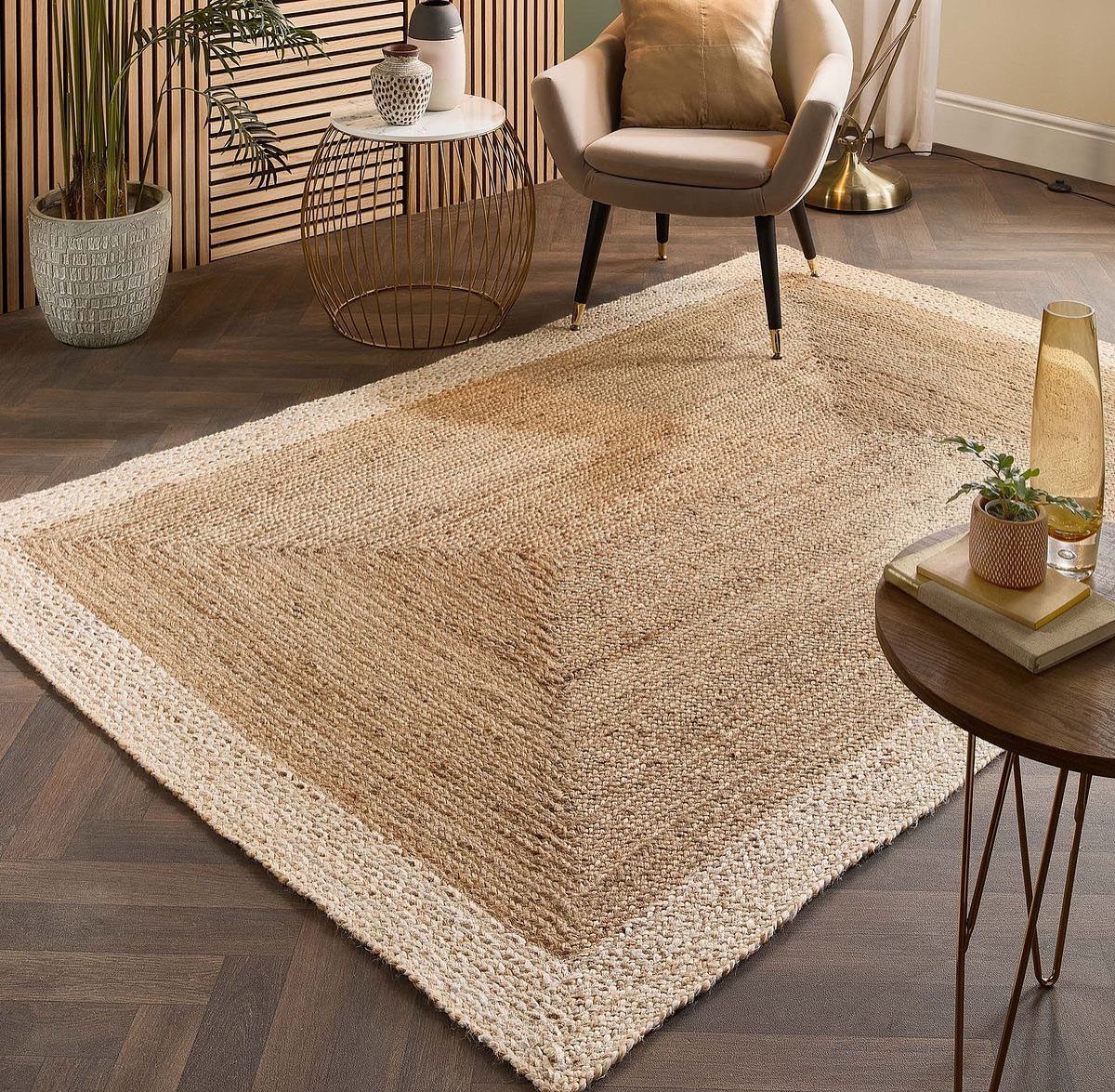
A low-pile rug in beige, tan or soft gray stops the floor from cutting the room in half visually, which helps a small living room feel larger.
The short fibers lie flat and don’t add bulk, so furniture legs sit level and the rug blends into the floor plane rather than sitting on top of it.
Woven natural fibers like jute or seagrass work well here, though they can feel scratchy underfoot. If you want softness, look for a low-pile wool or synthetic blend instead.
5. Soft White Carpets Paired with Tailored Furniture
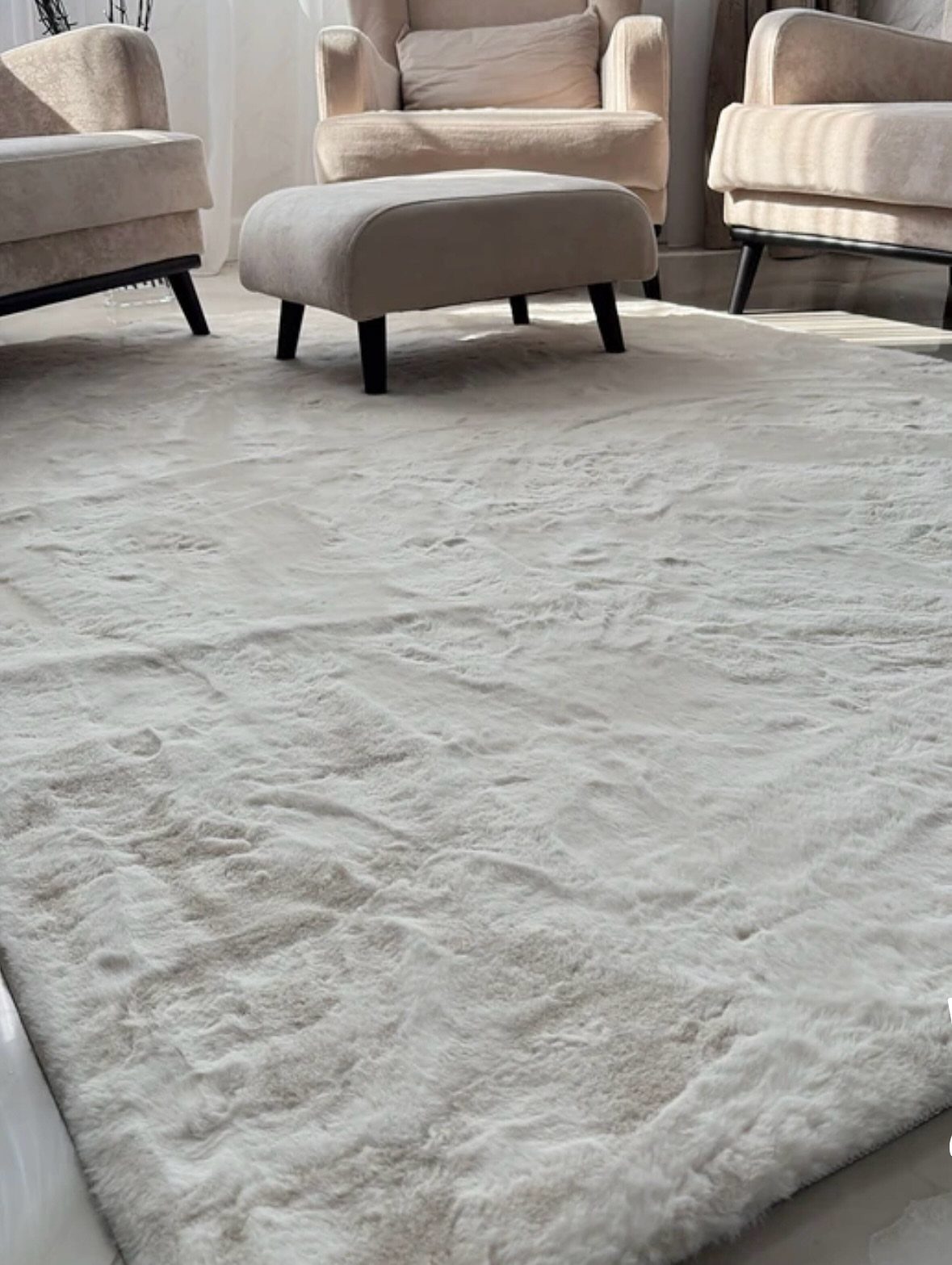
A soft white carpet paired with tailored furniture keeps the room feeling clean and spacious without reading as cold. The carpet adds warmth underfoot, and the structured lines of the furniture keep the space from looking too casual.
White shows dirt, so this works best in a living room that doesn’t take heavy traffic or pets. Regular vacuuming and a good stain treatment on hand make it manageable if you’re willing to stay on top of it.
6. Stripes
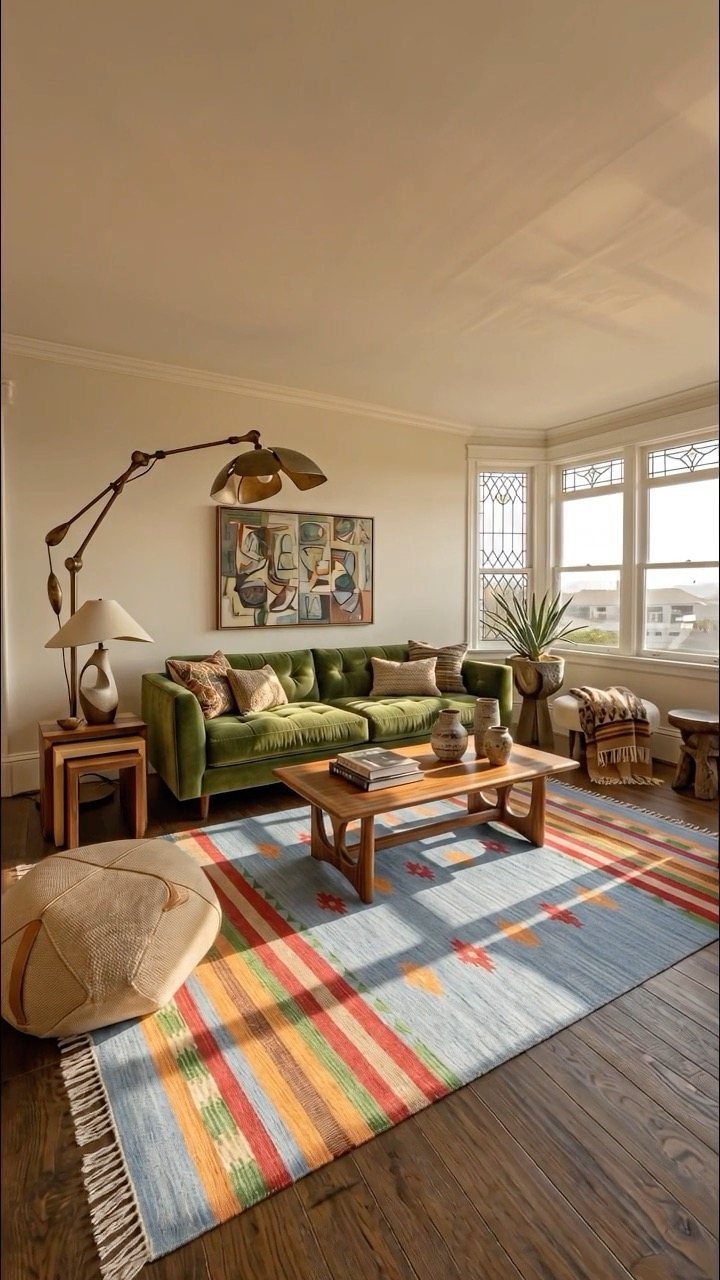
Stripes pull the eye along their direction, which makes a narrow room feel wider or a short room feel longer depending on how you run them. Horizontal stripes widen, vertical ones add length.
The effect is subtle but real, and it works best with stripes in two or three colors rather than high-contrast black and white, which can feel too graphic in a space meant to relax.
Pair them with solid furniture so the room doesn’t feel overly busy.
7. Plaid
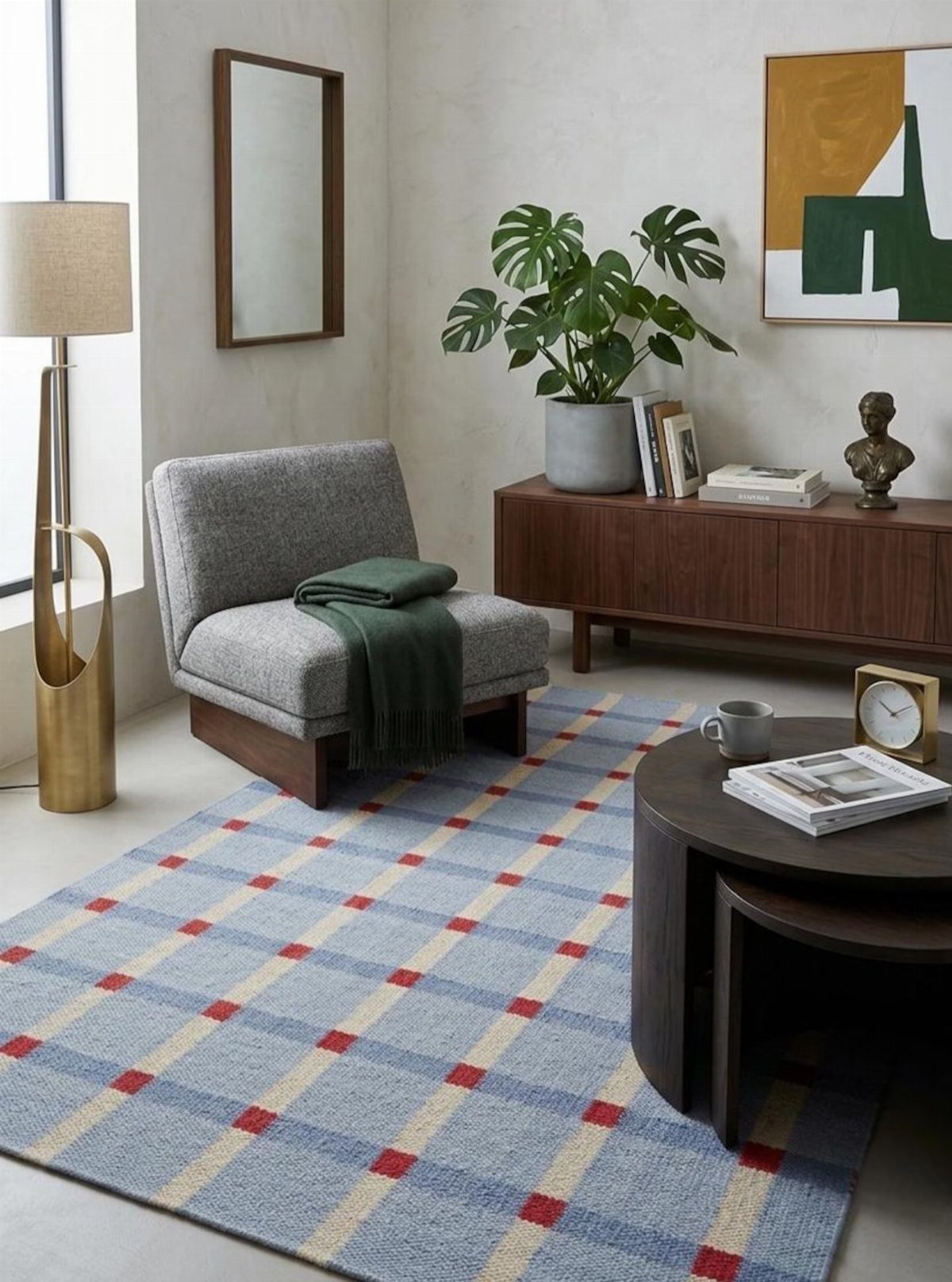
Plaid brings pattern without feeling loud, and the grid structure keeps it orderly enough for a modern room.
The repeating lines give the floor definition, and the multiple colors let you pull accent tones into pillows or throws without forcing an exact match.
It works best when the plaid uses softer, slightly muted tones rather than the bright primaries you’d find on flannel. That keeps the traditional pattern from reading too casual or too country for a contemporary living room.
Choosing the Right Carpet Color
Neutral shades like beige, grey, ivory and taupe let you swap pillows, curtains or paint later without replacing the carpet. Light neutrals open up a tight space, while mid-tone versions hide minor stains and wear better than pale options.
Charcoal, navy and deep brown add contrast in a light-colored room and make a large space feel more intimate.
They show every speck of lint and dust, so if you have pets or skip a day of vacuuming, a mid-tone neutral stays looking cleaner.
If you go bold with the carpet, keep the rest of the room simple.
Selecting the Right Carpet Material
Wool carpet holds its shape well and provides insulation, but it costs more than synthetic options. If you plan to keep the carpet for years and the budget allows it, wool pays off in longevity.
Nylon handles wear better than most natural fibers and cleans up easily, so it works well in living rooms that see a lot of foot traffic.
Polyester comes in richer colors and feels softer than nylon, but it can mat down where people walk most.
Blended carpets combine natural and synthetic fibers to balance comfort and durability.
If you have children or pets, blended materials hold up better than polyester alone. A living room you use once in a while can take a more delicate fiber, but a space the family uses every day needs something tougher.
Carpet Size and Placement Tips
Size the carpet to match your seating layout, not the center of the floor.
In a big living room, set all 4 legs of each piece on the carpet so everything reads as one zone. That connects the seating area and keeps the arrangement from feeling scattered.
Leave at least a few inches of carpet showing past the table on every side so the proportions look right.
Frequently Asked Questions
What type of carpet is trending now?
Textured carpets in neutral tones are trending, along with layered rugs that combine a large neutral base with a smaller patterned overlay.
These options add depth and warmth without committing to a bold color or permanent pattern. The focus is on materials that feel soft underfoot while keeping the room flexible for future changes.
What is the best kind of carpet for a living room?
Wool holds its shape well and lasts years, but nylon handles heavy use and cleans up easier if the room sees a lot of traffic.
Pick based on how often the room gets used and whether you’re willing to spend more upfront for longevity.






