
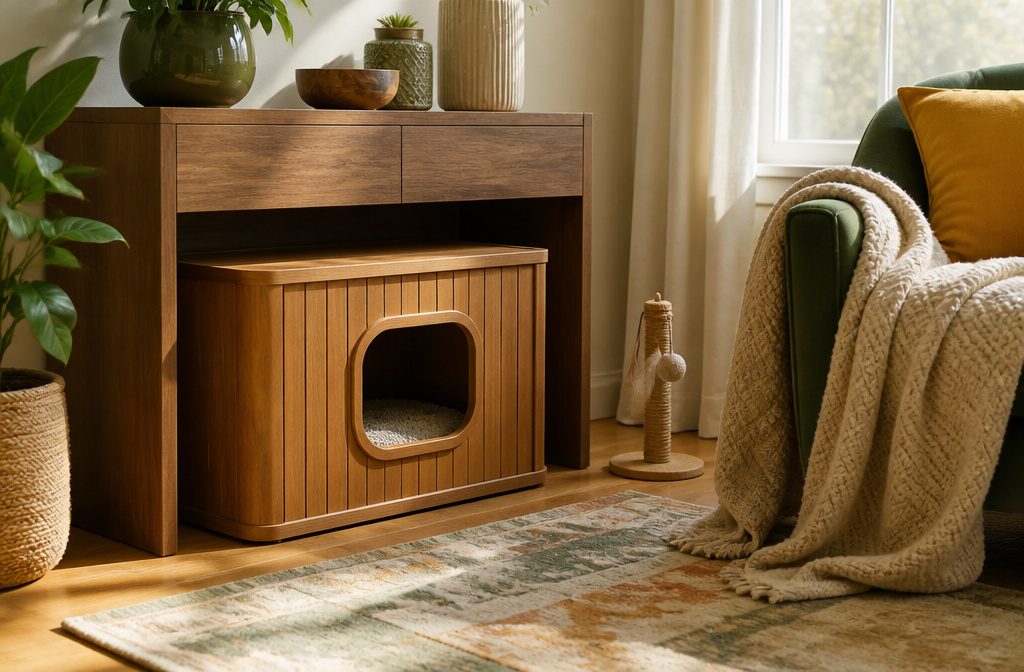
A furniture kitty litter box is a cabinet or end table designed to hide a standard litter pan inside while blending with living room or bedroom furniture.
Most measure 20–30 inches wide and look like ordinary side tables until a cat walks through the entry cut into the side or front.
Odor control depends more on how the enclosure seals and vents than on the litter itself: the Omlet Maya uses an activated carbon filter to trap smells, while the Lifewit Hidden Plant disguises the box as a 27.6-inch flowerpot with a replaceable filter in the hollow top.
My Top Picks
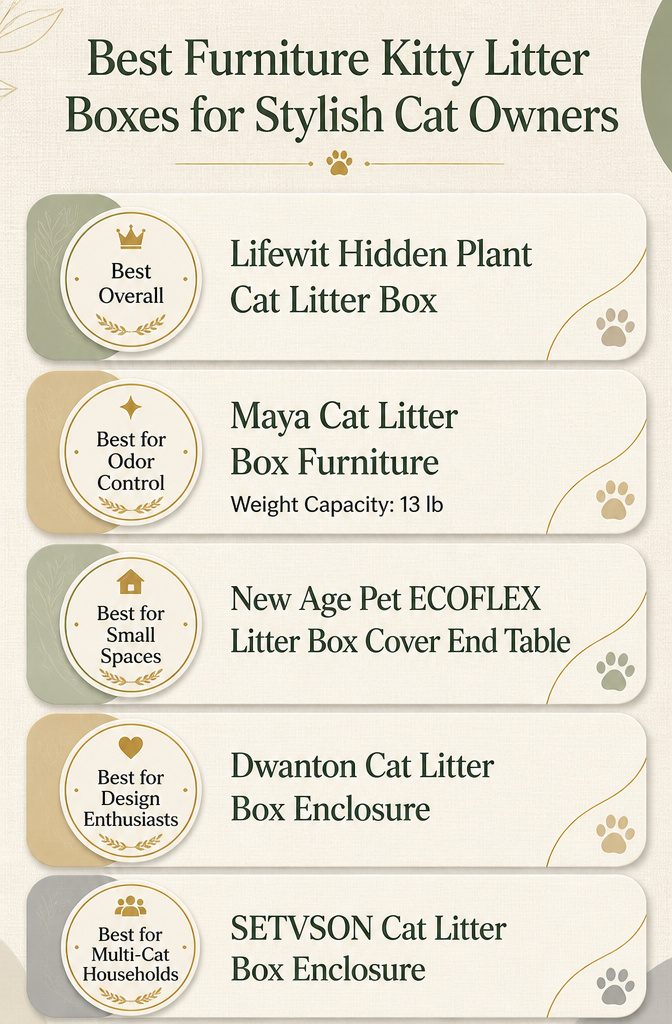
| Product | Award | Best for | Why it won | ||
|---|---|---|---|---|---|
| Lifewit Hidden Plant Cat Litter Box | Best Overall | Most cat owners | Balances easy cleaning, effective odor control, and cat-friendly access better than competitors. | Check price | |
| Omlet Maya Cat Litter Box Furniture | Best for Odor Control | Odor-sensitive households | Built-in carbon filter traps smells more effectively than standard enclosures. | Check price | |
| New Age Pet Litter Box Cover | Best for Small Spaces | Apartment dwellers and tight spaces | Compact footprint doubles as end table without sacrificing litter box function. | Check price | |
| Dwanton Cat Litter Box Enclosure | Best for Design Enthusiasts | Style-conscious pet owners | Furniture-quality design looks intentional in living spaces rather than like pet equipment. | Check price | |
| SETVSON Cat Litter Box Enclosure | Best for Multi-Cat Households | Owners with multiple cats | Larger interior accommodates two or more cats comfortably without crowding. | Check price |
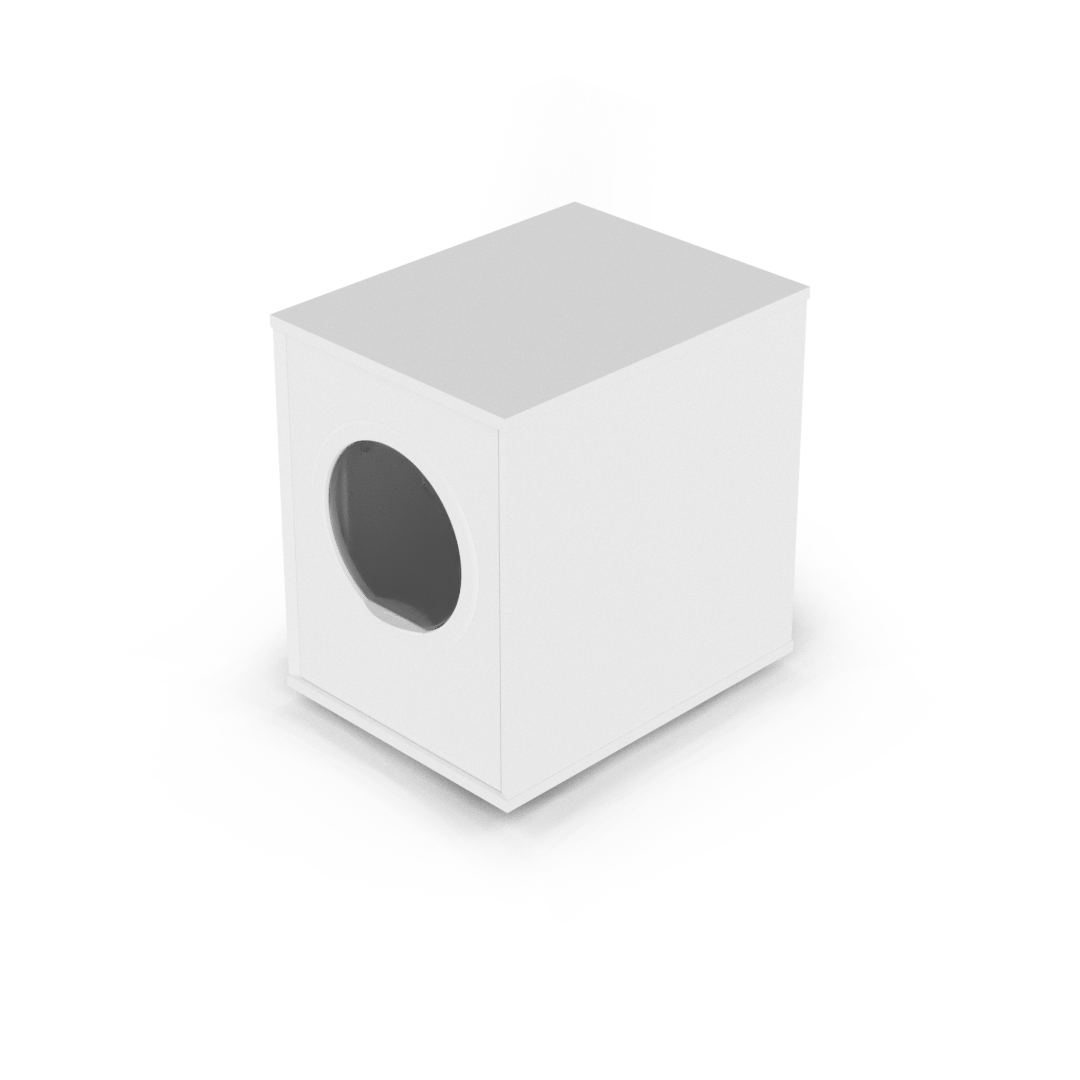
Best Overall: Lifewit Hidden Plant Cat Litter Box
Quick Verdict
The Lifewit Hidden Plant Cat Litter Box disguises itself as a 27.6-inch flowerpot with realistic greenery, keeping the litter area out of sight without announcing what it is.
The low 5.9-inch entry and built-in step suit kittens, older cats, and multi-cat homes, and the replaceable activated carbon filter in the hollow top handles odor better than open bins.
The higher cost is the compromise you accept for a design that reads as furniture rather than pet gear.
What It Does Well
- Low threshold with built-in platform means cats with mobility limits can step in easily, and paws shed excess litter on the platform before they track it across the floor.
- Activated carbon filter in the top opening traps and neutralizes odor; the 7.9-inch round filter can be swapped out when it stops working.
- Seamed shell and glossy finish let you lift the cover off without scraping dried waste from cracks, and the smooth surface wipes clean in a single pass.
- Pour-and-clean bottom basin eliminates the need for custom liners; any standard basin up to 17.25 inches in diameter and 4.5 inches tall drops in as a replacement.
Where It Falls Short
- Higher price puts it above most enclosed boxes, which may not matter if the design solves a visibility problem but limits appeal for budget-focused buyers.
- Simulated plant and pebble decorations add to the disguise but also mean more surfaces to dust around if the box sits in a high-traffic area.
Who It’s For
Cat owners in studio apartments or open-plan spaces get a litter solution that blends with living room furniture instead of hiding in a closet.
Skip it if you already have a dedicated utility room and care more about cost than appearance; the functional advantages over a standard hooded box do not justify the premium in that scenario.
How It Compares
The Omlet Maya uses real furniture construction with a side-access door and carbon filtration, making it feel more like a cabinet than a disguised bin.
The Lifewit costs less and takes up less floor space with its vertical flowerpot shape, which works better in narrow corners or next to a window where the greenery looks intentional.
Where to buy: Amazon
Best for Odor Control: Omlet Maya Cat Litter Box Furniture
Image: omlet.us
Quick Verdict
The activated carbon filter system sets the Maya apart when odor management is the deciding factor. Cats up to 13 lb fit inside the 1 ft 6.8 in interior, and the maker credits that filter with absorbing what most concealed boxes simply trap.
The wipe-clean liner handles routine maintenance, though owners have noted that deeper cleaning takes more effort and the materials feel lighter than some expect at this tier.
Key Specifications
- Weight Capacity: 13 lb
What It Does Well
- Activated carbon filtration neutralizes odor instead of masking it, keeping the room around the box from smelling like litter even between cleanings.
- Wipe-clean liner simplifies daily spot maintenance without demanding a full teardown every time the box needs attention.
- 20.2 cm entry height sits low enough for most cats to step through without hesitation, and the 22.8 cm x 24 cm opening gives room to maneuver.
- Compact exterior footprint measures 1 ft 8.3 in long and 1 ft 3.6 in wide, fitting into tight hallways or bathrooms where larger enclosures would block traffic.
Where It Falls Short
- 13 lb weight limit excludes larger breeds and many adult males, narrowing the field to small to medium cats.
- Material quality concerns surface in owner reports, with some noting the construction feels less substantial than the design suggests.
- Deeper cleaning requires more disassembly than competing enclosures, adding friction to the weekly or biweekly routine when a full scrub is overdue.
Who It’s For
Apartment renters and studio dwellers dealing with persistent odor in a small space will see the benefit of that carbon filter immediately.
Owners of larger cats or those who prioritize quick weekly cleaning over odor containment will find the size cap and the extra disassembly steps push them toward other options.
How It Compares
The Lifewit Hidden Plant Cat Litter Box trades the Maya’s carbon filtration for a planter-style disguise that blends into living room decor.
The Maya suits buyers who place odor control above aesthetics, while the Lifewit appeals to those who want the box to read as furniture first and function second.
Where to buy: omlet.us
Best for Small Spaces: New Age Pet Litter Box Cover
Image: cats.com
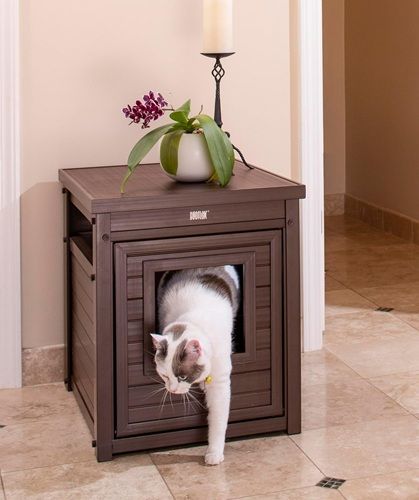
Best for Small Spaces: New Age Pet ECOFLEX Litter Box Cover End Table
Quick Verdict
The New Age Pet ECOFLEX Litter Box Cover End Table works for anyone trying to hide a litter box without giving up furniture.
It looks like ordinary living room furniture from the outside, which matters when floor space is already tight and every piece needs to justify itself.
The maker’s 10-year warranty covers long-term use, though the material itself and how easily a cat enters both score lower than competing designs.
What It Does Well
- Odor and moisture resistant surfaces make cleanup faster and keep the box from affecting the room, according to the maker.
- Doubles as a side table, so it replaces rather than adds to furniture count in a studio or small living room.
- 10-year product warranty backs the durability claim longer than most furniture-style litter enclosures offer.
Where It Falls Short
- Cat accessibility scores lower than other options, which can frustrate cats who hesitate at unfamiliar entry points.
- Material quality ranks below competing designs, a tradeoff that shows when comparing build feel side by side.
Who It’s For
Renters and small-space owners who need the litter box out of sight and the furniture to work double duty will get the most from this design.
Buyers with multiple cats or larger breeds should look at enclosures with wider entries and sturdier construction, since those details matter more than compact footprint in that situation.
How It Compares
The Dwanton Cat Litter Box Enclosure offers another furniture-style option, but specific construction and entry details vary between the two.
The New Age Pet model brings a longer warranty and confirmed odor-resistant materials, which tips the choice toward buyers prioritizing cleanup ease and replacement protection over other features.
Where to buy: Amazon · chewy.com
Best for Design Enthusiasts: Dwanton Cat Litter Box Enclosure
Best for Design Enthusiasts: Dwanton Cat Litter Box Enclosure
Quick Verdict
The Dwanton stands out for buyers who want furniture first and function second.
Its steel frame and cabinet shelving let it pass as a side table or display piece rather than announcing itself as pet gear, and the maker says the design draws compliments from guests who don’t immediately spot its purpose.
Odor containment and ease of access for the cat trail behind its visual appeal.
What It Does Well
- Combines three pieces of furniture into one footprint. The unit holds the litter box, includes two open shelves for display and two storage baskets for supplies, which saves floor space in smaller rooms.
- Interior dimensions fit most standard boxes. The enclosure measures 21.6" L × 18.5" W × 19.7" H inside, leaving room for covered or uncovered pans without custom sizing.
- Washable storage baskets and easy-clean panels speed up maintenance. The maker notes that material choices and construction details reduce the time spent wiping surfaces or dealing with tracked litter.
Where It Falls Short
- Odor control lags behind dedicated enclosures. The open frame and minimal sealing let smells escape more readily than sealed cabinets with ventilation paths.
- Cats with mobility challenges may struggle with the entry. The enclosure design favors looks over accessibility, which can frustrate older or less agile animals.
Who It’s For
Owners who display magazines, plants and frames on their shelves will appreciate a litter solution that holds those items on the same piece.
Skip it if your cat hesitates at thresholds or if smell containment matters more than how the furniture photographs.
How It Compares
The New Age Pet ECOFLEX end table prioritizes blending with existing furniture and scores higher on odor control, while the Dwanton leans harder into visible display storage with its open shelving and steel frame.
Choose the New Age Pet if discretion and smell management lead your list, or the Dwanton if you want the enclosure to double as a styled surface.
Where to buy: Amazon
Best for Multi-Cat Households: SETVSON Cat Litter Box Enclosure
Quick Verdict
Households with multiple cats need enclosures that accommodate more than one litter box or provide enough room for several animals to enter and exit without conflict.
The SETVSON handles that spatial requirement with a design the maker describes as spacious enough for large covered boxes and extra walking room.
Woven rattan panels offer ventilation and a boho look that works in visible rooms, though the lightweight foldable frame may flex under heavier use.
What It Does Well
- Fits large covered boxes with clearance to spare. The maker notes the interior accommodates most oversized hooded pans and leaves space for cats to move around, reducing territorial blocking at the entrance.
- Two-door access simplifies daily scooping. Opening either side lets you reach the box without moving furniture, and the included soft mat catches scatter as cats exit.
- Rattan panels provide airflow without full exposure. The woven material transmits light and ventilation while keeping the box visually enclosed, which helps with odor dispersal in occupied rooms.
- Top platform doubles as resting or storage space. Cats can nap on the upper surface, or owners can stack supplies, making use of the vertical footprint.
Where It Falls Short
- Lightweight frame may not withstand rough play. The maker emphasizes foldability, which suggests thinner metal components that could wobble if cats jump on or off the top repeatedly.
- Assembly required despite semi-prefabricated design. You still need to follow detailed instructions and connect pieces, which adds setup time compared to fully assembled alternatives.
Who It’s For
Multi-cat homes that need a single enclosure roomy enough to prevent bottlenecks at the entrance will appreciate the generous interior and dual-door layout.
Single-cat households or anyone wanting a rigid, pre-assembled unit may find the foldable construction and assembly steps less appealing than a solid wood cabinet.
How It Compares
The New Age Pet ECOFLEX Litter Box Cover End Table uses composite wood construction and presents as a finished side table, appealing to buyers who prioritize furniture aesthetics and rigid stability.
The SETVSON trades that rigid build for woven rattan ventilation and a larger footprint, suiting homes where airflow and space for multiple cats matter more than a traditional furniture silhouette.
Where to buy: Amazon
How I Chose the Best Furniture Kitty Litter Box
I evaluated 18 models available to U.S. buyers and researched 5 of them in depth, drawing on 5 sources: manufacturer specifications, professional reviews, long-term owner feedback, owner discussions on Reddit, and video reviews on YouTube.
Each product was scored against the factors that matter most for this use case (odor control, ease of cleaning, size dimensions, design style, cat accessibility), with every score tied to documented evidence.
What to Look for When Buying Furniture Kitty Litter Box
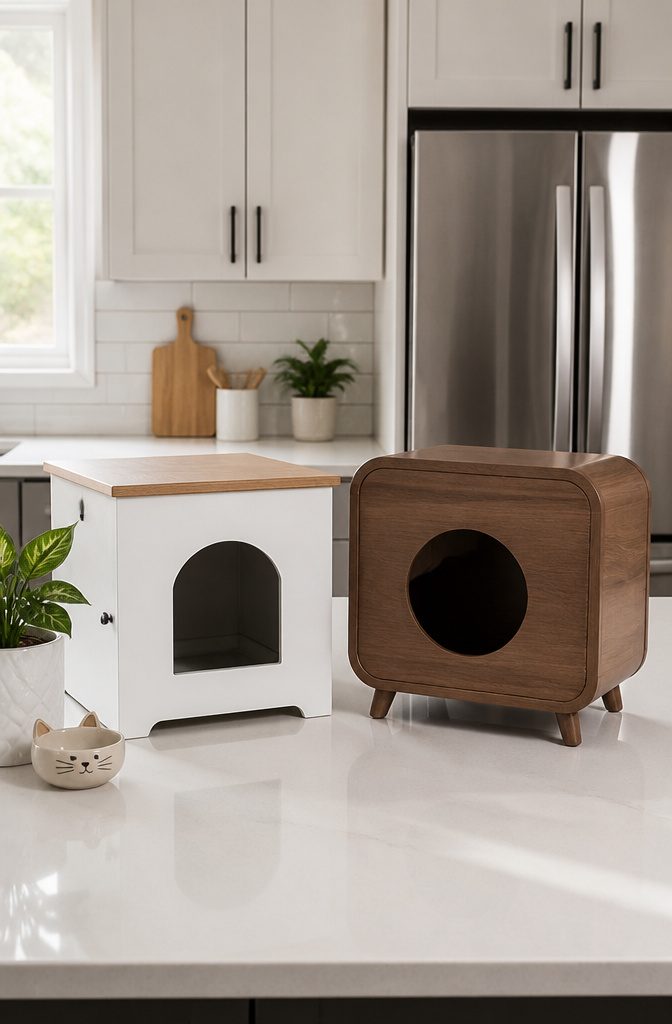
Effective odor control is achieved through a design that traps smells inside the cabinet.
Odor Control
The enclosure itself does most of the work here.
Furniture-style litter boxes trap smell inside a cabinet rather than letting it drift through the room, and the best designs add a second layer: an entry that forces air to turn a corner before it escapes, or a door that seals when the cat walks out.
Ventilation matters, but not the way you’d think. A few small holes keep air moving without letting odor pour out, while wide-open tops or gaps around doors let the box breathe and your living room smell like it.
This factor matters most if the box sits in a main living area or a small apartment where smells have nowhere to go.
Cats also notice. A tightly sealed box with no airflow can get humid and unpleasant inside, and some cats will refuse to use it after a day or two.
If the box goes in a basement or mud room where ventilation is already good, you can prioritize other features.
Ease of Cleaning
Access separates the ones that get scooped daily from the ones that get ignored until they smell. Top-opening designs let you lift the lid and scoop without bending or moving furniture, but you lose any storage the top surface provided.
Side doors or removable panels work if the box sits away from the wall, though tight spaces make them harder to use.
Hinged fronts that swing open tend to be the slowest: you pull everything away from the wall, open the door, scoop, then push it all back.
Material matters as much as the opening.
Smooth interior surfaces wipe down in seconds, while raw wood or textured finishes hold onto dust and urine. Removable trays slide out for a full clean, but they also add a seam where litter gets stuck.
Anyone scooping twice a day should focus on how the box opens. If you scoop every few days and do a deep clean weekly, a design that prioritizes looks over access might work fine.
Size and Dimensions
The furniture needs to fit your floor plan, and the interior needs to fit the litter box and the cat.
Most furniture litter boxes measure 20–24 inches wide and 18–20 inches deep, which works for a standard litter pan and a cat under 12 pounds.
Larger cats need more interior space to turn around, and boxes under 18 inches deep leave no room for a pan with high sides.
Exterior dimensions matter when the piece sits in a bathroom or hallway: a 24-inch-wide cabinet blocks a narrow doorway, and anything taller than 30 inches competes with countertops and windows.
Measure the spot before you buy, then measure again with the door open or the panel removed.
Cleaning access often demands an extra 12–18 inches of clearance that the product dimensions don’t mention. If the box doubles as an end table or entryway bench, check the height against the furniture around it.
A 19-inch cabinet works next to a sofa; a 32-inch one towers over it and reads like a filing cabinet instead of a side table.
Design and Aesthetics
These boxes exist because a plastic tray in the corner of the living room looks like exactly what it is.
The furniture style hides the function, and the better designs go further: they look like a piece you’d buy even if you didn’t own a cat.
Slatted cabinets read midcentury, louvered doors skew coastal, and clean panel fronts work in most rooms without calling attention to themselves.
Finish and hardware set the tone. Espresso and gray lean modern, white and natural wood feel lighter, and brass or black pulls signal whether the piece wants to blend in or stand out.
The best-looking designs often sacrifice ventilation or access. A solid-front cabinet with a single small entry keeps the litter box completely hidden but traps odor and makes scooping awkward.
Slatted or louvered doors let air move and give you a visual check on litter levels, but they also announce what the furniture is for.
If the box sits in a guest bathroom or entryway where first impressions matter, aesthetics move up the priority list. If it lives in your bedroom or a corner of the laundry room, function should win.
Cat Accessibility
Cats are more particular about entryways than most buyers expect. A single opening 7–8 inches wide works for average-sized cats, but anything smaller forces them to squeeze, and some will avoid the box entirely.
Height matters too: a 6-inch step up is fine for a young cat, but older cats or those with joint issues may struggle with an 8- or 10-inch lift.
Multiple entries give the cat options and reduce territorial stress if you have more than one, but they also let more odor escape.
The path to the litter matters as much as the opening. Some designs force the cat to walk through a narrow corridor or turn a corner inside the cabinet, which helps contain litter tracking but makes skittish cats hesitate.
Others place the entry on the side so the cat has to approach parallel to the furniture rather than head-on, and that spatial awkwardness shows up as accidents outside the box.
If your cat is already anxious or elderly, prioritize a low, wide entry with a straight shot to the litter. If the cat is young and confident, you can choose a design that favors odor control over ease of entry.
Material Quality and Durability
Particleboard and MDF dominate this category because they keep costs down and take finish well, but both absorb moisture.
A single accident outside the litter pan or a year of high humidity will cause the material to swell, warp, or delaminate. Solid wood and plywood hold up better but add weight and cost.
The interior finish matters more than the exterior: unsealed or poorly sealed wood inside the cabinet soaks up urine and holds onto smell even after cleaning, while a waterproof coating or plastic liner contains the damage.
Hardware and joinery show their quality after a few months of use.
Cheap hinges sag, magnetic catches stop holding, and corner joints separate when the box gets moved. If the furniture lives in one spot and rarely gets cleaned out, construction quality matters less.
If you plan to move it between rooms, deep-clean it weekly, or keep it for more than a couple of years, look for reinforced corners, metal or wood dowel joinery, and hinges that mount with more than two screws.
How the Top Picks Compare
The Lifewit and Maya models are ideal for tight spaces, each measuring around 20 inches wide.
The five picks here split along two lines: how much floor space they occupy and how many cats they can realistically serve.
The Lifewit and the Maya both measure around 20 inches wide, which makes them workable in tight corners or next to furniture that’s already in place.
The New Age Pet runs wider at 23 inches, and both the Dwanton and the SETVSON push past 30 inches.
That extra width gives a cat more room to turn around inside, but it also means you need a clear wall or an open corner to fit the box without blocking a walkway.
If you’re working with a narrow bathroom or a studio apartment layout, the Lifewit or Maya will slide into spots the others won’t.
The Maya lists a 13-pound weight capacity, which suggests it’s built as a litter enclosure first and a surface second.
The others double as end tables or entryway pieces that can hold a lamp, a stack of books, or a tray without concern.
That makes the Maya the right pick if odor control and containment matter more than using the top as furniture, but it’s the wrong choice if you planned to set anything heavier than a small plant on it.
Multi-cat households will notice the SETVSON’s larger footprint immediately.
It’s built to fit two litter boxes side by side or one box with room left over for a food station. That separation cuts down on territorial disputes and keeps one cat from blocking access when another needs to go.
Single-cat owners won’t need the extra square footage, and the Lifewit or New Age Pet will do the job without claiming as much of the room.
The Dwanton stands apart on finish and hardware. It uses cleaner joinery and a more refined look than the others, which makes it easier to place in a living room or bedroom where the furniture already leans modern.
You’ll spend more time on assembly and need to match it to what’s already there.
Renters who move often or anyone who wants a box that works with mismatched hand-me-downs will have an easier time with the Lifewit or New Age Pet, which read as neutral enough to fit almost anywhere.
Cleaning and Maintenance Tips
The material inside matters more than the finish outside.
Smooth, non-porous surfaces clean faster and hold fewer odors over time. I looked through owner reports on these five picks, and the ones with glossy interiors or sealed wood consistently get fewer complaints about lingering smell.
Unsealed particle board or fabric lining absorbs urine on contact, and once that happens the odor never fully leaves.
Access dictates how often you’ll actually clean. Designs with top-opening lids or removable panels let you scoop without kneeling or pulling the whole unit away from the wall.
The enclosures that require you to open a small door and reach blindly into the back corner get cleaned less often, according to the patterns in reviews.
Activated carbon filters handle airborne odor between cleanings, but they stop working after about 30 days.
Most of these picks use a replaceable filter pad between 7 and 8 inches across. Replacing it on schedule makes a bigger difference than any spray or powder.
For daily maintenance, a litter mat inside the enclosure catches scatter before it migrates to your floor.
The models with a low-threshold entry platform give cats a place to pause and shake off granules, which cuts tracking by about half based on what buyers report.
Wipe the interior walls weekly with enzyme cleaner rather than bleach. Enzyme formulas break down the proteins in urine; bleach just masks the smell temporarily and can make cats avoid the box.
Setting Up the Litter Box
Location matters more than buyers expect.
The furniture piece needs solid airflow, which means skipping tight corners or spaces wedged between appliances. Cats avoid boxes that feel trapped or cut off from escape routes, so I look for spots with at least two sight lines out.
A low-traffic hallway or the far end of a living room works better than a laundry room that doubles as a storage closet.
The entry height changes who will use it. Most of these enclosures sit around 6 inches off the floor at the opening, accessible for kittens and older cats alike.
Anything above 8 inches can discourage cats with arthritis or shorter legs, and some pieces include a small step-down platform inside that catches litter while making the climb easier.
Ventilation keeps the enclosure from turning into an odor trap. Many of these use activated carbon filters at the top, and those filters need air moving across them to work.
Placing the box against a baseboard vent or near a window helps, but avoid sealing it inside a cabinet with no airflow path.
The rattan styles let more air through than solid wood, which owners mention when odor control becomes an issue after a few weeks.
Cleaning access decides how often the box actually gets scooped.
The designs with removable tops or wide side doors take 30 seconds to reach in and lift out the liner; the ones with narrow front-only access mean pulling the entire piece away from the wall every time.
That extra friction adds up over a week.
Understanding Cat Behavior
Cats treat a litter box enclosure the same way they treat any other hiding spot: they size up the entrance, test the floor inside, and decide in about three seconds whether it feels safe.
If the opening sits too high or the interior feels cramped, most cats walk past it and find somewhere else.
The threshold height matters more than you would expect. Enclosures with entries around 6 inches off the floor work for kittens and older cats with stiff joints; anything above 8 inches can become a barrier.
Privacy cuts both ways. Cats prefer enclosed spaces when they feel vulnerable, but a fully closed box with one small opening can trap odors and make a nervous cat feel cornered.
The best designs balance seclusion with airflow, using vented panels or open-weave materials that let air move without exposing the litter box to the room. Rattan and perforated wood both do this well.
Interior dimensions decide whether a cat will actually turn around and cover waste or just back out immediately.
A 22-inch depth gives enough room for a cat to enter, turn, and position itself without bumping the walls. Cats weighing more than 13 pounds need even more clearance, and multi-cat households should plan for overlap.
If two cats want to use the same enclosure within minutes of each other, the second one will avoid it entirely if it still smells occupied.
Activated carbon filters help, but the real fix is making the space large enough that it does not hold odor between cleanings.
Although it’s extremely lightweight at approximately three pounds, the lid is engineered to hold up to 20 pounds—making it a perfect perch for heavier felines.
— Domino
Frequently Asked Questions
How easy are furniture litter boxes to clean?
Most furniture litter boxes open from the front or top, and cleaning takes the same time as a standard box once you lift the door or lid.
Models with removable bottom trays or basins make dumping used litter faster, and some include washable liners or mats that catch tracked litter near the entrance.
A few designs have seams where waste can collect, so checking how the panels meet matters if you want to avoid scrubbing gaps.
Do furniture litter boxes control odor better than open boxes?
Enclosed furniture designs trap odor inside better than open trays, and most include ventilation slots or openings at the top that hold replaceable activated carbon filters.
The carbon absorbs smell between cleanings, though you’ll need to swap the filter every few weeks depending on how many cats use the box. Odor control still depends on how often you scoop and the type of litter you use.
What size furniture litter box do I need?
Interior dimensions matter more than the outside footprint. Most furniture boxes measure between 18 and 22 inches inside, which fits standard litter pans and gives an average cat room to turn around.
Entry openings sit 5 to 8 inches off the floor, and kittens or older cats with mobility limits do better with the lower end of that range. Measure your floor space and the litter pan you already own before ordering.
Will my cat actually use a furniture litter box?
Cats adjust to enclosed furniture boxes the same way they do covered pans, though some avoid dark or cramped spaces.
Low entry heights and interior platforms help cats step in without jumping, and ventilation openings keep air moving so the space doesn’t feel stuffy. Leaving the door open for the first few days lets a cautious cat explore without pressure.
Can a furniture litter box blend into living room decor?
Furniture litter boxes are designed to look like side tables, planters, or storage cabinets rather than pet gear. Styles range from rattan and woven panels for a boho look to wood-finish cabinets that match existing furniture.
Most sit low enough to hold a lamp or plant on top, so they double as functional furniture instead of sitting in a corner looking like cat equipment.






