
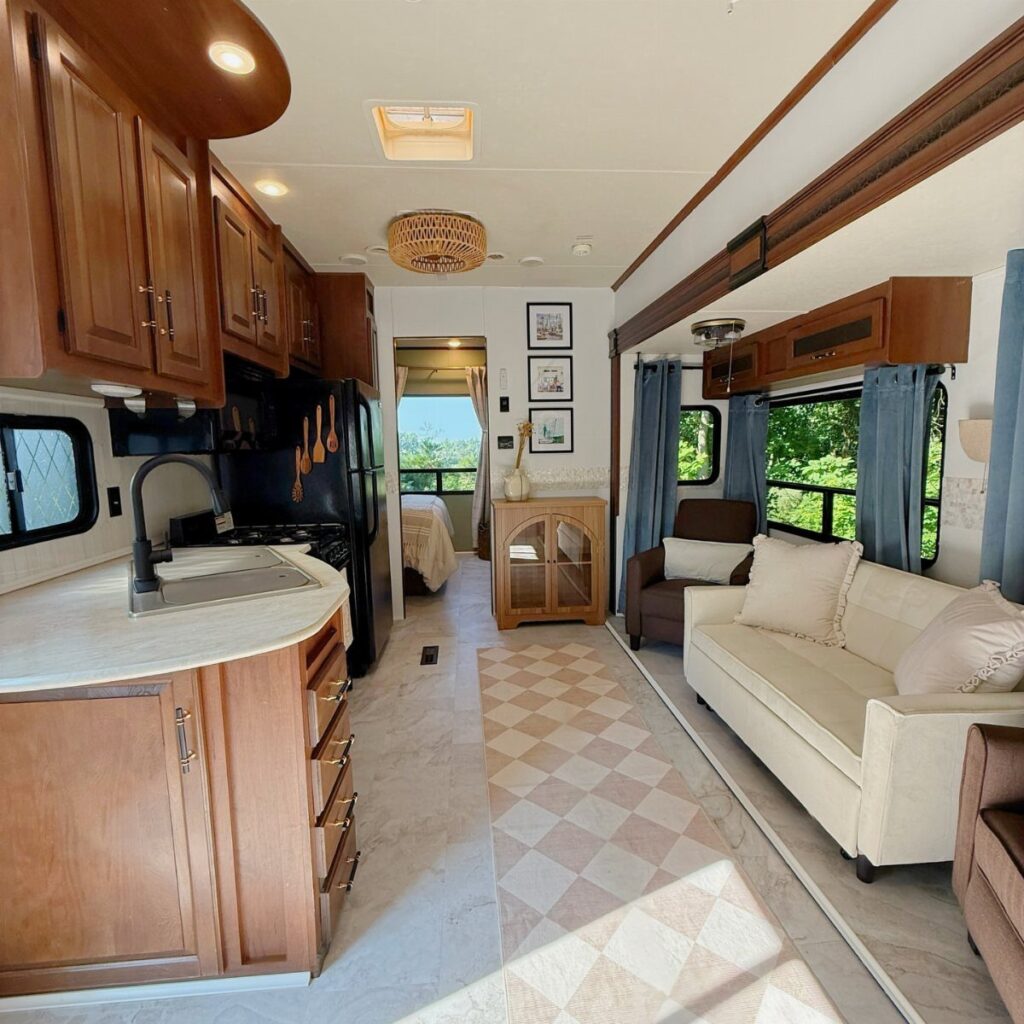
An RV interior shifts between wallpaper that peels off in minutes and floating shelves that take an afternoon to install, and the distance between projects matters when you’re working in 200 square feet with walls that flex.
Pick based on what you’re willing to undo: removable wallpaper and peel-and-stick backsplash come off cleanly if you sell or want to reverse course, while an accent wall and DIY projects commit you to the finish.
Low-pile rugs stay put better than thick shag during travel, and Command strips hold frames without anchor holes in thin RV walls.
1. Removable Wallpaper
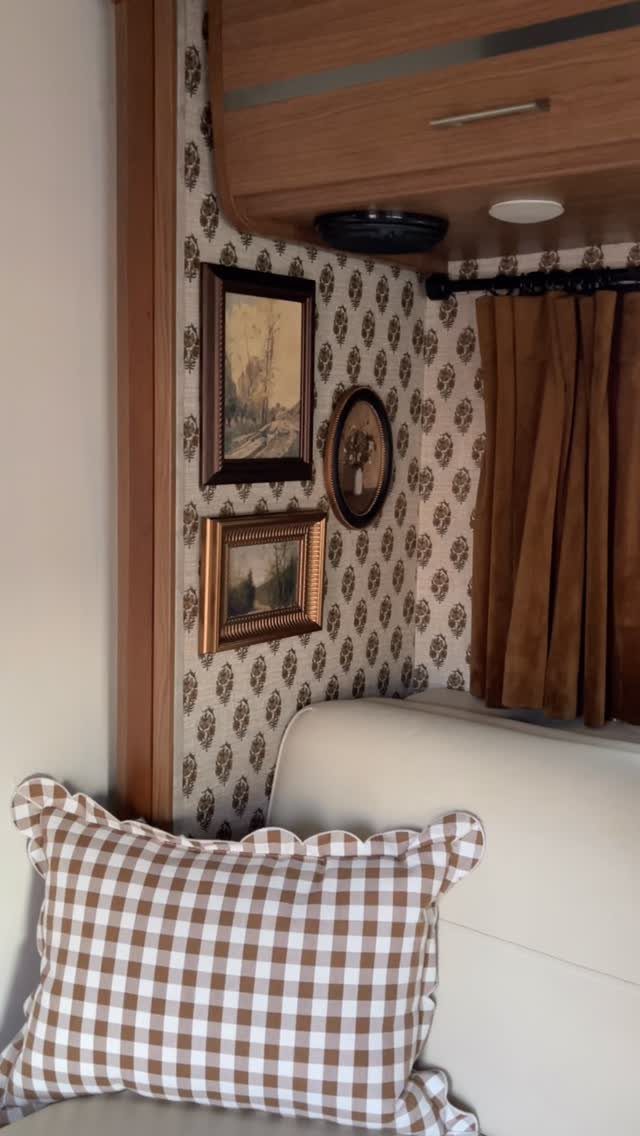
Removable wallpaper changes the look of an RV interior without the commitment of traditional wallpaper or paint. It peels off cleanly when you’re ready for a change, which matters in a space you might sell or return to stock condition.
Installation takes about an hour for a small accent wall. Clean the surface, measure and cut your panels, then smooth them on from top to bottom to avoid bubbles.
Patterns with smaller repeats work better in tight RV spaces than large-scale designs. A subtle texture or geometric keeps the room from feeling closed in.
2. Gallery Wall
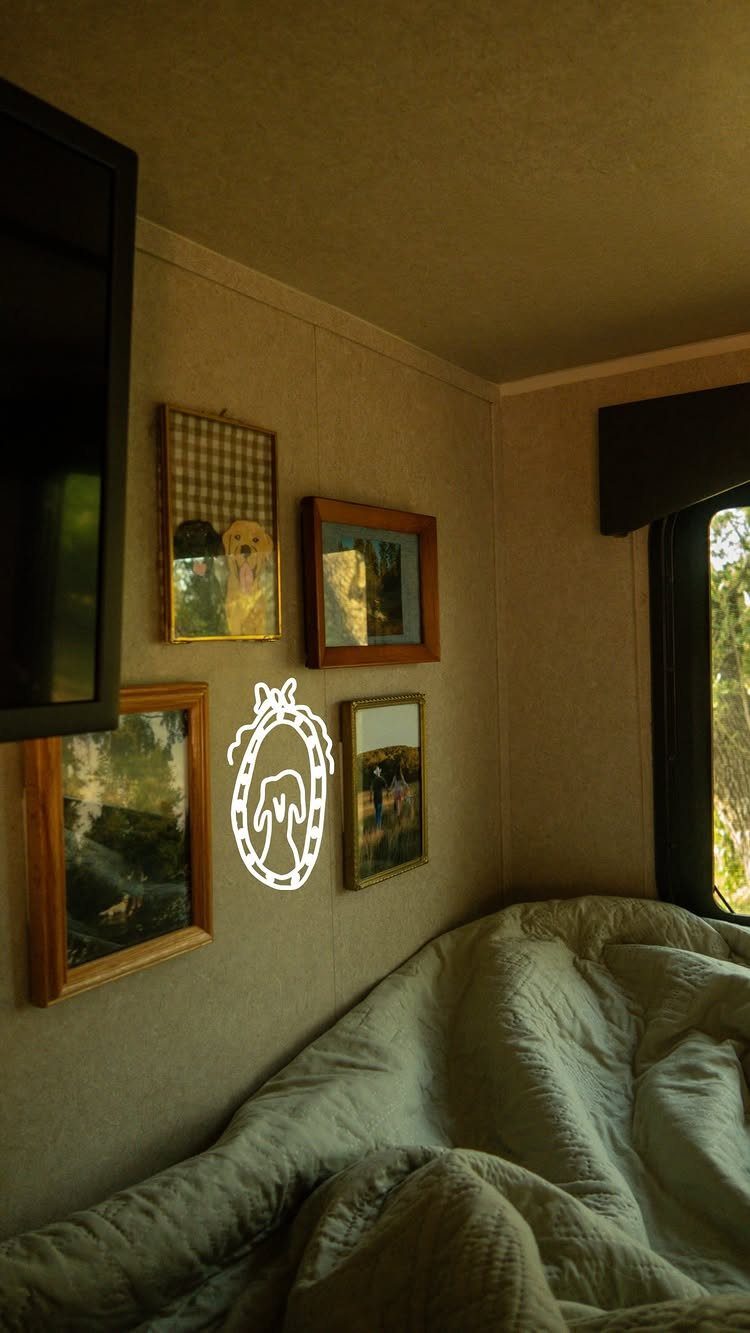
A gallery wall fills vertical space with personal photos and prints, turning a blank RV wall into something that feels like home. Frames in matching finishes keep the look cohesive even when the images vary.
Start with the largest frame at eye level, then build around it. Lay the arrangement on the floor first to get the spacing right before you commit to nail holes.
Command strips hold frames without damaging RV walls. For anything heavier, find a stud or use an anchor rated for your wall type.
3. String Lights
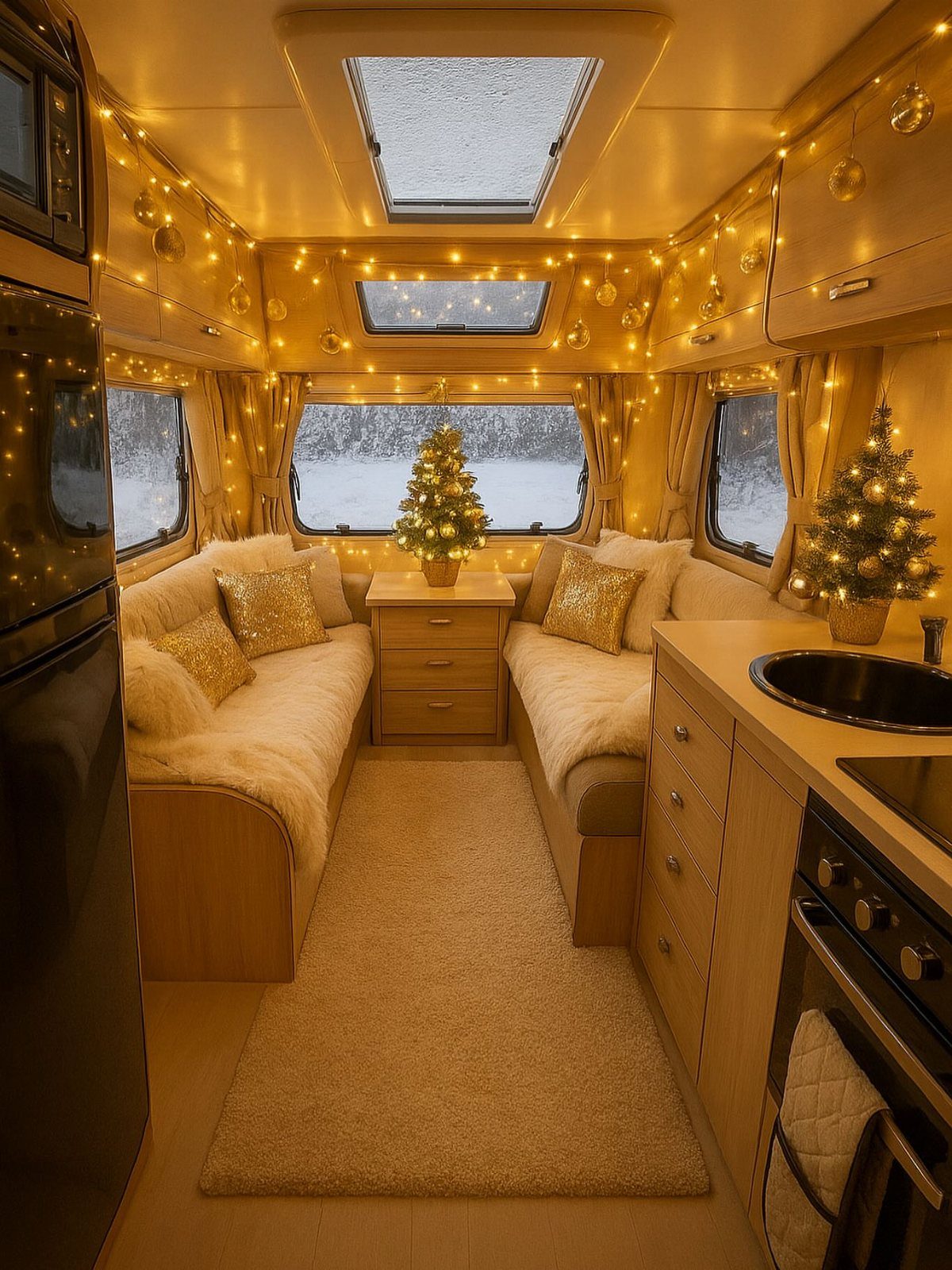
String lights soften the overhead lighting in an RV and add warmth without wiring or permanent fixtures. Battery-operated versions mean you’re not hunting for outlets or running extension cords across narrow walkways.
Drape them along the ceiling line, wrap them around cabinet edges, or hang them in swags across a window. You want ambient light, not task lighting, so keep them diffuse.
Warm white bulbs feel cozier than cool white in a small space. If you’re decorating for a season, clear bulbs let you swap in colored ones later without replacing the whole strand.
4. Throw Pillows
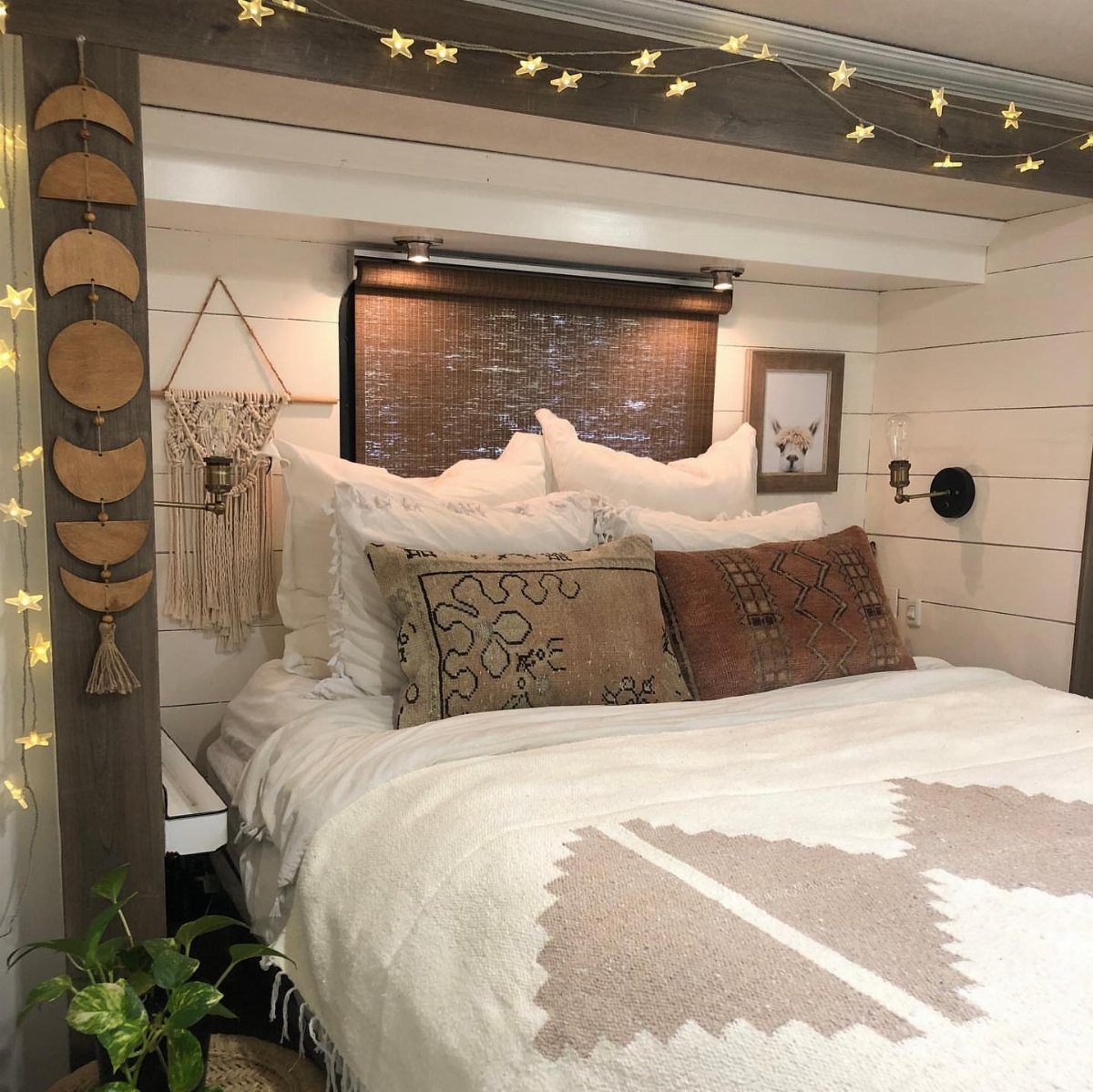
Throw pillows add color and texture to seating without the expense or effort of reupholstering built-in furniture. Swapping covers between seasons keeps the space from feeling static.
Choose covers with zippers so you can wash them easily. RV fabrics take more wear than home furniture, and anything on a bench seat near the door gets dirty fast.
Mix 2 patterns with 1 solid in the same color family. Too many competing prints feel chaotic in a space this size, and all solids read flat.
5. Area Rugs
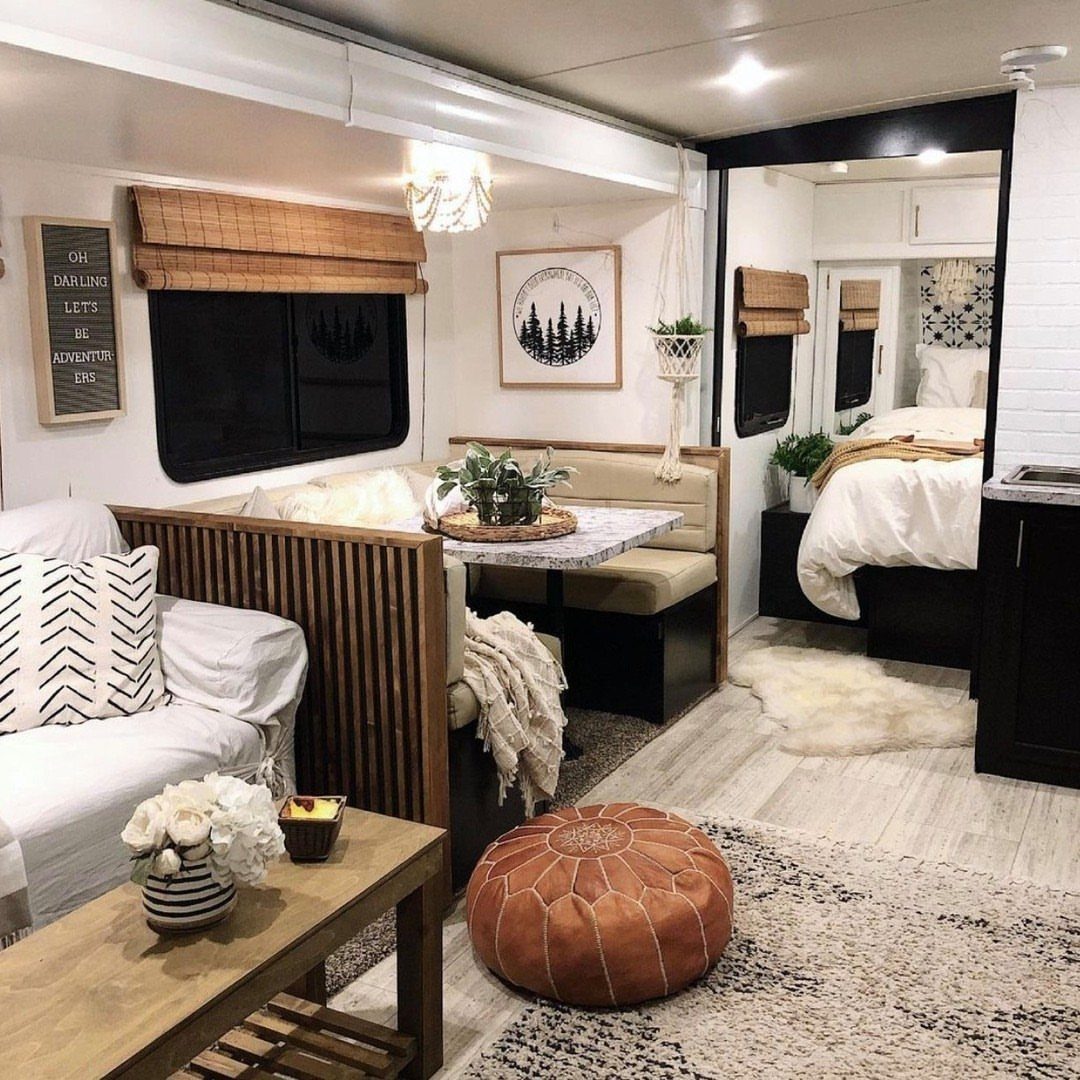
An area rug defines the living space in an open RV layout and adds softness underfoot where hard flooring dominates. It also protects the original floor from wear in high-traffic zones.
Size the rug so it fits under at least the front legs of your furniture. A rug that floats in the middle of the room looks disconnected, and one that’s too large will bunch at the walls.
Low-pile or flatweave rugs slide less than thick shag and stay cleaner when you’re tracking in dirt from outside. Rubber rug pads keep them in place during travel.
6. Floating Shelves
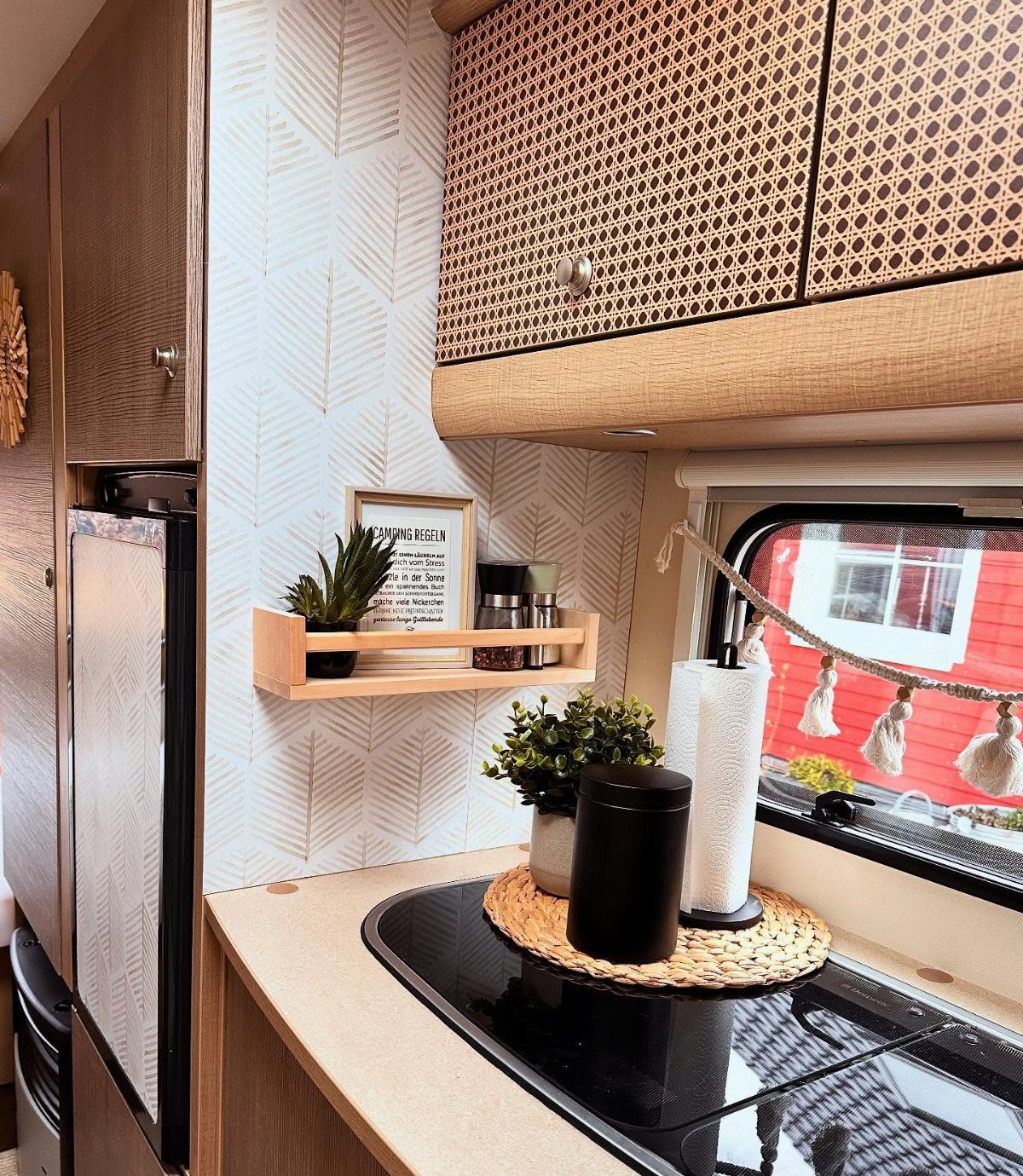
Floating shelves add storage and display space in an RV kitchen or living area without eating into the narrow floor plan. A single shallow shelf holds spices, small plants, or decorative objects that would otherwise clutter the counter.
Mount shelves to studs whenever possible for the best hold. In an RV, thinner walls mean shorter screws.
Keep the depth narrow so the shelf doesn’t jut into the walkway. Anything deeper juts into the aisle and catches elbows, especially in a galley kitchen.
7. Colorful Curtains
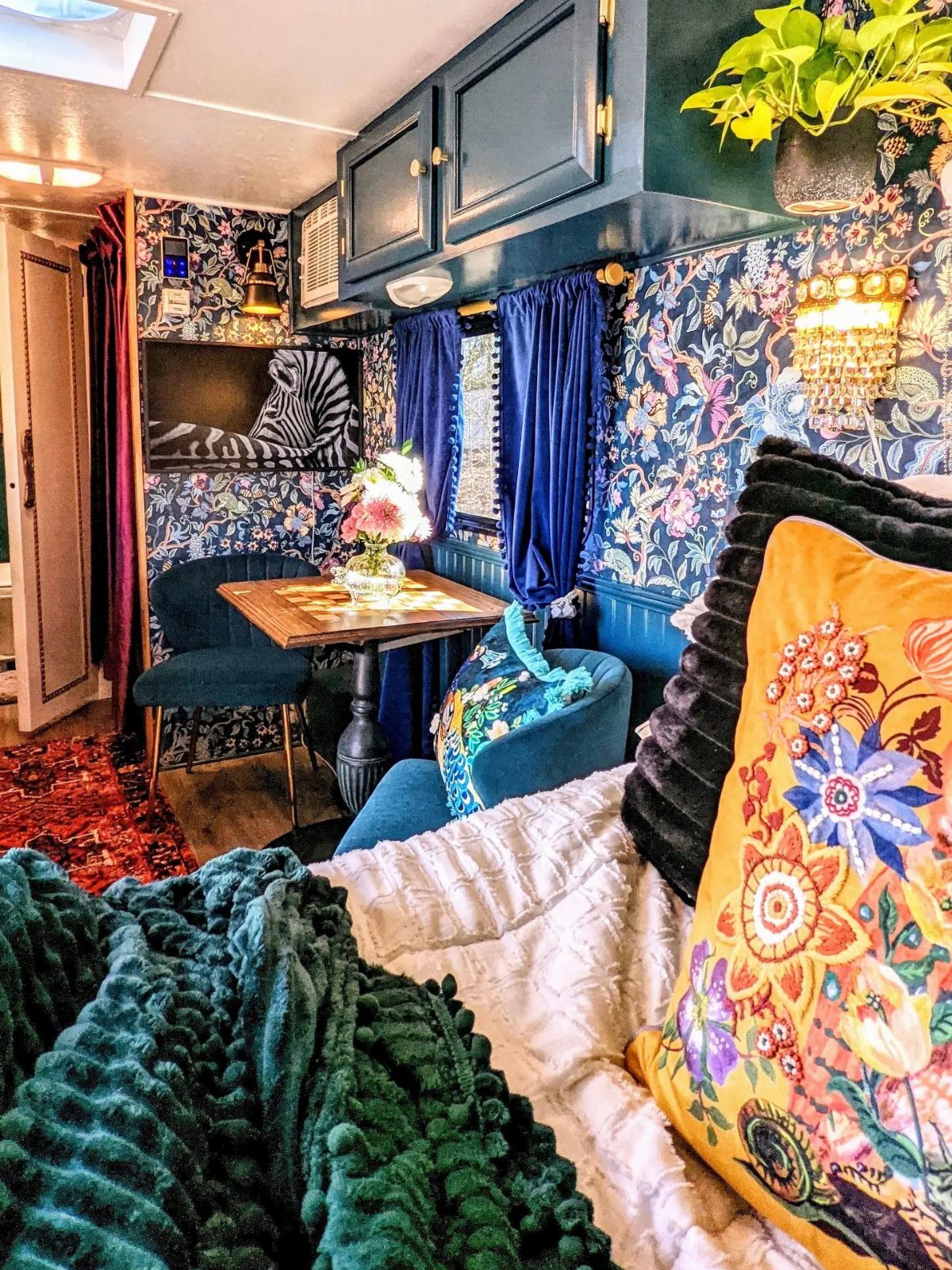
Curtains in a bright color or bold pattern draw the eye and make standard RV windows feel less utilitarian. The fabric softens the space and gives you privacy without blocking light completely when you go with a lighter weave.
Measure the width of your window and double it for fullness. Tension rods install without drilling and stay put during travel.
Velvet or heavier cotton drapes well and holds its shape better than thin polyester. If the fabric wrinkles easily, you’ll spend time steaming it after every trip.
8. Indoor Plants
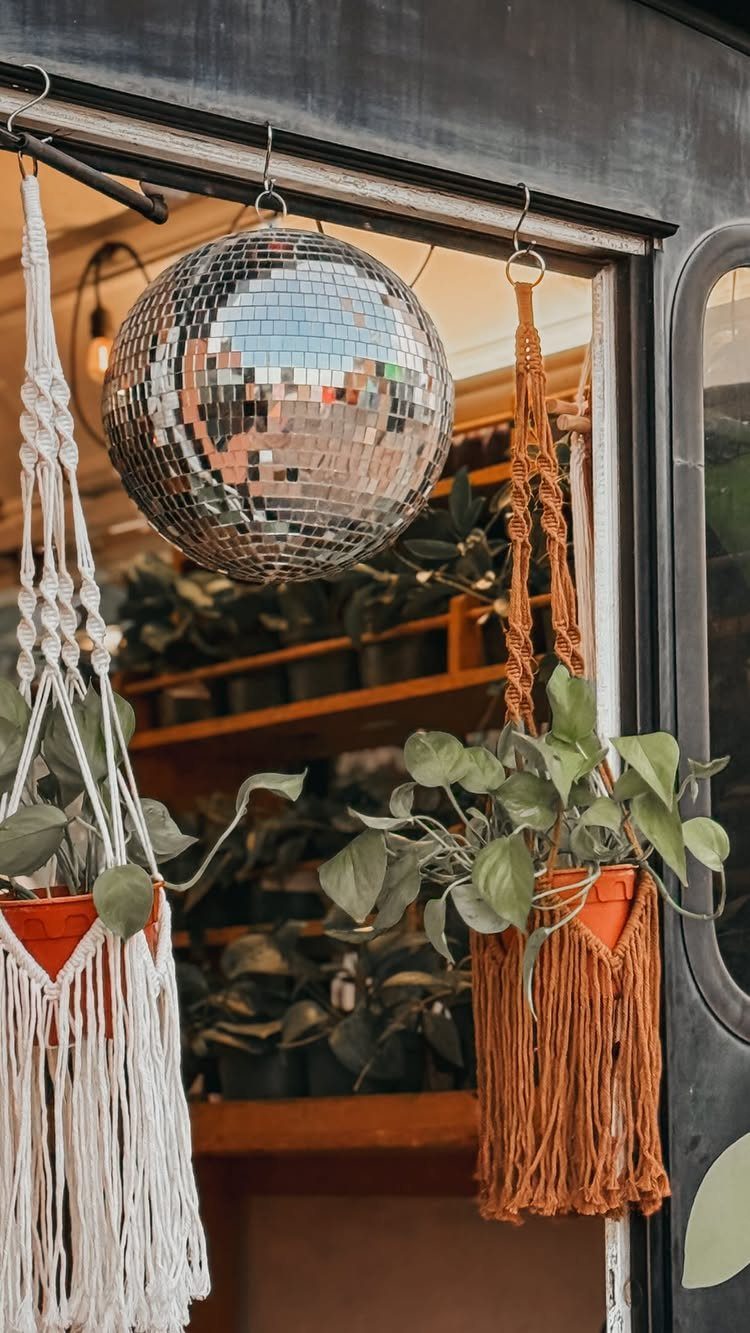
Live plants improve air quality and bring color into an RV without taking up counter space when you hang them. Pothos, spider plants, and philodendrons tolerate low light and bounce back if you forget to water.
Macrame hangers work on ceiling hooks or over cabinet doors. Keep the pot small so the weight doesn’t pull the hook out during travel.
Water sparingly. RVs have less airflow than houses, and wet soil in a closed space grows mold faster than you’d expect.
9. Faux Plants
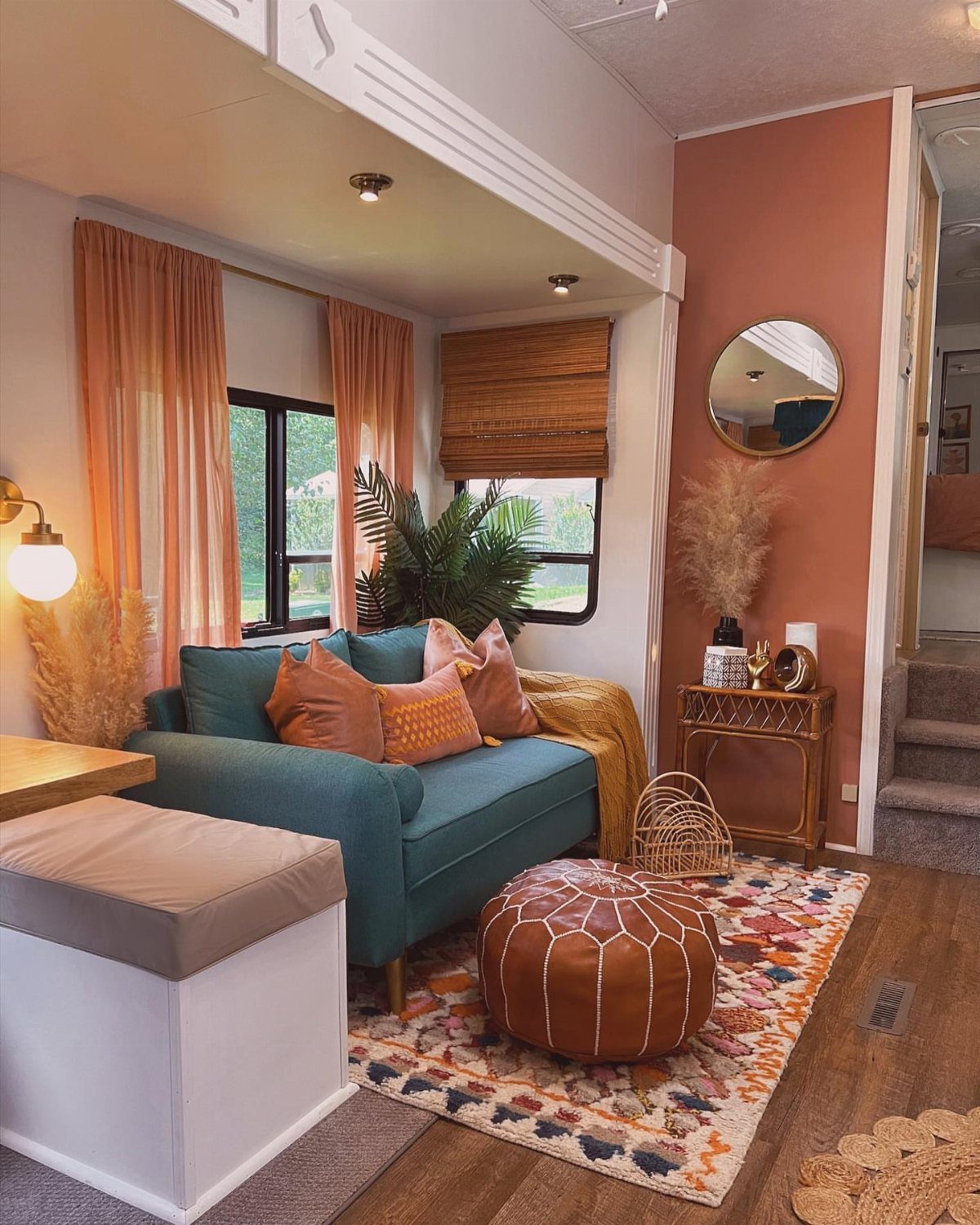
Faux plants give you the look of greenery without the watering schedule or the cleanup when a real plant dies in transit. A large potted faux tree fills a corner and adds height in a low-ceiling space.
Quality faux plants have varied leaf shapes and slight color differences between stems. The flat green plastic versions read fake immediately.
Dust them every few weeks or they’ll look worse than no plant at all.
10. Storage Bins
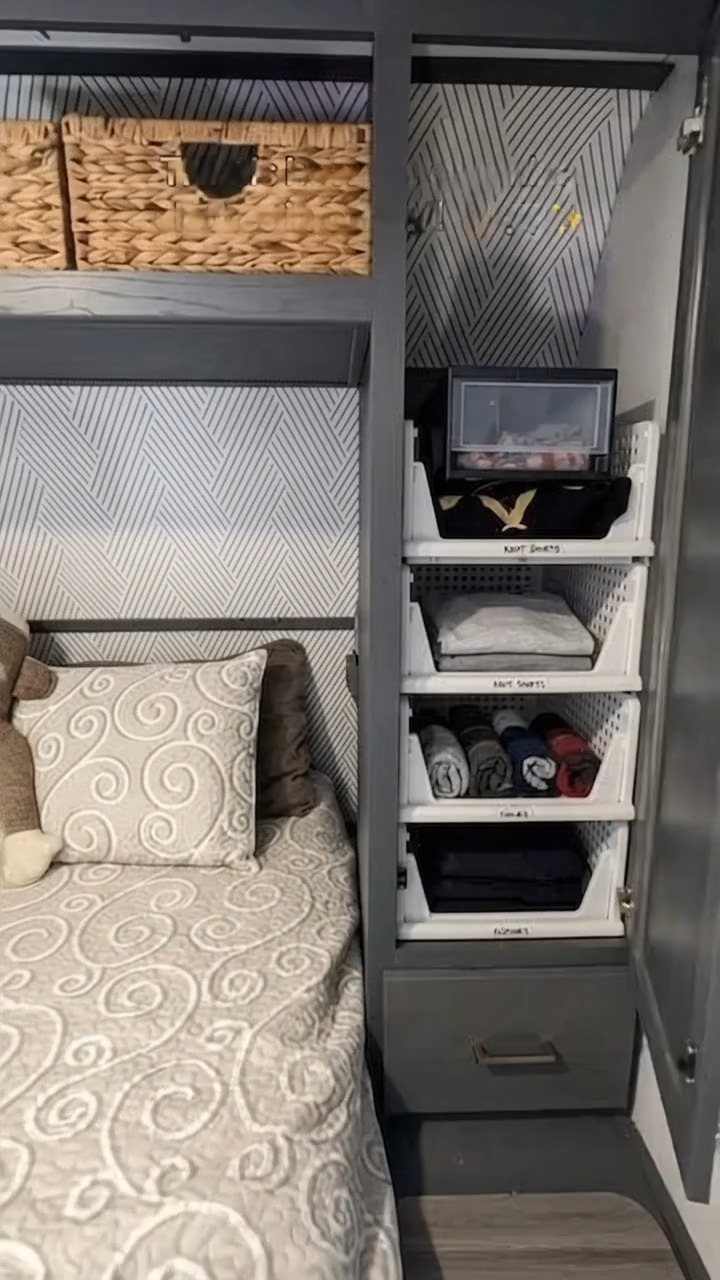
Storage bins corral small items and keep cabinets from turning into junk drawers. Labeled bins make it easy to find what you need without pulling everything out.
Woven baskets or fabric bins look better on open shelves than plastic tubs. Size them to fit the shelf depth so they don’t stick out into the walkway.
A tiered organizer holds more in a narrow space and keeps everything visible. Stack bins by category so you’re not digging through layers to reach one thing.
11. Natural Wood
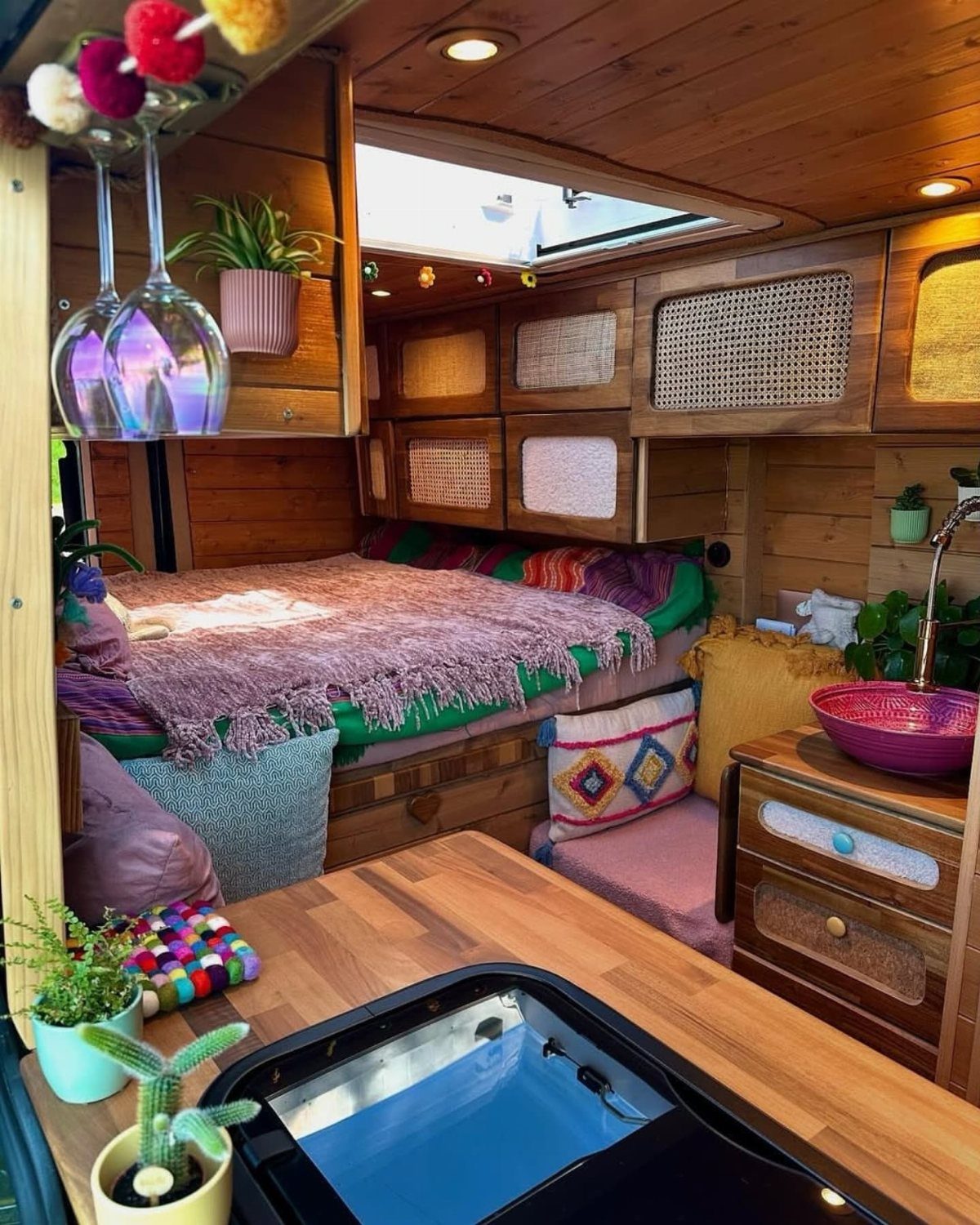
Natural wood adds warmth and texture to an RV interior that often comes finished in laminate or painted surfaces. Reclaimed wood planks or rough-cut boards bring in character without looking too polished.
You can panel a wall, add a wood headboard, or replace a countertop with butcher block. The grain and tone break up flat surfaces and make the space feel more custom.
Seal the wood if it’s going near a sink or in a high-humidity area. Unfinished wood absorbs moisture and warps in a closed RV.
12. Accent Wall
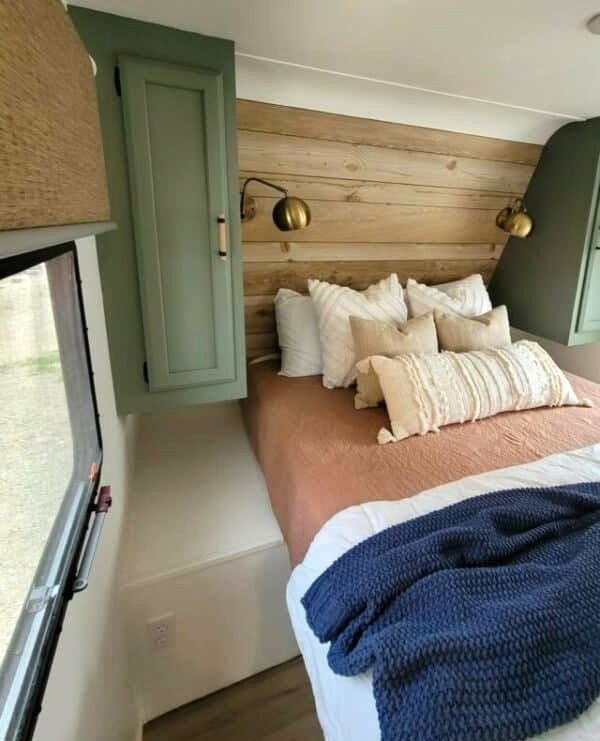
An accent wall creates a focal point and breaks up the monotony of builder-grade RV interiors. Paint, wood panks, or peel-and-stick panels all work, and the project takes a few hours.
Choose the wall behind the bed or the one facing the entry so it’s the first thing you see. Keeping the other walls neutral lets the accent wall stand out without overwhelming the space.
Light colors make tight quarters feel bigger. Darker tones add drama but can make a tight space feel closed in if the lighting isn’t strong enough.
13. Peel-and-Stick Backsplash
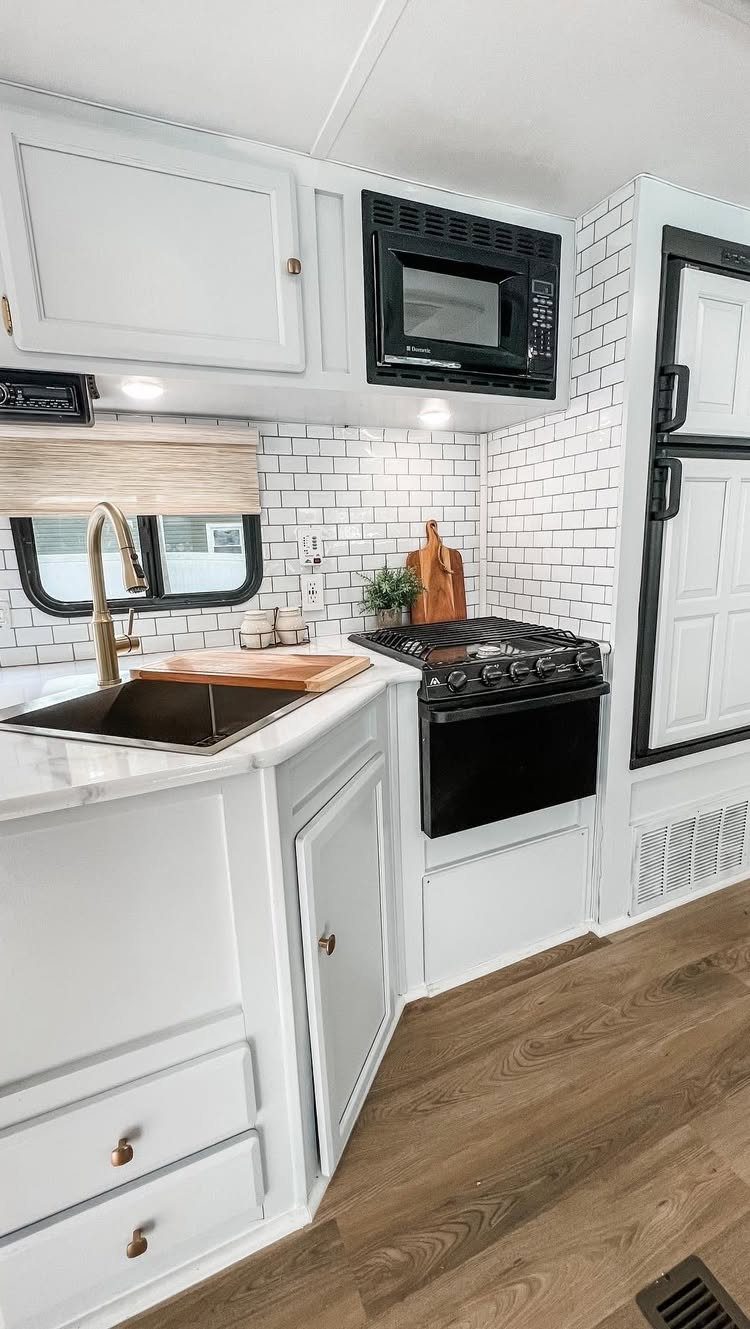
Peel-and-stick backsplash tiles update an RV kitchen or bathroom in an afternoon without grout or special tools. The adhesive backing means you press them into place and trim the edges with a utility knife.
Subway tile in white or a neutral tone keeps the space feeling open. Busy patterns can overwhelm a small galley kitchen where you’re already looking at cabinets, counters, and appliances in a few square feet.
Clean the wall with rubbing alcohol before you start so the tiles stick properly. Any grease or residue will cause them to peel at the edges.
14. Decorative Accents
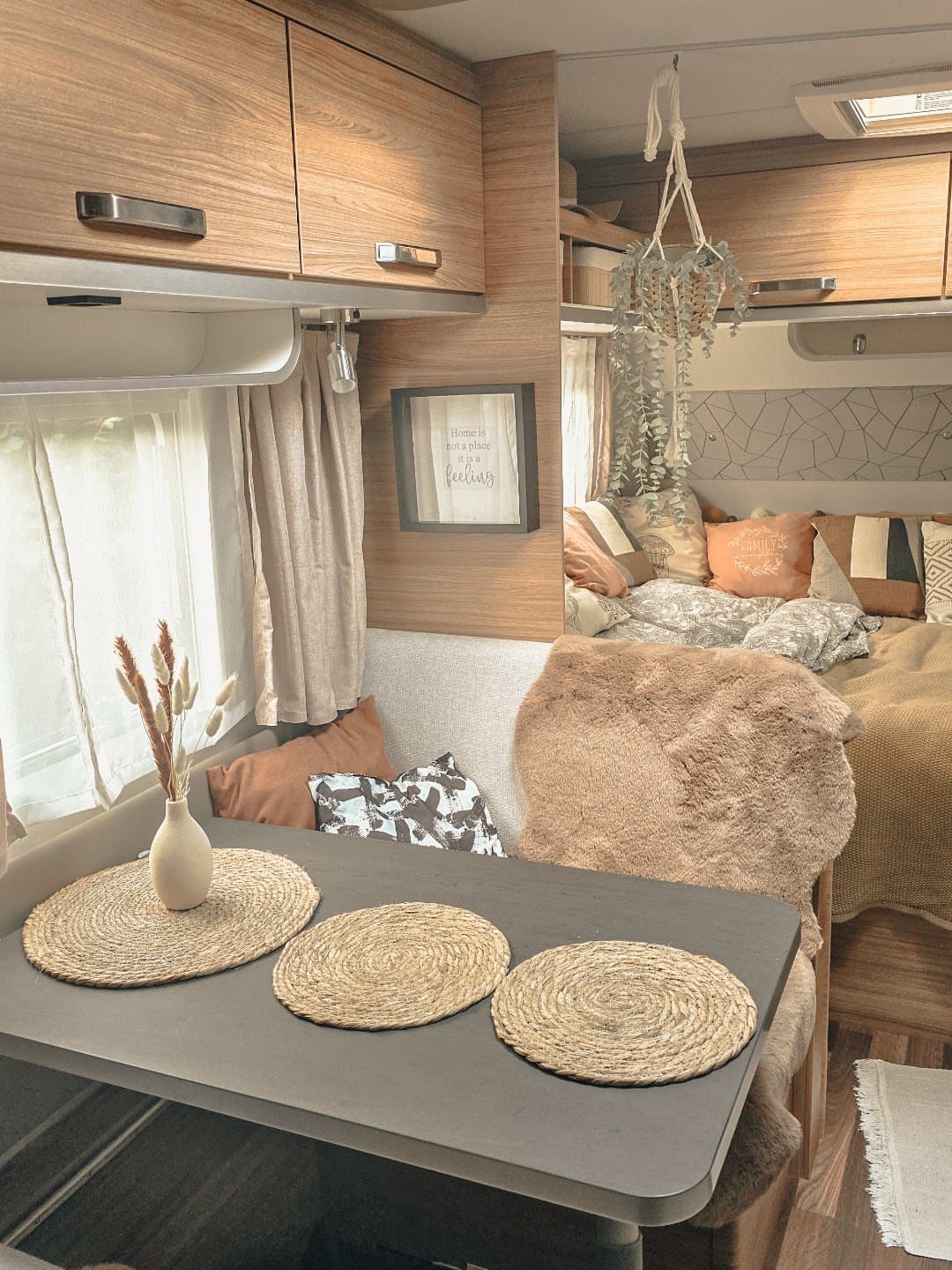
Small decorative accents pull a space together without requiring a full redesign. A vase, a set of woven placemats, or a framed sign adds personality to surfaces that would otherwise stay bare.
Choose pieces in colors that repeat elsewhere in the room. The woven texture of the placemats picks up the warmth of the plant basket, and the neutral tones tie back to the bedding.
Swap accents seasonally to refresh the look. A few small changes feel new without the cost or effort of replacing larger items.
15. Theme Decor
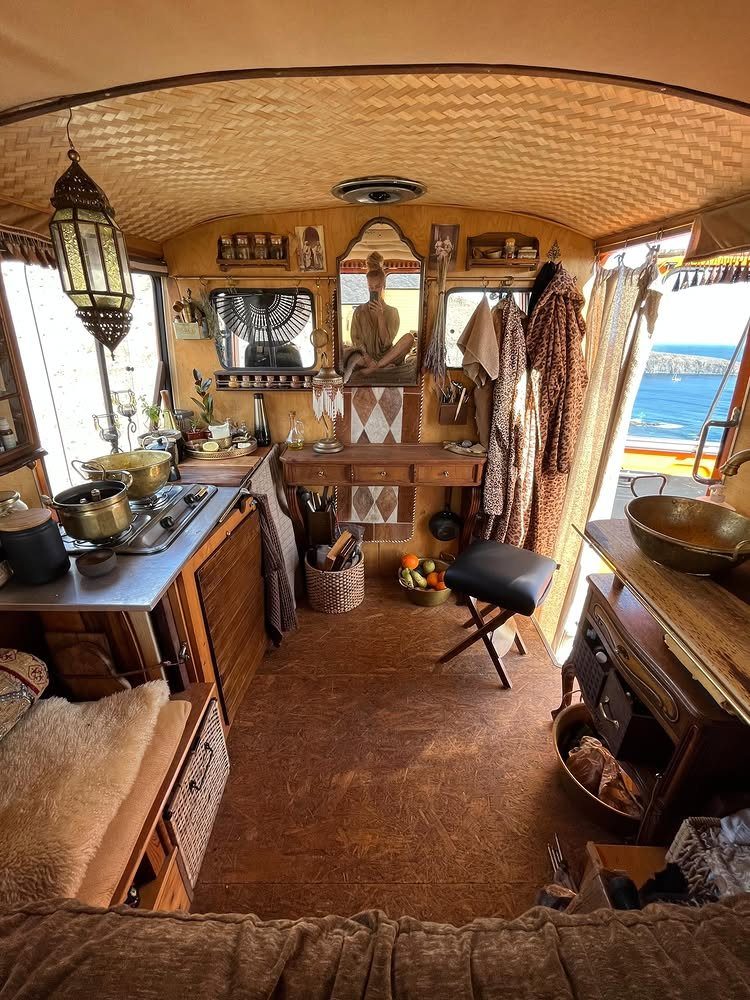
Committing to a theme gives an RV a pulled-together look instead of a collection of random pieces. Bohemian, coastal, or modern farmhouse all work as long as the textiles, colors, and materials stay consistent.
Pick one theme and let it guide every choice, from the curtains to the throw pillows to the wall art. The woven ceiling, layered textiles, and warm wood here all point to the same aesthetic.
A theme makes decorating easier because it narrows your options. You know what belongs and what doesn’t before you bring it home.
16. Decorative Towels
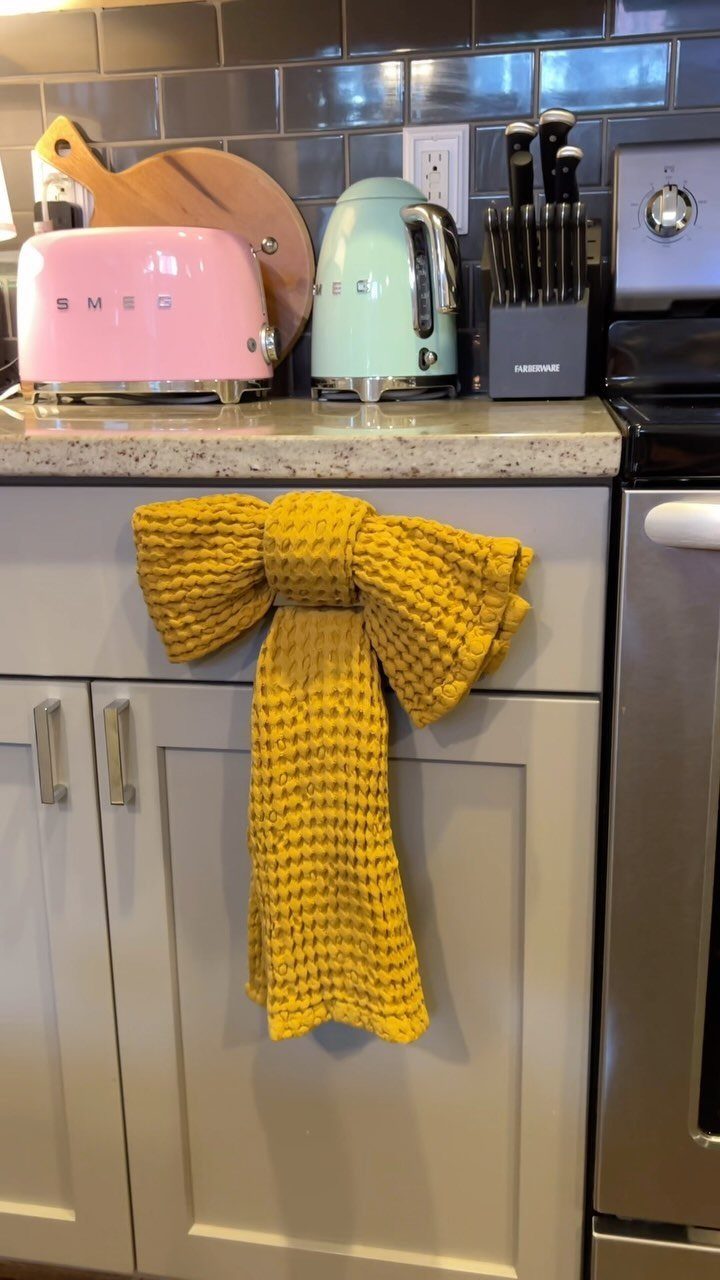
A decorative towel on a cabinet handle adds a finished look to an RV kitchen or bathroom. Tying it in a bow keeps it from slipping off while you’re driving.
Choose a towel in a color that contrasts with the cabinets so it reads as intentional, not leftover laundry. The yellow stands out against white and picks up the warm tones from the small appliances.
Change the towel when you change the season or the color scheme. It costs less than most decor updates.
17. Earthy Linen Bedding
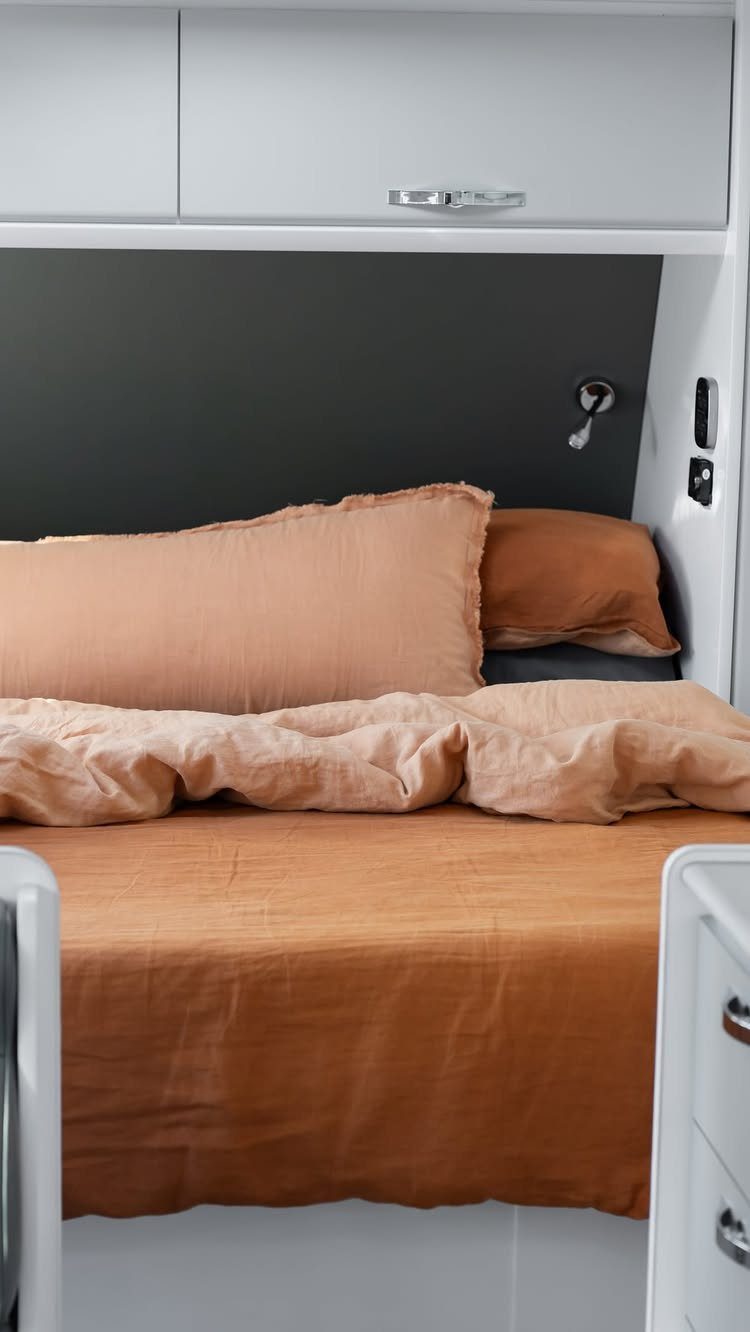
Linen bedding in warm earth tones makes an RV bed feel like a retreat instead of an afterthought. The natural texture of linen softens over time and breathes better than synthetic fabrics in a space that can get stuffy.
Terracotta, rust, and sand tones add warmth without reading too bold. They pair well with white or light wood cabinetry and keep the space feeling grounded.
Linen wrinkles easily, but that’s part of the look. If you prefer crisp bedding, stick with cotton percale instead.
Maximize Space
A sofa bed gives you seating during the day and a sleeping surface at night without claiming separate floor space for each function.
Tables with lift tops or drop leaves adjust to the task and tuck away when you’re not using them.
Storage ottomans hold blankets or kitchen supplies and double as extra seating. The lid lifts off, and the footprint stays small enough to slide under a dinette when you need the aisle clear.
Wall-mounted cabinets go up in places where a floor cabinet would crowd the space.
After you’ve lived in the space a few days, you’ll see where the layout fights you.
A shelf that came with the RV might sit at the wrong height or in a spot that crowds the room. Take it down and add storage where you actually need it.
Color Choices
White walls and light wood cabinets make a small RV interior feel more open than dark finishes. The lighter surface reflects more light, and the room reads bigger even when the square footage stays the same.
Accent walls and colorful wallpaper add personality without overwhelming the space.
Throw pillows, curtains, and small art bring in bursts of color that change easily. Digital prints on white backgrounds keep the focus on the color itself, and unframed pieces hang without adding visual weight.
Texture matters as much as color in a tight space. Sheepskin rugs, woven baskets, and linen bedding add depth and keep a neutral palette from feeling flat.
DIY Projects
Custom cushion covers let you choose the fabric and fit the exact dimensions of RV seating.
Measure the cushion, add seam allowance, and sew a zippered cover in a durable upholstery fabric. The original cushion stays intact, and you can swap covers when the fabric wears or you want a new look.
Removable wallpaper goes up without special tools or experience. If you make a mistake, peel it off and reposition it.
Painting cabinet fronts or drawer faces changes the look of an RV kitchen for the cost of a quart of paint and a weekend. Sand lightly, prime, and apply 2 coats with a foam roller for a smooth finish.
Frequently Asked Questions
What to paint camper walls with?
Use a primer before applying paint for better coverage and durability.
RV walls need that base coat because paint-and-primer combos won’t cover the surface well enough on their own. Light colors like white or off-white reflect the most light and make the interior feel more spacious.
What are some cool things to add to my camper?
Decorative accents like throw pillows, area rugs, and towels add color and personality without major effort.
Live or faux plants bring in greenery, and string lights create ambient warmth. Small changes like these make the space feel finished without cluttering narrow walkways or overwhelming the square footage.






