
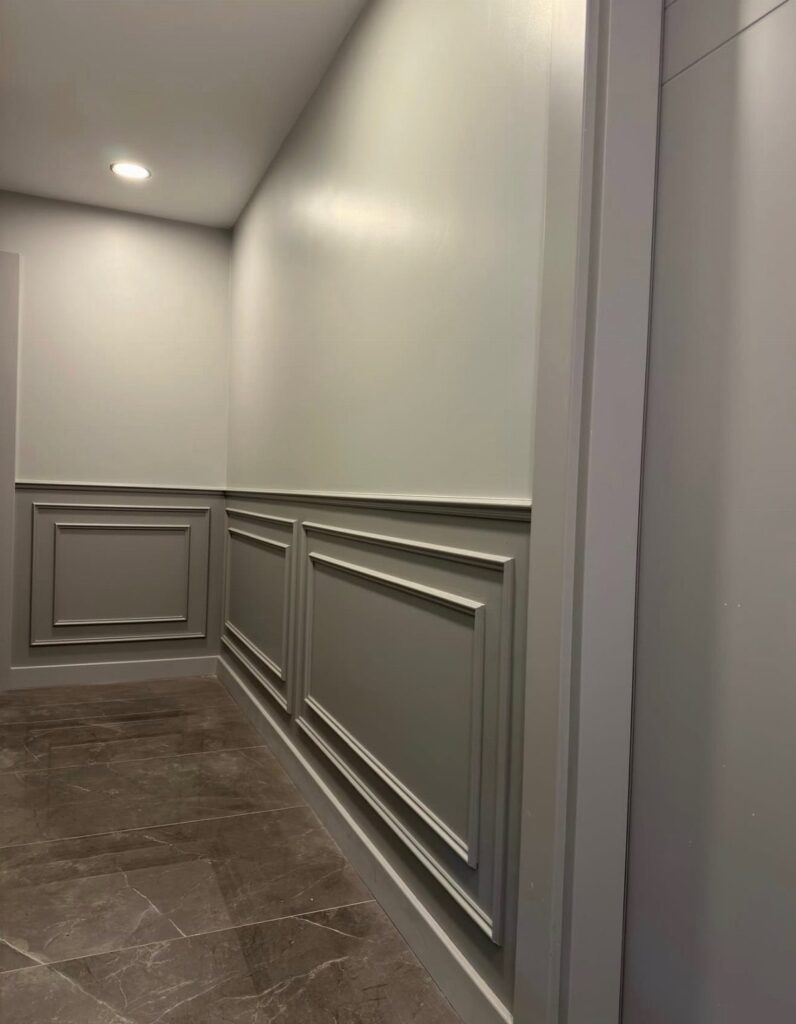
The height you choose for your chair rail decides where the visual break happens and how much wall you commit to each treatment.
The ideas that work best are the ones that pair the rail with two-tone paint, picture frame molding below it, or board and batten wainscoting.
A two-tone split gives you color without painting floor to ceiling, picture frame molding adds depth below the line, and board and batten wainscoting brings in texture you can feel.
1. Two-tone Wall with Chair Rail
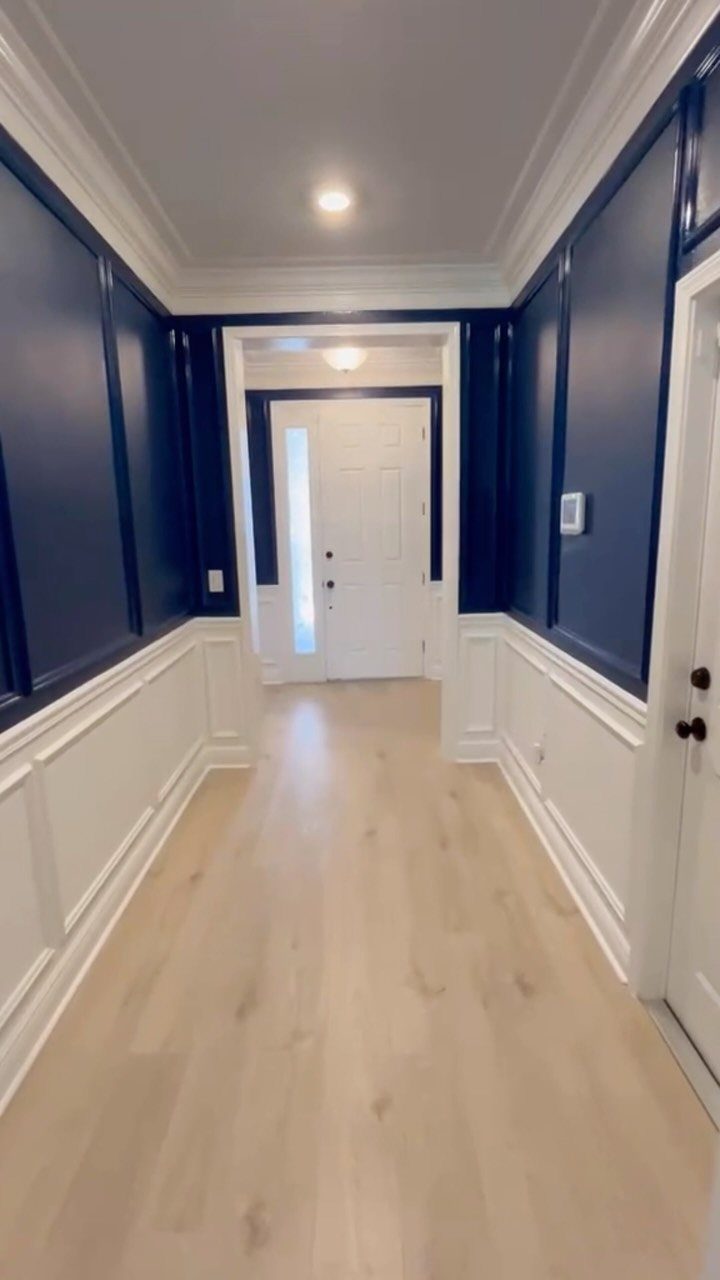
A chair rail divides the wall into 2 zones, each painted a different color. The lower section runs white, the upper a deep navy blue, and the rail itself stays white to match the trim below.
The split gives you a visual break without committing an entire room to one bold color. I find it works best when the darker shade goes on top, which keeps the space from feeling bottom-heavy.
Paint the chair rail and any wainscoting below it first, then tape off and roll the upper color. A 2-inch angled brush handles the edge where the rail meets the wall.
2. Chair Rail in Bathrooms
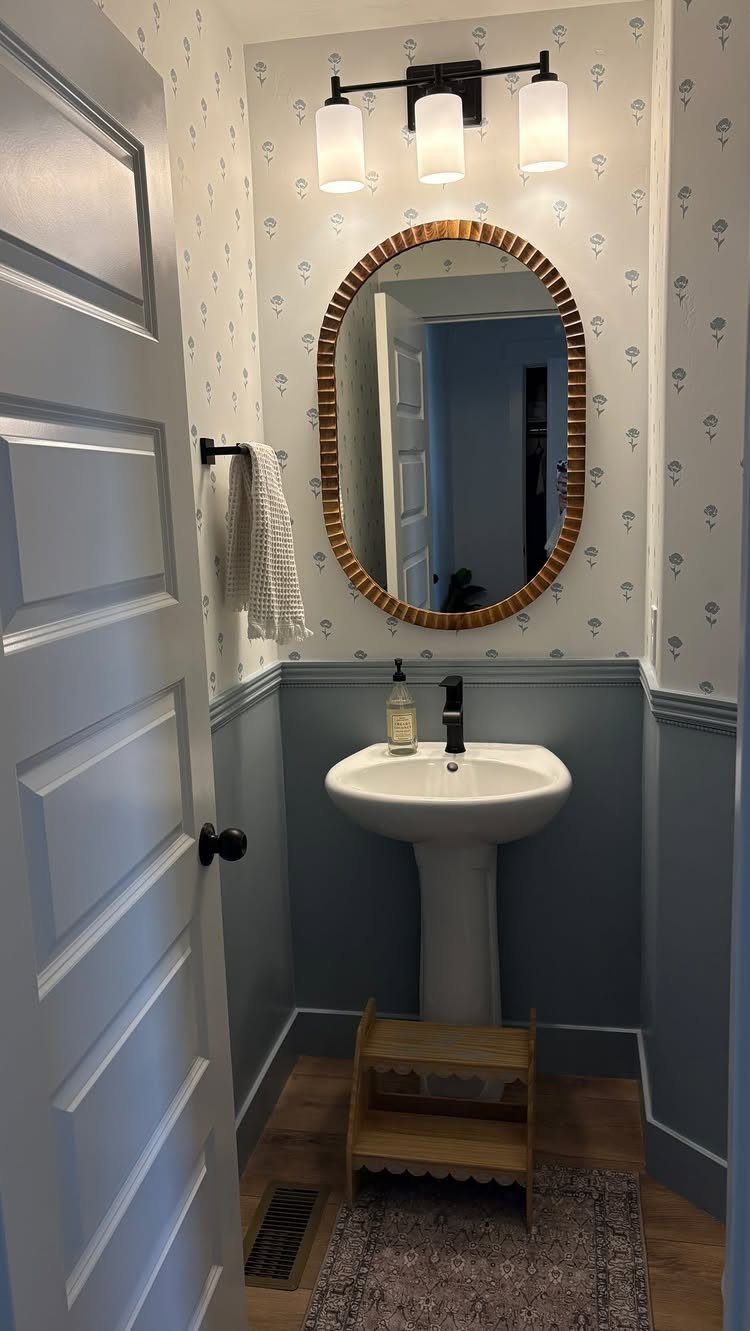
Chair rail in a bathroom adds a trim line that protects the wall and gives you a natural stopping point for paint or wallpaper.
In this space, the lower half is painted blue, the upper half gets a small-scale floral pattern, and the rail itself stays white.
Moisture matters here. I would use semigloss or satin paint below the rail, where splashes hit, and a vinyl-coated or solid vinyl wallpaper above it if you are putting paper near a sink or tub.
Install the rail high enough that it clears the sink and sits below most mirrors. Prime and caulk the seams before you paint.
3. Natural Wood Chair Rail
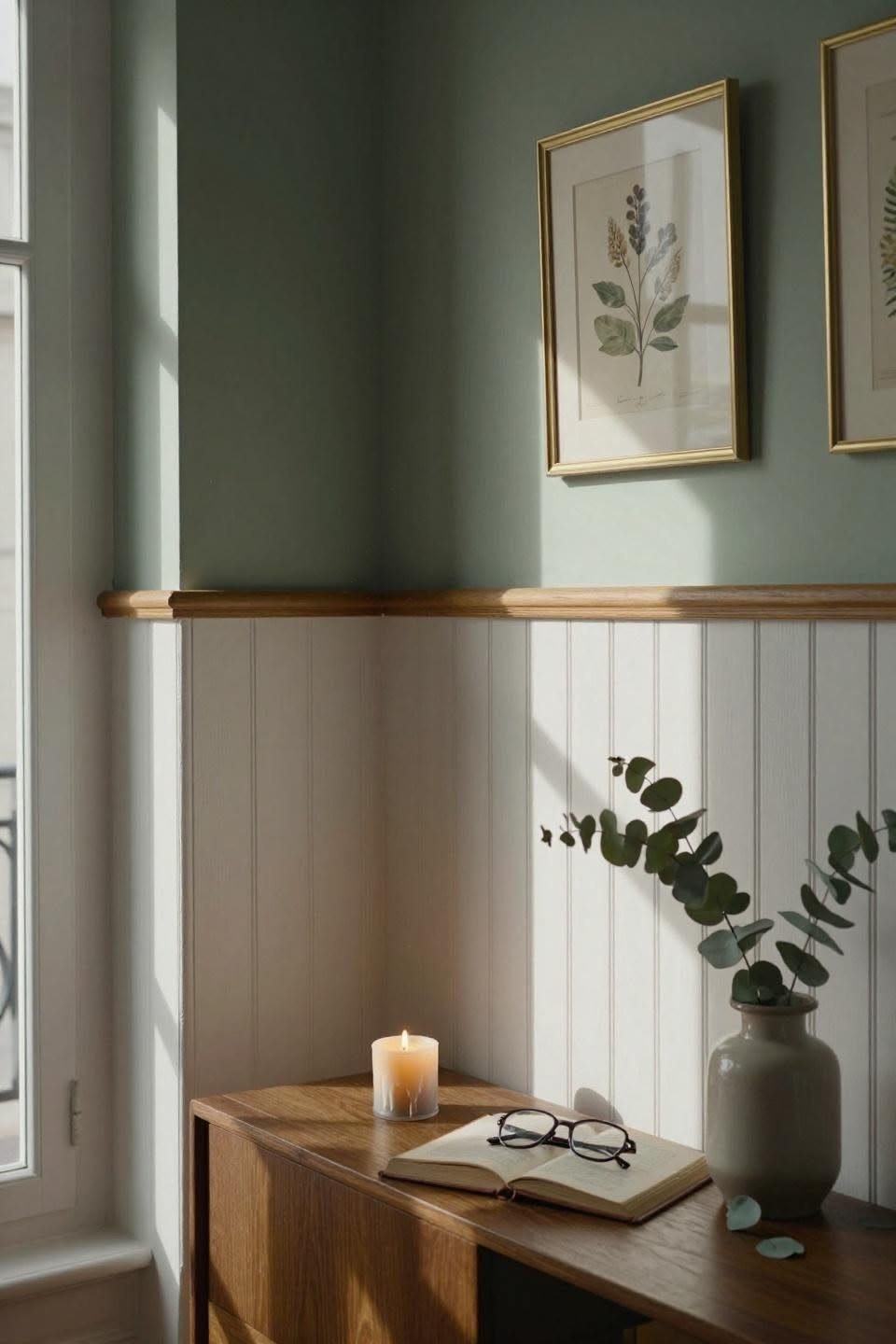
Natural wood chair rail brings warmth without covering the whole wall in stain.
I like it in rooms where you already have wood furniture or floors, because it ties those pieces to the architecture. Oak, poplar and pine all take stain well and cost less than prefinished hardwood trim.
Cut and fit the rail the same way you would painted molding, then sand, stain and seal it before nailing it in place. A clear satin polyurethane holds up better than wax in high-traffic areas.
4. Picture Frame Molding Below Chair Rail
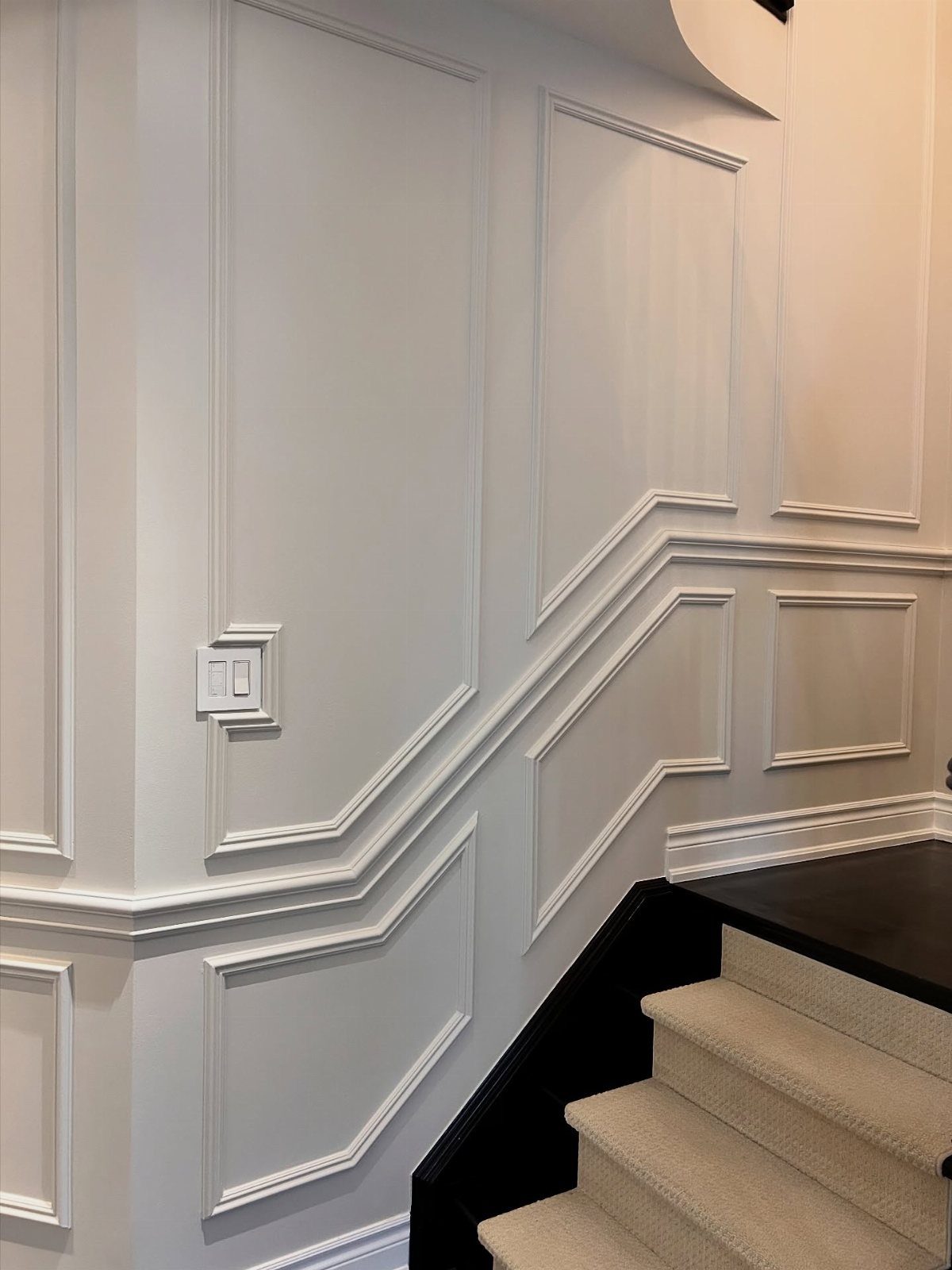
Picture frame molding sits below the chair rail in rectangular panels that follow the wall down the staircase.
Each panel is outlined in flat trim, painted the same white as the rail and baseboard, and the effect reads formal without adding much depth to the wall.
This treatment works on angled walls and landings where wainscoting would need complicated cuts.
Measure and mark your panels first, then cut 1×2 or 1×3 trim to fit each rectangle. Glue and nail the trim flat to the wall, caulk the joints, and prime before painting.
5. Layered Chair Rail
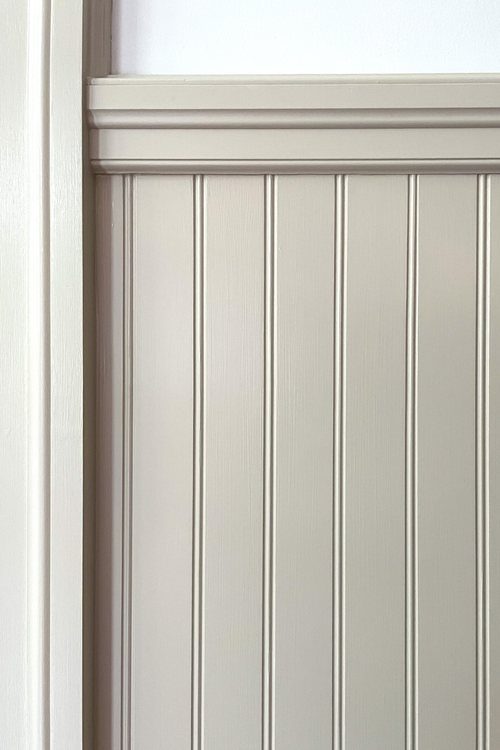
Layered chair rail stacks 2 or more molding profiles on top of each other to build a thicker, more detailed line.
This version pairs a flat cap molding over a thinner rail piece, both painted the same light neutral as the beadboard below.
The look reads more traditional than a single piece of trim, and it gives you a way to add presence without going wider than 3 or 4 inches total.
I would use it in a dining room or entryway where you want the trim to feel deliberate.
Install the lower piece first, level it, then add the cap on top with adhesive and finish nails. Fill the nail holes and caulk where the pieces meet before painting.
6. Board and Batten with Chair Rail
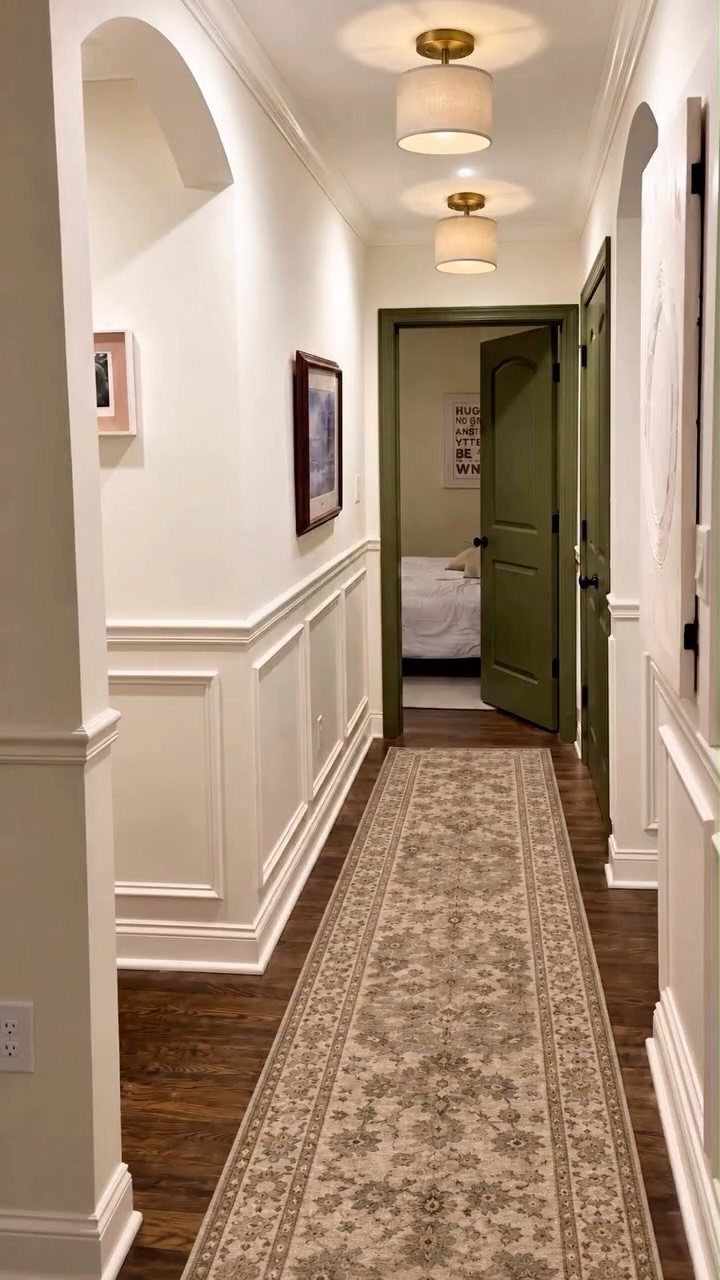
Board and batten wainscoting runs vertical boards at regular intervals between the baseboard and the chair rail, creating a paneled lower wall. The boards, rails and wall are all painted white here, and the repeating lines add texture without color.
Spacing the battens tight keeps the rhythm traditional. Cut your battens from 1×2 or 1×3 boards, space them evenly, and nail them into studs where possible or use construction adhesive on drywall.
Prime everything after installation. The seams between the battens and the wall need caulk before paint, or the lines will show gaps.
7. Chair Rail Height
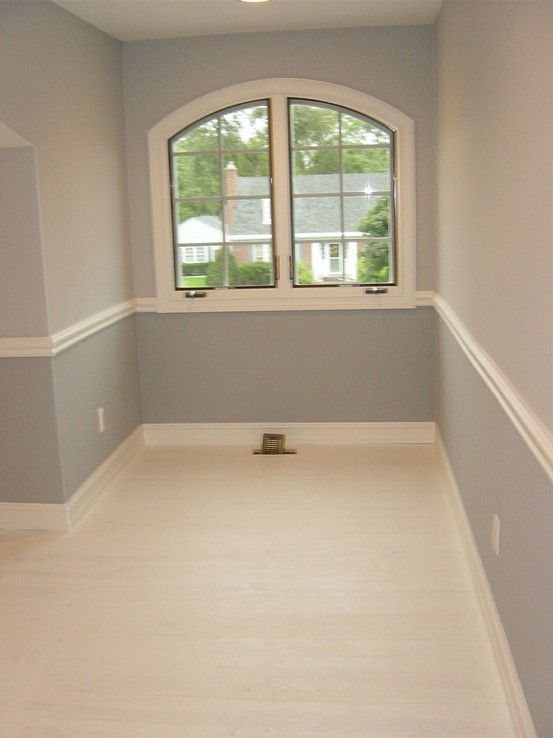
Chair rail sits one-third of the way up the wall from the floor, which usually lands between 32 and 36 inches in a room with standard 8-foot ceilings.
That proportion keeps the lower section from looking stubby and the upper zone from feeling cramped.
In a room with taller ceilings, you can push the rail higher, but I would still keep it below the midpoint.
Measure from the floor, mark a level line, and install the rail so its top edge sits on that line.
The rule of thirds holds up in most rooms. If you are adding wainscoting below, the rail goes directly on top of it.
8. Stenciling Designs Below Chair Rail
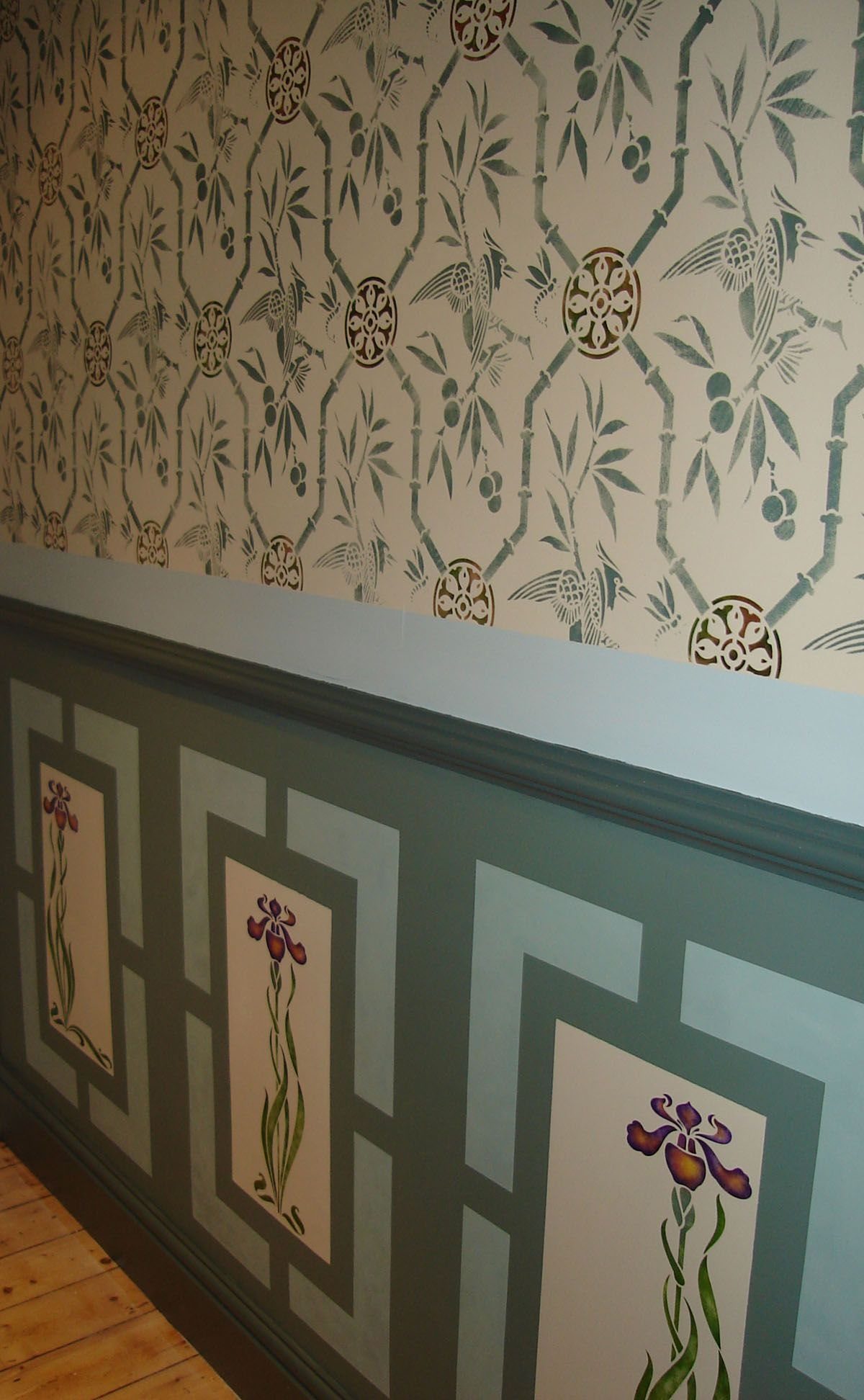
Stenciling below the chair rail gives you pattern without the cost or commitment of wallpaper.
The teal base color runs from the rail down to the baseboard, and the stenciled panels sit inside that zone, framed by white borders with purple iris blooms repeated in a grid.
Tape off the panel areas first, roll the base color, then position your stencil and work with a foam roller or stencil brush. Craft paint or leftover wall paint both work.
The repetition looks intentional when the spacing stays consistent. Measure and mark your panels before you stencil the first one.
Frequently Asked Questions
What is the difference between chair rail moulding and wainscoting?
Chair rail is a horizontal trim piece that runs along the wall, usually 32 to 36 inches up from the floor.
Wainscoting refers to paneling that covers the lower portion of the wall, and the chair rail often sits on top of it as a cap.
You can install chair rail without wainscoting, but wainscoting always needs a top edge, which is usually a chair rail.
What are the different styles of chair rails?
Chair rail styles range from a single flat piece to layered moldings that stack 2 or more profiles for a thicker line.
Natural wood rail brings warmth and works in rooms with existing wood furniture or floors. Picture frame molding below the rail creates formal rectangular panels, and board and batten adds vertical texture between the rail and baseboard.






