
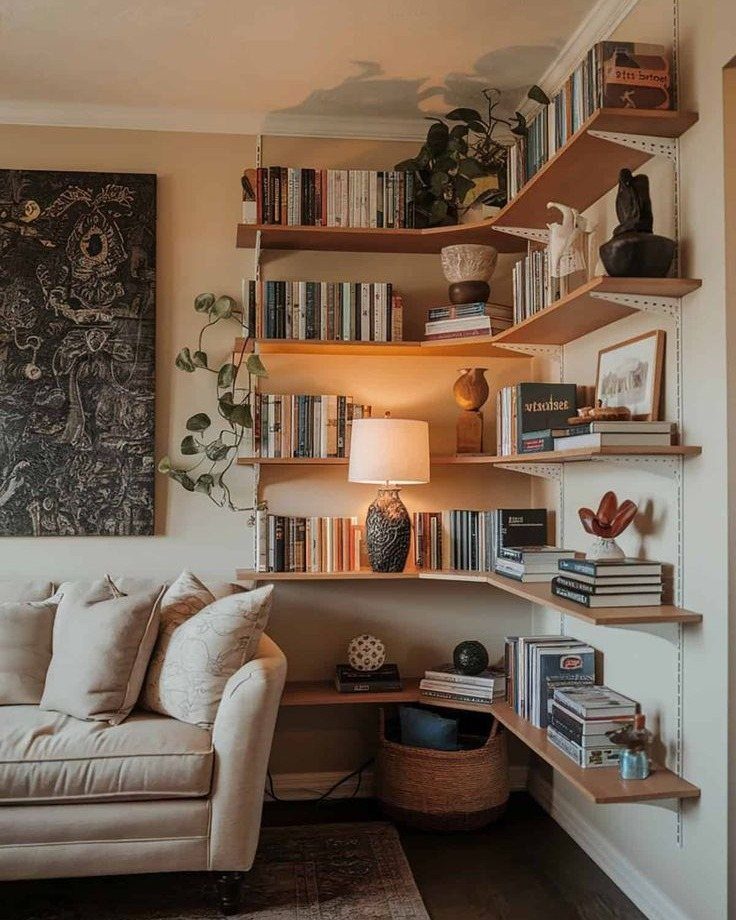
Corner bookshelves range from floating shelves you mount in an afternoon to floor-to-ceiling built-ins that fill the full height of the room.
The right option depends on how much you want to commit: freestanding triangular or ladder-style units move with you, while tall built-ins anchor to studs and hold serious weight.
1. Custom-Built Corner Bookshelf
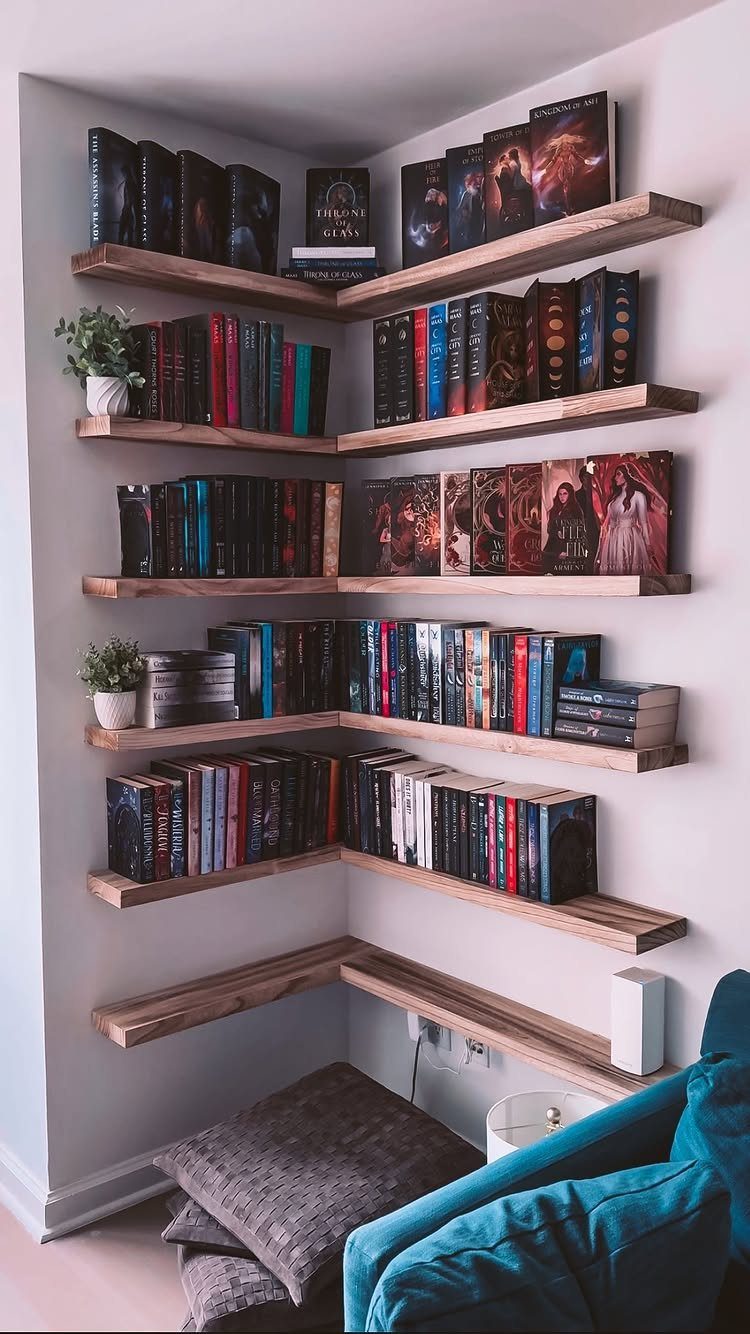
A corner bookshelf built to your exact dimensions fills the space without gaps or overhang.
You measure the corner height and depth, then cut shelves to match, which means books fit exactly where you need them and nothing sits too far from the wall.
If you’re working with an odd corner angle or a ceiling slope, custom-built is the only way to get shelves that sit flush.
The visible version uses L-shaped floating shelves that wrap around the corner, which keeps the look clean and lets you adjust spacing for tall books or small plants.
Paint or stain the wood to match your trim, and the shelves read as part of the room instead of added furniture.
2. Rustic Corner Bookshelf
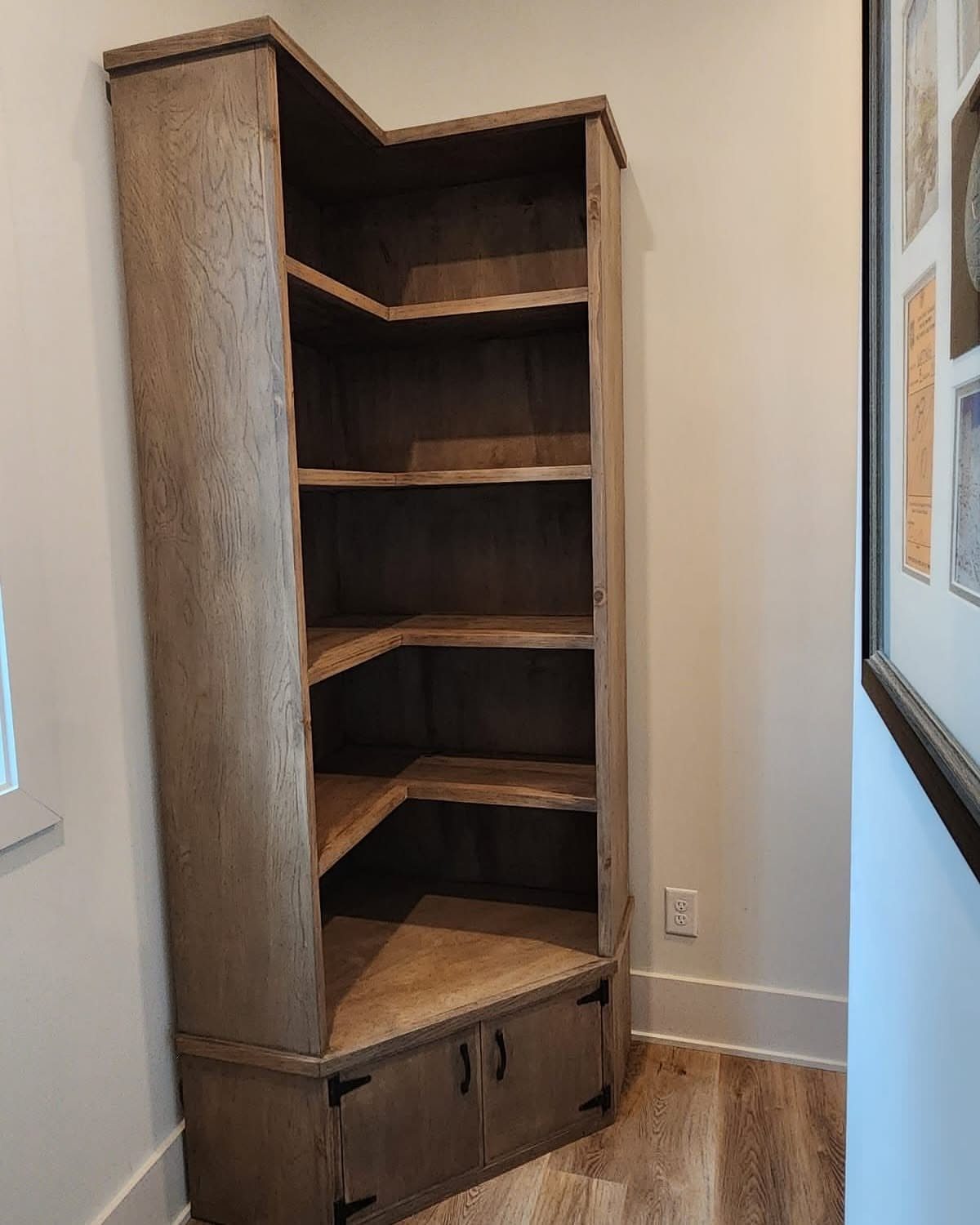
A rustic corner bookshelf brings warmth through visible wood grain and a handmade look. The open shelves hold books and small objects, and the cabinet below hides anything you don’t want visible.
This style works when you want storage that feels less formal than a built-in and more grounded than floating shelves. Light wood keeps the corner bright, but a darker finish works if your walls are pale or well-lit.
Most rustic corner units are freestanding, so you can move them if your layout changes.
3. Floating Corner Shelves
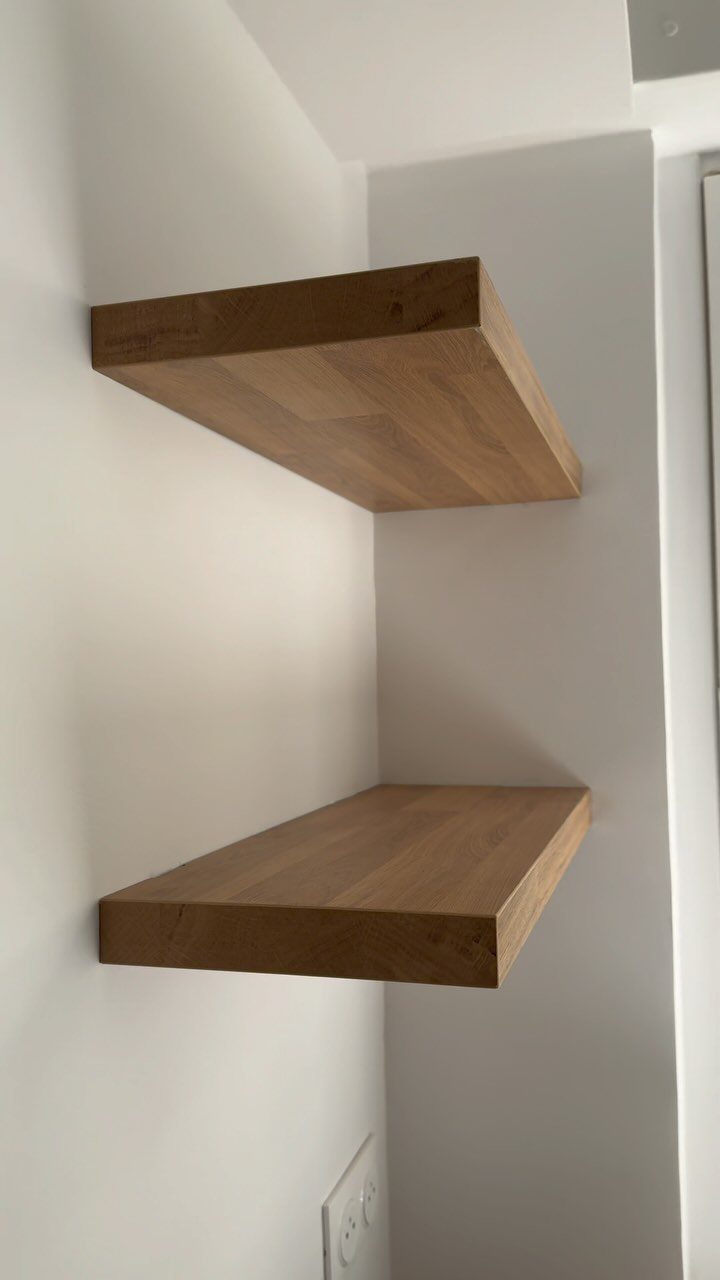
Floating shelves in a corner give you storage without the bulk of a full bookcase. Each shelf mounts directly to the wall with hidden brackets, so all you see is wood and books.
2 shelves work for a small collection, and you can add more as you need them. Place them at heights that match what you’re storing: tall books need more clearance, paperbacks can sit closer.
Thick shelves hold more weight and look more finished than thin ones. The light wood here reads modern, but you could stain them to match darker furniture.
4. Tall Corner Bookshelf
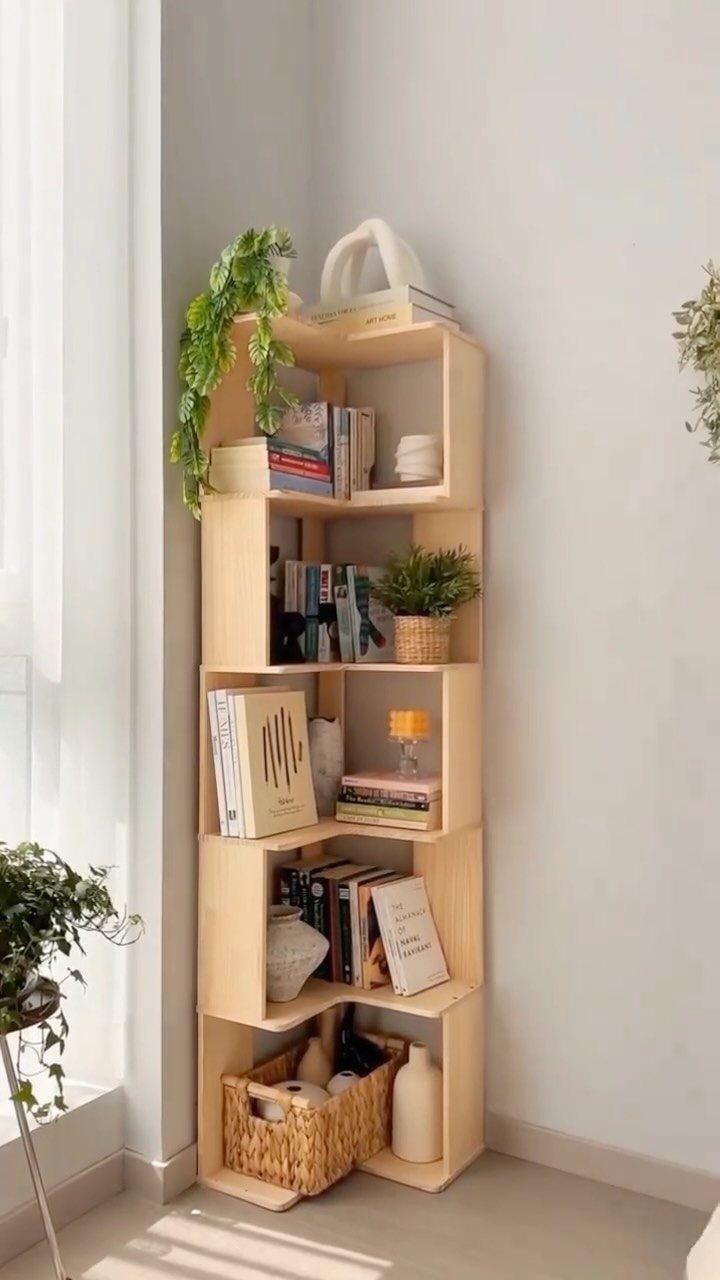
A tall corner bookshelf makes use of vertical space and holds far more than a standard 5-shelf unit.
The vertical design keeps the footprint small while giving you room for dozens of books, and the tiered shelves wrap around the corner so both walls carry weight.
If your corner gets good natural light, position the shelf so the window isn’t fully blocked.
I like this option when you have the wall height but not the floor space for a wide bookcase. Just make sure it’s anchored to the wall, especially if you’re loading the upper shelves.
5. L-Shaped Corner Bookshelf
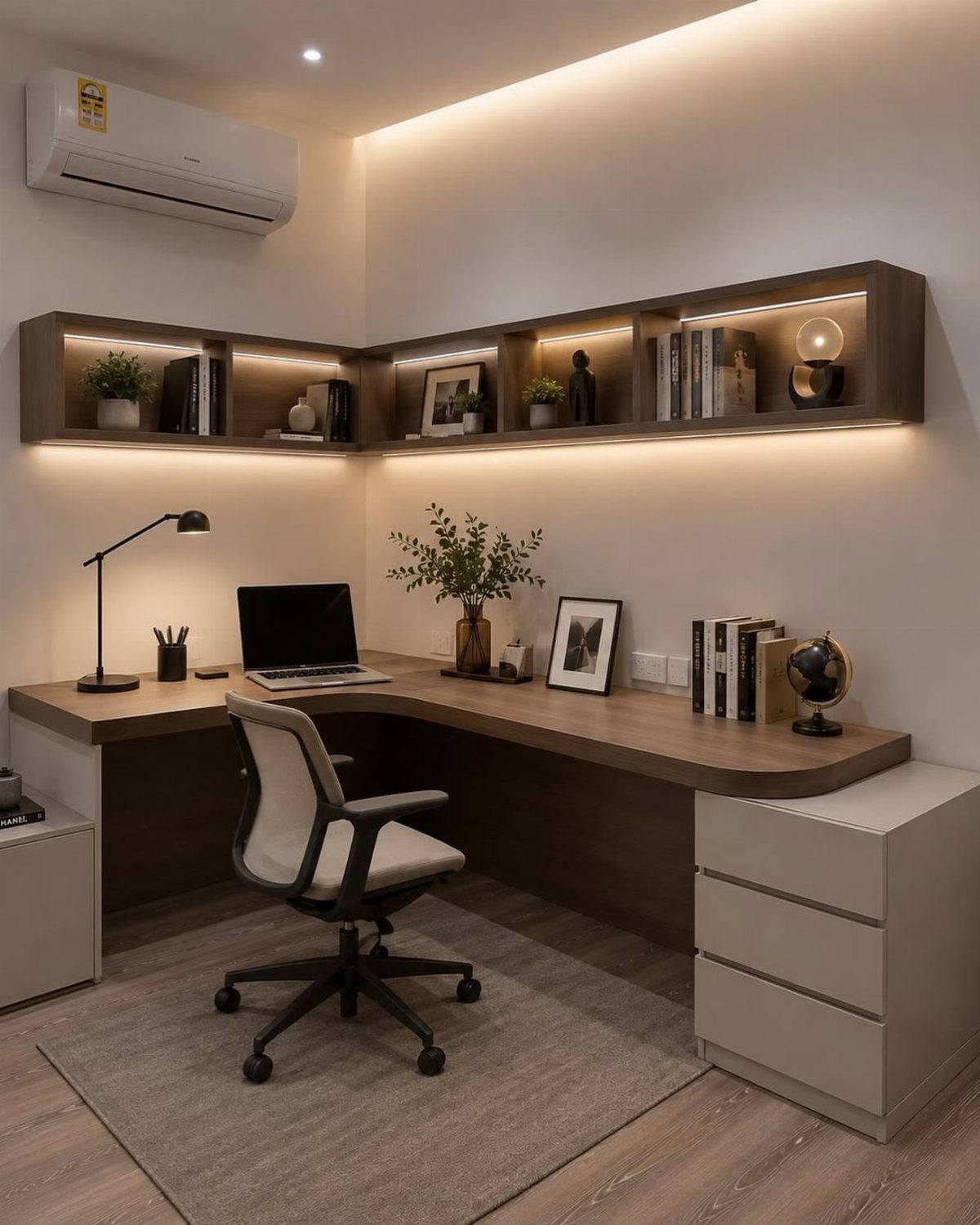
An L-shaped corner bookshelf extends along 2 walls and gives you twice the storage of a single vertical unit.
The shelves follow the corner angle and meet without a gap, and integrated lighting adds task light if you’re placing this above a desk.
This setup works best when you have clear wall space on both sides of the corner. If one wall has a window or door, the L-shape won’t fit cleanly.
Floating L-shaped shelves keep the floor open underneath, which makes the room feel larger even though you’re adding storage. The wood tone here matches the desk below, which ties the whole corner together.
6. Ladder Corner Bookshelf
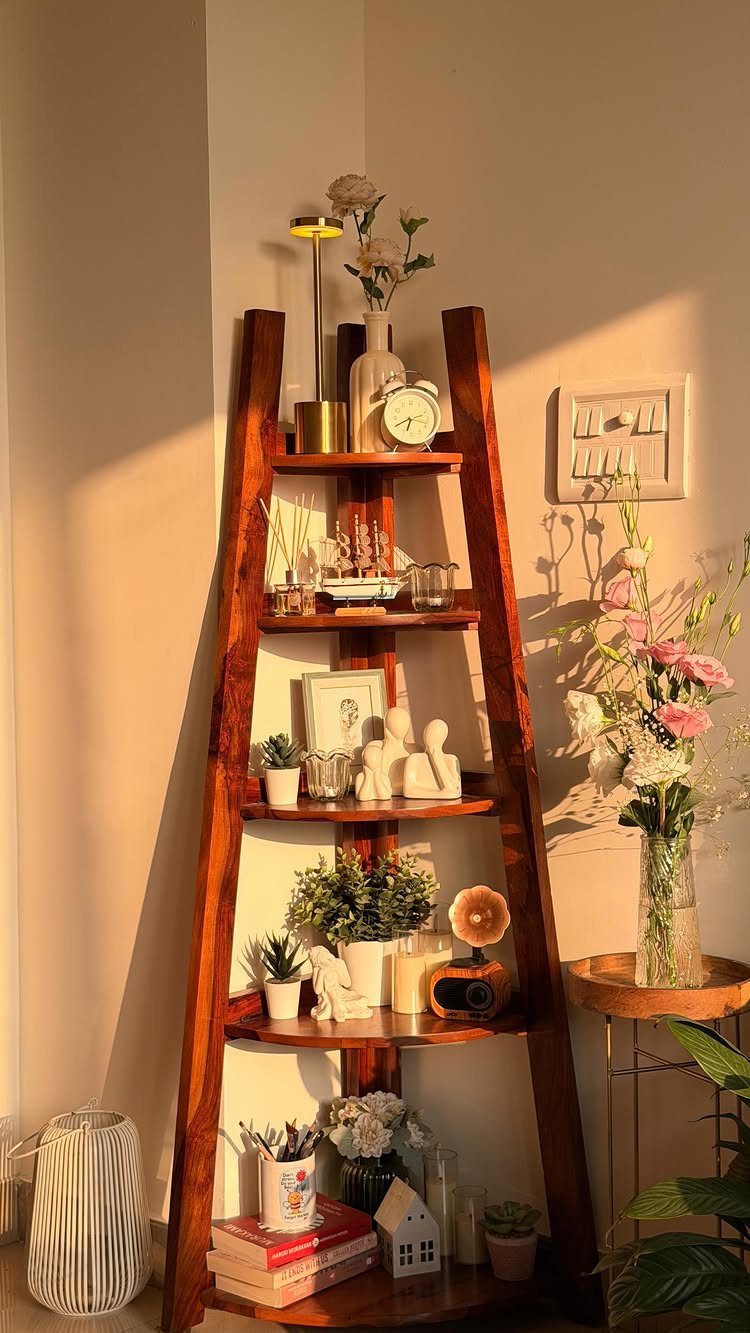
A ladder corner bookshelf leans against the wall without drilling or mounting hardware. The angled legs create triangular shelves that fit snugly into the corner, and you can move the whole unit if you rearrange the room.
This style suits renters or anyone who doesn’t want to drill into walls. The shelves are smaller than a built-in unit, so you’ll fit fewer books, but the open frame keeps the corner from feeling crowded.
If you’re loading it with hardcovers, check the weight rating, some ladder shelves are designed more for display than heavy storage.
7. Triangular Corner Bookshelf
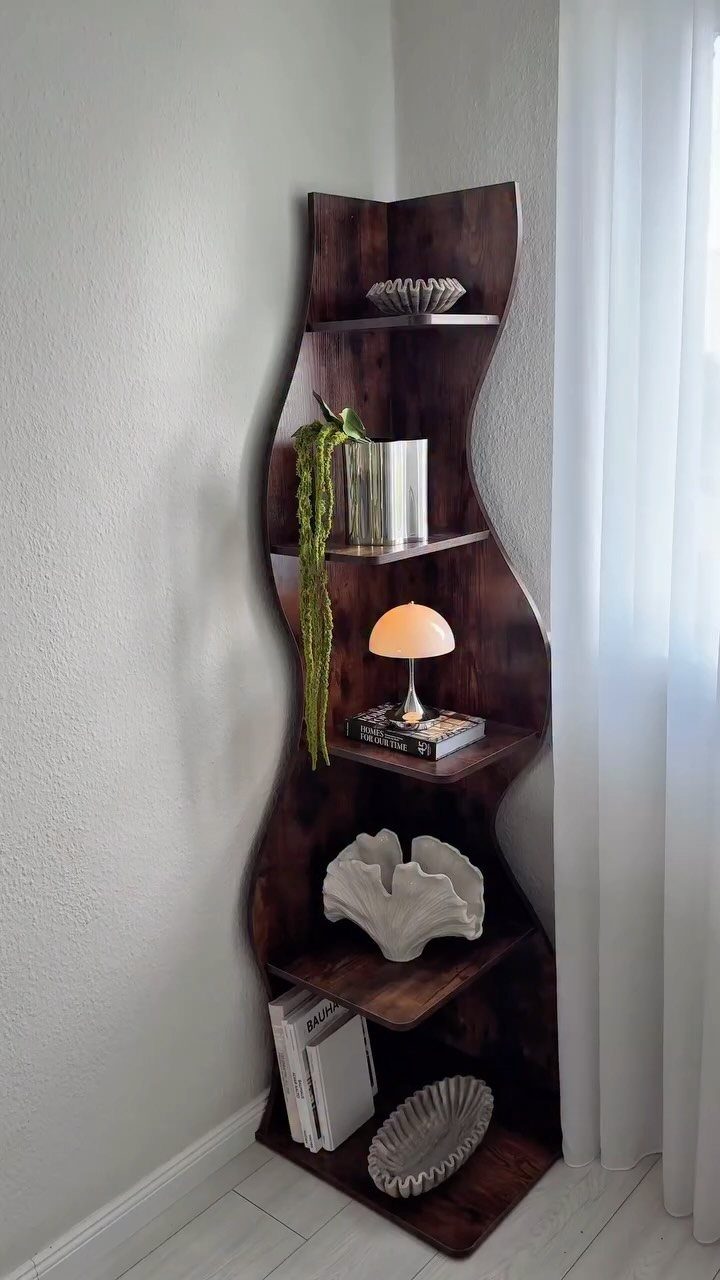
A triangular corner bookshelf fits the angle exactly, with shelves that taper from wide at the wall to narrow at the front edge. The wedge shape means no wasted space behind the unit, and the footprint stays small.
Dark wood anchors the spot, but a lighter finish works if you want the corner to recede.
This design sits on the floor, so you can slide it out to clean behind it or move it to another corner if your layout changes.
8. Tree-Shaped Corner Bookshelf
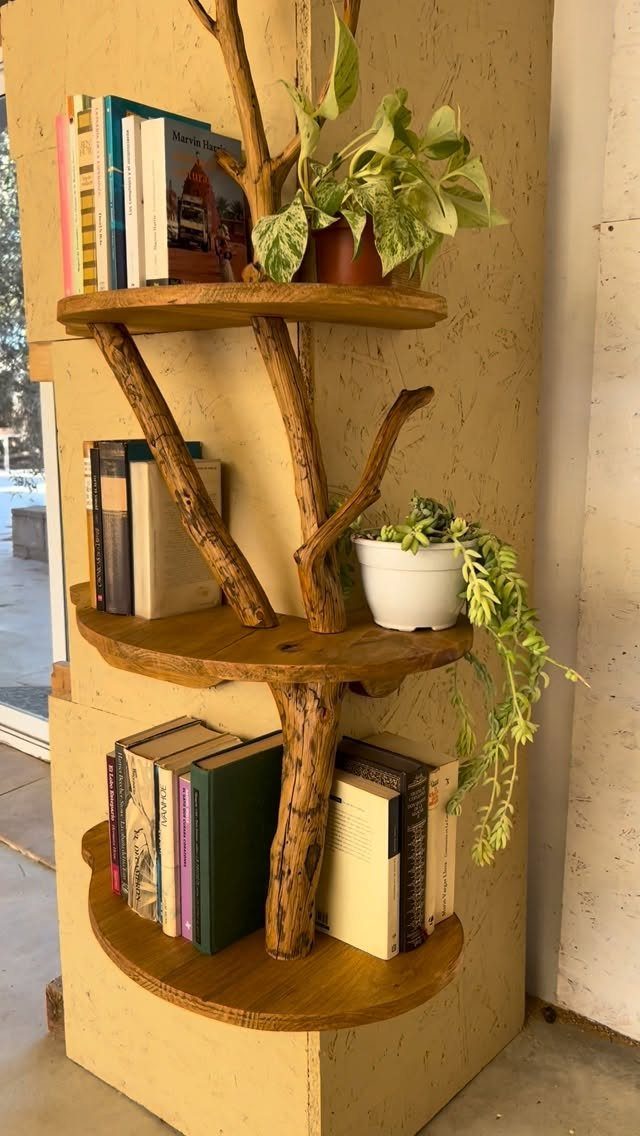
A tree-shaped corner bookshelf uses branch-like supports instead of straight verticals, so books rest on limbs rather than standard shelves. The organic shape breaks up the right angles of the corner and adds dimension to a flat wall.
3 shelves give you room for a mix of books and small plants, and the branches hold more weight than they look like they would. The wood grain stays visible, which suits a room with other natural materials.
Position it where the irregular silhouette won’t block a door swing or a walkway.
9. Zig-Zag Corner Shelf
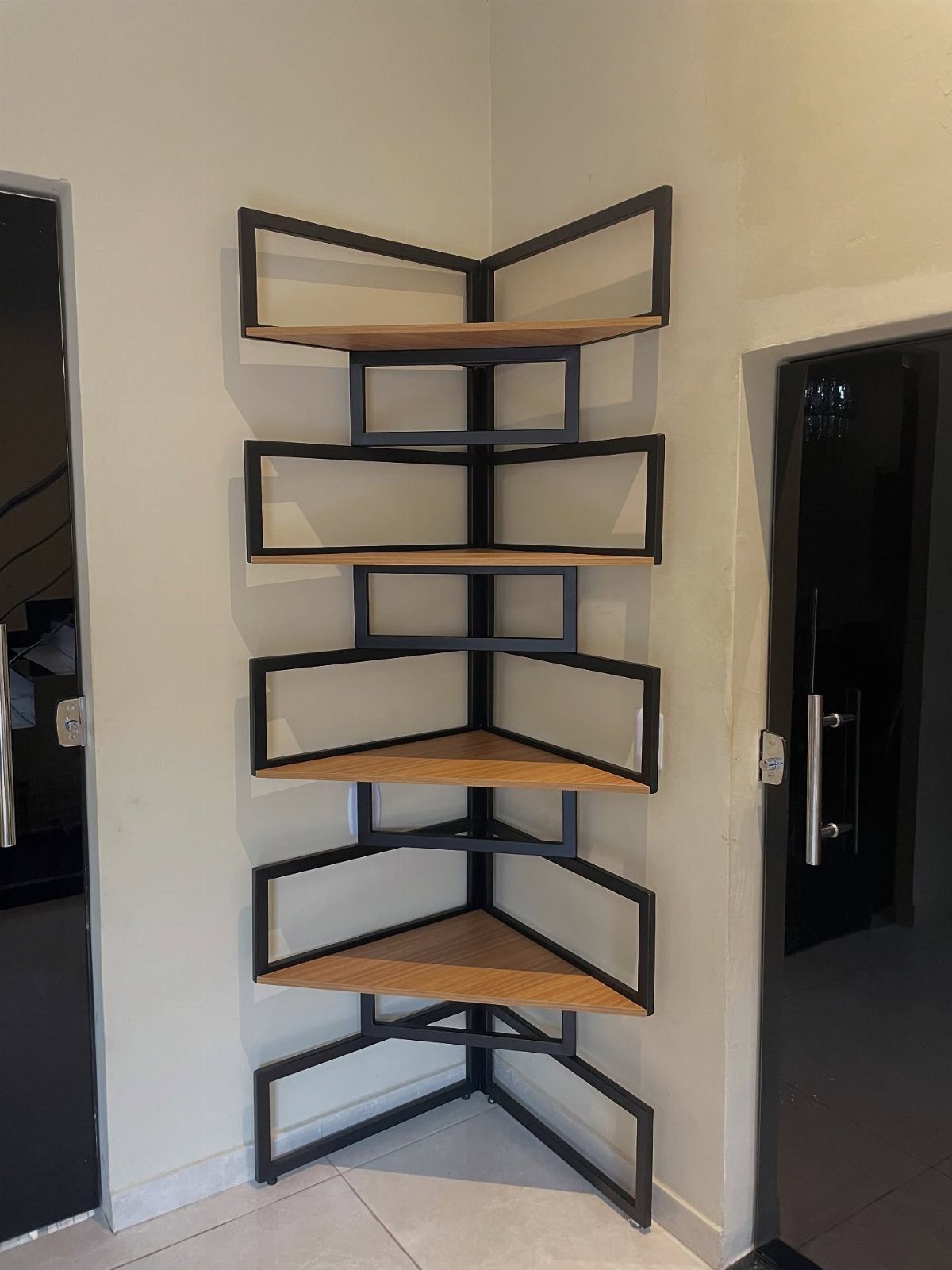
A zig-zag corner shelf alternates shelves between the 2 walls, so the unit climbs the corner in a staggered line.
The angular frame adds geometry to the space, and the open metal structure keeps it from reading as a heavy piece of furniture.
Light wood shelves on black metal give you contrast without pattern, and the frame stays visible between books. Each shelf holds less than a standard bookcase tier, so this works better for a small collection than a full library.
The metal frame needs to be anchored at the top if you’re stacking hardcovers.
10. Wine Bar Corner Shelf
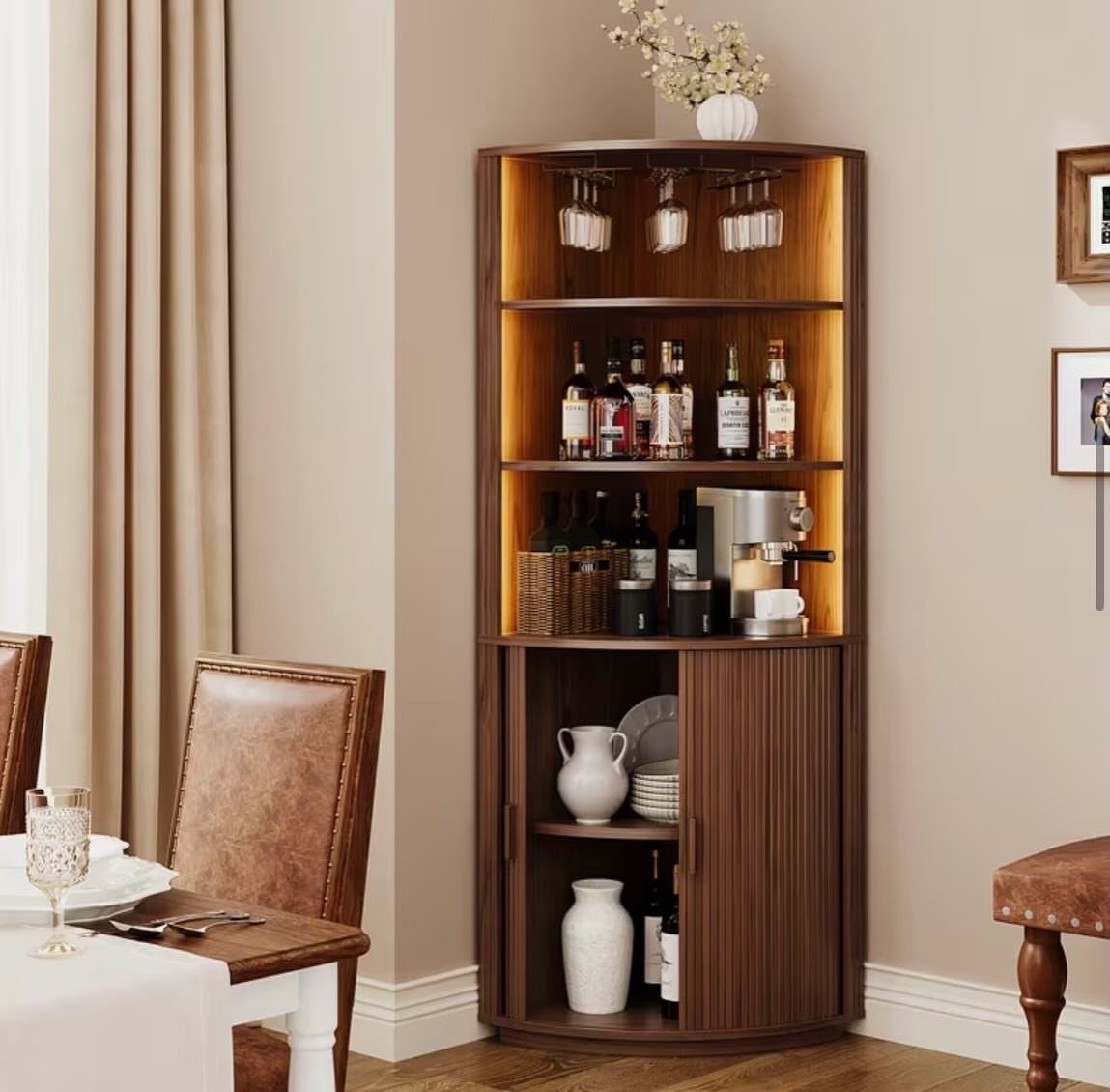
A wine bar corner shelf dedicates the space to bottles, glassware and liquor instead of books.
The shelves sit at different heights to fit wine bottles upright and stemware hanging or standing, and the curved shape follows the corner without sharp edges.
This setup works when you entertain often enough to keep bottles out rather than stored in a cabinet.
If your corner is near the kitchen or dining table, the bar becomes part of the flow instead of a separate stop across the room.
11. Corner Reading Nook with Bookshelf
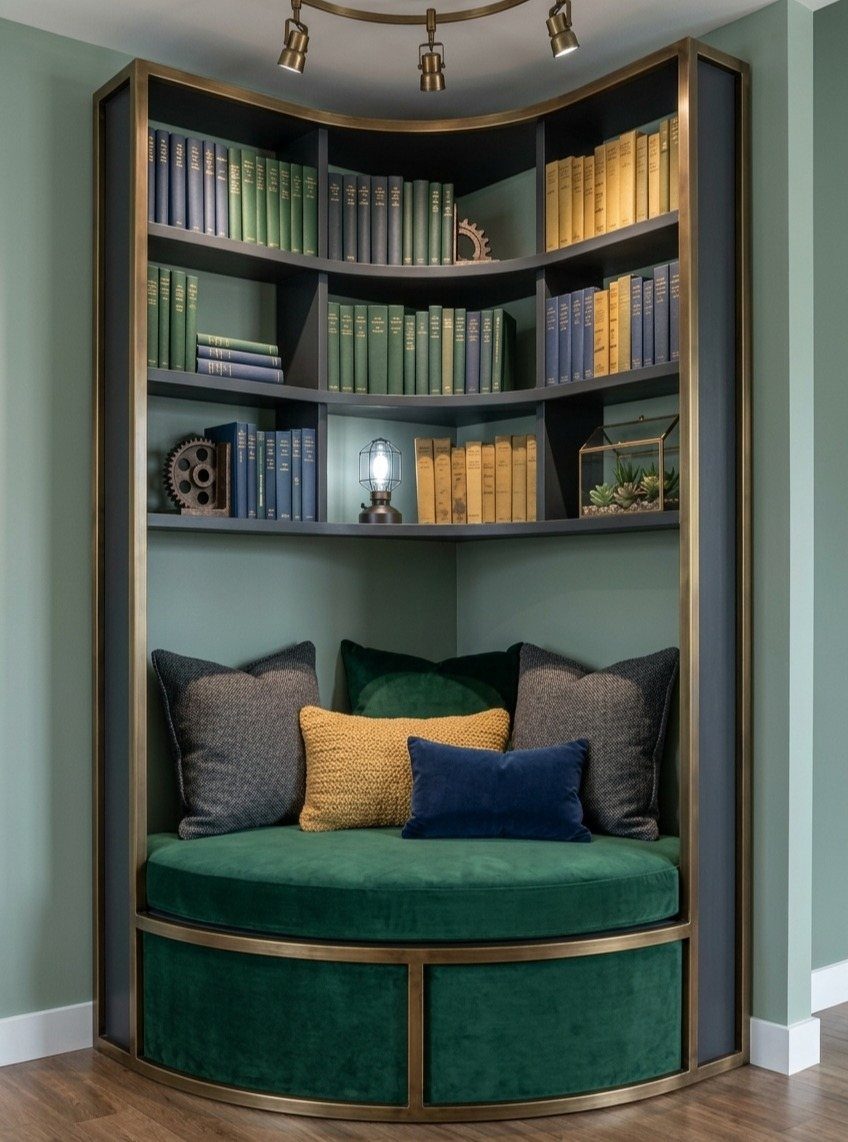
A corner reading nook with bookshelf builds seating directly into the corner and surrounds it with shelves, so books sit within arm’s reach of where you read.
The cushioned bench fits the corner angle, and the shelves frame the nook on both sides.
This option takes more space than a standalone shelf, but you gain a dedicated spot to sit with a book instead of just storing them. The built-in look requires carpentry or a custom unit, so it’s not a rental-friendly choice.
If the corner has a window, position the seating to face the light and run the shelves along the darker wall.
12. Curved Corner Bookshelf
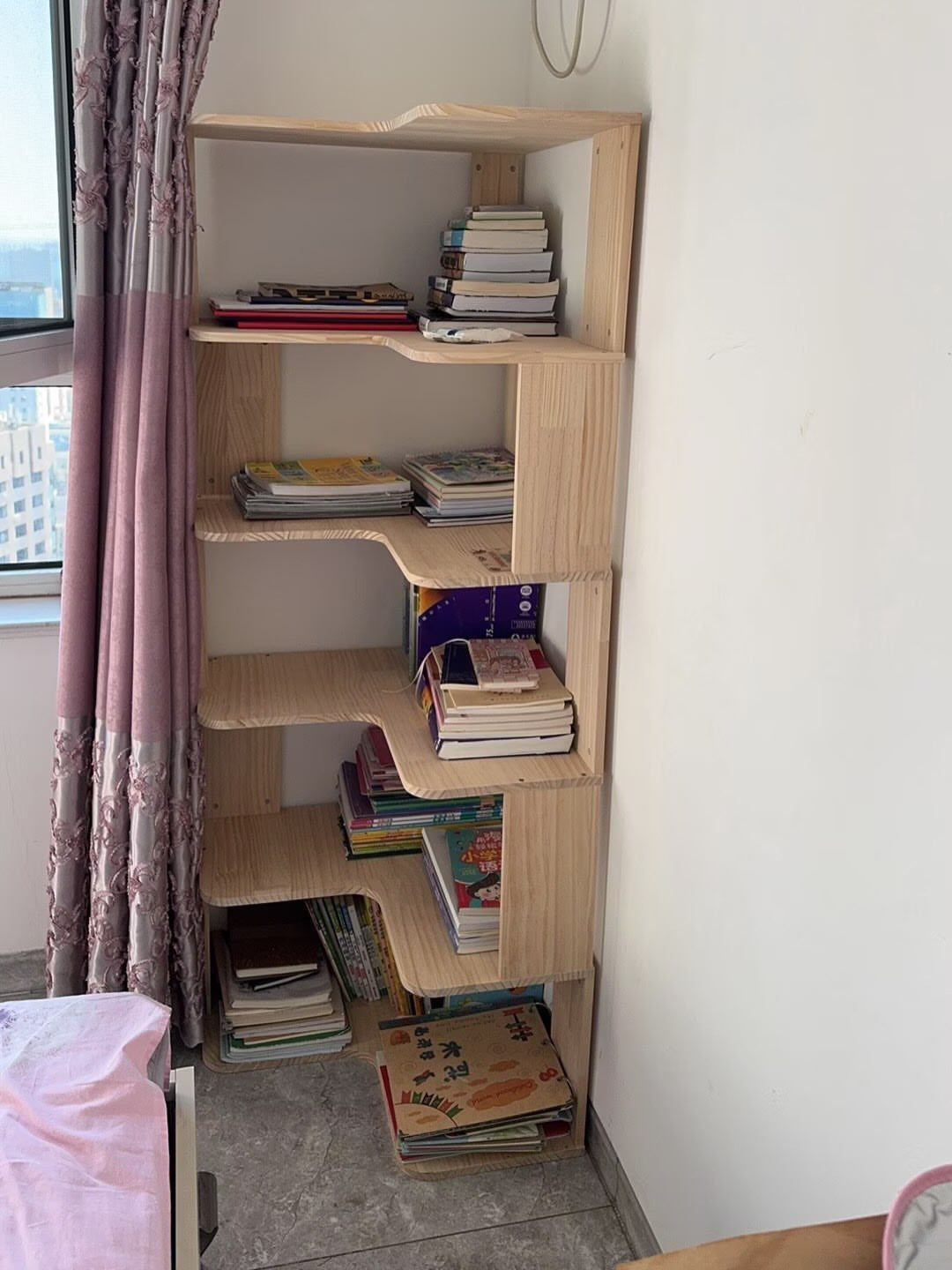
Curved corner shelves bow outward instead of sitting flat against the wall, which gives you a few extra inches of depth without sharp corners poking into the room.
The rounded edges make the unit easier to walk past, and books sit stable even on the curve.
Freestanding versions like this one can be moved if you repaint or rearrange furniture. Light wood keeps the corner bright and works with most wall colors.
Load heavier books on the lower shelves, where the curve is wider and the weight distributes better.
13. Wavy Silhouette Corner Bookshelf
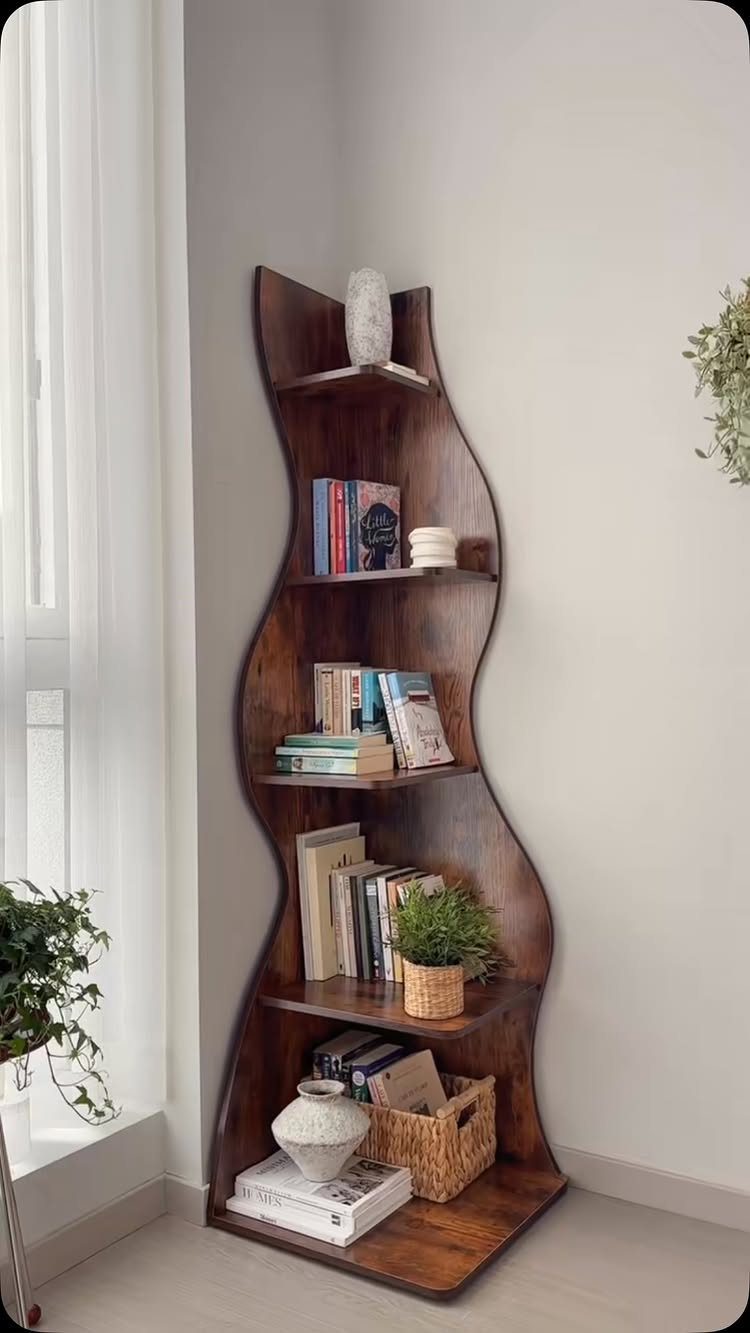
The wavy exterior profile on this corner bookshelf adds sculptural shape without taking up more floor space than a standard unit.
The curves break up the straight lines most furniture brings to a room, and the dark wood reads as a finished piece rather than utility storage.
The shelves hold books and small plants, and the freestanding design means you can move it if you repaint or shift furniture.
The wavy edge works best in a corner with enough clearance so you’re not catching the curves as you walk past.
14. Circular Corner Bookshelf
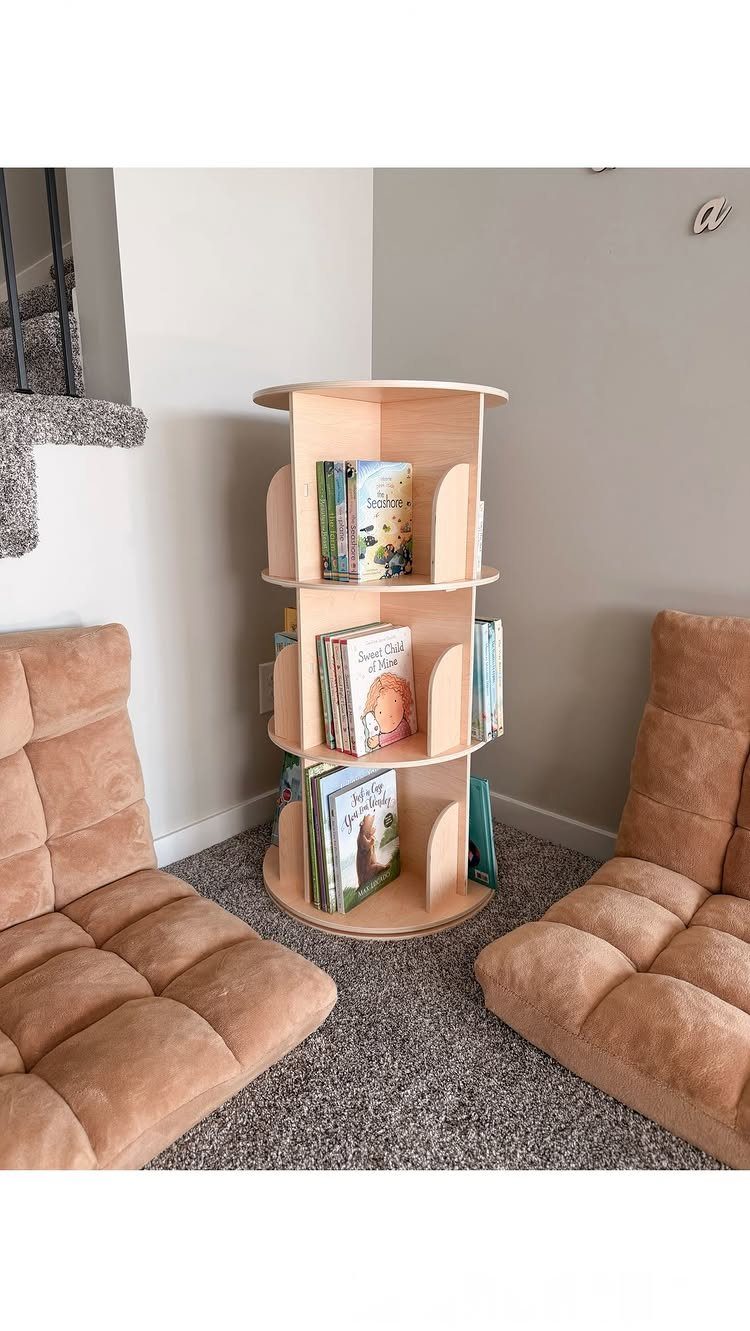
3 round tiers stacked in a corner hold books in a footprint smaller than most floor bookcases. The circular shape tucks between chairs or furniture without blocking access, and the short height keeps books within reach for kids.
This option works when you need a few dozen books stored in a high-traffic area where a tall unit would divide the room.
The open shelves make it easy to grab a book, but dust collects faster than it would behind glass or cabinet doors.
15. Glass Door Corner Bookshelf
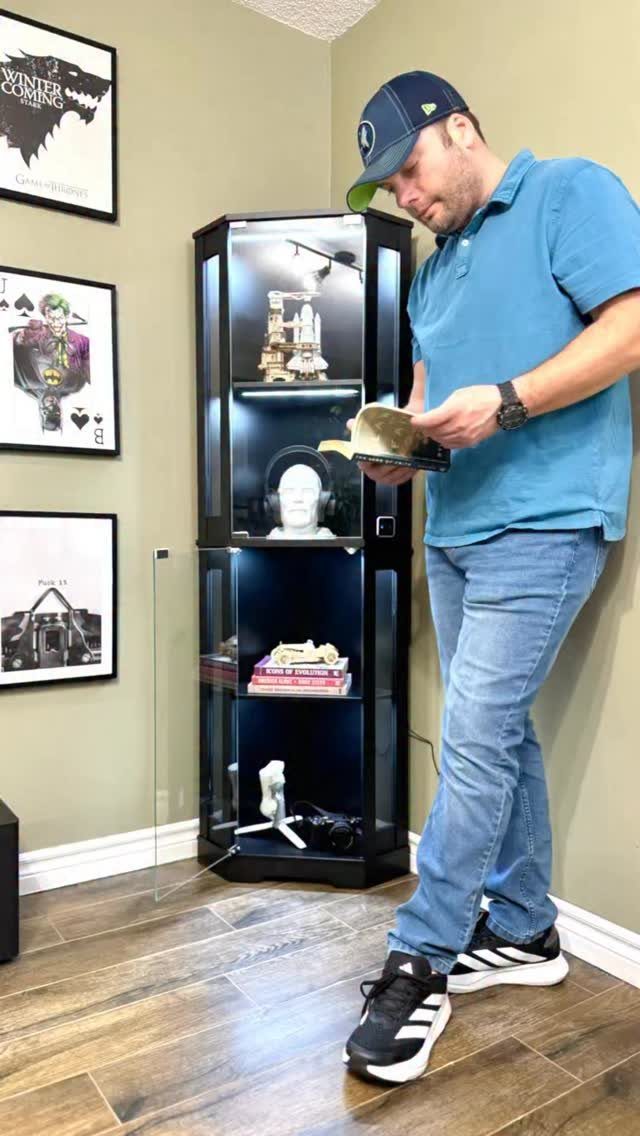
Glass doors keep dust off books and collectibles while still showing what’s inside. The hexagonal frame wraps the corner without wasted space, and the enclosed shelves protect items you don’t want handled every day.
Black metal gives the unit weight and works with dark furniture or as contrast against pale walls. The glass reflects light, so position the cabinet where glare from windows won’t block the view of what’s inside.
Corner Bookshelf Benefits
Corners collect dead space in most rooms because standard furniture doesn’t fit the angle.
The right unit adds function and pulls the eye into a spot that would otherwise stay empty. If your room feels unbalanced or one wall looks bare, filling the corner often solves it.
The smaller footprint leaves floor space open for seating or traffic flow, and you can add one without rearranging the rest of the room.
Installation Tips
Use wall anchors rated for drywall if you can’t hit a stud, but locating studs and screwing directly into them is the safer option for any bookshelf that will hold more than a few paperbacks.
Heavy units loaded with hardcovers need stud mounting. Anchors work for lighter floating shelves, but they have a weight limit and drywall can pull away under sustained load.
The instructions that come with the shelf tell you which wall anchors and screws you need for the weight it holds.
If the hardware list includes specific anchor types or bracket placements, those specs account for how the unit distributes weight, and skipping a step usually shows up as sagging or failure later.
Materials for Corner Bookshelves
Wood is the most common material for corner bookshelves because it holds weight, matches most furniture, and comes in enough finishes to suit any room.
Metal frames with wood shelves give you a lighter look and work well in modern or industrial spaces.
Glass shelves show up on decorative units where you’re storing lighter objects and want the corner to feel open. Glass reflects light, which helps in darker corners, but it shows dust faster than wood.
If you’re placing a corner shelf in a bathroom, stick with metal, glass, or sealed wood.
Raw wood pulls moisture from the air and warps over time, so seal it or keep it out of bathrooms and anywhere near a sink.
Frequently Asked Questions
What is a good bookshelf for a corner of a room?
Floating shelves and ladder-style units work well in corners because they add storage without claiming much floor space. Both styles use corners that most rooms leave bare, and neither one takes up floor space the way a standing unit does.
How to style corner bookshelves?
Mix books with small plants and decorative objects so the shelves hold what you use and look intentional. Vary the heights of what you place on each shelf, and leave some space open instead of packing every tier.
The corner reads as part of the room instead of pure storage when you add a few items that aren’t books.






