
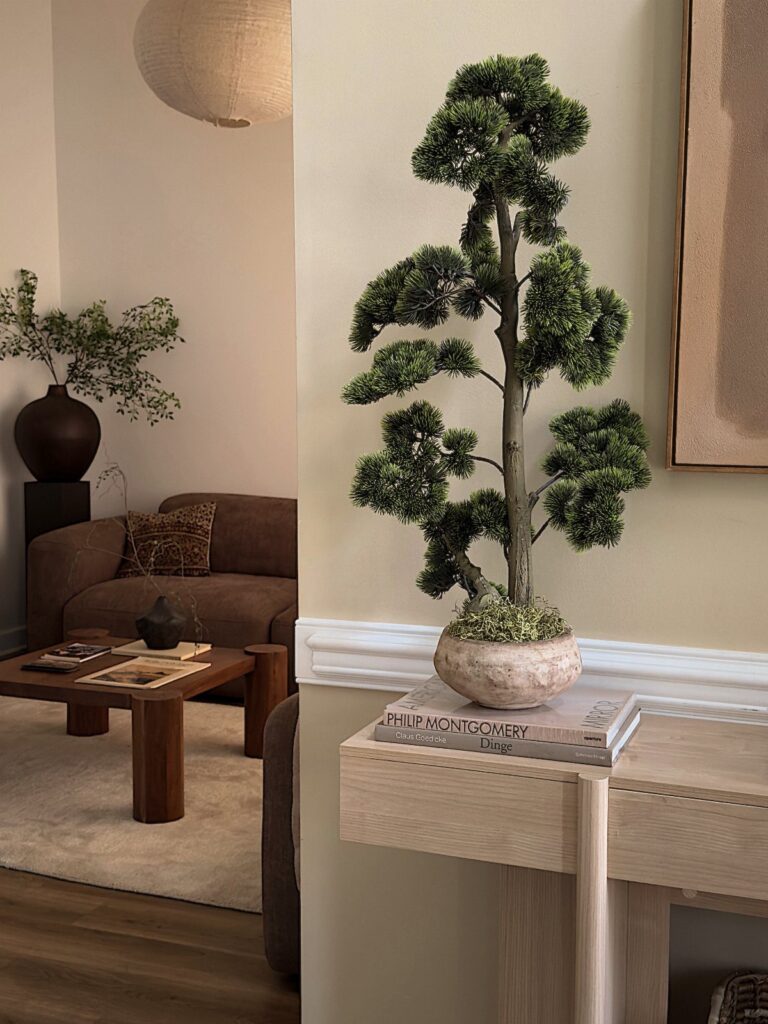
A dark brown sofa works in a room with warm whites and soft beige just as well as it does against moody dark walls with brass, and the difference comes down to how much contrast you want.
I go into lighting in more detail below, but the short version is that brown needs warm bulbs aimed near or behind the sofa to pull the warmth out instead of flattening it.
Olive green, brass, and rust all sit comfortably next to brown without clashing.
1. Brown Sofa with Wooden Furniture
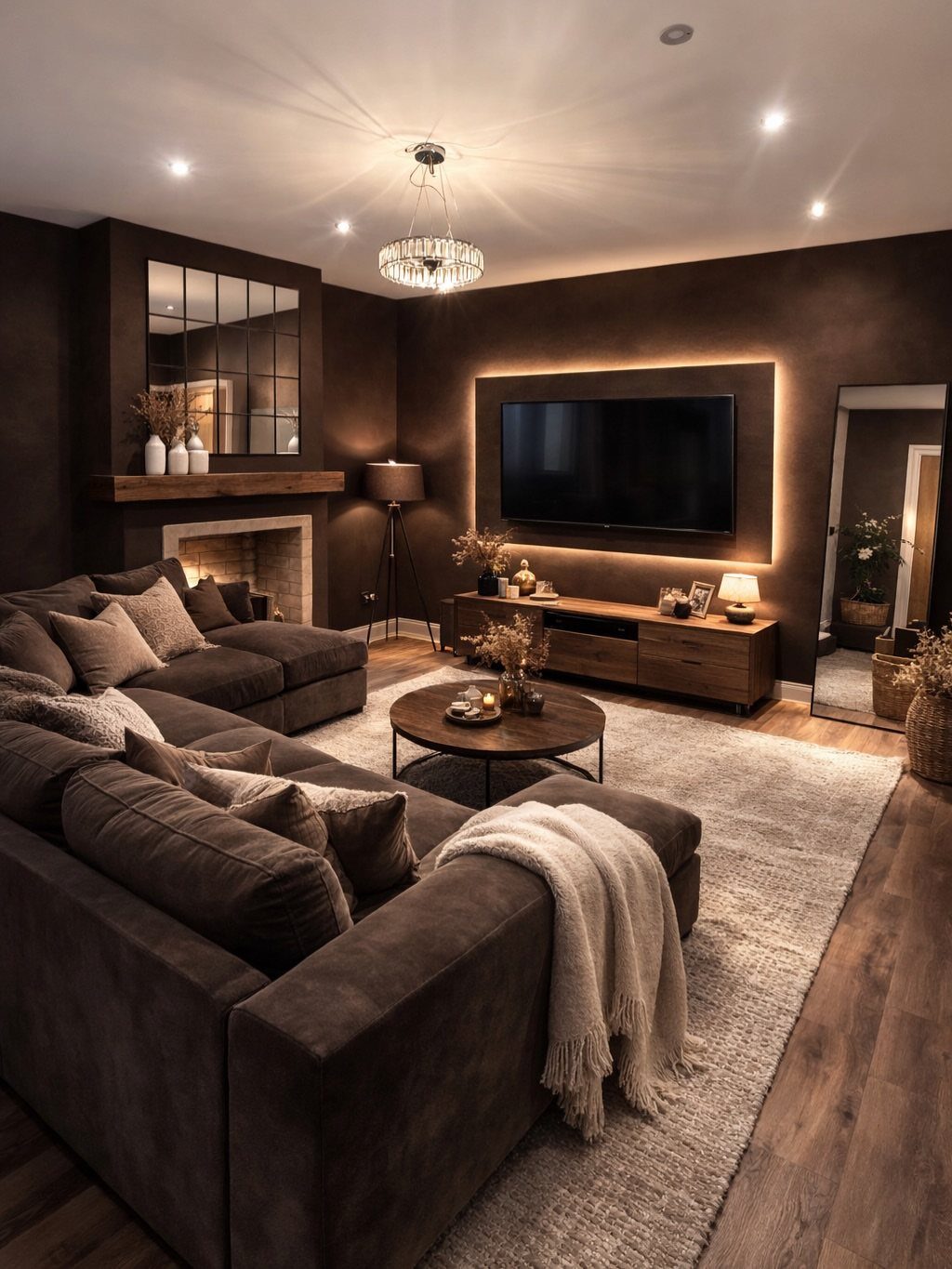
Pairing a dark brown sofa with wooden furniture creates a grounded, cohesive look where everything feels like it belongs.
The warm tones echo each other without competing, and the natural grain of wood adds texture without adding more color to manage.
If your room already has wood floors or built-ins, this is the easiest route.
A wooden coffee table and media console keep the palette simple and let you spend your energy on smaller accents like pillows or throws instead of wrestling with mismatched finishes.
2. Indoor Plants Around the Brown Sofa
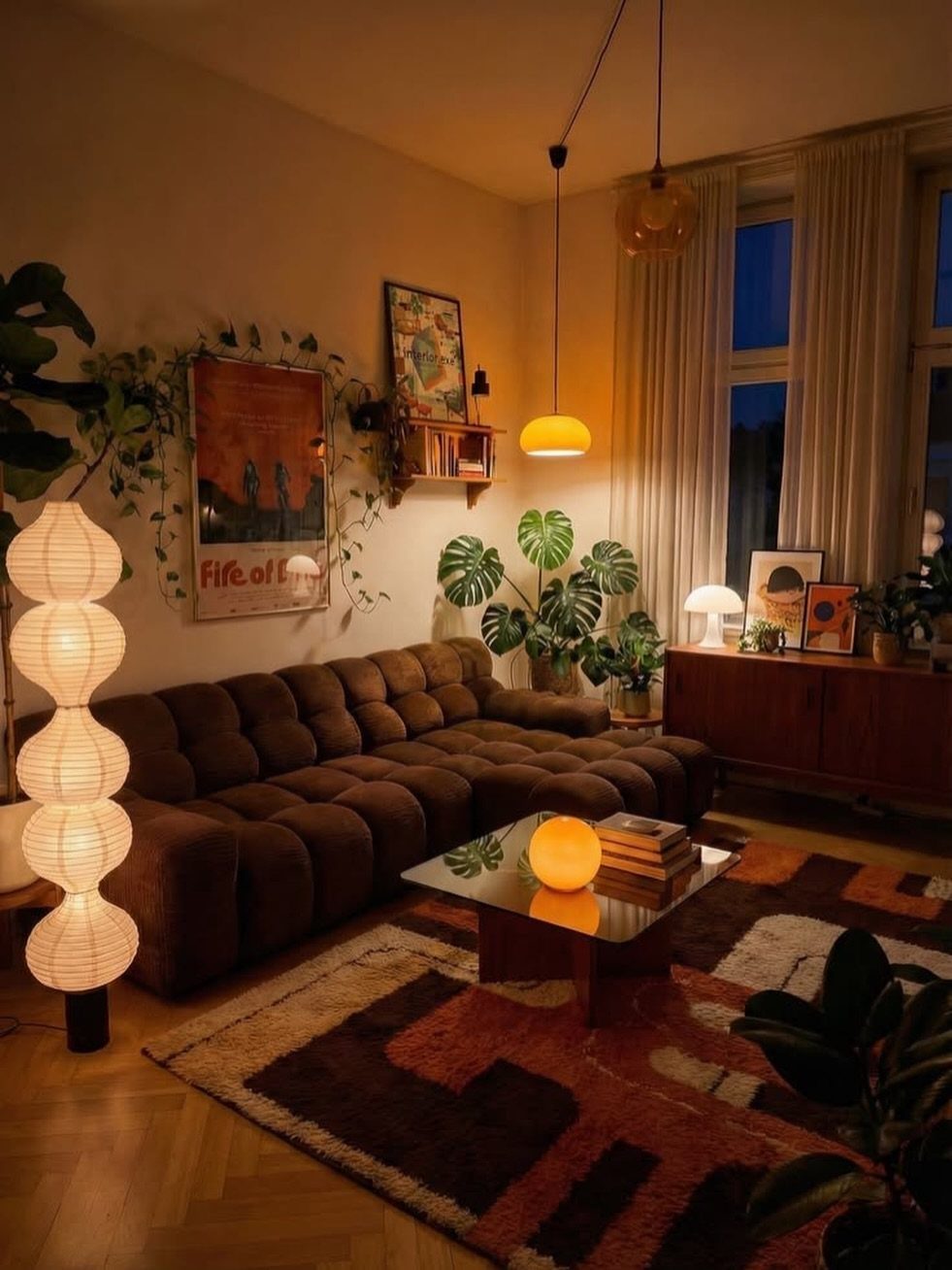
Plants soften the weight of a dark brown sofa by introducing movement and a living green that contrasts without clashing.
The leaves break up the solid block of upholstery, and in a room with warm lighting, the greenery reads almost golden.
I like mixing heights: a tall fiddle-leaf fig or snake plant in one corner, a pothos trailing from a shelf, and something compact like a ZZ plant on the coffee table.
It fills the room with texture and makes the brown feel richer instead of heavy.
3. Moody Brown Drama
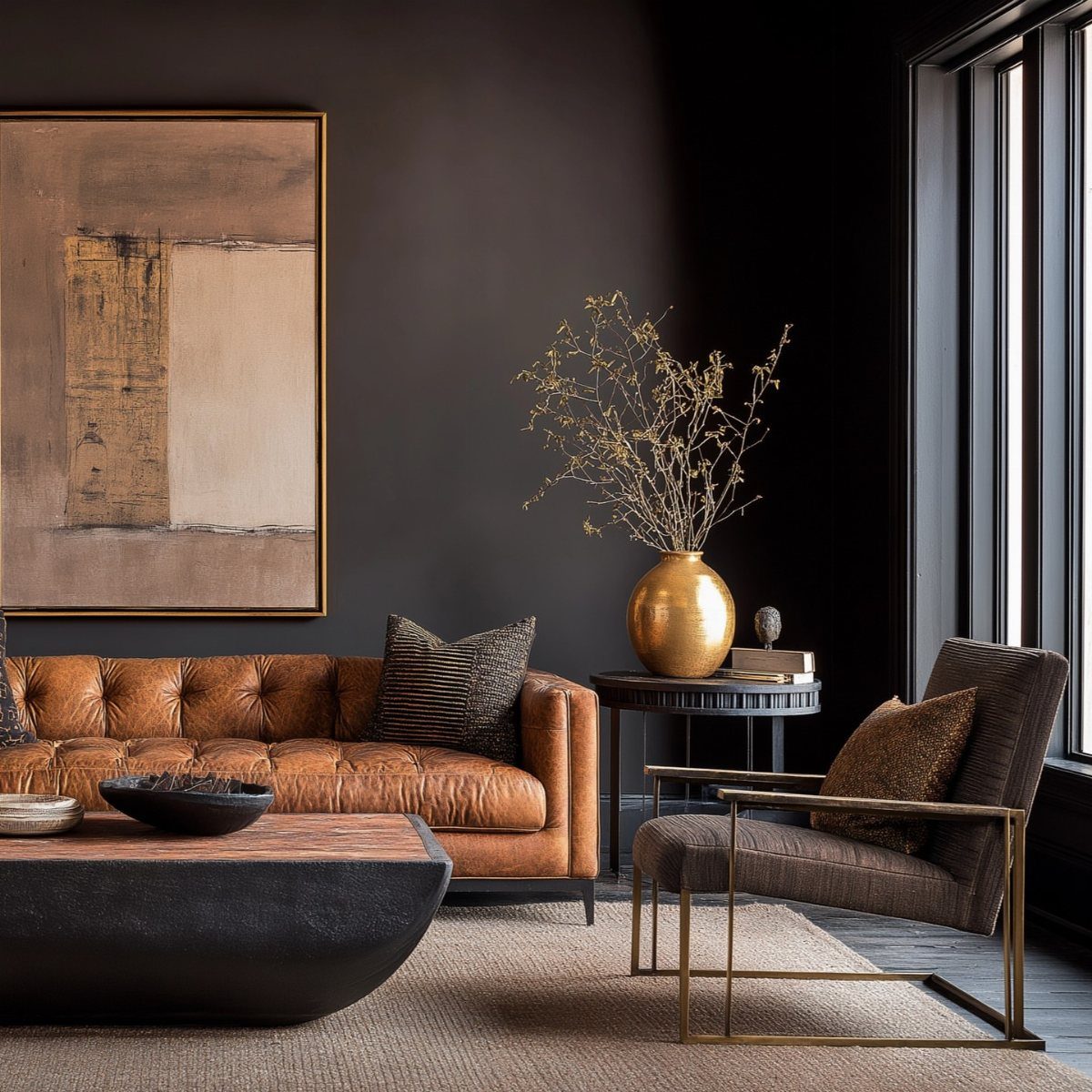
Dark walls behind a brown leather sofa push the room into moody territory, where shadows and highlights do the decorating.
The brown doesn’t disappear against the backdrop; instead, it picks up depth and reads as a deliberate anchor rather than an afterthought.
Gold accents bring in just enough light to keep the space from feeling closed off.
A brass floor lamp, a gold-framed mirror, or even a vase with metallic finish catches the eye and balances the richness without brightening it into something cheerful.
4. Patterned Rugs with Brown Couch
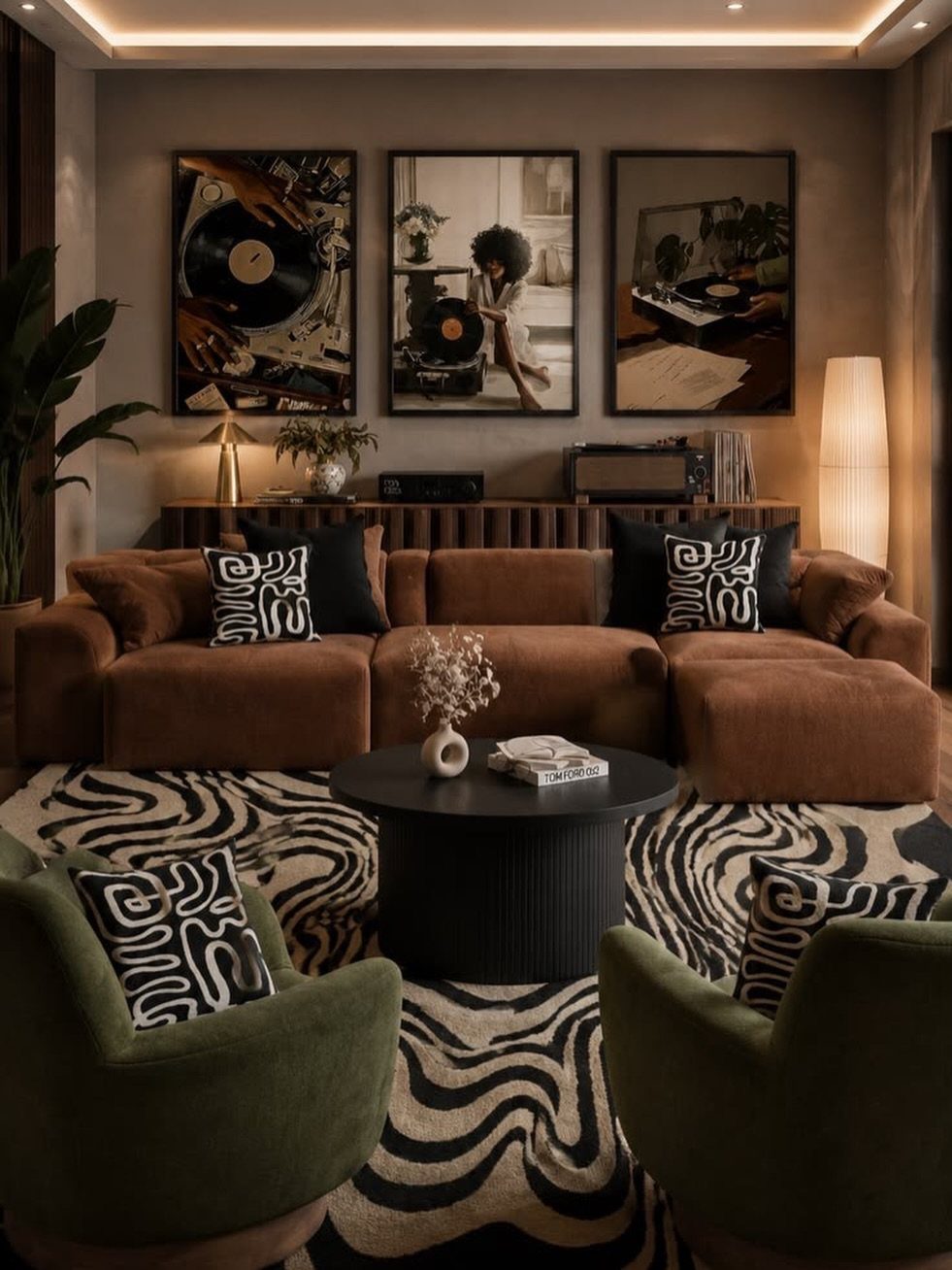
A bold rug introduces pattern and contrast under a brown sofa without competing for visual weight.
Geometric black-and-white designs are the easiest to work with because they ground the brown and give the floor its own identity, which keeps the room from feeling furniture-heavy.
If you want to bring in more color, the rug is where to do it. A vintage Persian or Turkish rug with rust, cream, and navy pulls warmth from the brown and connects it to other accents in the room.
5. Warm Vintage Luxe
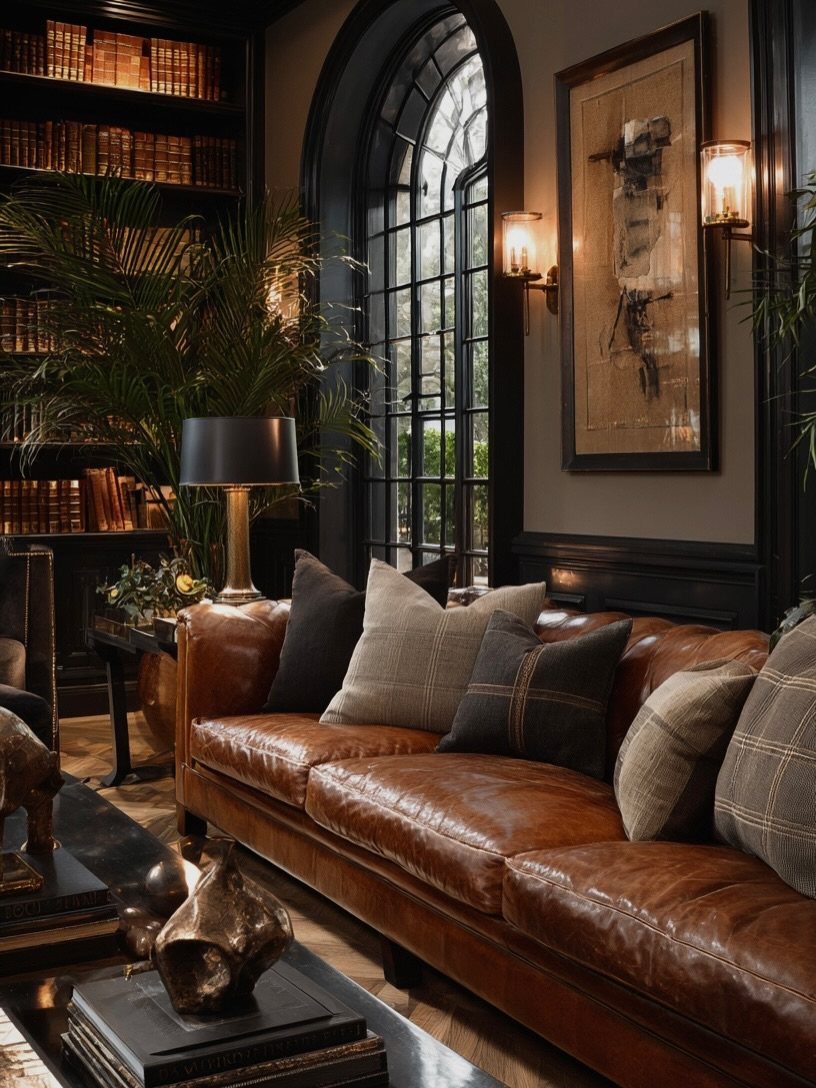
Leather ages into something that looks like it has a story, and in a room with bookshelves and vintage lighting, a brown leather sofa feels more like a collected piece than a furniture-store purchase.
The sconces and lamp add pools of warm light that play off the leather’s sheen without washing it out.
Arched windows and architectural details help, but even without them, the layered lighting does most of the work. A single overhead fixture flattens everything; multiple smaller sources let the brown shift between highlight and shadow.
6. Gallery Wall Behind the Sofa
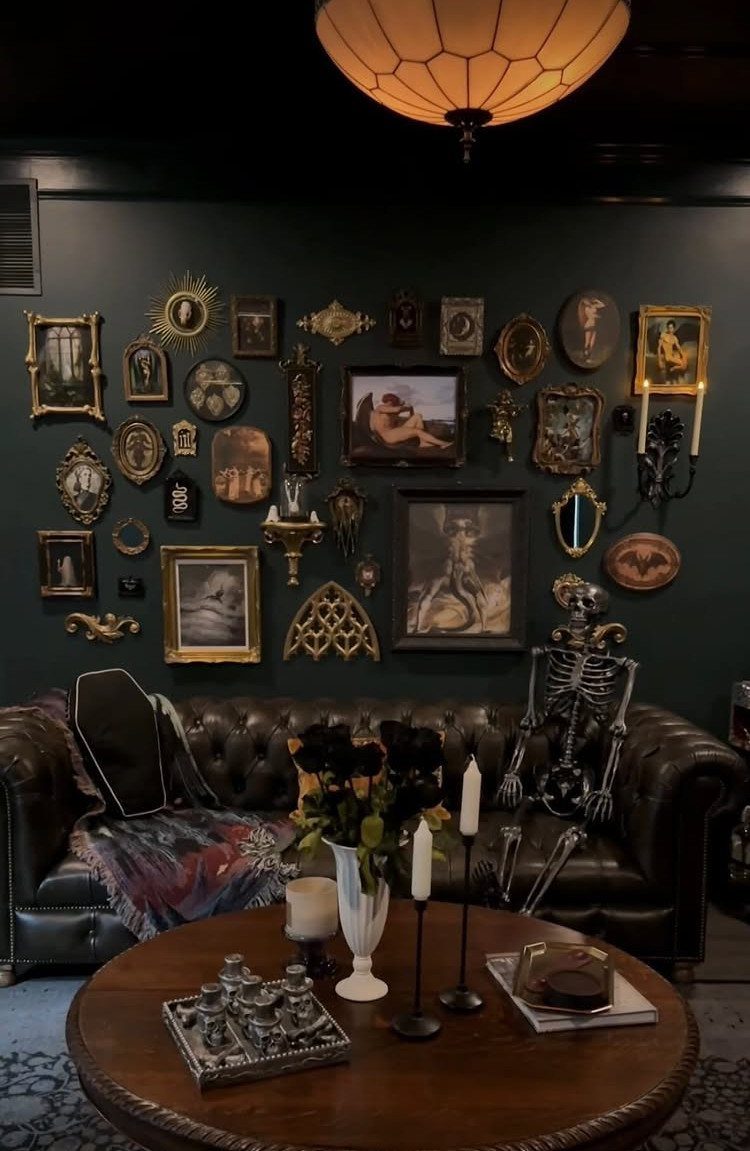
A gallery wall gives a brown sofa something to sit against other than blank space. Frames in varying sizes and finishes create density and movement, and the sofa becomes the foreground instead of the focal point.
I’d start with a few larger pieces at eye level and fill in around them with smaller frames, mirrors, and anything flat with a strong outline.
The mix matters more than the subjects; even mismatched gold and black frames read as intentional when they’re packed close enough together.
7. Rustic Farmhouse Comfort

A stone fireplace and dark brown leather furniture turn a living room into a place that feels collected over years rather than bought in one trip.
The texture of the stone holds its own against the leather, and both materials look better with some wear on them.
This works best in a room with good natural light, since the brown and stone together can read dim without it.
If your space gets direct sun for part of the day, the warmth shows up in the leather and keeps the room from feeling heavy.
8. Chocolate Velvet Sectional
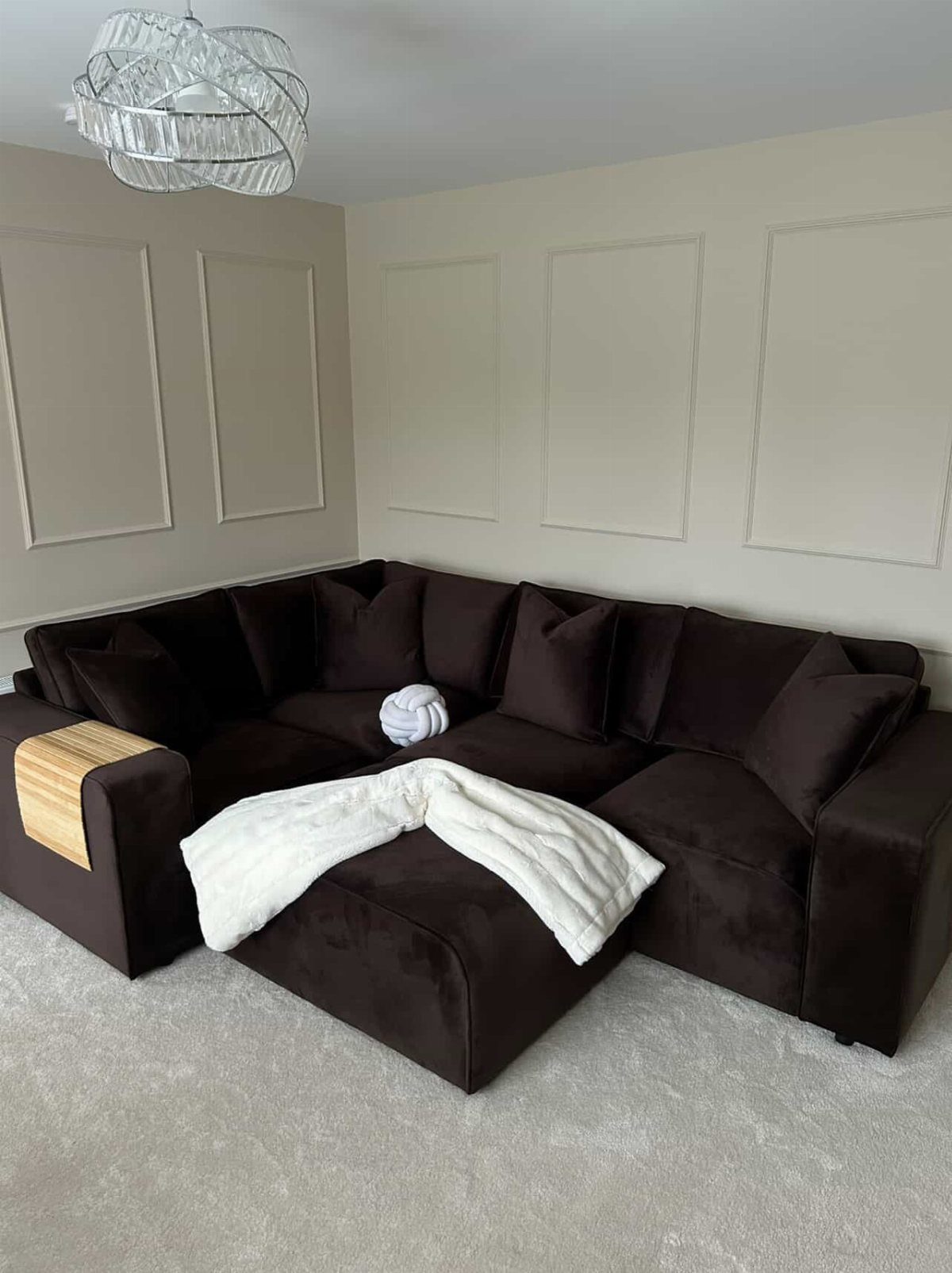
Velvet catches light in a way smooth upholstery doesn’t, and in chocolate brown it reads rich without needing pattern or color to make it interesting.
The nap shifts between light and dark depending on where you sit, which keeps a sectional this size from looking flat.
White throws and pillows lift the brown without softening it. I’d keep the rest of the room minimal so the velvet stays the focus.
9. Light Neutral Accents
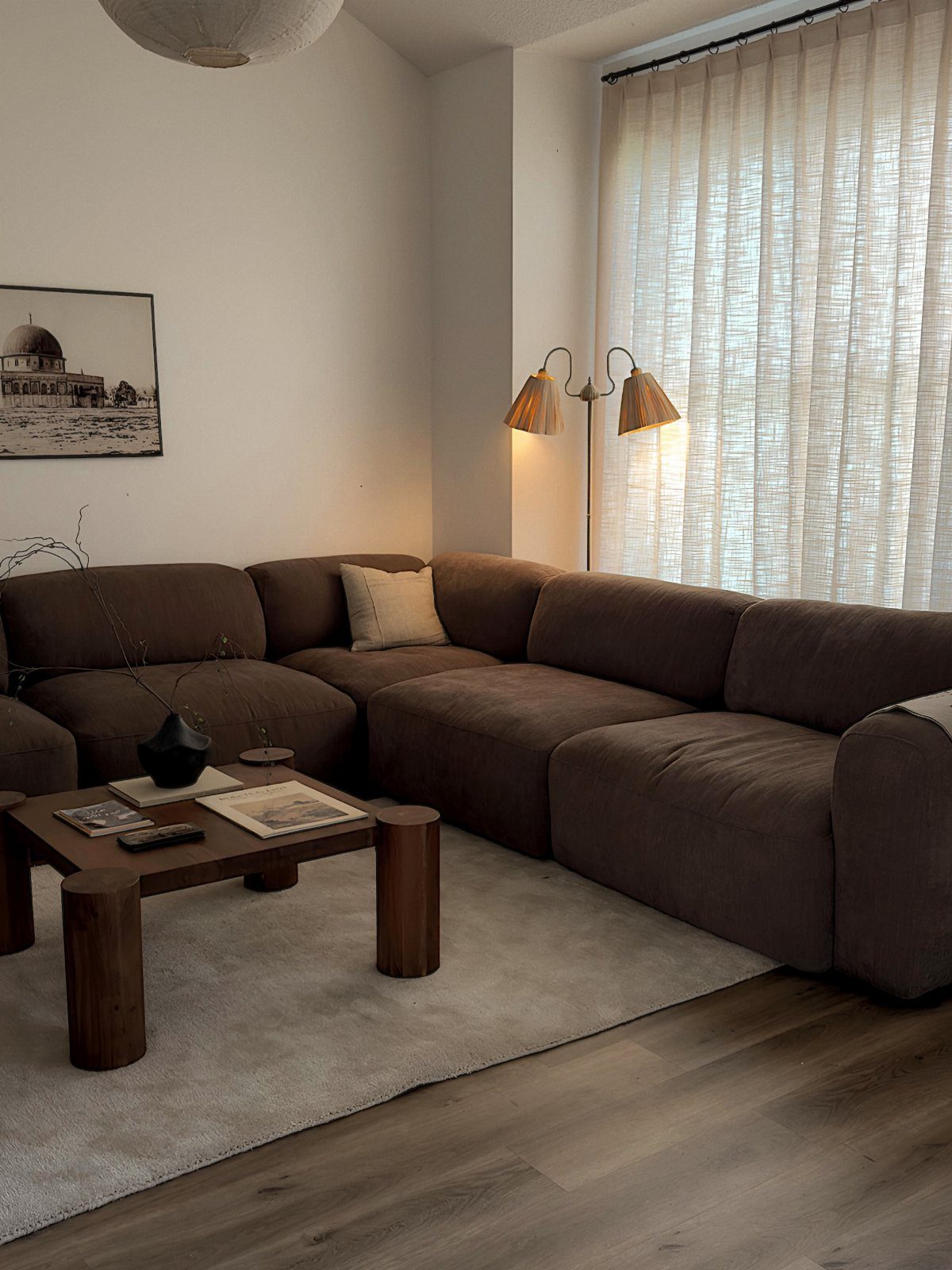
Cream and white accents pull the brown into balance without covering it up.
A light pillow, white curtains, and a pale grey rug give the eye somewhere to rest, and the brown becomes an anchor instead of the heaviest thing in the room.
This setup works when the sectional is big enough to dominate the floor plan. The light accents keep it from feeling like a wall of upholstery.
10. Curved Dark Brown Sofa
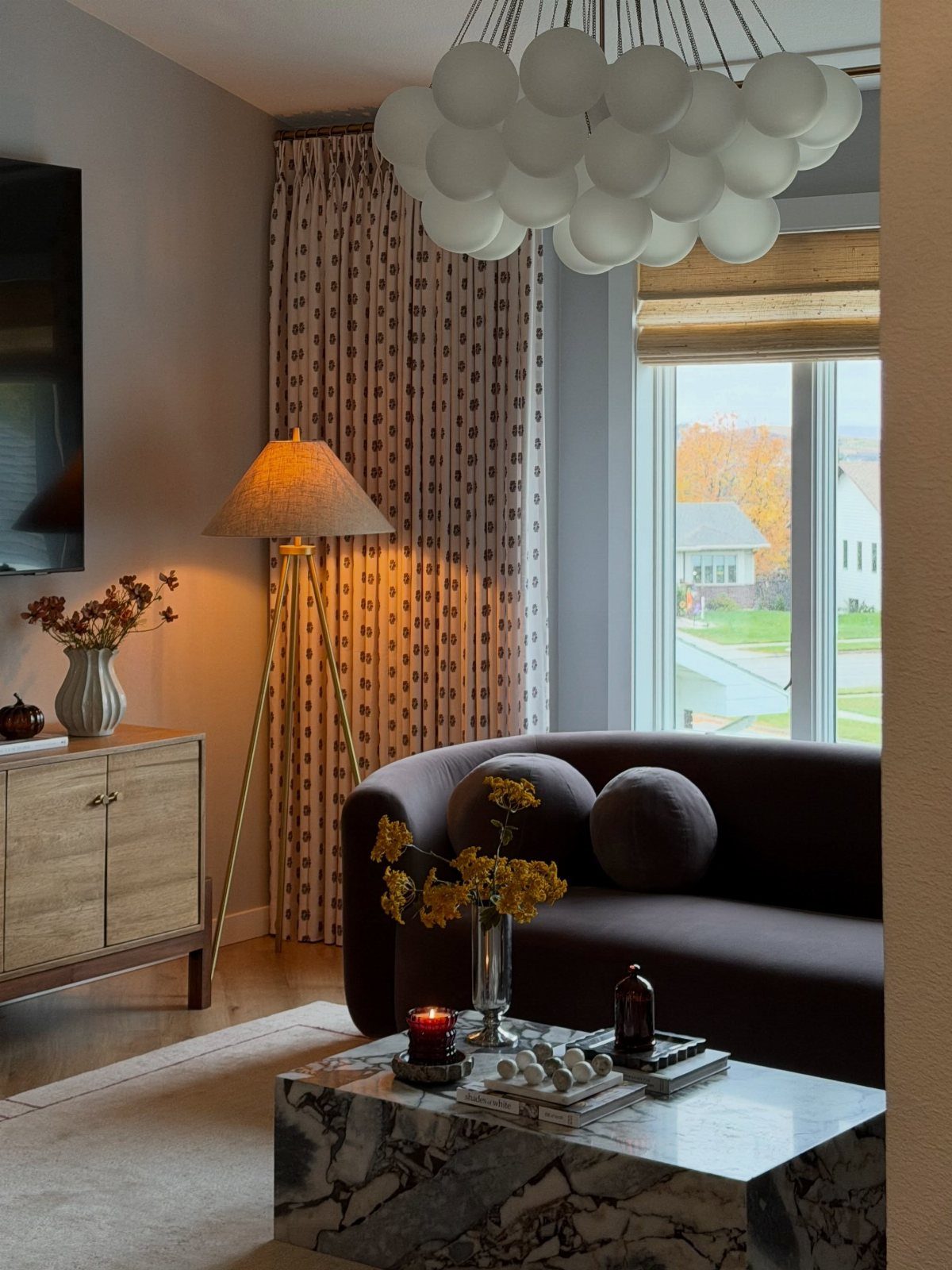
Curves soften a dark sofa in a way straight lines don’t, and round pillows reinforce the shape instead of fighting it.
The marble coffee table adds weight without bulk, and the bubble chandelier picks up the circular theme in a way that feels intentional rather than matchy.
If your room has hard angles everywhere else, a curved sofa is the fastest way to change the feel without replacing anything structural.
11. Olive Green Accent Chairs
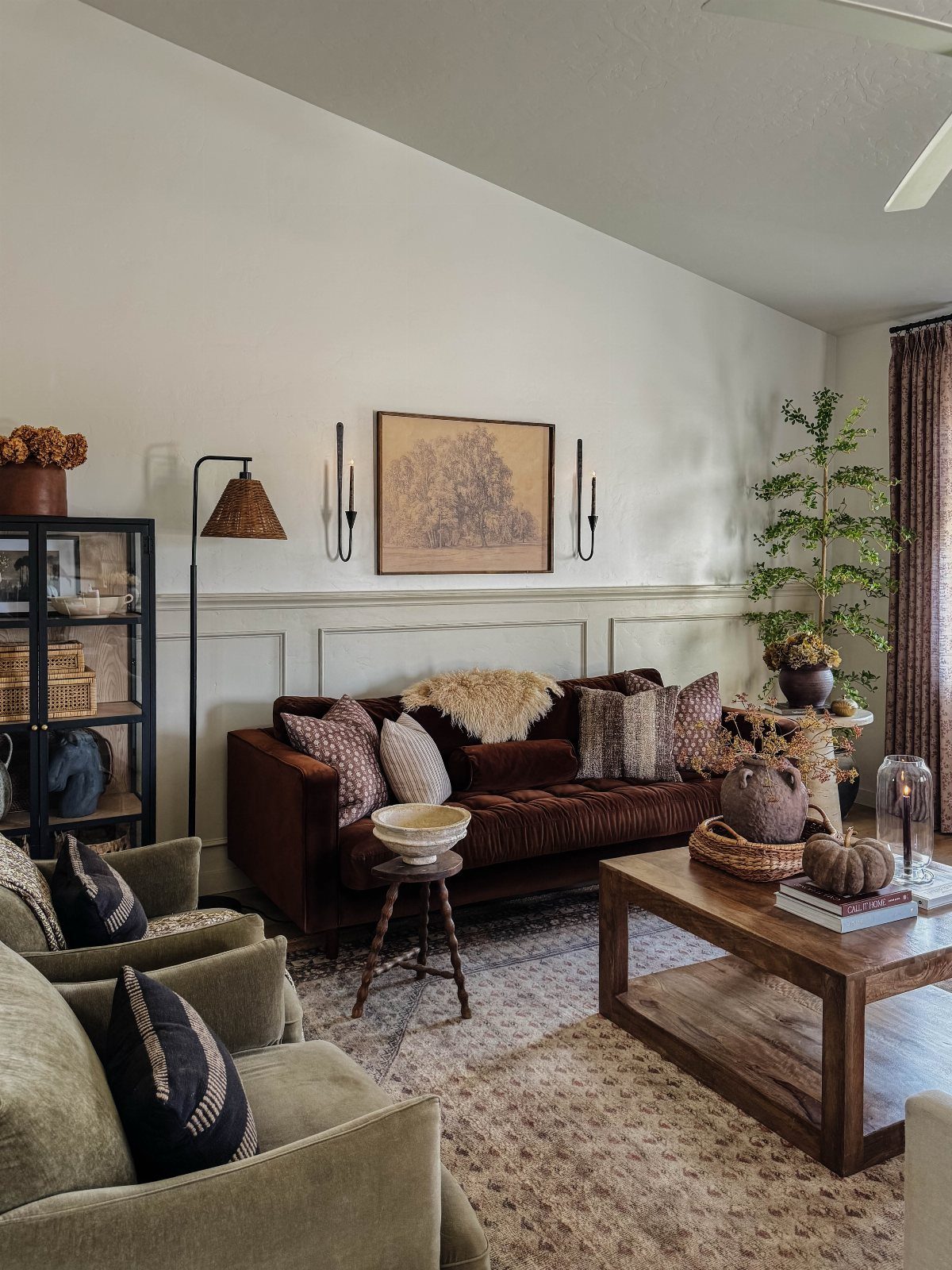
Olive green sits next to brown on the color wheel, so the 2 read as related without being monochromatic.
The green chairs introduce a second upholstered piece without adding visual noise, and the white wainscoting keeps the darker tones from closing in.
This pairing works in smaller rooms where too much brown would feel heavy. The green lightens the palette just enough.
12. Gold and Brown Velvet Accents
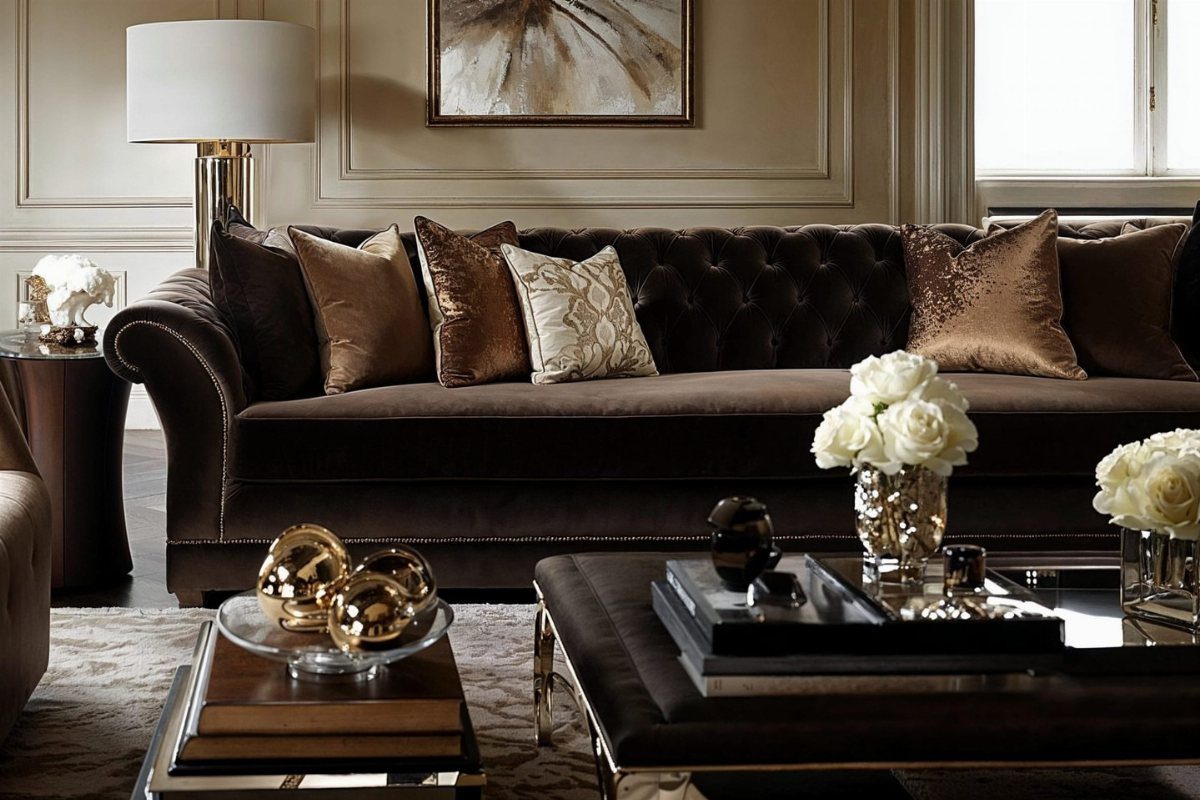
Tufting adds dimension to velvet, and in dark brown it creates shadows that shift as the light changes.
Gold pillows pick up any warmth in the brown and amplify it, and a matching ottoman extends the seating without breaking the color story.
This leans formal, so it fits a living room where you want the furniture to look considered. If the rest of your house is casual, this might feel like it belongs in a different home.
13. Statement Wallpaper and Bold Ceilings
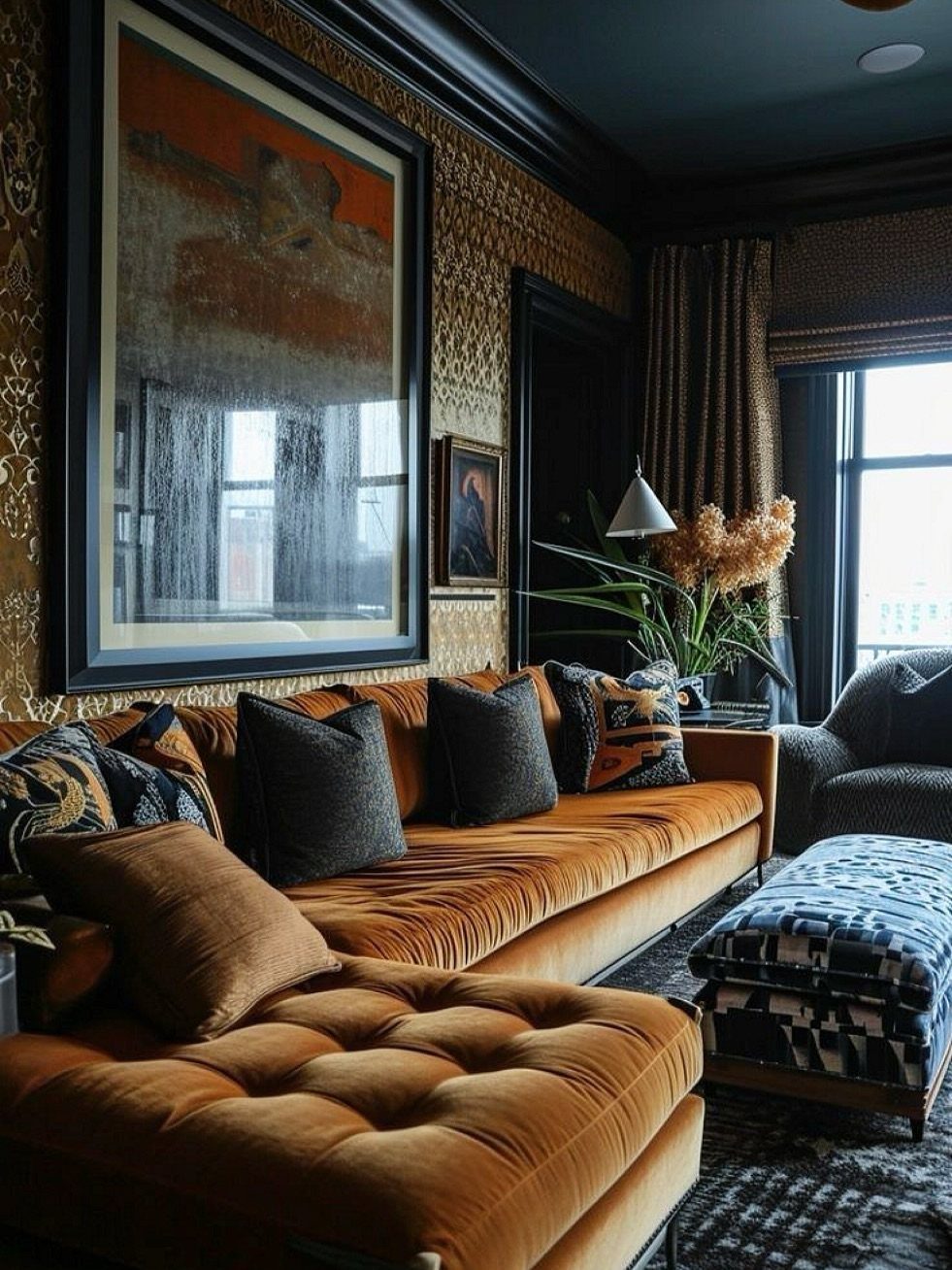
Wallpaper with enough pattern and metallic sheen holds its own next to a sectional this large, and painting the ceiling a contrasting color pulls the eye up so the brown doesn’t dominate.
The gold in the paper picks up warmth from the cognac velvet, and the blue ceiling adds a cooler note that keeps the room from reading entirely warm-toned.
This only works if you commit to both moves.
Wallpaper alone can feel busy, and a bold ceiling with plain walls looks unfinished. Together they frame the sofa instead of competing with it.
Colors That Complement Brown Sofas
Warm whites and soft beige are the safest bets because they brighten a room with a dark brown sofa without creating a cold contrast.
For contrast that still feels grounded, olive green and deep blue both work.
The green reads earthy next to brown, and the blue adds a cooler note without clashing. Rust or terracotta intensifies the warmth instead of fighting it, which works when you want the room to feel rich rather than neutral.
A tan rug, wood table, and beige walls all blur together, and the sofa disappears into the background. Without contrast, brown furniture fades into the background.
Styling Tips for Brown Sofas
Mix in different textures so the brown doesn’t look one-note.
Plants fill in the gaps between furniture and walls. Tall greenery in the corners or trailing from shelves adds movement and breaks up the solid mass of upholstery.
Wood furniture grounds the palette, especially if your floors are already wood.
Whether you choose to blend or contrast your brown sofa into your living room, there are so many ways to make this functional piece a real design moment — it comes down to what you like and what works best for your space.
Lighting Considerations
A dark brown sofa absorbs light, so it needs light aimed near it or behind it to show its color and texture.
Put a floor lamp next to the sofa and it stops looking like a dark blob in the corner.
I use 2700K bulbs because they pull the warmth out of brown.
Cooler bulbs flatten the color and make the brown look dull. You’ll see it right away in a dark room, but it barely registers in a bright one.
Layer your light sources at different heights instead of relying on one overhead fixture. Use more than one lamp so the brown catches light in some spots and falls into shadow in others.
Frequently Asked Questions
What color goes with a dark brown couch?
Warm whites and soft beige brighten the room without creating harsh contrast, and they’re the safest starting point.
Olive green and deep blue add contrast while staying grounded, rust or terracotta intensify the warmth, and all of these keep the brown from disappearing into the background.
Are brown sofas still in style?
Brown sofas are very much in style right now, especially as rooms move away from cool gray and back toward warmer, more layered palettes.
Add a couple of current pieces so the brown feels like a choice you made, not one you inherited.






