
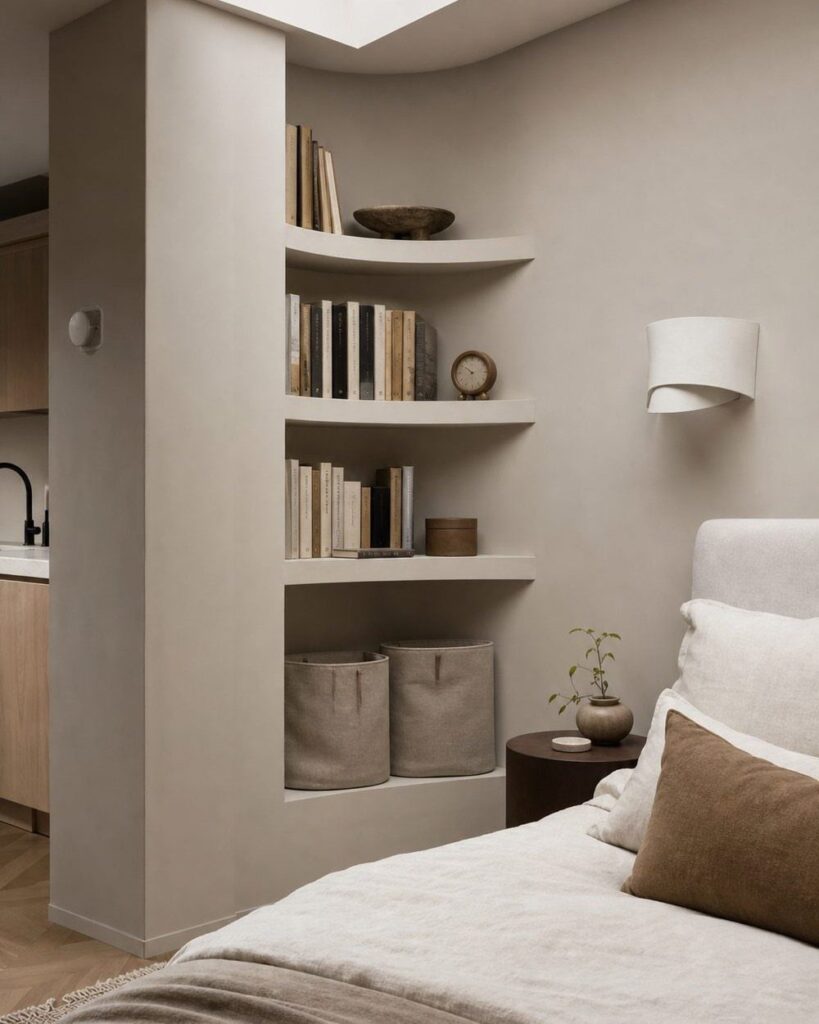
Built-in bookshelves range from simple floor-to-ceiling runs that cost $1,400 installed to alcove formations with base cabinets and curved profiles that push closer to $4,830.
The one that fits depends on how much floor space you can give up, whether you have an alcove or corner to fill, and whether you need the shelves to solve a layout problem or just add storage.
1. Corner Bookcase
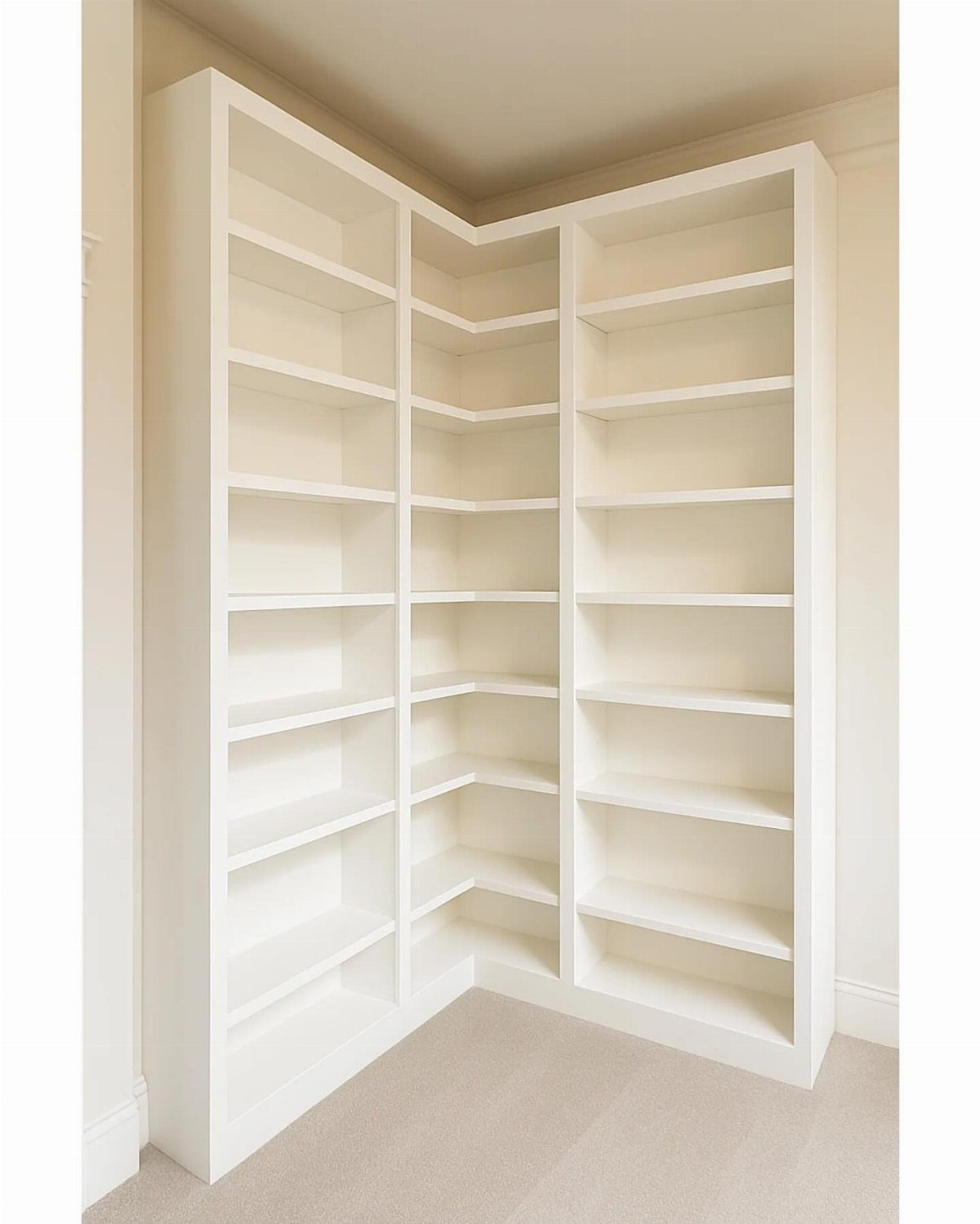
A corner bookcase wraps two walls into one continuous storage unit, turning dead space into shelving you can actually use.
The angle creates more linear footage than a flat wall would give you in the same footprint, and you get display space on both sides without blocking the middle of the room.
Most corner built-ins run floor to ceiling and use fixed shelves spaced evenly apart. You can frame them with standard lumber and finish with painted MDF or match existing trim if the room already has wainscoting or crown molding.
2. Alcove Formation
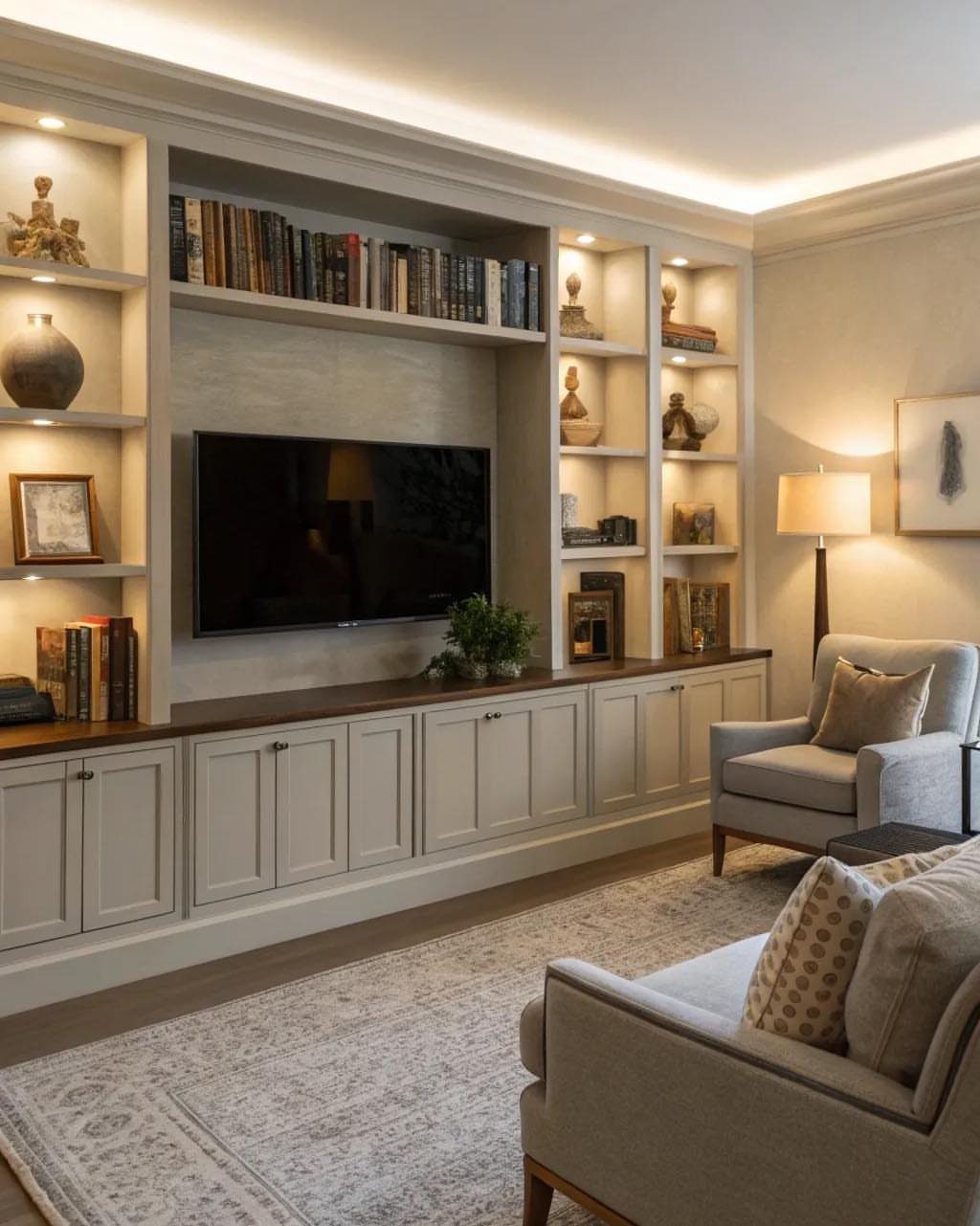
Alcove shelving fits into a recessed section of wall, usually flanking a central feature like a TV or a window.
The recess gives the unit architectural weight without projecting into the room, and the symmetry makes the whole wall feel intentional.
If you are working with a flat wall, you can build out a frame to create the alcove effect, then set the shelves back from the face.
Base cabinets keep the lower half clean and add closed storage for anything you do not want on display.
3. Built-In Around Fireplace
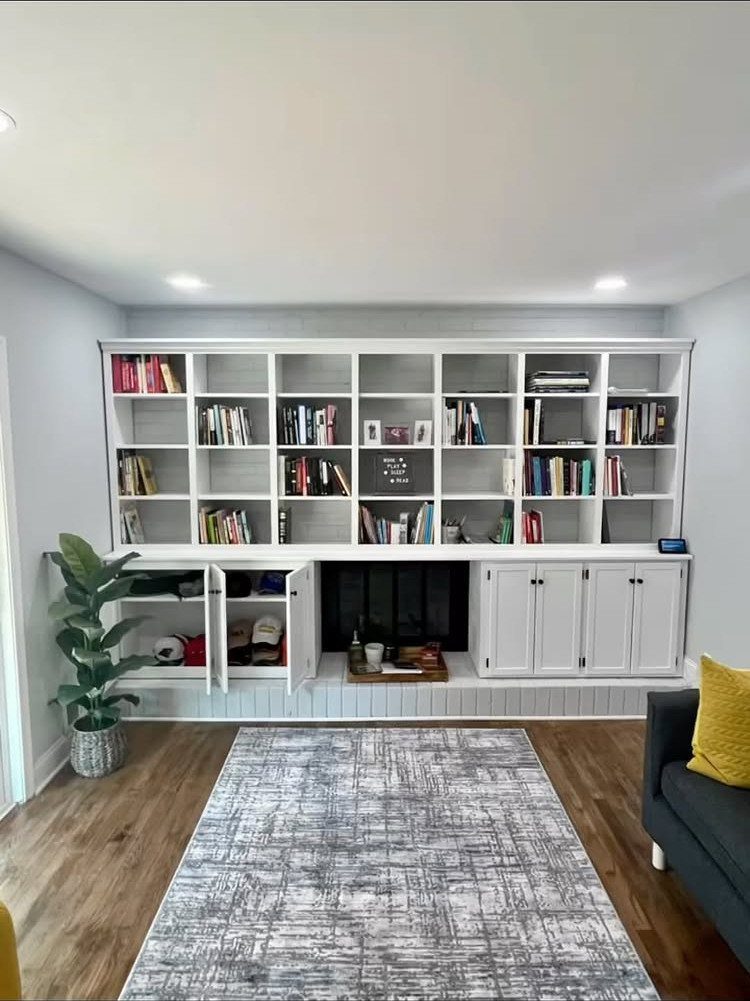
Built-ins around a fireplace frame the hearth and give you symmetrical storage on both sides. The vertical lines draw your eye up, and the shelves keep books and objects within arm’s reach of the seating area.
The units usually stop at mantel height or go all the way to the ceiling, depending on how much storage you need and whether you want the fireplace to stay the focal point.
Closed cabinets at the base hide remotes, games and anything else that would clutter the shelves.
4. Above Door Shelves
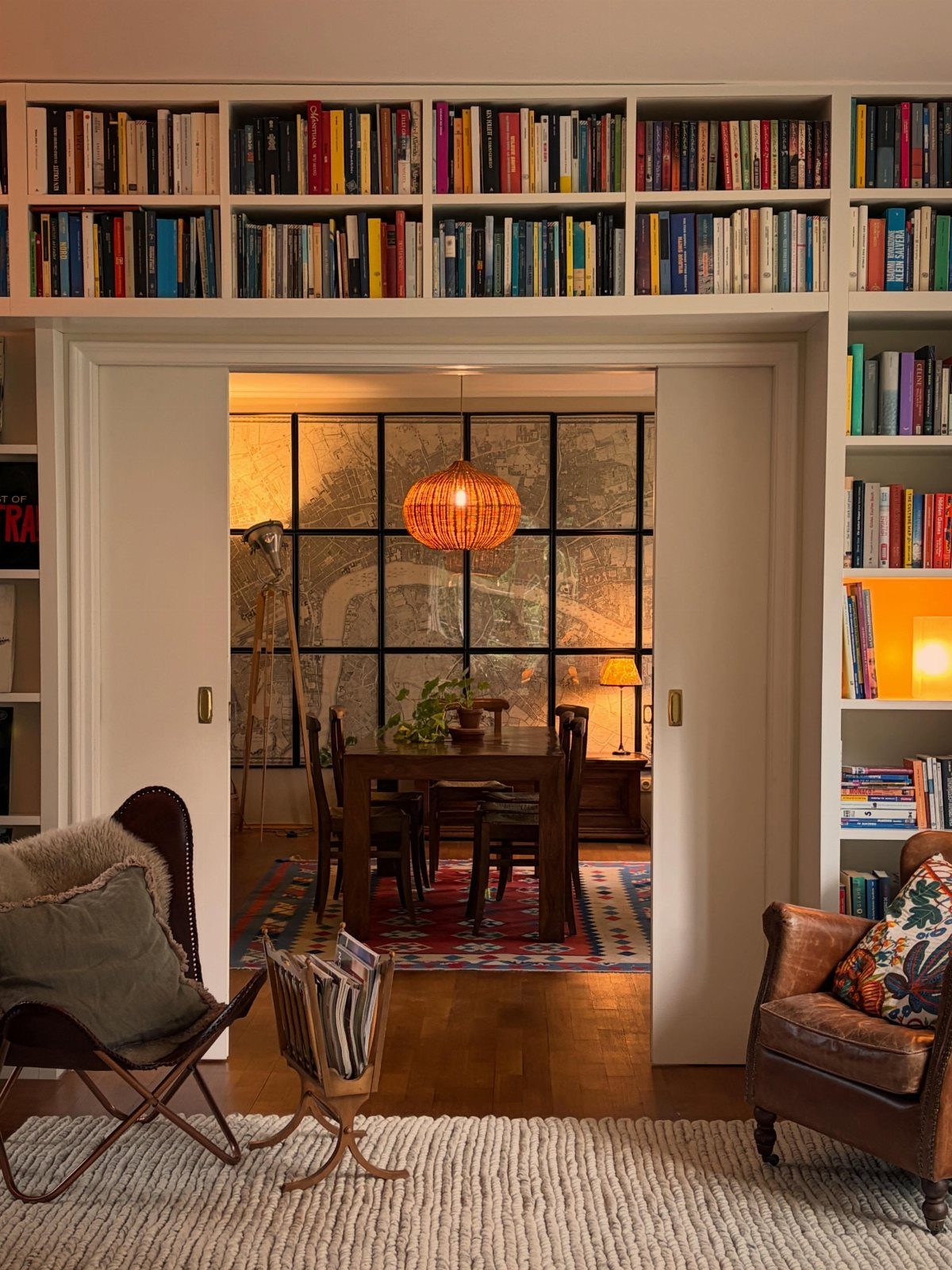
Shelves mounted above a doorway capture vertical space that would otherwise sit empty. The height keeps them out of the way, and a wide doorway gives you enough horizontal span to make the shelving feel substantial rather than decorative.
You will need to secure the shelves into studs or use heavy-duty anchors rated for the weight of books.
Most installs stay shallow so they do not project too far into the room, and painting them the same color as the trim helps them blend into the architecture.
5. Base Cabinets Built-In Bookshelves
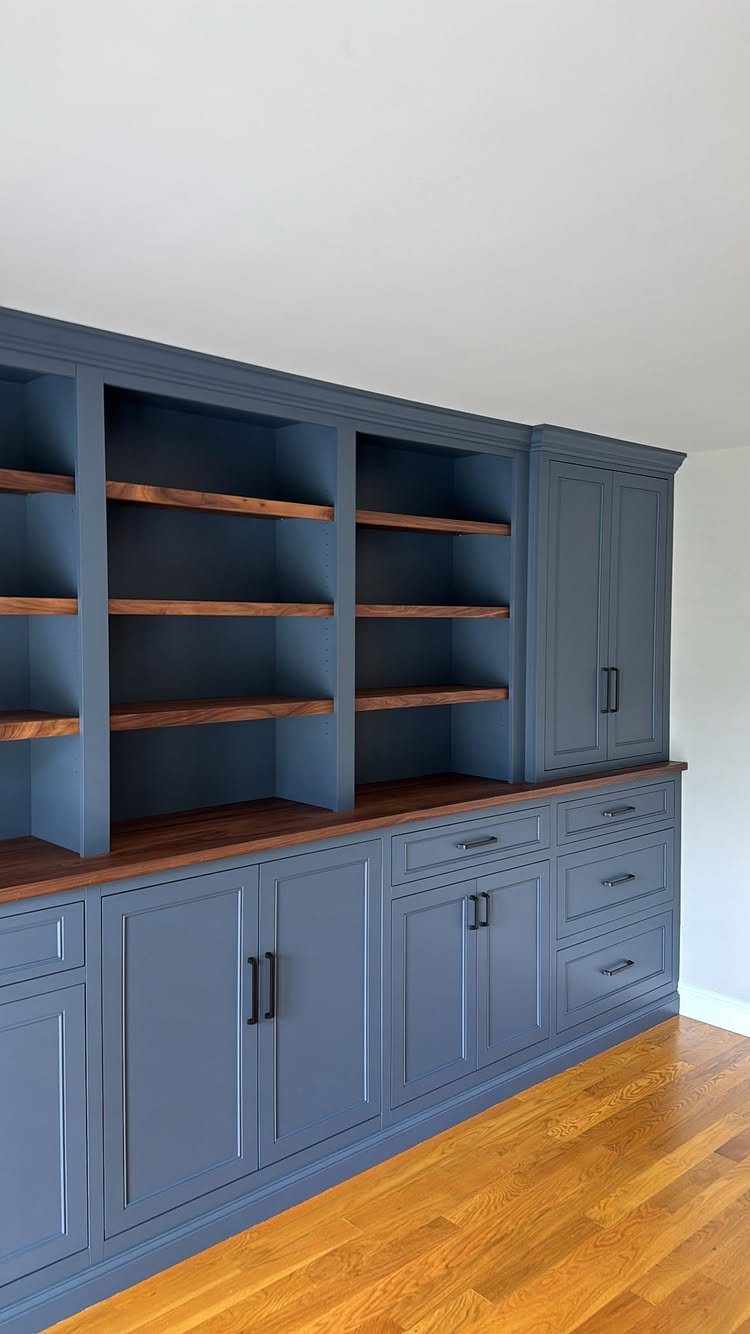
Base cabinets give you closed storage at floor level and open shelves above, so you can keep some things hidden and others on display. The cabinets anchor the unit and make it feel more like furniture than floating shelves.
Most designs use a painted cabinet box with wood or painted shelves, and you can match the cabinet color to existing trim or go darker for contrast.
6. Reading Nook
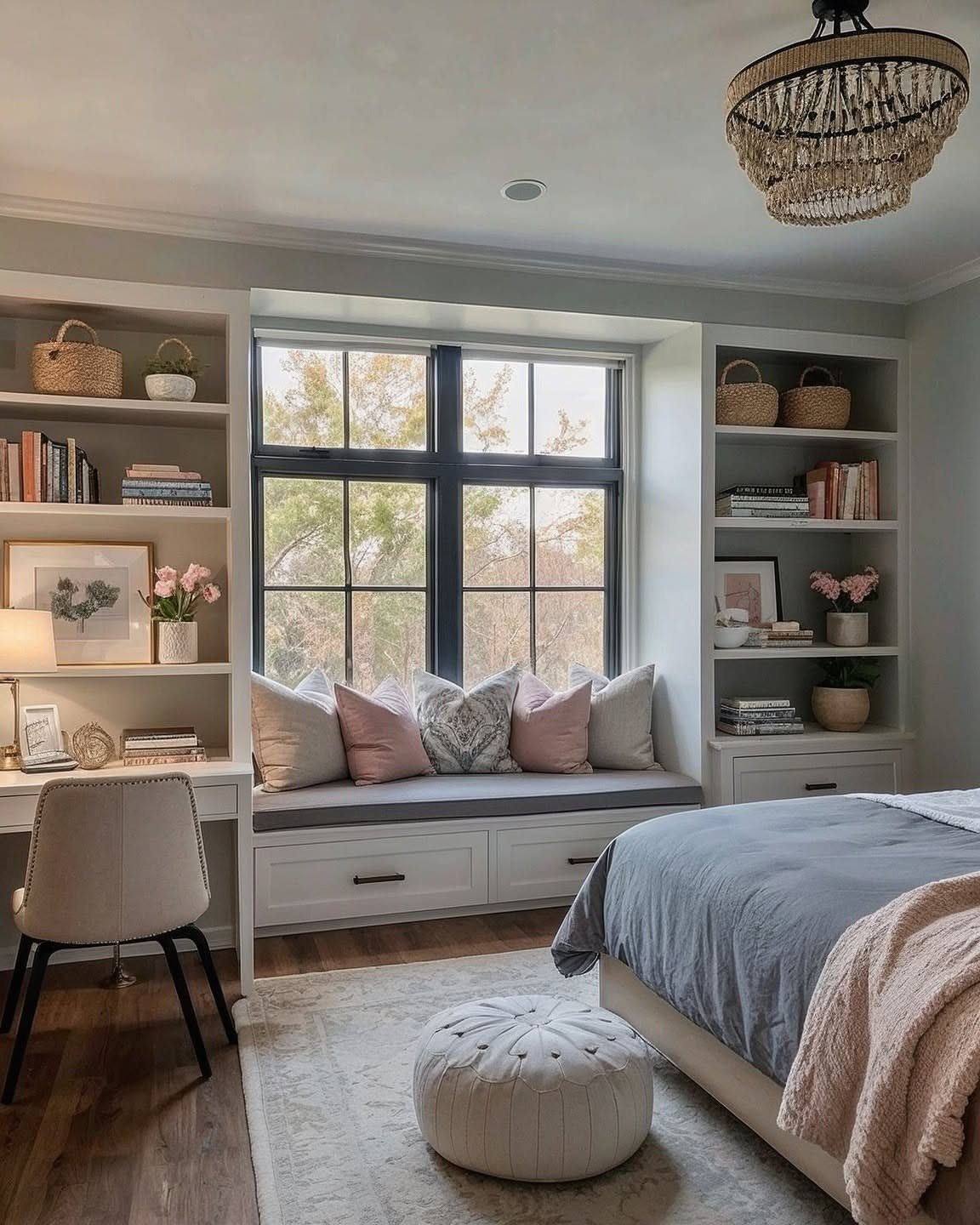
A window seat flanked by built-in shelves turns an underused window into a dedicated reading spot.
The shelves keep books within reach, and the seat gives you a place to sit that does not take up floor space the way a chair would.
The bench usually includes storage underneath, either drawers or a hinged top. Cushions and pillows make it comfortable, and the shelves on both sides frame the window without blocking light.
7. Floor-to-Ceiling
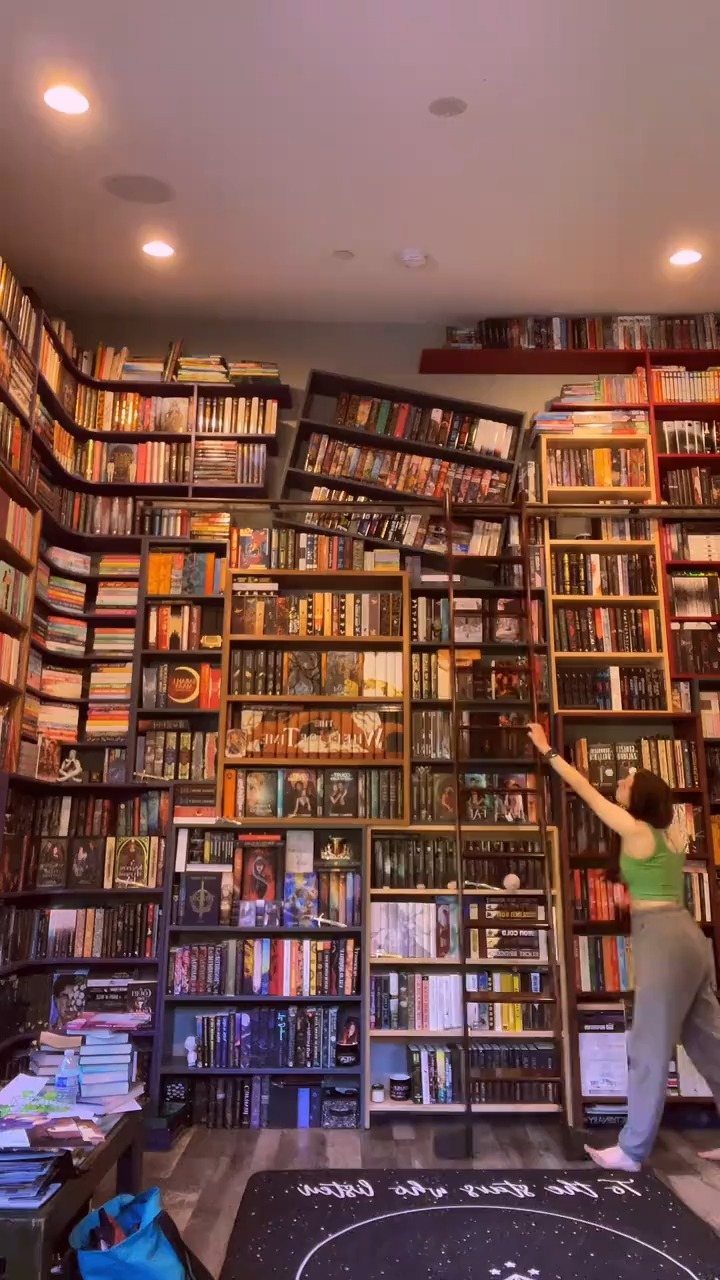
Floor-to-ceiling shelves run from the baseboard to the crown and fill the vertical span with books, turning an entire wall into storage.
The height draws your eye up and stretches the vertical space, and a rolling ladder gets you to the top shelves without dragging a stepstool around.
The ladder mounts on a rail that runs the full width of the unit, and the hardware needs to be rated for your weight plus the weight of anything you are carrying.
Most ladders are metal or wood and finish to match the shelves.
8. Room Divider
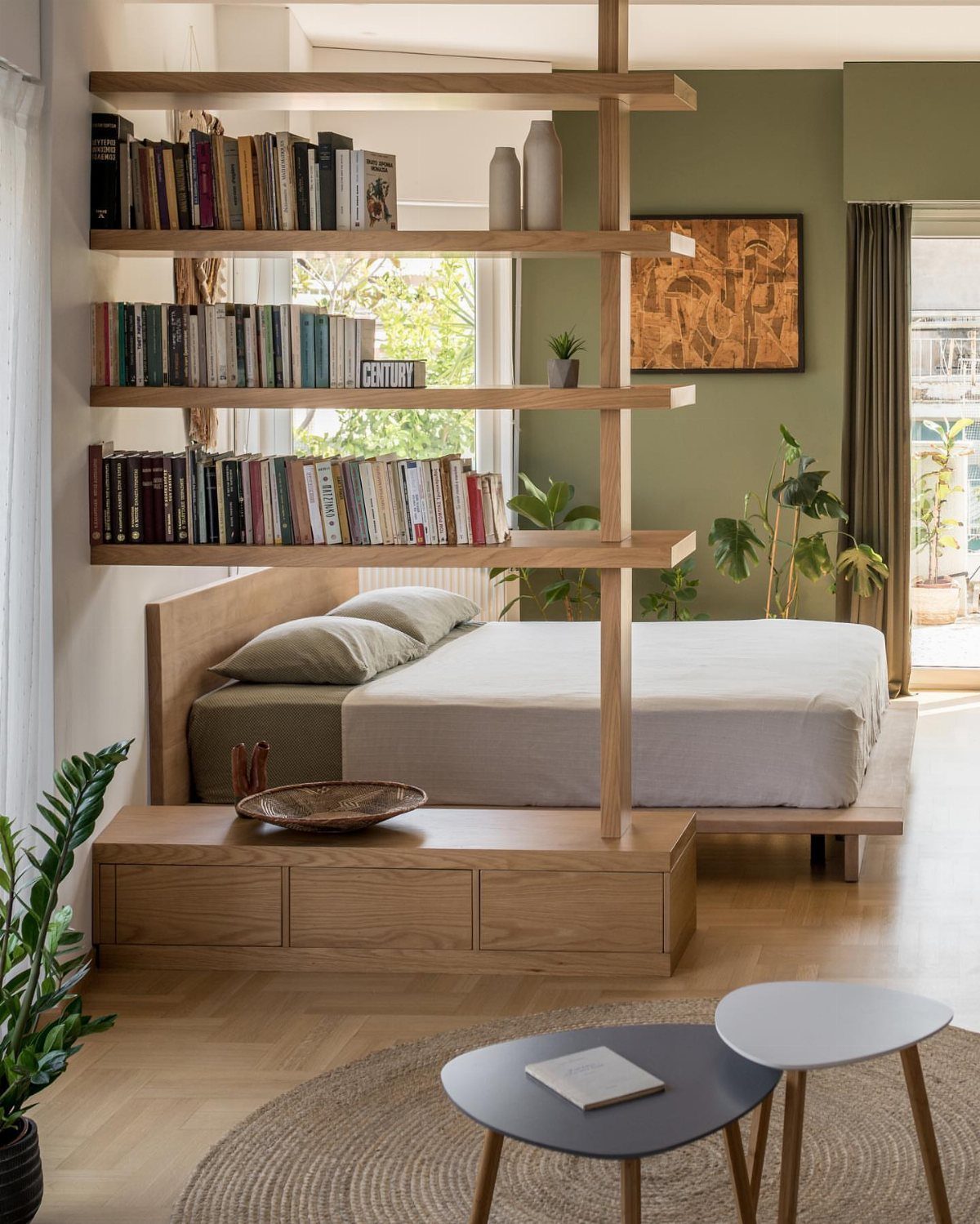
An open-backed bookshelf divides a room without putting up a full wall, so you keep the light and sightlines while marking off separate zones.
Books and objects on the shelves add privacy without closing things off completely, and you can access both sides.
The unit needs to be anchored at the top or built heavy enough at the base to stay stable.
Open shelves work better than closed backs if you want the space to feel connected, and leaving some shelves empty keeps the divider from turning into a visual barrier.
9. Curved Shelves
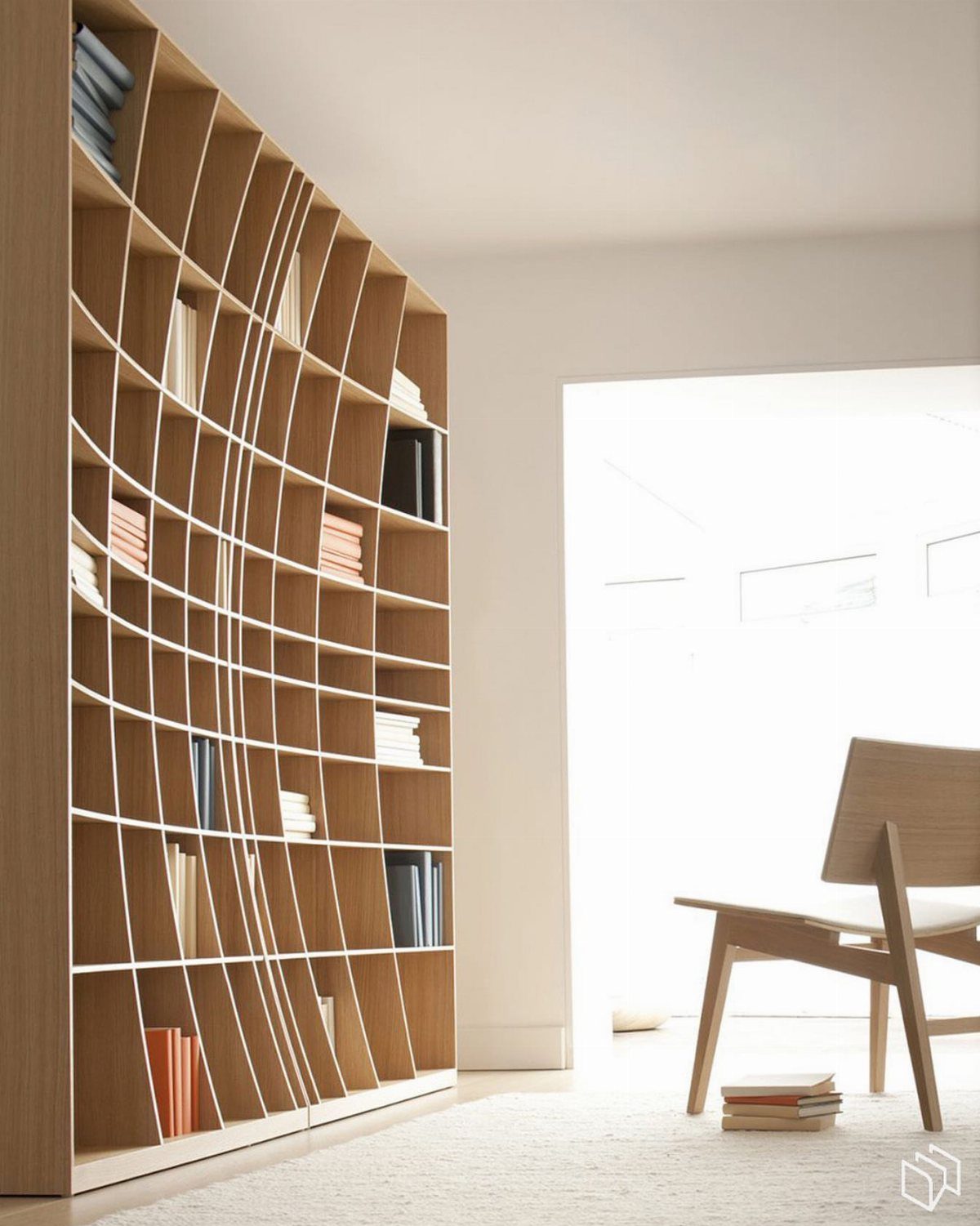
Curved shelves follow an arched or bowed profile instead of running flat and square, so the unit takes up less visual weight even when it holds the same number of books.
The curves soften the look and make the shelving feel more like architecture than storage.
Building curved shelves usually means bending plywood in thin layers or cutting solid boards into arcs, and you will need clamps and a form to hold the shape while the glue sets.
The front edge can stay exposed or get wrapped in veneer to hide the laminations.
10. Under the Stairs Bookshelf
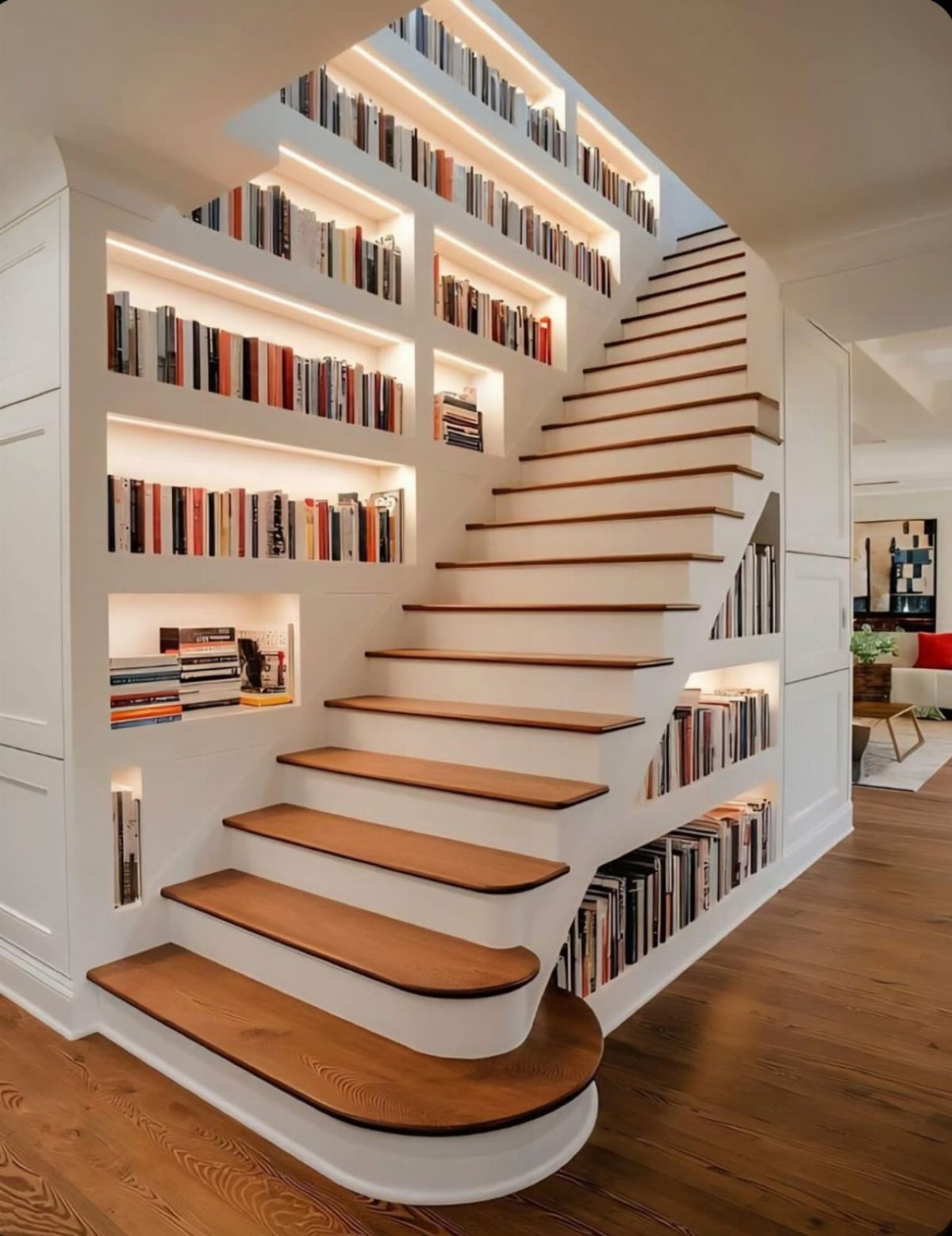
Shelves fitted into the space under a staircase follow the slope of the steps and turn otherwise wasted square footage into usable storage.
The height drops as you move toward the low end, so taller books go near the top of the stairs and smaller items fill the shorter sections.
Most installs use custom-cut shelves that match the stair pitch, and you can add lighting inside each shelf to make the spines easier to read.
The unit usually gets built into the wall rather than left freestanding, so it feels permanent.
Cost of Built-Ins
Professional installation for built-in bookshelves typically runs $1,400 to $4,830, with the final number tied to how much customization the design requires.
A simple floor-to-ceiling unit with fixed shelves sits at the lower end, while features like curved profiles, integrated lighting or matched crown molding push costs higher.
If you are hiring out, get quotes that break down materials and labor separately so you can see where the budget goes.
Custom work costs more than stock lumber and paint-grade MDF, and intricate joinery or site-built curves add hours to the install.
Building it yourself cuts the labor cost entirely, though you still need to account for materials, fasteners and finish.
Shelf Depth Recommendations
Most built-in shelves land between 11 and 12 inches deep, a span that holds standard hardcovers without projecting too far into the room. Paperbacks only need 5 inches, larger hardcovers take 10, and oversize art books require 11 inches of depth to sit flat.
Professional organizers keep shelves at 14 inches or less so everything stays visible from the front. Deeper shelves let things pile up behind the front row, and the back half turns into a junk drawer you can’t see.
If you are mixing book sizes and display objects on the same unit, 12 inches gives you enough room for flexibility without making the shelves feel like they are eating into the floor space.
Measure anything you plan to store before you commit to a depth.
For a more precise guide, This Old House Magazine’s “Bookcase Basics” breaks down shelf depth by book type: paperbacks need just 5 inches of depth, standard hardcovers require 8 inches, larger hardcovers need 10 inches, and coffee-table art books call for 11 inches.
Materials for Built-Ins
Solid hardwoods like oak, maple and cherry give you the most strength and hold up over decades, but they cost more than sheet goods and take longer to mill.
Hardwood plywood offers a middle option with good strength and veneer faces that work for both painted and clear finishes.
MDF is the most affordable material and takes paint cleanly without grain or knots showing through.
The edges stay smooth when you cut them, so you skip the edge banding plywood needs, and because there’s no grain direction you can orient cuts any way that saves material.
MDF sags sooner than plywood under the same weight, so shelves need to be shorter or you need to step up to thicker stock.
Laminate finishes hold up to moisture and heavy use better than paint, and metal shelving works for a modern look but shows up less often in built-ins.






