
Ceiling treatments range from a single gallon of paint to coffered panels that need blocking and trim work.
The height you have to work with decides which options stay on the table: low ceilings can’t spare the depth that dropped tiers or deep beams take away, and high rooms handle multi-level drops or cove lighting without feeling squeezed.
1. Painted Ceiling
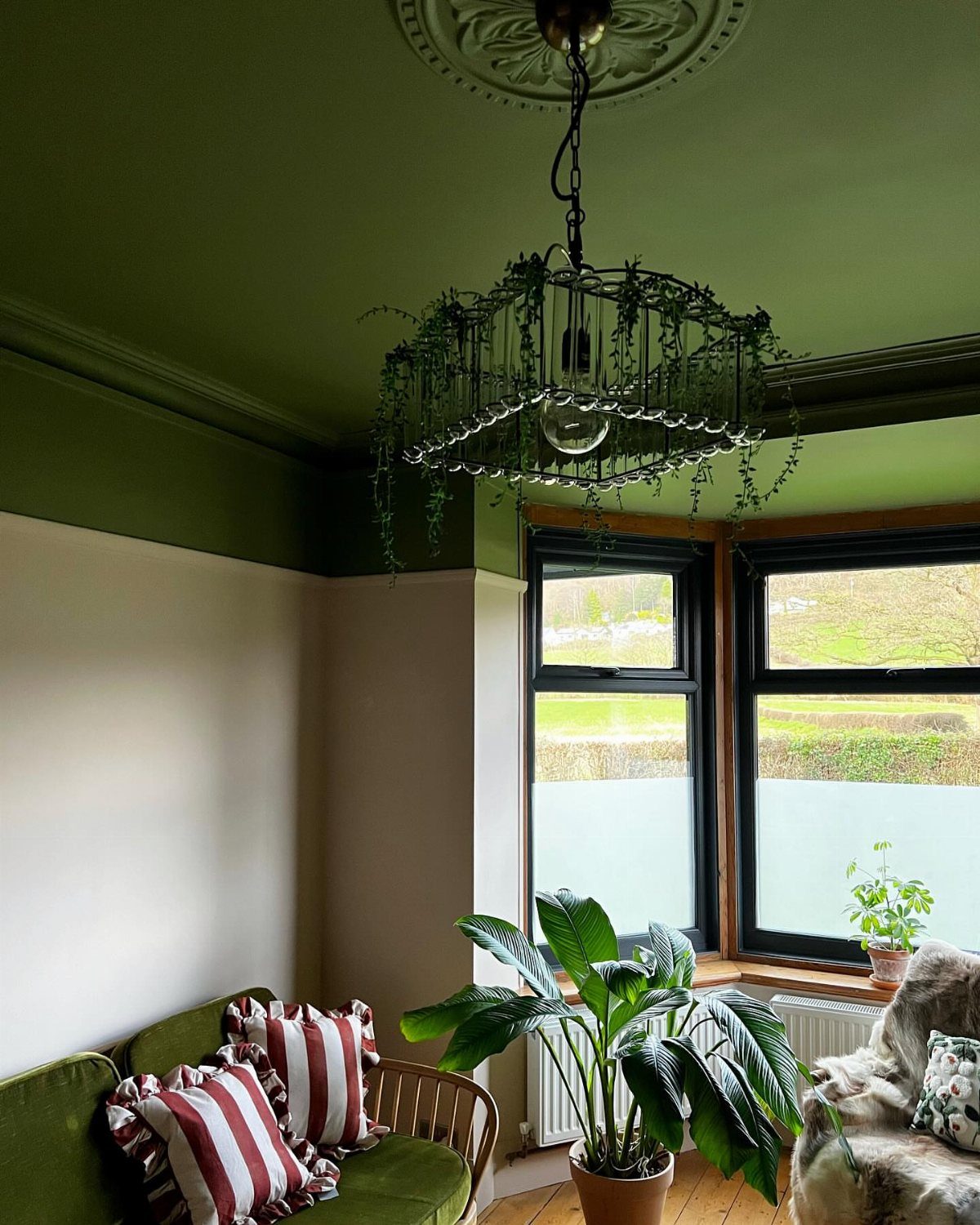
A single coat of color overhead pulls the whole room into focus. Green like this reads formal without needing molding everywhere, and deeper tones hide imperfections better than white ever will.
If the ceiling already has texture you want gone, skim coat it first or live with the bumps showing through.
Flat or matte paint hides roller marks; anything with sheen shows every lap. I’d tape the crown and cut in with a small brush, then roll in one direction to keep the finish even.
Color this saturated changes how the light sits in the room, so test it on a sample board first.
2. Wallpapered Ceiling
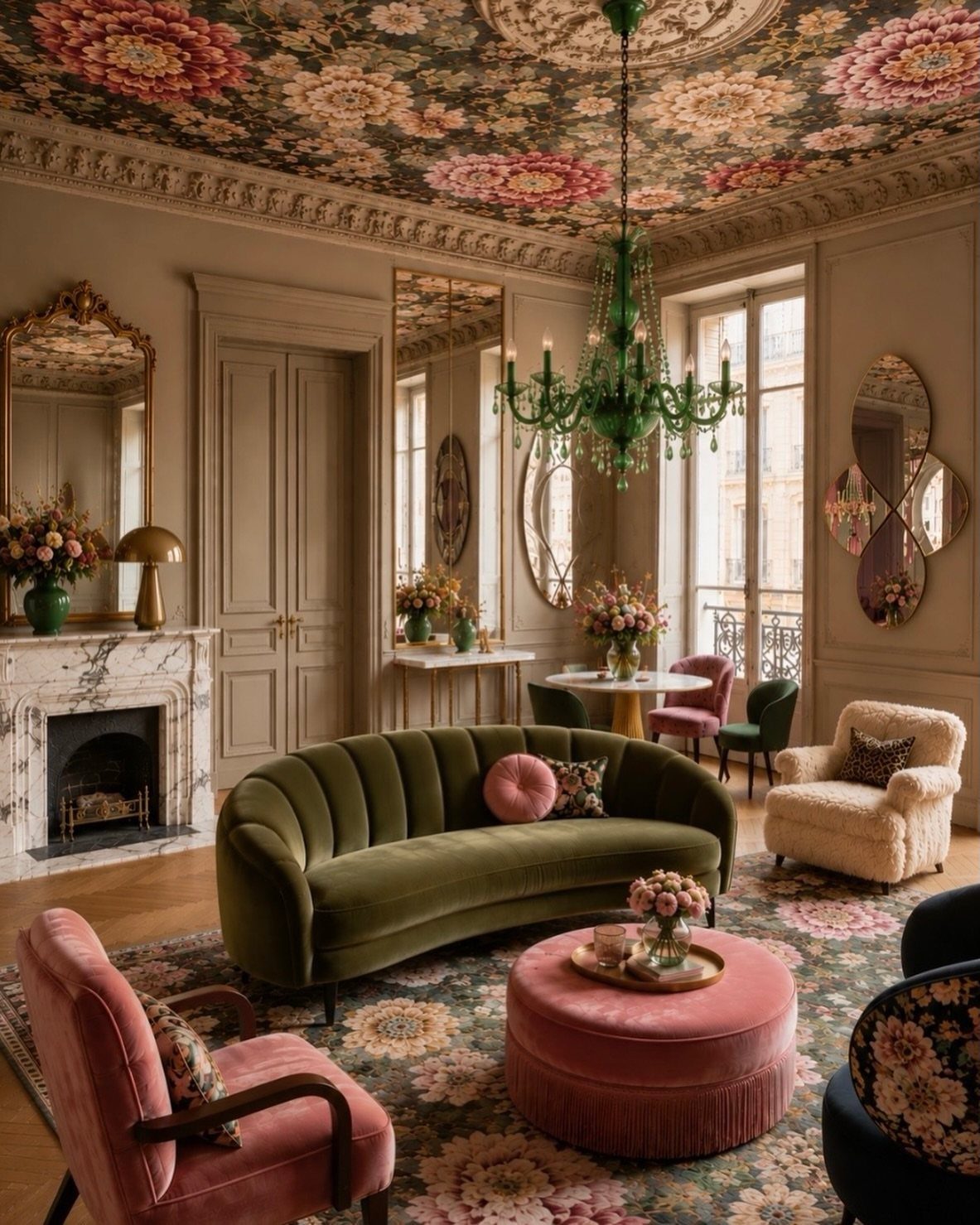
Pattern overhead works when the walls stay quiet. Floral like this brings in detail without cutting up the room, and the ceiling becomes the reason you kept everything else simple.
Peel-and-stick makes this manageable if you can handle seams that might lift over time. Paste-on wallpaper lasts longer and lies flatter, but you’re working above your head and repositioning wet paper gets old fast.
I’d start at the center and work outward so any trimmed edges land at the perimeter where molding can cover them.
Gloss or satin finish reflects light and makes the pattern read sharper than matte.
3. Wooden Beam Ceiling
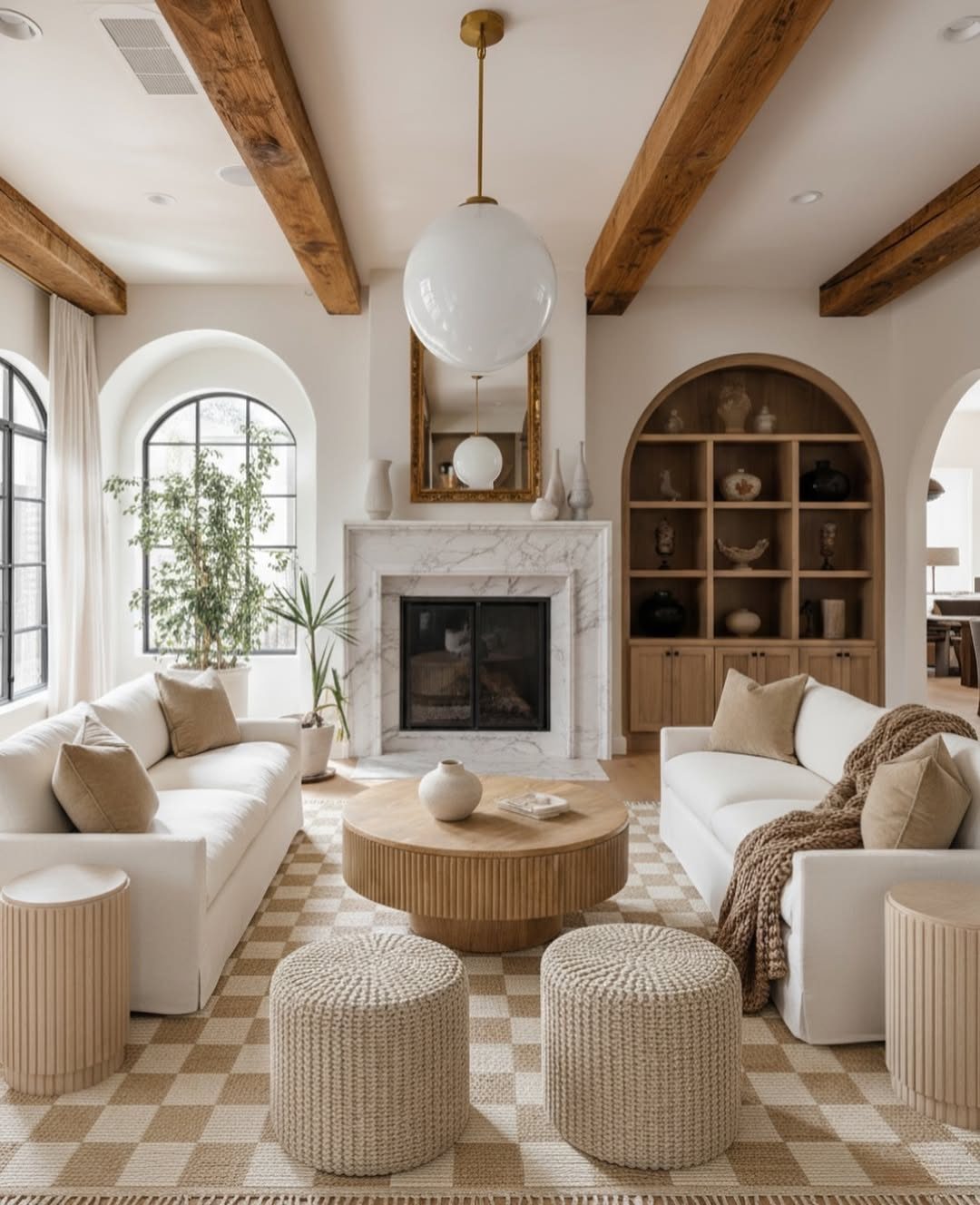
Beams cut the ceiling into sections and give a tall room something to hold onto. Real wood costs more and weighs enough to need solid blocking, but it ages in a way foam never will.
Faux beams hollow out the middle and install with construction adhesive and screws into the joists.
Stain them before they go up; doing it overhead guarantees drips. I’d run them parallel to the longest wall and space them wide enough to frame the room without crowding it.
White ceilings between dark beams keep the contrast high. Paint the whole ceiling the same color as the beams if you want warmth without the grid effect.
4. Geometric Patterns Ceiling
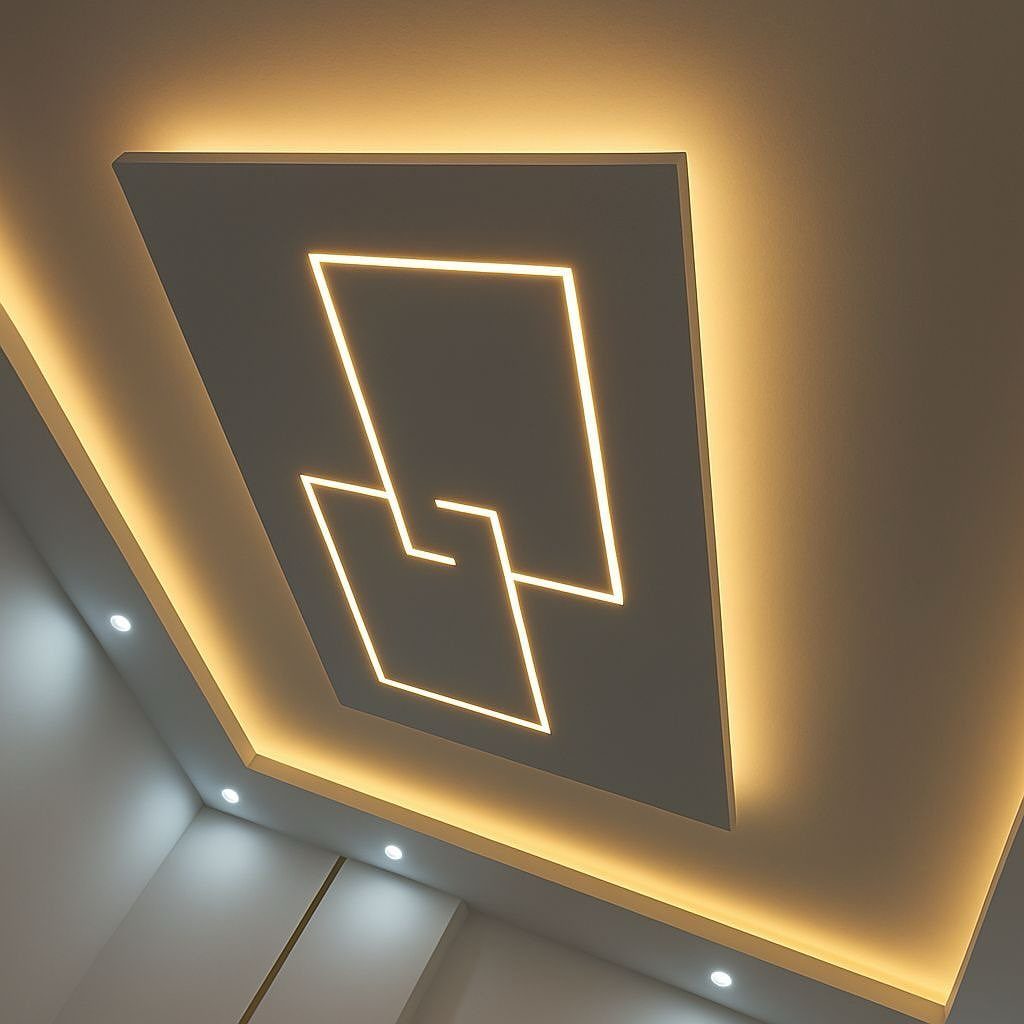
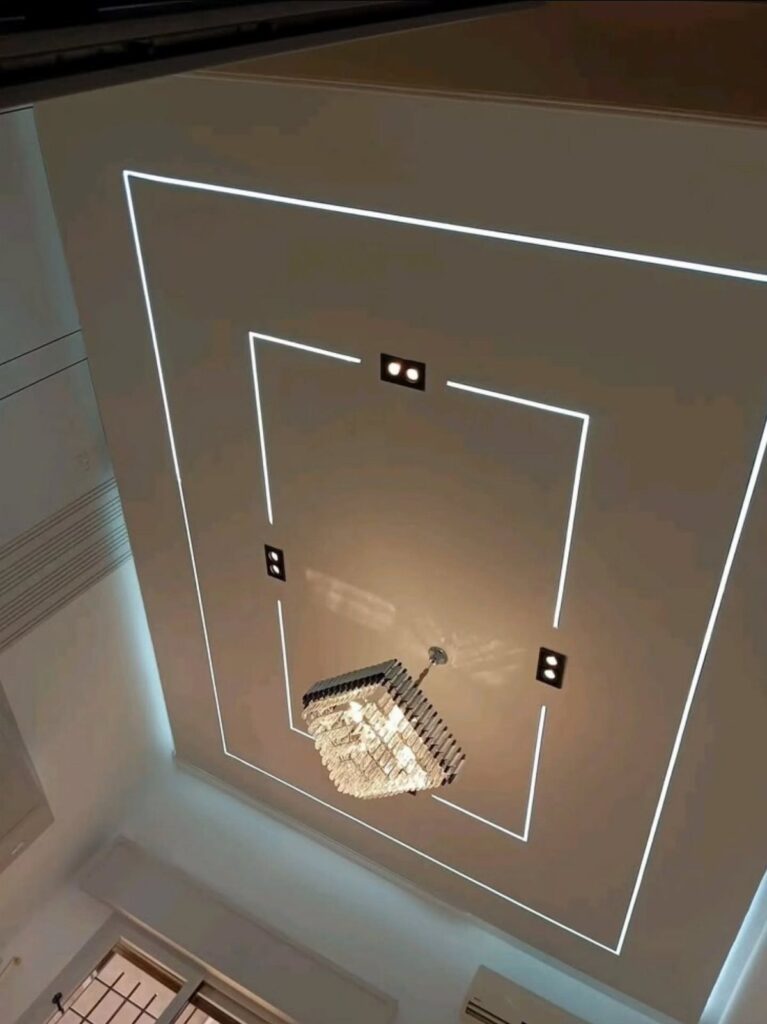
Geometric insets with integrated lighting turn the ceiling into architecture. The pattern defines zones without walls, and the glow softens what could read as hard-edged.
This needs framing dropped below the existing ceiling, so you lose height. Drywall the shapes, run LED strip in the recesses, and paint everything the same color so the light does the work.
I’d keep the geometry simple, squares or rectangles, because complex shapes multiply the cuts and the corners that need to align.
Warm white LED reads softer than cool white and makes the geometry feel intentional instead of clinical.
5. Tray Ceiling
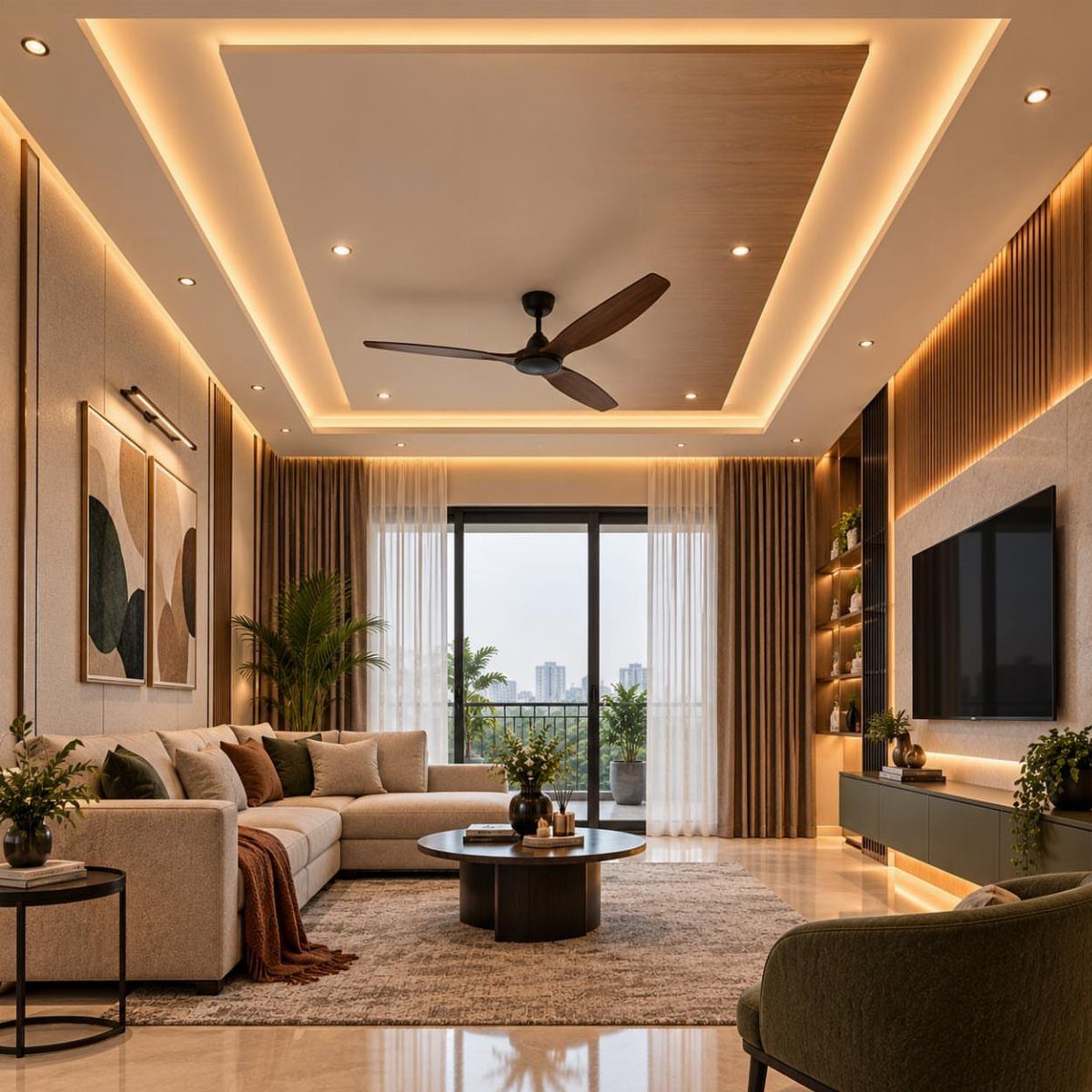
A tray ceiling lifts the center and tucks lighting into the step. The raised section draws your eye up, and the cove keeps the light indirect so it washes the ceiling instead of glaring down.
This works best in new construction or a gut renovation where you can frame it in.
Retrofitting means dropping the perimeter, which lowers the room everywhere but the middle. I’d run LED strip along the inner ledge and hide it behind a small lip so you see the glow, not the source.
Paint the recessed area a shade darker than the center to make the depth read, or keep it all one color if the shadows alone are enough.
6. Coffered Ceiling
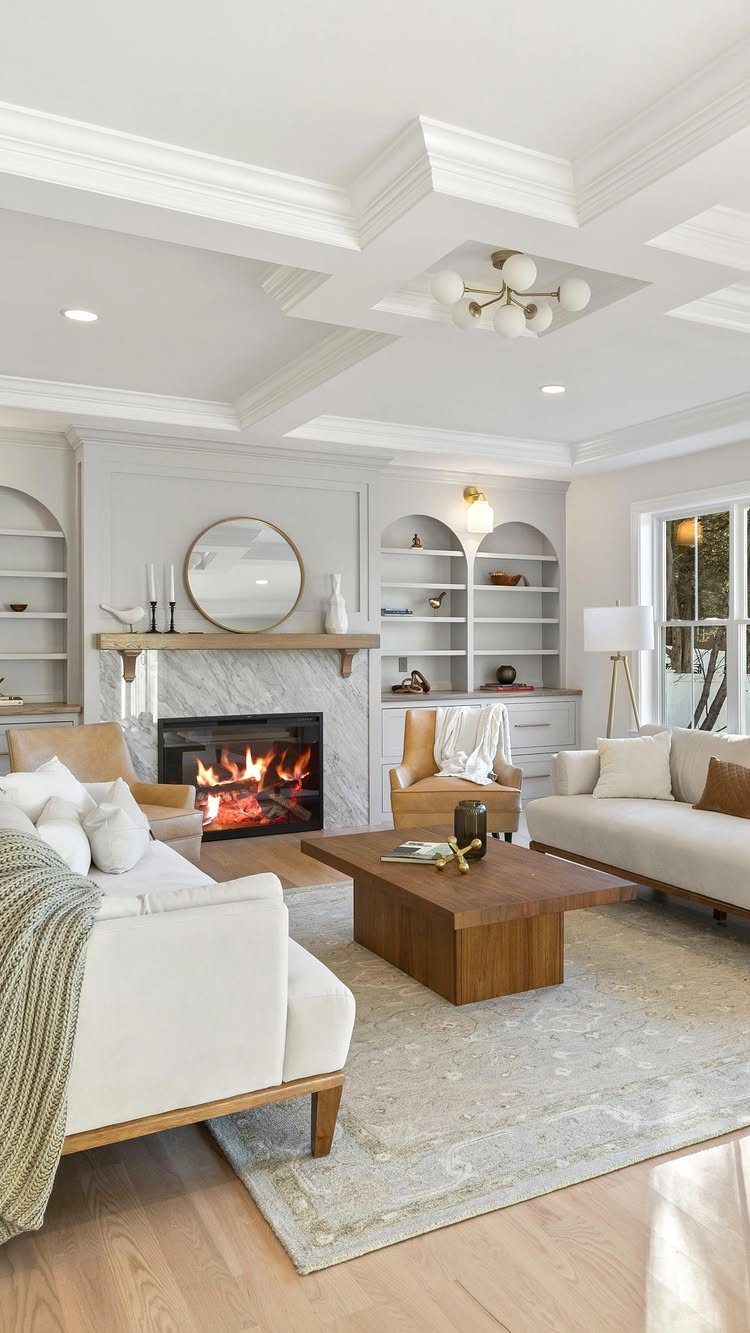
Coffered ceilings divide the surface into panels and give flat drywall some relief. The grid reads formal, and white keeps it from weighing the room down.
You can build this with dimensional lumber and trim, but it’s faster to use prefab MDF coffers that nail up in sections.
I’d plan the layout so full panels land in the center and any cut pieces fall at the edges. Paint everything before you install it, then caulk and touch up the seams.
Deeper coffers cast more shadow and read stronger. Shallow ones stay subtle and work in rooms with lower ceilings where you can’t afford to lose much height.
7. Multi-Level Ceiling
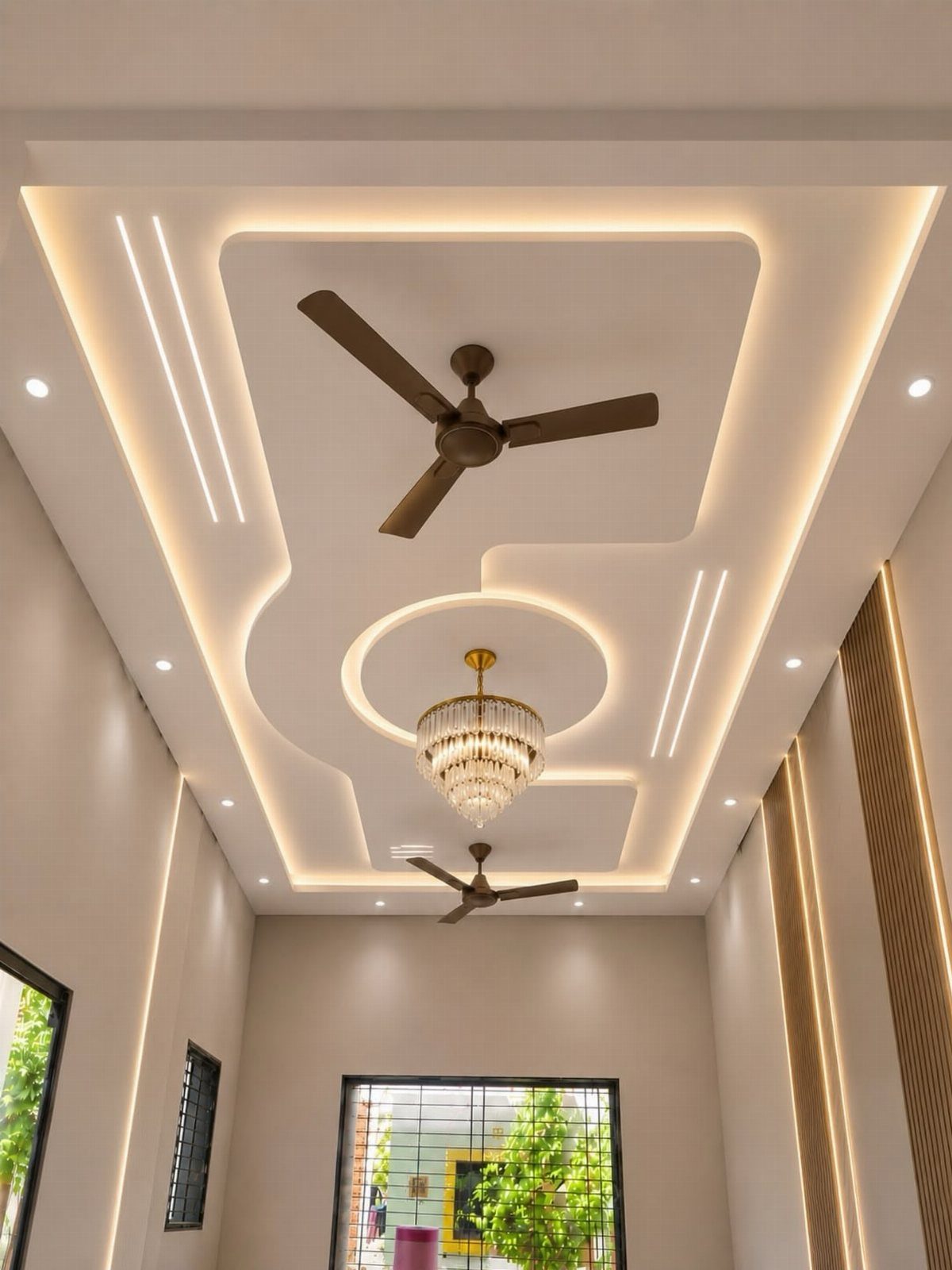
Stepping the ceiling in tiers pulls focus upward and lets you layer light into each level. The recessed sections here hold LED strip that washes the ceiling plane, and the fans and chandelier anchor separate zones.
Framing this means dropping sections at different heights, so you need clearance to start with. I’d keep the steps subtle, so the room reads layered instead of chopped up.
Wire the cove lighting on a dimmer so you can adjust how much glow the recesses throw.
8. Skylights
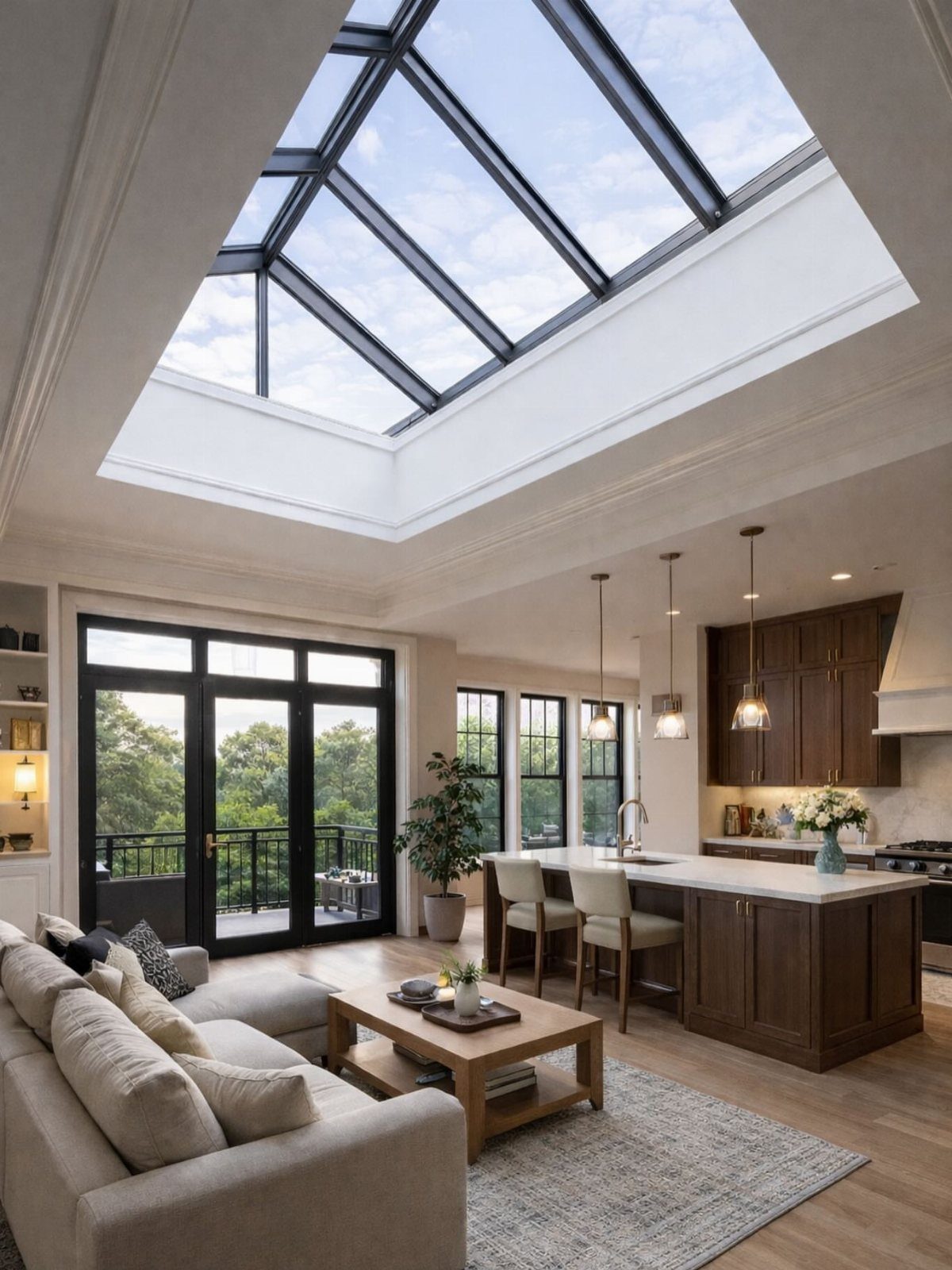
A skylight overhead turns the ceiling into a light source and cuts the need for fixtures during the day. Fixed glass like this works in dry climates, but operable units vent heat and let you control airflow.
Framing one in means cutting through rafters and flashing it tight enough to stay dry through heavy rain.
I’d go with a curb-mounted unit that sits above the roofline instead of a deck-mounted one that lies flat, because the curb sheds water better.
Tinted or low-E glass keeps the room from overheating in summer.
9. Textured Ceiling
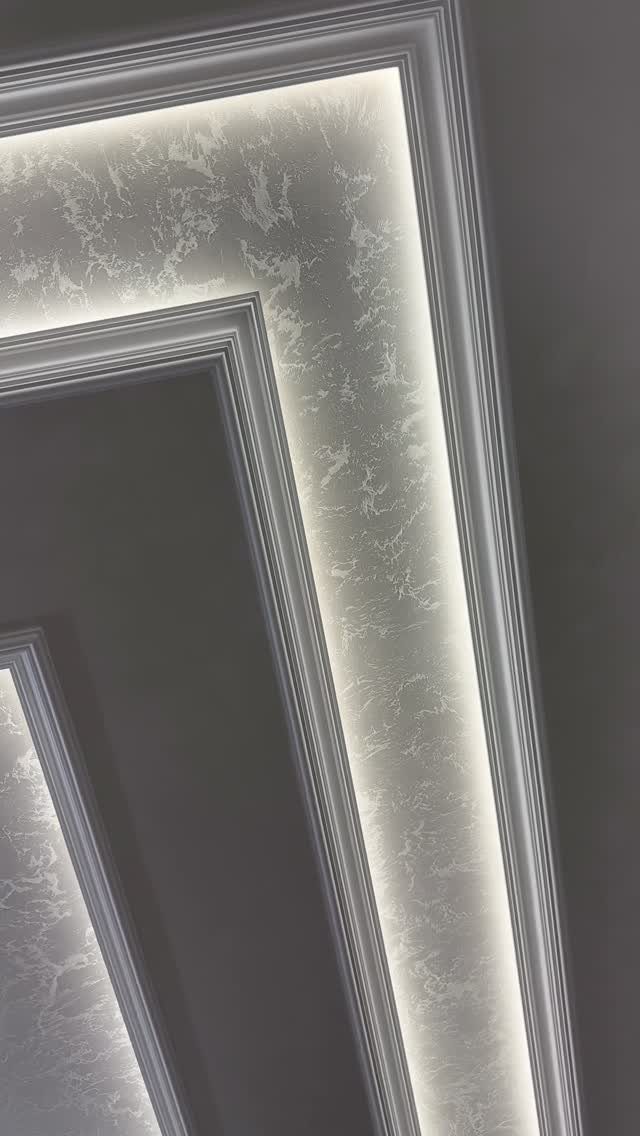
Texture overhead catches light and breaks up the flat plane.
Joint compound troweled in overlapping strokes and left rough gives you that look, or you can buy textured paint that goes on with a roller. I’d practice on scrap drywall first because you can’t smooth it out once it dries.
Keep the texture inside a border so it reads intentional. Running it everywhere dates the room fast.
10. Glossy Finish Ceiling
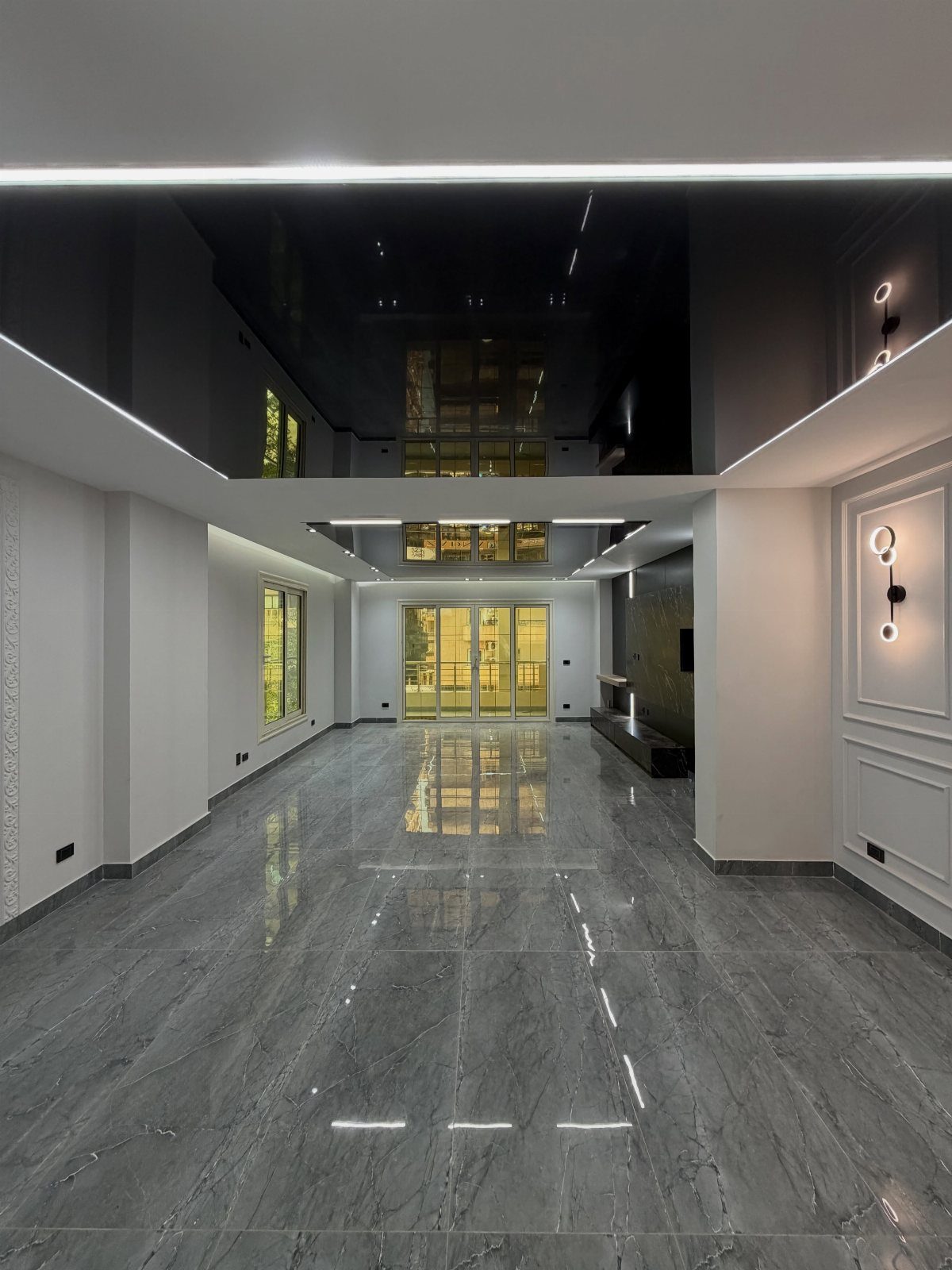
High-gloss paint or stretched vinyl reflects the room back at itself and makes the ceiling disappear into light. Black like this reads formal and hides the structure, while white would bounce more light around.
Glossy paint shows every flaw, so the ceiling needs to be dead flat before you roll it.
Stretch ceiling installs on a perimeter track and pulls tight with heat, which hides imperfections but costs more and needs a pro to do it right.
The reflection doubles the visual height but also shows dust, so plan on wiping it down.
11. Drop Ceiling
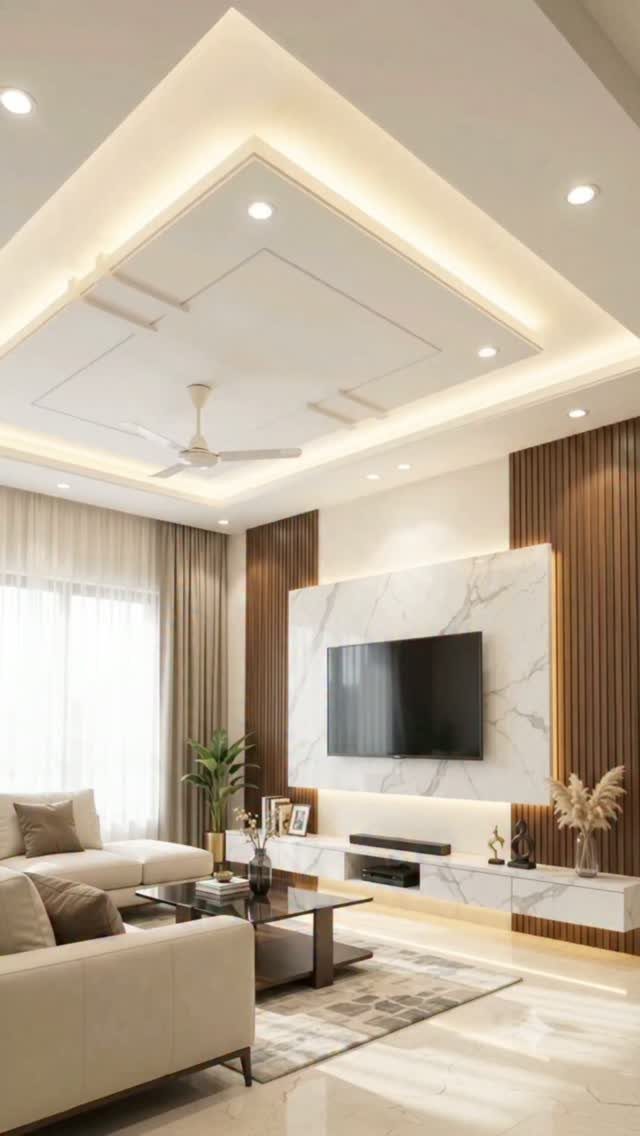
Dropping sections of the ceiling in tiers hides ductwork and wiring while giving you room to recess lights and mechanical.
You build this by hanging a grid below the existing ceiling and covering it with drywall or panels.
I’d keep the drops shallow so you don’t lose too much height. LED strip in the coves needs a channel to sit in and a lip to hide behind.
This muffles sound between floors if you add insulation above the dropped sections.
12. Veneered Ceiling Panels
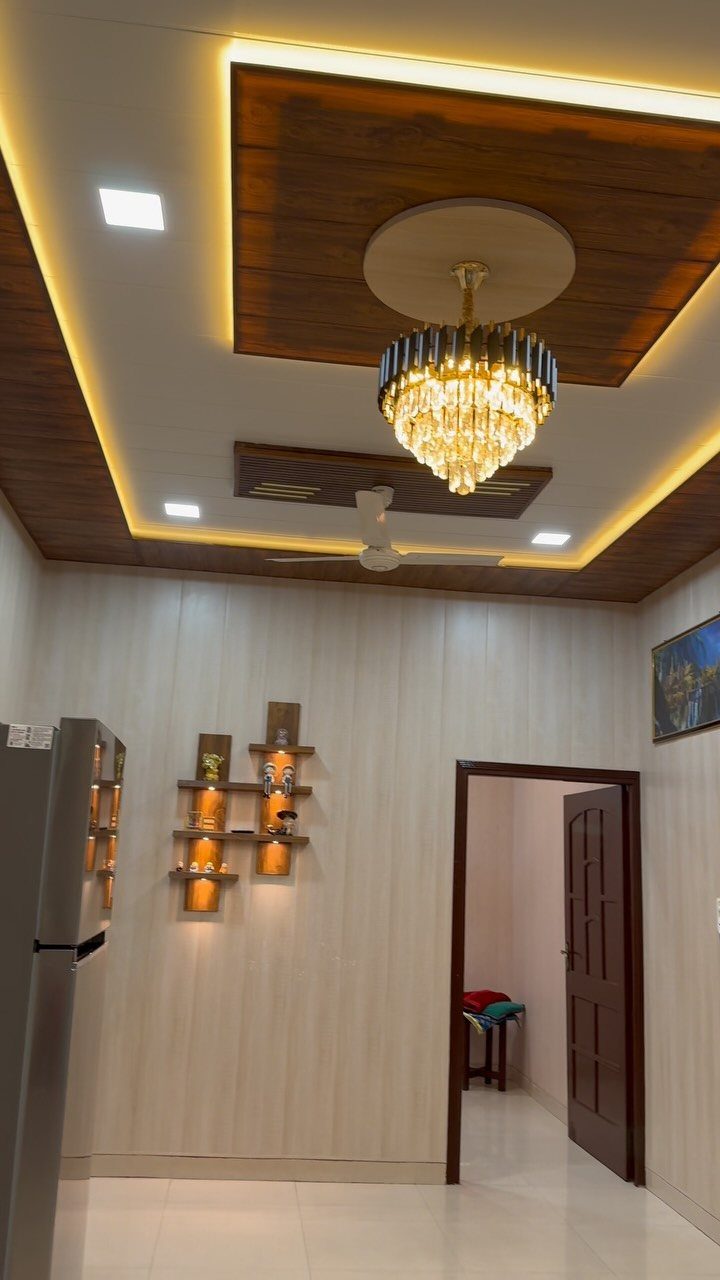
Wood veneer panels overhead bring in grain and warmth without the weight of solid planks.
Real wood veneer over MDF or plywood installs like tongue-and-groove paneling, nailed or clipped into furring strips.
I’d finish the veneer before it goes up, because staining overhead is miserable. The seams between panels will show, so plan the layout so they land evenly.
Darker veneer absorbs light, so balance it with enough fixtures to keep the room from feeling closed in.
13. Contrasting Colors Ceiling
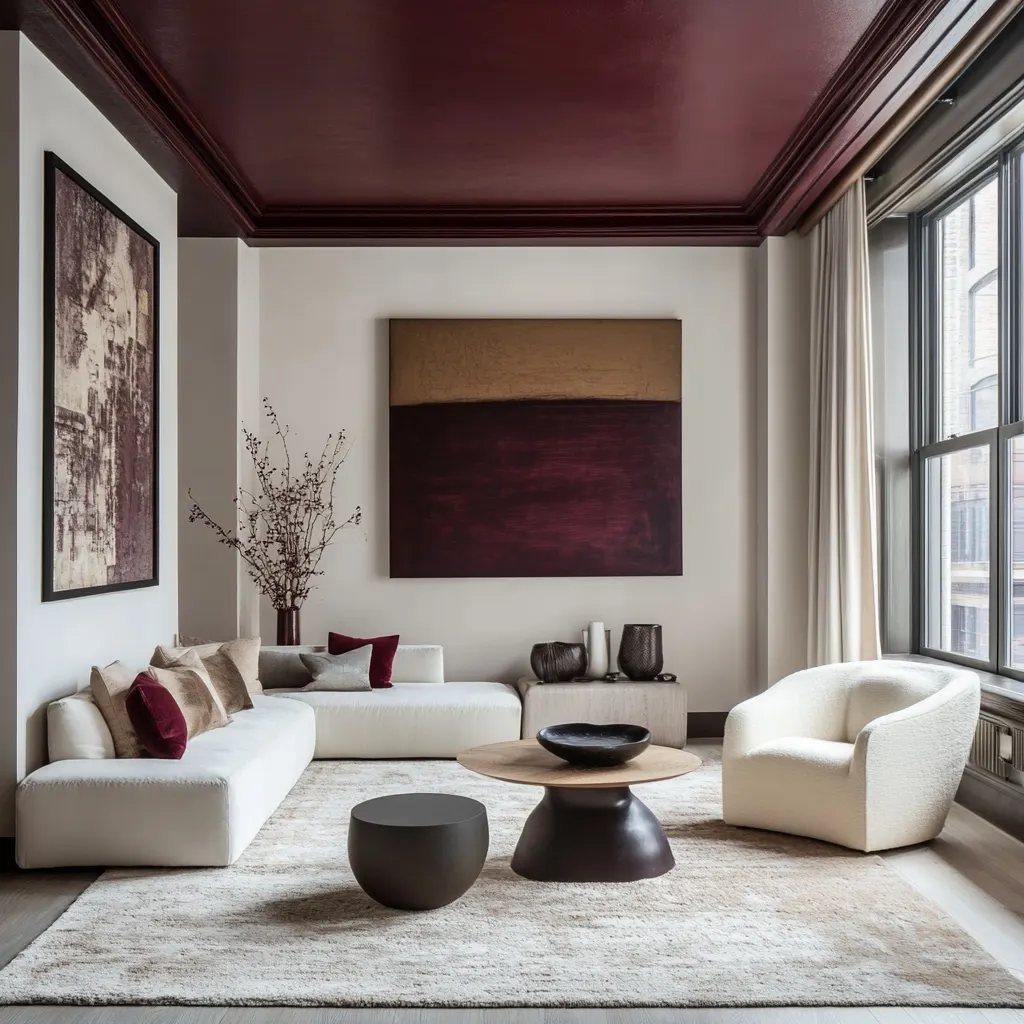
Color on the ceiling pulls the eye up and anchors the room in a way white never will.
Deep red like this makes high ceilings feel closer without closing the space in, and the contrast with white walls keeps the room from reading too dark.
Roll it the same way you would a painted ceiling, but expect to need a second coat with saturated colors. Flat finish hides texture, satin shows it.
Test the color on a large board first and look at it in morning and evening light before you commit.
While walls, floors, and furniture often take center stage in interior design, the ceiling offers a unique opportunity to elevate your living room’s aesthetic. A well-designed ceiling can dramatically impact the overall ambiance, creating a sense of grandeur, spaciousness, or intimacy.
— HomeTips
14. Integrated Lighting Ceiling
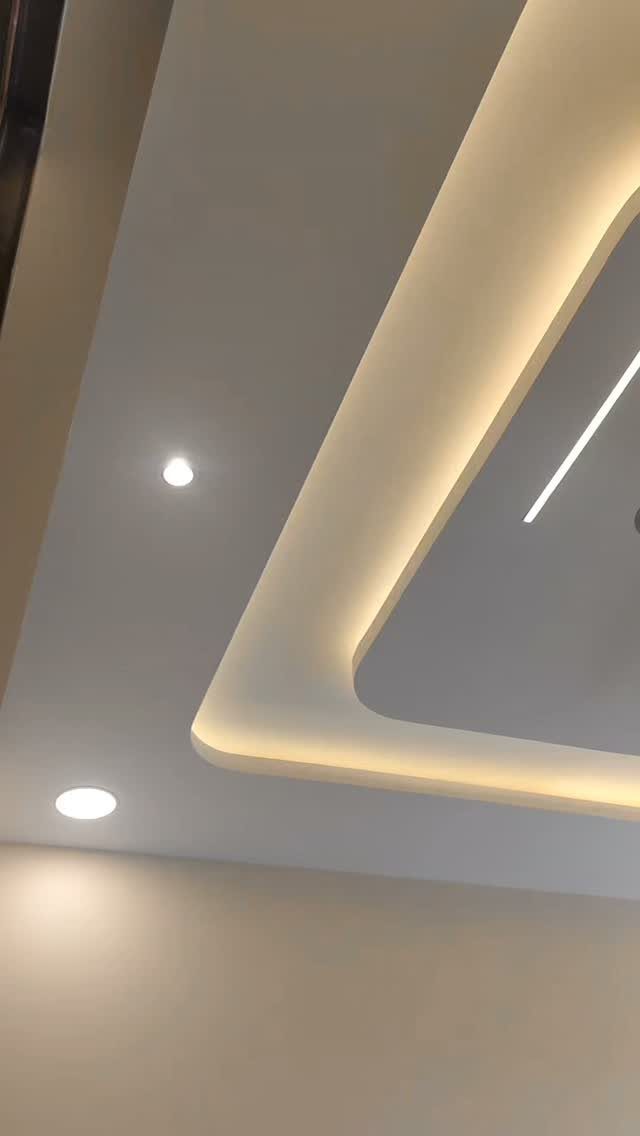
Recessed LED strip in a cove washes the ceiling with indirect light and lets you layer in spotlights where you need task lighting. The glow softens the room, and the spots handle reading or close work.
Frame the cove shallow and run the strip on a separate switch so you can use one or both.
I’d keep the strip set back far enough that you don’t see the diodes, just the wash. Spotlights need housings sized to fit your ceiling depth, so measure first.
Dimming both circuits separately gives you the most control.
15. False Ceiling
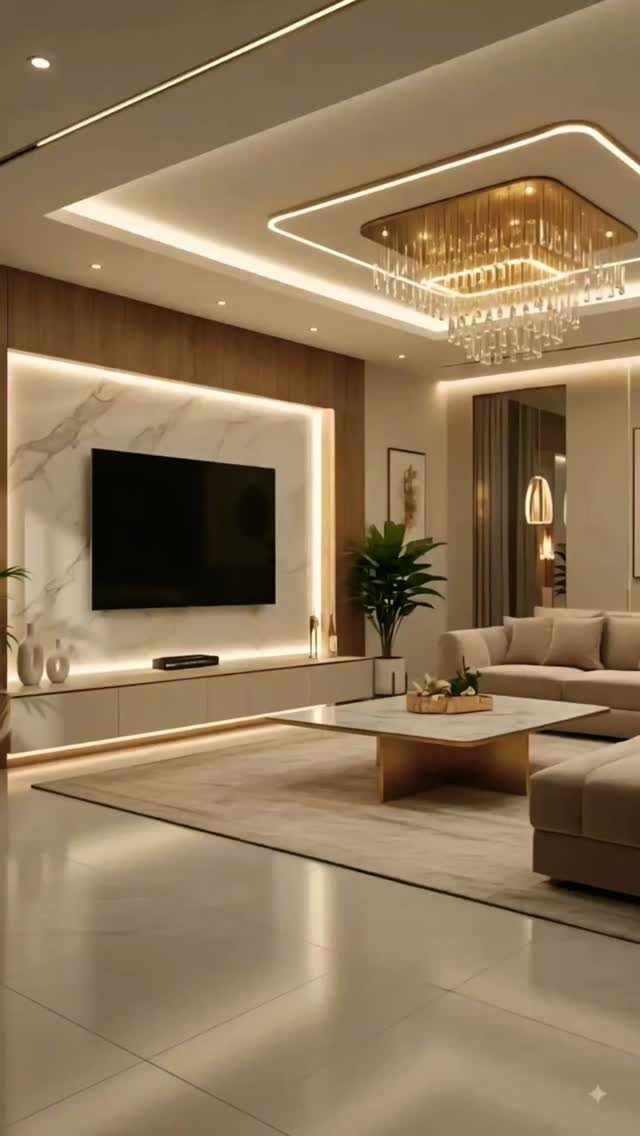
A false ceiling drops below the structural one and hides wiring, ducts, and uneven surfaces. The stepped sections here hold LED strip that lights each tier, and the whole thing reads as architecture instead of cover-up.
You frame it with metal track or wood furring, then finish with drywall.
I’d keep the drops minimal so the room doesn’t feel squeezed. Running cables and junction boxes above the false ceiling makes future changes easier than burying everything in the structure.
This adds sound dampening if you fill the void with insulation.
16. Pendant Lights
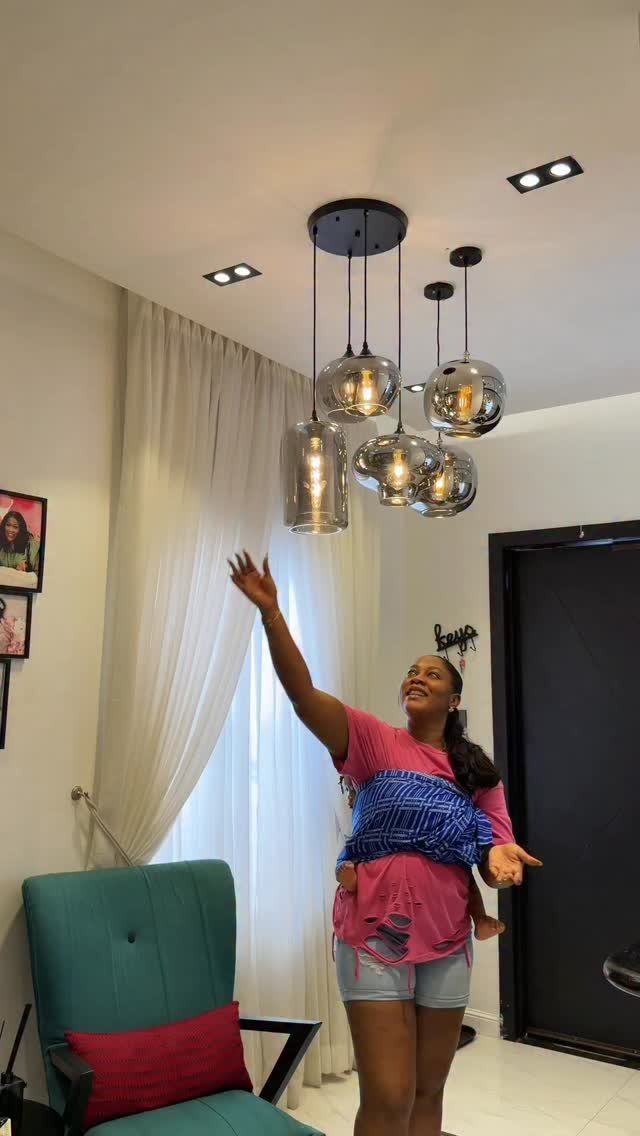
Hanging a pendant gives you light and something to look at when your eyes go up. Multi-globe fixtures like this spread light across the room instead of pooling it in one spot, and glass reads lighter than metal.
Mount it to a junction box rated for the weight, and use a ceiling brace if the box sits between joists. I’d hang it low enough to feel present but high enough to clear sight lines when you’re standing.
Dimmable bulbs let you adjust the mood without swapping the fixture.
17. Wood Slat Ceiling
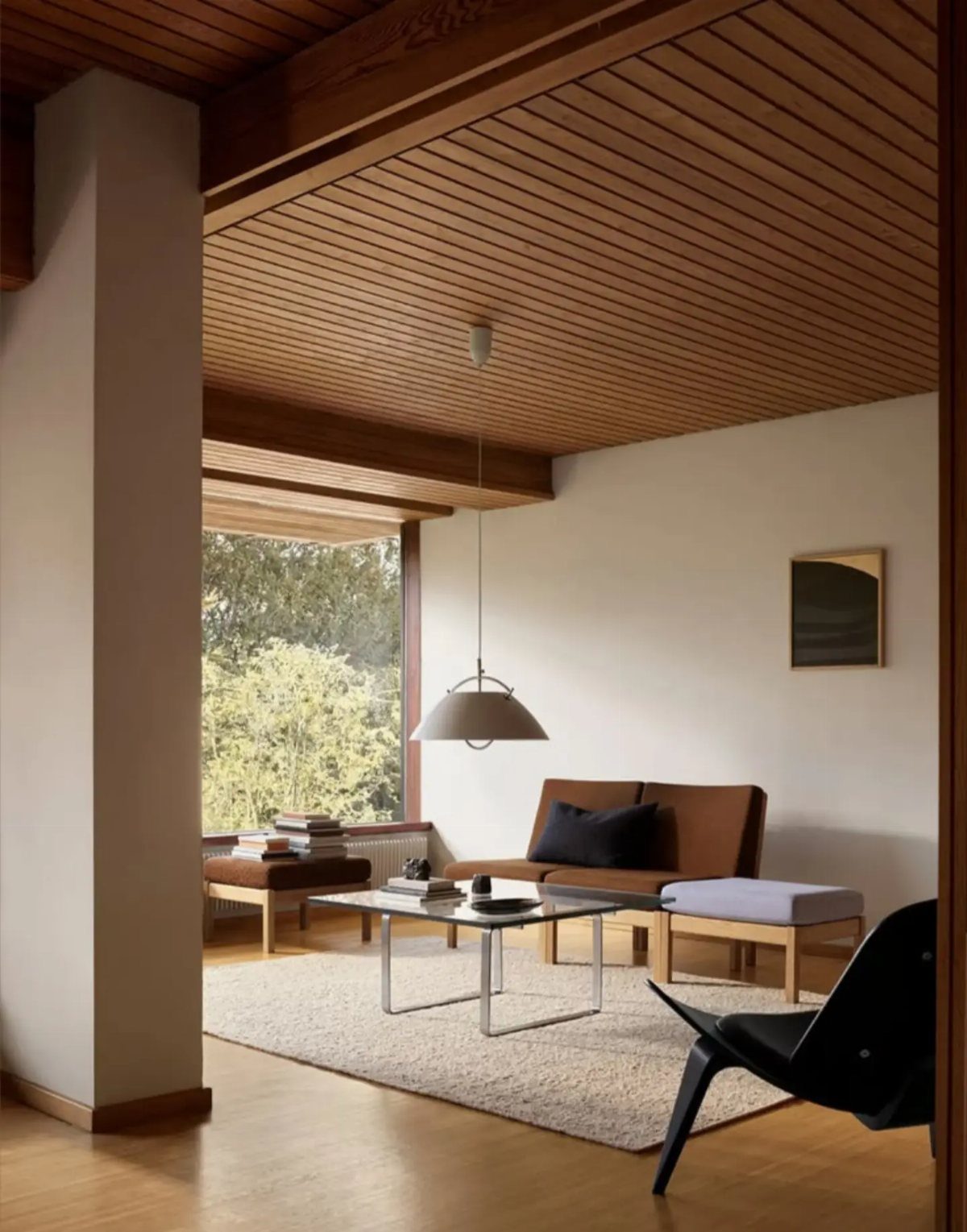
You screw them to furring strips or a cleat system, spacing them evenly or in a pattern that suits the room.
I’d stain or oil the slats before they go up, because finishing them overhead is a lot slower. The gaps mean sound travels through, so this doesn’t muffle noise the way solid paneling would.
Darker wood absorbs light, so plan your fixtures accordingly.
Budget-Friendly Ceiling Options
Paint is the cheapest way to change a ceiling, and a gallon goes far enough to cover most small rooms. You need a roller with an extension pole, painter’s tape, and a drop cloth.
Peel-and-stick wallpaper costs less than the paste-on kind, and both give you pattern without hiring anyone. Measure the ceiling and order a little extra in one batch so the color matches from roll to roll.
Limewash paint gives you texture without troweling compound.
It costs about the same as standard paint and goes on with a brush or roller. The finish reads softer than flat latex.
Ceiling Height Considerations
Low ceilings can’t spare the height that coffered panels or dropped tiers take away.
Flat paint in a pale color lifts the ceiling visually without framing anything in. Linear wood slats draw the eye across the ceiling plane and add texture without making a low room feel even more closed in.
Recessed lighting sits flush with the ceiling instead of hanging down.
High ceilings handle beams, coffers, and multi-level drops because you have room to lose some height and still breathe. Cove lighting adds perimeter glow and balances the height with indirect wash.
DIY Ceiling Projects
A second coat covers better than trying to load the first one thick.
The seams might lift over time, but you can press them back down with a roller.
Frequently Asked Questions
Which ceiling is trending?
Geometric patterns with integrated lighting and textured finishes are trending right now.
Geometric insets turn the ceiling into architecture and define zones without walls, while textured surfaces catch light and break up flat planes. Both add visual interest overhead without requiring major structural work.
How to cover a ceiling on a budget?
Paint costs the least and a gallon covers most small rooms with enough left over for touch-ups.
Peel-and-stick ceiling paper costs less than traditional rolls and goes up fast, though corners and seams take patience. Limewash brings visible brushwork and depth for the price of mid-grade latex.
What are some options for ceiling treatment?
Painted ceilings, coffered panels, and textured finishes change the look without tearing anything out.
Paint the ceiling one shade darker than the walls to anchor the room, frame it with crown molding for definition, or add recessed panels to give a flat surface dimension. Each one works at a different price point and timeline.






