
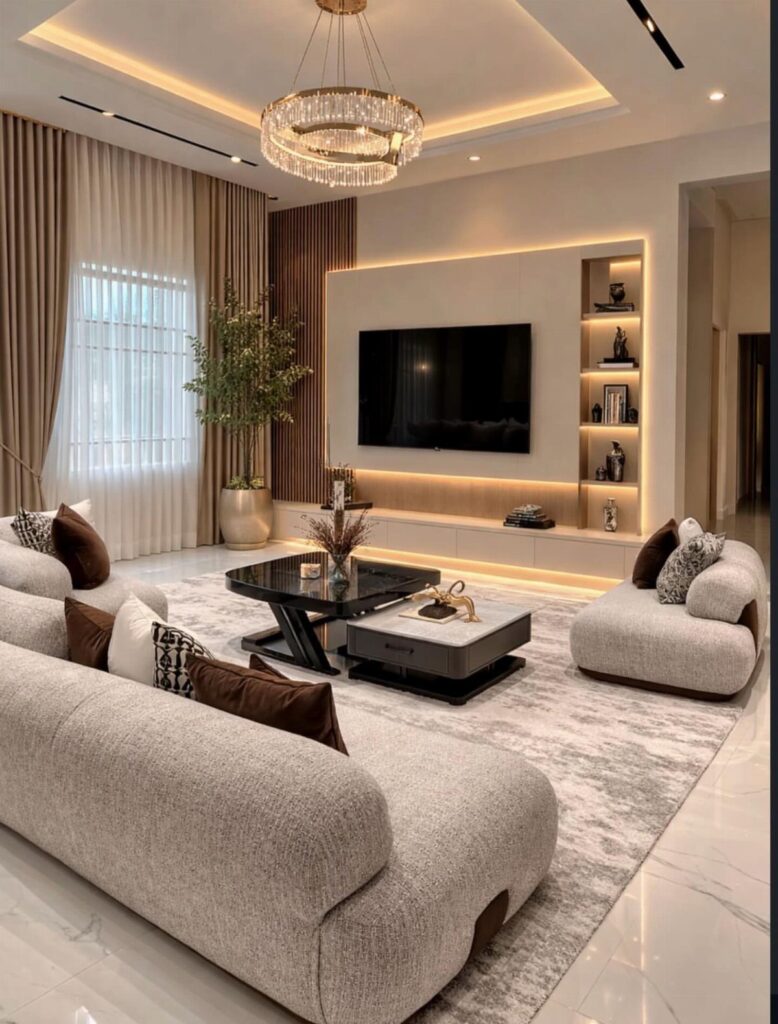
A sofa seats the room and sets the layout, whether you’re filling a corner with a sectional or floating a curved piece in the middle of an open floor plan.
Pick based on how you use the space: sofa beds convert for overnight guests, storage bases hide remotes and blankets without adding furniture, and armless designs read lighter when you need the room to feel less crowded.
1. The Functional Sofa Bed
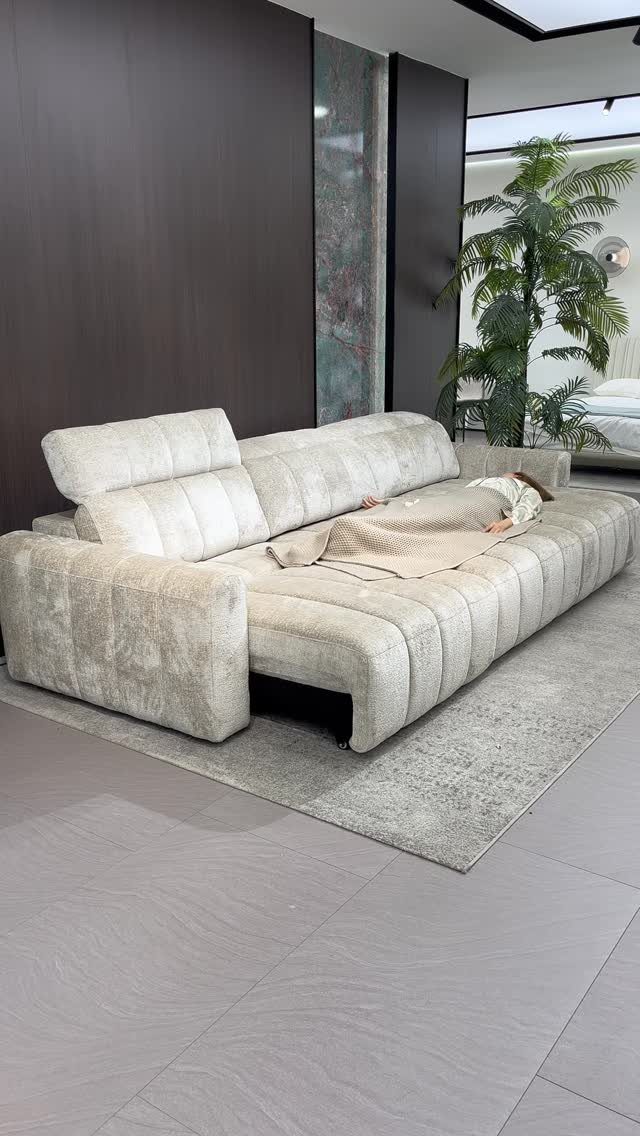
A sofa bed gives you a place to crash guests without needing a dedicated spare room.
The modular setup here unfolds flat, which makes the transition from seating to sleeping faster than a pullout mechanism and keeps the cushions from splitting into zones that dig into your back.
Look for one with a low profile if the room doubles as a workspace during the day. The ribbed fabric holds up better than smooth upholstery when you’re sitting, lying, and shifting cushions around weekly.
2. Sectional Sofa
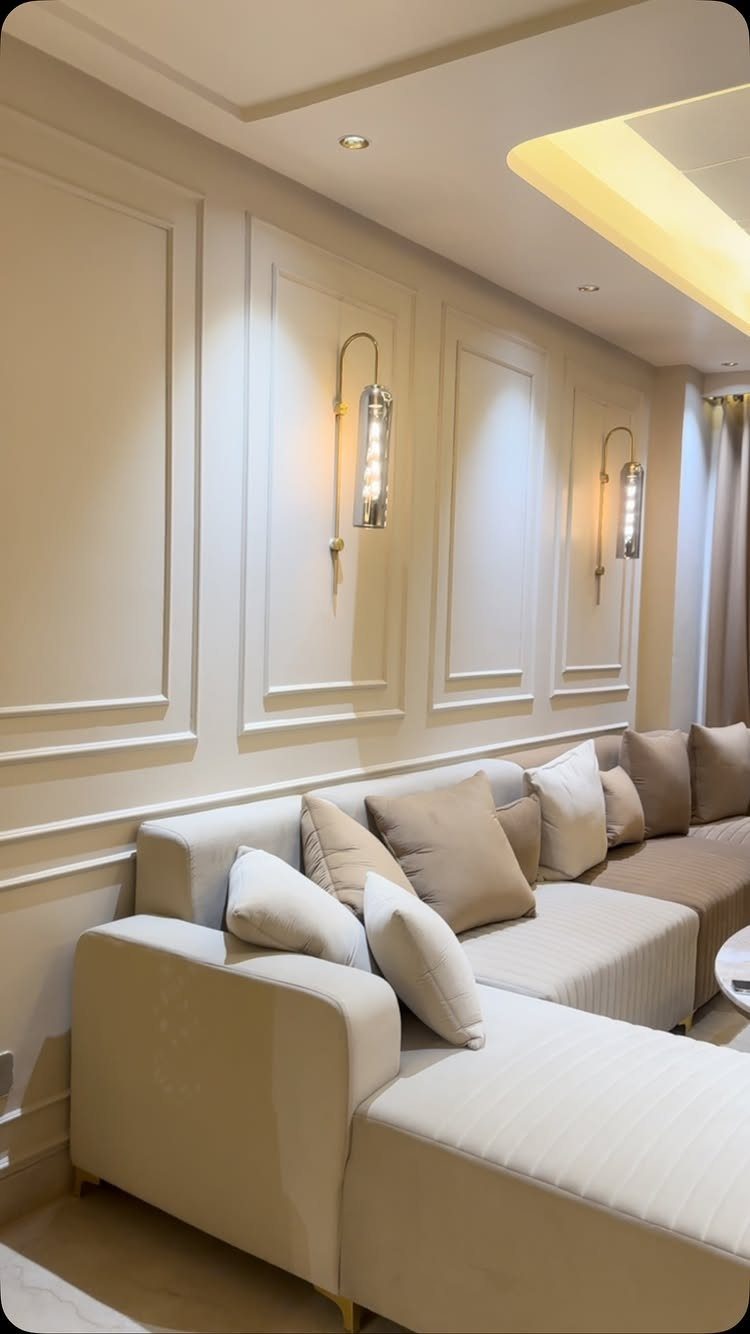
A sectional fills a corner and seats more people than a standard sofa in the same square footage.
The L-shape keeps conversation facing inward instead of lined up in a row, and it anchors an open floor plan without blocking sightlines to the rest of the room.
Measure the clearance on both sides before you order. Most sectionals ship in pieces that fit through doorways, but the assembled footprint is wider than you think, and you need enough walkway behind the chaise end.
3. Armless Sofa
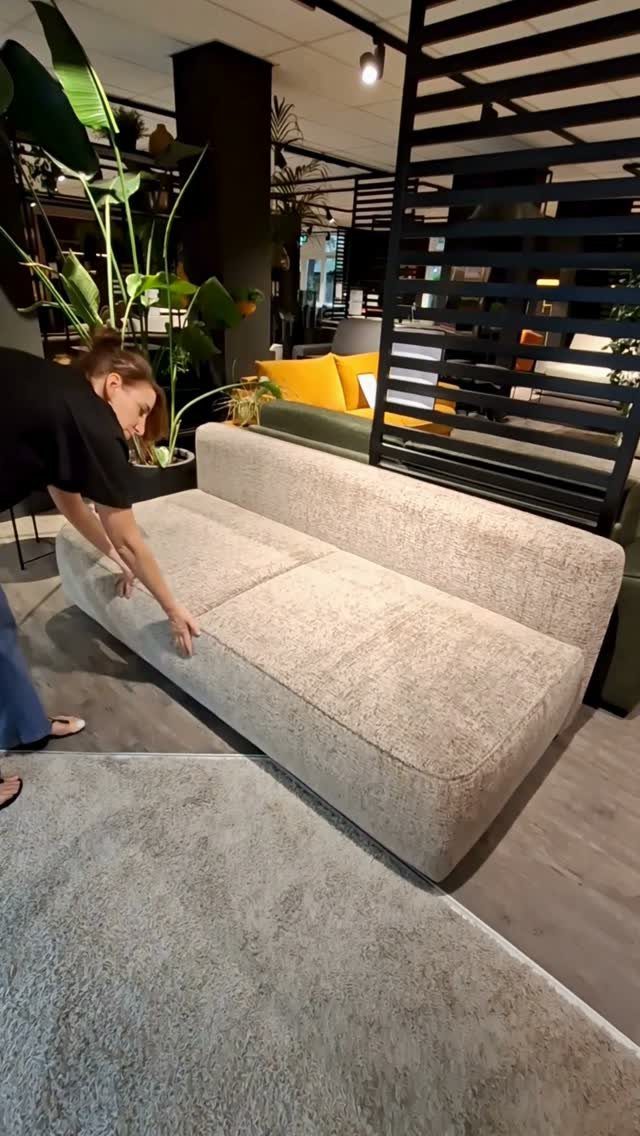
An armless sofa reads lighter because the open ends let you see more floor.
It also floats better in the middle of a space when you’re not pushing it against a wall, and you can tuck a side table right up to the edge without fighting an armrest.
The trade is comfort.
Without arms to lean into, you’ll want deeper cushions or a few large pillows to prop against. I’d pick this for a den or sitting area where you’re upright more than you’re sprawled out.
4. Storage Sofa
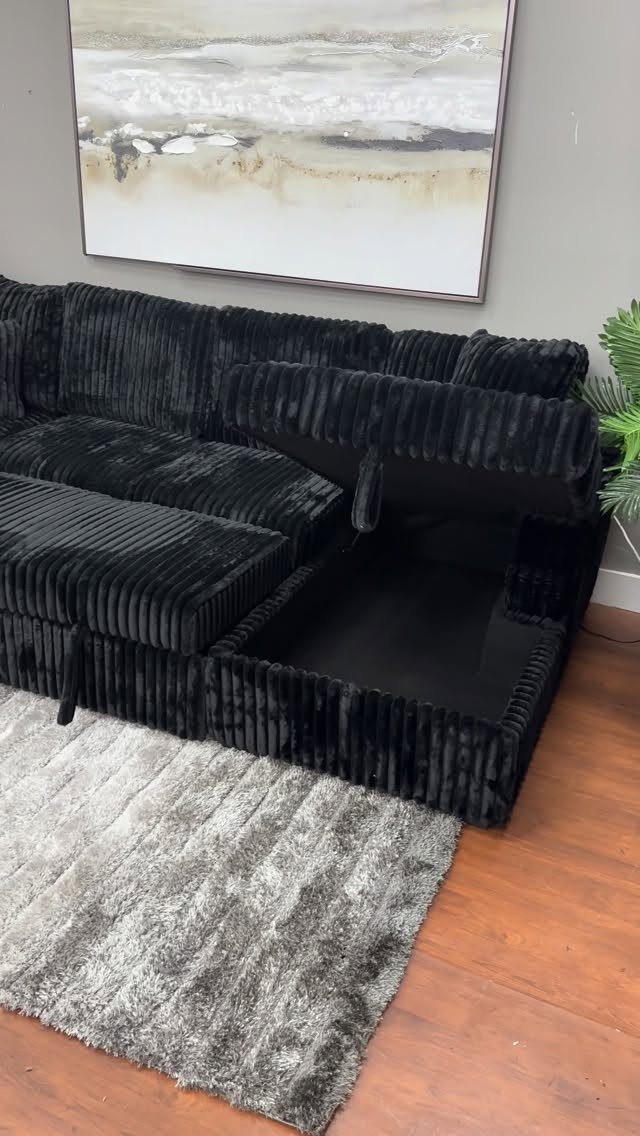
A storage sofa hides blankets, remotes, or anything else that clutters a coffee table. The compartment usually sits under a lift-up seat cushion, so you’re not crawling around on the floor or pulling drawers that catch on the rug.
Check the hinge mechanism: gas-lift springs hold the seat open while you dig around, and cheaper versions just prop on your hand.
5. Curved Sofa
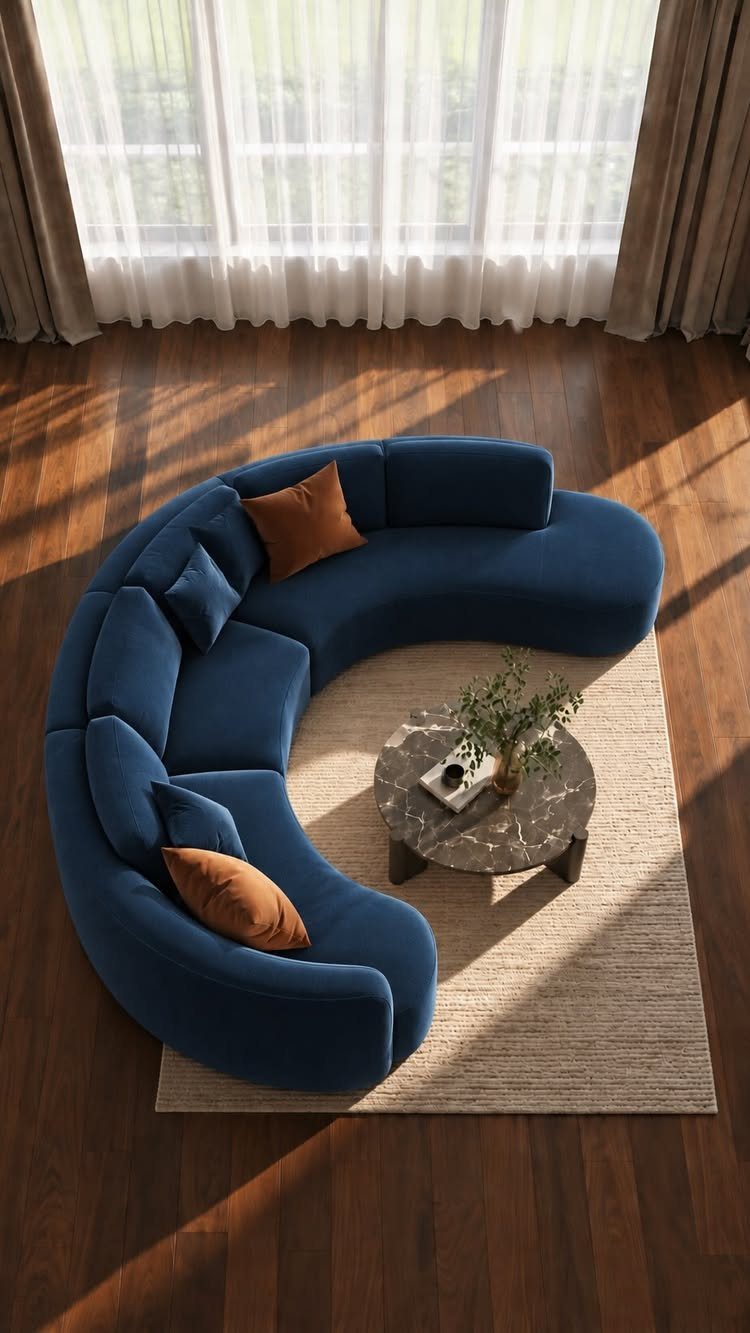
A curved sofa wraps the seating around a focal point, whether that’s a fireplace, a coffee table, or the center of an open room.
The arc softens a boxy floor plan and gives everyone a better angle on each other than a straight row does.
I’d use this in a space wide enough so the curve has room to read as intentional instead of squeezed in.
6. Grey Velvet Sofa
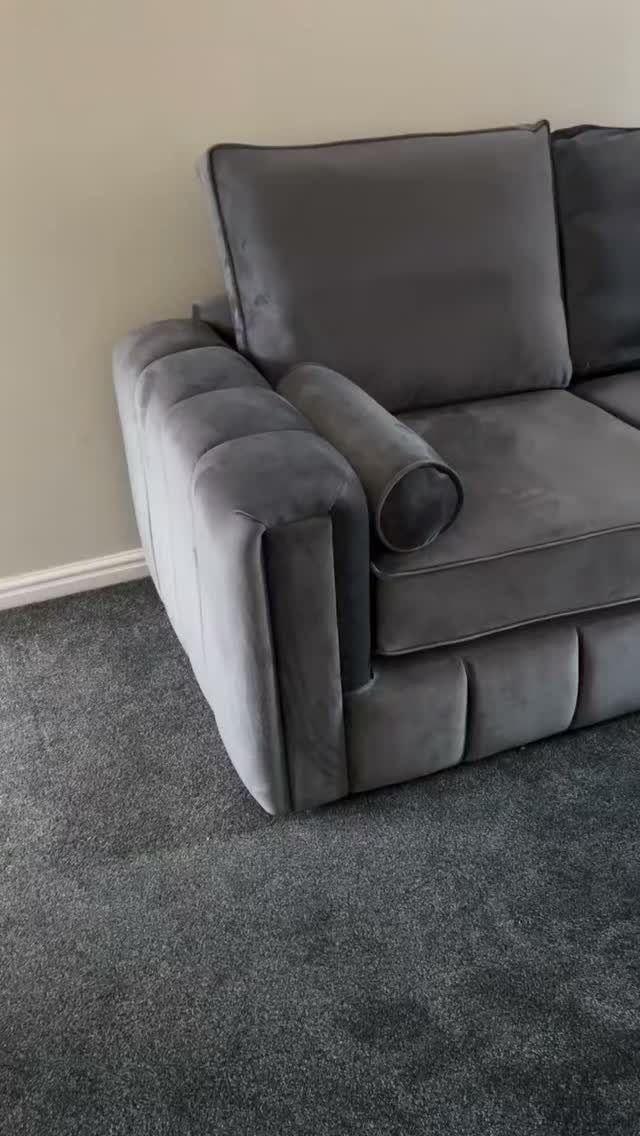
Grey velvet feels plush without looking overly formal, and the neutral tone works with most accent colors. The bolster pillow here adds lumbar support when you’re sitting upright and doubles as an armrest if the sofa doesn’t have tall sides.
Velvet shows scuff marks and crush patterns, so plan to brush it with a soft lint roller once a week if you’re using the sofa daily.
The grey hides pet hair better than lighter shades, but it picks up oils from skin contact faster than a tighter weave would.
7. Sofa with Matching Ottoman
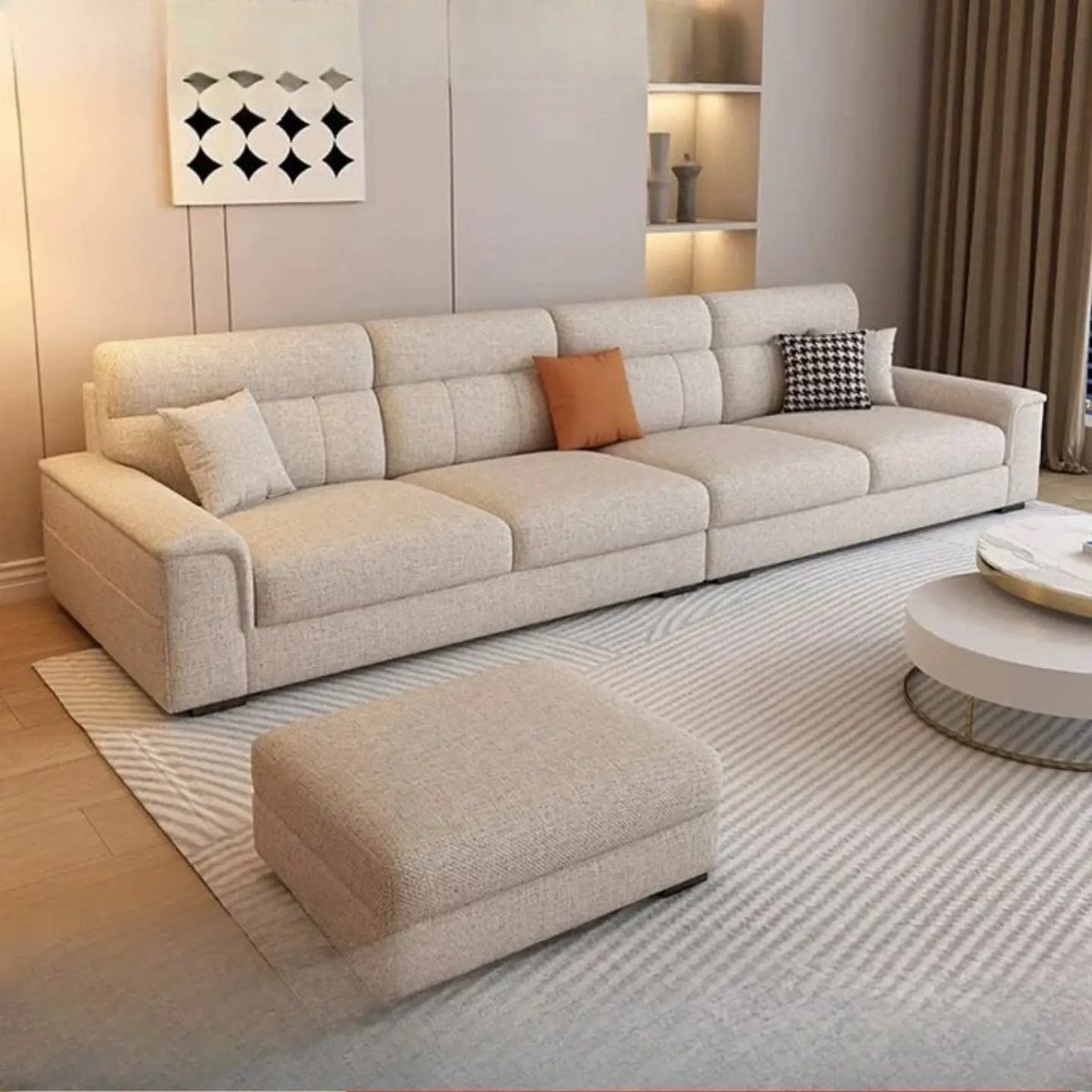
A matching ottoman turns the sofa into a modular layout you can rearrange for movie night or extra seating.
Push it up against the front edge and you have a chaise; pull it away and it becomes a coffee table or a footrest that floats wherever you need it.
The beige fabric here keeps the look calm and ties the pieces together without needing accent pillows to bridge the gap.
I’d add a tray on top of the ottoman if you’re using it for drinks or remotes so the cushion doesn’t sag under hard objects.
8. Couch with C-Shaped Side Table
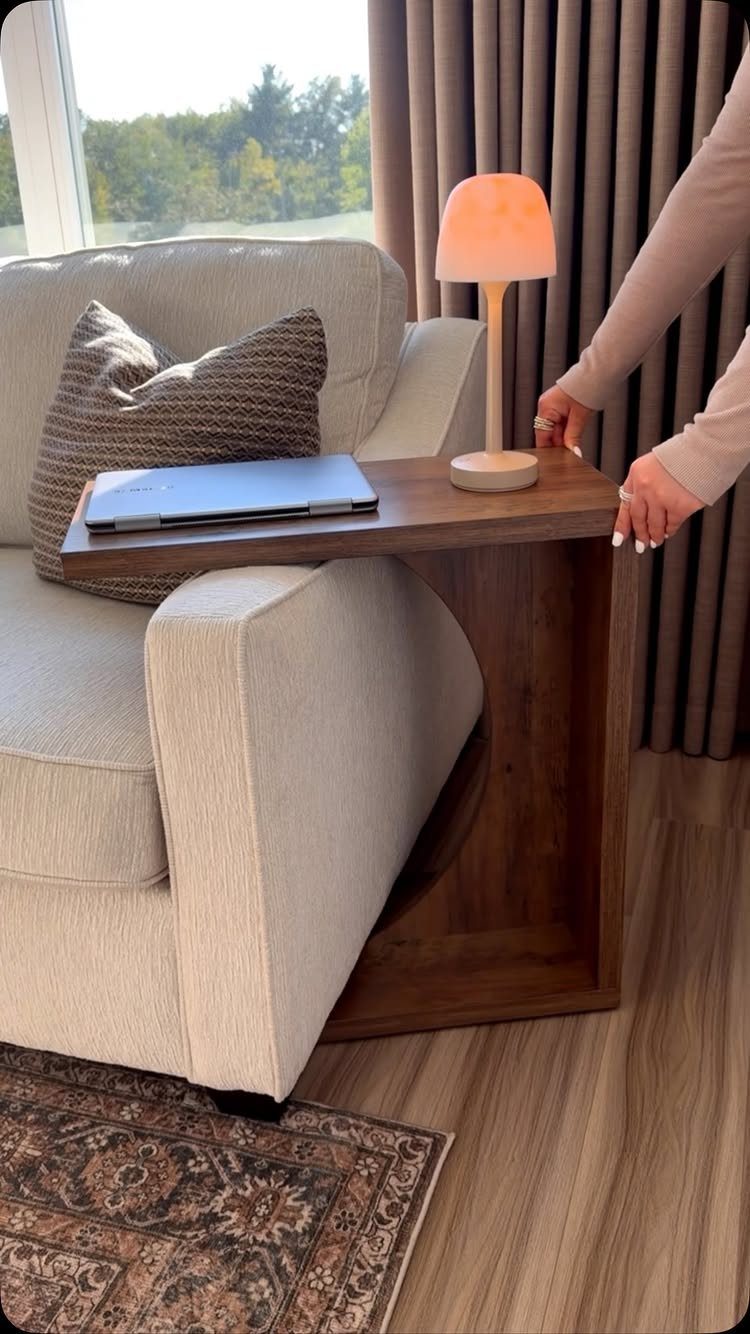
A C-shaped table slides the base under the sofa and brings the top surface right over your lap, so you can work or eat without leaning forward to reach a coffee table.
The tall leg holds a laptop at couch height, and the narrow profile fits into tight spaces between the armrest and the wall.
Wood holds up better than metal tubing if you’re moving it around daily. Measure the clearance under your sofa first: most need at least 3 inches of space for the base to slide underneath.
9. Dark Grey Fabric Couch
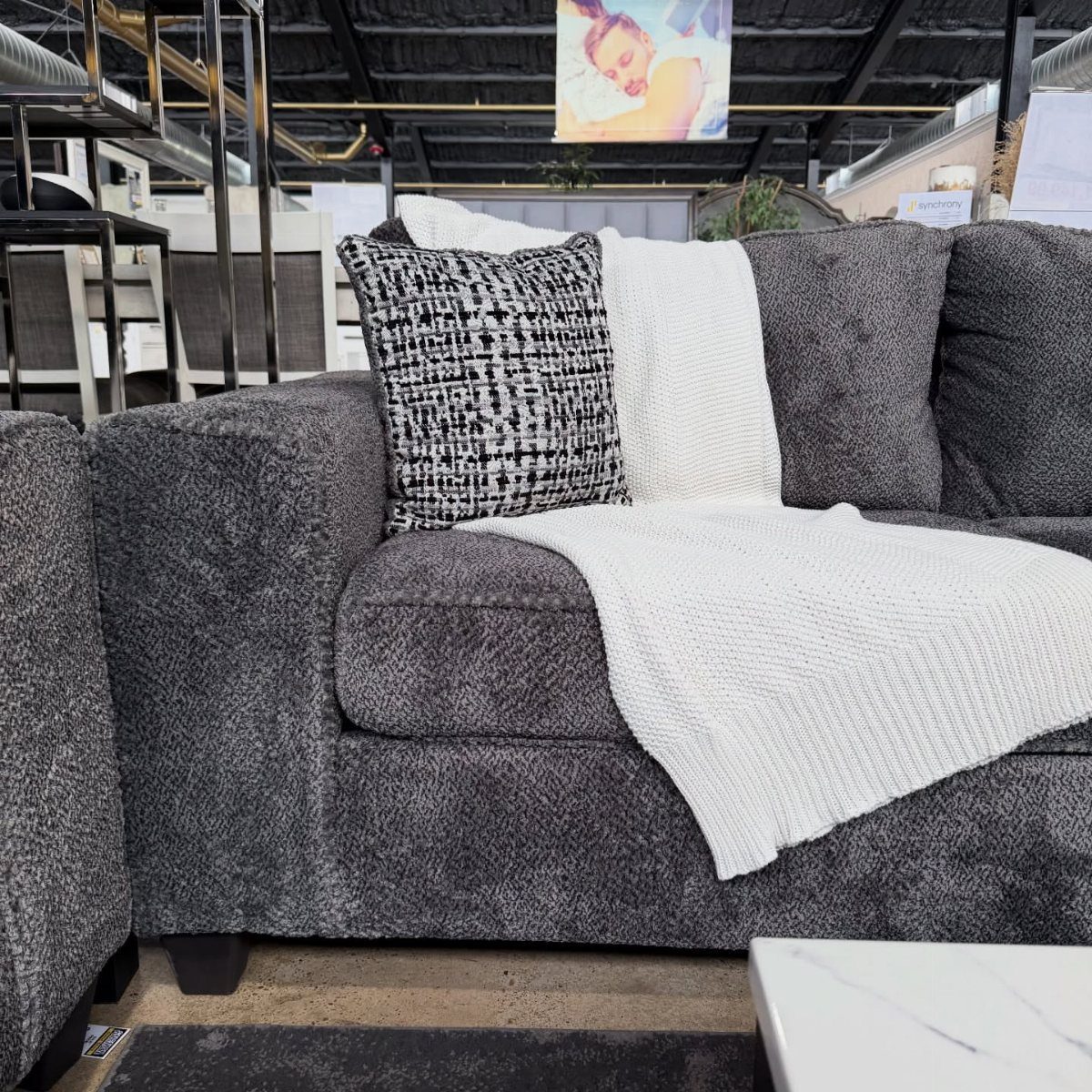
Dark grey fabric grounds a room without reading as heavy as black, and it hides stains better than lighter neutrals.
The textured weave here adds visual interest without pattern, so you can layer in bold pillows or a bright throw without clashing.
Pair it with warm accents if the grey skews cool and the room starts feeling flat. A knit blanket softens the upholstery and gives you something to grab when the fabric alone isn’t cozy enough.
10. Two Sofas
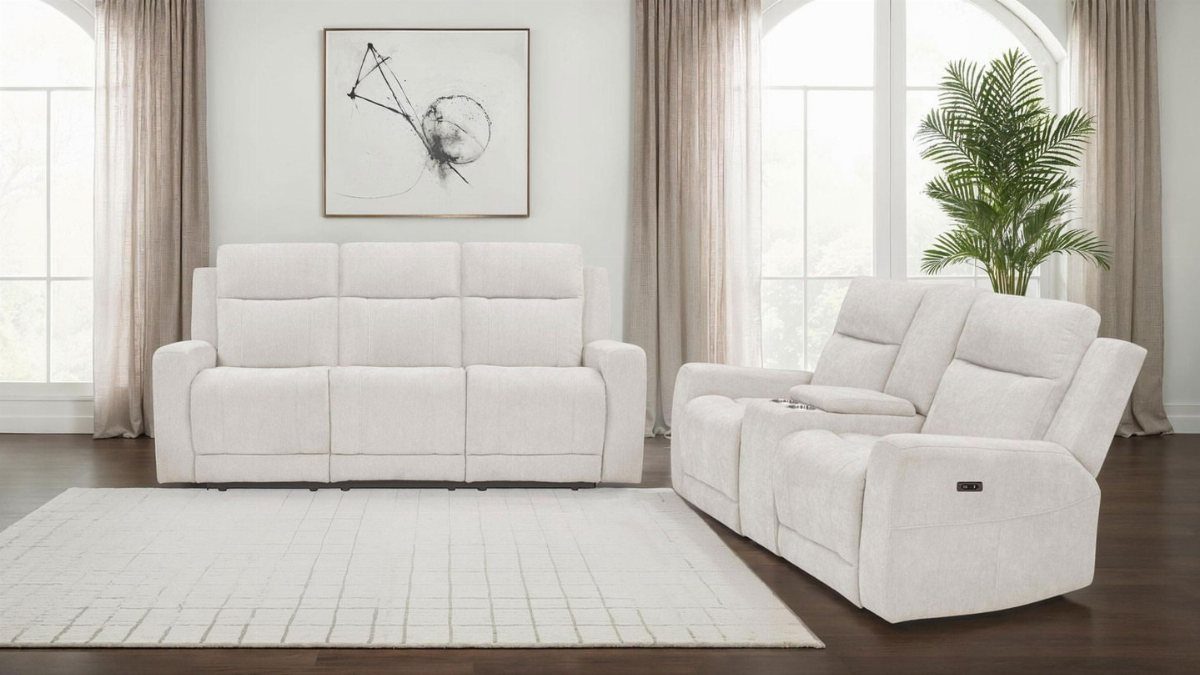
Two sofas facing each other balance a large room and seat more people than a single sectional without locking you into one furniture arrangement.
The symmetry makes the space feel intentional, and you can walk between them instead of around a single bulky piece.
I’d use matching or nearly matching upholstery so the pair reads as a set. Leave at least 3 feet between the front edges for a coffee table and enough room to walk through without turning sideways.
Styling Tips for Small Spaces
Low-profile furniture keeps sightlines open and makes the ceiling feel taller than it is. A sofa with legs instead of a skirted base shows more floor, which reads as extra square footage even when the footprint is the same.
Soft layers like rugs and cushions add warmth without taking up wall space or blocking walkways. A wooden mirror frame expands the room visually by reflecting light and doubling the apparent depth of the space.
Avoid crowding furniture against every wall.
Leave breathing room between pieces so the room feels intentional instead of packed. The gap matters more than filling every corner.
"Centralizing the position of your sofa design for a small living room makes the room look wider. Taking into consideration the functionality of the sofa and the design of the piece, including color, proportion, weight, placement, shape, and style is also key."
Color Choices for Sofas
A sofa color that matches the walls blurs the boundary between furniture and architecture, which can make a compact living room feel more open.
Upholstering in a rich velvet that complements the wall covering keeps the visual line going and adds warmth at the same time.
The coordinated palette works best when the sofa, walls, and millwork sit in the same tonal family. Charcoal velvet with charcoal suede walls or beige fabric with cream trim keeps the eye moving instead of stopping at hard contrasts.
Leather reads as sophisticated and gets better with age. Fabric offers more variety in pattern and color, and it holds warmth better in a room that skews cool.
Frequently Asked Questions
Which sofa color is best for a living room?
Matching your walls blurs the line between furniture and architecture, which makes tight spaces feel larger. Rich tones in the same family add warmth without breaking up the space.
What type of sofa is suitable for a small living room?
Low-profile designs with visible legs show more floor and make the ceiling feel taller.
Armless sofas read lighter because the open ends reveal more of the room, and sectionals fit into corners without blocking sightlines. Modular pieces let you shift the layout as needed instead of committing to one arrangement.
What are different types of sofas called?
Sectionals form an L-shape and fill corners, armless sofas have open ends that show more floor, and sofa beds unfold flat for overnight guests.
Curved sofas wrap seating around a focal point, while storage sofas hide compartments under lift-up cushions. Each type shifts how the room functions and how much space the furniture appears to take up.






