
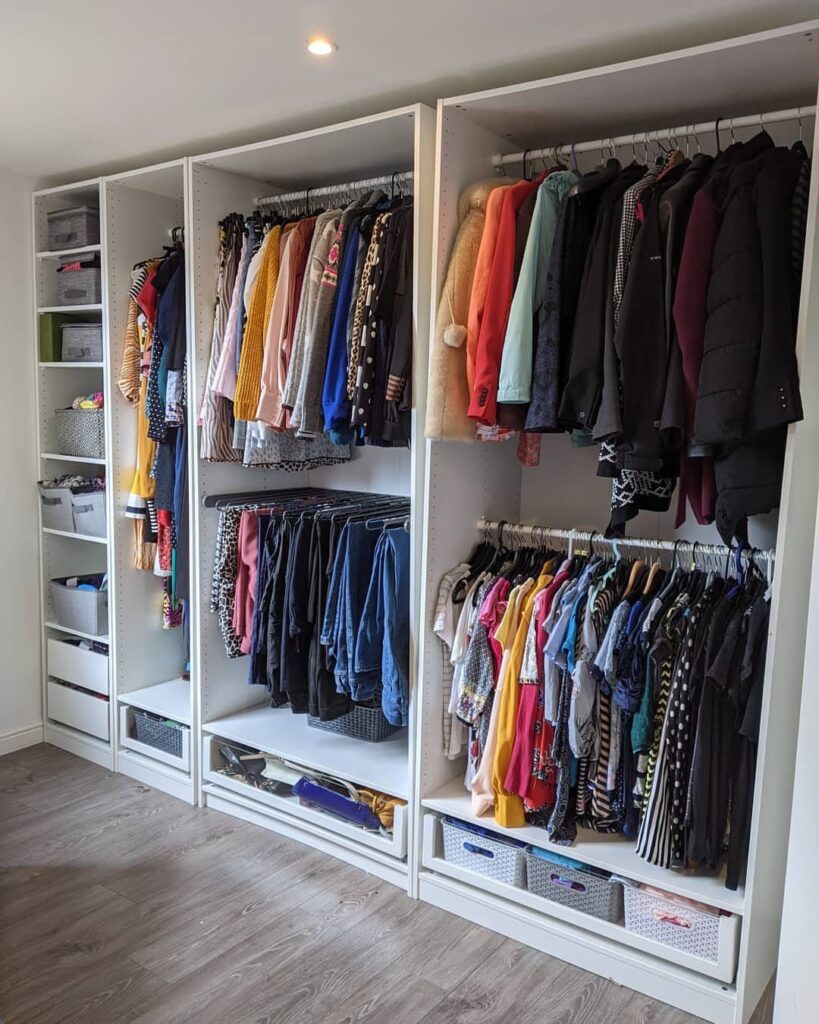
An open closet can run anywhere from a single hanging rod and a few hooks to a full walk-in system with LED strips and glass-front cabinets.
If you need to close off the view when guests are over, a curtain on a curved rod gives you that option without the weight of hinged doors.
1. Curtain Panel
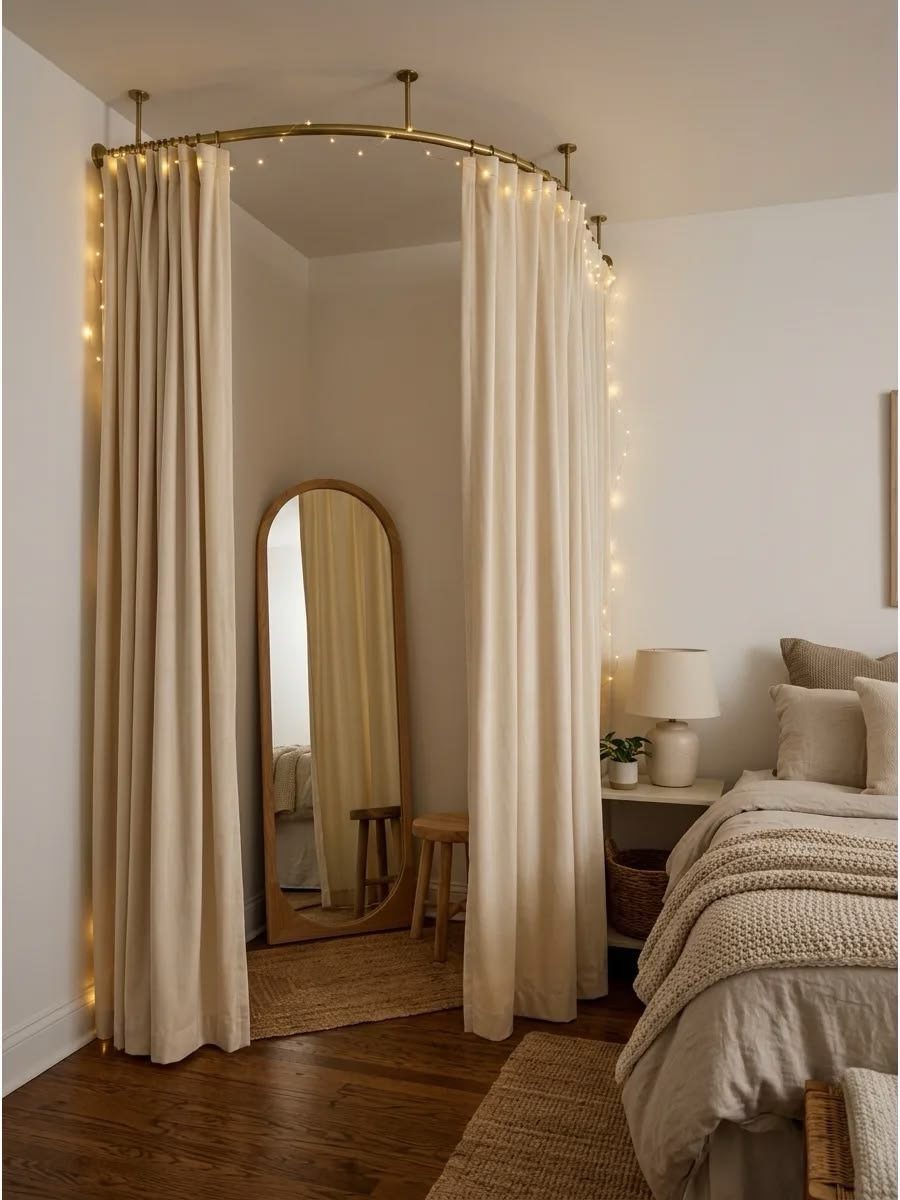
A curtain gives you the option to close off the closet when you want a cleaner look or when guests are over. The curved rod here softens the opening and lets the fabric drape without bunching at the edges.
Pick a lightweight fabric that moves easily.
Linen or cotton voile work well and keep the space feeling open even when the curtain is drawn. Mount the rod a few inches above the closet frame to add height to the room.
The gold finish and fairy lights add warmth, but a simple black or white rod keeps the focus on the clothes inside.
2. Open Closet Without Doors
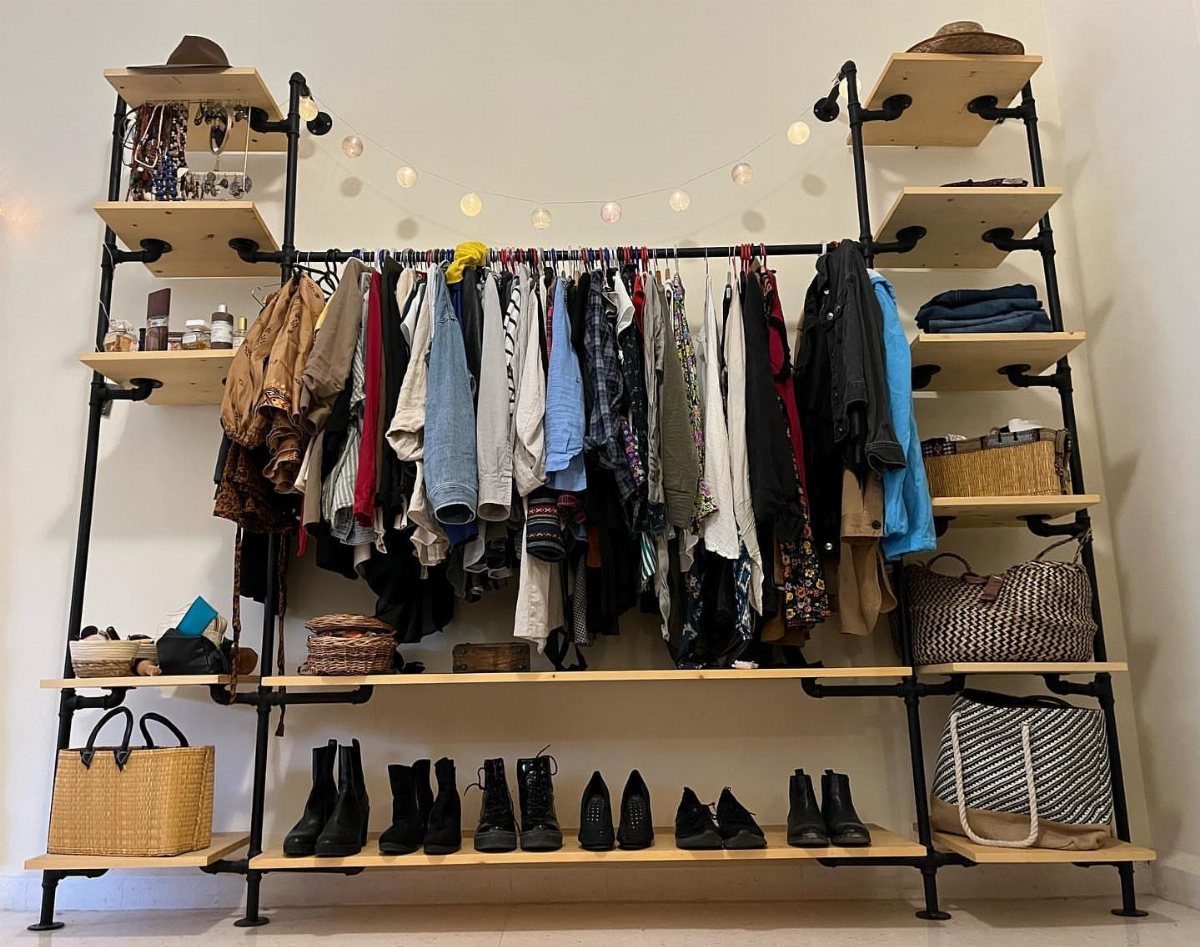
Removing the doors entirely opens up the room and makes getting dressed faster. You see everything at once, which cuts down on decision time in the morning.
A pipe-and-wood frame gives you structure without blocking light or closing off the room. Paint the pipes matte black or leave them as raw steel, depending on how industrial you want the look.
This works best if you keep the hanging area organized. Exposed clutter reads louder than it does behind doors, so edit what you display and use baskets or boxes on the lower shelves for items you don’t want visible.
Of course, the first step to creating an open closet is editing down your wardrobe; you’ll have to be okay with getting rid of anything that doesn’t fit on your racks or in your dresser.
3. Hanging Rod
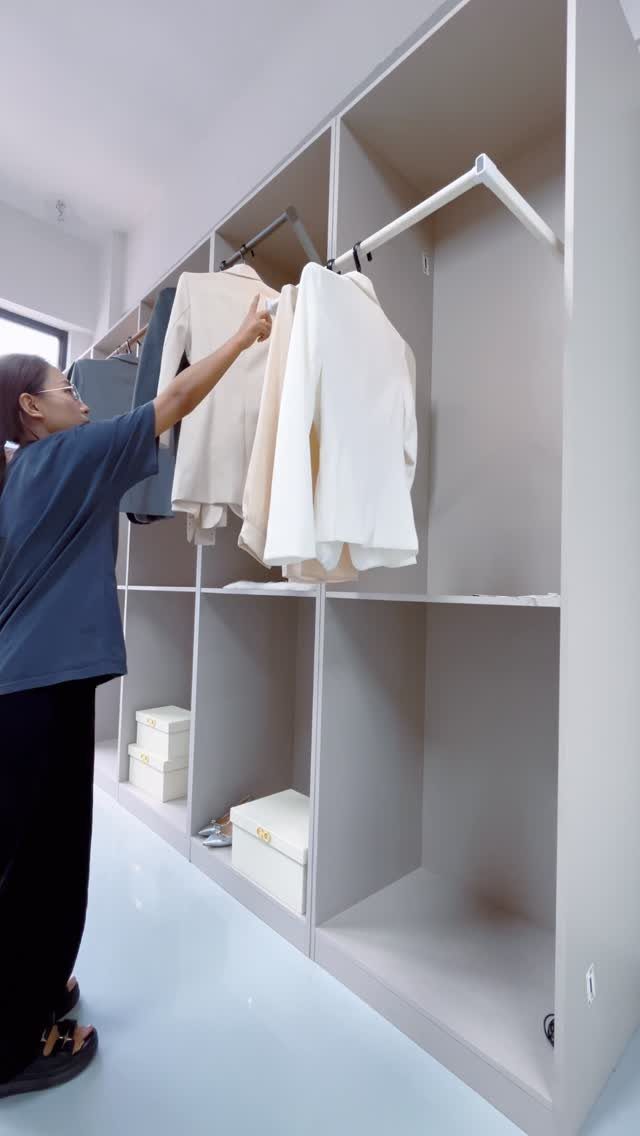
A hanging rod turns a shelf unit into a functional closet. A rod mounted inside a storage system holds blazers, dresses, and anything that wrinkles when folded.
Most modular units come with rod brackets that fit into the side panels. Cut the rod slightly shorter than the interior width so it slides in without forcing the frame.
Add a second rod below the first if you’re storing shorter items like shirts or folded pants on hangers. That doubles your hanging space without taking up more floor area.
4. Decorative Hooks
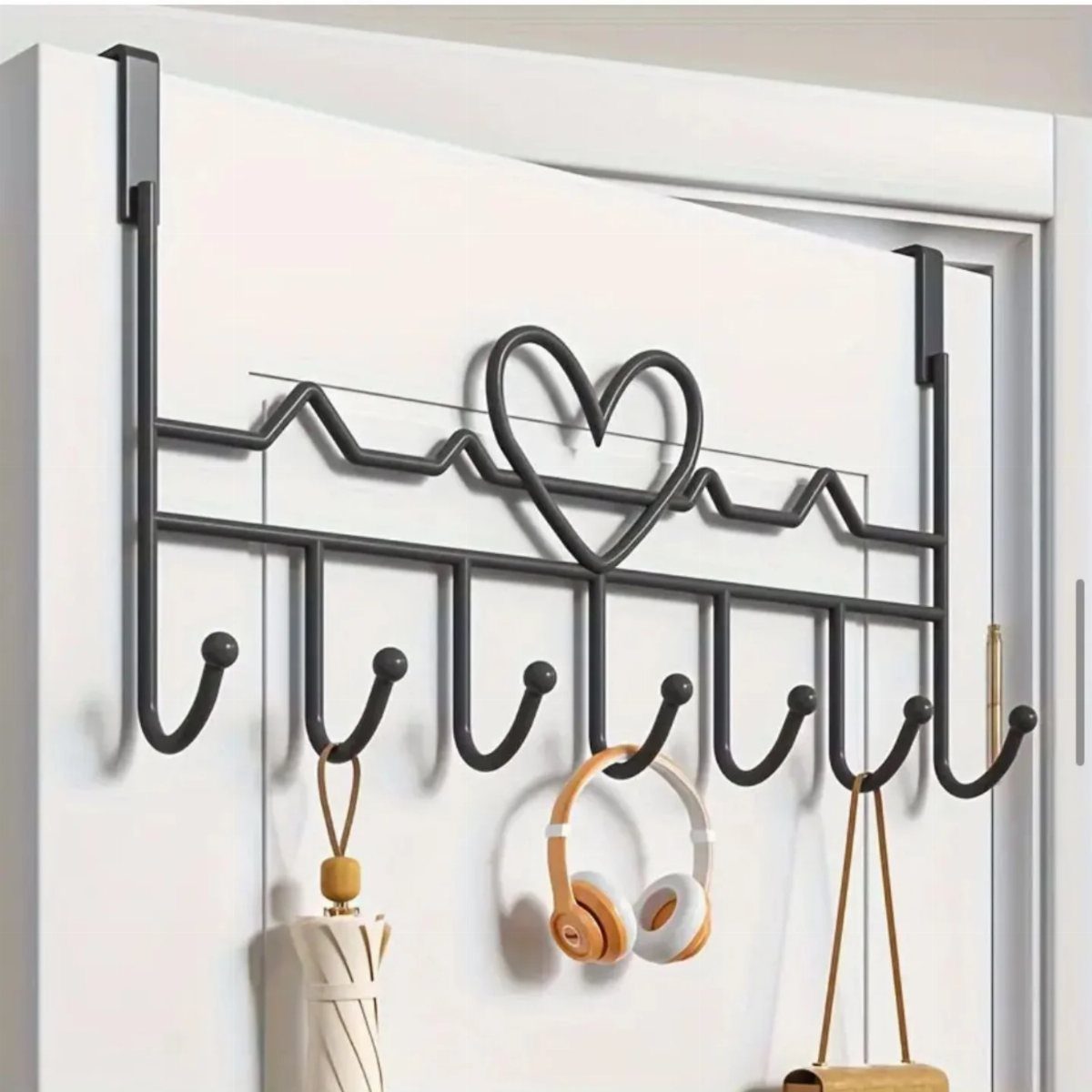
Hooks handle the items that don’t belong on hangers but need to stay visible. Bags, scarves, hats, and jackets all work better on hooks than folded in a drawer.
An over-the-door rack like this one installs in seconds and keeps accessories off the floor. The heart design adds personality without taking up wall space, and the multiple hooks let you separate items by type or frequency of use.
Mount wall hooks inside the closet if you have open shelving. Space hooks far enough apart that bags and accessories don’t crowd each other.
5. Shoe Racks
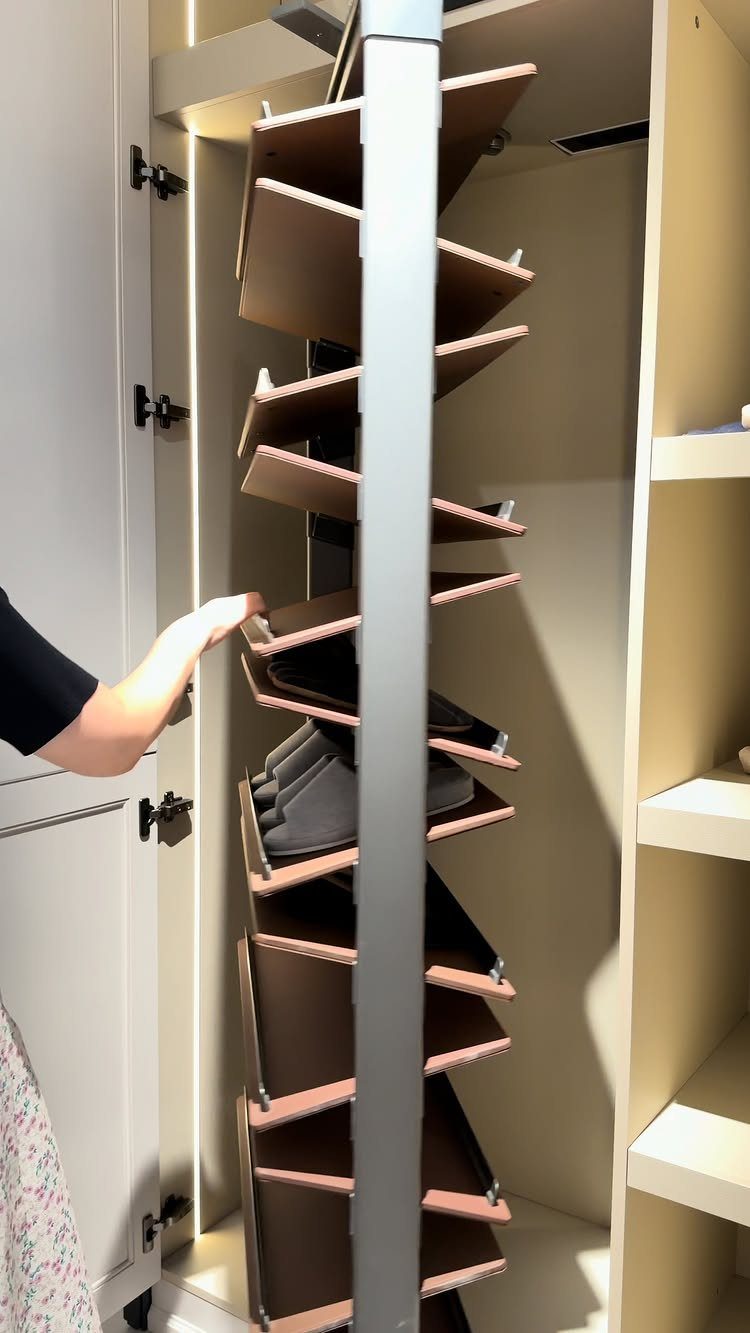
A dedicated shoe rack keeps pairs together and makes it easier to see what you own. The angled shelves here tilt each pair forward, so you’re not digging through a pile to find the second shoe.
Vertical racks like this one save floor space in narrow closets. A rotating rack lets you reach the back without pulling everything forward.
Measure the height of your tallest boots before buying. Most racks are sized for sneakers and flats, and knee-high boots won’t fit on a standard shelf.
6. Decorative Light Fixture
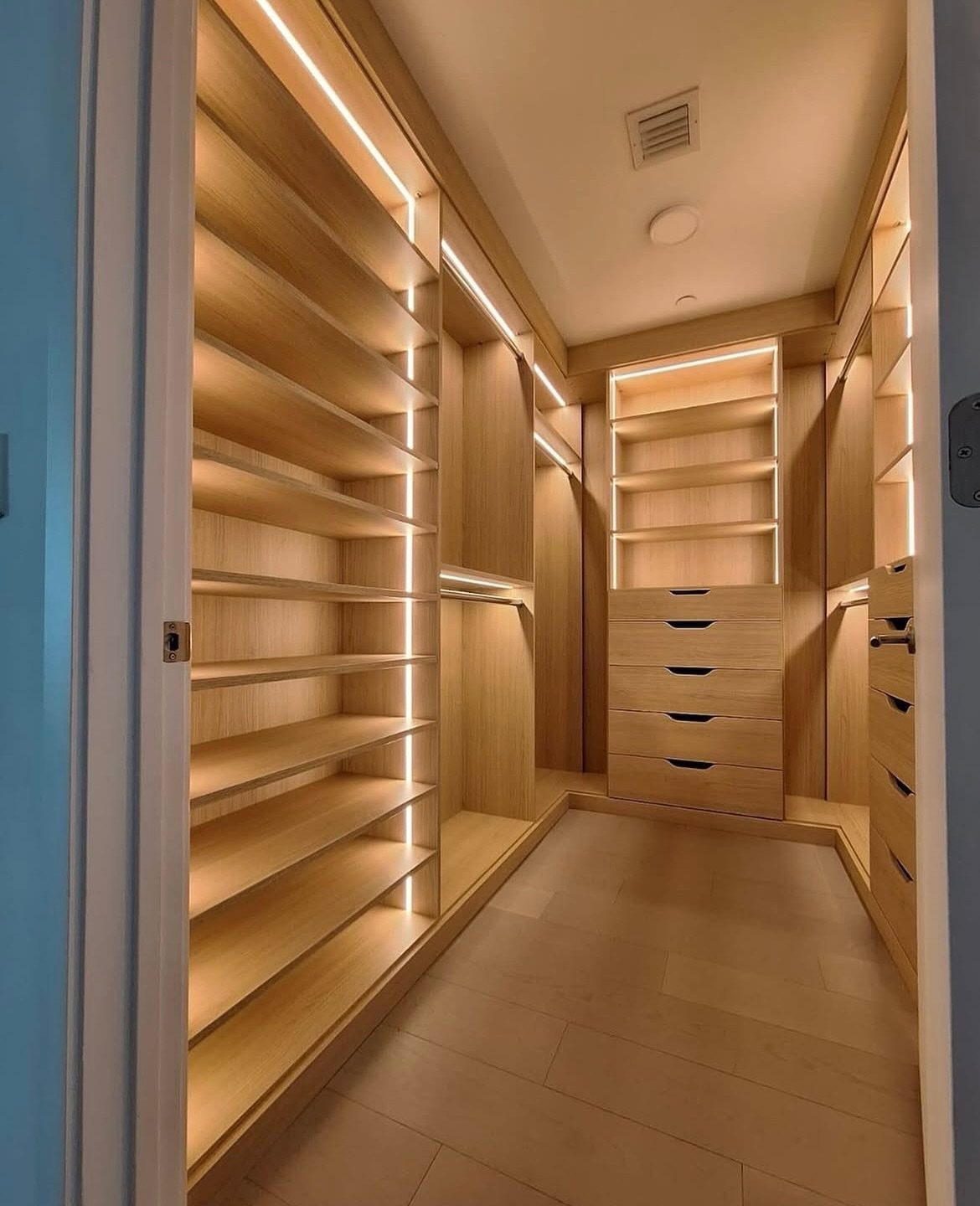
Lighting changes how well you can see colors and textures, which matters when you’re choosing an outfit.
Install battery-operated strips if you don’t have an outlet inside the closet. Peel-and-stick versions work on wood, metal, and laminate, and the batteries will need replacing eventually.
Pick daylight-temperature LEDs for accurate color matching. Warm white makes everything look yellow, and cool white skews blue, both of which distort how your clothes actually look in natural light.
7. Full-Length Mirror
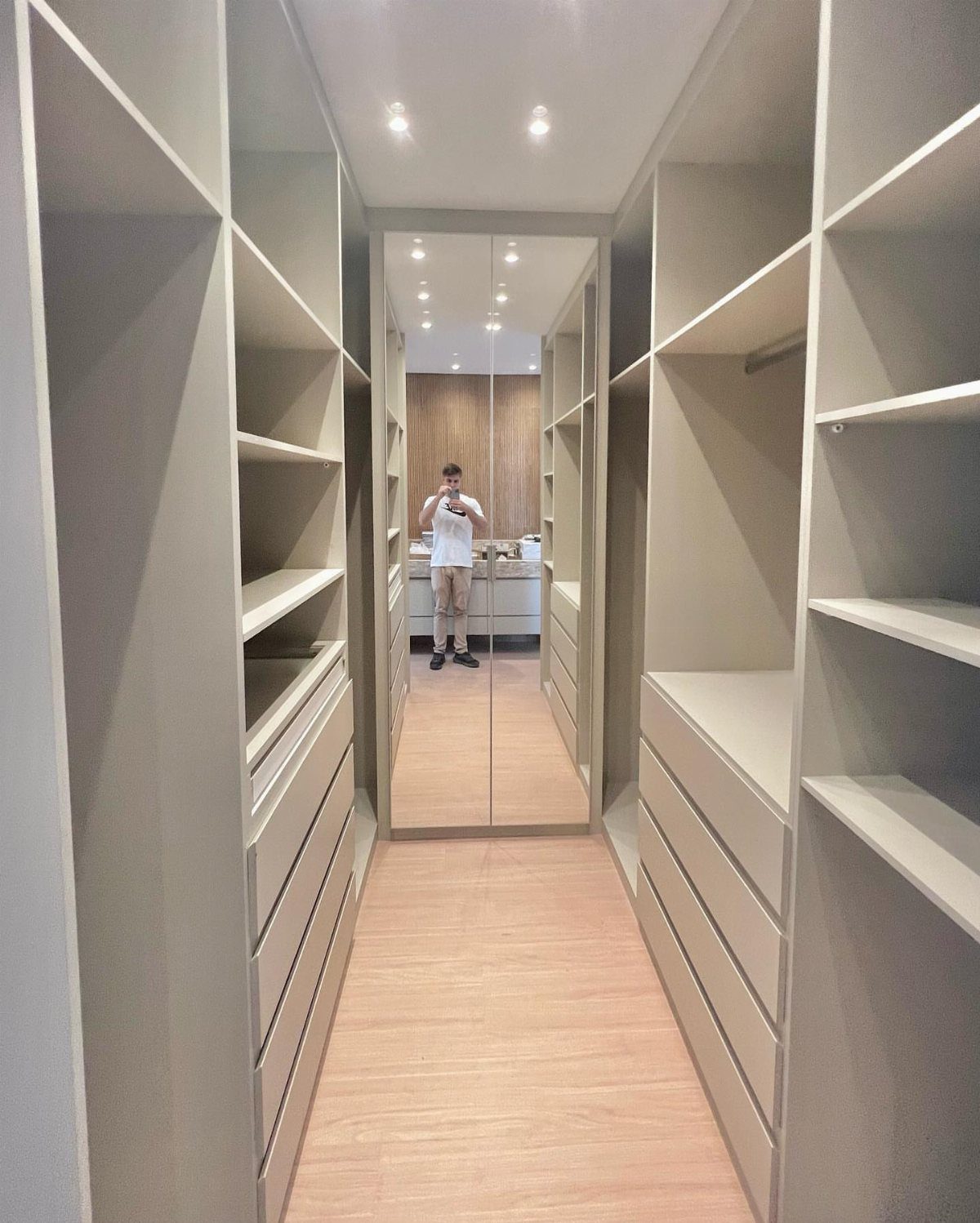
A mirror at the end of the closet hallway lets you see the full outfit before you leave the room. The placement here turns dead-end wall space into something functional without adding furniture that blocks the walkway.
Mount it floor to ceiling if the wall allows. A mirror that stops at waist height cuts off boots and pants, which defeats the point when you’re checking proportions.
The grey shelving keeps the focus on what you’re wearing rather than competing with the reflection.
8. Boutique Style Glass Cabinets
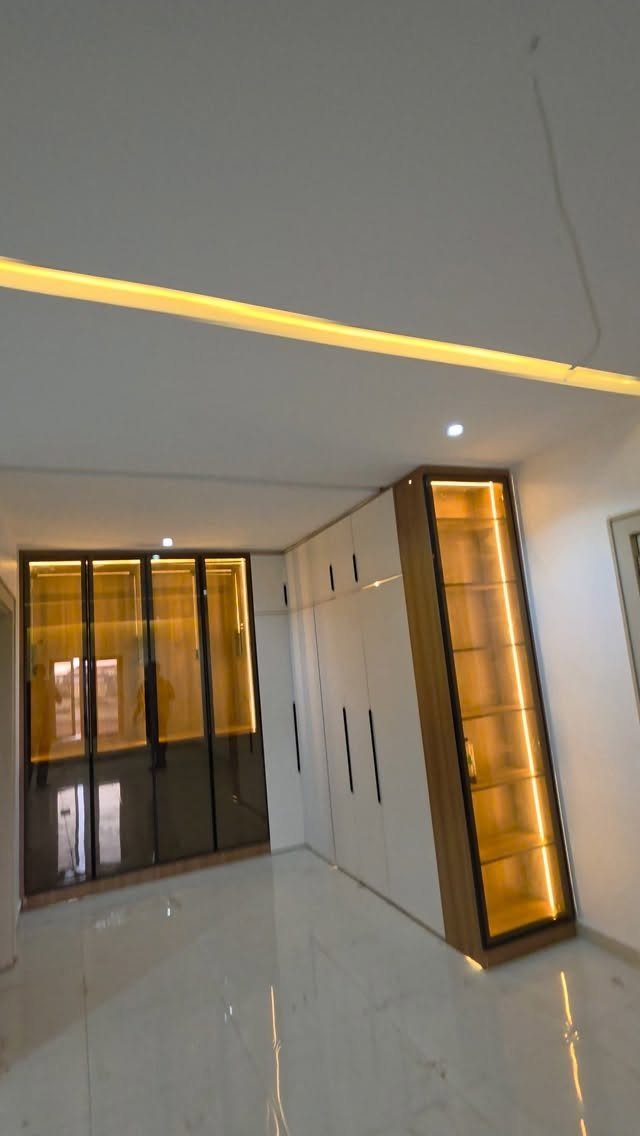
Glass-front cabinets turn storage into display. The tall unit here shows off shoes, bags, and folded items the way a retail store would arrange them, and the backlit shelves make everything easier to see.
This setup works if you’re willing to keep what’s inside organized. Glass doesn’t hide clutter the way solid doors do, so everything on those shelves stays visible all the time.
The matte white finish keeps the room feeling clean and open. A darker cabinet would create more contrast, but it also absorbs more light.
9. Industrial Pipe and Wood System
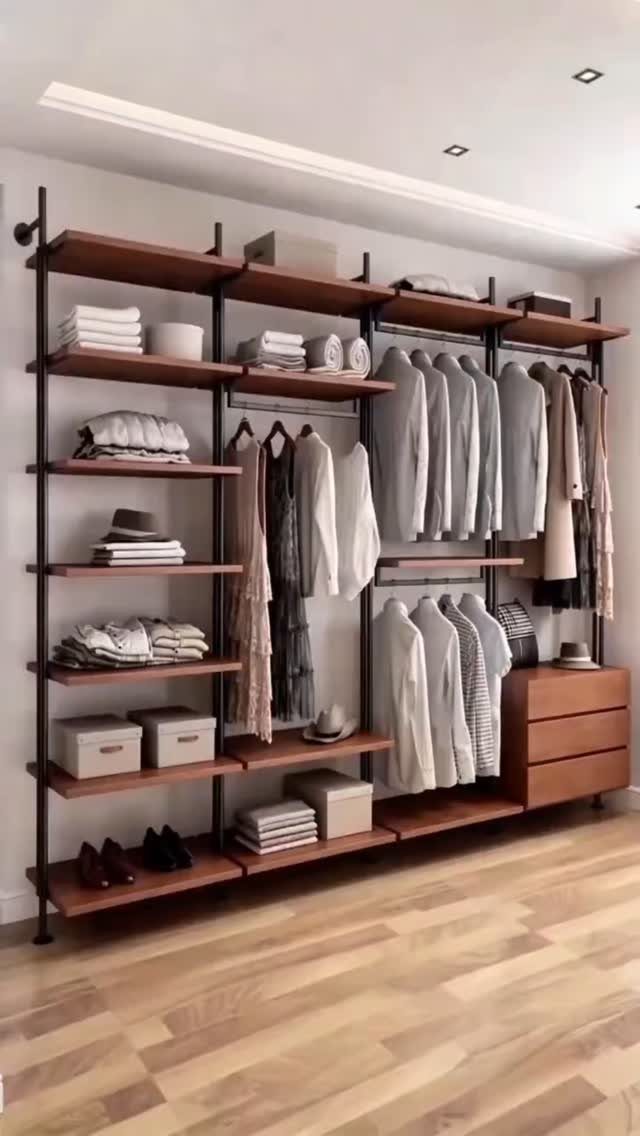
Pipes and wood planks give you an open closet that looks intentional rather than temporary. The black metal holds the structure, and the natural wood adds warmth without softening the industrial edge.
Build it with threaded pipe fittings from a hardware store. Floor flanges anchor the frame to the wall, and elbow joints let you turn corners or add a top rail for hanging clothes.
Stain or seal the wood before you install it. Raw pine picks up oils from your hands and will darken unevenly over time.
10. White Modular Storage Unit
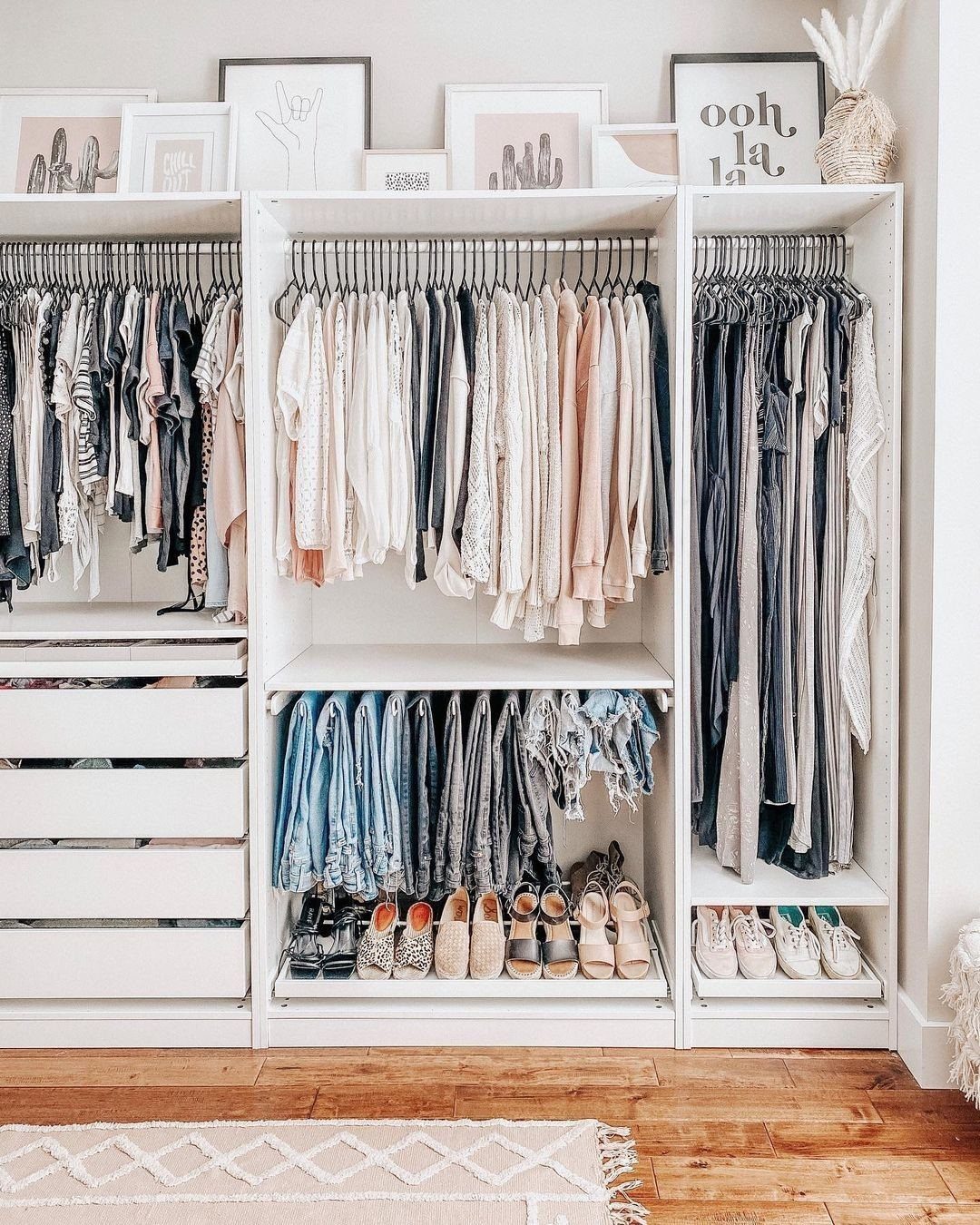
A modular unit combines hanging space, cubbies, and drawers in one freestanding piece. The white finish keeps the room feeling open, and the mix of storage types lets you separate folded clothes from shoes and bags.
Most modular systems stack or connect with cam locks, so you can adjust the layout if your needs change. Add a second hanging section if you have more dresses than folded items, or swap in more drawers for smaller pieces.
Anchor the unit to the wall if it’s taller than it is wide. Freestanding systems tip forward when you pull a loaded drawer.
11. Integrated LED Lighting System
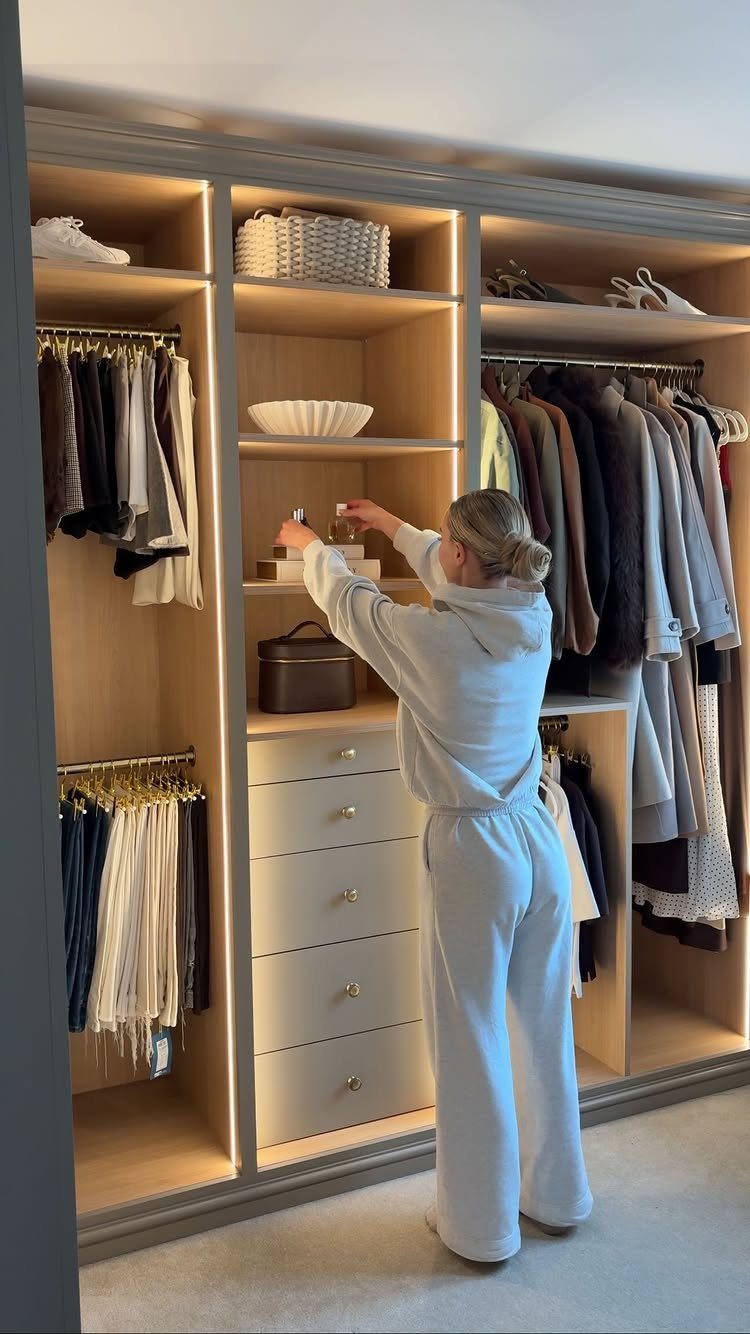
Built-in LED strips light the closet from top to bottom and eliminate the shadows that overhead lights create.
The vertical placement here runs along the edges of each section, so you’re not reaching into dark corners to find what you need.
Wire the strips to a single switch if you’re building the closet from scratch. Battery-operated versions work for retrofits, but you’ll need to reach behind the hanging clothes to replace them when they run out.
Daylight LEDs show colors accurately. Warm white makes it harder to match blacks and blues.
12. Central Island and Wardrobe Layout
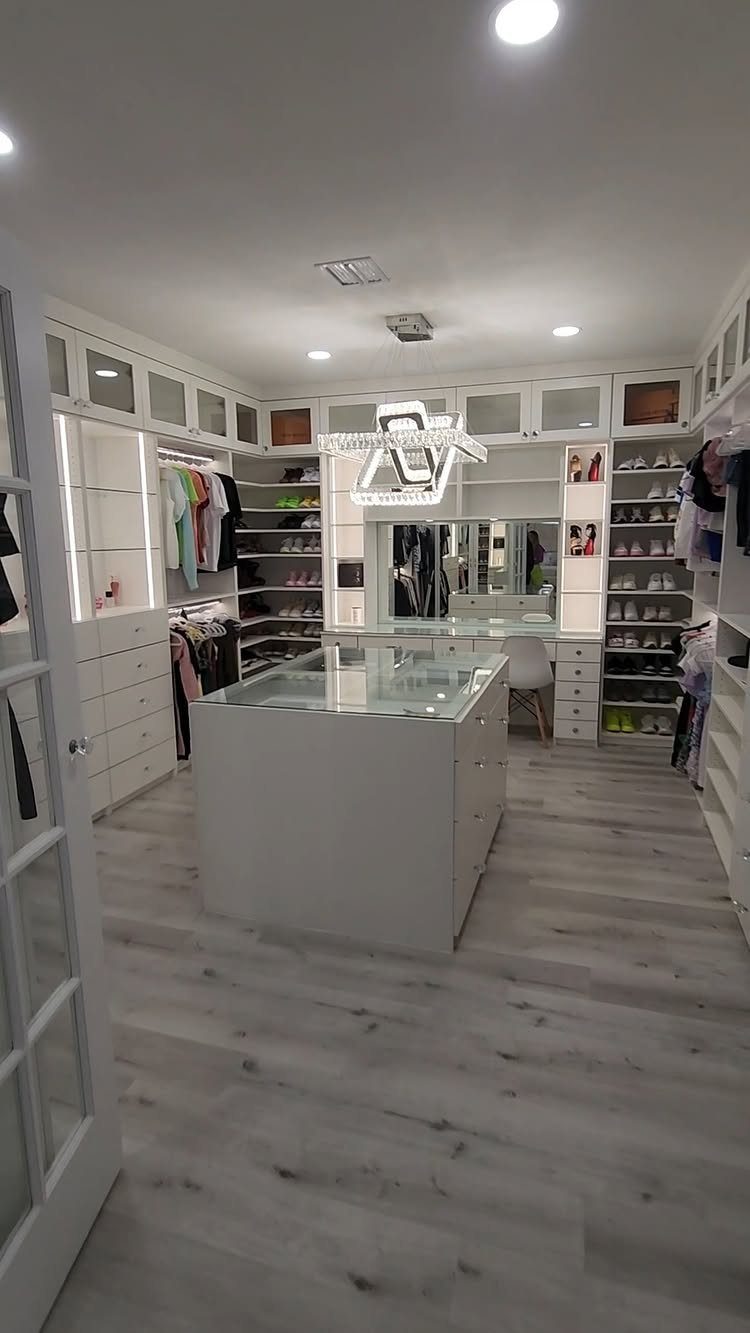
An island with built-in drawers anchors the room and gives you a surface for folding or laying out accessories.
The glass top adds a polished look, and the open shelving around the perimeter keeps hanging clothes and shoes within reach without filling the space with tall furniture.
This layout needs enough clear floor space to leave walkways on all sides of the island. Measure the room before you commit to the furniture.
The chandelier adds a decorative touch, but recessed lighting works better if the ceiling is on the lower side.
13. Dark Grey Walk-In System
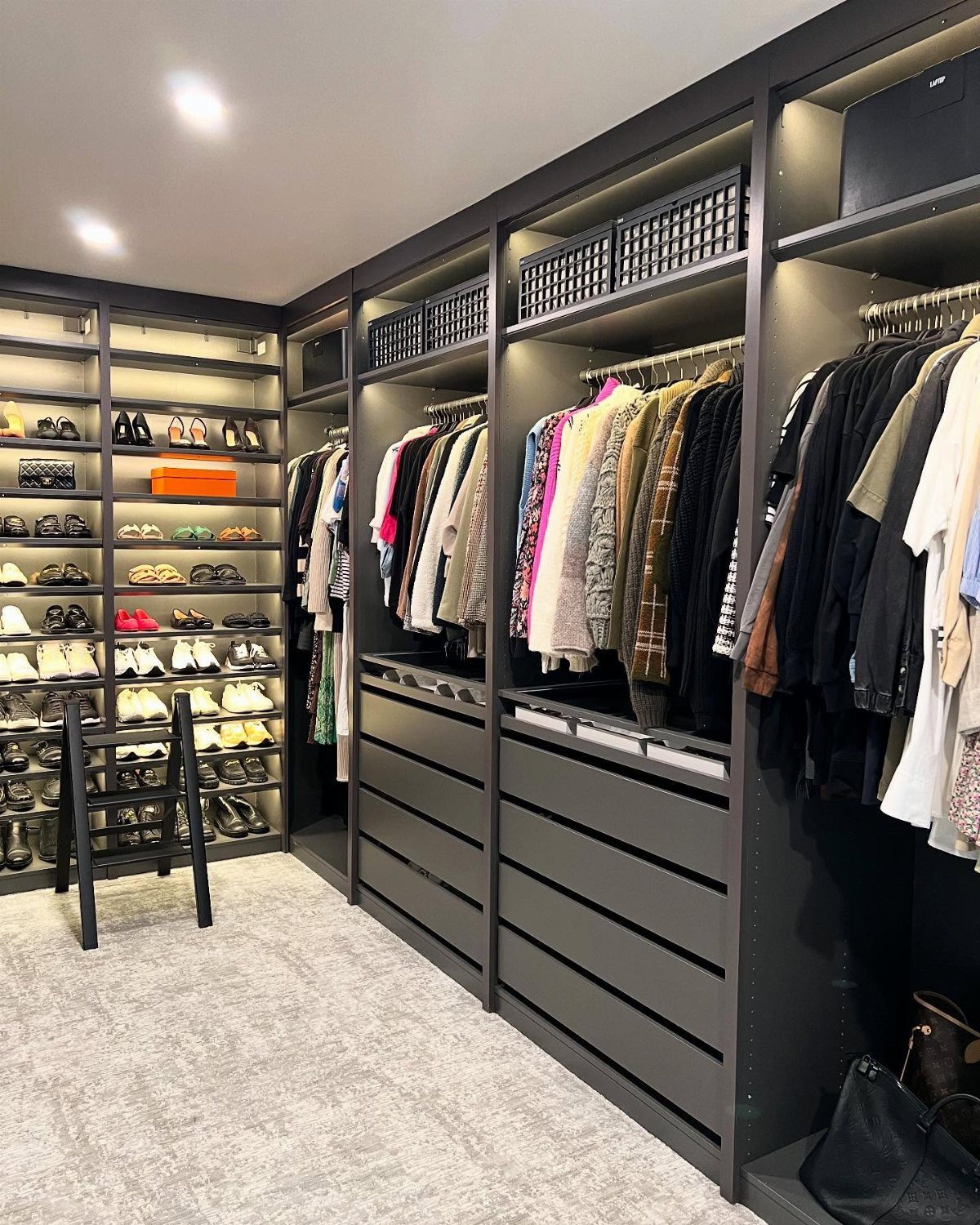
Charcoal cabinetry adds depth to a walk-in closet without making the space feel closed in. The dark finish hides scuffs and dust better than white, and it reads more tailored than raw wood or industrial metal.
Double hanging rods maximize vertical space. Stack shirts and jackets on one level, pants and skirts on the other, and you’ve doubled your capacity without adding floor storage.
The dedicated shoe shelves keep pairs visible and off the floor. A small step ladder gives you access to the upper shelves without straining or pulling items down by the hangers.






