
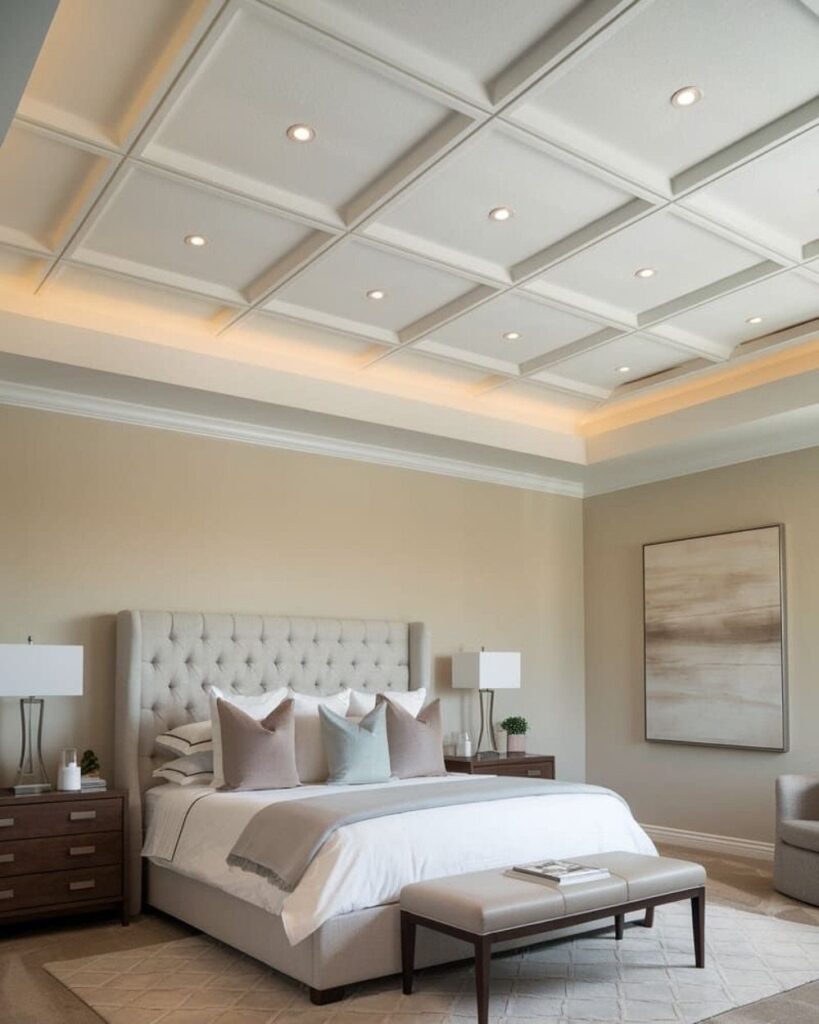
A coffered ceiling works in any room with at least 9 feet of clearance, where the beam depth will not make the space feel low.
The decision between paint, stain or mixed finishes comes down to how much contrast you want overhead: a single matte white tone keeps the grid minimal and modern, while dark wood beams against white panels add warmth without covering the ceiling in heavy millwork.
MDF and primed pine beams go up with adhesive and finish nails if you are handling the installation yourself, and recessed LED strips inside the coffers provide indirect light without crowding every panel with downlights.
1. Geometric and Asymmetrical Patterns
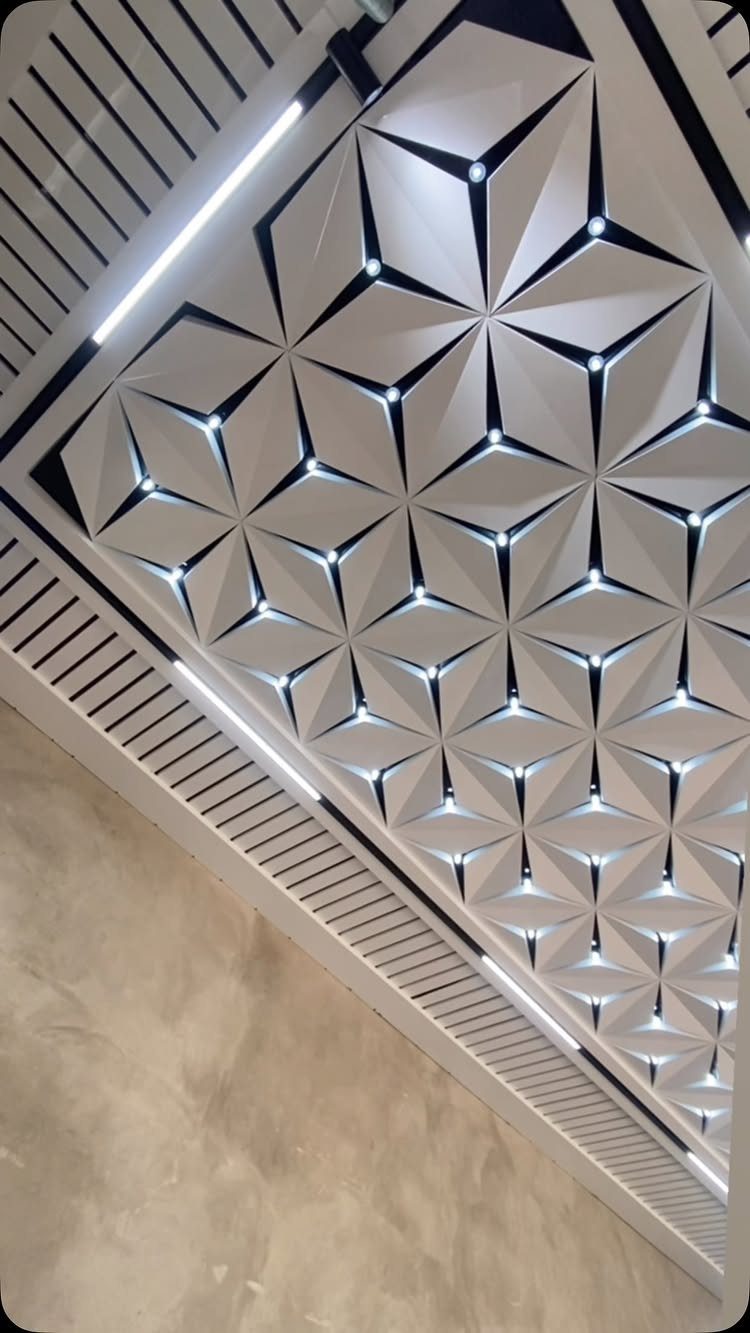
Breaking the traditional square grid with diagonal lines, triangles or offset rectangles gives coffered ceiling design that looks custom and intentional.
The raised geometry reads sharpest when you keep the finish uniform across beams and panels; painting everything in the same white or off-white makes the depth and angles stand out instead of competing with color changes.
Adding perimeter LED strips between the coffers and crown molding brings soft ambient light that highlights the dimensional pattern after dark without visible fixtures.
"There’s a lot of craftsmanship that goes into creating these perfectly segmented details." Read: Coffered ceilings can get expensive fast.
2. Classic Square Grid Coffered Ceiling
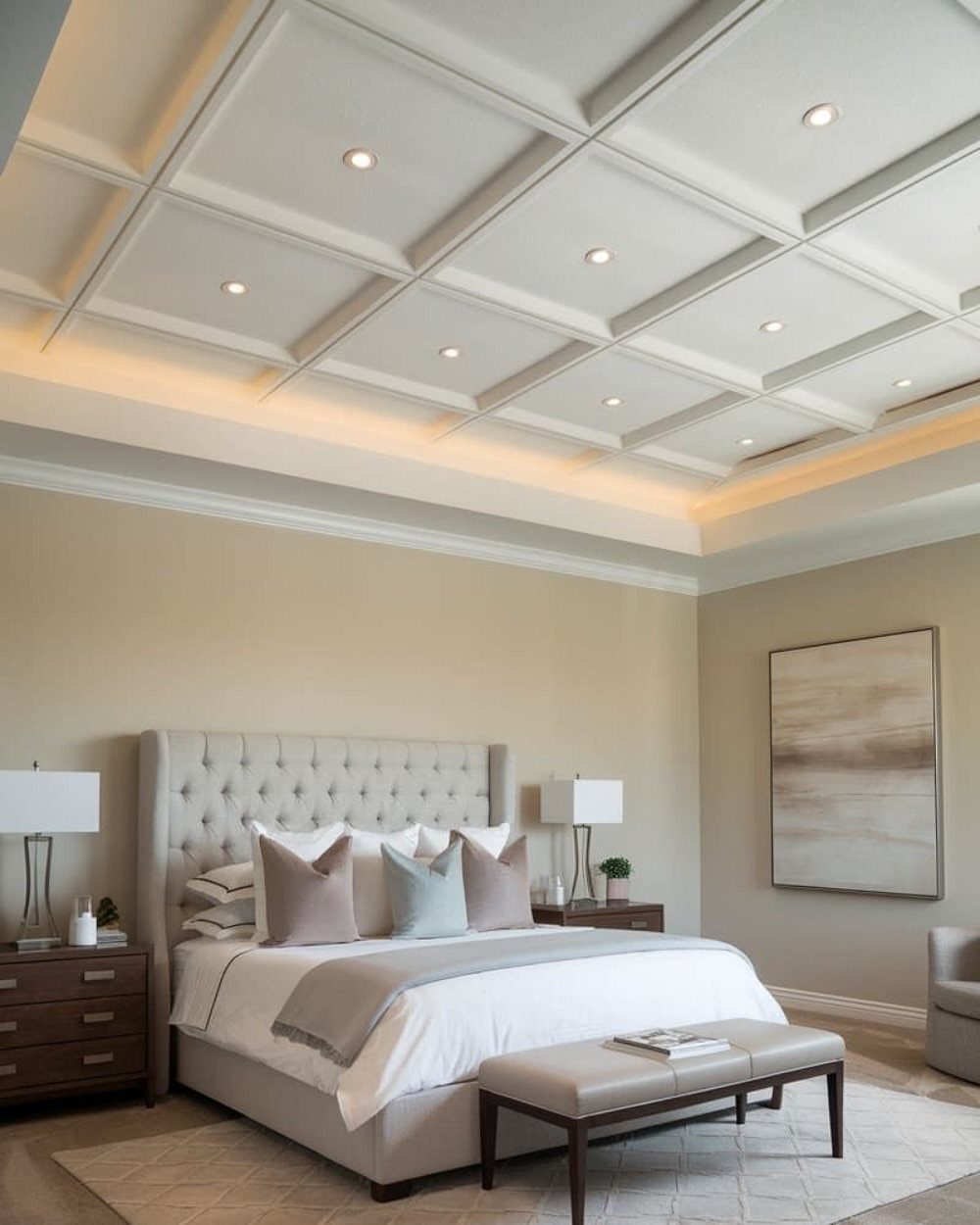
A grid of evenly spaced squares divided by painted beams is the standard coffered ceiling layout for a reason: it suits nearly any room size and reads as finished architecture rather than decorative add-on.
Installing MDF or poplar beams over drywall on standard centers keeps the material cost reasonable if you’re doing the work yourself.
Recessed LED pots centered in alternating coffers provide even overhead light without crowding every panel. Matte white paint across beams and recesses keeps the focus on shadow and depth instead of material or grain.
3. Coffered Ceiling with Integrated LED Lighting
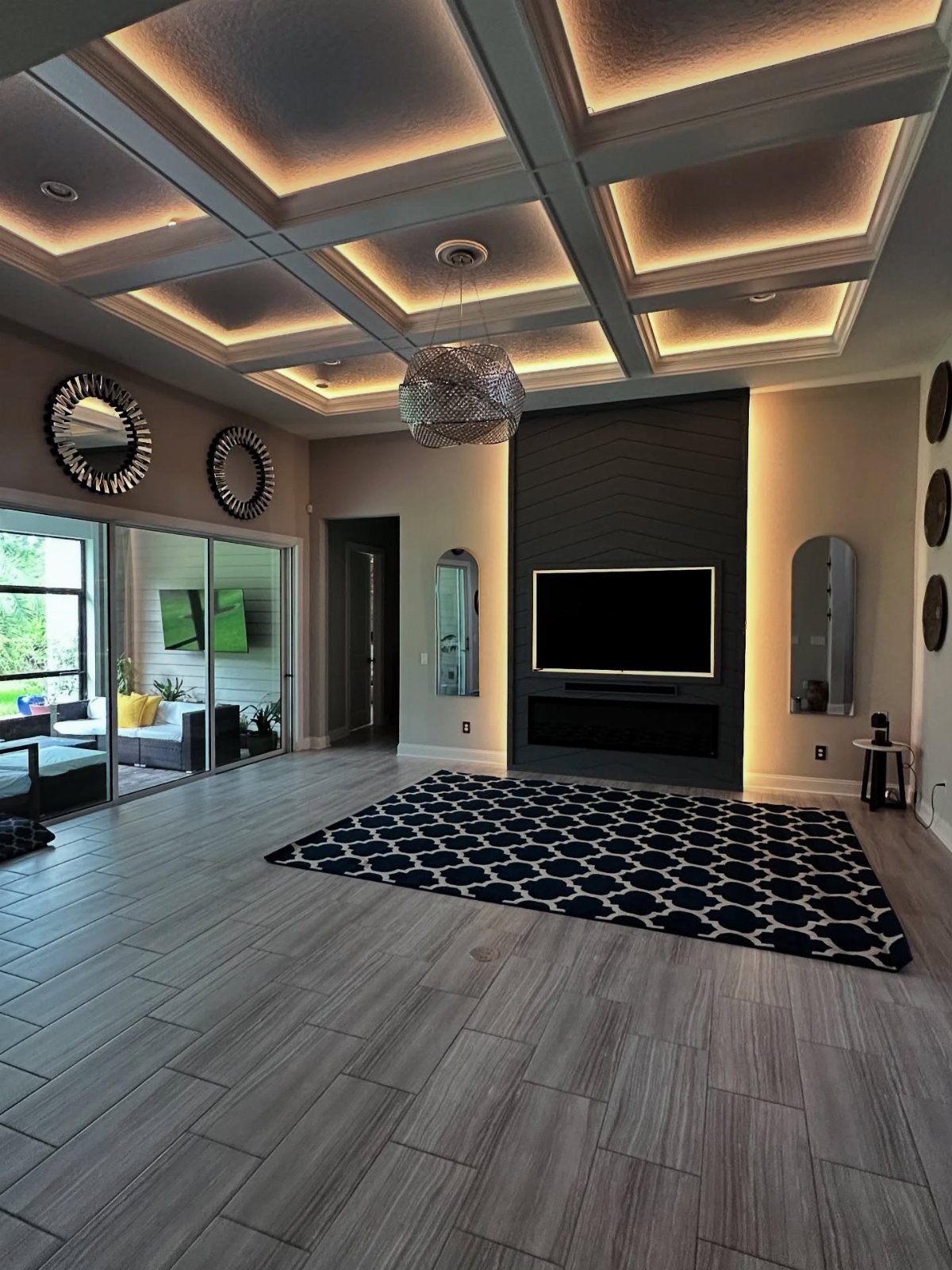
Running LED strips inside the coffers themselves rather than spacing individual downlights gives you continuous indirect light that washes the ceiling and softens shadows across the room.
The glow lifts the ceiling visually and adds layered lighting without taking up any floor or table space.
Wiring runs through the beam structure before drywall goes up, so planning the layout early matters. Warm white LEDs around 2700K match incandescent and halogen without the yellow cast that cool white strips throw on painted surfaces.
4. Coffered Ceiling with Wallpapered Panels
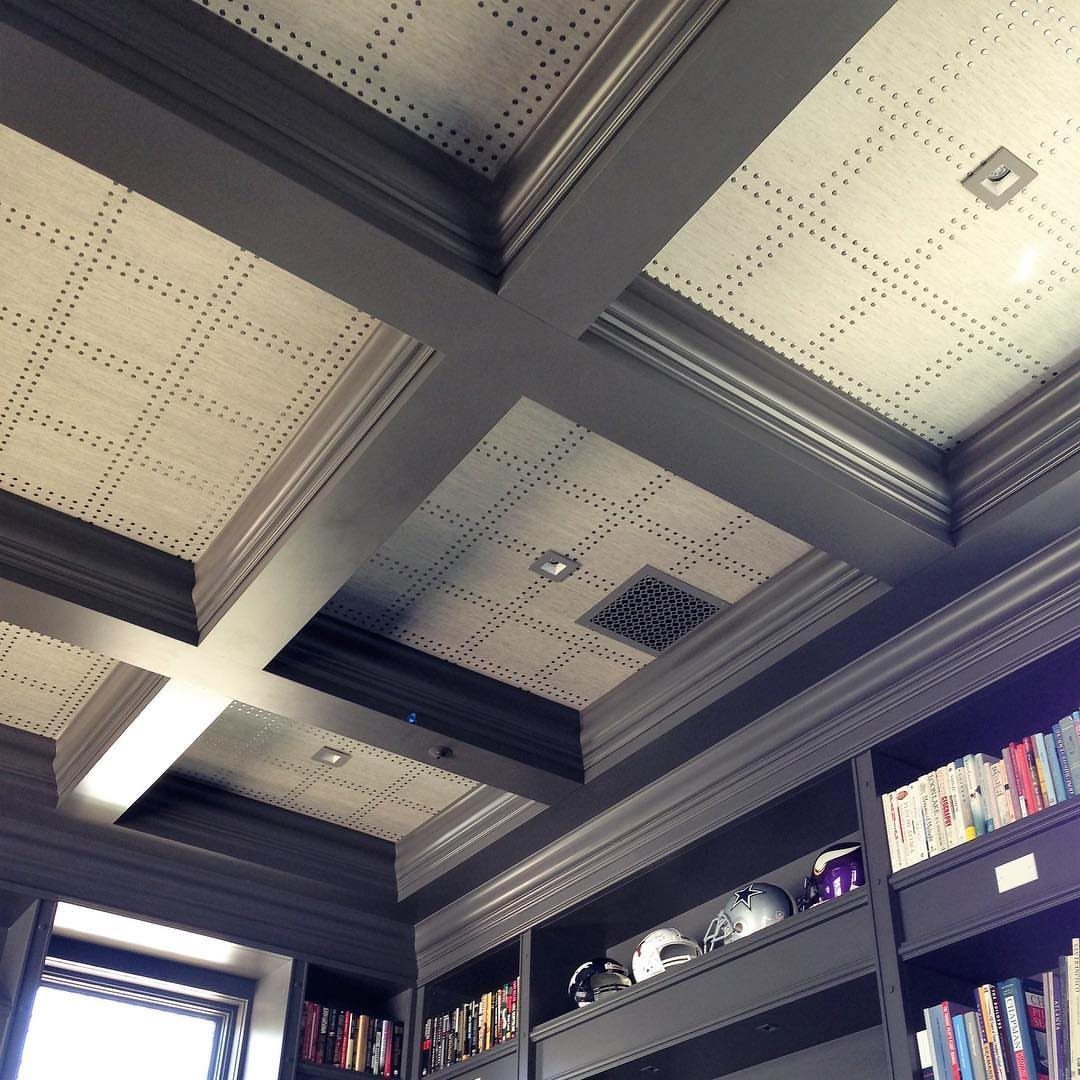
Lining the recessed panels with patterned wallpaper turns a standard grid into something that reads more like paneling than plain millwork.
Small-scale geometric or tonal prints work better than large florals; you want texture and subtle contrast, not a busy pattern that fights the beam structure.
Paste the paper before final paint on the beams so you can cut clean edges without taping over finished trim.
A satin or eggshell finish on the beams keeps them distinct from the matte texture of most wallpapers without adding gloss.
5. Kitchen Coffered Ceiling
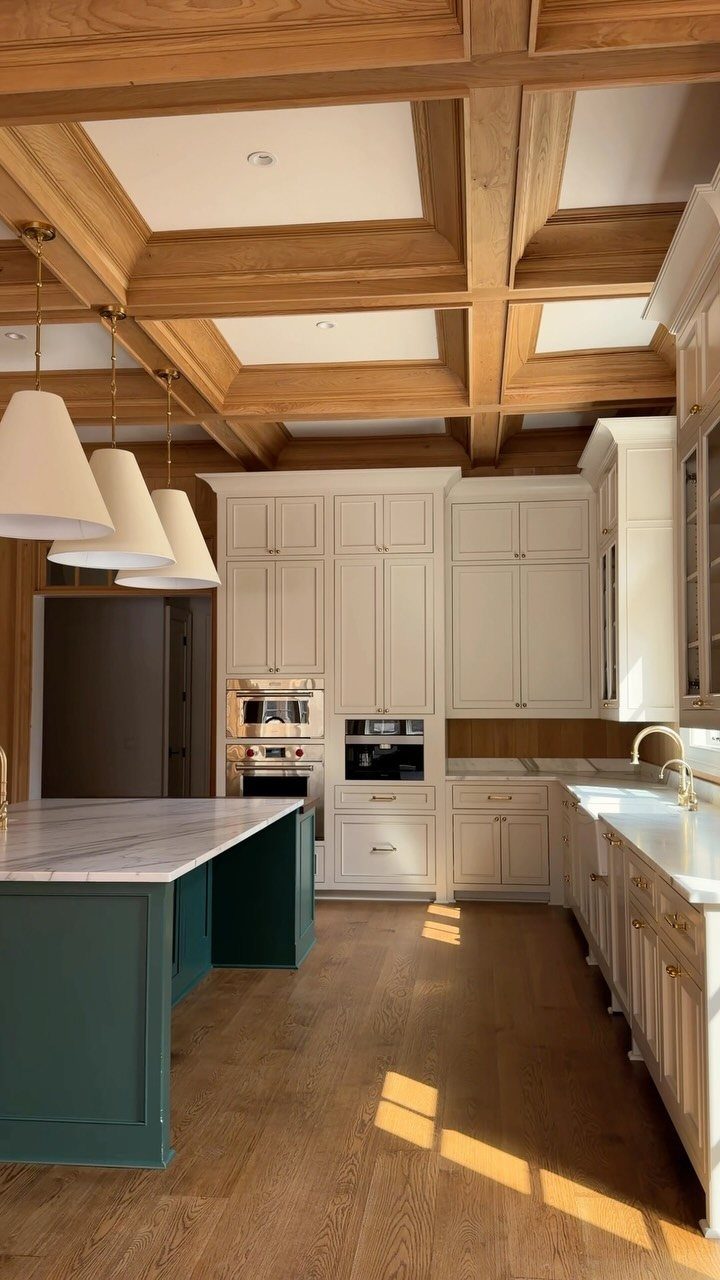
Coffered ceilings make sense in kitchens with ceiling height to spare, where the added depth does not crowd the room or make upper cabinets feel low.
Natural wood beams and panels bring warmth without needing paint, though keeping the stain light prevents the ceiling from feeling heavy over bright cabinetry.
Pendant lights over an island handle task lighting while the coffered grid adds architectural finish overhead.
The beam layout should align with the room’s footprint rather than centering on the island alone; symmetry across the full ceiling looks intentional, floating coffers over one zone does not.
6. Coffered Ceiling with Beadboard Detail
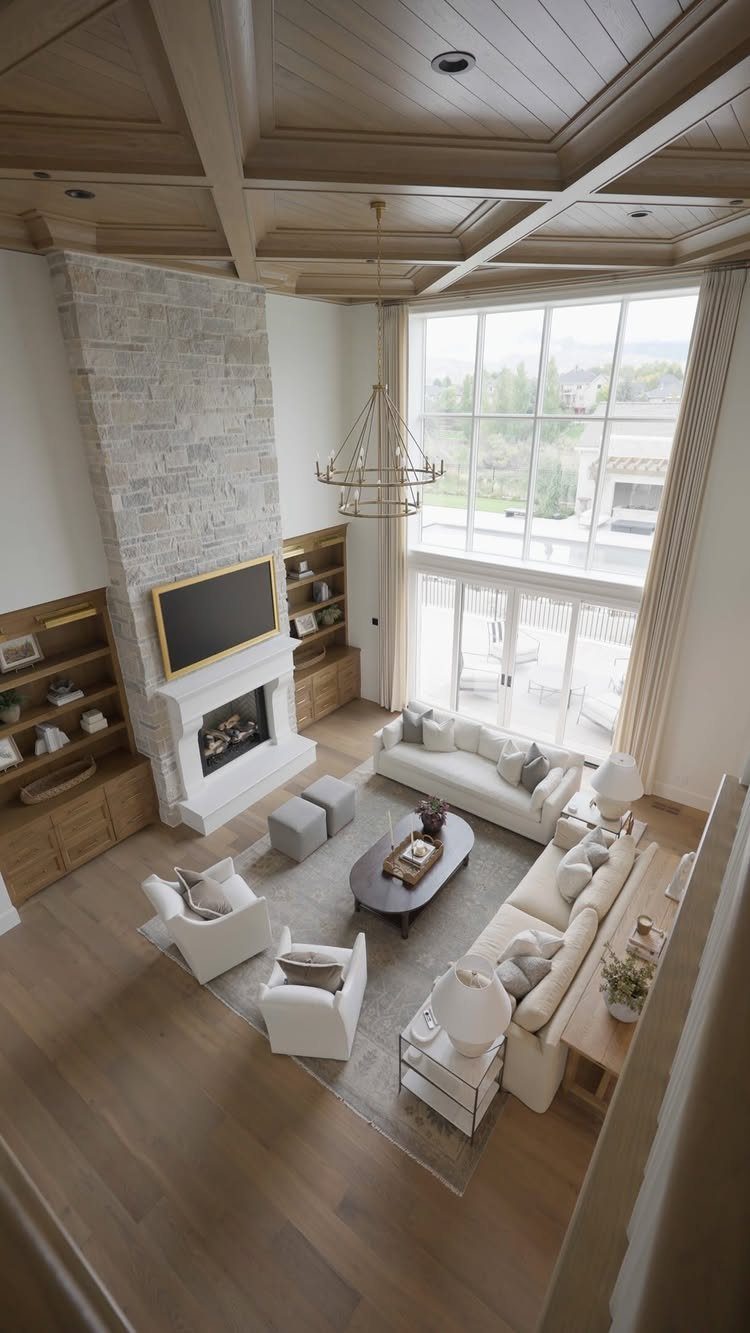
Installing beadboard or tongue-and-groove planks inside the recessed panels adds visible texture and breaks up flat drywall without pattern or color.
The narrow vertical lines read as traditional detail and suit rooms where you want the ceiling to feel like finished carpentry rather than drywall and trim.
Primed MDF beadboard sheets go up faster than individual planks and take paint evenly. Running the grooves parallel to the room’s longest wall keeps the pattern from feeling directionally random across multiple coffers.
7. Contemporary Flat-Panel Coffered Designs
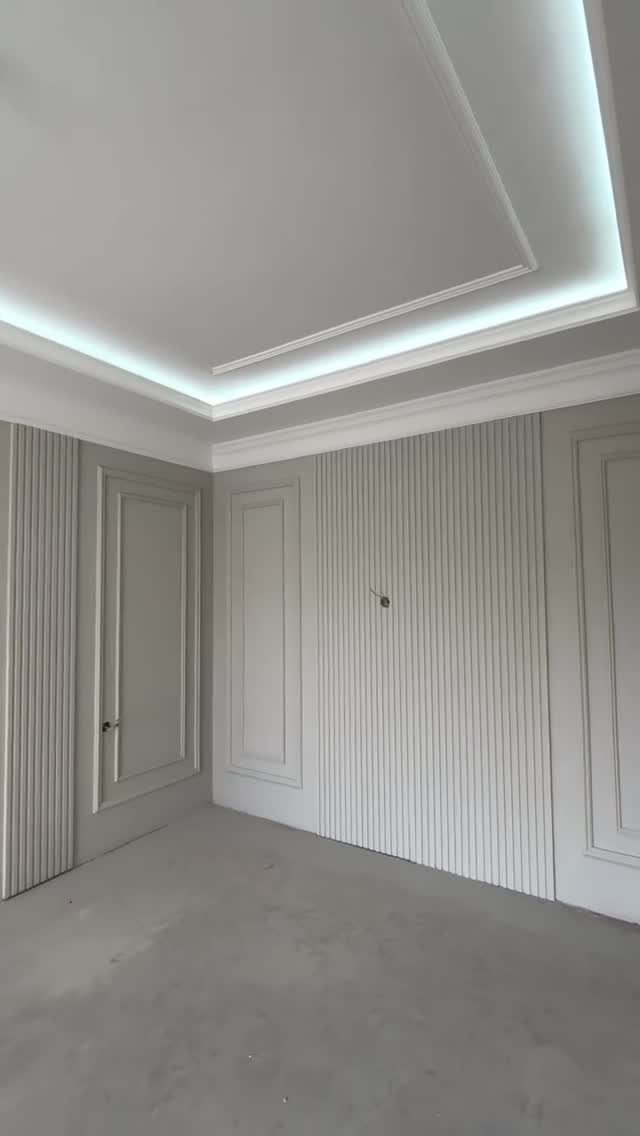
Flat beams flush with the ceiling plane instead of proud below it keep the coffered grid minimal and suit rooms where you want architectural order without traditional millwork depth.
The layout still divides the ceiling into panels, but the beams read as lines rather than raised structure.
Recessed LED strips along the perimeter of each coffer add indirect light that lifts the ceiling without visible fixtures. Matte paint in one color across beams and panels keeps the geometry clean and the profile low.
8. Coffered Ceiling in Open Floor Plans
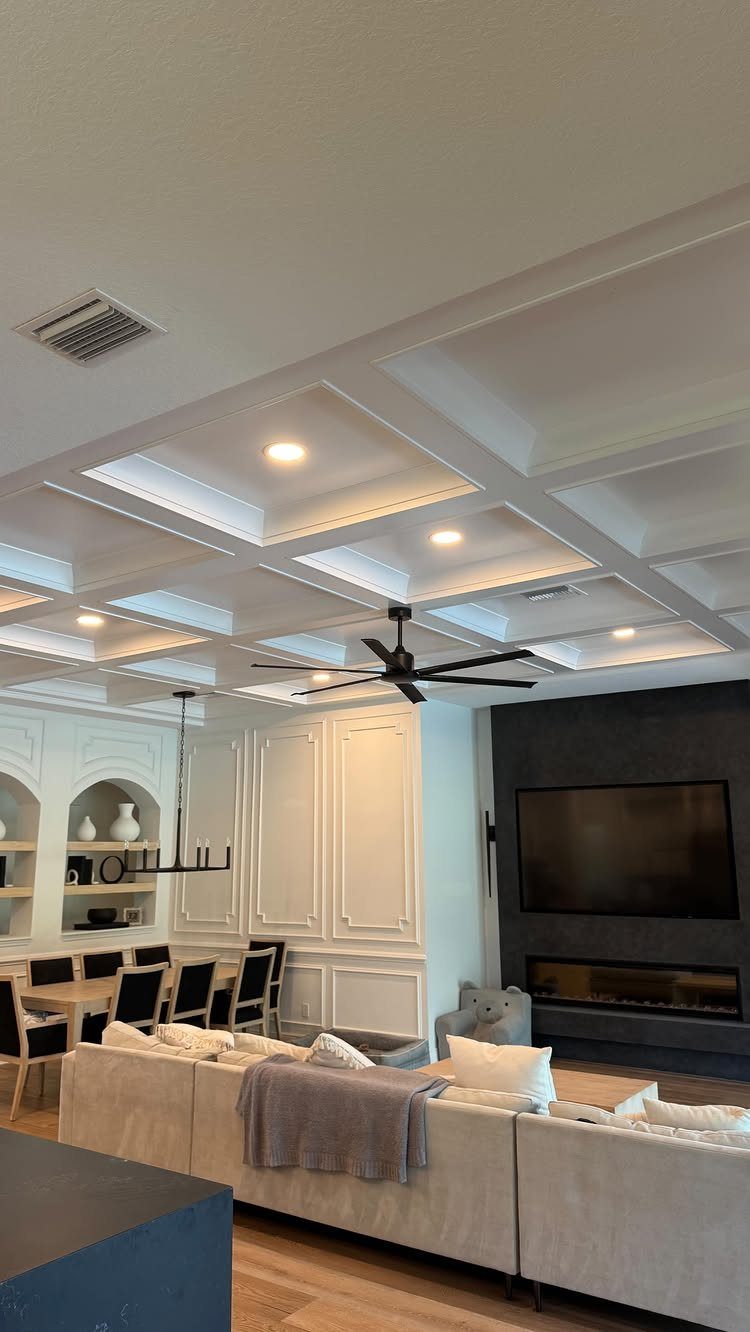
Carrying a coffered grid across a combined living and dining space gives the open floor plan a ceiling treatment that unifies both zones without dropping soffits or adding walls.
The repeating pattern provides visual structure overhead where furniture alone marks the room divisions below.
Aligning the beam spacing with major walls or transitions between zones keeps the grid from feeling arbitrary. Recessed lighting in alternating coffers spreads even light across the full space without clustering fixtures over one area.
9. Ornate Dark Wood Coffered Ceiling
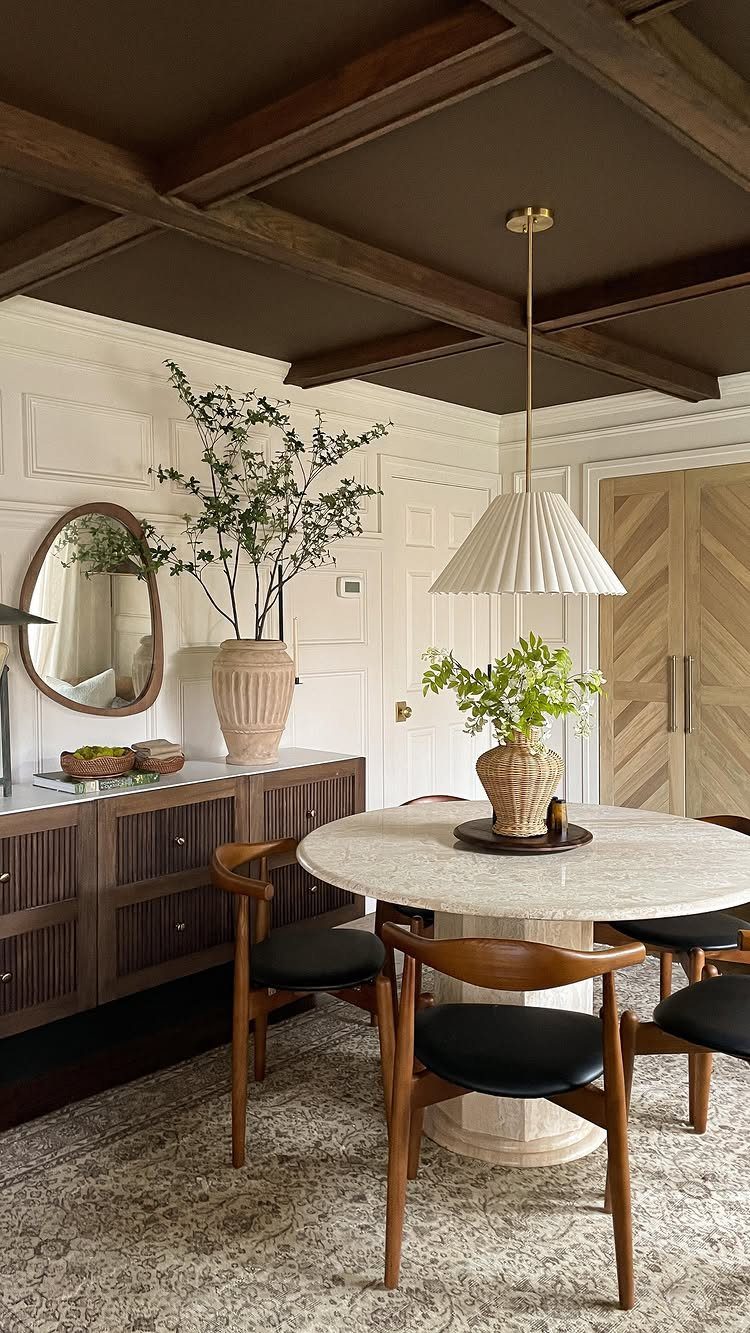
A dark stained wood coffered ceiling over white walls and bright furniture creates contrast without needing heavy millwork elsewhere in the room.
The deep brown reads as a strong horizontal plane that anchors the space and makes standard ceiling height feel deliberate rather than low.
This works best in rooms with enough natural light to prevent the dark ceiling from closing in. Matte or satin polyurethane on the wood keeps the finish rich without gloss that competes with pendant fixtures or chandeliers.
10. Wood-Inset Coffered Ceiling
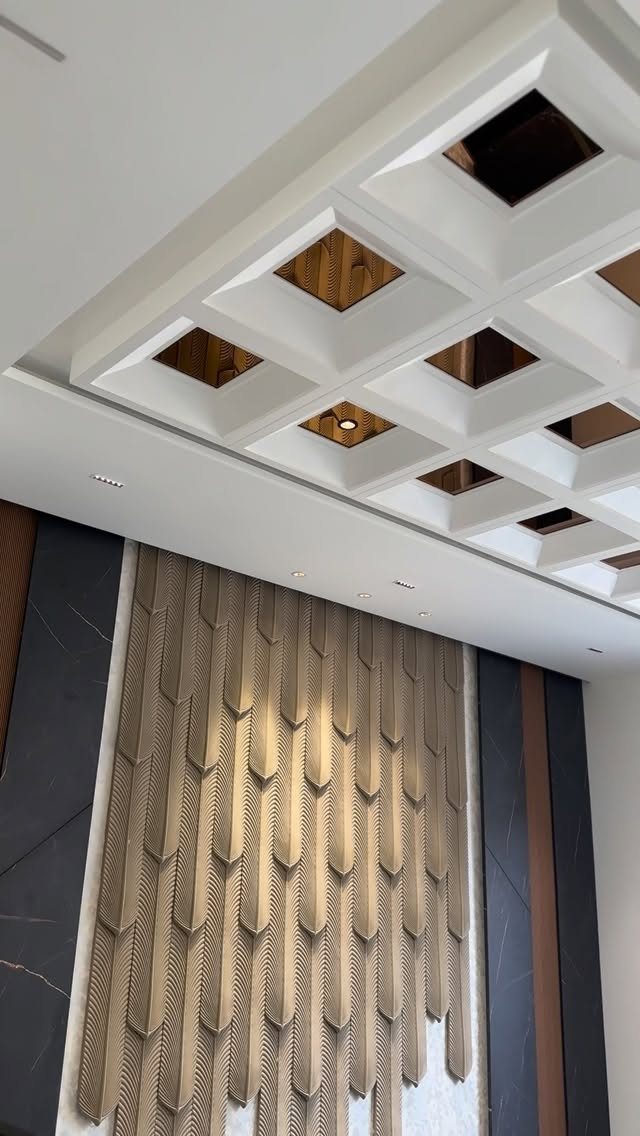
Installing natural wood panels in the recessed sections of a white painted grid brings warmth and grain without the weight of an all-wood ceiling.
The contrast between smooth white beams and textured wood inserts gives the coffered layout material interest while keeping the room light overall.
Tongue-and-groove pine or cedar planks fit the recesses and take stain or clear finish depending on how much color you want. Running the wood grain in one direction across all panels keeps the pattern consistent rather than rotating by coffer.
11. White Grid with Dark Wood Beams
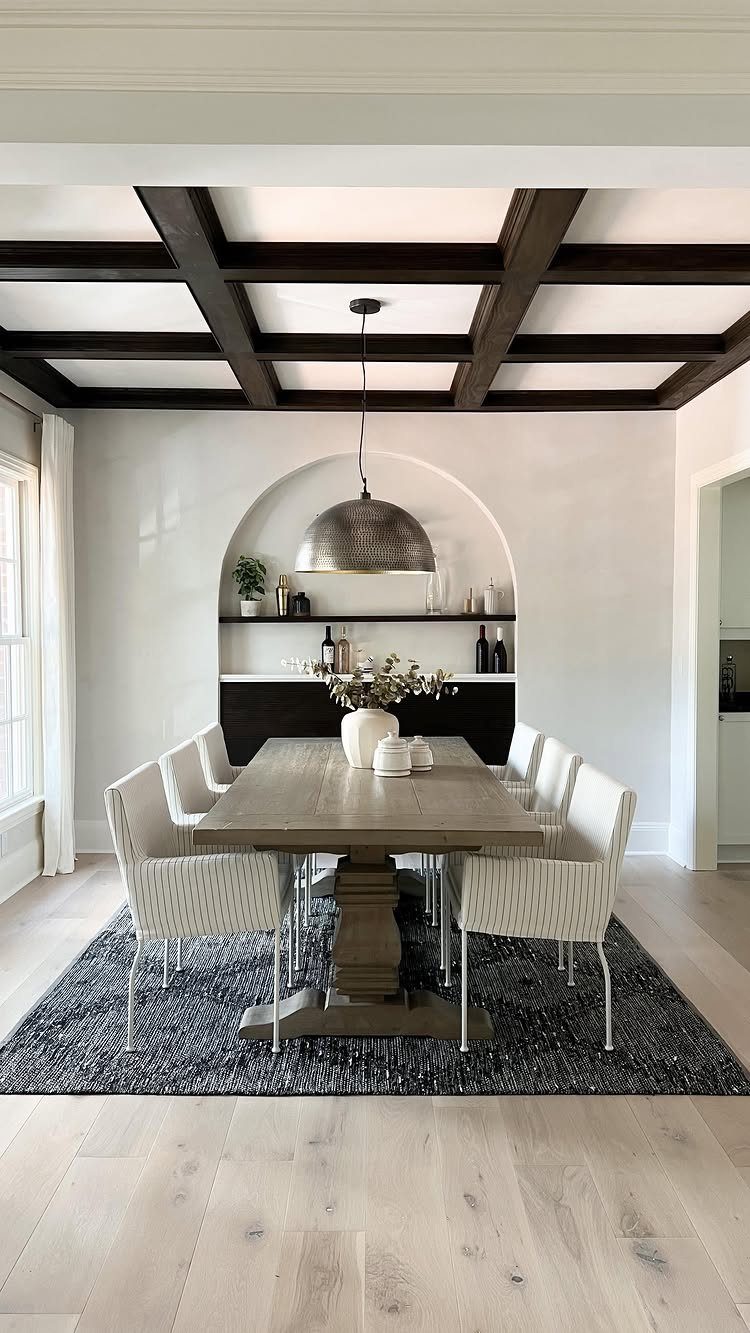
Dark stained beams against white recessed panels split the coffered grid into 2 finishes and add warmth without covering the ceiling in wood.
The white keeps the space bright while the exposed beams provide structure and contrast that plain drywall does not.
This suits rooms where you want traditional ceiling detail but need to preserve light. Painting the recesses in the same white as the walls ties the ceiling to the room instead of floating it separately overhead.
12. Mirrored Coffered Ceiling Panels
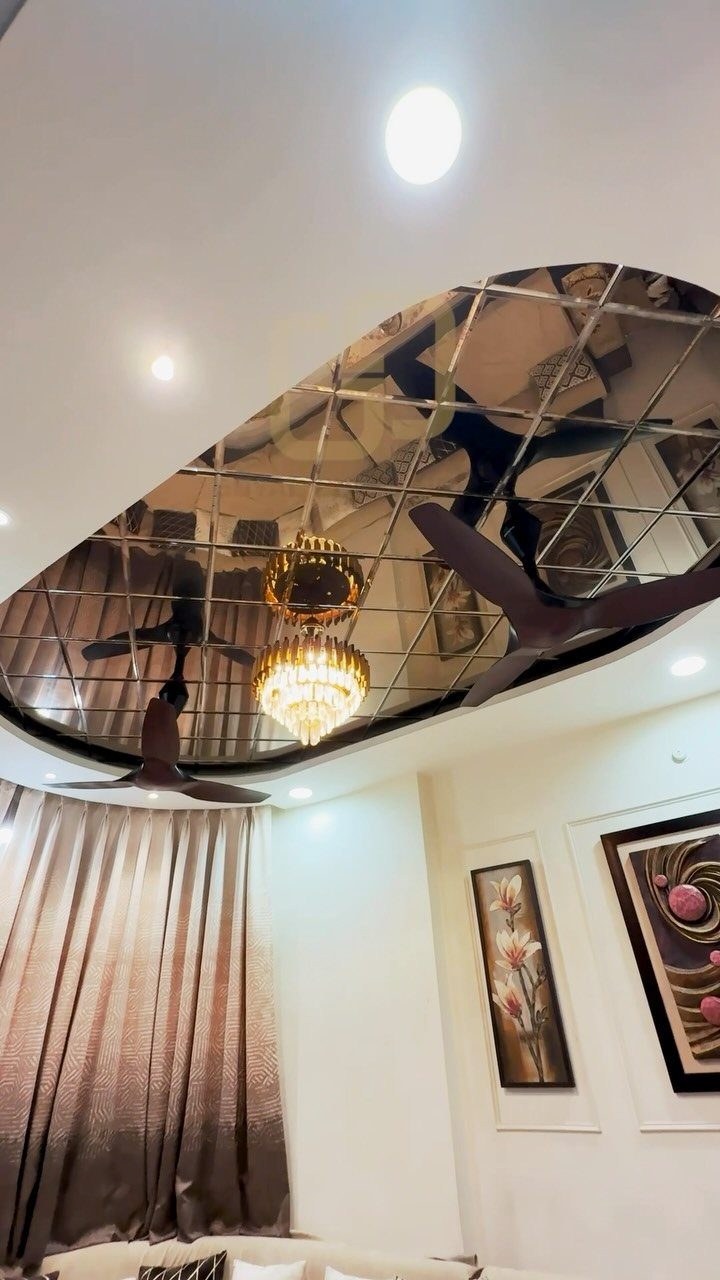
Mirrored panels in the recessed sections of a coffered grid reflect light and fixtures back down into the room, which can make a smaller space feel taller and brighter.
The effect works best with a statement chandelier or pendant centered in the space where the reflection doubles the visual weight of the fixture.
Adhesive mirror tiles sized to fit each coffer go up faster than cutting sheet mirror, though the seams will show at angles.
This treatment suits formal dining rooms or entryways more than everyday spaces where the reflective surface can feel busy overhead.
Coffered Ceiling Benefits
Coffered ceilings help reduce echo and absorb sound, which matters in open floor plans with hard flooring where every conversation and footstep echoes off tile or wood without upholstery or carpet to soften it.
The beam structure also hides ceiling lines you cannot move.
Finished millwork overhead registers as architectural detail rather than cosmetic update, which typically adds value at resale.
Coffered Ceiling Installation Tips
A 9-foot ceiling is the minimum height that keeps beams from sitting too close overhead. Below that, the added depth drops the ceiling and the room reads as cramped instead of finished.
At 10 feet or higher, you have enough clearance for the beam structure to read as architecture rather than something pressing down into the space.
Lightweight materials make installation faster if you are handling the beams yourself.
MDF and primed pine go up with construction adhesive and finish nails, and you can cut and fit them without help. Solid hardwood beams weigh more and take longer to position, though they take stain without needing veneer or paint.
Budget for both material and labor early. The carpentry adds up quickly when the layout includes multiple beam intersections and mitered corners, and precise cuts matter more here than in trim work where caulk and paint cover small gaps.
Color does not need to match the walls. Complementary or contrasting tones on the beams or panels can add depth without looking mismatched.
Coffered Ceiling Color Ideas
A single tone in matte or eggshell reads as clean modern millwork without the traditional two-tone contrast.
Light and dark tones of the same color give you separation between beams and recesses without introducing a second hue. The closer the values, the softer the grid reads from below.
Contrasting colors between beams and panels add drama and make the structure more visible.
Frequently Asked Questions
What is a coffered ceiling?
A coffered ceiling features recessed panels outlined by beams that form a grid pattern, usually squares or rectangles.
The design adds architectural depth and visual interest overhead, and historically was built from stone but today uses wood, MDF or PVC. The sunken panels create shadow lines that make the ceiling feel taller and more finished than flat drywall.
What rooms work best for coffered ceilings?
Living rooms, dining rooms and bedrooms with at least 9 feet of ceiling height suit coffered ceilings best because the beam structure needs clearance to avoid feeling cramped.
Kitchens work when there is height to spare above upper cabinets, and open floor plans benefit from the repeating grid that unifies separate zones without adding walls.
Smaller rooms or spaces below 9 feet can feel closed in once the beam depth drops the ceiling further.






