
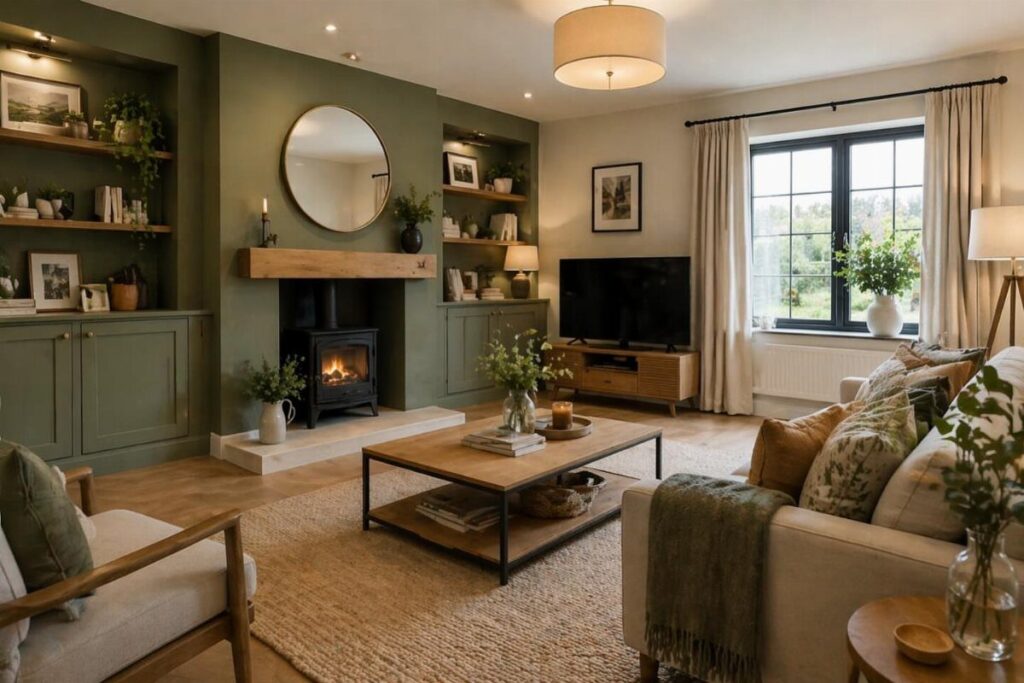
Green enters the room through paint, wallpaper, velvet upholstery, textured art, cushions, rugs, or living plants.
A few cushions or a patterned rug bring in color you can swap out in an afternoon, while green wallpaper or a velvet sofa commits the room to that tone for the next few years.
1. Indoor Plants
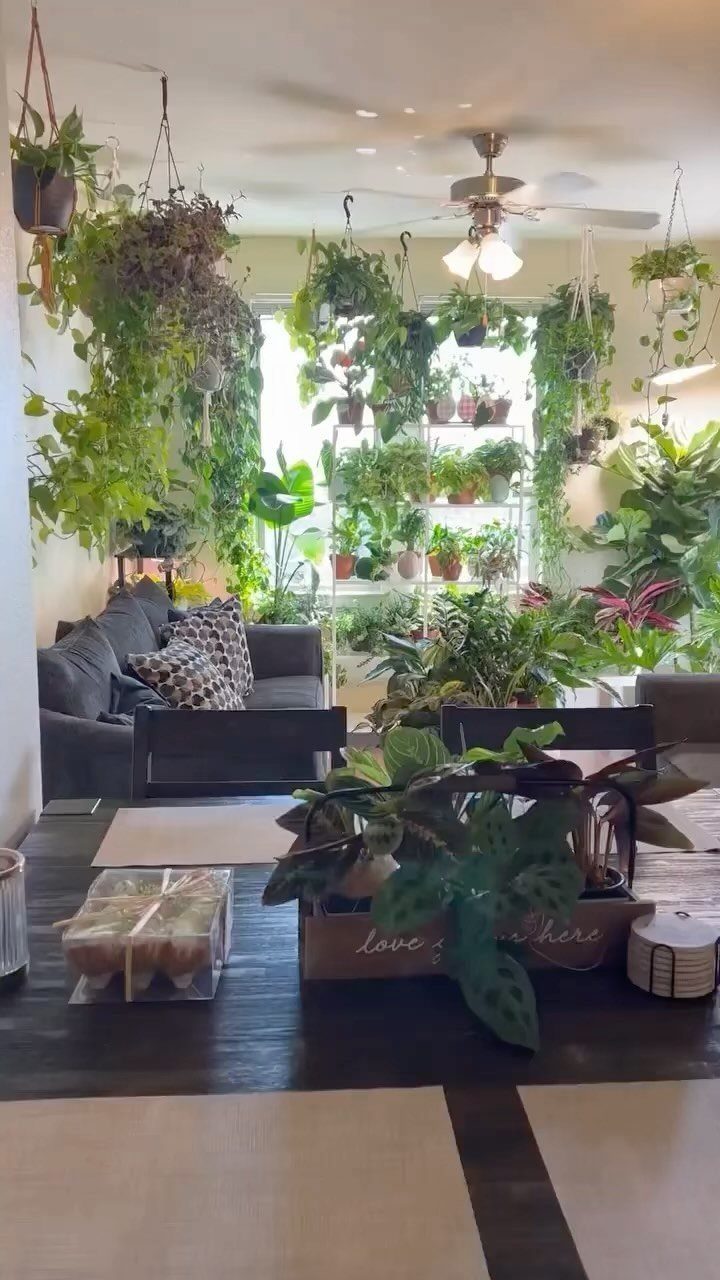
Filling a room with plants in different sizes and heights brings green in without committing to paint or furniture. The mix of hanging planters, shelves, and floor pots adds layers that make the space feel fuller and more lived-in.
Start with a few easy growers like pothos, snake plants, or philodendrons if you’re still figuring out light and watering. Group them at different levels so your eye moves around the room instead of landing in one spot.
A neutral sofa in grey or beige gives the plants room to stand out instead of fighting with bold upholstery.
2. Green Walls
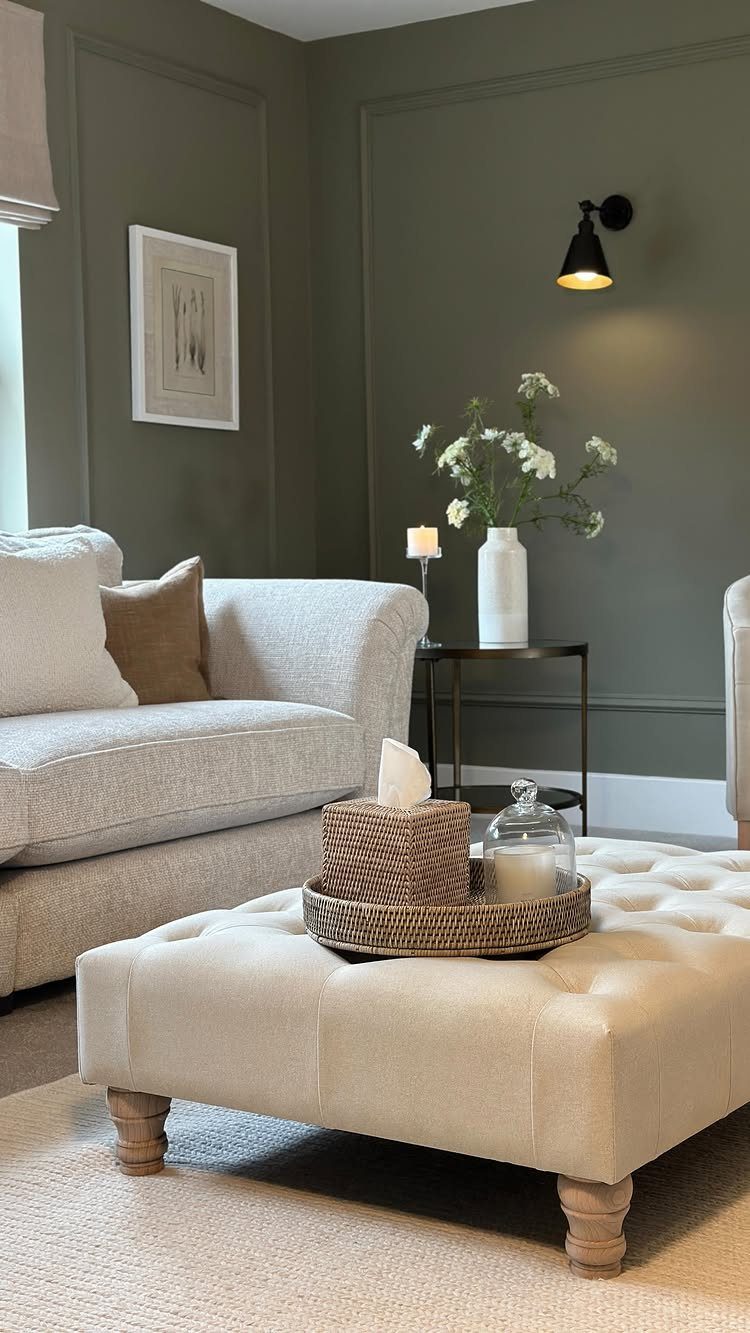
A single coat of green paint shifts the whole mood of the room, and olive tones like this one warm up without going too bright.
The molding keeps the walls from feeling flat, and pairing green with beige furniture and natural wood keeps it grounded instead of going too bold.
If you’re renting or not ready to commit, peel-and-stick panels in similar tones give you the same backdrop without the paint. Test a sample on your wall first since greens shift a lot depending on your light.
3. Green Wallpaper
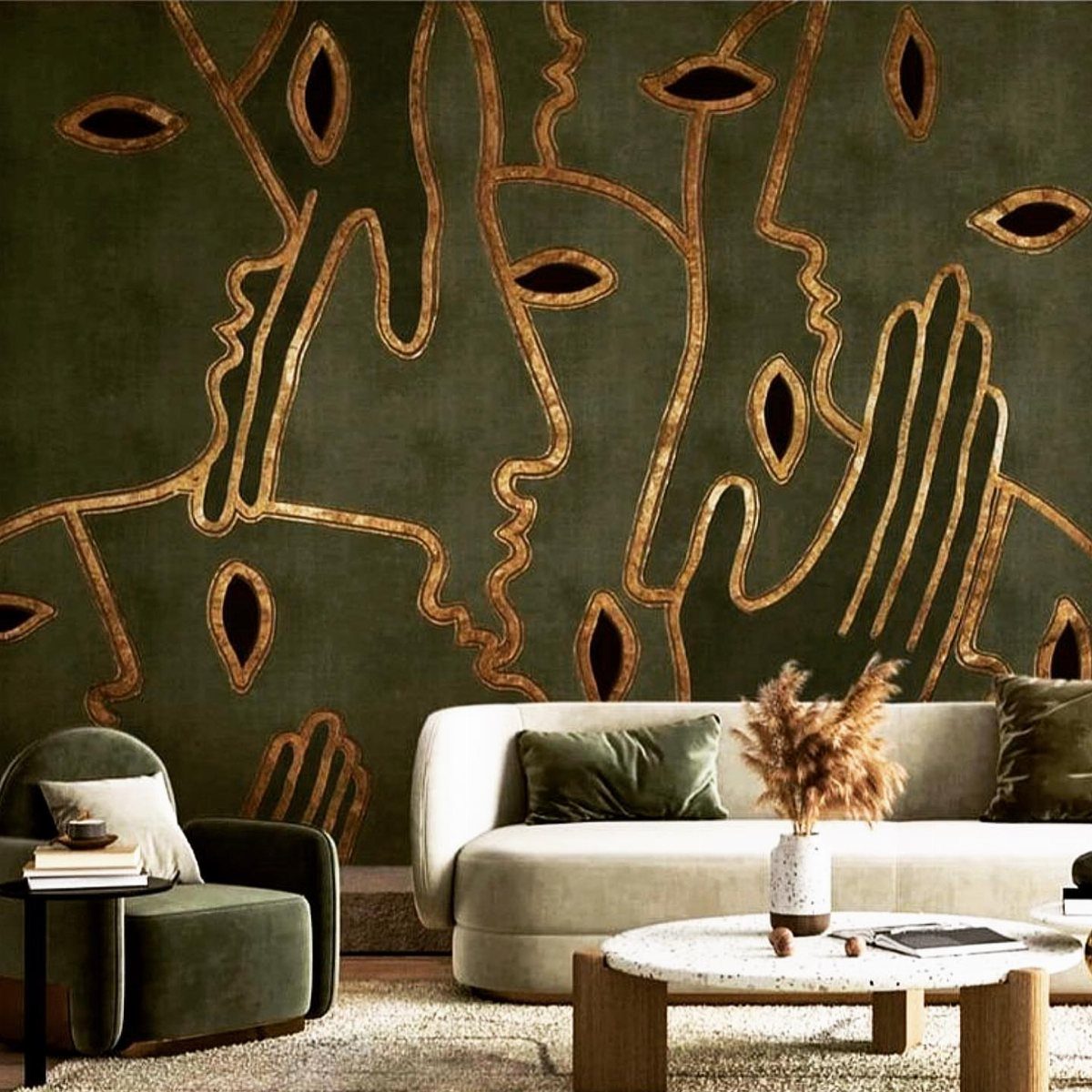
Wallpaper lets you add pattern and color in one move, and the abstract gold lines here break up the dark green without making the wall feel busy.
It works well on a single accent wall behind the sofa so the rest of the room stays simple.
Peel-and-stick versions go up in an afternoon and come off clean if you change your mind. Measure twice and order an extra roll since dye lots can shift between batches.
4. Warm Lighting in Green Living Room
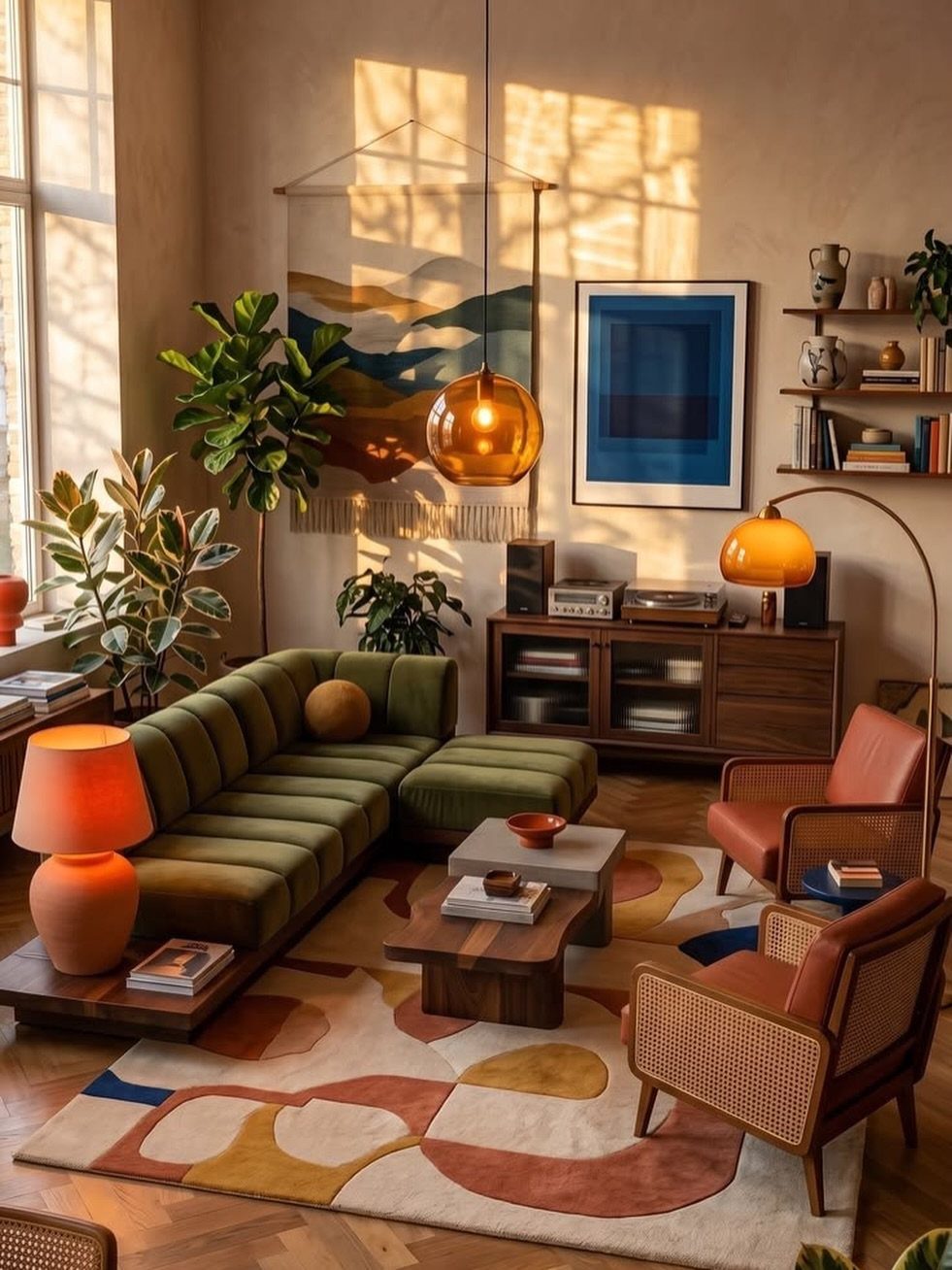
Warm-toned bulbs in table and floor lamps soften green furniture and keep it from reading too cool or sterile. Warm amber lighting pulls out the brown in leather and wood and softens the contrast against a green sofa.
Swap your bulbs to 2700K or 3000K if your current lighting feels too blue. Layer a few lamps at different heights instead of relying on overhead fixtures so the light hits the fabric and plants from multiple angles.
The patterned rug and wall art add more color without fighting the green.
5. Green Velvet Room
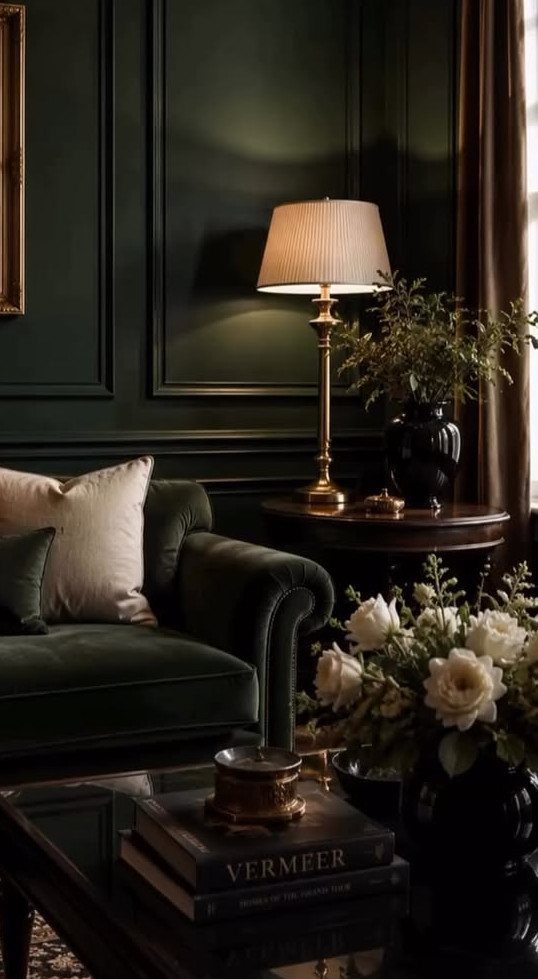
Velvet picks up light differently than flat fabrics, so a green velvet sofa shifts from dark to bright depending on where you sit.
Paneling the walls in the same deep green wraps the room and feels more deliberate than a sofa floating against white.
This works best in rooms with enough natural light during the day or good task lighting at night, since dark walls absorb more than they reflect.
6. Green Cushions and Rugs
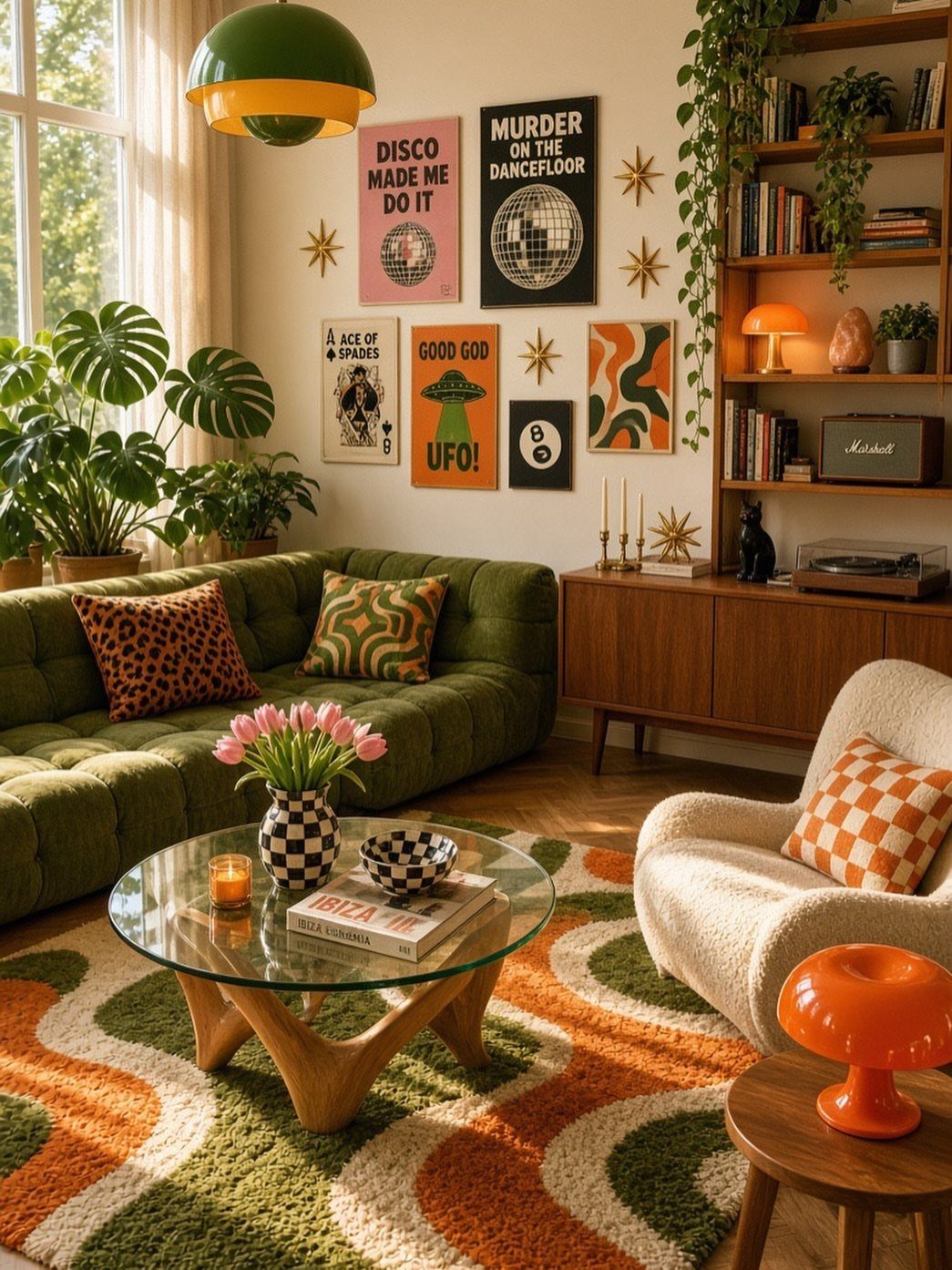
Cushions and a rug let you test green without repainting or buying new furniture.
The wavy green and orange rug here brings in pattern and pulls your eye down to the floor, while the cushions tie the sofa into the rest of the room.
Start with a few cushions in different shades of green or mix in a second color like orange.
A textured or patterned rug adds detail under a solid sofa, and layering a smaller rug over a larger neutral one lets you swap colors without replacing everything.
7. Green Textured Wall Art
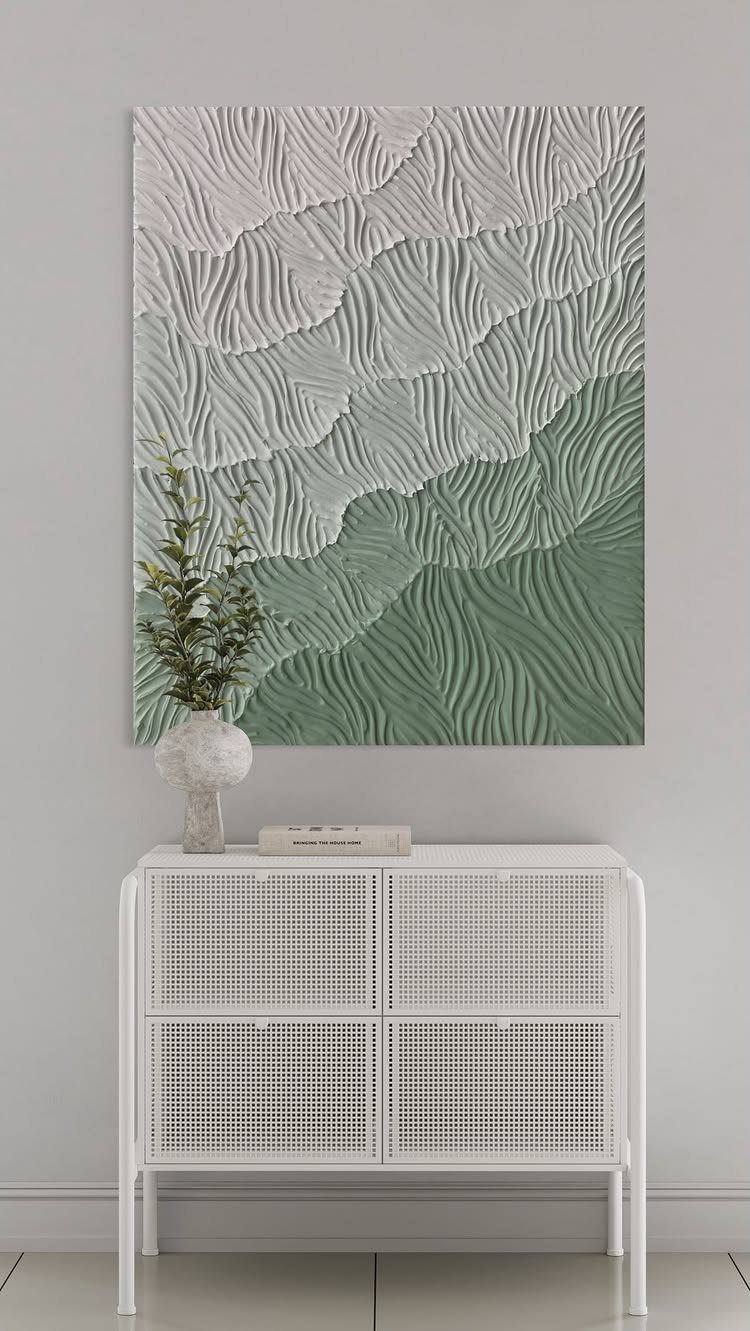
A textured art piece in green and white adds dimension to a blank wall without taking up floor space.
The wavy pattern here catches light and shadow differently through the day, so it reads less flat than a print or painting.
Look for 3D wall panels or sculptural pieces in wood, plaster, or foam if you want something similar. Mount it above a console or sideboard where it sits at eye level when you walk in.
Keep the rest of the wall clear so the texture does the work.
8. Green Sofa as Focal Point
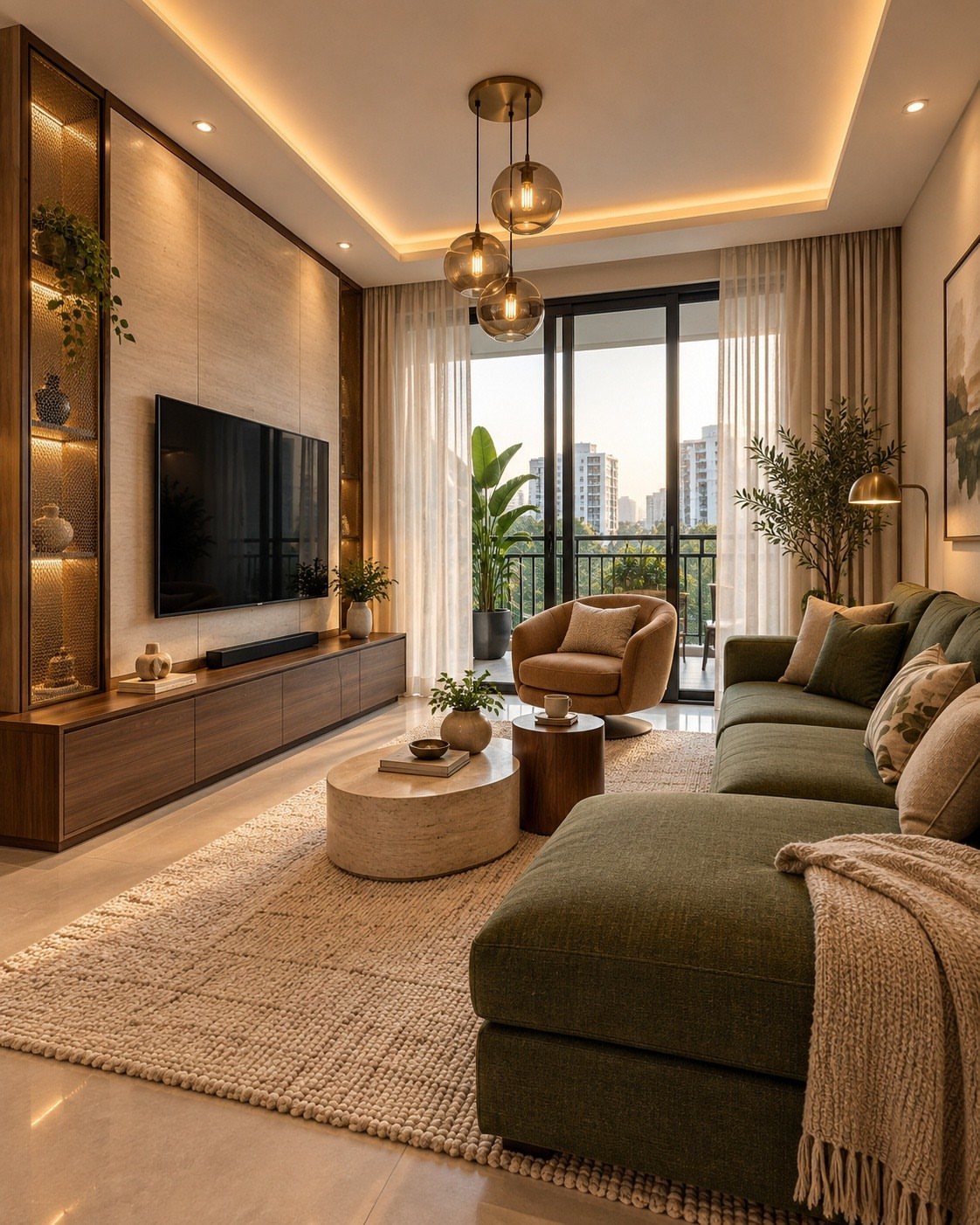
A green sectional anchors the room and gives you seating that works for everyday use and when people come over. The olive tone here pairs with brown leather and wood without needing everything else to match.
If you’re buying new, measure your doorways and hallways first since sectionals ship in pieces but still need clearance. A sectional with a chaise on one end fills an L-shaped layout better than a sofa and separate chairs.
Add a patterned rug or textured cushions if the green feels too solid on its own.
Choosing the Right Shade
Darker greens like forest or evergreen pull a room inward and work best when you want a cozy, wrapped feeling.
They read more dramatic in small spaces where the walls sit close, and pairing them with a white ceiling and neutral furniture keeps the room from closing in completely.
Lighter greens like sage, celadon, or seafoam open things up and feel calmer. They reflect more light and pair easily with wood tones and natural textures.
The shade you pick shifts depending on your light. A green that looks soft in a showroom can turn murky in a north-facing room or too yellow under warm bulbs.
Paint a sample square on your wall and watch it through the day before you commit to a full room.
Balancing with Neutrals
Beige, white, and grey keep green from taking over every surface.
The 60-30-10 rule gives you a frame: 60% neutral, 30% green, 10% accent.
Textures in cotton, linen, or wool add detail without adding more color. Burgundy or rust work as accent colors against green if you want something besides beige, and the combination holds up past December.
Incorporating Natural Elements
Wood furniture and plant life make green feel intentional instead of arbitrary. A green accent wall behind a few grouped plants ties the color to something organic, and the plants add movement and height variation that paint alone can’t.
Natural materials like jute rugs, wood side tables, or woven baskets layer in texture that reinforces the green without repeating it. The combination reads as pulled from outside rather than just painted.
Pothos, philodendrons, and snake plants tolerate lower light and need less attention than finicky tropicals.
Frequently Asked Questions
Is green a good color for a living room?
Green works well because it brings a calm, grounded feeling that most people respond to.
It pairs easily with wood, beige, and white, so you’re not locked into one look. The shade matters: darker greens wrap a room and feel cozy, while lighter ones like sage open things up and reflect more light.
How to make a green couch look good?
Let the sofa carry the room instead of competing with a busy backdrop.
What colors go best with green?
Beige, white, and grey give green room to stand out without competing. Give green 30% of the room, neutrals 60%, and save 10% for a warmer accent like rust or brass.






